
Getting a plant to explode with flowers isn’t about dumping on more nitrogen; it’s about flipping a metabolic switch with the right phosphorus and potassium ratios. The difference between a leafy green bush and a plant covered in heavy, long-lasting blooms often comes down to a single bottle or bag of bloom-specific plant food during the flowering phase. The wrong formula pushes foliage instead of flowers, leaving you with a bushy green disappointment.
I’m Rikta — the co-founder and writer behind Lawn Gear Lab. I’ve spent hundreds of hours cross-referencing NPK ratios, solubility data, and owner-reported results across dozens of bloom-boosting formulas to isolate the products that deliver a measurable flowering response.
Whether you grow indoors under lights or tend a backyard flower border, choosing the right best bloom plant food comes down to matching the phosphorus concentration, application method, and solubility to your specific growing system.
How To Choose The Best Bloom Plant Food
Not all bloom boosters are created equal. The key is understanding the NPK ratio, the form (liquid, granular, or soluble powder), and how it interacts with your existing fertilizer program. Here’s what to watch for.
Decoding the NPK Ratio for Flowering
The second number is phosphorus, which directly drives flower bud initiation, root development, and fruit set. A bloom-specific formula will have a significantly higher middle or last number. Ratios like 0-46-0 or 1-34-32 indicate a strong phosphorus and potassium focus with minimal nitrogen, preventing excess leafy growth that steals energy from flowers.
Liquid vs. Granular vs. Soluble Powder
Liquid concentrates offer fast uptake and are ideal for container plants and hydroponic systems. Granular formulas like triple super phosphate provide slow, sustained phosphorus release and excel as a soil amendment before planting. Soluble powders such as Flower Fuel give the most precise control per gallon, making them the standard for advanced hydroponic and coco growers who need to dial in ppm precisely.
Quick Comparison
On smaller screens, swipe sideways to see the full table.
| Model | Category | Best For | Key Spec | Amazon |
|---|---|---|---|---|
| Flower Fuel 1-34-32 | Soluble Powder | Heavy bloom production | 1-34-32 NPK, 250g treats 200 gal | Amazon |
| Cz Garden 18-46-0 DAP | Granular | Early-season root + bloom | 18-46-0 NPK, 4 lb resealable | Amazon |
| MARPHYL Organic Phosphate | Liquid Organic | Organic soil building | 16.9 fl oz, OMRI-compatible | Amazon |
| The Grow Co Triple Super Phosphate | Granular | Long-term phosphorus amendment | 0-46-0 NPK, 5 lb bag | Amazon |
| Cz Garden Triple Super Phosphate | Granular | Soil deficiency correction | 0-46-0 NPK, 5 lb resealable | Amazon |
| Farmer’s Secret Plant Booster | Liquid Concentrate | Early-stage root growth | 8 oz, 1 tsp per 2 gal mixing | Amazon |
| HiThrive Indoor Plant Food | Liquid Concentrate | General indoor foliage care | 6-2-4 NPK, 16 oz makes 85+ gal | Amazon |
In‑Depth Reviews
1. Element Nutrients Flower Fuel 1-34-32

The Flower Fuel formula is engineered for one job: maximizing bloom mass. With a 1-34-32 NPK ratio, this soluble powder delivers virtually no nitrogen, forcing the plant to redirect energy entirely into flower and fruit development. The tiny dose requirement — just 1/4 teaspoon per gallon — makes the 250-gram jar last a remarkably long time, treating up to 200 gallons of water.
This product shines brightest in hydroponic and coco coir setups where feed charts are precise, but soil growers also report dramatic results on ornamentals like bougainvillea, hibiscus, and even stubborn native plants that haven’t bloomed in years. The powder dissolves quickly and naturally lowers pH by about one point per gallon, which is a welcome side effect for most nutrient programs that run slightly acidic during bloom.
Be cautious with dosing — it is potent enough to cause burn if mixed stronger than recommended. Several users noted that flushing and reducing concentration after an initial overfeed produced explosive flowering. For growers who want to push their plants to maximum genetic potential, this is the go-to standard.
What works
- Extremely high phosphorus and potassium ratio triggers heavy bloom set
- Low dose per gallon delivers excellent cost-per-treatment value
- Dissolves completely without sediment for clean reservoir feedings
What doesn’t
- Mixing above label rates causes nutrient burn easily
- Not ideal for early vegetative growth due to near-zero nitrogen
2. Cz Garden Supply 18-46-0 DAP Fertilizer
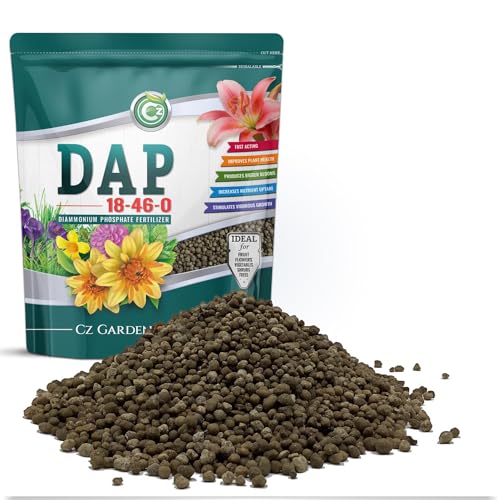
Diammonium phosphate (DAP) is an agricultural-grade standard, and Cz Garden brings it to the home grower in a convenient 4-pound resealable pouch. The 18-46-0 ratio provides a substantial nitrogen kick alongside the dominant phosphorus content, which makes this a transitional fertilizer well-suited for the late vegetative to early flowering shift. Unlike pure bloom boosters, this product can both green up foliage and initiate bud sites at the same time.
The granular form requires incorporation into the top layer of soil and thorough watering to release nutrients. This is a pre-plant or top-dress amendment rather than a liquid feed. Users report strong results on roses, fruiting trees, and heavy-feeding vegetables like tomatoes and peppers where the nitrogen helps sustain leaf canopy while phosphorus fuels bud formation.
The resealable pouch is a practical touch for storing large quantities without moisture clumping. One bag covers a substantial garden area. The primary limitation is that DAP’s high salt index can burn tender roots if applied too close to the stem, so precise placement and follow-up watering are non-negotiable.
What works
- High phosphorus content with enough nitrogen to support transitional growth phases
- Convenient resealable packaging preserves granule quality over time
- Cost-effective for large garden areas and heavy feeders
What doesn’t
- High salt index demands careful application to prevent root burn
- Not suitable for hydroponic or foliar feeding applications
3. MARPHYL Organic Liquid Phosphate Soil Enhancer
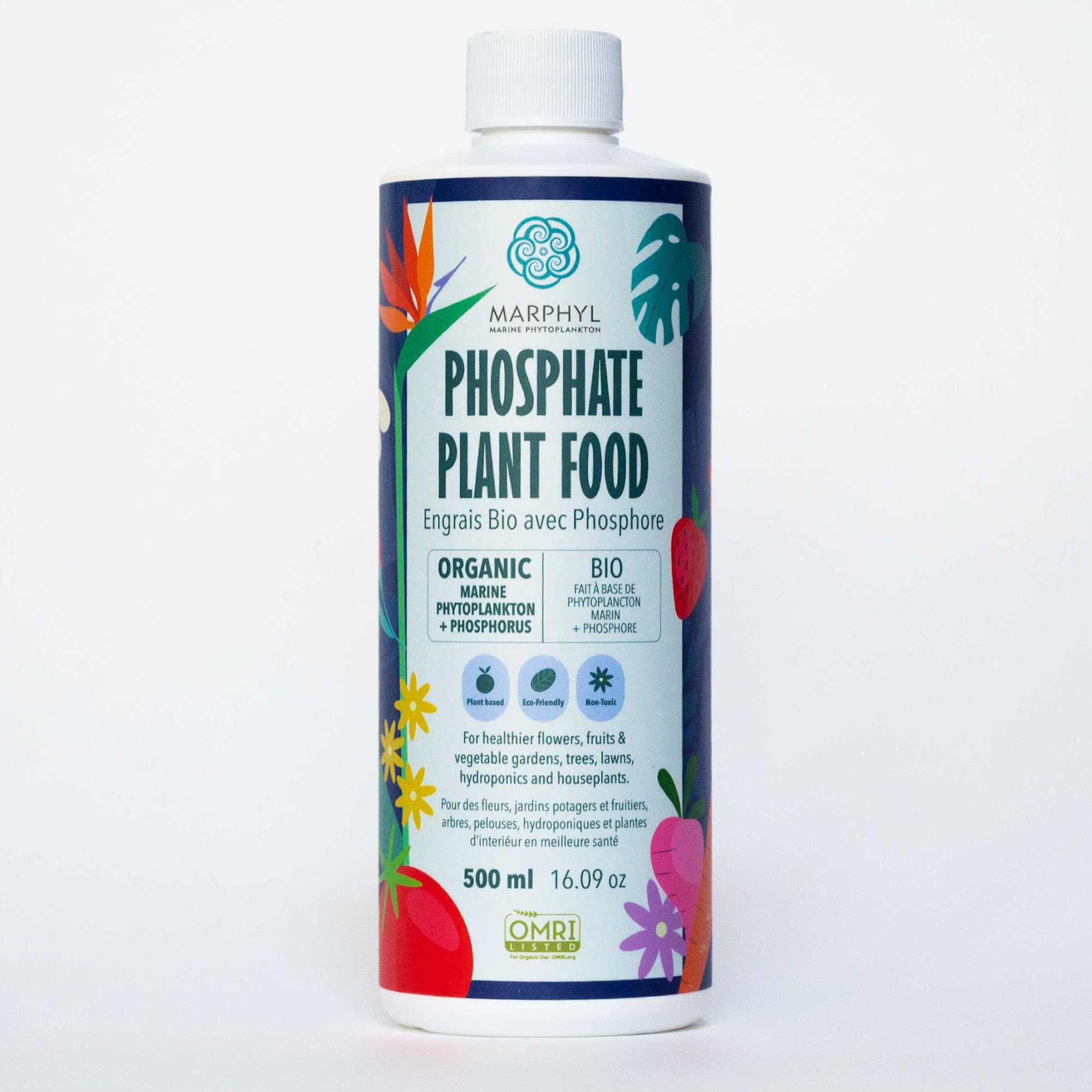
MARPHYL takes a different approach by deriving phosphorus from marine phytoplankton rather than mineral salts, appealing to organic growers who want to avoid synthetic inputs. This liquid formula supports root development and bloom initiation through a biologically active pathway, feeding the soil microbiome alongside the plant. The 16.9-ounce bottle is concentrated enough to last months for a moderate container garden.
Users report particularly good results on houseplants recovering from stress, with birds of paradise, cactus, and philodendrons showing new growth and first-time blooms after repeated feedings. The liquid form makes it easy to dilute into a watering can or add directly to hydroponic reservoirs. It also works as a root drench for soil conditioning, helping to unlock tied-up phosphorus in poor soils.
The strong fishy odor is a practical consideration — best used outdoors or in well-ventilated areas, though it dissipates within a few hours. Some sensitive foliage plants like calatheas may show leaf stress, so a patch test on a single plant is wise before full application. For committed organic gardeners, this is the most effective biologically active phosphorus source on this list.
What works
- Organic marine-based phosphorus feeds soil biology as well as the plant
- Effective at reviving stressed plants and encouraging stubborn bloomers
- Versatile for soil, hydroponics, and container use
What doesn’t
- Strong fishy odor requires outdoor or ventilated application
- May cause leaf damage on sensitive houseplant varieties
4. The Grow Co Triple Super Phosphate 0-46-0

The Grow Co delivers a classic triple super phosphate formulation with a pure 0-46-0 analysis, making it one of the most concentrated phosphorus sources available without nitrogen or potassium. This granular product is designed as a soil amendment for gardeners who have already dialed in their nitrogen and potassium levels but need to correct a phosphorus deficiency or specifically boost flower and fruit mass. The 5-pound bag covers roughly 1,000 square feet at the recommended rate.
Real-world results are particularly striking on woody ornamentals and fruiting perennials. Users report hydrangeas that failed to bloom for five years producing abundant flowers the following season, jasmine plants loaded with blossoms, and plumeria staying compact while blooming heavily. The granular form requires incorporation into the top inch of soil and consistent moisture to break down, but once active, the phosphorus release is steady over weeks.
The product ships in a heavy-duty resealable pouch, which preserves granules from humidity. The main challenge is the slow-release nature — granular TSP is not a quick fix for plants already in flower. Apply it six to eight weeks before the expected bloom cycle for best results. Over-application can lock out other micronutrients, so follow the soil test recommendations carefully.
What works
- Extremely high phosphorus concentration at 46% corrects deficiencies fast
- Effective for reviving non-flowering perennials and woody ornamentals
- Large bag provides season-long coverage for garden beds
What doesn’t
- Granular release is slow, requiring application weeks before bloom
- No nitrogen or potassium content, must be used as part of a complete program
5. Cz Garden Supply Triple Super Phosphate 0-46-0

Cz Garden’s version of triple super phosphate mirrors the same 0-46-0 analysis but distinguishes itself with a resealable pouch designed for repeated access without degradation. This product is manufactured in the USA and targets gardeners who need bulk phosphorus for soil correction across larger areas — the bag reportedly covers over 3,000 square feet of deficient ground and still has leftover material for the next season.
User reports from small-scale farmers in tropical climates confirm that this TSP improves fruit set on coffee, pineapple, and lychee trees when combined with separate nitrogen and potassium sources. Orchids also respond dramatically, with owners noting accelerated bloom cycles and larger flower spikes after a single application. The resealable pouch prevents the hygroscopic granules from clumping, which is a common complaint with large bags of phosphate fertilizers.
A small but notable issue is a labeling discrepancy on some batches that includes a “source of potassium” claim despite the 0-46-0 analysis. While this appears to be a printing error, it can cause confusion for growers tracking exact nutrient inputs. For the phosphorus price-per-pound, this product delivers the highest concentration available in this roundup, making it a staple for serious soil management.
What works
- Highest phosphorus concentration (46%) allows precise soil correction
- Resealable pouch maintains granule integrity across multiple uses
- Produces measurable yield increases on fruit trees and tropical crops
What doesn’t
- Label misprint on some units causes nitrogen/potassium confusion
- Granular form requires soil incorporation and isn’t usable in hydroponics
6. Farmer’s Secret Plant Booster
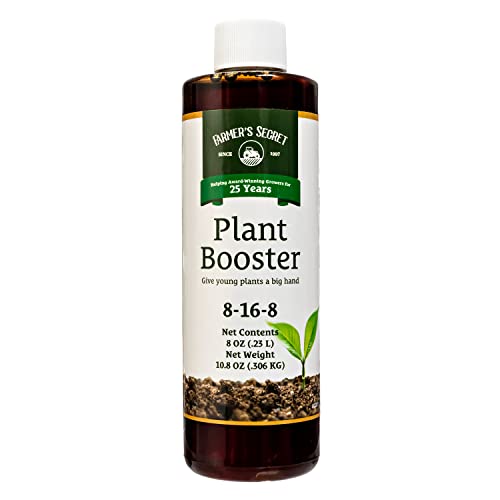
Farmer’s Secret markets this 8-ounce liquid concentrate as a high-phosphorus formula aimed at early-stage root growth, but its effect on bloom initiation is equally significant. The super-concentrated nature means one teaspoon treats two gallons of water, making this an economical choice for gardeners with a large number of containers or a moderate-sized vegetable patch. Users consistently describe it as a “dense, heavy concentrate” that punches above its bottle size.
The formula is particularly effective at accelerating growth in seedlings and transplants during the first few weeks after planting. First-time gardeners using this product report visibly faster leaf expansion and earlier flowering compared to untreated plants. The liquid delivery system also makes it easy to apply as a foliar spray for rapid uptake, especially on plants showing early signs of phosphorus deficiency like purple-tinged leaves.
Because the concentrate is so dense, under-dilution is a real risk — users who ignored the 1:32 mixing ratio saw leaf burn. The product also contains enough nitrogen to support green growth, so it works best as a transitional feed rather than a pure flower finisher. For a budget-friendly liquid option that covers both rooting and early bloom phases, this is a solid value.
What works
- Extremely concentrated formula provides many treatments per bottle
- Works effectively as both a root drench and foliar spray
- Accelerates early growth and flowering in seedlings and transplants
What doesn’t
- Risk of leaf burn if not diluted to the specified 1:32 ratio
- Contains nitrogen that may promote foliage over blooms in late flowering
7. HiThrive 16oz Houseplant Fertilizer

HiThrive positions this 16-ounce bottle as an all-purpose indoor plant food with a 6-2-4 NPK ratio, meaning it is nitrogen-dominated rather than optimized for blooming. However, for houseplant owners focused on overall health and occasional flowers from species like peace lilies, pothos, and fiddle leaf figs, this balanced formula keeps foliage lush while still providing enough phosphorus for modest bloom support. The concentrated formula makes over 85 gallons of feed, stretching the bottle’s lifespan considerably.
The fast-acting liquid formula is convenient for weekly watering schedules — just one teaspoon per gallon for standard feeding or a quarter teaspoon for water propagation. User reports note that consistent use improves leaf thickness and green color, with several owners specifically mentioning increased bloom frequency on plants that had previously only produced leaves. The diluted application also reduces the risk of fertilizer burn common with stronger concentrates.
The primary limitation for bloom-focused growers is the low phosphorus content. This is not a dedicated flower finisher; it is an all-purpose maintenance feed that happens to support some flowering. Plants that require a strong phosphorus push to initiate buds, like orchids or flowering annuals, will need a higher-P supplement. For the casual indoor gardener who wants one bottle to handle everything, this is a practical starting point.
What works
- Makes over 85 gallons, offering exceptional value for the bottle size
- Safe for weekly use on a wide range of common houseplant species
- Includes micronutrients that improve leaf color and thickness
What doesn’t
- Low phosphorus ratio limits effectiveness as a dedicated bloom booster
- Some users report nitrogen buildup if used at every watering without skipping
Hardware & Specs Guide
NPK Ratio for Bloom Stages
The middle number (phosphorus) is the primary driver of flower initiation, while the last number (potassium) supports flower structure and disease resistance. A dedicated bloom booster will have the middle or last number significantly higher than the first. Ratios like 0-46-0 or 1-34-32 tell you the product is designed for late-stage flowering. An 18-46-0 DAP adds nitrogen for a transitional feed, while a 6-2-4 mix is better suited for general maintenance.
Solubility and Application Method
Soluble powders dissolve fully in water, making them ideal for hydroponic systems and precise fertigation scheduling. Granular products like triple super phosphate require soil incorporation and a watering-in period to break down, releasing phosphorus over several weeks. Liquid concentrates offer fast uptake but vary in concentration density — check the mixing ratio because a product requiring 1 teaspoon per 2 gallons is vastly more concentrated than one requiring 1 teaspoon per gallon.
FAQ
What does 0-46-0 mean on a bloom plant food label?
Can I use a bloom booster on my plants every time I water?
Why do my plants have lots of leaves but no flowers?
Final Thoughts: The Verdict
For most gardeners, the best bloom plant food winner is the Element Nutrients Flower Fuel 1-34-32 because its ultra-high phosphorus and potassium ratio delivers measurable bloom mass increases in both soil and hydroponic systems. If you want an organic approach that builds soil biology while feeding blooms, grab the MARPHYL Organic Liquid Phosphate. And for large garden beds or soil phosphorus correction, nothing beats the Cz Garden Triple Super Phosphate 0-46-0.