
A plumeria that refuses to bloom, drops its leaves, or develops a soft, rotting trunk is almost always suffering from one problem: the wrong soil. These tropical beauties demand a mix that drains within seconds, not minutes. While they will tolerate some neglect in watering, they have zero tolerance for soggy roots. The potting medium is the single most decisive factor between a plant that merely survives and one that explodes with fragrant, waxy flowers all season long.
I’m Rikta — the co-founder and writer behind Lawn Gear Lab. I’ve spent hundreds of hours cross-referencing bagged potting mixes, analyzing ingredient ratios, and sifting through verified owner reports to isolate what actually makes one mix superior for plumerias over another.
If you grab a bag of generic potting soil, you are almost certainly setting your plant up for failure. What you need is a specialized, fast-draining, slightly acidic blend. This guide cuts through the marketing to find the very best soil for plumeria with the drainage, aeration, and nutrient profile these heavy feeders actually require.
How To Choose The Best Soil For Plumeria
Plumerias are not like your average houseplant. They are semi-succulent tropical trees with thick, water-storing trunks and fleshy, brittle roots that rot if kept damp for more than a day or two. Selecting the right mix means prioritizing three things above all else: drainage speed, physical texture, and pH level.
Drainage Speed Is Non-Negotiable
Test a soil by wetting it and squeezing a handful. If water streams out freely and the soil clump immediately crumbles when you release pressure, the drainage is adequate. If it holds a muddy shape or feels soggy after 10 seconds, reject it. Plumerias need a mix where water flows through the pot within seconds, not minutes. Coarse sand, perlite, pumice, and pine bark fines are the ingredients that create this fast-draining structure.
Texture: Chunky, Not Powdery
Standard potting soil is ground too fine. It settles into a dense, water-retaining sludge in a container. A good plumeria mix physically looks rough — you should see visible flecks of perlite, pieces of bark, and gritty sand or pumice. This chunky texture creates air pockets that oxygenate the root zone, which is critical because plumeria roots are obligate aerobes. Without oxygen, they suffocate and invite root-rot pathogens. Look for a mix described as “chunky,” “coarse,” or “fast-draining” rather than “light and fluffy.”
pH: Slightly Acidic for Maximum Nutrient Uptake
Plumerias prefer a pH range between 6.0 and 6.8. Outside this window, the plant cannot absorb phosphorus, iron, and manganese properly, leading to yellow leaves and bloom failure. Most quality specialty mixes are formulated within this range. If you are blending your own, add dolomitic lime or sulfur to adjust. Avoid mixes that contain high levels of uncomposted pine bark, which can acidify too aggressively over time.
Quick Comparison
On smaller screens, swipe sideways to see the full table.
| Model | Category | Best For | Key Spec | Amazon |
|---|---|---|---|---|
| Soil Sunrise Desert Rose Mix | Specialty Mix | Out-of-the-box plumeria readiness | 8 qt volume, includes sand & lime | Amazon |
| Rosy Soil Cactus Mix | Peat-Free | Gritty, fast drainage with microbes | 4 qt, chunky texture, worm castings | Amazon |
| Jessi Mae Potting Soil | Organic Mix | Acidic mix for smaller pots | 4 qt, slightly acidic, perlite added | Amazon |
| Miracle-Gro Cactus, Palm & Citrus | 3-Pack Value | Mass repotting or bulk users | 3 x 8 qt, fast-draining formula | Amazon |
| Soil Sunrise Citrus Tree Mix | Premium Blend | Large, established plumeria trees | 12 qt, balanced pH, coarse texture | Amazon |
| Sol Soils Houseplant Chunky | Chunky Mix | DIY soil mixers needing a base | 1 gallon, peat-free, pumice & LECA | Amazon |
| Forbidden Cereal Aroid Mix | Ultra-Chunky | Maximum aeration, large root balls | 6.5 qt, 8 organic ingredients, soilless | Amazon |
In‑Depth Reviews
1. Soil Sunrise Desert Rose Potting Soil Mix (8 Quarts)

This is the most straightforward recommendation for plumeria growers who want a true bag-to-pot solution. Soil Sunrise formulated this blend specifically for Adenium obesum, the desert rose, which has identical root system demands to plumeria — fleshy, rot-prone, and needing extreme drainage. The ingredient list includes peat moss, horticultural perlite, coconut coir, sand, and lime, creating a coarse, gritty texture that drains instantly while retaining just enough moisture between waterings.
The 8-quart volume is enough to fill a 12-inch pot, which is the ideal starting size for a standard plumeria cutting or a small rooted plant. The lime addition stabilizes the pH in the 6.0–6.5 range, which crosses over perfectly for plumeria phosphorus absorption needed for blooming. Multiple verified reviewers report “more blooms” and plants looking “extremely healthy” after switching to this mix, which aligns directly with what plumeria owners care about most.
One caveat: the mix can arrive quite dry, so it needs a thorough pre-soak before potting. It is also a premium-priced small-batch product. But for anyone who wants a ready-to-use soil that requires zero modification, this is the most reliable option available for plumeria.
What works
- Gritty, chunky texture drains within seconds—perfect for plumeria fleshy roots.
- Blended specifically for desert rose, making it chemically and structurally identical to what plumeria needs.
- Contains lime for pH stabilization in the ideal 6.0–6.5 sweet spot.
What doesn’t
- Bag can be extremely dry on arrival; requires pre-moistening before use.
- Small-batch production means premium cost per quart compared to mass-market blends.
2. Rosy Soil Cactus & Succulent Potting Mix (4 Quarts)
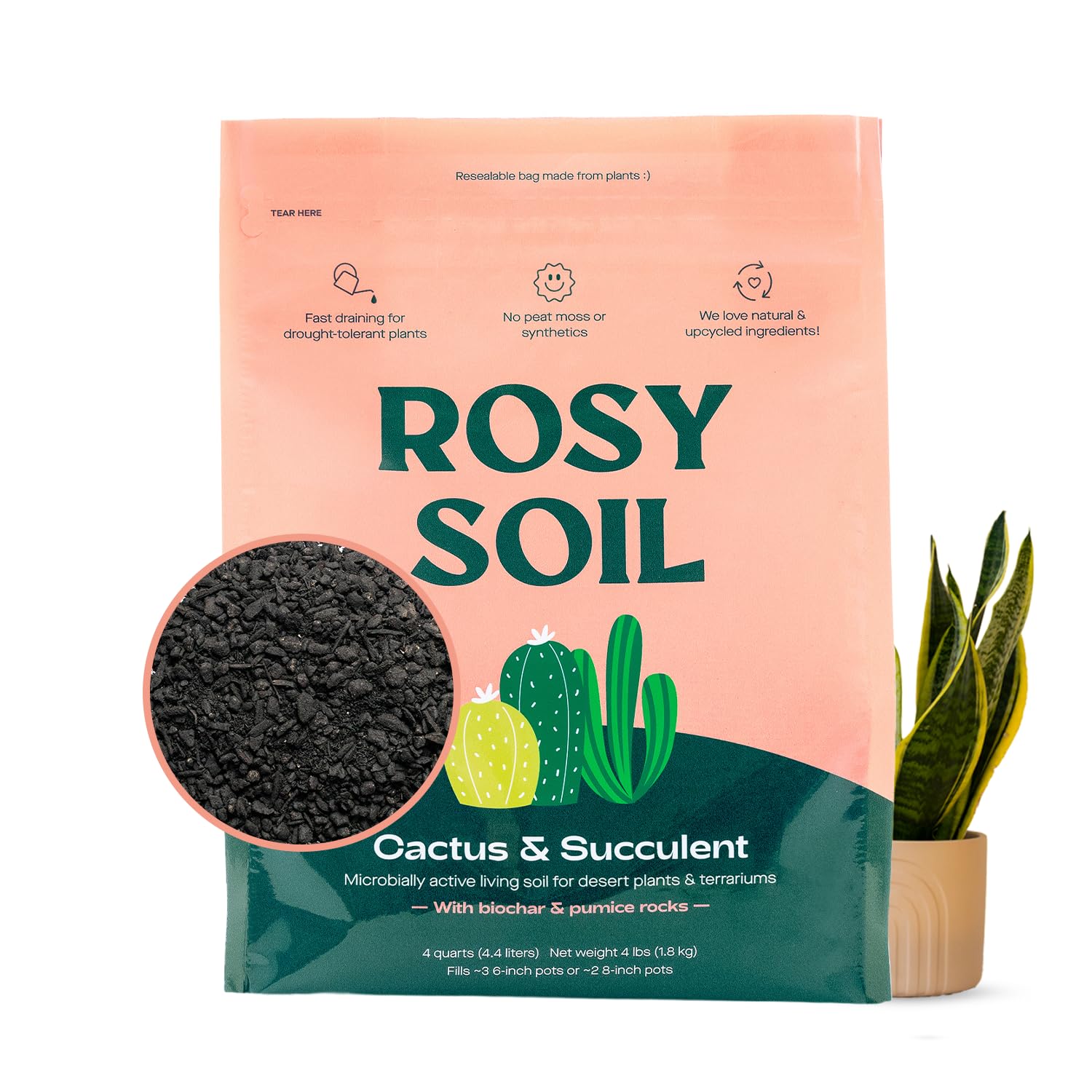
Rosy Soil takes a completely different approach than traditional peat-based mixes. This formula is peat-free, using coconut coir as the base, and adds worm castings and beneficial microbes that create a “living soil” ecosystem. For plumeria, the key advantage is the chunky, gritty texture that eliminates compaction. The mix is physically coarse enough that water runs straight through, which is exactly what a plumeria’s root system requires to stay healthy.
The absence of peat moss solves two issues for plumeria growers. First, peat can become hydrophobic when it dries out completely, repelling water. Coir re-wets easily. Second, peat decomposes over time, turning into a dense sludge that suffocates roots. This mix stays loose indefinitely. The worm castings provide a slow-release nutrient base that feeds plumerias without the risk of fertilizer burn.
At 4 quarts, the bag is small—it fills roughly two to three 6-inch pots. For a single large plumeria in a 10-inch or larger pot, you will need multiple bags. Some users note the bag can have a slight moisture content and a unique odor initially. However, the complete absence of bugs and the clean, consistent texture earn it high marks from experienced collectors who keep succulents and tropicals.
What works
- Peat-free formula prevents compaction and sludge formation over time.
- Pre-loaded with worm castings and beneficial microbes for natural feeding.
- Extremely clean—zero reports of fungus gnats or mold in dozens of bag openings.
What doesn’t
- Small 4-quart bag requires multiple purchases for larger plumeria pots.
- Can hold slight moisture on arrival; needs aeration or baking if you want it bone dry immediately.
3. Jessi Mae Potting Soil (4 Quarts)

Jessi Mae’s organic potting soil is positioned as a general indoor plant mix, but its slightly acidic pH and inclusion of perlite make it a functional base for plumeria when you add extra drainage material. The texture is light and airy straight out of the bag, avoiding the heavy, clay-like consistency of many generic soils. For a small plumeria cutting in a 4-inch pot, this mix actually works without modification.
The organic formulation means no synthetic chemicals, which plumeria growers often prefer because it reduces the risk of salt buildup—a common issue when using slow-release synthetic fertilizers with these heavy feeders. The 4-quart bag is compact, but it is enough to get a young plant started or to refresh the top layer of a larger pot. Users report success with snake plants, peace lilies, and pothos in this mix, indicating it has solid structure for aeration.
Where this mix falls short for plumeria is the drainage speed. It is too moisture-retentive for a full-size plumeria in a large pot without additional perlite or pumice amendment. Several reviewers note the bag is smaller than expected, and the soil can have a noticeable organic smell for the first few days after opening. It is best viewed as a cost-effective foundation that requires you to add 25–30% extra perlite or coarse sand for reliable plumeria use.
What works
- Light, airy texture straight from the bag with visible perlite for aeration.
- Organic and slightly acidic pH aligns with plumeria’s nutrient uptake needs.
- Budget-friendly entry point for small pots or as a base for custom mixing.
What doesn’t
- Retains too much moisture for large, established plumerias without heavy amending.
- Bag volume is smaller than expected; limited to filling one small pot.
4. Miracle-Gro Cactus, Palm & Citrus Potting Mix (3-Pack, 8qt Each)

Miracle-Gro’s cactus, palm, and citrus formula is the mass-market benchmark for fast-draining container mixes. It is widely available, consistently formulated, and formulated to be less moisture-retentive than standard potting soil. For plumeria growers on a budget who are repotting multiple plants or maintaining a large collection, the 3-pack of 8-quart bags offers the best cost-to-volume ratio in this lineup.
The mix contains perlite and sand to create a coarse structure, but it is not as chunky as specialty blends. Plumerias in this mix will need careful watering discipline—allow the soil to dry completely between waterings. The added plant food (a synthetic slow-release fertilizer) is a mixed blessing: it gives a quick nitrogen boost, but plumeria are sensitive to salt buildup, and over time you may see leaf tip burn if you supplement with additional liquid fertilizer.
Verified user reports confirm this mix works well for Christmas cactus, palm, and citrus, all of which share plumeria’s need for good drainage. The main knock from heavy users is that the individual bags are smaller than the descriptive volume suggests for large containers. A single 8-quart bag barely fills one 10-inch pot. Still, for the grower who wants a reliable, predictable, inexpensive mix and is willing to monitor watering closely, this is a solid practical choice.
What works
- Excellent value per quart in the 3-pack; covers multiple large pots.
- Fast-draining formula with perlite and sand outperforms standard potting mixes.
- Widely available with consistent formulation across bags.
What doesn’t
- Not chunky enough for plumeria without additional coarse amending.
- Contains synthetic slow-release fertilizer that can cause salt buildup over time.
5. Soil Sunrise Citrus Tree Potting Soil Mix (12 Quarts)

Soil Sunrise extends its specialty approach from desert rose to citrus, and the overlap between citrus and plumeria root requirements is substantial. Both are woody tropical trees that need excellent drainage, a slightly acidic pH, and a mix that does not compact over a full growing season. This 12-quart bag provides enough volume to fill a 14-inch or larger pot, making it the best option for an established plumeria tree that has outgrown its container.
The mix achieves its structure through a combination of peat moss and perlite with sand, avoiding the heavy bark fines that can cause acidity swings. Multiple verified user reviews confirm that citrus trees—including lemons, limes, and guavas—thrive in this mix, with vigorous leaf growth and strong root development. The same properties that make it suitable for citrus (superior aeration, effective drainage, balanced pH) translate directly to plumeria success.
The price per quart is higher than mass-market options, and the packaging—a cardboard box containing a plastic bag—is less resealable than some competitors. A few users wish for a resealable bag system. However, the mix is clean, free of pests, and arrives consistently well-blended. For the plumeria owner with a specimen plant they have invested years in, this is the safe, premium upgrade that protects that investment.
What works
- 12-quart volume covers large, established plumeria trees in one bag.
- Balanced pH and coarse texture support heavy root systems without compaction.
- Clean, pest-free mix with consistent blending across batches.
What doesn’t
- Packaging is a box with an inner bag, not ideal for resealing.
- Premium price point compared to generic cactus and citrus blends.
6. Sol Soils Houseplant Chunky Mix (1 Gallon)
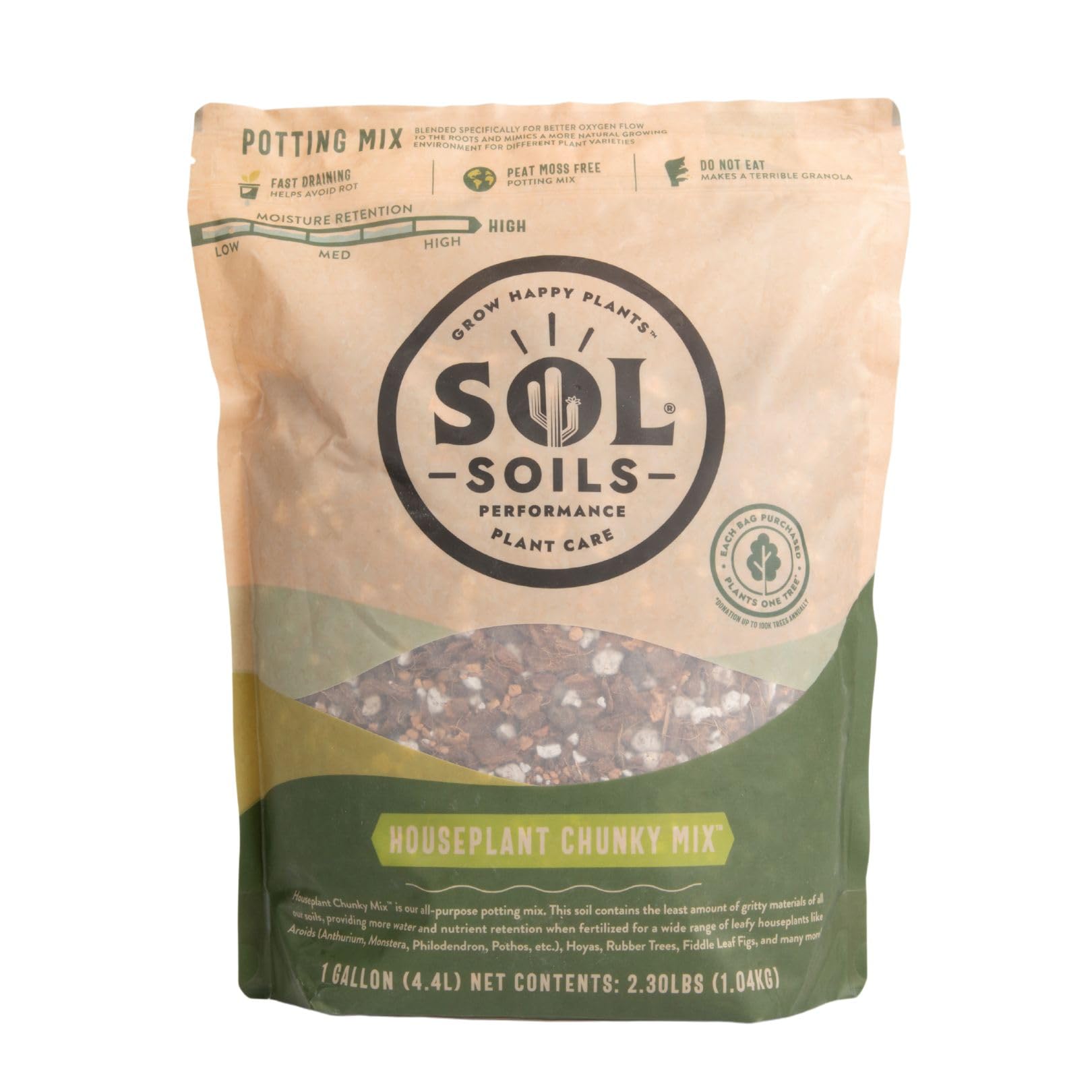
Sol Soils Houseplant Chunky Mix is engineered for tropical aroids like Monstera, but its ingredient profile—coconut coir, husk chips, perlite, pumice, pine bark, and LECA—makes it a superb base for a custom plumeria blend. The texture is aggressively chunky, with particles large enough that water has no choice but to flow around them. Plumerias grown in this mix will have roots that are constantly bathed in oxygen, which drastically reduces the risk of rot even if you overwater slightly.
The peat-free formulation means this mix will not turn into a dense sludge as it decomposes, which is a major long-term benefit for plumeria that stay in the same pot for several years. The inclusion of coco chips and bark fines creates a structure that stays open for the lifetime of the plant. Each bag is 1 gallon (4 quarts), and a single bag fills one 8-inch pot adequately. For larger plants, you will need to buy multiple bags.
This mix lacks the fine sand or soil components that provide some water retention and nutrient-holding capacity. For plumeria, which are heavy feeders during the growing season, you should blend this 3:1 with a fine organic potting soil or add worm castings and a slow-release fertilizer at potting time. Users confirm the mix is completely free of gnats and mold, arrives very dry, and provides excellent drainage. It is the ideal starting point for the grower who wants to fine-tune their own perfect recipe.
What works
- Extremely chunky, oxygen-rich structure prevents root compaction.
- Peat-free formulation stays open and airy for years without sludge.
- Completely free of fungus gnats and mold from multiple user reports.
What doesn’t
- Too aggressive for straight use—needs blending with fine soil for moisture and nutrient retention.
- Small 1-gallon bag runs out quickly for larger containers.
7. Forbidden Cereal Aroid Potting Mix (6.5 Quarts)
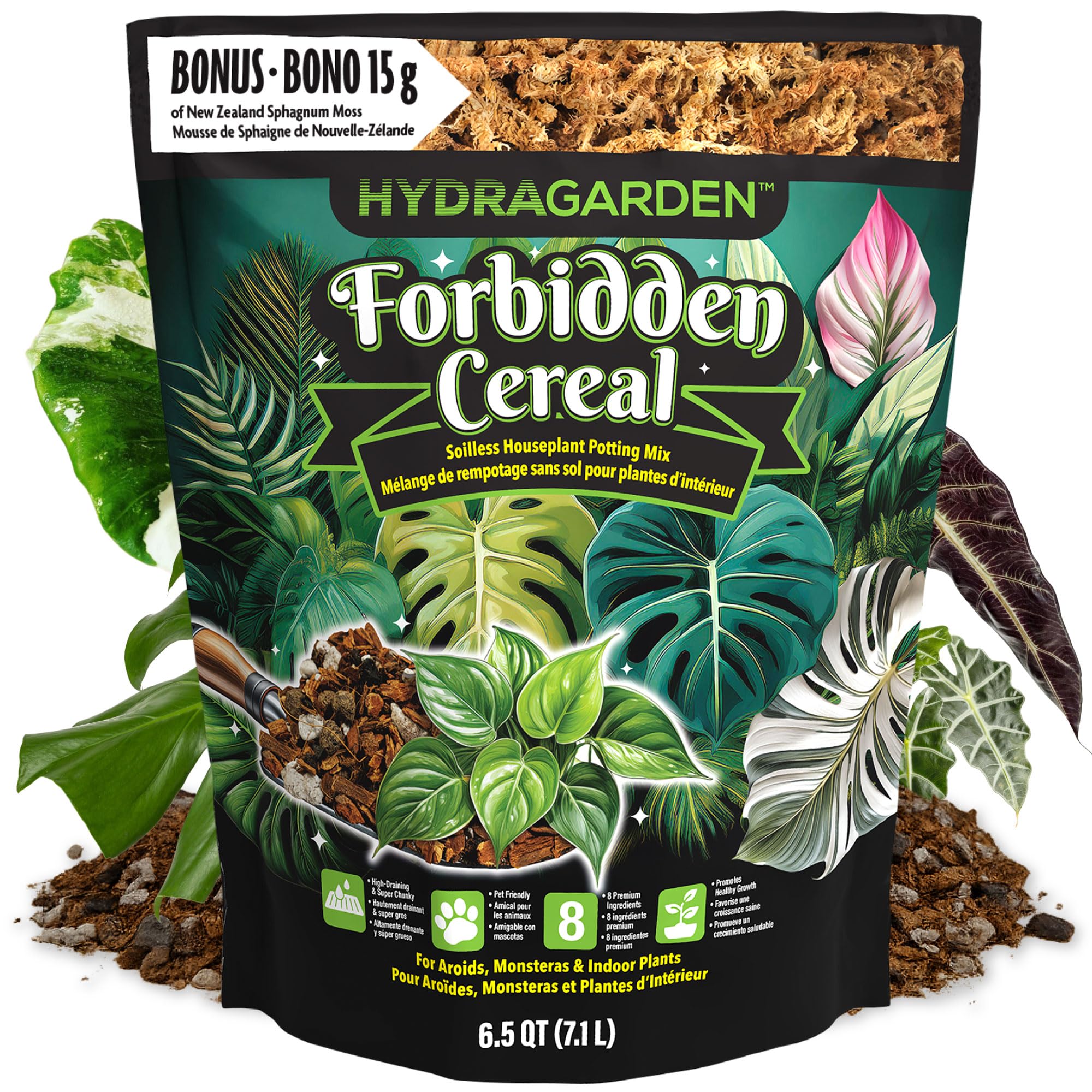
Forbidden Cereal markets itself as “Earth’s chunkiest potting mix,” and the claim holds up. The blend contains 8 organic ingredients including Douglas fir bark, coarse and fine perlite, coco coir, coconut fiber, coco chips, biochar, worm castings, LECA clay balls, and New Zealand sphagnum moss. The particle sizes range from fingernail-sized bark chunks to small clay pebbles, creating a physical structure that is almost impossible to compact. For a plumeria, this is the ultimate defense against overwatering.
This is a soilless mix—it contains zero traditional soil or peat moss. The biochar component helps buffer pH and provides surface area for beneficial bacteria. The separated sphagnum moss layer on top is a clever design touch: you can use it as a moisture-retaining topper for humidity or work it into the blend at the root level. However, the massive chunk size means this mix is not suitable for small 4-inch pots. The bark pieces create too much air space, and small plumeria cuttings can dry out too quickly.
For a large plumeria in a 14-inch or larger pot, this mix is excellent. Water flows through instantly, and the structural integrity lasts for years without breaking down. The main negatives are the price—it is the most expensive mix per quart in this guide—and the fact that the bag looks bigger than it is. The large chunks create visual bulk, so the bag volume of 6.5 quarts appears smaller than the ingredient list suggests. It is a specialist tool for the advanced grower who prioritizes oxygen over moisture retention.
What works
- Unmatched physical chunkiness provides maximum oxygen to root systems.
- Biochar and worm castings supply long-term, gentle nutrient buffering.
- Separated moss layer adds versatility for moisture management.
What doesn’t
- Too coarse for small pots or young cuttings; roots can dry out too fast.
- Highest price per quart; value significantly lower than any blended alternative.
Hardware & Specs Guide
Drainage Velocity
The single most critical spec for any soil used for plumeria is how many seconds it takes for water to drain from the pot. Measure this by saturating the mix in a container with drainage holes. If the water stops dripping within 15 seconds, the drainage is adequate. Mixes that take 30 seconds or longer to drain will cause root rot in plumeria. The key ingredients that speed up drainage are perlite (grades #2 or #3 coarse), pumice, calcined clay, and coarse horticultural sand.
Porosity & Air-Filled Porosity
Aeration is measured by air-filled porosity (AFP), which should be above 25% for plumerias. Standard potting soil typically has an AFP of 10–15%, which is lethal. Chunky bark, pumice, and LECA increase AFP. A simple test: fill a pot with the mix, water it, and pour out the drainage. Then repot the same plant into fresh mix. If the first mix feels dense and the fresh one feels fluffy, the AFP is too low. Opt for mixes with visible 3–8mm particles throughout such as Forbidden Cereal or Sol Soils Chunky.
FAQ
Can I use regular potting soil for plumeria?
Should I add perlite or sand to my store-bought mix?
What pH should my plumeria soil be?
Final Thoughts: The Verdict
For most gardeners, the soil for plumeria winner is the Soil Sunrise Desert Rose Mix because it arrives ready to use with the exact chunky, sand-amended texture and pH balance that plumerias demand. If you want a peat-free, living-soil approach with beneficial microbes, grab the Rosy Soil Cactus Mix. And for the advanced grower who wants to build their own custom blend with maximum aeration, nothing beats the Sol Soils Houseplant Chunky Mix as a base.