
Hibiscus plants are heavy feeders that demand a specific balance of nutrients to produce those dinner-plate-sized flowers. Without the right formula, your plants will produce plenty of leafy growth but few, if any, blooms. This guide breaks down the top fertilizers that deliver the high phosphorus and potassium levels these tropical beauties crave.
I’m Rikta — the co-founder and writer behind Lawn Gear Lab. I’ve spent dozens of hours analyzing NPK ratios, micronutrient profiles, and release mechanisms to help you find a food for hibiscus that actually delivers on its promise of bigger, brighter flowers.
The key to unlocking explosive blooms lies in the middle number of the NPK ratio — phosphorus — which drives flower production. The right food for hibiscus will tip the scales in your favor without burning your plant’s sensitive root system.
How To Choose The Best Food For Hibiscus
Hibiscus is a hungry plant that needs a steady diet of phosphorus and potassium to fuel continuous blooming. Picking the wrong formulation leads to lush leaves and zero flowers, which is frustrating for any grower. Focus on these three factors to cut through the noise.
Decode the NPK Ratio
The three numbers on a fertilizer bag represent Nitrogen-Phosphorus-Potassium. For hibiscus, the phosphorus (middle number) should be the highest, with targets like 10-30-20 or 12-24-12. High phosphorus triggers bud formation, while too much nitrogen pushes green growth at the expense of blooms.
Choose Your Release Method
Slow-release granules like the Schultz 12-24-12 feed the soil over several weeks and are ideal for busy gardeners who want set-and-forget feeding. Water-soluble powders like Jack’s Classic offer faster absorption and allow you to control the dosage precisely each watering, which is better for potted plants with restricted root zones.
Check for Trace Micronutrients
Beyond the big three, hibiscus benefits from chelated iron, manganese, and magnesium. These prevent common issues like interveinal yellowing (chlorosis) and ensure the plant can actually use the phosphorus you provide. Products like Grow More Super Bloomer include an iron boost that keeps foliage dark green.
Quick Comparison
On smaller screens, swipe sideways to see the full table.
| Model | Category | Best For | Key Spec | Amazon |
|---|---|---|---|---|
| Fertilome 17-7-10 | Granules | All-in-one tropical care | 17-7-10 + trace elements | Amazon |
| Jack’s Classic 4lb | Powder | Longer lasting supply | 10-30-20 water soluble | Amazon |
| Grow More Super Bloomer | Powder | Universal bloom booster | 15-30-15 chelated iron | Amazon |
| TPS Hibiscus Liquid | Liquid | Fast-acting rescue feed | 32 oz ready to mix | Amazon |
| BGI Hibisgain 10lb | Granules | Commercial-grade feeding | 10 lb resealable bag | Amazon |
| Schultz 12-24-12 | Granules | Easy granular application | 12-24-12 slow release | Amazon |
| Jack’s Classic 8oz | Powder | Small garden spot feeding | 10-30-20 compact tub | Amazon |
In‑Depth Reviews
1. Fertilome Hibiscus and Tropical Plant Food 17-7-10 (4 lbs.)

Fertilome hits the sweet spot with a 17-7-10 formulation that provides a higher nitrogen kick for lush green leaves while still supplying enough phosphorus and potassium for steady blooms. The 4-pound bag covers a generous ground area or multiple large containers. Users consistently report seeing blooms within a week of application, which is exactly what you want from a tropical plant food.
The slow-release granules mean you only need to apply every two weeks during active growth, then once a month once blooms appear. This reduces the risk of overfeeding and works well for gardeners who cannot stick to a strict weekly schedule. The addition of secondary nutrients supports overall plant vigor beyond just the N-P-K ratio.
Some buyers noted the bag weight can vary slightly from the advertised 4 pounds, but the actual volume remains sufficient for several months of feeding. For a dedicated hibiscus formulation that balances growth and flowering, this is the most reliable all-rounder in the lineup.
What works
- Balanced NPK for foliage + flowers simultaneously
- Two-week feeding window is forgiving for busy schedules
- Rapid visible bloom response reported by many growers
What doesn’t
- Bag weight may be slightly less than stated on label
- Not water-soluble so less control over per-plant dosage
2. Jack’s Classic 10-30-20 Blossom Booster 4lb
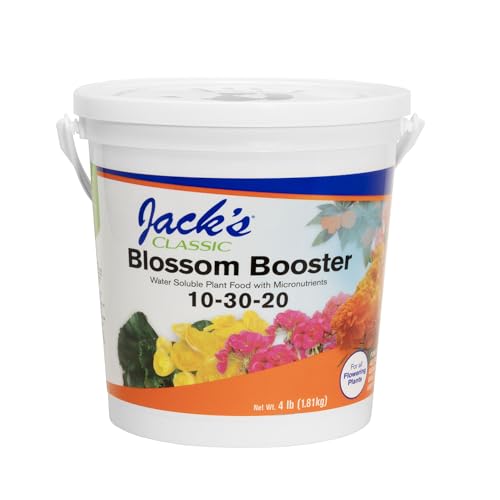
The 4-pound size of Jack’s Classic Blossom Booster is the volume-conscious version of the popular 8-ounce starter tub. With a potent 10-30-20 analysis, this powder is designed specifically to push flowering plants into heavy bloom production. The high phosphorus content makes it ideal for hibiscus that refuse to bud up despite good growing conditions.
This water-soluble formulation mixes easily and can be applied as a soil drench or foliar spray. The included measuring spoon takes the guesswork out of mixing, and the powder yields many gallons of liquid fertilizer. Users describe noticeable improvements in flower size, color intensity, and stem strength within a few applications.
Because it comes in two separate packets inside the bag, you need to mix the batch properly before first use. This product is the best value for large gardens where you need consistent bloom-boosting power across multiple plants over an entire season.
What works
- Very high phosphorus ratio drives maximum flower set
- Powder form yields many gallons from a single purchase
- Works as both root feed and foliar spray
What doesn’t
- Requires mixing and measuring before each use
- Small risk of leaf burn if applied too concentrated
3. Grow More Super Bloomer 15-30-15 Fertilizer 3lbs

Grow More Super Bloomer packs a 15-30-15 punch with added chelated iron and manganese, making it one of the most complete bloom-boosting powders on the market. The high phosphorus content targets flower formation directly, while the chelated iron prevents the yellowing that sometimes occurs when phosphorus levels are too high relative to iron availability.
The water-soluble formula absorbs quickly whether applied as a soil soak or a foliar spray. Growers report plants doubling in size with two to three times the normal amount of blooms. It works across a wide range of flowering plants beyond hibiscus, including roses and fruiting shrubs, making it a versatile addition to any gardener’s shed.
The 3-pound tub is a mid-size option — smaller than the 4-pound Jack’s but larger than the 8-ounce sample tubs. It represents a strong value for money given the inclusion of micronutrients that eliminate the need for separate supplements.
What works
- Chelated iron prevents leaf chlorosis during bloom boosting
- Versatile for hibiscus, roses, and fruiting shrubs
- Fast-acting formula with visible results in days
What doesn’t
- Powder can cake if stored in humid conditions
- No measuring spoon included in the tub
4. TPS Nutrients Hibiscus Fertilizer 32 oz Liquid
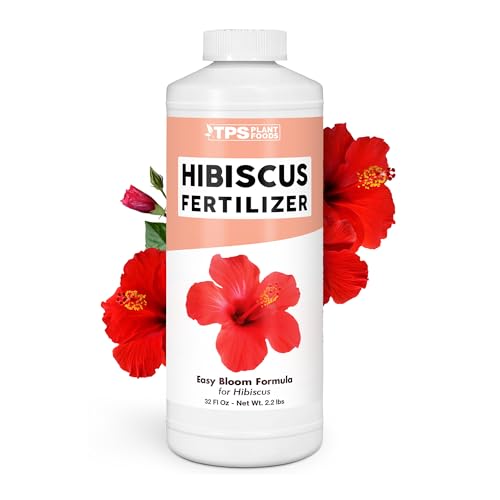
TPS Nutrients formulated this liquid plant food specifically for hibiscus, and it shows in the results. Users consistently report reviving non-flowering hibiscus and reversing leaf yellowing within one week after a single application. The liquid form means the nutrients are immediately available to the roots, making it ideal for stressed or pot-bound plants.
With a 1:28 mixing ratio, a single 32-ounce bottle goes further than you might expect for a liquid concentrate. It works for both outdoor garden beds and container plants, delivering large, bright, continuous blooms throughout the growing season. The formula is made in the USA with quality ingredients.
The main trade-off is the cost per feed compared to granular or powder options. The bottle is relatively small and may not last as long if you have a large collection of hibiscus. For a quick rescue of a struggling plant, however, this liquid option is hard to beat.
What works
- Immediate nutrient availability for stressed plants
- Very fast visible turnaround on yellow leaves
- Specifically formulated for hibiscus needs
What doesn’t
- Higher cost per application than granular alternatives
- Small bottle may require frequent repurchasing
5. BGI Fertilizers HIBISGAIN Hibiscus Fertilizer 10lb Bag

BGI Hibisgain is the go-to choice for serious hibiscus enthusiasts and commercial growers. Developed in the hibiscus-growing hub of Homestead, Florida, this granular formula is tailored specifically for the unique feeding habits of tropical hibiscus. The 10-pound bag with a resealable top and cut-out handle is built for volume feeding across multiple large plants.
The granules are applied directly on top of the soil or mulch with no mixing required, and a monthly feeding schedule keeps plants in peak bloom condition. Users report that even older, declining plants explode back into growth and become covered in flowers after a single dose. The strong odor is noted by some but confirms the organic-based composition.
This is a premium product in terms of price per bag, but when you factor in the large volume and the fact that it was designed by professional hibiscus growers, the value becomes clear for anyone with a substantial hibiscus collection.
What works
- Commercial-grade formula trusted by professional growers
- Resealable bag keeps granules fresh between uses
- Excellent for reviving older, non-flowering plants
What doesn’t
- Strong smell during and after application
- Higher upfront cost for the large bag
6. Schultz Slow-Release Bloom Fertilizer 12-24-12 3.5 Lbs

Schultz 12-24-12 is a classic slow-release granular fertilizer that delivers a phosphorus-heavy punch at a very accessible price point. The 3.5-pound container provides medium coverage and is simple to apply — just scatter the granules around the base of the plant and water in. Users report seeing results in plant health and bloom count within just a few days.
The 12-24-12 ratio is almost perfectly aligned with the bloom-boosting needs of hibiscus. Nitrogen stays moderate to avoid excessive leaf growth, while the phosphorus and potassium work together to support flower development and root strength. It is also labeled for roses, annuals, and perennials, so it works across your entire flower garden.
While it does not have the dedicated hibiscus-specific branding of some competitors, the performance data from thousands of users confirms it works. For budget-conscious gardeners who want a reliable bloom fertilizer without complex mixing routines, this granular option is a top contender.
What works
- Very easy no-mix application — scatter and water
- Fast visible improvement in flower vibrancy
- Low cost for effective bloom-boosting results
What doesn’t
- Not as targeted as hibiscus-specific formulas
- Slower initial response than water-soluble options
7. Jack’s Classic 10-30-20 Blossom Booster 8oz

The 8-ounce tub of Jack’s Classic is a starter-sized version of the same powerful 10-30-20 water-soluble powder found in the 4-pound bag. It is perfect for gardeners with just a few hibiscus plants who want to test the formulation before committing to a larger purchase. The compact container includes a measuring spoon for accurate mixing.
This powder is highly concentrated — the 8-ounce tub can make roughly 10 full watering cans of liquid fertilizer. Users have reported excellent results on Hoya, jasmine, anthuriums, and orchids in addition to hibiscus. The formula is gentle enough to use as a foliar spray without burning leaves, provided you follow the dosage instructions.
The main limitation is the quantity. For outdoor flower beds with multiple large hibiscus shrubs, you will use the entire 8-ounce tub in a single watering session. It is best suited for indoor potted hibiscus or small container gardens where precise dosing matters more than bulk volume.
What works
- Ideal for testing the formula before buying larger sizes
- Concentrated powder yields many gallons from a small tub
- Works well as both root drench and foliar spray
What doesn’t
- Small tub runs out fast for large gardens
- Comes in a bag inside the tub that only fills it partially
Hardware & Specs Guide
NPK Ratio
The three-number fertilizer analysis stands for Nitrogen-Phosphorus-Potassium. For hibiscus, the ideal ratio places phosphorus — the middle number — as the highest figure. Ratios like 10-30-20, 12-24-12, or 15-30-15 are typical bloom-boosting formulas. Nitrogen supports leaf growth, phosphorus drives bud and flower formation, and potassium strengthens stems and roots.
Slow-Release vs. Water-Soluble
Slow-release granules (like Schultz 12-24-12 and Fertilome 17-7-10) break down gradually with water, providing a steady nutrient supply for 4 to 6 weeks per application. Water-soluble powders (like Jack’s Classic and Grow More) dissolve instantly and are taken up by the plant within days, but require more frequent mixing and application — typically every 1 to 2 weeks.
FAQ
Can I use any all-purpose fertilizer on my hibiscus?
How often should I apply liquid fertilizer to potted hibiscus?
Why are my hibiscus leaves turning yellow despite feeding?
Final Thoughts: The Verdict
For most gardeners, the food for hibiscus winner is the Fertilome 17-7-10 because it offers a balanced NPK with slow-release convenience and specialized tropical plant support. If you want a powerful water-soluble bloom booster, grab the Jack’s Classic 10-30-20 4lb. And for reviving a struggling plant fast, nothing beats the TPS Nutrients Liquid Hibiscus Fertilizer.