
Most snake plant casualties don’t come from neglect — they come from the wrong soil holding water against the roots long enough to trigger rot. Snake plants are succulents that store moisture in their thick leaves, so a dense, moisture-retentive potting mix that works for ferns or tropicals is essentially a slow death sentence for Sansevieria. The ideal dirt for snake plants needs to drain aggressively while still holding enough structure to anchor the plant and deliver trace nutrients.
I’m Rikta — the co-founder and writer behind Lawn Gear Lab. I’ve spent hundreds of hours cross-referencing soil composition data, researching drainage ratios, and analyzing owner feedback to pinpoint exactly which bagged mixes give snake plants the gritty, fast-draining environment they require.
This guide breaks down the best pre-mixed options so you can repot with confidence and stop guessing about aeration, pH, and moisture retention.
How To Choose The Best Dirt For Snake Plants
Not every bag labeled “potting mix” is safe for snake plants. The wrong mix retains too much water, compacts over time, and suffocates the roots. Here are the three critical factors to evaluate before buying.
Drainage & Aeration
Snake plant roots need oxygen and hate sitting in moisture. Look for mixes that contain coarse materials like perlite, pumice, lava rock, or sand. These create air pockets and channels for water to escape quickly. A mix that feels dense or heavy in the bag is the wrong mix for Sansevieria.
Ingredient Base
Soil bases fall into two camps: peat moss and coco coir. Peat holds water longer and can become hydrophobic when dry, while coco coir rehydrates easily and drains faster. Peat-free options like those using bark chips, coco coir, and pumice tend to perform better for snake plants because they resist compaction and stay loose.
Added Nutrients vs. Single Purpose
Many premium mixes include worm castings, mycorrhizal fungi, or slow-release fertilizers. These can boost root development and reduce the need for additional feeding. However, mixes with added fertilizer require careful watering to avoid nutrient burn. For beginners, a lean, well-draining mix is safer than a nutrient-rich one.
Quick Comparison
On smaller screens, swipe sideways to see the full table.
| Model | Category | Best For | Key Spec | Amazon |
|---|---|---|---|---|
| The Soil Sage 5 Qt | Soilless | Max Drainage | Lava Rock & Pumice Base | Amazon |
| Perfect Plants 8qt | Organic | Large Repotting | Coco Coir & Bark Chips | Amazon |
| Rosy Soil Cactus | Living Soil | Microbe-Rich Growth | Peat-Free with Worm Castings | Amazon |
| Jessi Mae 4-Quart | Organic | Slightly Acidic pH | Perlite & Organic Base | Amazon |
| Perfect Plants 4qt | Organic | Small Pots & Propagation | Coco Coir & Sand Mix | Amazon |
| Gardenera Premium 1qt | Hand Blended | Single Small Pot | Peat Moss & Perlite | Amazon |
| Miracle-Gro 8qt 3-Pack | Value Pack | Multiple Plants | Fast-Draining Formula | Amazon |
In‑Depth Reviews
1. The Soil Sage 5 Dry Qt Cactus & Succulent Potting Soil Mix
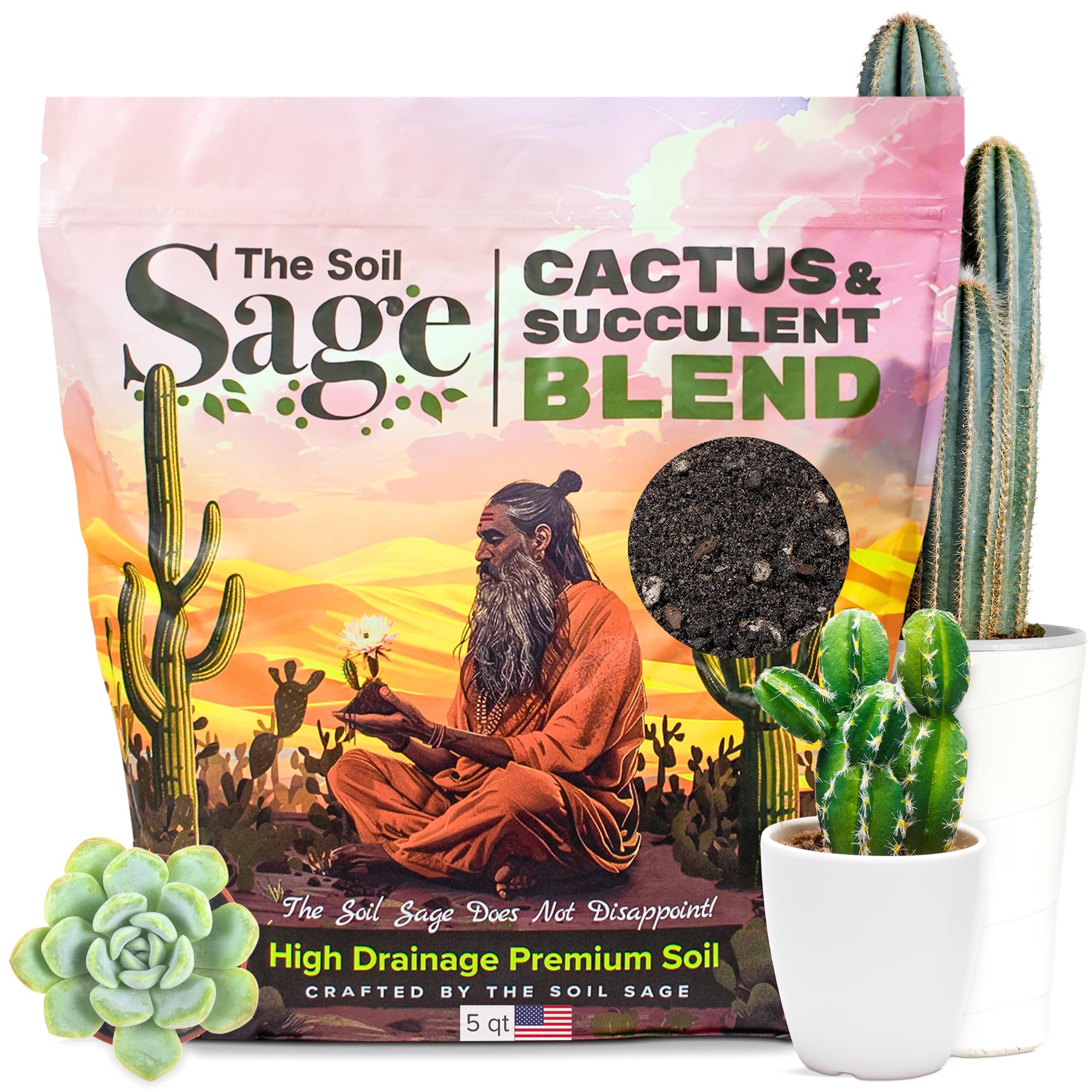
The Soil Sage delivers a soilless, chunky blend built around lava rock, pumice, compost, bark, sand, and biochar — ingredients chosen specifically to create instant drainage and prevent root rot. Mycorrhizal fungi are pre-loaded into the mix, which colonizes the root zone and enhances nutrient uptake without requiring additional fertilizers. The texture is gritty and loose, exactly what snake plant roots need to breathe.
Each 5 dry quart bag comes with four mesh pot screens to stop soil from washing out of drainage holes, a thoughtful inclusion that saves you a separate purchase. Owners consistently report that adenium, aloe, and Sansevieria thrive in this blend, with several noting that the mix drains fast enough to water on a normal schedule without fear of soggy soil. The biochar component also helps sequester nutrients and keep the mix pH-stable over time.
The main downside is the premium per-quart cost, which makes it less economical for large repotting projects. Some users also mention that the bag could benefit from a resealable closure, though the quality of the ingredients offsets the packaging shortfall. For single pots or small collections, this is the most technically sound mix on the list.
What works
- Exceptional drainage with lava rock, pumice, and sand base
- Pre-loaded mycorrhizal fungi boost root health naturally
- Includes mesh pot screens for drainage control
What doesn’t
- High cost per quart for larger batches
- Bag lacks a resealable feature
2. Perfect Plants Organic Snake Plant Soil 8qt. Bag
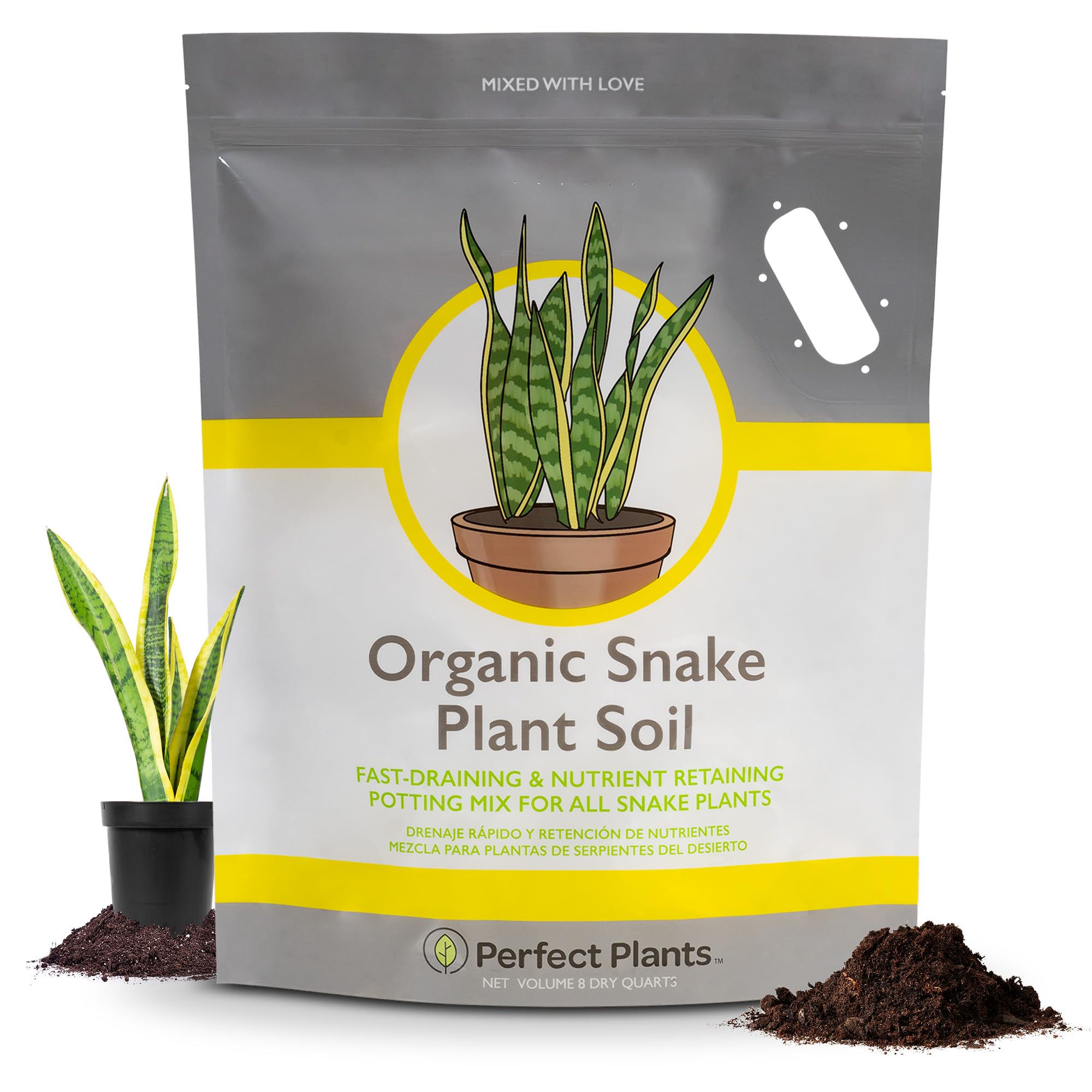
Perfect Plants offers the largest dedicated snake plant mix in our roundup at 8 quarts, blended with coconut coir, pine bark chips, perlite, and sand. The coco coir base rehydrates easily after drying out, unlike peat moss that turns into a water-repelling brick. The bark chips add structural porosity that keeps the mix from compacting even after repeated waterings.
Users with multiple snake plant varieties — Laurentii, Black Coral, Cylindrica — consistently report strong root growth and no signs of rot after switching to this bag. The resealable heavy-duty packaging helps keep the remaining mix fresh for future repotting. Because it contains no slow-release fertilizer, you have full control over feeding, which is ideal for growers who prefer liquid succulent fertilizers during the growing season.
The bag is noticeably heavier than standard potting soil due to the sand content, and some owners of very small pots find the 8-quart size more than they need. The cost per quart lands in the premium tier, but the volume makes it a smart buy for anyone repotting multiple plants or a large floor-standing snake plant.
What works
- Large 8-quart bag handles multiple repots
- Coco coir base resists compaction and rehydrates easily
- No added fertilizer gives full feeding control
What doesn’t
- Heavier bag due to sand content
- High price per quart for budget shoppers
3. Rosy Soil Cactus Soil – Organic Succulent Potting Mix
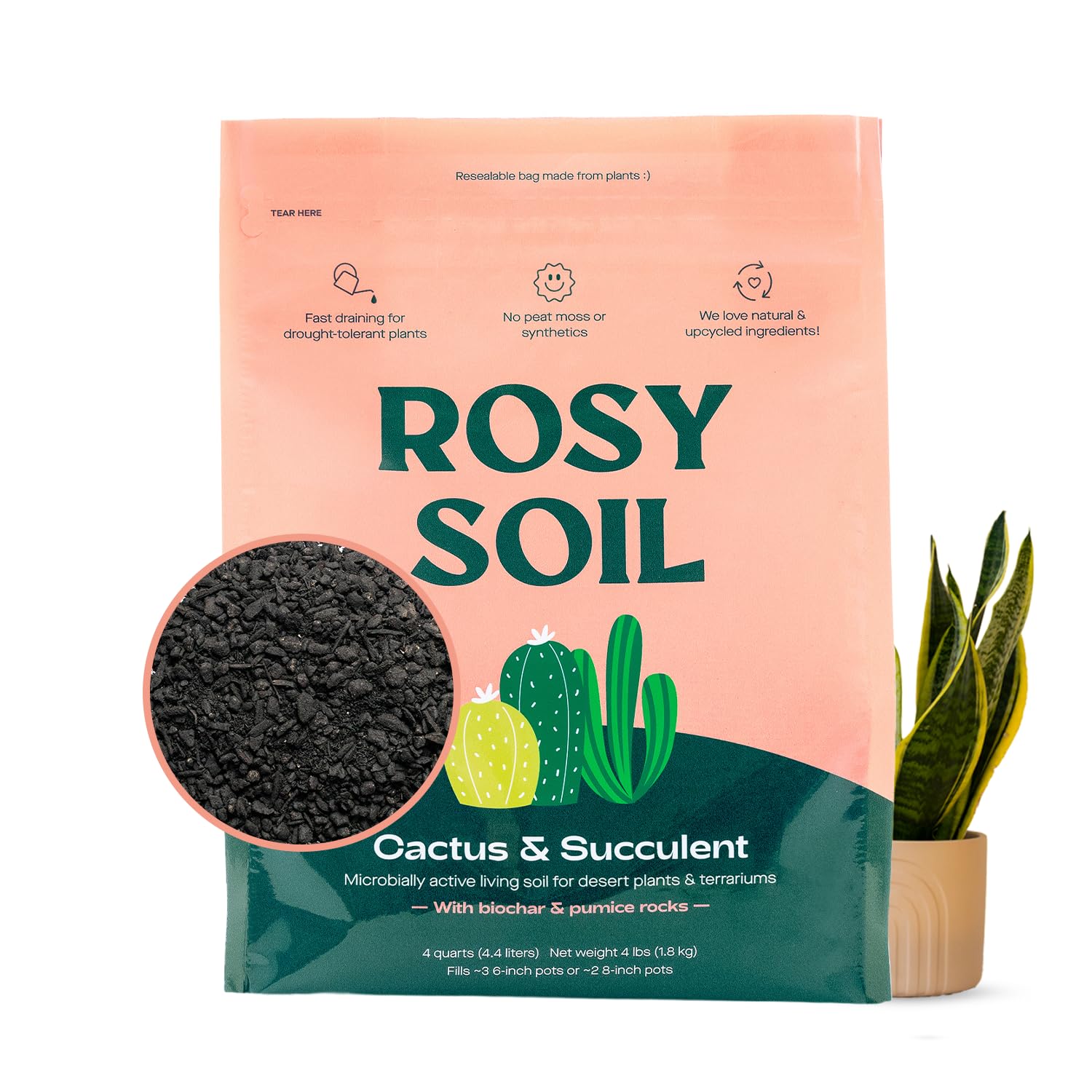
Rosy Soil takes a living-soil approach by packing beneficial fungi, microorganisms, and organic worm castings directly into the bag. The chunky texture stays loose and airy, meaning water flows through freely rather than pooling. By omitting peat moss entirely, this mix drains more aggressively and avoids the pH drift that peat-heavy blends can cause over time.
The 4-quart resealable bag fills two to three standard pots, and the packaging is plastic-neutral — a detail that matters for eco-conscious buyers. Owner feedback highlights that aloe, ZZ plants, and snake plants show noticeable new growth within weeks of repotting. A few users note a mild earthy smell from the worm castings that fades after a day or two, which is common with biologically active mixes.
Some experienced growers mention that very mature snake plants with dense root systems benefit from extra perlite or bonsai gravel mixed in. The 4-quart size also limits its value for large repotting jobs. For smaller pots and growers who want a biologically rich foundation, Rosy Soil is a strong contender.
What works
- Living soil with pre-loaded microbes and worm castings
- Peat-free formula drains faster and resists pH fluctuation
- Resealable, plastic-neutral packaging
What doesn’t
- Mature plants may need extra perlite or grit
- 4-quart bag is small for large collections
4. Jessi Mae Potting Soil – 4-Quart Bag

Jessi Mae hand-mixes its soil in small batches using organic materials and extra perlite, resulting in a light, fluffy texture that promotes air circulation around the roots. This mix is formulated to be slightly acidic, which aligns well with snake plants that prefer a pH range around 5.5 to 7.0. The well-draining structure reduces the risk of root rot for both snake plants and peace lilies.
Owners frequently point out that the soil smells distinctly organic when first opened — a sign of active composted material rather than chemical filler — and the odor dissipates within a day or two. New plant owners appreciate the no-mix-needed convenience, while experienced growers note that the fluffy texture makes it easy to see when the soil is dry and ready for watering.
The 4-quart bag is smaller than some competitors, and the price per quart lands in the mid-range tier. A handful of users wish the bag were resealable. For a single snake plant or a small propagation project, the consistent texture and pH balance make Jessi Mae a reliable choice.
What works
- Light, airy texture with excellent perlite distribution
- Slightly acidic pH suits snake plant preferences
- Hand-mixed in small batches for quality control
What doesn’t
- Bag is not resealable
- Small 4-quart volume for the price
5. Perfect Plants Organic Snake Plant Soil 4qt. Bag

This 4-quart version of Perfect Plants’ snake mix delivers the same coco coir, pine bark chips, perlite, and sand formulation as the larger bag but at a lower entry cost. The water management is identical — excess moisture drains quickly while the coir retains enough to keep the root zone from drying out completely. The chunky texture prevents the compaction that plagues standard potting soils after a few waterings.
Buyers with smaller pots or single snake plants find the 4-quart bag more practical than committing to a larger volume. The resealable packaging keeps unused mix fresh, and the all-natural ingredient list means no slow-release fertilizer pellets that could burn sensitive roots. Owners report that even picky Sansevieria varieties like Cylindrica respond well, producing firm, upright leaves after repotting.
The main complaint is the cost per quart, which is higher than generic cactus mixes. Some users with multiple large pots end up buying the 8-quart version instead. For small-scale repotting or propagation, this 4-quart bag offers the same premium performance without the oversize commitment.
What works
- Same premium formulation as the 8qt bag in a smaller size
- Resealable bag keeps unused mix fresh
- Drains quickly with coco coir and bark chips
What doesn’t
- Higher cost per quart than generic mixes
- Small bag runs out fast for large pots
6. Gardenera Premium Snake Plant Potting Soil Mix – 1 Quart Bag

Gardenera blends its mix on a small family farm in the USA using Canadian peat moss, perlite, worm castings, and lime to adjust pH. The 1-quart bag is the smallest option in this guide, making it ideal for a single pot or for replacing soil in a small nursery container. The extra perlite content promotes rapid root development and quick drainage, while the worm castings add a light nutrient boost.
Multiple owners note that switching to this soil revived snake plants that had turned yellow due to overwatering in dense generic mixes. The ingredients are OMRI-listed for organic growing, and the bag contains no synthetic additives. The small batch blending ensures consistency from bag to bag, which is harder to guarantee with mass-produced soils.
The obvious limitation is the volume: 1 quart fills only one small pot, so anyone repotting multiple plants will need several bags. The peat-based formula also holds more moisture than coco coir mixes, requiring careful watering discipline. For a budget-friendly trial or a single plant rescue, Gardenera delivers targeted performance.
What works
- Hand-blended on a small farm with premium ingredients
- Extra perlite ensures rapid drainage
- Worm castings provide gentle organic nutrients
What doesn’t
- 1 quart only fills one small pot
- Peat base holds more moisture than coir alternatives
7. Miracle-Gro Cactus, Palm and Citrus Potting Mix 8 qt., 3-Pack

Miracle-Gro’s cactus, palm, and citrus formula is the most widely available option on this list, designed for fast drainage in containers. Each 8-quart bag fills roughly two 8-inch pots, and the 3-pack gives you 24 total quarts — enough to repot a small collection or refresh multiple plants at once. The mix is enriched with Miracle-Gro plant food, so there’s no need to fertilize immediately after repotting.
Long-time users report strong growth in Christmas cactus, aloe, and snake plants when using this blend. The fast-draining formula prevents water from pooling, though some growers find the texture slightly less chunky than premium boutique mixes. The price per quart on the 3-pack is noticeably lower than specialty brands, making it the most economical option for large jobs.
The main trade-off is the added fertilizer, which is not ideal for snake plants that prefer lean soil. Some owners cut the mix with extra perlite or sand to increase drainage. If you want a one-stop solution for multiple containers and don’t mind a little extra grit, the 3-pack delivers solid value.
What works
- 24 total quarts across three bags — high volume for the price
- Fast-draining formula suitable for snake plants
- Enriched with plant food for immediate use
What doesn’t
- Pre-added fertilizer may be too rich for some snake plants
- Less chunky texture than premium boutique mixes
Hardware & Specs Guide
Drainage Material Breakdown
The most critical spec for snake plant soil is the drainage aggregate. Perlite is the most common additive, but pumice and lava rock offer superior aeration because their porous structure holds air even when wet. Sand adds weight and sharp drainage, while bark chips create large pore spaces that prevent compaction. A mix with at least three of these components provides the fastest drainage and best root oxygenation.
Peat vs. Coco Coir
Peat moss is acidic and retains water longer, which can be risky for snake plants if watering isn’t carefully controlled. Coco coir rehydrates more easily after drying and drains faster, making it the safer base for Sansevieria. Peat-free mixes also avoid the environmental concerns associated with peat harvesting. If you choose a peat-based mix, ensure it contains enough perlite or sand to counterbalance the moisture retention.
FAQ
Can I use regular potting soil for snake plants?
How often should I repot my snake plant with fresh soil?
Does pH matter for snake plant soil?
Final Thoughts: The Verdict
For most gardeners, the dirt for snake plants winner is the The Soil Sage 5 Qt because its soilless blend of lava rock, pumice, and mycorrhizae provides the fastest drainage and most robust root support. If you want larger volume for multiple pots, grab the Perfect Plants 8qt. And for a budget-friendly multi-pack Miracle-Gro Cactus 3-Pack that works in a pinch.