
A mini cordless leaf blower trades raw acreage-clearing power for the freedom to reach every tight corner, shake loose debris from your car’s grill, and dust off a workbench in seconds — all without untangling an extension cord. But the sheer number of off‑brand options with wildly different motor claims makes picking the right one surprisingly tricky. The wrong choice leaves you with a toy that scatters leaves instead of moving them.
I’m Rikta — the co-founder and writer behind Lawn Gear Lab. I’ve spent dozens of hours cross‑referencing specifications, studying motor efficiency data, and analyzing real‑world owner feedback on these compact units to separate the genuinely useful blowers from the overhyped ones.
Whether you need to blow out a small patio after mowing or dry a freshly washed car without scratching the paint, this guide helps you find the best mini cordless leaf blower for your specific tasks without wasting money on a glorified fan.
How To Choose The Best Mini Cordless Leaf Blower
Mini blowers are defined by their small form factor, but the internal components vary dramatically. Understanding the three specs that actually dictate real‑world performance — airflow, motor type, and battery compatibility — keeps you from confusing marketing numbers with usable power.
Airflow (CFM) vs. Wind Speed (MPH) — Which One Really Moves Leaves?
CFM (Cubic Feet per Minute) measures the volume of air the blower pushes. MPH measures how fast that air travels. For sweeping dry leaves off a patio or driveway, high CFM moves a wider swath efficiently. For dislodging stuck debris from between pavers or drying a car, high MPH concentrates force into a narrow jet. A mini blower with at least 130 CFM and 150 MPH usually handles routine post‑mow cleanup. Units under 100 CFM often struggle with anything beyond loose dust.
Brushless vs. Brushed Motors — Runtime and Lifespan
Brushless motors generate less friction heat than brushed designs, which directly translates to longer runtime per charge and a motor that lasts several times longer before wearing out. Budget‑friendly mini blowers often use brushed motors to hit a low entry price, but a brushless motor like the 480‑watt unit in some premium models delivers consistent power even when the battery starts draining. If you plan to use the blower weekly for multiple seasons, the extra upfront cost of brushless is typically recouped in fewer battery replacements.
Battery Capacity (Ah) and Voltage — Why 4.0Ah Beats 2.0Ah
Amp‑hour (Ah) rating determines how long the blower runs before needing a recharge. A 2.0Ah battery on high speed might last 10‑15 minutes — enough for a single patio sweep. A 4.0Ah battery effectively doubles that runtime, letting you finish a driveway, walkway, and front porch without stopping. Voltage (20V vs. 21V) is less critical in this category; most mini blowers operate in the same power band, so focus on Ah capacity and whether the kit includes a second battery for uninterrupted work.
Quick Comparison
On smaller screens, swipe sideways to see the full table.
| Model | Category | Best For | Key Spec | Amazon |
|---|---|---|---|---|
| TNELTUEB 21V | Premium | Variable control & large area | 765 CFM / 200 MPH | Amazon |
| OGERY Brushless | Premium | Wet leaves & night use | 480W brushless motor | Amazon |
| SUNCHERS 650CFM | Mid-Range | High CFM homeowners | 650 CFM / 280 MPH | Amazon |
| EWORK 200MPH | Mid-Range | Ultra‑lightweight use | 1.8 lbs / 200 MPH | Amazon |
| SEYVUM 20V | Value | Small job clean up | 350 CFM / 150 MPH | Amazon |
| SUNCHERS 305CFM | Value | Long runtime per charge | 80 min total run time | Amazon |
| RTWDKFQ 500K RPM | Entry | Car detailing & workshop | 2 x 4.0Ah batteries | Amazon |
In‑Depth Reviews
1. TNELTUEB Leaf Blower Cordless, 21V 765 CFM
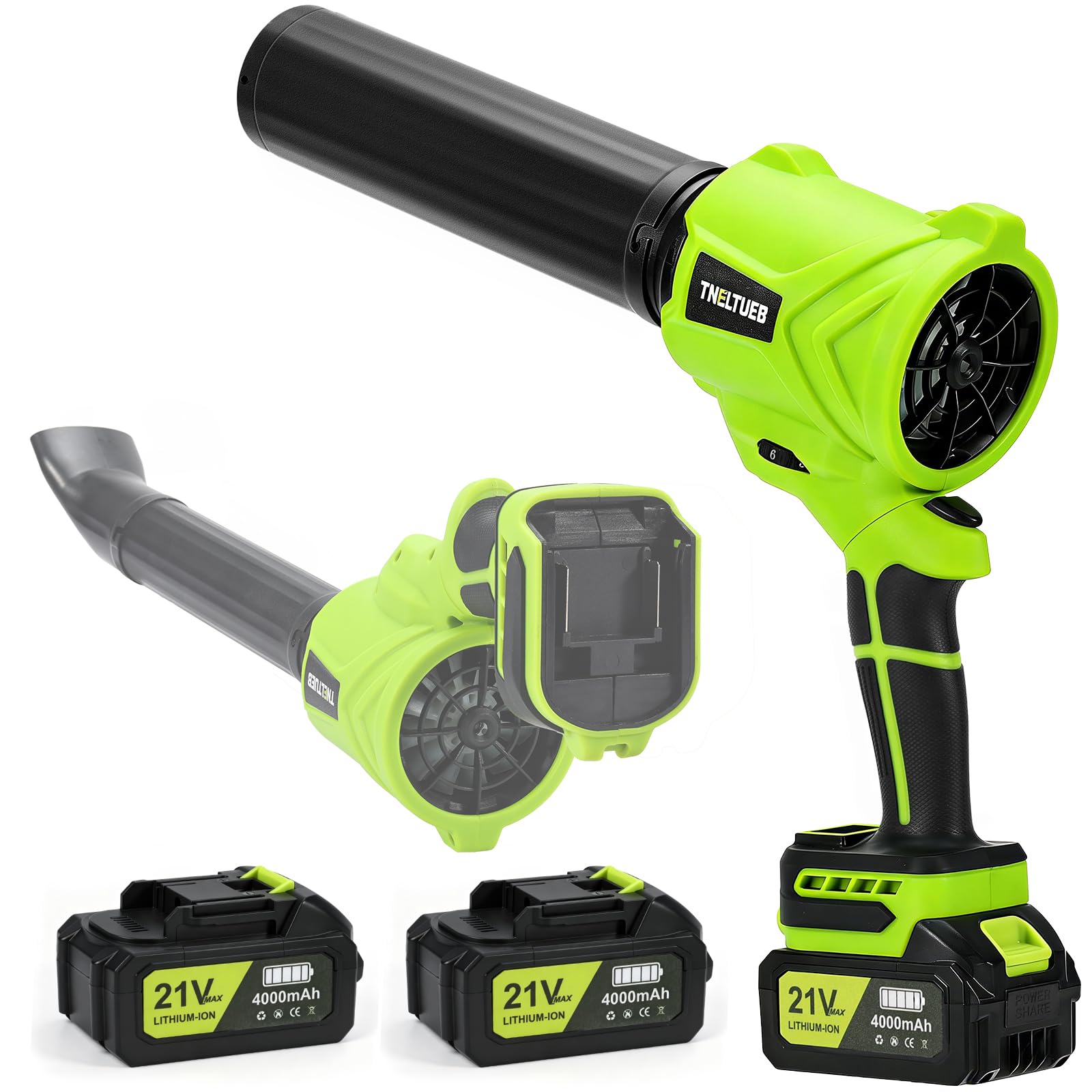
The TNELTUEB delivers a category‑leading 765 CFM of airflow while still fitting the mini blower form factor — a combination most compact units simply cannot match. The 180° rotating handle gives you immediate directional control without twisting your wrist, and the 6‑speed dial lets you dial in exactly the force you need, from 100 MPH for dusting patio furniture up to 200 MPH for wet leaf piles.
Each of the two included 4.0Ah batteries delivers roughly 30 minutes on low speed, which is enough to clear a driveway, front walk, and back patio on a single swap. The motor reaches 98,000 RPM, providing concentrated turbo blasts that easily dislodge debris from between pavers and under deck railings. The plastic housing feels solid in hand, and the compact storage footprint is a bonus for garage organization.
Downsides include a slightly louder operation than pricier brushless models — expect to use earplugs — and the included nozzles are basic. The motor is not brushless, so extreme long‑term durability lags behind some competitors. But for sheer volumetric air movement in a small package, the TNELTUEB is the clear standout for homeowners who want power without a full‑size backrack.
What works
- 765 CFM easily clears large areas quickly
- 6 variable speeds let you match the task
- 180° rotating handle reduces wrist fatigue
What doesn’t
- Noisy; earplugs are recommended
- Brushed motor has shorter lifespan than brushless
- Basic nozzle design limits precision work
2. OGERY Brushless Cordless Leaf Blower
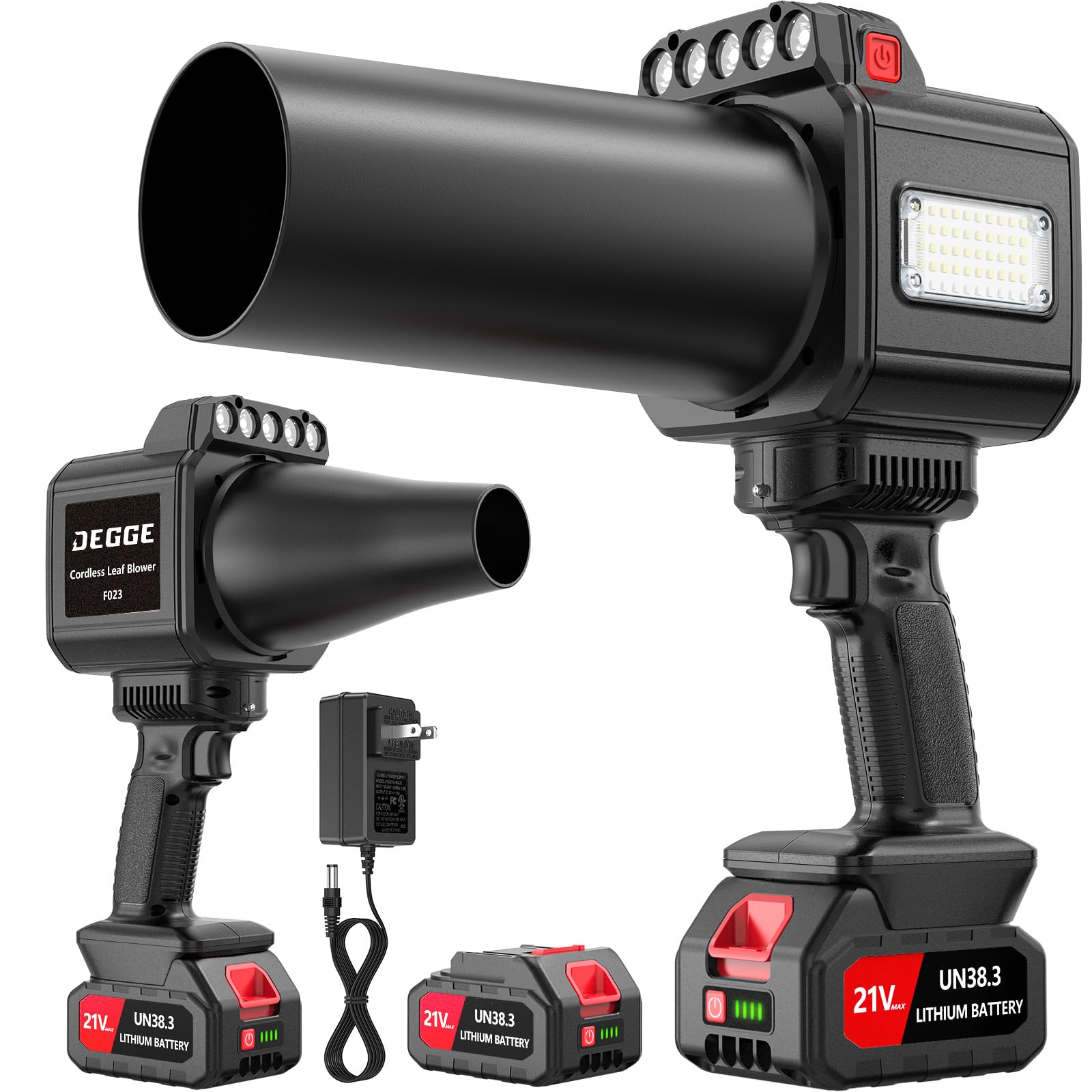
The OGERY is the most technologically advanced unit in this guide, thanks to its 480‑watt brushless motor that produces a 900‑gram blowing force strong enough to push wet leaves and heavy lawn clippings. The brushless architecture delivers roughly five times the motor lifespan of comparable brushed designs, making this a strong candidate for users who want a single blower to last multiple yard seasons.
It comes with two 3000mAh batteries that yield about 17 minutes on low speed or 7 minutes on full turbo — short bursts only, but the included dual‑nozzle set (extended for volume, narrow for detailing) makes every minute count. A truly unique feature is the integrated lighting: a front LED spotlight for dusk cleanup and a side floodlight for illuminating a dark garage or campsite.
On the other hand, the runtime on high speed is shorter than larger battery competitors, and the blower is noticeably loud — owner feedback consistently points to the included earplugs as essential. The compact 2‑pound body is well‑balanced for one‑handed use, but the aggressive turbo setting can cause arm fatigue during extended sessions. For targeted heavy‑duty cleanup where brushless longevity matters most, the OGERY is a specialist that punches above its size.
What works
- Brushless motor offers superior durability and efficiency
- 900G blowing force moves wet, heavy debris
- Integrated LED lights extend usable hours
What doesn’t
- Short runtime on high turbo setting
- Very loud even for a leaf blower
- Single gear case limits whole‑yard coverage
3. SUNCHERS Cordless Leaf Blower (650CFM)

The SUNCHERS 650CFM model targets users who want near‑full‑size blower airflow without the bulk. Its 18,000 RPM motor pushes 650 CFM at 280 MPH, figures that usually belong to larger handhelds. The two‑speed toggle lets you flip between a gentle low for car interiors and a high that aggressively sweeps dry leaves and light gravel off asphalt.
With two 3.0Ah batteries included, you get over 60 minutes of combined runtime on low speed and at least 30 minutes on high. The dual‑tube design uses a quick‑release latch that feels more secure than push‑fit collars, and the rubber‑coated handle stays grippy even in sweaty summer conditions. Weighing 5.5 pounds, it’s slightly heavier than the lightest mini blowers but still manageable for one‑handed use.
Owners report that the advertised 280 MPH feels closer to 100–120 MPH in practical use — adequate for dry debris but underpowered for soaking‑wet pine needles or compacted leaves. The construction uses iron and plastic, which adds to the weight but also gives the body a sturdier feel than all‑plastic units. If you prioritize CFM over MPH and work mostly with dry debris, the SUNCHERS is a strong mid‑range option.
What works
- 650 CFM rivals much larger blowers
- Long combined runtime from two 3.0Ah batteries
- Rubber‑coated handle stays comfortable
What doesn’t
- Advertised MPH seems overstated in real use
- Heavier than most mini competitors
- Not effective on wet, heavy debris
4. EWORK Small Leaf Blower Cordless 20V
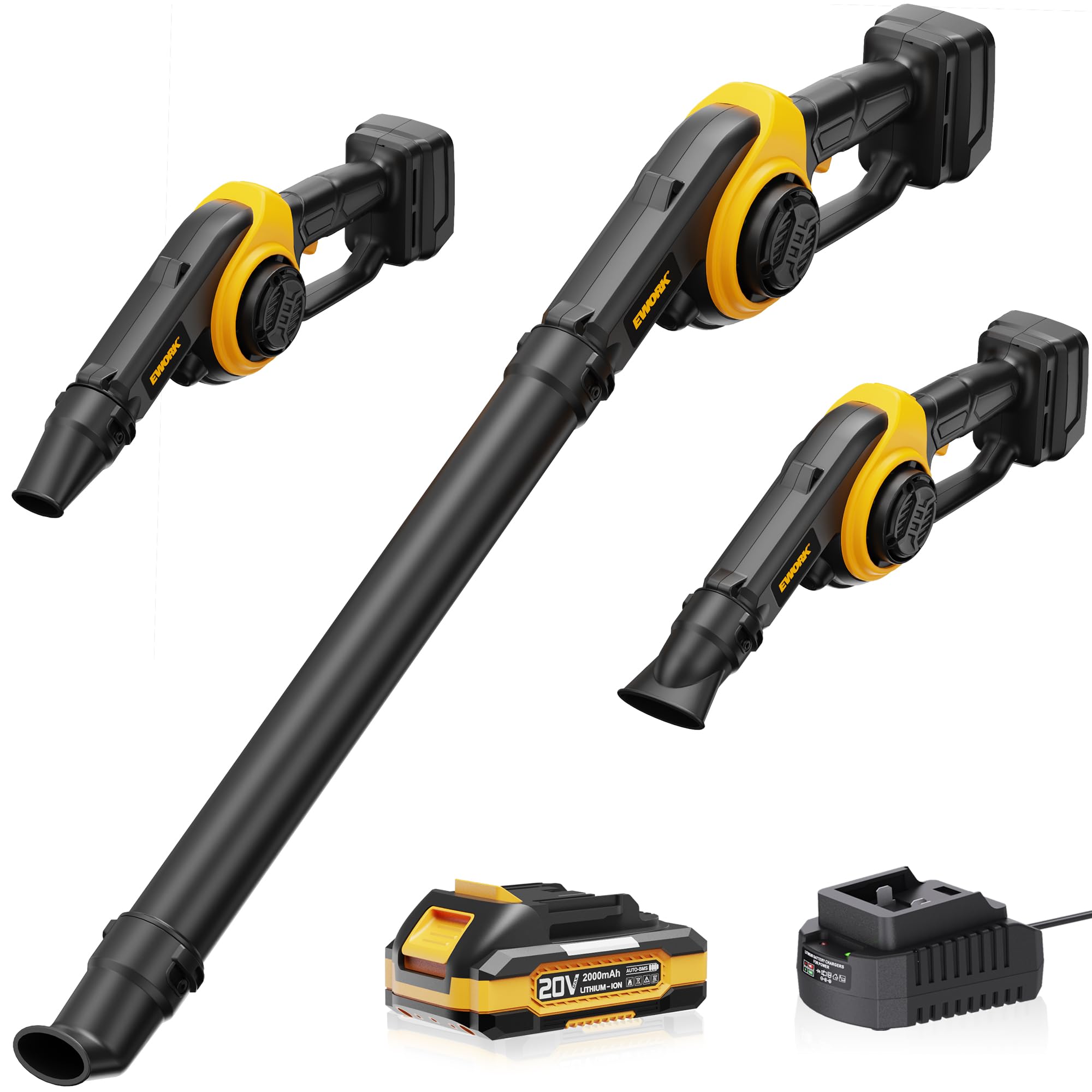
At just 1.8 pounds without the battery, the EWORK is virtually featherweight — you can hold it steady at any angle for extended detailing without your arm tiring. The patented dual‑side air inlet design achieves 130 CFM and 200 MPH, concentrating power into a narrow blast that easily clears sawdust from a workbench, dirt from window sills, and dry leaves from a small stone path.
It includes three short blow tubes and one extension tube, giving you six possible configurations for tight spaces like car trunks, between deck boards, and inside workshop machinery. The 2.0Ah battery delivers approximately 30 minutes on low speed and 10 minutes on high. The UL‑certified charger ensures safe, consistent charging, and the overload protection system automatically cuts power under abnormal voltage conditions.
The trade‑off is limited CFM — 130 CFM is fine for light debris but won’t move moderate leaf piles or wet grass clippings. Battery life on high speed is short enough that you’ll likely need to swap or recharge for larger jobs. The plastic construction feels functional rather than premium. If your use case revolves around precision dusting and small patio sweeps, the EWORK’s weight advantage is unbeatable.
What works
- Extremely light — 1.8 lbs for minimal fatigue
- Multiple nozzle configurations for tight spaces
- 200 MPH concentrated jet cleans crevices well
What doesn’t
- 130 CFM limits it to light debris only
- High‑speed runtime under 15 minutes
- Plastic shell feels less durable
5. SEYVUM Leaf Blower, 20V Cordless
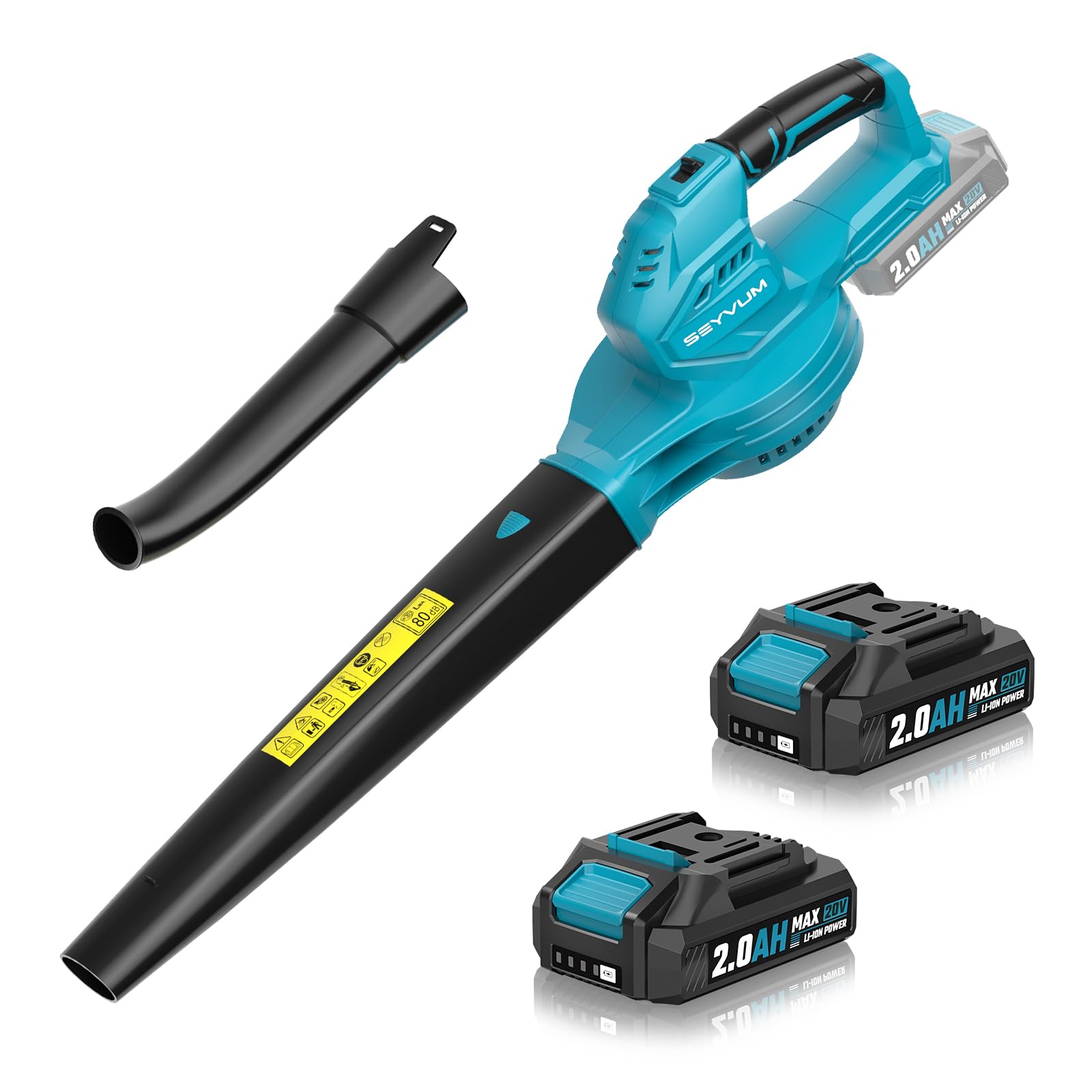
The SEYVUM offers a balanced package for budget‑conscious homeowners who need a reliable second blower for quick post‑mow cleanup. Its 350 CFM and 150 MPH figures place it solidly in the middle of the mini category — not the most powerful, but sufficient for dry leaves on a patio, walkway, or driveway. The detachable two‑section tube design allows shorter users to use just the nozzle, while taller users can attach both sections for better reach.
Two 2.0Ah batteries provide about 25 minutes of runtime on high speed collectively, which covers a typical suburban front‑and‑back session. At 3.4 pounds with battery, the SEYVUM is light enough for one‑handed operation but still feels substantial in the hand. The included 1.3A fast charger reduces downtime compared to slower 0.5A chargers common in this price tier.
Power limitations become noticeable on damp leaves or thick pine needles — the 150 MPH jet is not strong enough to dislodge them from grass. The overload protection is a welcome safety feature, but the brushed motor will wear faster under frequent high‑speed use. For light daily maintenance on small properties, the SEYVUM is a competent and affordable companion.
What works
- Detachable tubes accommodate different user heights
- 350 CFM handles routine dry leaf cleanup
- Fast 1.3A charger reduces waiting time
What doesn’t
- Struggles with wet leaves and heavy debris
- Brushed motor wears quicker than brushless
- Battery indicator light would be useful
6. SUNCHERS Cordless Leaf Blower (305CFM)
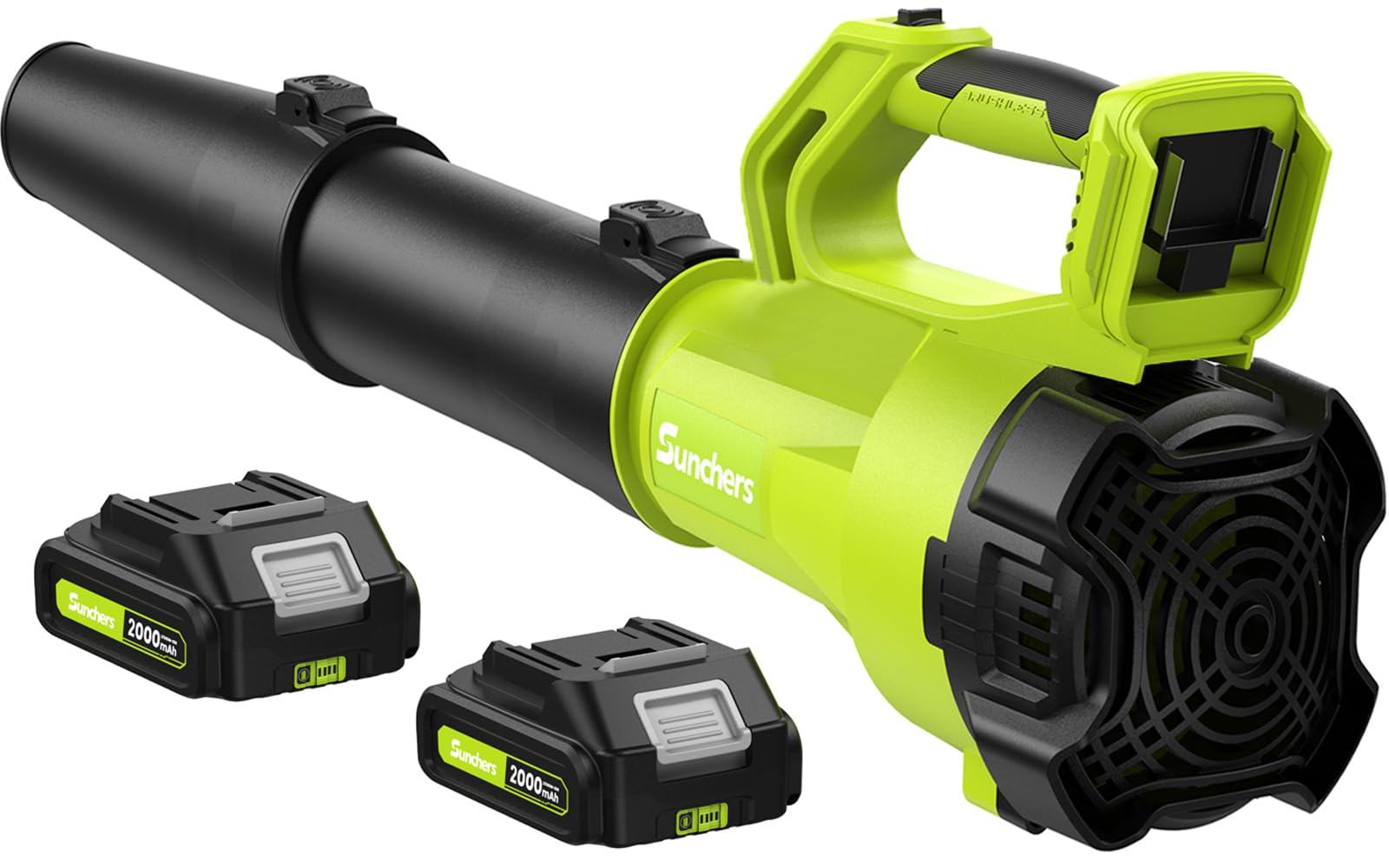
SUNCHERS’s 305 CFM model differentiates itself with exceptional battery endurance: the two 2.0Ah batteries deliver a combined runtime of roughly 80 minutes on low speed, giving you enough power to thoroughly clean a large yard, multiple driveways, or a garage bay without rushing. The two‑speed switch lets you switch between a gentle low and a more aggressive high that produces 115 MPH.
The dual‑tube design with a quick‑release latch provides flexibility for different debris types — use the wider tube for leaves and the narrower one for dust and fine particles. At 4.6 pounds, it’s heavier than the ultra‑lights but still falls within comfortable one‑hand territory. The power indicator on each battery helps you avoid surprise shutdowns mid‑job. Spare parts are available on Amazon, which is a practical advantage for long‑term ownership.
Output is modest — 305 CFM and 115 MPH won’t challenge a full‑size gas blower or move soaked leaves. The low speed is ideal for gentle dusting around delicate plants, but the high speed may not satisfy users accustomed to more powerful units. The iron and plastic construction feels durable but slightly unbalanced after extended overhead use. If runtime per dollar is your priority, the SUNCHERS 305 CFM is a standout.
What works
- 80‑minute combined runtime for large yards
- Power indicator prevents unexpected shutdowns
- Spare parts available for long‑term maintenance
What doesn’t
- Modest 115 MPH limits heavy debris handling
- Heavier than other mini options
- Low speed only suitable for light dusting
7. RTWDKFQ Handheld Electric Cordless Leaf Blower
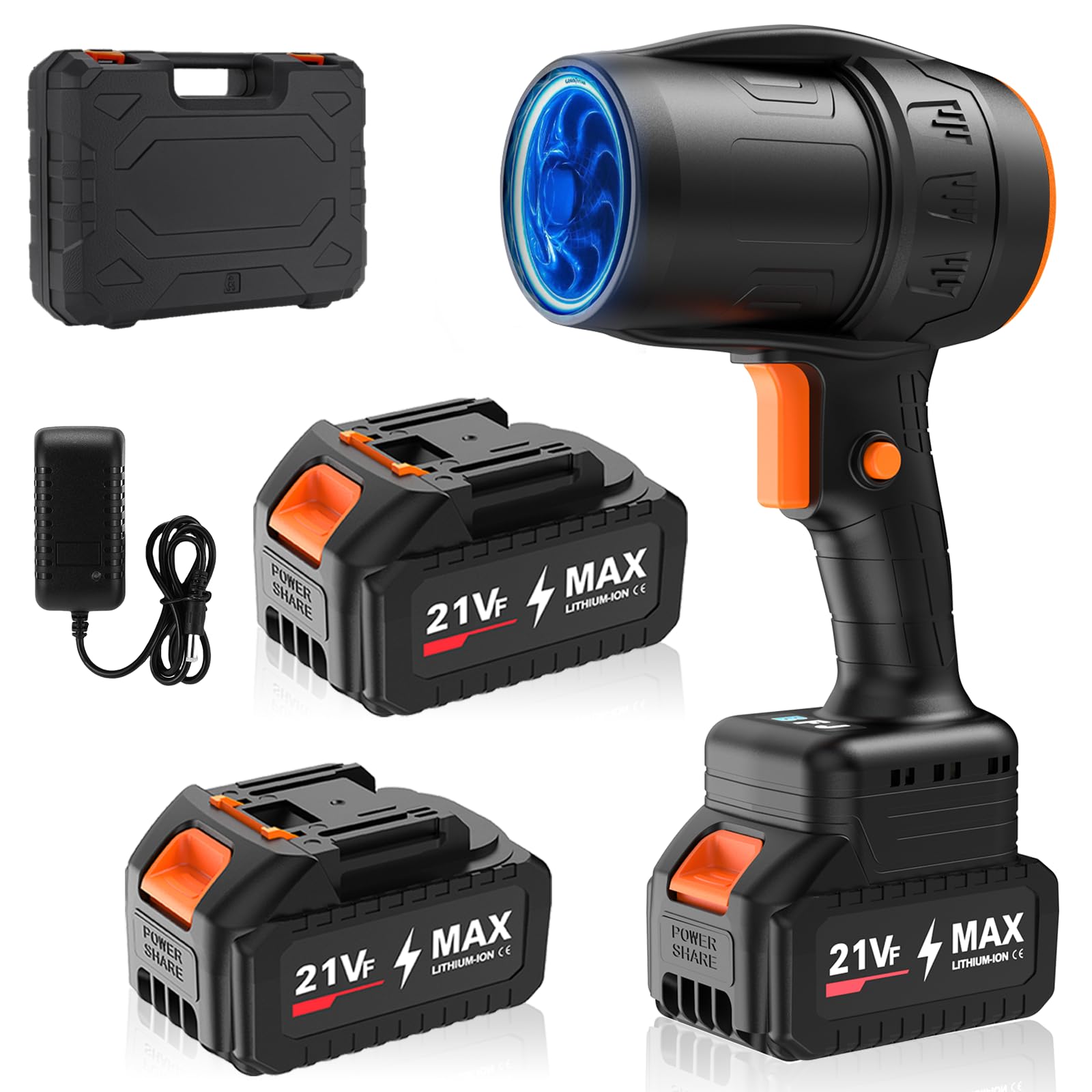
The RTWDKFQ positions itself as a turbo jet blower, and the 500,000 RPM motor claim signals its focus on high‑speed air for precision tasks rather than broad leaf sweeping. It includes two 4.0Ah batteries — the largest capacity in this guide — which provide extended runtime for blowing dust out of car interiors, drying water from vehicles after a wash, and cleaning workshop crevices.
At 3.9 pounds with battery, it’s light enough for women or seniors to control without strain, and the compact 8‑inch length fits easily into a tool bag or car trunk. The included fast charger replenishes spent batteries reasonably quickly, and the simple one‑button operation makes it straightforward to hand to anyone in the household. Users consistently praise the power for patio cleaning and car detailing.
This blower is not designed for lawn leaf piles — the narrow nozzle and high‑speed orientation scatter rather than sweep bulk debris. The motor is loud and lacks variable speed control; you get one aggressive speed. The build quality is typical for the entry‑level price point, with plastic components that feel less robust than mid‑range options. For targeted cleaning rather than yard maintenance, the RTWDKFQ delivers excellent value with generous battery capacity.
What works
- Two large 4.0Ah batteries for extended runtime
- Compact size fits in a tool bag or trunk
- Strong jet ideal for car detailing and dusting
What doesn’t
- Narrow nozzle not effective on leaf piles
- Single speed — no variable control
- Plastic build feels less durable
Hardware & Specs Guide
CFM — The Real Measure of Leaf Moving Power
Cubic Feet per Minute (CFM) tells you how much air the blower can push per minute. For mini blowers, look for at least 130 CFM to handle dry leaves on hard surfaces. Units above 600 CFM, like the TNELTUEB, start approaching the clearance capability of full‑size handhelds despite their compact footprint. CFM is more important than MPH for sweeping tasks — high CFM lets you cover a driveway in fewer passes because the column of air is wider.
Motor Technology — Brushless vs. Brushed
A brushless motor uses electronic commutation to reduce friction, which means less heat buildup and dramatically longer service life. Brushed motors are cheaper to manufacture but produce carbon dust from brush wear, and they lose efficiency as the brushes degrade. In the mini blower category, brushless models like the OGERY 480W unit offer about five times the motor lifespan of a brushed counterpart. If you plan on regular weekly use across multiple seasons, the higher initial investment in brushless pays off in avoided replacements.
Battery Voltage and Amp‑Hour Capacity
Most mini blowers operate on 20V–21V battery platforms. The voltage determines the potential power ceiling, but the amp‑hour (Ah) rating dictates usable runtime. A 2.0Ah battery on high speed typically delivers 10–15 minutes of continuous use, while a 4.0Ah battery doubles that. Kits that include two batteries, such as the RTWDKFQ with dual 4.0Ah packs, effectively remove runtime anxiety for most residential tasks. Always check whether the included charger is a fast charger — 1.3A or higher — to minimize downtime between sessions.
Weight and Ergonomics for Extended Use
Mini blowers range from 1.8 to 5.5 pounds. Ultra‑light models around 2 pounds reduce arm fatigue during detailing sessions but often compromise on motor power and battery duration. Heavier units in the 4–5 pound range typically house larger motors and higher‑capacity batteries but may require periodic breaks. Look for a well‑balanced design where the weight sits directly above the grip — the SUNCHERS 650CFM and the TNELTUEB both use balanced body geometries that minimize the lever effect on your wrist. A rubber‑coated or textured handle is essential for maintaining a secure grip in humid conditions.
FAQ
What CFM do I actually need for a small patio and driveway?
Is a brushless motor worth the extra cost in a mini blower?
Can a mini cordless blower replace a gas blower for leaf cleanup?
Why does my mini blower stop blowing after a few minutes on high speed?
Final Thoughts: The Verdict
For most gardeners and homeowners, the best mini cordless leaf blower winner is the TNELTUEB 21V because it delivers full‑sized 765 CFM airflow in a compact frame with six speed settings and a rotating handle — the ideal balance of power, control, and portability. If you need brushless durability and extra power for wet debris, grab the OGERY Brushless. And for the lightest possible carry that still clears a small patio, nothing beats the EWORK 1.8‑pound model.