
Compacted clay, acidic pH, and poor drainage are the silent killers of a lush lawn. A quality conditioner delivers calcium, humates, or microbial life to physically break up tight soil and chemically balance the root zone, turning thin, stressed turf into deep-rooted grass that resists drought and weeds without extra fertilizer.
I’m Rikta — the co-founder and writer behind Lawn Gear Lab. I’ve spent hundreds of hours cross-referencing soil science data, reading owner feedback on pH swings, clay break-up, and liquid aeration results to build this guide around measurable performance metrics.
Whether your lawn is battling heavy clay, acidic soil, or compaction, choosing the right formula means fewer inputs and better results. This guide breaks down the top picks for every soil type so you can confidently select the best soil conditioner for lawns.
How To Choose The Best Soil Conditioner For Lawns
A soil conditioner is not a fertilizer — it fixes the physical and chemical structure of the ground so your grass can actually use the nutrients you apply. Picking the wrong type wastes money and delays results.
pH Adjustment vs. Physical Loosening
If your soil pH is below 6.2, grass roots struggle to absorb nitrogen, phosphorus, and potassium. A calcium-based conditioner raises pH efficiently. For heavy clay that drains poorly, gypsum (calcium sulfate) or liquid surfactants physically separate tight clay particles without changing pH.
Granular vs. Liquid Delivery
Granular conditioners like pelletized gypsum or biochar provide slow, structural improvement that lasts for years. Liquids penetrate compacted soil quickly and are ideal for spot-treating dry patches or hydrophobic zones, but they require reapplication more frequently.
Microbial Inoculants vs. Mineral Amendments
Products containing lactic acid bacteria or humates feed existing soil biology, improving nutrient cycling and root depth. Mineral amendments like calcium carbonate or gypsum change the physical matrix of the soil itself. Decide based on a soil test: low pH needs mineral adjustment; poor drainage with neutral pH calls for gypsum or aeration.
Quick Comparison
On smaller screens, swipe sideways to see the full table.
| Model | Category | Best For | Key Spec | Amazon |
|---|---|---|---|---|
| Jonathan Green Mag-I-Cal | Granular | Raising acidic pH | CaCO3 soluble powder, 5k sq ft | Amazon |
| FoliarTech Humic Acid | Liquid | Nutrient lockout relief | OMRI liquid, 33.8 oz concentrate | Amazon |
| TeraGanix EM-1 | Liquid | Soil microbiology boost | 1M CFU LAB per ml, 16 oz | Amazon |
| GS Plant Foods Soft Soil | Liquid | Compacted clay drainage | 1-gal concentrate, 16k sq ft | Amazon |
| Espoma Garden Gypsum | Granular | Heavy clay & salt damage | 36 lb, pelletized mined gypsum | Amazon |
| The Andersons BioChar DG | Granular | Long-term soil structure | 10 lb DG tech, 5k sq ft | Amazon |
| The Andersons Dirt Booster Plus | Powder | Compost & microbial kickstart | 20 lb, 320 oz, multi-microbe | Amazon |
In‑Depth Reviews
1. Jonathan Green Mag-I-Cal Soil Food

The top choice for homeowners whose soil test shows a pH below 6.2. Mag-I-Cal uses a completely soluble calcium carbonate formula that one reviewer confirmed raised pH from 5.0 to 6.0 in just three days with a double dose. This speed matters because limestone alternatives can take months to break down in cool soil.
Each 18-pound bag covers 5,000 square feet and can be applied any season. It also contains humates that feed soil microbes, so you get both pH correction and biological stimulation in one pass. Spring and fall applications create a buffer against recurring acidity.
Users report that weeds naturally recede as the grass thickens, eliminating the need for broadleaf herbicides. The only real requirement is an accurate soil test beforehand — applying blindly wastes the product’s fast-acting potential.
What works
- Raises pH measurably within days, not months
- Equivlent to up to 5 bags of limestone per bag
- Contains humates for microbial root development
What doesn’t
- Requires a soil test for proper dosage
- Only useful if soil is actually acidic
2. FoliarTech Humic Acid Fertilizer

A versatile liquid conditionaer that targets nutrient lockout by chelating bound-up minerals in the soil. Reviewers noted that blossom-end rot on vegetables disappeared after application, indicating that calcium and other micronutrients were freed for uptake. The 34-ounce concentrate dilutes to multiple gallons of working solution.
This OMRI-listed formula is safe around children and pets, making it a go-to for organic-minded homeowners. One user saw their tall fescue lawn visibly greener after a single spray application, while others report sustained color through winter freezes. The liquid format works well with hose-end sprayers for broad coverage.
It does not physically loosen clay or adjust pH — its role is purely chemical and biological. If your soil is already neutral but plants look pale despite feeding, this product addresses the underlying uptake problem. Expect to reapply monthly during the growing season.
What works
- Frees locked-up nutrients for immediate uptake
- OMRI certified — safe for organic production
- Works with any sprayer or hydroponic system
What doesn’t
- Requires monthly reapplication for best results
- Does not change soil structure or pH
3. TeraGanix EM-1 Microbial Inoculant
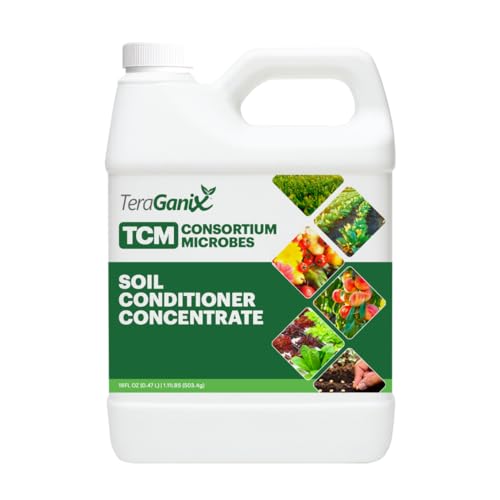
EM-1 is not a mineral conditioner — it is a concentrated probiotic containing one million colony-forming units of lactic acid bacteria per milliliter, plus photosynthetic bacteria and yeasts. When diluted with molasses and water, it colonizes the root zone and accelerates organic matter breakdown. One reviewer reported tripling kale and spinach yield after monthly applications.
The 16-ounce bottle makes up to 16 gallons of activated solution when fermented with a sugar source. Users consistently report that pet and chicken coop odors disappear within two weeks as the microbes outcompete anaerobic bacteria. The product also improves water retention in sandy soils by building humus content.
Store it sealed away from sunlight and freezing temperatures. The pH must remain below 3.6 for the bacteria to stay viable. This is a long-term biology play — results build over several seasons as the microbial population establishes.
What works
- Dramatically increases vegetable and turf yield
- Eliminates foul odors from soil and manure
- Concentrated — one bottle covers large areas
What doesn’t
- Requires activation with molasses before use
- Must be kept cool and sealed for viability
4. GS Plant Foods Soft Soil Liquid Aerator
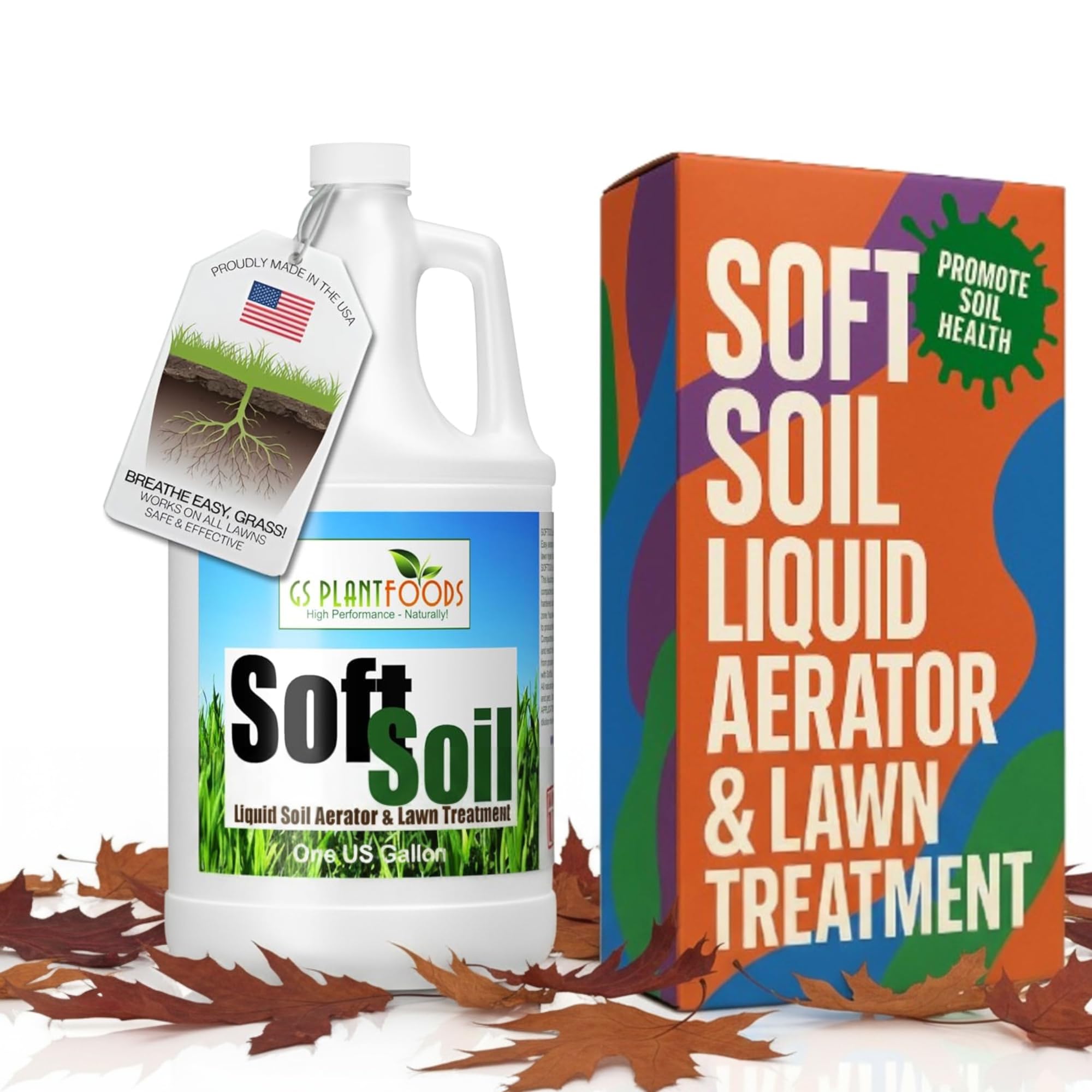
Soft Soil tackles compacted clay without renting a core aerator. The liquid surfactant formula breaks surface tension so water and oxygen can penetrate tight soil. One user reported that a single application softened red clay enough to allow spiked aeration boots to sink in, followed by successful Bermuda seeding on a previously hydrophobic spot.
The one-gallon jug covers up to 16,000 square feet when applied through a hose-end sprayer. It works on all grass types and is safe for existing lawns. The organic formula leaves no chemical residue. Some users note the product resembles liquid manure in smell and appearance, but the odor fades quickly after watering.
Multiple applications per season are necessary for severely compacted soil. A single pass will not replace years of compaction, but it softens the soil profile enough to make subsequent aeration or topdressing far more effective.
What works
- Large coverage per gallon — up to 16k sq ft
- Softens hard, water-repellent clay quickly
- Safe for all grass types and organic gardens
What doesn’t
- Requires repeat applications for heavy compaction
- Strong odor during application
5. Espoma Organic Garden Gypsum
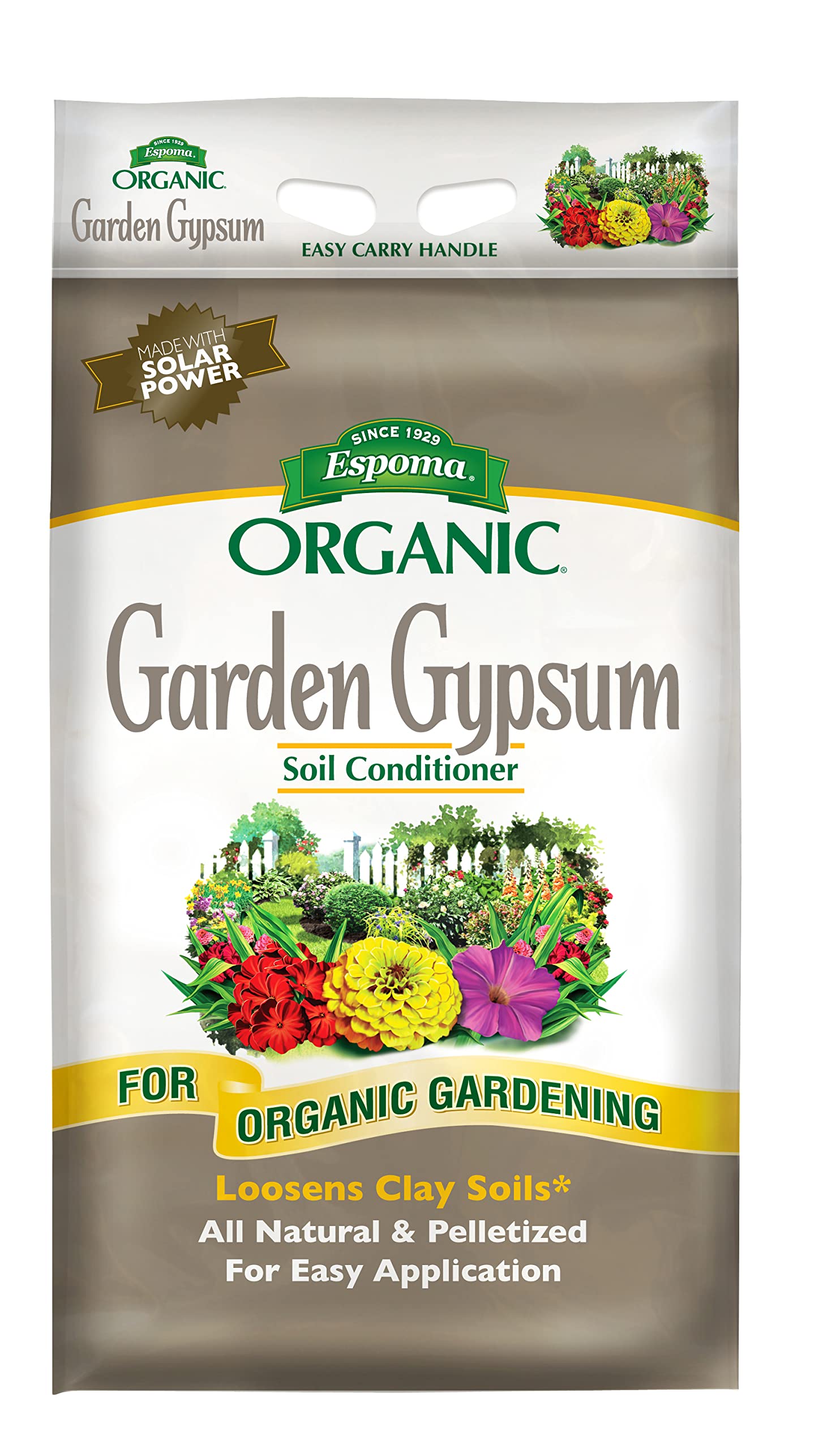
This is the go-to product for homeowners fighting heavy clay that feels like concrete. Made from 100% all-natural mined gypsum, it delivers calcium and sulfur without altering soil pH. One reviewer with red clay soil reported that azaleas and crepe myrtles stopped needing daily watering after gypsum was tilled in. The 36-pound bag offers good value for medium to large lawns.
Gypsum also neutralizes salt damage from winter ice melt and pet urine spots. Apply it any time during the growing season using a broadcast spreader. The pelletized format means low dust and even distribution. Espoma has been producing organic amendments since 1929.
Results are not instant — soil structure improvement becomes visible over several seasons as clay particles flocculate. For gardens and flower beds, mix it into the top few inches at planting time. This is a structural fix, not a nutrient booster.
What works
- Loosens heavy clay without changing soil pH
- Cures turf burn from road salt and pet spots
- Approved for organic gardening, pelletized for spreaders
What doesn’t
- Takes a full season to show structural improvement
- Does not provide NPK or microbial inputs
6. The Andersons BioChar DG Organic Amendment
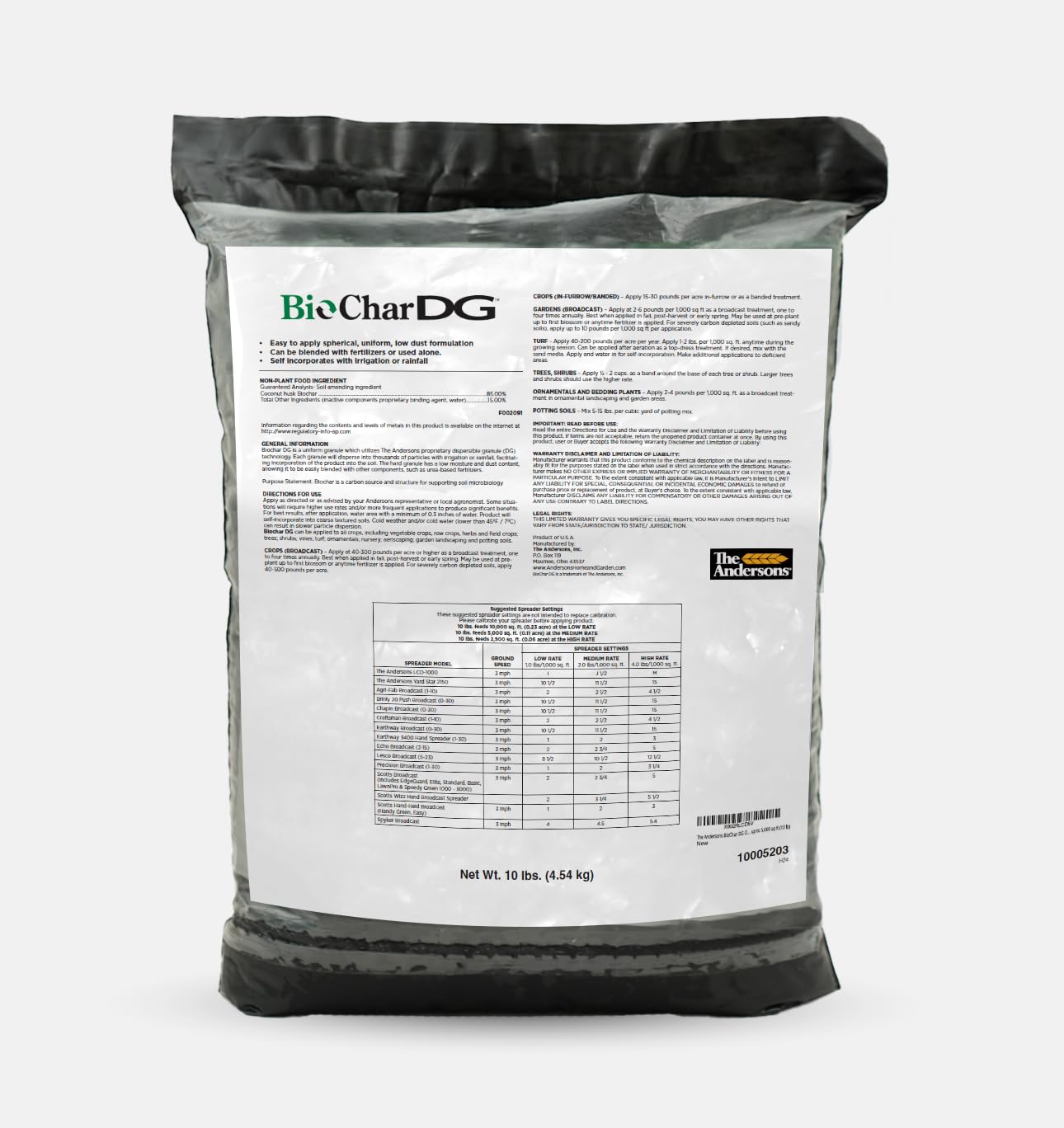
Biochar acts like a permanent soil sponge — it holds water and nutrients in the root zone and provides habitat for beneficial bacteria. The Andersons uses patented Dispersible Granule technology so the particles break down quickly after watering instead of blowing away or sitting on the surface. One user after three years of heavy applications on North Texas clay reported the soil had turned dark brown and grass grew deep, dense green.
A single 10-pound bag covers 5,000 square feet. The carbon stays active in the soil for years, meaning one application builds over time. This product is ideal for seeding new lawns, enriching flower beds, or mixing into potting soil. It works alongside any fertilizer program without risk of burning.
A critical note: biochar must be “charged” with nutrients before use, or it can temporarily immobilize nitrogen. Several reviewers noticed yellowing until they added a liquid fertilizer alongside it. Pair with a starter fertilizer or compost tea.
What works
- Permanently improves soil structure and water retention
- Low-dust DG technology spreads cleanly
- Stays active in soil for multiple seasons
What doesn’t
- Must be charged with nitrogen to avoid stunting growth
- Higher cost per square foot than gypsum or lime
7. The Andersons Dirt Booster Plus
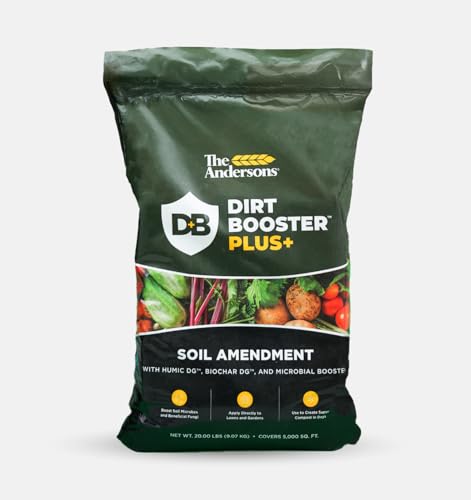
Dirt Booster Plus blends microbials, biochar, humic acid, corn distillates, and molasses into a single powder that kicks compost piles to finished soil in 7–12 days. It is equally effective broadcast onto lawns to increase organic matter. Users report easy, dust-free spreading with a standard broadcast spreader.
The 20-pound bag delivers a dense cocktail of biology. One user with heavy red clay noted that after two years of use, grass roots had penetrated much deeper and the lawn survived summer stress better than untreated areas. It is not a fertilizer, so it can be applied generously without risk of burn.
This is a broad-spectrum biology boost rather than a targeted fix. It works well as a complement to a separate pH adjuster or gypsum program. If your lawn suffers from low organic matter rather than extreme acidity or clay, this is the most versatile starting point.
What works
- All-in-one microbial blend plus biochar and humic acid
- Speeds compost production to under two weeks
- Safe to apply heavily without fertilizer burn
What doesn’t
- Results are gradual — requires patience over seasons
- Does not address pH or severe clay compaction directly
Hardware & Specs Guide
Calcium Carbonate Solubility
Not all lime products are created equal. Jonathan Green Mag-I-Cal uses a soluble form that dissolves on contact with water, raising pH in days. Traditional limestone requires soil microbial activity to break down and can take months. If you need fast pH correction, look for “soluble” or “immediately available” calcium carbonate on the label.
Biochar Charging Requirement
Raw biochar is like a dry sponge — it will absorb nitrogen from the soil if not pre-loaded with nutrients. The Andersons BioChar DG must be paired with a liquid fertilizer or compost tea during initial application to prevent yellowing. Charged biochar then slowly releases those nutrients back over years.
CFU Count in Microbial Inoculants
Colony-forming units (CFUs) measure the concentration of live bacteria. TeraGanix EM-1 guarantees 1 million CFU/ml of lactic acid bacteria. Higher counts generally mean faster colonization, but the bacteria must also be viable — check expiration dates and storage instructions (pH below 3.6, no freezing).
Gypsum vs. Lime pH Impact
Both products contain calcium, but they affect pH differently. Lime (calcium carbonate) raises pH. Gypsum (calcium sulfate) does not change pH at all — it adds calcium and sulfur while loosening clay. Choose gypsum if your pH is already in the healthy 6.2–7.0 range but your soil is tight and compacted.
FAQ
How long does it take for a soil conditioner to work?
Can I use a conditioner and fertilizer at the same time?
Do I need a soil test before applying a conditioner?
Will liquid aeration replace mechanical core aeration?
Final Thoughts: The Verdict
For most gardeners, the soil conditioner for lawns winner is the Jonathan Green Mag-I-Cal because it addresses the most common soil problem — acidic pH — with fast, measurable results and added humates for root health. If you need to physically loosen heavy clay, grab the Espoma Garden Gypsum. And for a long-term structural overhaul of poor soil, nothing beats the The Andersons BioChar DG for building a permanent sponge in your root zone.