
A thin layer of bagged compost is the single most effective thing you can do for a tired, nutrient-depleted lawn. Unlike synthetic fertilizers that force rapid top-growth, a quality compost feeds the soil biology—the worms, bacteria, and fungi that build a deep, resilient root system. The challenge is sorting through the dozens of bags labeled “organic,” “premium,” or “all-purpose” to find the one that actually delivers measurable results without introducing weed seed or unpleasant odor.
I’m Rikta — the co-founder and writer behind Lawn Gear Lab. I’ve spent hundreds of hours digging through peer-reviewed soil science, cross-referencing NPK and microbial content claims against independent lab data, and analyzing verified owner feedback across dozens of compost and soil amendment products to build this guide on real, measurable performance.
This guide breaks down the top seven products on the market today, comparing their texture, nutrient profile, moisture-retention capacity, and best-use scenarios so you can confidently pick the right bagged compost for lawn without wasting money on bags that are mostly wood chips and sand.
How To Choose The Best Bagged Compost For Lawn
Selecting a bagged compost for your lawn comes down to understanding what’s actually inside the bag. Many commercial “compost” products are simply partially decomposed manure mixed with peat, which offers minimal long-term benefit to soil structure. A high-quality compost has three defining traits: it’s fully cured (no ammonia smell), it contains a diverse microbial population, and it has a balanced carbon-to-nitrogen ratio near 20:1. Here’s what to look for when scanning the label.
Check for Filler Material
Peat moss, aged bark fines, and sand are common fillers that add bulk without adding significant nutrients or organic matter. A bag that lists “composted pine bark” or “peat humus” as the first ingredient is not a pure compost—it’s a soil conditioner. For lawn use, you want the first ingredient to be a composted animal manure (cow, chicken, worm castings) or a plant-based compost like mushroom compost. The higher the organic matter percentage (aim for 50–70%), the better the product will improve water infiltration and root zone aeration.
Texture and Screen Size
Lawn top-dressing requires a fine, uniform texture—ideally screened to ⅜-inch or smaller. Large chunks of wood or bark create an uneven surface and can smother grass blades if applied too thick. A compost that feels crumbly and soil-like, with no visible sticks or clods, will integrate smoothly into the turf canopy and provide even nutrient release. For lawns, avoid chunky, landscape-grade composts that are better suited for garden beds or mulch.
Nutrient Profile and pH
Most quality composts will list a guaranteed analysis like 0.5-0.5-0.5 or 1-1-1. The numbers will be low compared to synthetic fertilizer—that’s normal. The real value is in the micronutrients (calcium, magnesium, iron) and the humic acid content that chelates existing soil nutrients. A pH between 6.5 and 7.5 is ideal for lawns; highly acidic compost (below 6.0) can alter soil chemistry over multiple applications. If the bag doesn’t list a pH or any analysis, be cautious—it’s likely unregulated fill material.
Quick Comparison
On smaller screens, swipe sideways to see the full table.
| Model | Category | Best For | Key Spec | Amazon |
|---|---|---|---|---|
| R&M Organics Premium Compost | Manure Compost | Top-dressing lawns | Fine texture, 10 lb bag | Amazon |
| Michigan Peat Baccto Wholly Cow | Peat/Manure Mix | Raised beds & large lawns | 40 quart bag | Amazon |
| Espoma Organic Land and Sea | Lobster/Crab Compost | High-value flower & veg beds | 1 cubic foot bag | Amazon |
| The Andersons BioChar DG | Biochar | Clay soil remediation | Covers 5,000 sq ft | Amazon |
| Back to the Roots Worm Castings | Worm Castings | Seedlings & gentle feeding | 5 lb bag | Amazon |
| Brut Cow Compost | Cow Manure Compost | OMRI certified budget pick | 10 quart bag | Amazon |
| Earth Science Fast Acting Sulfur | Sulfur Amendment | Lowering high soil pH | 5 lb bag | Amazon |
In‑Depth Reviews
1. R&M Organics Premium Organic Compost
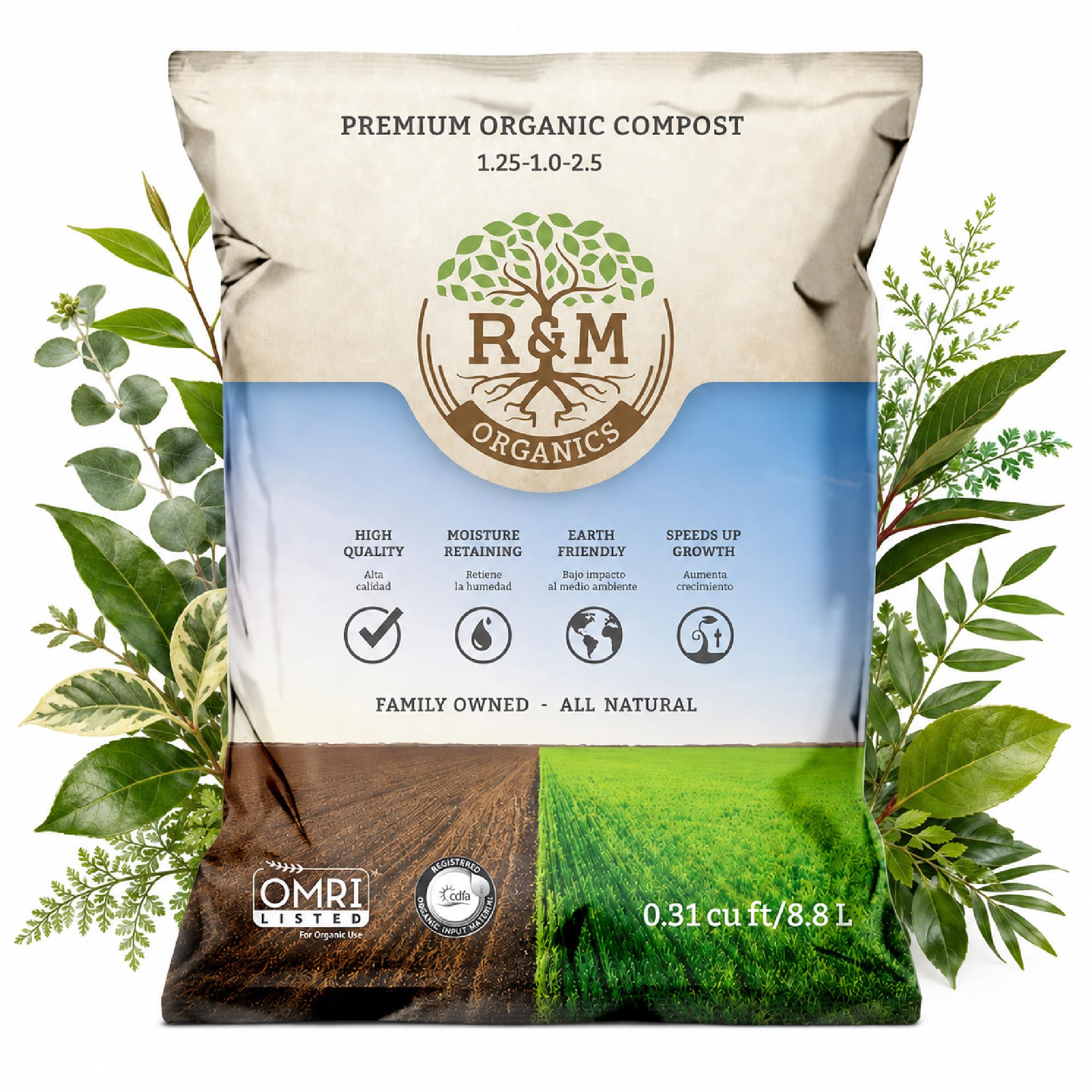
R&M Organics delivers a 10-pound bag of dairy cow manure compost that has been fully aerated and cured to eliminate the sharp ammonia notes typical of raw manure. The final texture is remarkably fine—almost like a premium topsoil—which makes it ideal for spreading a quarter-inch layer directly over existing turf without clumping or smothering the grass. The bag lists a liquid volume of 0.31 cubic feet, which is roughly enough to top-dress 50 to 60 square feet of lawn at the recommended application rate.
Owner reports consistently highlight how quickly this compost reverses chlorosis and leaf die-off in stressed plants, with one master gardener specifically recommending it for azaleas recovering from chemical damage. The moisture-retention claim holds up in practice: the compost acts like a slow-release sponge, reducing the frequency of watering during dry spells. Because it’s fully composted, there is no risk of root burn, even when applied directly around tender seedlings or newly seeded areas.
For the mid-range price per pound, the low-odor formulation makes it a rare pick for homeowners who want to compost inside a garage or near living spaces. The only trade-off is the bag size—10 pounds disappears fast if you’re covering a large lawn. For smaller patches or targeted spot treatments, however, it’s the most balanced and immediately effective option on this list.
What works
- Ultra-fine, soil-like texture spreads evenly without clumps
- No manure odor, suitable for indoor or garage storage
- Quickly reverses yellowing and stress in established plants
What doesn’t
- 10-pound bag is small for large-scale lawn applications
- Moisture retention can be high; avoid overwatering after application
2. Michigan Peat Baccto Wholly Cow
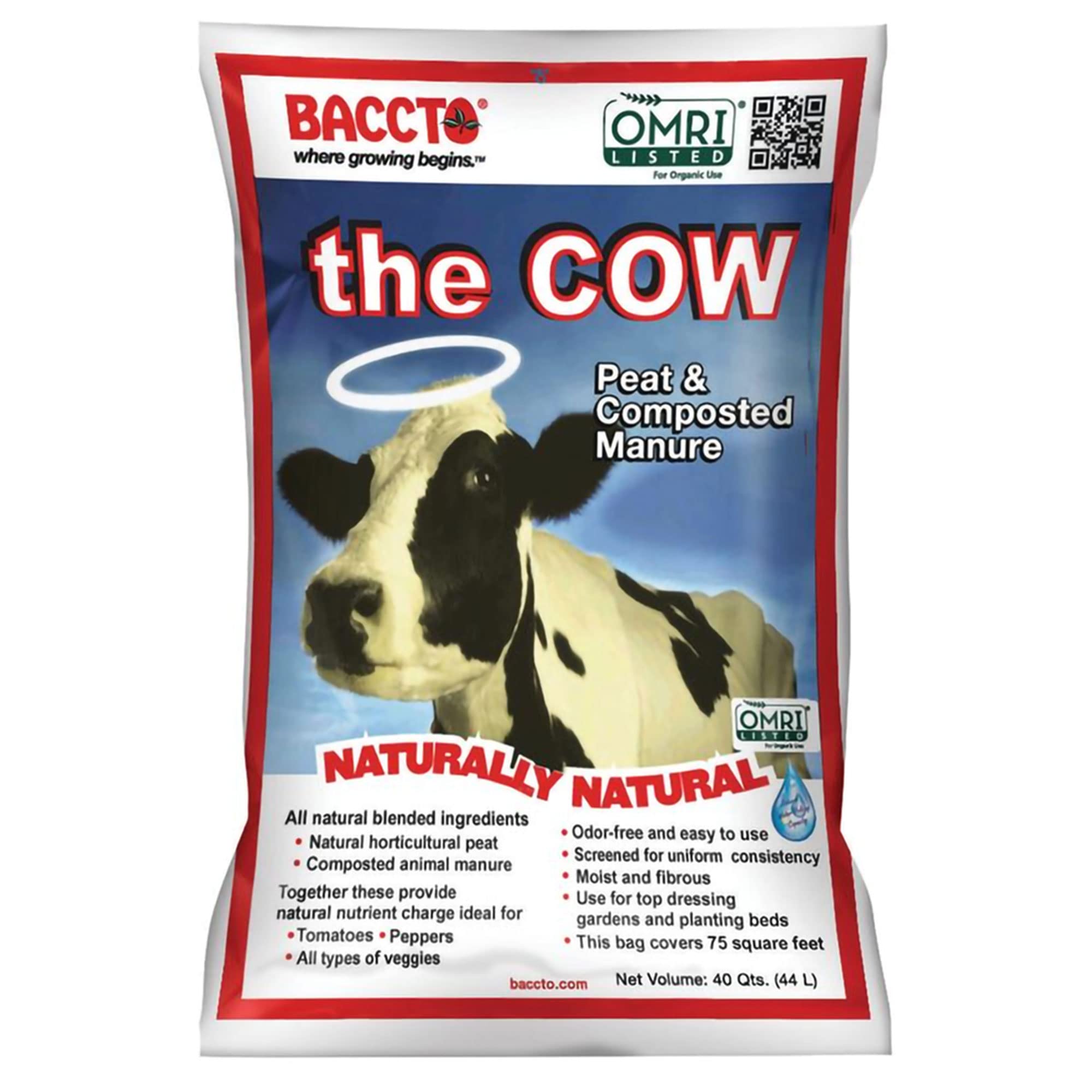
Michigan Peat blends high-moor peat with composted animal manure to create a 34-pound, 40-quart bag that offers excellent value for lawn owners covering larger areas. The mix has been screened to a uniform consistency—owners note it feels “fluffy” and “lightweight” with very few woody fragments—which allows it to integrate into a spreader or hand-trowel without clogging. The peat component gives this product a natural moisture-holding capacity, meaning it can buffer against drought stress in sandy soils while also improving aeration in heavy clay.
This is a favorite among mushroom cultivators and serious gardeners because the manure concentration is high enough to support aggressive fungal growth, yet the formula remains odor-free. For lawn use, the recommended application is a ½-inch top-dressing raked into the canopy, followed by a deep watering. The 40-quart bag covers roughly 150 to 200 square feet at that depth, which puts it in a sweet spot between the small premium bags and the bulk cubic-yard deliveries.
The primary drawback is the peat content itself—peat is a non-renewable resource with a high carbon footprint. Additionally, if you’re looking for a straight compost without any filler, the Baccto blend does include peat as a structural ingredient. For the lawn owner who prioritizes performance and coverage over strict “pure compost” sourcing, however, this bag is a reliable workhorse that consistently delivers lush, green results.
What works
- Large 40-quart bag offers excellent per-square-foot value
- Uniform texture with minimal sticks or debris
- Strikes a good balance between aeration and water retention
What doesn’t
- Peat content is a non-renewable resource
- May be too moisture-retentive for naturally damp clay lawns
3. Espoma Organic Land and Sea Gourmet Compost

Espoma’s Land and Sea is a 1-cubic-foot bag that stands apart by combining lobster and crab meal—two marine-source ingredients rich in chitin and calcium—with a proprietary blend of endo- and ectomycorrhizae. This is not a standard manure-based compost; it’s a biologically active soil inoculant designed to colonize plant root systems and improve nutrient uptake. The granulated texture is coarser than the R&M Organics product, which makes it better suited for mixing into potting soil or tilling into garden beds than for precision top-dressing on a manicured lawn.
Hostas, vegetables, and acid-loving ornamentals respond particularly well to the chitin content, which naturally suppresses soil-borne nematodes and pathogens. The mycorrhizae component is the real differentiator: these symbiotic fungi extend the effective root zone of grass plants, allowing them to access phosphorus and micronutrients that would otherwise remain locked in the soil. For lawn owners who also maintain vegetable beds or flower borders, a single bag can serve double duty as both a root inoculant and a slow-release nutrient source.
The 24-pound bag is relatively dense, and the marine-based ingredients do carry a faint sea-like aroma when first opened, though it dissipates quickly after incorporation. The price per cubic foot is higher than standard manure composts, but the biological additives justify the premium for gardeners focused on long-term soil-building rather than quick cosmetic greening.
What works
- Endo- and ectomycorrhizae improve root efficiency
- Lobster and crab meal add chitin for natural pest suppression
- Versatile for lawns, vegetables, and ornamentals
What doesn’t
- Coarser texture is less ideal for fine lawn top-dressing
- Distinct marine odor when first opened
4. The Andersons BioChar DG Organic Soil Amendment
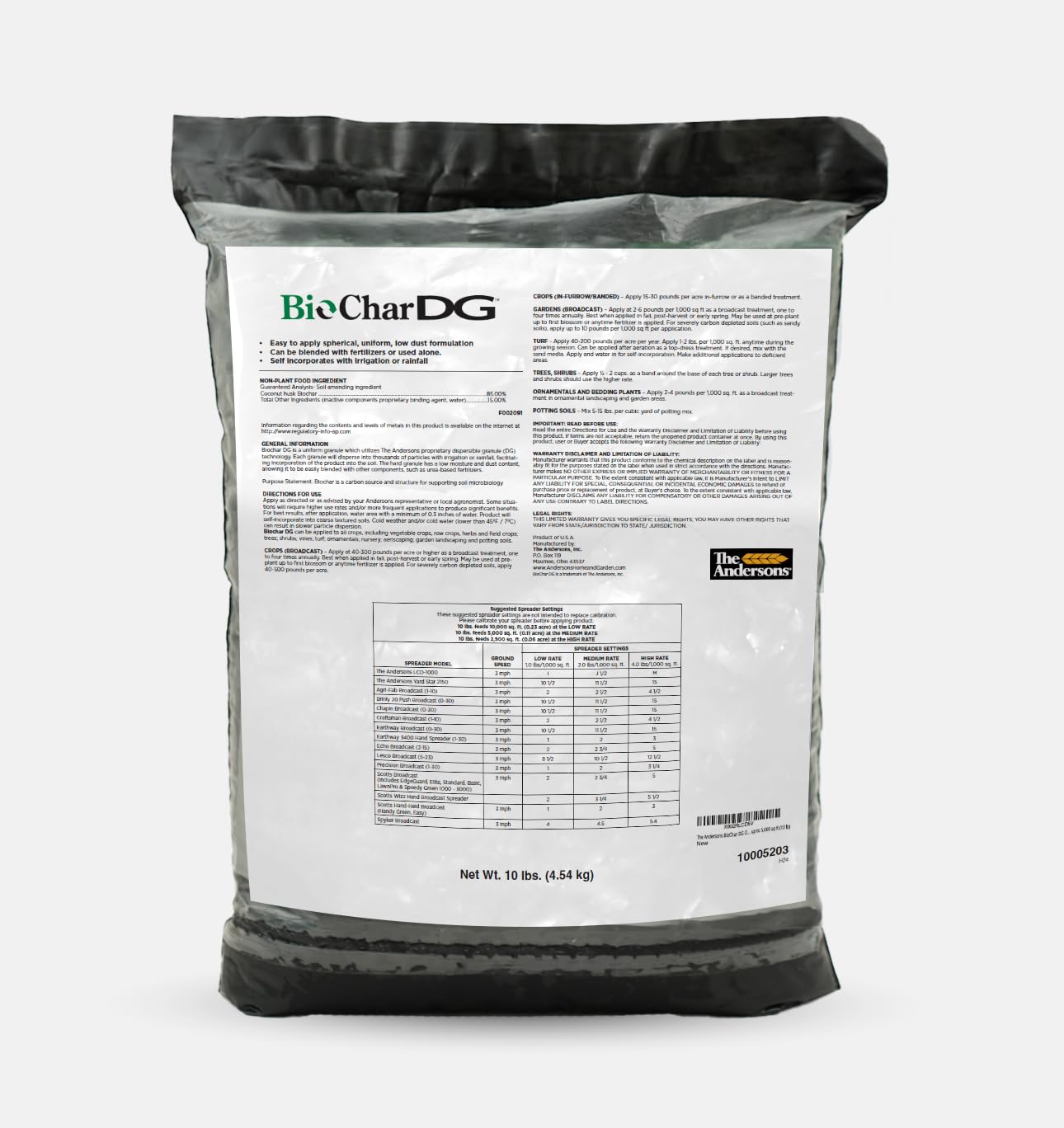
The Andersons BioChar DG is not a traditional bagged compost—it’s a 10-pound bag of biochar granules designed to be dispersed at a rate that covers up to 5,000 square feet. Biochar is produced by pyrolyzing organic matter (wood, crop residues) in a low-oxygen environment, creating a highly porous carbon structure that acts as a permanent habitat for soil microbes. The patented DG Technology means each granule breaks down rapidly when exposed to water, eliminating the black dust mess typical of raw biochar and ensuring even distribution through a standard lawn spreader.
This product shines in problematic clay soils where water infiltration is poor and roots struggle to penetrate. Verified owners report that after multiple annual applications (4–6 over three years), heavy clay transforms into workable, water-permeable soil with visible darkening of the topsoil layer. The biochar also attracts and holds on to nutrients that would otherwise leach away after rain, making it an excellent companion to any fertilizer program. One important nuance: biochar must be “charged” (pre-loaded with nutrients) before application, and while The Andersons says their product is pre-charged, some users still recommend pairing it with a liquid fish or kelp fertilizer for the first application to avoid temporary nitrogen tie-up.
It’s the most expensive product on this list per pound, but the coverage area changes the math entirely—a single bag can treat a quarter-acre lawn. For homeowners with large, compacted lawns who are willing to invest in a multi-year soil regeneration plan, this is the most scientifically sound choice available in a bagged format.
What works
- Extremely high coverage (5,000 sq ft per bag)
- Permanently improves soil structure and microbial habitat
- Low-dust, spreader-friendly DG Technology
What doesn’t
- High upfront cost per bag
- May require supplemental nitrogen charging to avoid deficiency
5. Back to the Roots Organic Worm Castings

Back to the Roots offers a 5-pound bag of 100% pure earthworm castings—no fillers, no peat, no manure blend. Worm castings are widely considered the gold standard of organic soil amendments because they contain a dense population of beneficial microbes, humic acids, and plant-available nutrients in a form that cannot burn roots, even at heavy application rates. The granules are small, dark, and uniform, making them easy to sprinkle by hand over lawn patches or mix into seed-starting mixes for a gentle nutrient boost.
Vermicompost is particularly effective for protecting seedlings from damping-off disease, as the microbial diversity in castings outcompetes soil-borne pathogens at the root-soil interface. Owners also report that monarch-friendly milkweed and other sensitive perennials show dramatically improved vigor after a single application. The 5-pound bag is compact and resealable, which suits gardeners who want a highly concentrated amendment for targeted spot treatments rather than whole-lawn coverage.
The trade-off is scale: at 5 pounds, this bag covers roughly 20–30 square feet when applied as a quarter-inch top-dressing. For a full-lawn application, you’d need multiple bags, which becomes cost-prohibitive compared to manure composts. But for precision feeding of tired spots, container plants, or new sod, the purity and biological density of this vermicompost make it a superior choice.
What works
- Completely safe—zero risk of fertilizer burn
- High microbial diversity improves soil disease suppression
- Resealable bag keeps product fresh for multiple uses
What doesn’t
- Small bag size limits application to targeted areas
- Cost per square foot is higher than manure composts
6. Brut Cow Compost

Brut Worm Farms packages a 10-quart bag of cow manure compost that carries OMRI (Organic Materials Review Institute) listing—a third-party certification that confirms the product meets strict organic input standards. The compost is finely sifted, aerated, and free of synthetic additives or chemical stabilizers. Owners rate it a consistent 5 stars, with first-time gardeners reporting excellent results when mixing it at a 3:2 ratio (compost to soil) for tomato starts and vegetable plugs.
The nitrogen, calcium, and iron profile makes this a solid all-around amendment for lawns that need a general fertility lift without the risk of ammonia burn. The texture is uniform enough for light top-dressing, though it works best when incorporated into the top inch of soil or used as a side-dressing around established plants. The 10-quart bag is a useful intermediate size—larger than the 5-pound worm castings bag but smaller than the 40-quart Baccto bag—allowing you to test the product without committing to a huge volume.
The biggest limitation is the lack of a detailed guaranteed analysis on the bag label; while the OMRI listing is a strong quality signal, some competitors provide more transparent nutrient breakdowns. Additionally, the bag notes it is “finely sifted,” but a few owner reports mention occasional small clumps that require breaking apart by hand before spreading.
What works
- OMRI listed for certified organic use
- Gentle on roots with no burn risk
- Versatile for lawns, vegetables, and flowers
What doesn’t
- No printed NPK analysis on the bag
- Occasional small clumps require manual breaking
7. Earth Science Fast Acting Sulfur Granules

Earth Science Fast Acting Sulfur is not a compost—it’s a 5-pound bag of elemental sulfur granules designed specifically to lower high soil pH. This is an essential complementary product for lawns where alkalinity (pH above 7.5) is locking up iron and manganese, causing chlorosis (yellowing) that looks like a nitrogen deficiency but won’t respond to fertilizer. The patented Nutri-Bond Technology causes the sulfur to bond with soil particles, reducing runoff and keeping the amendment active in the root zone longer than raw sulfur dust.
Homeowners with hydrangeas, blueberries, or acid-loving ornamentals will see the most dramatic results, with owners reporting perked-up foliage and deeper bloom color within weeks of application. For lawns, the product is safe for all grass types, including St. Augustine and Bermuda, and can be applied immediately after watering without any safety wait period for people or pets. The granular form is easy to broadcast with a handheld spreader, though the “fast acting” claim is relative—some owners note the pellets require several heavy waterings to fully dissolve, which is typical for elemental sulfur.
It’s worth noting that sulfur is a long-term soil management tool, not a quick fix. Over-application can drop pH too low, so a soil test is strongly recommended before purchase. If your soil pH is already in the optimal 6.2–7.0 range, this product won’t improve your lawn and may cause more problems than it solves.
What works
- Effectively lowers soil pH for chlorotic lawns and ornamentals
- Nutri-Bond Technology reduces environmental runoff
- Safe for people and pets immediately after application
What doesn’t
- Not a compost—does not add organic matter or microbes
- Dissolution time may be slower than advertised for some pellets
Hardware & Specs Guide
Particle Size & Texture
The most critical physical spec for lawn compost is particle size. Compost that has been screened to ⅜-inch or smaller passes through the turf canopy and reaches the soil surface without sitting on top of the grass blades. Fine-textured composts like the R&M Organics and the Back to the Roots worm castings blend into the thatch layer quickly, reducing the risk of smothering. Coarser products like the Espoma Land and Sea are better suited for tilling into garden beds or mixing into potting media rather than top-dressing a lawn.
Organic Matter Percentage
A high-performing bagged compost should contain at least 50% organic matter by dry weight. The Michigan Peat Baccto Wholly Cow, for example, uses peat to boost organic content beyond what straight manure compost can achieve, which explains its strong moisture-retention and aeration properties. The Andersons BioChar is a special case—it’s nearly 100% organic carbon, but it functions as a soil structure amendment rather than a nutrient source. Products with low organic matter (below 30%) are likely using sand or mineral fillers and will do little to improve soil tilth.
FAQ
How much bagged compost should I apply to my lawn?
Can I use bagged compost instead of fertilizer on my lawn?
What is the difference between compost and topsoil for lawn use?
How do I know if a bagged compost is fully cured and safe for lawns?
Final Thoughts: The Verdict
For most gardeners, the bagged compost for lawn winner is the R&M Organics Premium Organic Compost because it combines a fine, low-odor texture with rapid results for stressed lawns at a fair mid-range price. If you want a large bag that can cover raised beds and lawn patches in one trip, grab the Michigan Peat Baccto Wholly Cow. And for transforming heavy clay soil over the long term, nothing beats the coverage and science-backed structure of the The Andersons BioChar DG.