
True plant health starts below the surface. While synthetic fertilizers deliver a quick green burst, they often leave the soil structure weaker and the microbial life depleted. Real compost does the opposite—it feeds the soil food web, buffers pH naturally, and creates the kind of living environment where root systems expand and plants produce at their genetic potential.
I’m Rikta — the co-founder and writer behind Lawn Gear Lab. I’ve spent countless hours comparing microbial inoculants, analyzing NPK profiles of organic soil amendments, and cross-referencing verified buyer feedback to find which compost formulations actually deliver measurable results for home gardeners.
Whether you are amending a raised bed for tomatoes, revitalizing a container of herbs, or top-dressing a perennial border, choosing the right compost for plants is the single highest-leverage decision you can make for long-term soil fertility and robust growth.
How To Choose The Best Compost For Plants
Not all brown bags are equal. Some composts act primarily as a soil conditioner, improving texture and water-holding capacity, while others are nutrient-dense enough to serve as a primary fertilizer. Understanding a few core variables will help you match the right product to your specific growing environment.
The source material matters more than you think
Manure-based composts—typically from dairy cows, chickens, or horses—tend to have a higher nitrogen content and can be denser, making them excellent for heavy feeders like tomatoes, squash, and corn. Plant-based composts (often from yard waste, lobster/crab meal, or seaweed) tend to be lighter, with a broader spectrum of trace minerals and a higher proportion of fungal biomass. If you are working with container plants or seedlings, a plant-based or fully composted manure with low odor is the safer bet to avoid burning tender roots.
Moisture retention and soil texture
A great compost improves the soil’s ability to hold water without becoming waterlogged. Look for products that describe a “crumbly” or “sandy loam” texture—this indicates the organic matter has been broken down into stable humus. Compost that is too fine or dusty can compact and reduce aeration; compost with large, undecomposed wood chips may tie up nitrogen as it continues to break down in your soil. The ideal particle size is a mix of small granules and fine material, allowing water infiltration and root penetration simultaneously.
Microbial life and mycorrhizal inoculants
The real magic of compost is not the NPK numbers on the bag—it is the living biology. Beneficial bacteria, fungi, protozoa, and nematodes cycle nutrients and protect roots from pathogens. Some premium composts include a proprietary blend of endo- and ectomycorrhizae, which form symbiotic relationships with plant roots to dramatically increase water and nutrient uptake. If you are planting in degraded or compacted soil, a compost with added mycorrhizae can jumpstart the regeneration process faster than a sterile, heat-treated alternative.
Quick Comparison
On smaller screens, swipe sideways to see the full table.
| Model | Category | Best For | Key Spec | Amazon |
|---|---|---|---|---|
| Espoma Land and Sea Gourmet Compost | Organic Planting Mix | Vegetables & ornamentals | Contains lobster & crab meal + Myco-Tone | Amazon |
| R&M Organics Premium Compost | Manure-Based | General garden amendment | Low-odor dairy cow manure | Amazon |
| Old Potters Organic Compost | Plant-Based | Containers & raised beds | 24 quarts, chemical-free plant material | Amazon |
| Earth Science RevitaSoil | Soil Revitalizer | Depleted soil repair | Worm castings + patent-pending formula | Amazon |
| Super Compost Tea (Gardenersbud) | Liquid Concentrate | Foliar feeding & soil drench | 64 oz liquid, micro & macro nutrients | Amazon |
| Blue Ribbon Organics Compost | OMRI Certified | Certified organic container growing | 7.9 gallons, 32-35 lbs, rich compost | Amazon |
In‑Depth Reviews
1. Espoma Organic Land and Sea Gourmet Compost

Espoma brings decades of organic gardening credibility to a product that is genuinely unique. The Land and Sea Gourmet Compost is built around a blend of lobster and crab meal—crustacean shells packed with chitin, calcium, and a natural compound that stimulates soil microbes to suppress fungal pathogens. That marine base is paired with a proprietary Myco-Tone mix of endo- and ectomycorrhizae, making this one of the few composts that actively builds the root-fungal network from day one.
The texture is dry and lightweight—almost fluffy—which means it mixes effortlessly into native soil or container media without clumping. It is designed as a planting mix for vegetables, flowers, trees, and shrubs, but the 1-cubic-foot bag goes a long way as a top-dressing or side-dress for heavy feeders. Users report noticeably larger tomato fruit and more vigorous zucchini production after a single incorporation into reused potting soil.
If you are establishing new plants or transplanting, this is the product that delivers dual-action benefits: immediate nutrient availability from the seafood meal and long-term biological activity from the mycorrhizae. The only trade-off is the premium positioning, but for those who want to invest in soil biology rather than synthetic shortcuts, the value is unmistakable.
What works
- Unique dual-source marine meal provides chitin and calcium
- Myco-Tone blend boosts root-fungal symbiosis
- Lightweight, easy-to-mix texture with no strong odor
What doesn’t
- More expensive per cubic foot than standard bagged compost
- Dry granular form may require pre-moistening for some uses
2. R&M Organics Premium Organic Compost
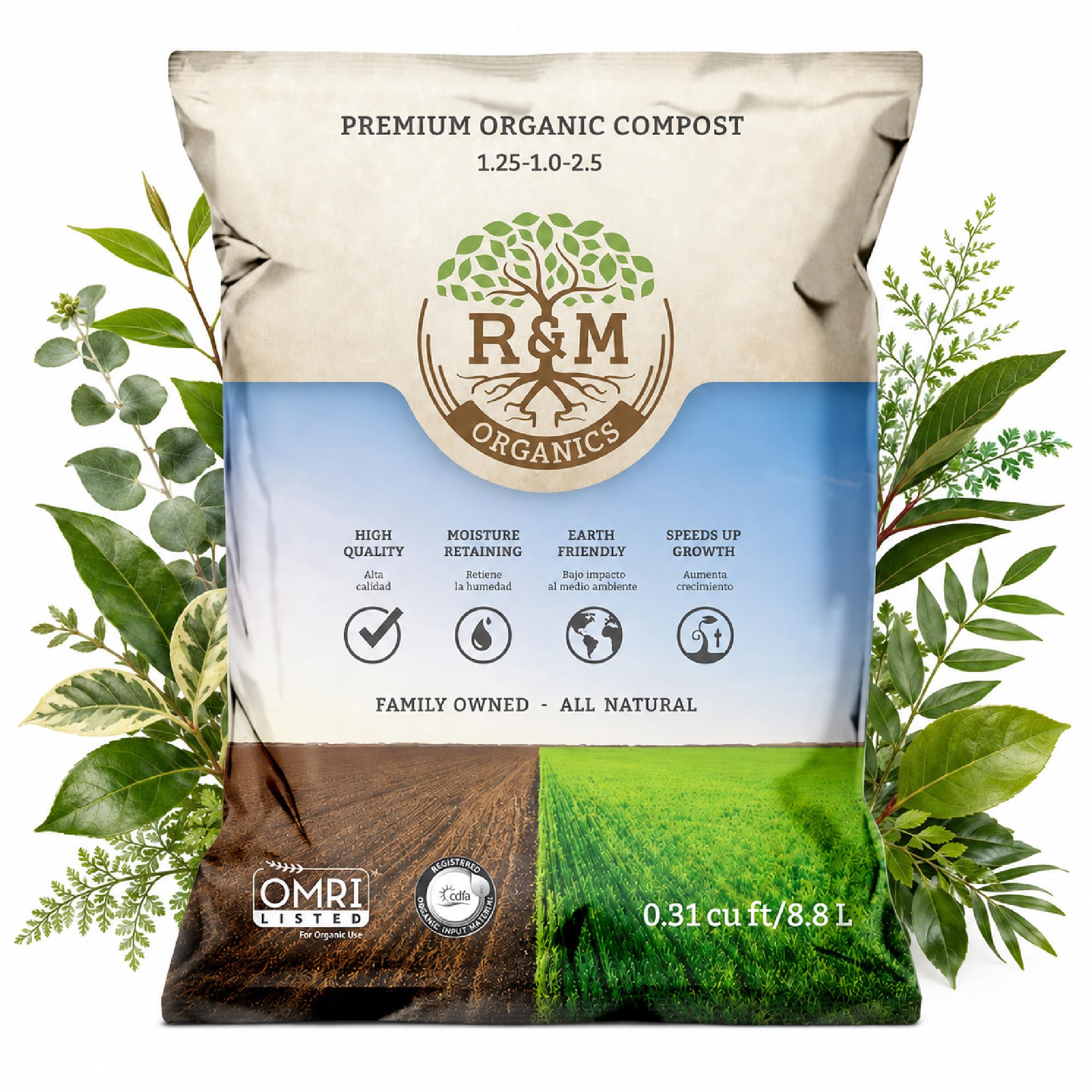
If the idea of manure compost conjures images of overpowering barnyard stench, R&M Organics is here to rewrite that assumption. This product is fully composted using continuous aeration, resulting in a dark, crumbly material with a clean, earthy scent that is genuinely suitable for both indoor and outdoor applications. The base ingredient is dairy cow manure, which provides a well-balanced nutrient profile without the hot nitrogen spikes that can burn sensitive transplants.
The 10-pound bag covers small to medium gardening tasks efficiently—a quarter-inch layer around existing plants or a mix-in for new beds. Users have reported resuscitating azaleas damaged by roof-cleaning overspray and reviving ailing tomato plants within a week. The moisture retention improvement is noticeable; soil amended with this compost stays hydrated longer, which reduces watering frequency during hot spells.
Texture is a major selling point here—it arrives finely screened with no clumps, sticks, or undecomposed debris, making it easy to work into pots or raised beds. Master Gardeners have recommended this product specifically for its safety profile (no root burn) and its ability to deliver quick visible results. For those who want the nutrient density of manure without the odor or the risk, this is the smart middle-ground pick.
What works
- Surprisingly low odor—usable indoors without complaint
- Fine, consistent texture with no large debris
- Quick turnaround for stressed plants, often within a week
What doesn’t
- 10-pound bag is better for small projects than large beds
- Manure-based; may still be too rich for the most sensitive seedlings
3. Old Potters Organic Compost
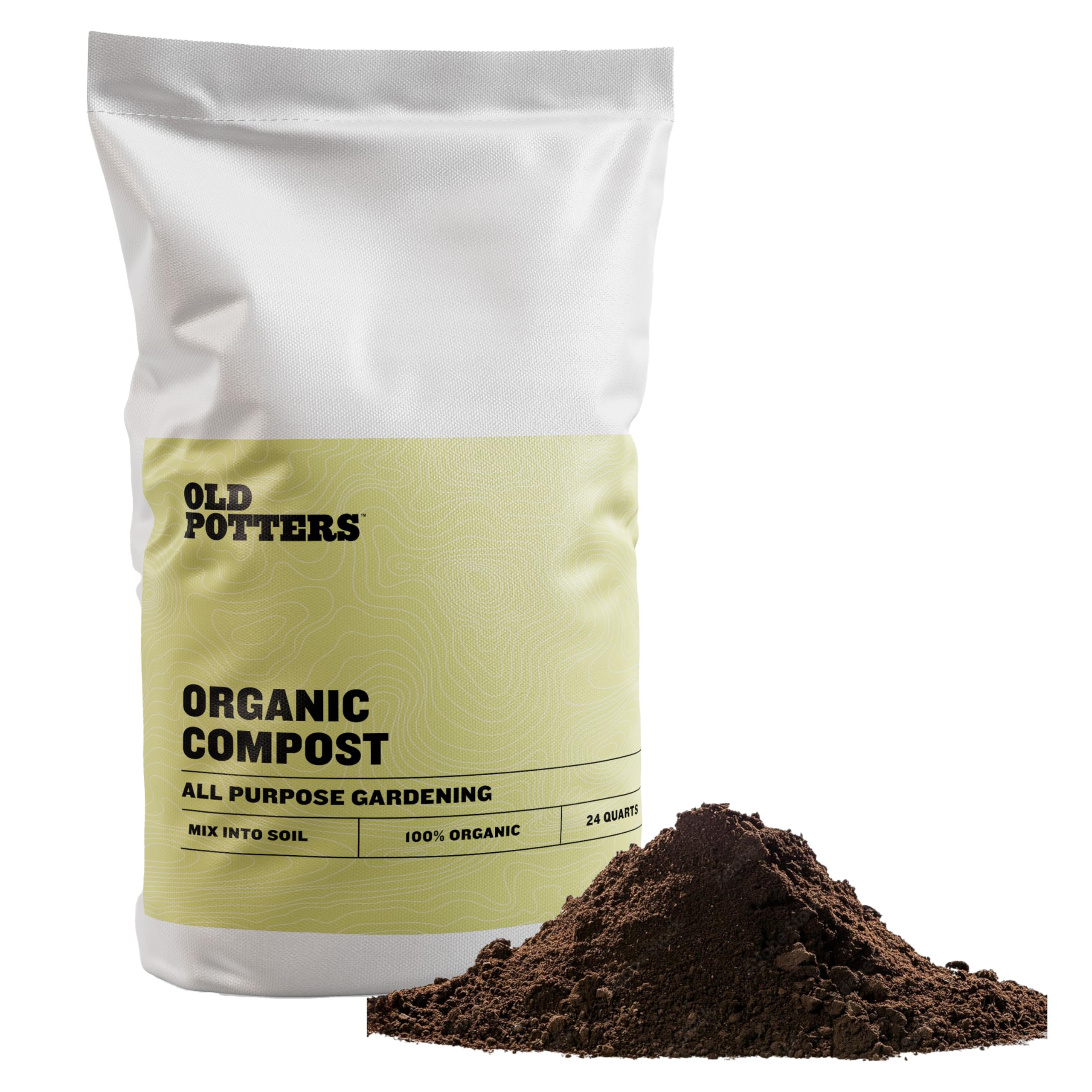
Old Potters delivers what many organic gardeners crave: a large-volume, plant-based compost that is free from any animal byproducts or synthetic chemicals. At 24 quarts (approximately 25 pounds), this bag is designed for the gardener who needs to fill multiple containers, top off a raised bed, or blend a custom potting mix without buying several smaller bags. The plant-based source material means the compost is naturally lower in salts compared to manure-based alternatives, making it safer for continuous use.
The texture can be slightly clumpy out of the bag, with some users reporting clayish clods that need manual breaking. Once crumbled, however, the compost improves soil aeration and water retention noticeably. It has performed exceptionally well in challenging conditions—one user in zone 7a mixed it with worm castings and mycorrhizae to help bare-root roses survive heavy clay soil and harsh weather, with blooms and strong fragrance by mid-season.
Because it is 100% plant-derived, this compost tends to feed the fungal side of the soil food web more effectively than animal-based products. That makes it an excellent choice for perennial gardens, fruit trees, and woody ornamentals that rely on fungal partnerships for nutrient cycling. The volume-to-price ratio is strong, but be prepared to do a bit of manual crumbling for the fluffiest result.
What works
- Large 24-quart bag covers multiple containers or a full raised bed
- Plant-based formula avoids high salt content, reducing burn risk
- Supports fungal-dominant soil biology for woody perennials
What doesn’t
- Clumpy consistency straight from the bag requires manual breaking
- Not as nutrient-dense as manure-based or seafood-meal blends
4. Earth Science RevitaSoil
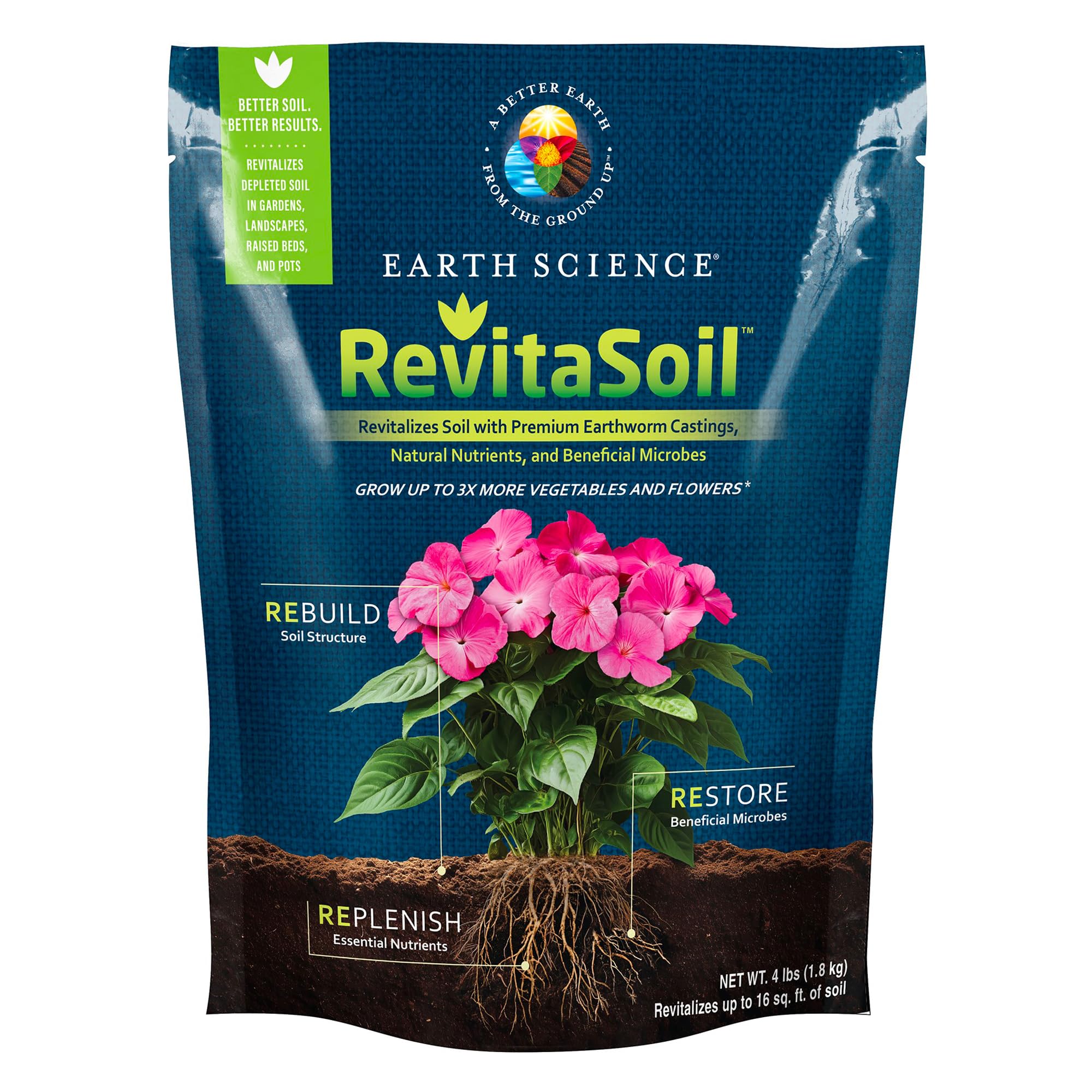
RevitaSoil takes a different approach—rather than simply adding bulk organic matter, it is formulated as a soil revitalizer built around premium earthworm castings and a patent-pending biological blend. The goal here is not just to feed the plant, but to repair the soil’s physical structure and reawaken its native microbial population. A single 4-pound bag covers up to 16 square feet of garden soil or 8 square feet in raised beds, making it a highly concentrated solution compared to traditional compost.
User feedback consistently highlights visible yield improvements, with claims of up to 3X more vegetable production after application. One gardener with raised beds installed in 2020 reported declining yields until RevitaSoil was applied; within a month, tomatoes, cucumbers, and peppers were significantly healthier and more productive. The product has no strong odor, comes with clear instructions, and integrates easily into existing soil.
The worm casting component is critical here—castings are rich in humic acids, plant-available nutrients, and a diverse array of beneficial microbes. For gardeners dealing with tired, compacted, or chemically-depleted soil, RevitaSoil offers a way to regenerate without hauling in large quantities of new soil. It is not a bulk filler; it is a biologic rescue shot for soil that has lost its vitality.
What works
- Highly concentrated formula—a little goes a long way
- Worm castings provide humic acids and microbial diversity
- Proven to revive declining yields in established beds
What doesn’t
- Small bag size limits use for large-scale garden projects
- Results may take a few weeks to become visible
5. Super Compost Tea (Gardenersbud)
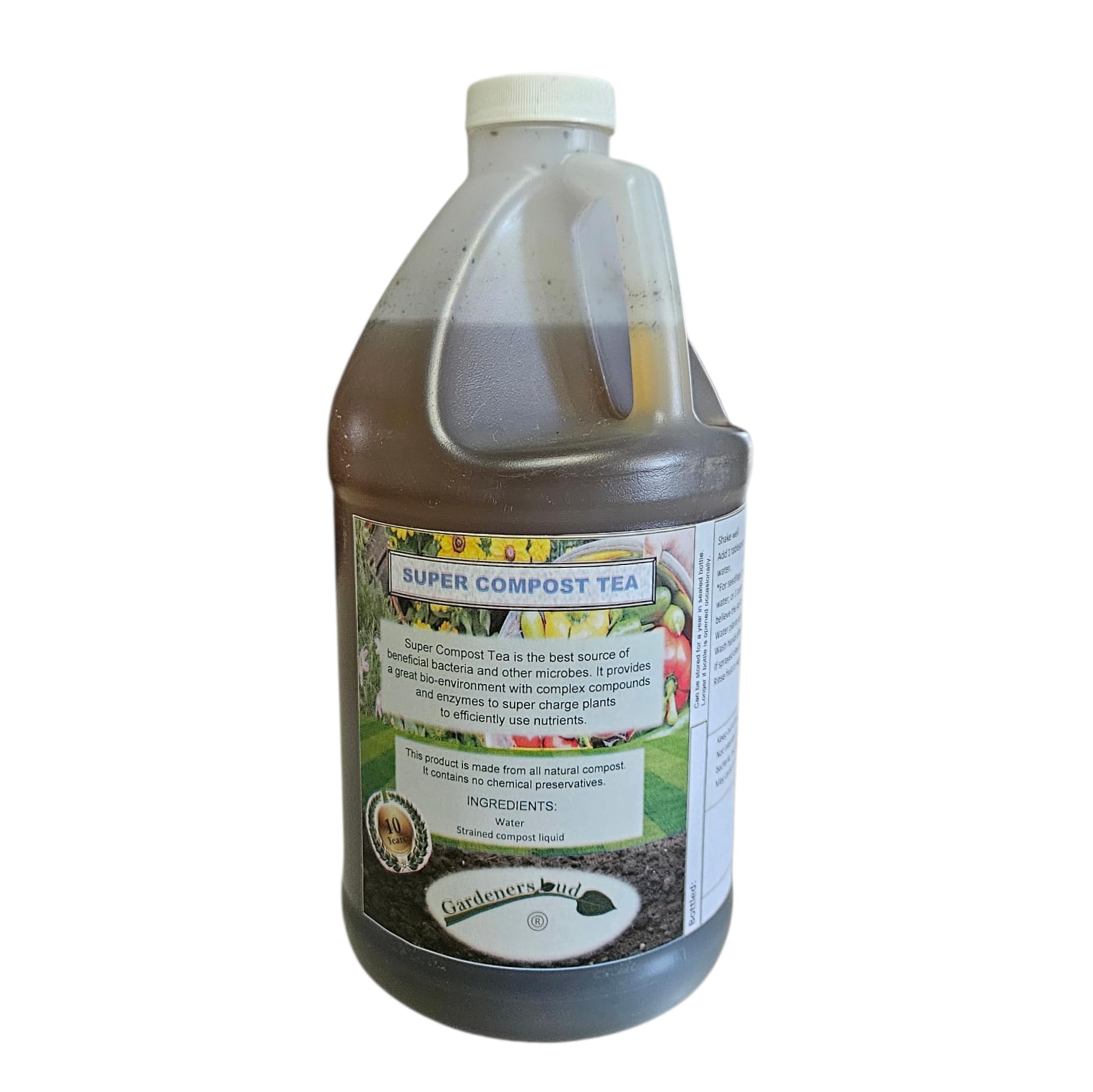
Not every gardener has the space or patience to mix bulk compost into their soil. For those who want the biological benefits of compost without the physical labor, Gardenersbud’s Super Compost Tea delivers a liquid alternative that can be applied directly to the soil or sprayed onto foliage. The 64-ounce concentrate contains organic compounds, micro and macro nutrients, and a proprietary blend of beneficial microorganisms that colonize both the root zone and leaf surfaces.
Foliar application sets this product apart—spraying compost tea on leaves does more than wash off dust; it provides a direct food source for epiphytic microbes that help outcompete foliar pathogens. Users report lush, vibrant vegetation and dramatic increases in pepper production when used consistently. The product is also effective at buffering soil pH, reducing the need for chemical fertilizers as plants become more efficient at nutrient uptake.
The main limitation is shelf life after opening. Several users noted that the tea developed a strong odor after three weeks in hot conditions, suggesting that it should be stored in a cool, dark place and used relatively quickly. For gardeners who want immediate biological activation without digging, this liquid compost tea is a versatile tool for both root drench and foliar feeding.
What works
- Versatile—use as soil drench or foliar spray
- Immediate application without mixing into bulk soil
- Buffers soil pH and supports beneficial microbial colonization
What doesn’t
- Short shelf life after opening, especially in heat
- Liquid form offers less long-term soil structure improvement
6. Blue Ribbon Organics OMRI Certified Compost

Blue Ribbon Organics has earned a cult following among serious container gardeners, and the 7.9-gallon bag is the reason why. This is OMRI-certified organic compost that is so rich, dark, and pure that users describe it as “black gold.” It arrives free of any contaminants—no sticks, plastic shards, glass, or metal fragments—which is a distressingly common issue with bulk landscape compost. The texture is consistently fine and easily moistened.
The compost blends beautifully with perlite and orchid bark to create a custom mix that balances moisture retention and aeration for finicky container plants like Clivias, Orchids, and Epiphyllums. One long-time gardener reported that this compost outperformed premium brands like Miracle-Grow (which can harbor fungus gnats) and acid-specific mixes (which often become water-repellent when dry). The earthy, clean smell is another hallmark of quality.
The cost per bag is undeniably higher than what you would pay at a big-box nursery, and using it to fill an entire raised bed would be prohibitively expensive for most. But as a concentrated amendment—mixed 1:2 or 1:3 with existing soil—it transforms the growing environment. For the gardener who prioritizes certified organic ingredients and wants the cleanest, most biologically active compost available, Blue Ribbon Organics is the pinnacle choice.
What works
- OMRI-certified with zero contaminants—exceptionally clean
- Dark, rich texture perfect for container mixing
- No fungus gnats or water-repellency issues like some brands
What doesn’t
- Premium price makes it impractical for large-scale use
- Bag size may be too small for extensive raised bed projects
Hardware & Specs Guide
Particle Size & Texture
Compost that is too coarse (large wood chips, undecomposed bark) can rob nitrogen from the soil as it continues breaking down. Aim for a product that is screened to a uniform, crumbly texture—similar to coarse sand or fine topsoil. The R&M Organics and Blue Ribbon Organics products excel here. If you find clumps, like those reported with Old Potters, a quick hand-crumble or a pass through a soil sieve will fix it before incorporation.
Nutrient Source & Profile
Manure-based composts (R&M Organics) provide higher immediate nitrogen, ideal for leafy greens and heavy feeders. Plant-based and seafood blends (Espoma Land and Sea, Old Potters) lean toward a more balanced, slow-release nutrient profile and often include trace minerals like chitin and calcium. The liquid compost tea (Gardenersbud) offers the fastest absorption but the least physical soil improvement, making it best for supplementary feeding rather than foundational soil building.
FAQ
Can I use manure-based compost on seedlings without burning them?
How often should I apply compost to my vegetable garden?
What does OMRI certification mean for compost?
Final Thoughts: The Verdict
For most gardeners, the compost for plants winner is the Espoma Land and Sea Gourmet Compost because its dual marine-meal and mycorrhizal formula delivers both immediate nutrients and long-term soil biology improvement in a single bag. If you want a low-odor manure option that works beautifully for stressed plants and containers, grab the R&M Organics Premium Compost. And for pure OMRI-certified quality that transforms container mixes into living soil, nothing beats the Blue Ribbon Organics Compost.