
Most compost bins are either flimsy plastic tumblers that crack after two seasons or expensive wood kits that warp in the rain. A truly durable and effective composting setup needs material that naturally regulates moisture and resists rot without chemical treatments. That is why the best option in this space relies on a naturally rot-resistant wood species that also allows the pile to breathe.
I’m Rikta — the co-founder and writer behind Lawn Gear Lab. I review dozens of product specifications side-by-side, analyze material composition and assembly engineering, and cross-reference hundreds of owner reports to identify which models actually perform over multiple seasons.
This guide narrows the field to the top alternatives currently on the market so you can find the best cedar compost bin for steady, high-quality soil production without structural failure.
How To Choose The Best Cedar Compost Bin
Selecting a cedar or solid-wood compost bin requires a different mindset than picking a plastic model. You are trading convenience features like a tumbling mechanism for natural breathability, structural longevity, and a chemical-free composting environment. The following factors determine whether your bin will last or fail by its second season.
Wood Species and Treatment
Not all wood resists rot equally. Cedar and larch contain natural oils that repel moisture and insects without pressure-treated chemicals. Avoid pine or spruce unless they carry an FSC-certified rot-resistant treatment — otherwise the base boards will decay within a year of ground contact.
Inner Volume and Base Dimensions
Hot composting requires a minimum mass of about 3 feet cubed to maintain internal temperature. A volume under 400 liters struggles to heat the core in cooler weather. Check the inner dimensions rather than the external footprint — some models lose 10-15% of volume to thick wall planks.
Ventilation Gap Spacing
Gaps between slats must be wide enough for airflow (4-5 cm) but narrow enough to prevent compost from spilling out. If the gap exceeds the width of your largest brown material pieces, you will lose fine particles through the sides. Adjustable slat spacers allow seasonal tuning between winter heat retention and summer aeration.
Assembly Mechanism
Wood compost bins use either a plug-in interlocking system or screw-based construction. Plug-in systems require no tools and can be disassembled for winter storage, but they may loosen over time if the wood dries and shrinks. Screwed panels are more rigid but demand a drill and longer initial setup time.
Quick Comparison
On smaller screens, swipe sideways to see the full table.
| Model | Category | Best For | Key Spec | Amazon |
|---|---|---|---|---|
| dobar Larch Square Composter | Solid Wood | Chemical-free hot composting | 420 liters / 79×79×79 cm | Amazon |
| Good Ideas Compost Wizard Jr | Tumbler | No-tumble ease of use | 7 cubic feet (52.4 gallons) | Amazon |
| Gobetter 45 Gallon Dual Chamber | Dual Tumbler | Continuous batch production | 45 gallons / 2 chambers | Amazon |
| EJWOX 35 Gallon Tumbler | Single Tumbler | Compact space and liquid collection | 36 gallons / drain plug | Amazon |
| EJWOX 43 Gallon Dual Chamber | Dual Tumbler | Temperature-monitored batching | 43 gallons / built-in thermometer | Amazon |
| YITAHOME 120 Gallon Static Bin | Static Bin | High-volume cold composting | 120 gallons / 28×28×39.8″ | Amazon |
| EJWOX 80 Gallon Static Bin | Static Bin | Budget static aeration | 80 gallons / 33×25×6″ | Amazon |
In‑Depth Reviews
1. dobar Green Label Larch Square Composter

This is the only all-wood unit in the entire lineup that hits the perfect sweet spot of material quality, volume, and natural aeration. The dobar is made from FSC-certified larch — a dense softwood that contains natural resins to resist moisture and insect burrowing without any chemical sealants. The 79×79×79 cm dimensions provide 420 liters of usable volume, which is the minimum threshold for maintaining a hot composting core temperature during fall and winter shoulder seasons.
The plug-in system lets you to assemble the entire box without a single screw or tool. Each slat has 3.5-4 cm gaps that allow oxygen circulation while retaining fine compost material. Owners report that the raw unfinished wood blends into a garden setting aesthetically, though several note the slats can pop loose if the bin is moved while full — a concern that is easily addressed by screwing the bottom and top slats into the corner posts for rigidity.
Natural airflow through the gaps eliminates the need for the manual turning that plastic tumblers require. The larch construction is sturdy enough to hold a full load of heavy wet kitchen scraps without bulging. If you want the gold standard for a low-maintenance, long-lasting wooden bin, this is the one to beat.
What works
- Tool-free plug-in assembly takes less than 10 minutes
- FSC-certified larch resists rot without chemical treatment
- Large 420-liter volume sustains hot composting temperatures
- 4 cm ventilation gaps prevent anaerobic smell without losing material
What doesn’t
- Lid is not included — must purchase separately or fabricate a cover
- Thin slats can pop out if bin is moved while full
2. Good Ideas Compost Wizard Jr 7 Cubic Feet
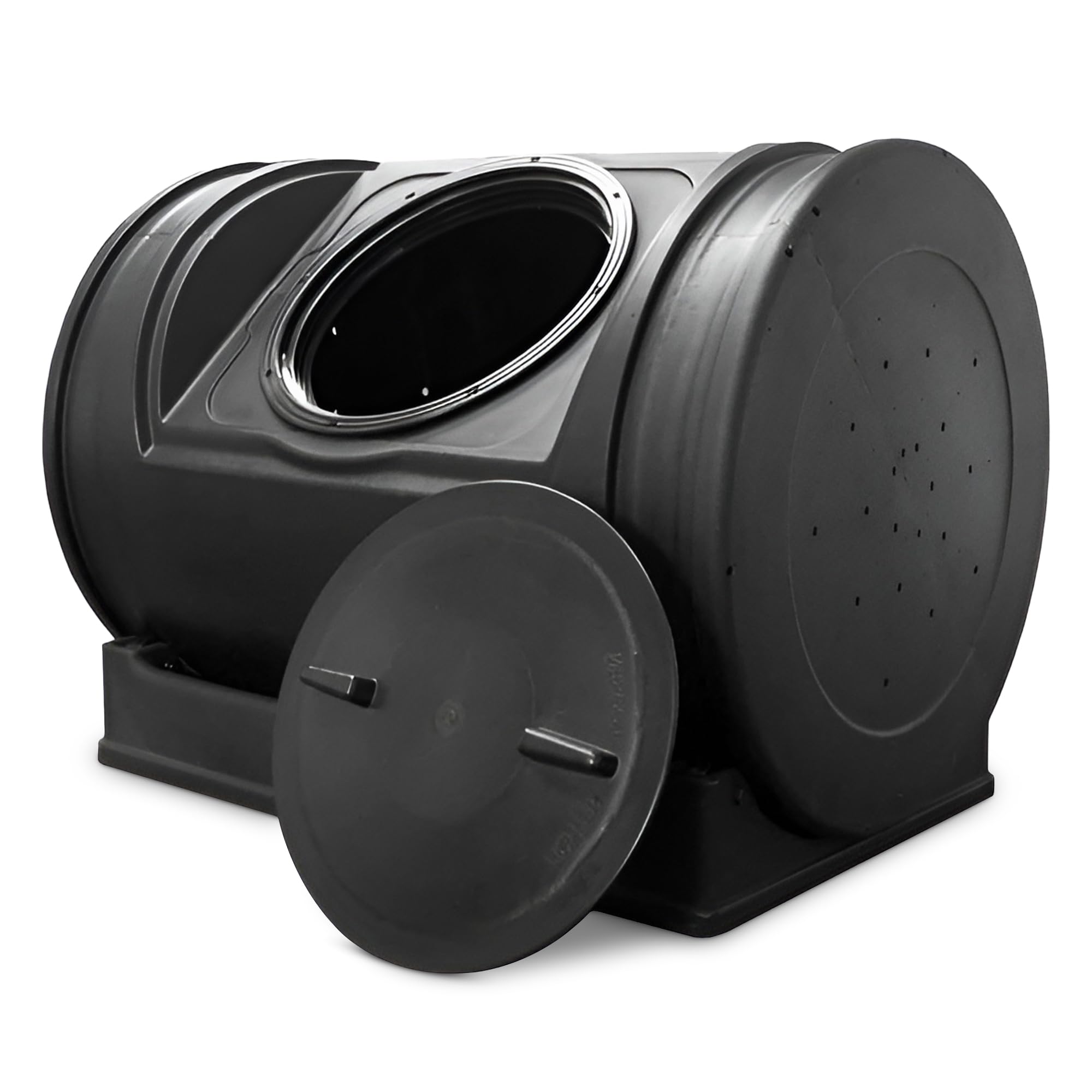
Unlike every other model in this roundup that requires you to snap or screw panels together, the Compost Wizard Jr arrives fully assembled except for mounting the barrel onto its wheeled base. That eliminates the single biggest frustration of composting bin ownership — spending an hour wrestling with warped plastic parts or misaligned screw holes. The 7-cubic-foot capacity (about 52 gallons) is generous enough for a household of two to four people.
The rotating design uses a horizontal axle with a solid base that rolls the barrel rather than spinning it on a central rod. This low-friction movement means you can turn a full load with one hand while holding the lid with the other. The lid twists off completely — no tiny sliding doors or narrow feeding hatches that clog with matted leaves.
The primary trade-off is that the barrel can accumulate rainwater through the small drain holes at the bottom, making it noticeably heavier to roll after a storm. Draining the collected compost tea requires lifting the unit or tilting it onto its side, which is awkward with a full load. Still, for someone who values instant setup and effortless tumbling, this is the most user-friendly option available.
What works
- Arrives pre-assembled — no tools or manual required
- Wheeled base allows one-hand tumbling even when full
- Durable BPA-free plastic survives years of outdoor exposure
- Large twist-off lid makes filling and emptying very simple
What doesn’t
- Rain collects through drain holes, making bin heavier to roll
- No dedicated compost tea spigot — draining requires tilting the barrel
3. Gobetter 45 Gallon Dual Chamber Tumbler

The Gobetter tumbler distinguishes itself from the competition with a powder-coated steel frame that supports two separate chambers, each with its own sliding door. This design allows you to fill one side while the other side matures, creating a continuous batch cycle that keeps fresh compost flowing every few weeks. The 45-gallon total capacity is split evenly, meaning each chamber holds roughly 22.5 gallons — enough for a moderate household but slightly cramped for bulkier yard waste like large branches or dense grass clippings.
Assembly is the clear weak point for this model. Owners report 56 individual screws plus additional bolts for the center divider. The instruction manual relies entirely on numbered diagrams with zero written guidance, and two people are strongly recommended to align the barrel halves during the frame attachment step. Once assembled, however, the unit is notably stable. The sliding doors are functional but stiff on initial use — they require repeated opening to loosen the plastic track.
The steel frame resists rust well thanks to the zinc powder coating, and the polypropylene barrel panels show no UV degradation after several seasons in full sun. The dual-chamber workflow genuinely works for continuous composting, but prospective buyers should be prepared for a substantial assembly project before they ever add a single scrap of kitchen waste.
What works
- Dual chambers allow fresh adds on one side while the other matures
- Powder-coated steel frame is very stable and rust-resistant
- Polypropylene panels hold up well against UV and freezing temps
What doesn’t
- Assembly requires 56 screws and two people for panel alignment
- Small sliding doors make it difficult to dump finished compost out
4. EJWOX 35 Gallon Tumbler with Drain Plug
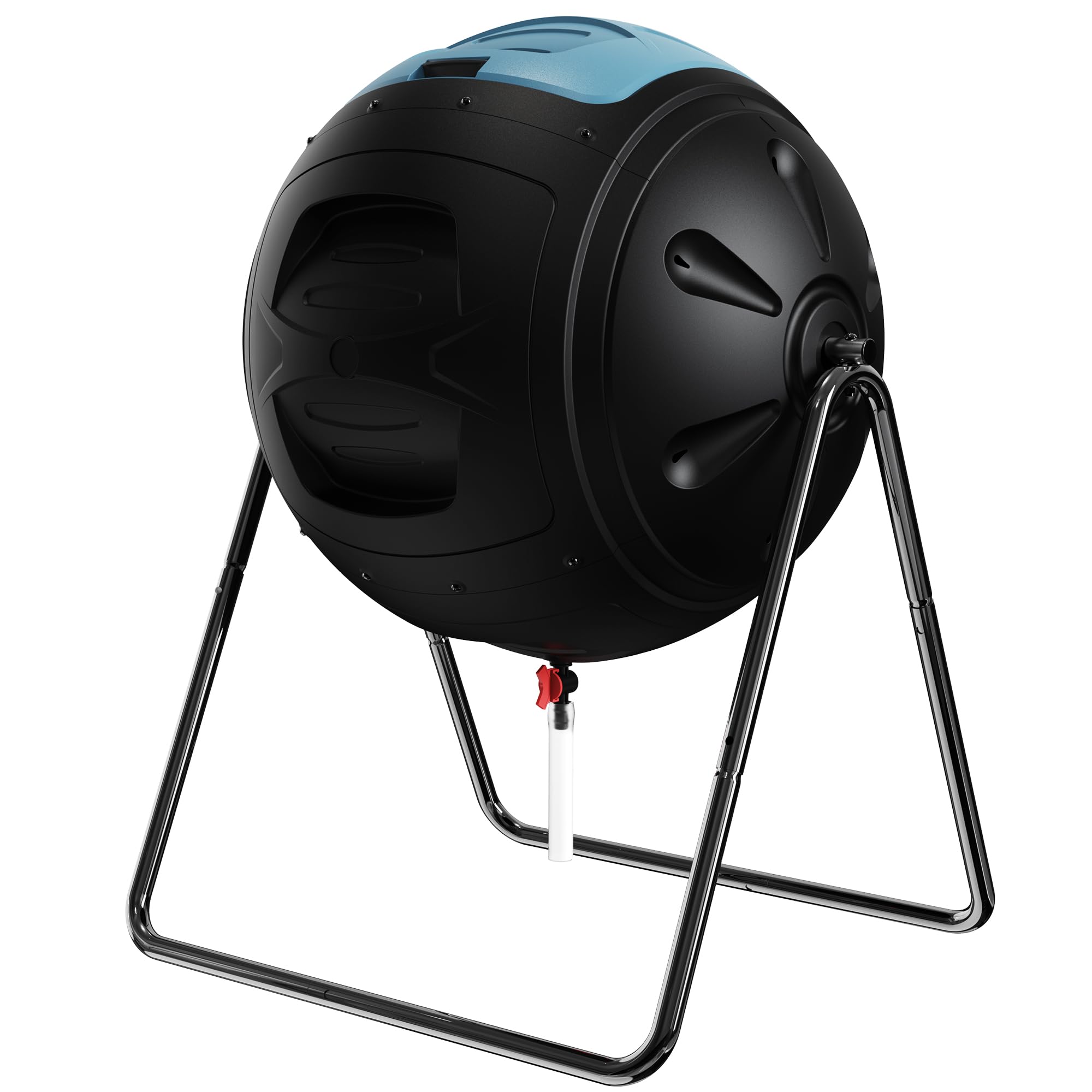
This 36-gallon single-chamber tumbler is the most compact rotating composter in the roundup, making it a strong candidate for small patios, balconies, or yards where space is at a premium. The frame is made from alloy steel with a zinc powder coating, and the barrel uses UV-stabilized polypropylene that resists fading and brittleness from prolonged sun exposure. The standout feature is the integrated drain plug at the bottom of the barrel, which lets you collect compost tea without disassembling or tipping the unit.
Assembly is straightforward — owners report completion in 15-20 minutes with basic tools. The tumbling mechanism rotates smoothly even when the barrel is fully loaded with wet kitchen scraps mixed with dry leaves. The compact footprint (30×30×40 inches) fits into tight corners that larger tumblers cannot reach. Multiple verified reviews confirm that the plastic barrel withstands repeated freeze-thaw cycles without cracking, though the door latch is a known weak point — some owners experienced warping from internal heat and had to rig a secondary closure.
The main limitation is capacity. At 36 gallons, this bin fills quickly for a household of three or more, and the lack of a dual chamber means every fresh addition interrupts the decomposition cycle of the existing batch. If you generate more than 10-15 pounds of kitchen scraps per week, you will likely outgrow this unit within a season.
What works
- Drain plug enables easy compost tea collection without tipping
- Compact footprint fits small patios and corner spaces
- Quick 15-minute assembly compared to dual-chamber models
What doesn’t
- Door latch can warp from internal heat and lose grip
- Too small for households producing more than 10 lbs weekly waste
5. EJWOX 43 Gallon Dual Chamber Tumbler with Thermometer
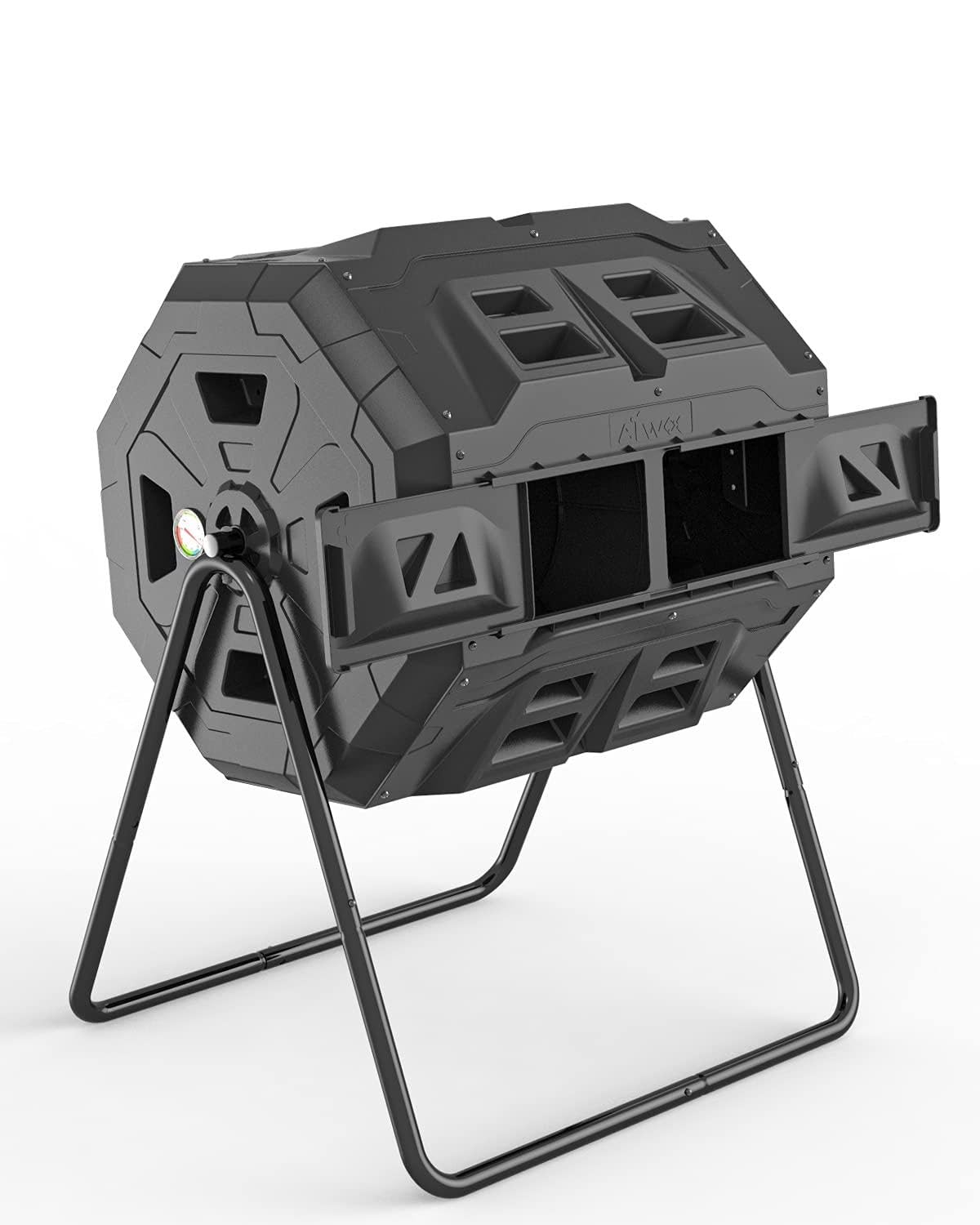
This EJWOX model brings a genuinely useful feature that is rare at this tier: an integrated thermometer mounted directly into the barrel wall so you can monitor internal temperature without opening the lid and losing heat. For serious composters who track the 130-160°F thermophilic range to ensure weed seeds and pathogens are killed, this is a practical upgrade that eliminates guesswork. The dual-chamber setup (43 gallons total) allows continuous batch processing — fill one side while the other cooks.
The frame is built from galvanized steel rather than painted mild steel, which provides significantly better corrosion resistance in damp environments. The octagonal barrel shape distributes weight evenly and rotates with less resistance than rectangular designs. Owners caution that the thermometer tends to read a few degrees lower than the actual core temperature because the probe only extends to the barrel wall — the center of the pile can be 10-15°F hotter. Assembly is moderate, requiring about 45 minutes solo, with picture-only instructions that some found confusing for the center divider installation.
Several owners use bungee cords to reinforce the two sliding doors, as the latch mechanism can pop open if the chamber is overfilled and the internal pressure from decomposing material builds up. Despite that quirk, the galvanized frame and dual-chamber workflow make this a strong mid-range option for gardeners who want temperature feedback without stepping up to premium pricing.
What works
- Built-in thermometer helps monitor thermophilic composting range
- Galvanized steel frame resists rust better than painted alternatives
- Dual chambers enable continuous batch processing
What doesn’t
- Thermometer reads lower than core pile temperature
- Sliding door latches may require bungee cord reinforcement
6. YITAHOME 120 Gallon Static Compost Bin
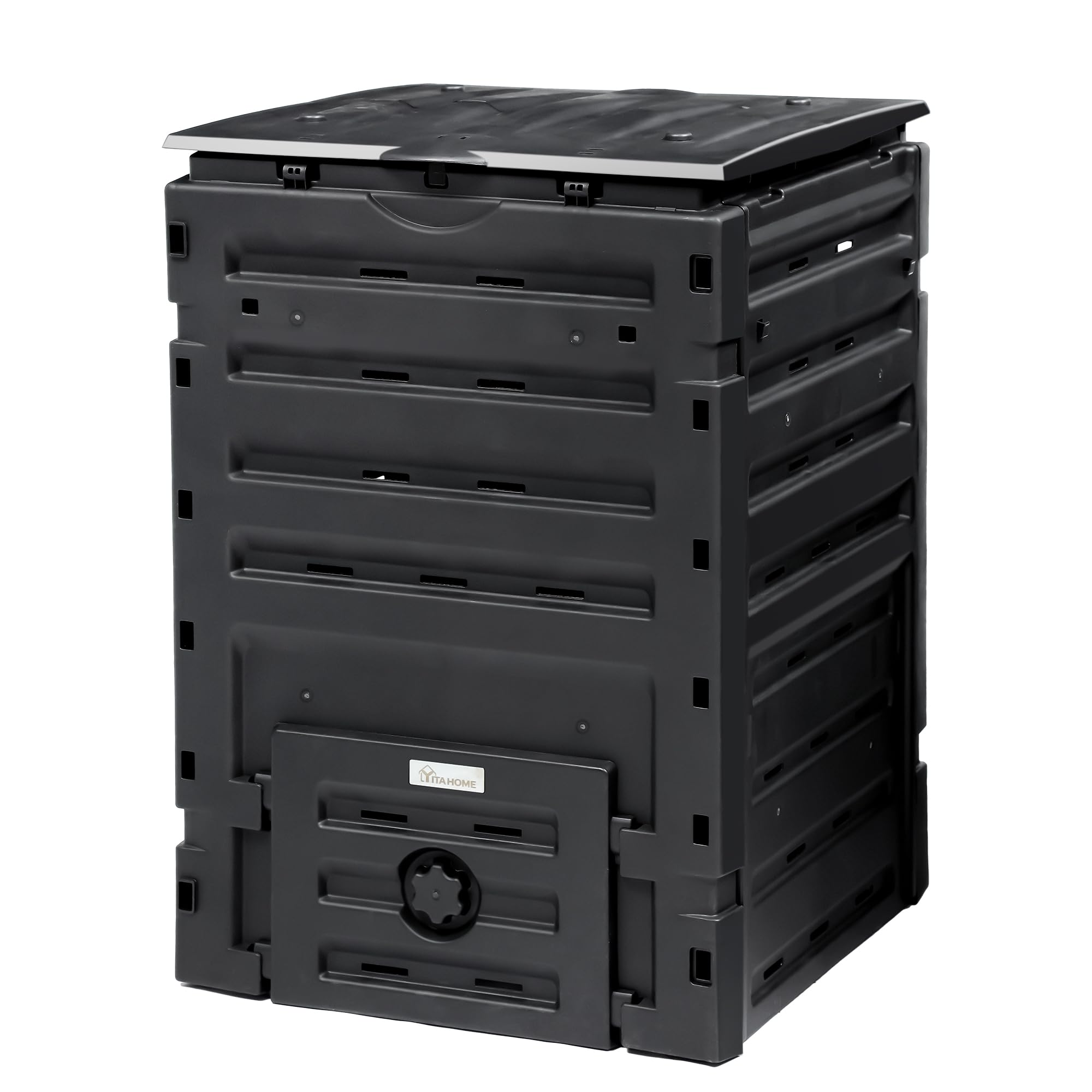
If you generate significant yard waste from large lawns, multiple garden beds, or seasonal leaf drops, this 120-gallon static bin from YITAHOME offers the highest raw capacity in the comparison. The square cylindrical design has 12 aeration holes on each panel, ensuring airflow reaches the center of the pile without requiring manual turning. The snap-on assembly system uses a tongue-and-groove interlock that requires no screws, though owners caution that panels can warp in direct sunlight and make final alignment tricky.
This is a cold-composting bin designed for volume rather than speed. You fill it continuously and let the material break down over several months. The large snap-on top lid keeps wildlife out effectively, and the wide opening makes it easy to dump bucket after bucket of grass clippings or shredded leaves without funneling through a narrow hatch. Owners in both deep winter and high-heat summer climates report the polypropylene panels do not degrade or become brittle.
The main risk is structural. Multiple verified reviews note that when the bin is half-filled with heavy, pre-compacted material, the interlocking panel seams can separate and cause the walls to collapse outward. The 120-gallon rating is aggressive for a snap-together design — loading it to full capacity with wet, dense matter pushes the connection points to their limit. For dry, fibrous yard waste this is a solid choice, but for wet kitchen-heavy loads, a more rigid bolted design is safer.
What works
- Massive 120-gallon capacity handles heavy yard waste volume
- Snap-on lid seals well against rodents and wind lift
- 12 aeration holes per side provide effective passive airflow
What doesn’t
- Panels can separate under the weight of wet, dense material
- Tongue-and-groove assembly is finicky with warped panels
7. EJWOX 80 Gallon Static Compost Bin

The EJWOX 80-gallon static bin is the most affordable entry point in this roundup, and it prioritizes one thing above all else: quick, tool-free assembly. The polypropylene panels snap together with only six parts, and owners consistently report completing the build in under five minutes. The rectangular shape with an open bottom allows direct ground contact for worms and soil microbes to enter the pile, which accelerates decomposition compared to sealed-bottom tumblers that isolate the material from the soil ecosystem.
Strategic air vents on all four sides create a cross-breeze effect that keeps the pile aerobic during the active decomposition phase. The 80-gallon capacity is a solid middle ground — large enough to handle a two-person household with moderate garden waste, but not so massive that it dominates a small yard. The lid includes optional staking holes to secure it against wind, which is a thoughtful detail for exposed garden locations.
The material is the clear compromise here. Multiple owners report that the polypropylene is noticeably thinner than competing brands, with the lid tabs being particularly fragile. Some users place a brick on top or use a bungee cord to keep the lid secure. The plastic also lacks the UV-inhibiting additives found in higher-priced models, which means it may become brittle after 2-3 years of full-sun exposure. For a budget-first buyer who needs capacity on day one and is comfortable with potential replacement down the line, this bin delivers the best cost-per-gallon value.
What works
- Five-minute snap-together assembly from only six parts
- Open bottom allows direct soil microbe access for faster breakdown
- 80-gallon capacity provides good volume for the price point
What doesn’t
- Thin polypropylene panels are prone to cracking over multiple seasons
- Lid tabs do not snap securely — may need a weight or cord to stay shut
Hardware & Specs Guide
Internal Volume and Thermal Mass
For hot composting to function, the bin must hold a minimum of one cubic yard (about 200 gallons or 750 liters) of material to maintain the 130-160°F thermophilic range without external insulation. Smaller bins like the 36-gallon EJWOX tumbler will heat up briefly in summer but cool too quickly in winter to kill weed seeds. The dobar larch bin at 420 liters (111 gallons) sits between the cold-composting and hot-composting threshold — it can sustain thermophilic activity if filled quickly with a balanced ratio of green to brown material. If you live in a cooler climate below USDA zone 7, aim for a bin with at least 500 liters of internal volume to maintain consistent core temperatures through shoulder seasons.
Wood vs. Plastic: Moisture Regulation
Wood compost bins (cedar, larch) absorb excess moisture from wet kitchen scraps and release it slowly through the sides, preventing the anaerobic slime that forms in sealed plastic tumblers. The dobar larch bin has 3.5-4 cm slat gaps that provide passive airflow without any moving parts. In contrast, plastic static bins like the YITAHOME 120-gallon model rely on drilled holes and can trap moisture at the bottom, creating a dense, oxygen-starved layer that slows decomposition. Wood bins also buffer temperature swings because the material itself has thermal mass, whereas thin plastic panels transfer heat rapidly to the outside air. The trade-off is weight — a wood bin filled with wet compost can exceed 300 pounds and cannot be moved, while plastic bins are easier to reposition.
FAQ
Does a cedar or larch bin need a lid for successful composting?
Can I compost dog waste in a cedar or larch wood compost bin?
Final Thoughts: The Verdict
For most gardeners, the best cedar compost bin winner is the dobar Green Label Larch Square Composter because it provides 420 liters of naturally rot-resistant FSC-certified larch wood with a tool-free plug-in assembly that no plastic model can match for breathability and longevity. If you want a pre-built tumbler that you can roll with one hand and start using immediately, grab the Good Ideas Compost Wizard Jr. And for continuous batch production with internal temperature feedback, the Gobetter 45 Gallon Dual Chamber Tumbler is the strongest runner-up for serious home composters who need a steady output schedule.