
Whether you’re planting a new David Austin climber or refreshing the soil around a mature hybrid tea, the wrong soil mix can mean weak stems, yellowing leaves, and few blooms. Roses demand a specific balance of organic matter, slow-release nutrients, and beneficial microbes to push out those heavy, fragrant flowers. A generic bag of potting soil or a synthetic quick-feed granular won’t cut it—roses need a biologically active, moisture-retentive yet well-draining foundation that feeds the root zone and builds long-term soil structure.
I’m Rikta — the co-founder and writer behind Lawn Gear Lab. I’ve spent countless hours cross-referencing organic certifications, NPK analyses, pH suitability, and real-world owner feedback to isolate the handful of rose-specific composts and soil amendments that actually deliver on their label promises. Every product here has been vetted against the specific needs of rose root systems and bloom cycles.
Roses thrive on a compost that is rich in humus, contains a balanced 4-3-2 or 5-3-4 NPK profile, and is OMRI-certified or Non-GMO Project Verified to avoid harsh synthetics. After dozens of research sessions, I’ve compiled this review of the best compost for planting roses to save you the guesswork.
How To Choose The Best Compost For Planting Roses
Roses are heavy feeders—they need a steady supply of macronutrients (nitrogen for foliage, phosphorus for strong roots and blooms, potassium for overall vigor) plus a healthy dose of organic matter to keep the soil structure open. A high-quality compost does this without the risk of burning delicate roots. Here are the factors to check before you buy.
NPK Ratio and Organic Matter Content
The three numbers on a fertilizer label represent nitrogen, phosphorus, and potassium. For roses, a moderately balanced ratio like 4-3-2 or 5-3-4 is ideal—enough nitrogen for green growth without creating lanky stems, and enough phosphorus to encourage abundant, long-lasting blooms. Avoid high-nitrogen lawn formulations or synthetic bloom boosters that can kill beneficial soil microbes.
Organic Certification and Ingredient Sources
Look for OMRI (Organic Materials Review Institute) listed products or Non-GMO Project Verified labels. These certifications ensure no synthetic pesticides, GMO-derived chicken manure, or sewage sludge is present. Additionally, check for humic acids, mycorrhizae, or crab/lobster meal—each enhances microbial activity and root colonization specific to roses.
Application Method: Top-Dressing vs. Soil Amendment vs. Liquid Feed
Granular composts like Rose-tone are designed for monthly top-dressing or mixing into the planting hole. Liquid fish fertilizers deliver an immediate boost but require weekly mixing and can have a strong odor. True soil conditioners (like Coast of Maine or Heirloom Mint Compost) are best used as a 50/50 blend with native soil or as a 2-inch surface mulch to conserve moisture and slowly release nutrients.
Quick Comparison
On smaller screens, swipe sideways to see the full table.
| Model | Category | Best For | Key Spec | Amazon |
|---|---|---|---|---|
| Dr. Earth Rose & Flower Fertilizer | Granular | Organic feeding with Non-GMO trust | NPK 4-3-2, Non-GMO Verified | Amazon |
| Heirloom Founder’s Fish Fertilizer | Liquid | Quick N-P-K shot for new roses | 32 fl. oz., 1:4 mixing ratio | Amazon |
| Espoma Rose-tone (2-Pack) | Granular | Regular monthly feeding schedule | 4-3-2 with Bio-tone microbes | Amazon |
| Espoma Land & Sea Gourmet Compost | Soil Amendment | Transplanting & improving native soil | Crab/lobster meal + Myco-tone | Amazon |
| Coast of Maine Rose & Flower Soil | Planting Mix | Revitalizing in-ground beds | 20 Qt bag, OMRI listed | Amazon |
| Heirloom Mint Compost | Top Dressing | Pest repellence & clay soil break-up | 7 Qt box, insect-repelling mint | Amazon |
| Ribbon Organics OMRI Compost | Pure Compost | Ultra-pure no-debris soil builder | 7.9 gal, OMRI Certified | Amazon |
In‑Depth Reviews
1. Dr. Earth Total Advantage Rose & Flower Fertilizer 4 lb

Dr. Earth holds a rare distinction as the only Non-GMO Project Verified fertilizer in the United States. The 4-pound bag of granules is handcrafted from human- and feed-grade ingredients—no GMO-infested chicken manure, no synthetic chemicals, and no toxic fillers. The base NPK of 4-3-2 is exactly in the sweet spot for roses: enough nitrogen to push out healthy green leaves, with phosphorus geared toward root development and flower formation.
Beyond the big three nutrients, Dr. Earth enriches the soil with multi-minerals, proteins, carbohydrates, humic acids, and trace elements. These compounds feed the soil microbiome rather than just the plant, building long-term soil structure that helps roses resist disease and drought stress. The granules are easy to broadcast around the drip line, and they break down gradually over several weeks without the risk of salt burn.
Owner feedback is consistently strong across dozens of verified reviews, with repeated mentions of “best blooms ever” and dramatically healthier foliage in tough climates like South Florida. The only limitation is the bag size—4 pounds covers a small bed or a handful of container roses, so bigger gardens may need multiple bags per season.
What works
- Non-GMO Project Verified and OMRI-listed
- Balanced 4-3-2 ratio ideal for roses
- Rich in humic acids and trace minerals
What doesn’t
- Small 4-lb bag may not last a full season for large gardens
- Granular form requires watering in after application
2. Heirloom Roses Founder’s Fish Fertilizer 32 oz
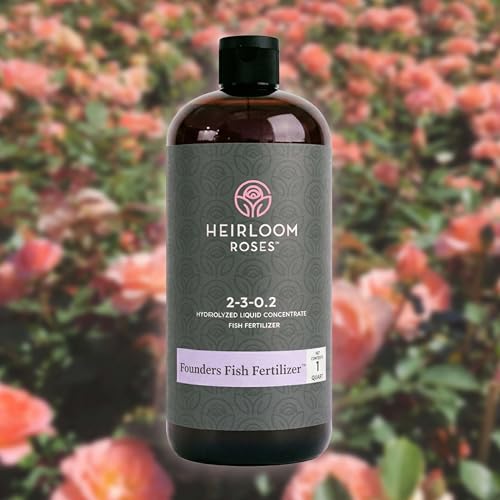
This liquid fish emulsion from Heirloom Roses is built around acidulated fish solubles stabilized with phosphoric acid, delivering a nitrogen-rich boost that roses soak up within days. The organic matter feeds mycorrhizae deep in the soil, building beneficial bacteria that help roots access locked-up nutrients. It’s especially effective for newly planted own-root roses that need rapid establishment without synthetic shock.
The mixing ratio is straightforward—4 ounces per gallon of water—and one gallon treats two to three bush-sized roses. Users in zone 7a report that weekly applications produce “rapid new growth” and healthier foliage within weeks. Be aware of the smell: this is a genuine fish product, and the odor is strong during application, though it dissipates quickly once the soil absorbs it.
One 32-ounce bottle lasts the entire season for a small garden of five or fewer roses. Liquid application also means you can skip the watering-in step that granular feeds require. The biggest practical concern is storage—keep the bottle sealed in a shed or garage to avoid attracting animals, and always apply in the evening to minimize neighbor complaints about the scent.
What works
- Immediate nutrient uptake for new or stressed roses
- Feeds mycorrhizae for long-term soil health
- One bottle covers a full season for small gardens
What doesn’t
- Strong fish smell during and after application
- Requires weekly mixing and watering schedule
3. Espoma Organic Rose-tone 4-3-2 (2-Pack)

Espoma’s Rose-tone is a cult favorite among rose enthusiasts, and this two-pack gives you eight pounds of granules to spread across a full season. The 4-3-2 analysis is bolstered by 5% calcium, which helps prevent blossom-end rot and strengthens cell walls in petals and stems. The Bio-tone proprietary blend adds endo and ecto mycorrhizae, encouraging a robust root system that can pull water and nutrients more efficiently from the soil.
Rose-tone is approved for organic gardening and is registered as an Organic Input Material, so it meets production standards for certified organic growers. It works on all types of roses—knockouts, climbers, tea roses, and floribundas—as well as other flowering ornamentals like viburnum, bougainvillea, and clematis. Users note that monthly application from May to September results in “tremendous growth and incredible flowers.”
The granules are ready to use with no mixing required. Sprinkle them around the drip line, scratch lightly into the soil surface, and water thoroughly. One downside: the 4-pound bag size is modest, so a large bed of ten or more bushes will consume this two-pack quickly—budget for a second order if your garden is oversized.
What works
- Bio-tone mycorrhizae improve root efficiency
- Calcium content prevents common rose disorders
- Approved for organic production systems
What doesn’t
- Need multiple packs for large gardens
- Slow release means results take a week or two to show
4. Espoma Land & Sea Gourmet Compost (1 Cubic Foot)

Espoma’s Land & Sea is a true soil amendment rather than a standard granular fertilizer—it’s a gourmet compost enriched with lobster and crab meal, providing chitin that naturally deters soil-borne pests and boosts the activity of beneficial fungi. The 1-cubic-foot bag weighs 24 pounds and goes a long way when mixed into planting holes or turned into beds before transplanting.
The Myco-Tone blend of endo and ecto mycorrhizae sets this product apart from basic composted manure. When you dig a hole for a new rose bush, mixing a few handfuls of this compost into the backfill creates a biologically active pocket that supports rapid root spread. It also works well as a top-dressing for established plants, slowly releasing organic matter each time you water.
Indoor and outdoor gardeners have reported noticeable improvements in plant health even when reusing old potting soil, with tomatoes and zucchini producing higher yields and roses showing stronger stems. The only catch is that Land & Sea is a soil conditioner, not a complete fertilizer—you’ll want to pair it with a balanced granular feed like Rose-tone during the growing season for optimal bloom production.
What works
- Crab/lobster meal adds chitin for pest resistance
- Myco-Tone improves root colonization
- Versatile for in-ground and container planting
What doesn’t
- Not a standalone rose fertilizer
- Heavy bag at 24 lbs can be hard to maneuver
5. Coast of Maine Organic Rose & Flower Soil (20 Qt)
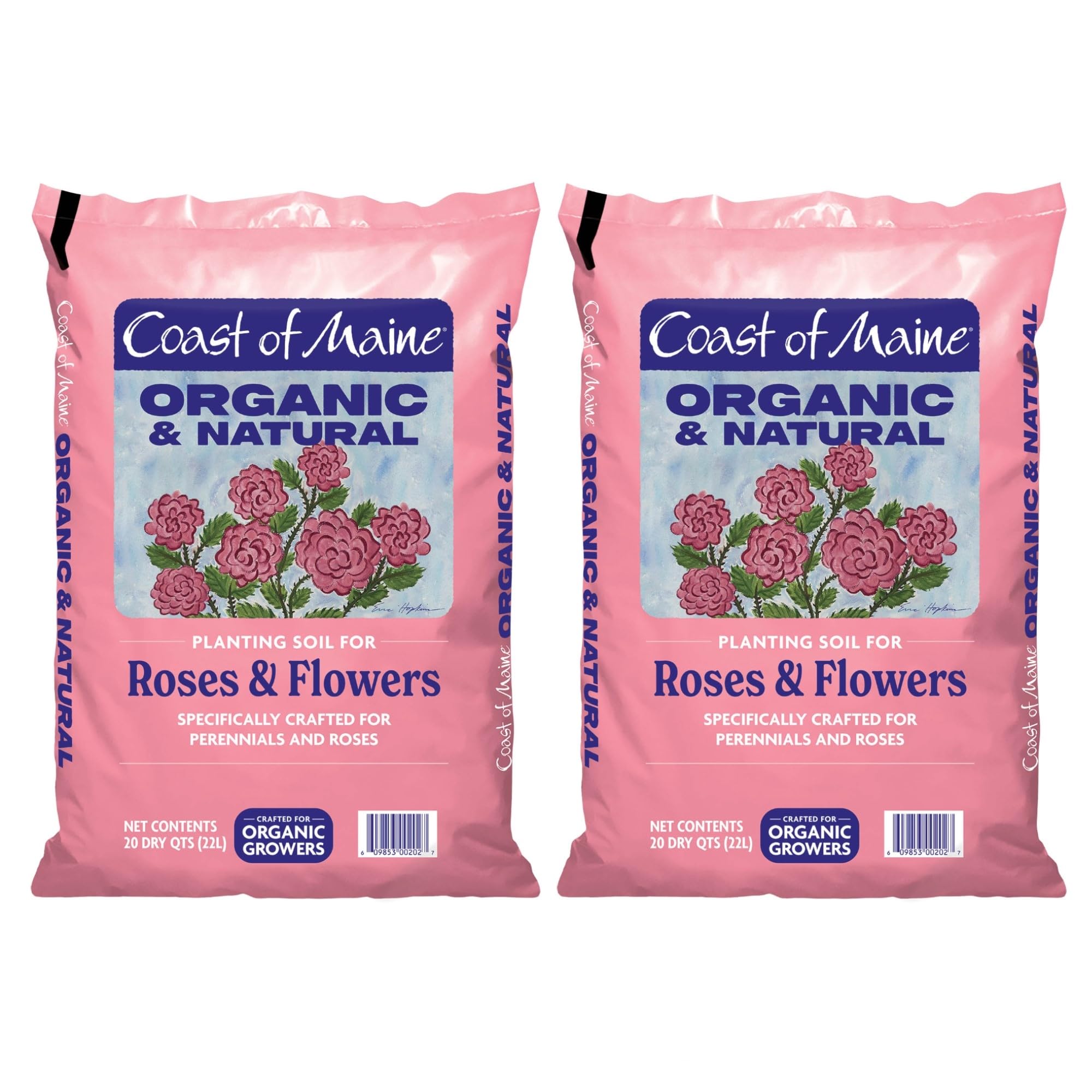
Coast of Maine makes a premium planting soil specifically engineered for roses and flowers. The blend of composted manure, sphagnum peat moss, and organic ingredients creates a lightweight, fluffy mix that balances moisture retention with sharp drainage—critical for preventing the root rot that plagues roses in heavy clay. The 20-quart bag is available as a two-pack and is OMRI-listed for organic use.
What makes this product stand out is its ability to revive struggling roses. Verified reviews describe a “baby rose on the brink of death” that fully recovered after being planted in Coast of Maine soil, while established bushes produced new growth and blooms within three months. The texture when wet is consistent and crumbly, unlike some bagged soils that turn into a hard cake after watering.
This product works both in-ground and in containers, making it versatile for rose beds, patio pots, and raised planters. The only consideration is that it’s a pure soil mix—not a concentrated fertilizer—so you’ll want to supplement with a granular feed (like Dr. Earth or Rose-tone) after the first month to maintain consistent blooming through the season.
What works
- Designed specifically for rose drainage and moisture balance
- OMRI-listed with composted manure and peat
- Revives even severely stressed roses
What doesn’t
- Heavier bag at 22 pounds per two-pack
- Requires supplemental feeding after first month
6. Heirloom Roses Mint Compost (7 Qt Box)
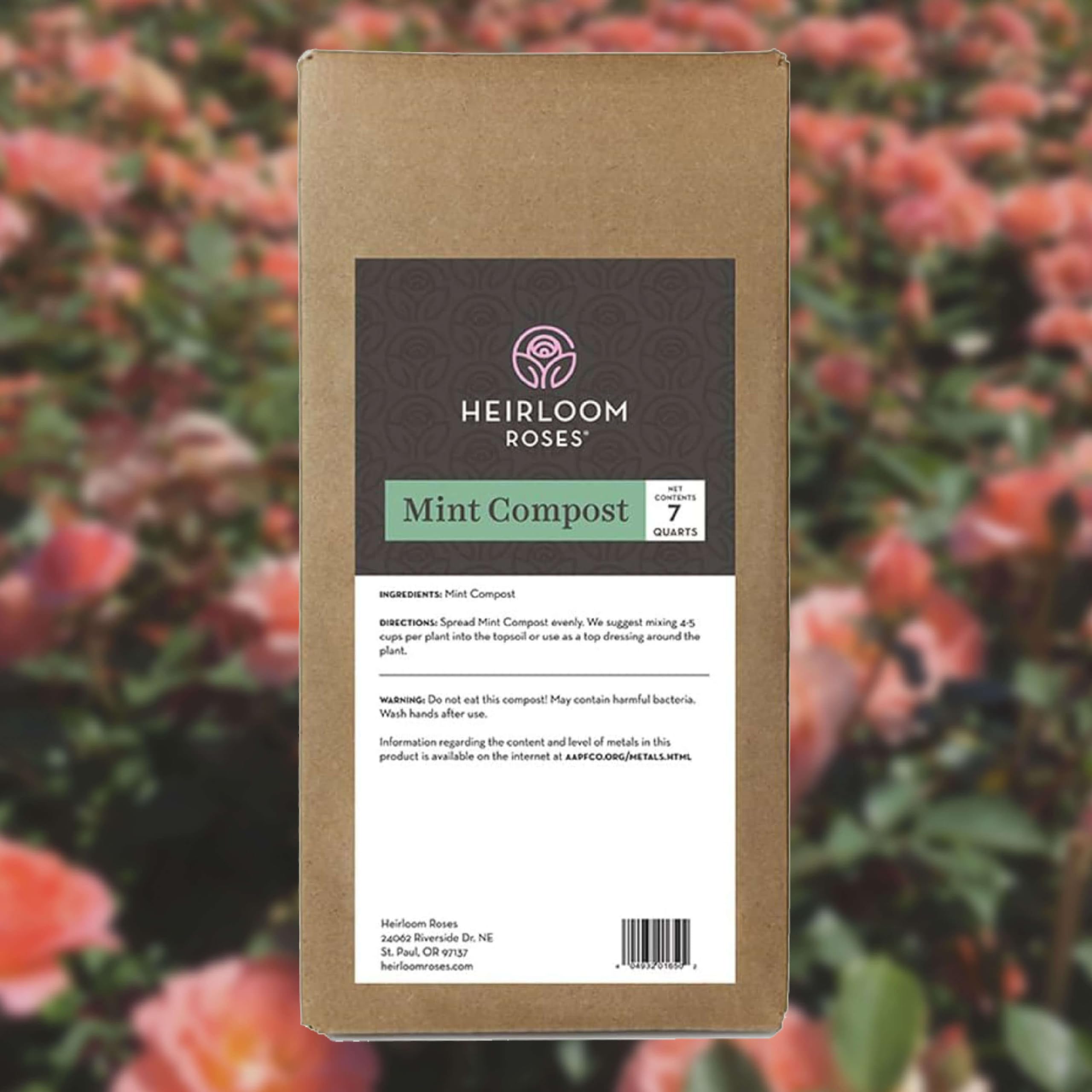
Heirloom Roses took an interesting approach with this mint compost—it’s a 100% natural soil amendment infused with mint oils that help repel aphids, spider mites, and other common rose insects. The mint does more than mask smells; it acts as a natural deterrent that can reduce the need for chemical sprays. The box contains 7 quarts, enough for five roses as a top dressing or hole amendment.
Beyond pest control, the mint compost is rich in natural humus that helps break up hard clay soils while also improving moisture retention in sandy beds. Users praise its dark, rich color and pleasant minty aroma—a welcome change from the earthy smell of standard compost. The texture is fine and uniform, making it easy to spread around the base of each plant without disturbing roots.
The primary trade-off is cost per volume. At this price point per 7-quart box, it’s more expensive per cubic foot than standard soil amendments. Also, the mint scent, while pleasant to humans, can be overwhelming in enclosed spaces—best to store the box in a ventilated shed.
What works
- Mint oils naturally repel aphids and mites
- Improves both clay and sandy soil structure
- Pleasant minty scent (not fishy or manure-like)
What doesn’t
- High cost per quart limits large-garden use
- Strong mint smell may be off-putting to some
7. Ribbon Organics OMRI Certified Organic Compost (7.9 Gal)

Ribbon Organics markets this as “black gold” for a reason—the compost is dark, rich, and free of sticks, plastic, or metal debris that plagues many bulk composts. At nearly 8 gallons per bag, it’s the most generous volume in this roundup, and the OMRI certification guarantees no synthetic pesticides or sewage sludge. The texture is fine and crumbly, making it ideal for mixing into containers or raised beds.
Users consistently report that this compost outperforms big-box store brands, especially for indoor container plants and finicky crops like clivias and orchids when blended with perlite and bark. Reviews note that it is odorless when moist (no ammonia or manure stink) and that it rehydrates easily even after long storage. The bag arrives with live worms and bugs, which is a genuine sign of active biological life—a good thing for soil health.
The price per cubic foot is higher than what you’d pay at a garden center for unlabeled compost. If you’re amending a very large rose bed (more than 50 square feet), this product may not be the most economical choice. But for small to medium gardens where quality and purity matter more than raw volume, this is the cleanest compost you can buy in a bag.
What works
- OMRI Certified with no debris or contaminants
- Odorless when moist—good for indoor use
- Contains active biology (live worms/bugs)
What doesn’t
- Premium cost per cubic foot
- Bag weight is light for the volume (7.9 grams—very fluffy)
Hardware & Specs Guide
NPK Analysis (Nitrogen-Phosphorus-Potassium)
For roses, the NPK ratio determines whether you get lush foliage or abundant blooms. A 4-3-2 or 5-3-4 blend provides steady nitrogen for leaf growth, enough phosphorus for strong root and flower development, and potassium for overall plant vigor. Products like Dr. Earth and Espoma Rose-tone stick to the 4-3-2 sweet spot, while liquid fish emulsions are higher in nitrogen and are best used early in the season.
Organic Certification and Soil Microbes
OMRI, CCOF, and Non-GMO Project Verified labels mean the compost contains no synthetic chemicals, GMO ingredients, or toxic fillers. Look for added mycorrhizae (both endo and ecto types) in products like Espoma Land & Sea—these fungi attach to rose roots and dramatically increase water and nutrient uptake, reducing your watering frequency and the need for chemical fertilizers.
FAQ
Is compost or fertilizer better for planting new roses?
Why do my rose leaves turn yellow after applying fish emulsion?
Can I use mushroom compost instead of rose-specific compost?
Final Thoughts: The Verdict
For most gardeners, the compost for planting roses winner is the Dr. Earth Total Advantage Rose & Flower Fertilizer because it delivers a genuine 4-3-2 NPK profile with Non-GMO verification and humic acid enrichment—all in an easy-to-use granular form. If you want a rapid liquid feed for newly planted roses, grab the Heirloom Roses Founder’s Fish Fertilizer. And for an ultra-pure, debris-free soil builder that improves heavy clay or sandy soil, nothing beats the Ribbon Organics OMRI Certified Compost.