
Too much water pressure from a standard can will flatten delicate seedlings, wash away loose seed-starting mix, or create unsightly divots in your trays. A watering can built for seedlings must deliver a gentle, controlled stream or a fine rose spray that lands like soft rain rather than a deluge. The spout needs to reach into tight germination cells and under low humidity domes without disturbing the fragile root hairs that have just begun to form.
I’m Rikta — the co-founder and writer behind Lawn Gear Lab. I’ve spent dozens of hours cross-referencing spout lengths, nozzle designs, and owner-reported flow control on small watering cans, and I’ve distilled which specs actually separate a seedling-safe tool from an indoor plant novelty.
Whether you are hardening off a flat of tomatoes or watering a windowsill tray of microgreens, the right tool prevents over-saturation and soil splash. Here is my detailed research guide to the best watering can for seedlings on the market today.
How To Choose The Best Watering Can For Seedlings
Seedlings are not houseplants. Their root systems are shallow, their stems are brittle, and the growing medium (often peat-based or coco coir) is lightweight and prone to erosion. A standard 2-quart watering can with a wide mouth will dump too much water at once, burying seeds and compacting the mix. You need a tool that meters flow, targets the root zone, and fits between leaves without bruising tender cotyledons.
Spout Length vs. Reach
The spout must be long enough to reach the back of a 1020 propagation tray or the interior of a tall humidity dome without your hand hovering directly over the soil. A spout of at least 5 to 6 inches gives you the reach to water the root collar without leaning across, which also prevents accidental elbow-bumps to neighboring trays. Look for a slender, tapered exit — around 0.3 to 0.5 inches — to avoid a rushing wall of water.
Rose Head Versus Open Spout
Rose attachments (fine-nozzle sprinkler heads) break the stream into hundreds of micro-droplets, reducing the kinetic impact on the soil surface. A brass or plastic rose with small, evenly spaced holes is the gold standard for overhead watering of newly germinated seeds. An open spout, by contrast, works better once seedlings have established true leaves and you want a direct stream to the root zone without wetting the foliage — a key tactic for preventing fungal diseases like damping-off.
Capacity and Balance
You do not need a gallon of water for a single seed-starting session. Cans in the 12 oz to 40 oz range are ideal because they force you to refill often, which discourages overwatering — the number one killer of seedlings. A smaller can stays lighter and easier to maneuver between pots, and when filled fully it must remain well-balanced so the weight does not pull your wrist down and cause the spout to dip into the soil.
Quick Comparison
On smaller screens, swipe sideways to see the full table.
| Model | Category | Best For | Key Spec | Amazon |
|---|---|---|---|---|
| Haws Light Blue Plastic 1 Pint | Premium Plastic | Brass rose for fine rain | 1 pint / removable brass rose | Amazon |
| CEWOR Sage Green Stainless Steel | Stainless Steel | 35 oz coverage + wood handle | 35 oz / powder-coated steel | Amazon |
| Fiskars Indoor Watering Can | Recycled Plastic | Anti-drip spout / measurements | 40 oz / anti-drip nozzle | Amazon |
| HB Design Co. White Printed | Decorative Metal | Display piece + gentle pour | 35 oz / ceramic-coated steel | Amazon |
| Nakaya Japanese Long Spout | Entry Plastic | Tight tray corners / 28 oz | 28 oz / 12.5″ spout length | Amazon |
| Bamworld Matte Black Metal | Budget Metal | Desk-side tiny pots / 10 oz | 10 oz / one-piece welded steel | Amazon |
| Lizhluzh 12 oz Stainless Steel | Budget Compact | Single succulent / cactus care | 12 oz / Teflon-coated steel | Amazon |
In-Depth Reviews
1. Haws Light Blue Plastic 1 Pint
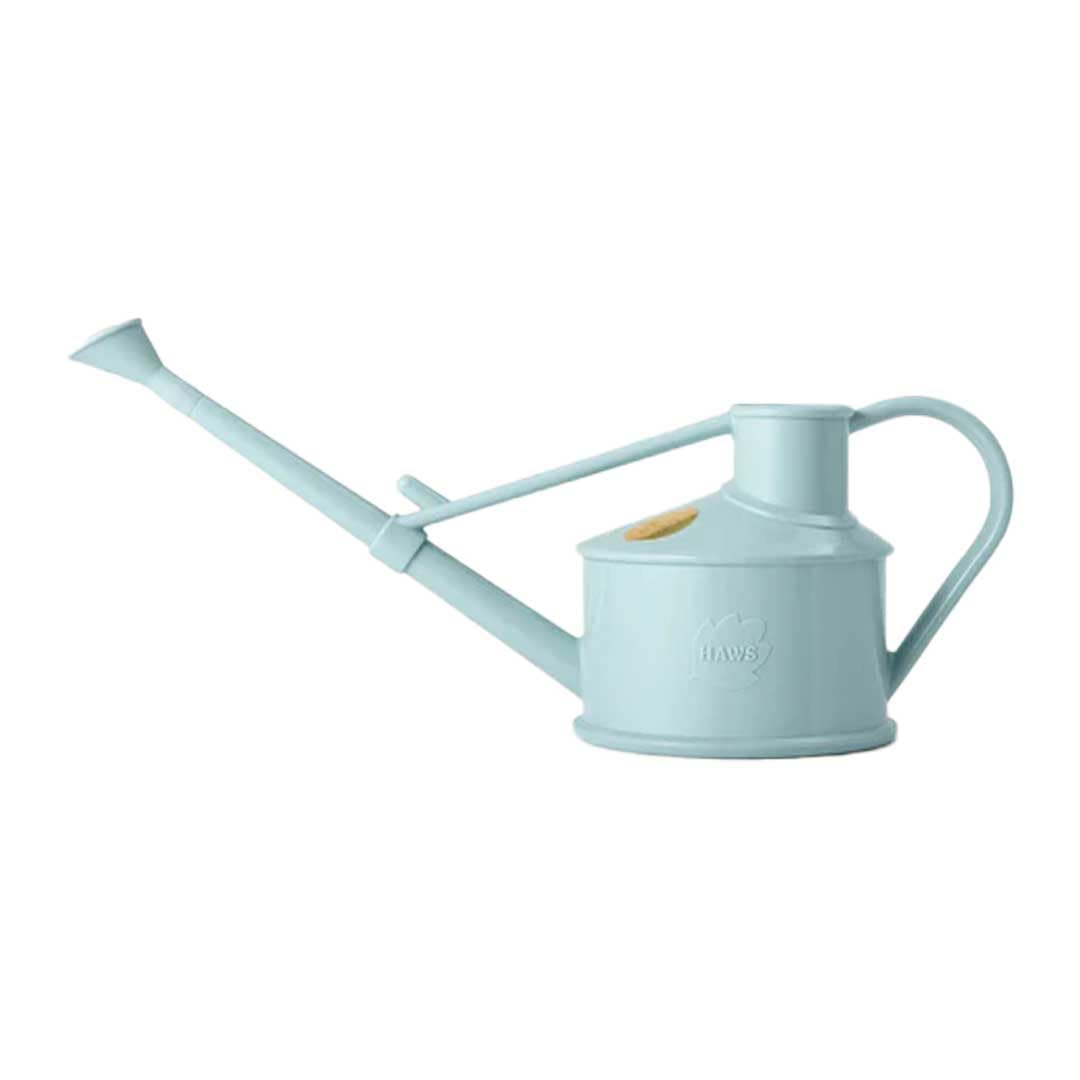
Haws brings over a century of watering-can engineering to this compact plastic model, and the brass rose head is the standout feature for seedling work. The removable rose screws into the spout and turns the stream into a soft, rain-like shower that won’t dislodge freshly sown seeds or gouge open seed-starting mix. The 1-pint (16 oz) capacity is deliberately small — just enough for one 1020 tray or a cluster of 4-inch pots — which forces you to slow down and observe the moisture level of each cell.
The injection-molded plastic body is lightweight at only 150 grams, and the balance point sits directly under the handle so the can does not tip forward when full. Owners consistently praise the elegant, well-balanced design and the fact the brass rose develops a natural patina over time. The open-top design makes refilling simple, and the removable rose gives you two watering modes: a precise open spout for directed root-zone watering once seedlings have true leaves, or the rose for gentle overhead application.
A few owners report that if you leave the can full of water overnight, a small amount will seep from the base — the rose gasket is not completely watertight when stored wet. This is a minor inconvenience for a tool that performs flawlessly during active use. For anyone who starts seeds indoors with any regularity, this Haws can is the definitive seedling-watering specialist.
What works
- Removable brass rose produces a truly gentle rain pattern ideal for germinating seeds.
- Excellent balance — feels light and stable even when filled to the brim.
- Classic Haws construction with replaceable parts; built to last.
What doesn’t
- Small size means multiple refills if you have more than two standard trays.
- Can develop a slow base leak if stored horizontally with water inside.
- Plastic body feels less premium than the metal Haws models.
2. CEWOR Sage Green Stainless Steel 35 oz

The CEWOR 35 oz can bridges the gap between a functional tool and a countertop decor piece without sacrificing seedling-friendly performance. The body is powder-coated stainless steel, not painted, which means the finish resists chipping when you inevitably bump it against a shelf or tray edge. The natural wood handle is thicker than most metal handles and provides a secure, non-slip grip that matters when you are pouring a controlled stream over a flat of fragile tomato starts.
The long spout measures approximately 7 inches from the can body to the tip, giving you the reach to water the back cells of a standard propagation tray without leaning over the front row. The semi-open top has a partial cover that prevents sloshing during transport but still allows easy filling from a faucet. At 35 oz, the capacity is generous enough to handle three or four small trays in a single trip, yet the can remains light enough for one-handed operation.
Reviewers consistently note zero leaking at the weld seams and a precise stream that does not splash. The sage green finish and wood handle make this a can you will leave on display, and the lack of a rose head means you should pour close to the soil line to avoid disturbing the mix. It is ideal for the transition phase when seedlings have their first true leaves and you want a direct, no-drip pour to the root zone.
What works
- Powder-coated stainless steel resists rust and scratches far better than painted metal.
- Wood handle is comfortable and does not get slippery when wet.
- Partial top cover reduces slosh and spill during movement between trays.
What doesn’t
- No rose head — the open spout can erode soil if you pour from too high.
- Wood handle may need periodic sealing to prevent moisture absorption over years.
- Capacity of 35 oz may feel large for a single small tray of microgreens.
3. Fiskars Indoor Watering Can 40 oz
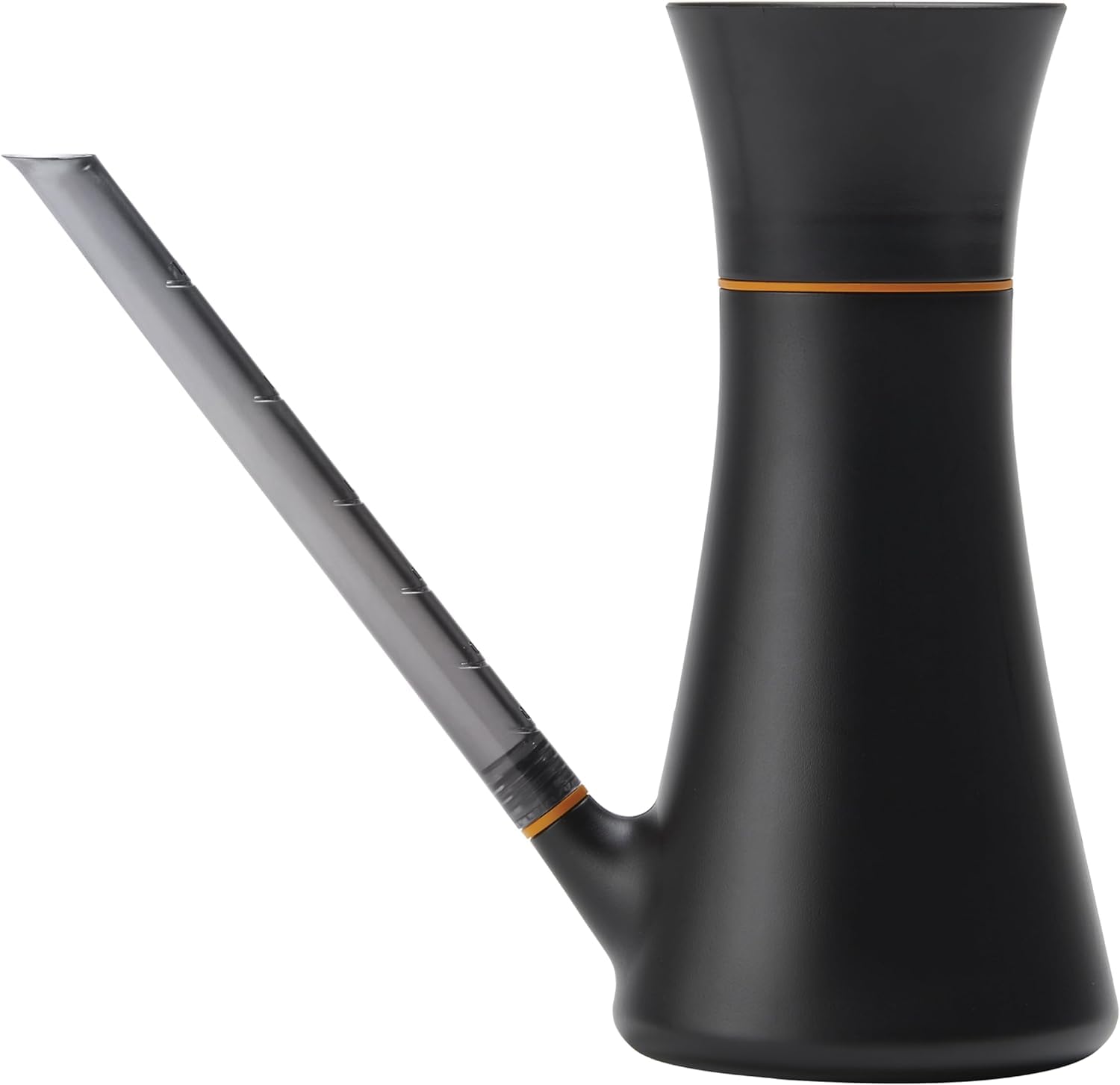
Fiskars applies its ergonomic tool-design DNA to this 40 oz indoor can, and the result is a remarkably controllable pour that works well for seedling trays. The translucent spout has volume markings printed in easy-to-read figures, letting you measure out exactly 8 oz for a single 1020 cell flat without overthinking it. The anti-drip tip is a real advantage — when you finish a pour and tilt the can back, the remaining water does not dribble down the spout and onto your floor or shelf.
The slender spout is about 8 inches long and tapers to a narrow exit that produces a slow, focused stream. This stream is thin enough to snake between the leaves of maturing seedlings and deliver water directly to the base of each stem, which is a key technique for avoiding fungal issues on the foliage. The body is made from 30% post-consumer recycled plastic, and the overall weight with 40 oz of water is still manageable for a single-hand carry. The quick-fill cap folds open without needing to be removed, making refills fast during a long seed-starting session.
Owner feedback highlights the sleek, modern silhouette that blends into a home environment, though a few mentioned that the spout can detach if you twist it past the click-stop during cleaning. The 40 oz capacity is the largest among the seedling-friendly picks here, so you will have enough water to cover multiple trays without constantly returning to the sink. This is the best option for the grower who starts a moderate number of seeds indoors and wants an elegant, mess-free watering experience.
What works
- Volume markings on the translucent spout allow measured watering per tray.
- Anti-drip nozzle stops floor and shelf mess after each pour.
- Lightweight recycled-plastic construction with a comfortable contoured grip.
What doesn’t
- Spout can become loose and detach if over-rotated during cleaning.
- 40 oz capacity might encourage overwatering if you are not careful.
- Plastic body may feel less durable to buyers expecting a metal can.
4. HB Design Co. Printed White 35 oz
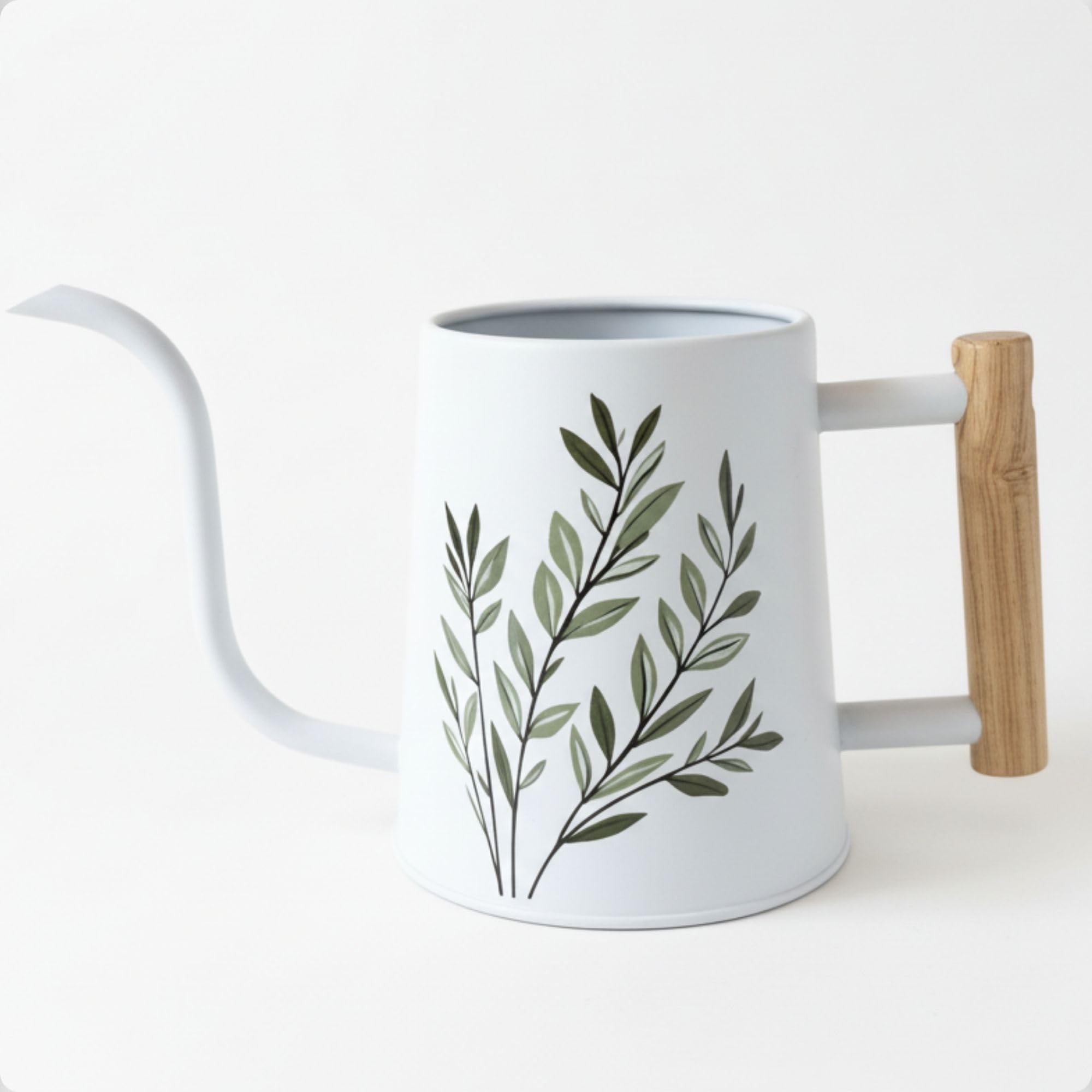
The HB Design Co. can distinguishes itself with a ceramic-like powder coating over stainless steel and a decorative leaf pattern that turns the tool into intentional shelf decor. But beneath the aesthetic, the engineering is serious: the long spout (approximately 8 inches) produces a gentle, narrow stream that is ideal for reaching the base of seedling cells without disturbing the surrounding medium. The bamboo handle is smooth and ergonomic, providing a comfortable pivot point for controlled tilting.
At 35 oz, the capacity is identical to the CEWOR model, but the HB Design can uses a slightly smaller footprint (10.8 inches wide) which makes it easier to store on a crowded seed-starting shelf. The interior is ceramic-coated stainless steel, which adds an extra layer of protection against corrosion from fertilizers or hard water that might be mixed into your seedling feed. Owners mention that the can arrives in a custom-fit box that protects the painted finish during shipping, and most describe the pour as “effortlessly controlled” with no splashback.
This model lacks a rose head, so you will need to bring the spout close to the soil surface for direct root watering. The price point is the highest of any can reviewed here, which reflects the premium decorative finish and the bamboo handle. If you want a watering can that performs reliably for seedlings while also functioning as an attractive object you are happy to leave in plain sight, this HB Design Co. can justifies its premium position.
What works
- Ceramic-coated steel interior resists corrosion from fertilizer mixes.
- Bamboo handle provides a warm, non-slip grip that ages well.
- Decorative leaf pattern means you will not hide it — always accessible for watering.
What doesn’t
- Premium price is significantly higher than functionally similar metal cans.
- No rose attachment — not suitable for overhead watering of just-germinated seeds.
- White finish may show water spots or mineral deposits over time.
5. Nakaya Japanese Long Spout 28 oz

The Nakaya Japanese Long Spout can is the most targeted tool in this lineup for reaching the deepest corners of a seed tray. The spout extends 12.5 inches from the handle axis, which is longer than any other model here, allowing you to water the back row of a deep 1020 tray without stretching your arm over the front edge. The 28 oz plastic body is lightweight (just 0.06 kg), and the white color makes it easy to see residual water level through the translucent walls.
Made in Japan, this can uses a simple, no-frills design that prioritizes precision over aesthetics. The narrow spout opening produces a thin, controlled stream that can be directed into individual 2-inch seedling cells without wetting the leaves of adjacent plants. The capacity is small enough that you will refill often, which naturally prevents the overwatering that plagues beginner seed-starters. Owners frequently mention that the can is “barely larger than a coffee mug,” so set your expectations accordingly — this is a single-tray tool, not a bulk watering solution.
Because the spout is so long and the base is narrow, the can can tip over if set down carelessly on an uneven surface. Several reviews note that filling it past three-quarters capacity causes water to dribble out of the top during pouring. For the grower who needs extreme reach into tight propagation setups and values a no-nonsense, budget-friendly design, the Nakaya delivers exactly that and nothing more.
What works
- Extra-long 12.5-inch spout reaches the back of deep trays without arm strain.
- Very lightweight at 0.06 kg — easy to hold steady for precise targeting.
- Translucent body lets you see water level at a glance.
What doesn’t
- Narrow base makes it tippy on uneven shelves or tray edges.
- Cannot be filled past 75% without spilling from the wide mouth top.
- Plastic build feels less robust than steel alternatives.
6. Bamworld Matte Black Metal 10 oz
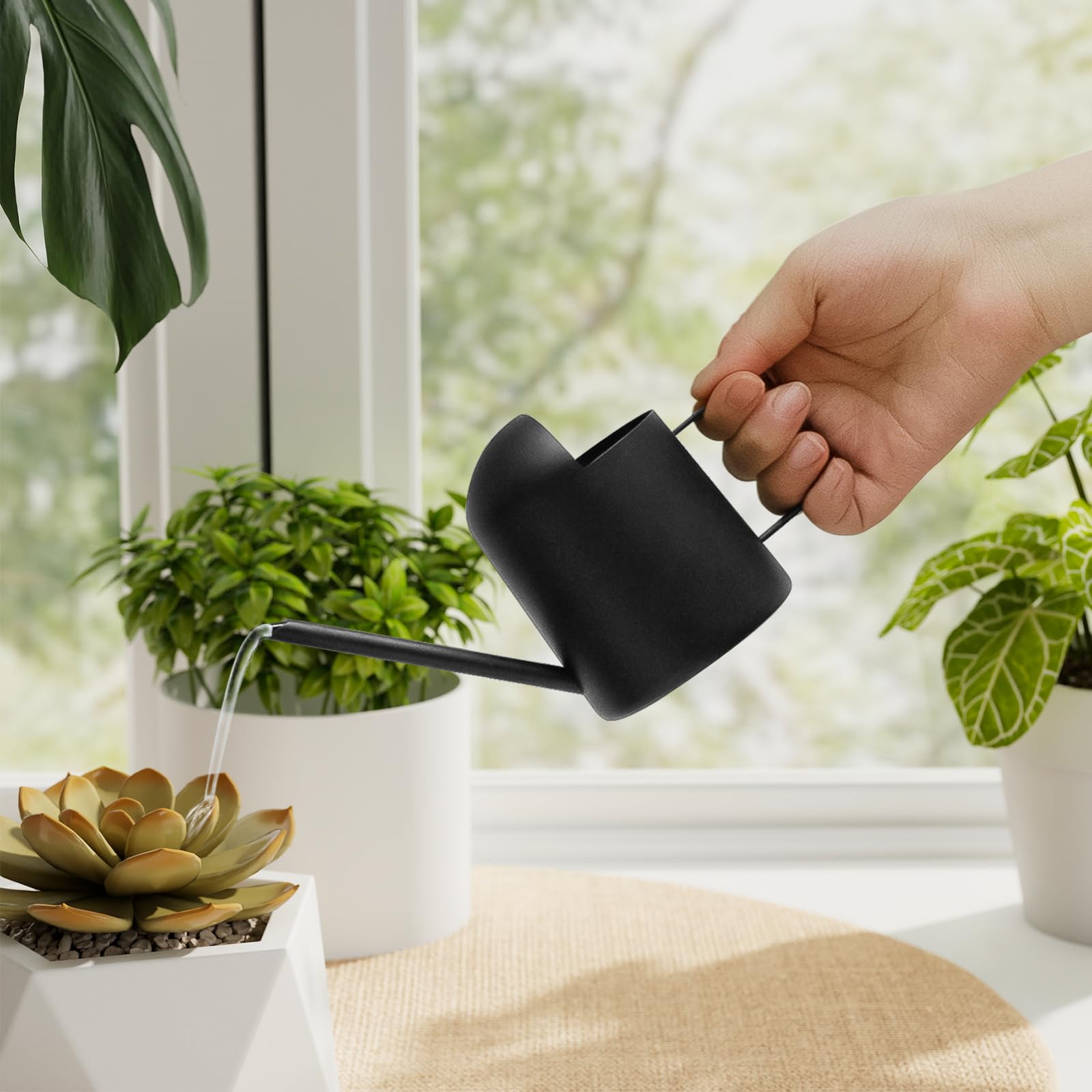
The Bamworld 10 oz can is the smallest metal watering can in this selection, and its 300 ml capacity makes it an excellent choice for anyone starting seeds in a very small space — a single 6-cell tray, a trio of 4-inch pots, or a windowsill microgreen garden. The one-piece welded stainless steel construction eliminates seams that could leak over time, and the matte black powder coat finish gives it a modern, understated look that fits into a home office or kitchen windowsill.
The long spout is narrow and precise, delivering a small, controlled stream that is ideal for targeting the base of each seedling without disturbing the delicate soil crust. The handle is formed from the same continuous steel piece, so there is no joint weakness, and the overall weight with water is barely noticeable. Reviewers consistently call it “cute” and “perfect for a few plants,” and many appreciate that the small size forces mindful watering rather than pouring by volume.
The spout is not removable, and there is no rose attachment, so you must use the open-stream approach. For the seed starter with a single tray or a collection of succulents and cacti where overwatering is the biggest threat, the Bamworld can delivers a budget-friendly, durable solution that looks good sitting out.
What works
- One-piece welded steel body eliminates leak-prone seams.
- Matte black finish is attractive and resists visible water spots.
- Tiny capacity naturally prevents overwatering in small setups.
What doesn’t
- 10 oz capacity requires multiple refills for more than one standard tray.
- No removable rose — not suitable for overhead fine-mist watering.
- Very small size may feel toy-like to some users; check dimensions carefully.
7. Lizhluzh 12 oz Stainless Steel
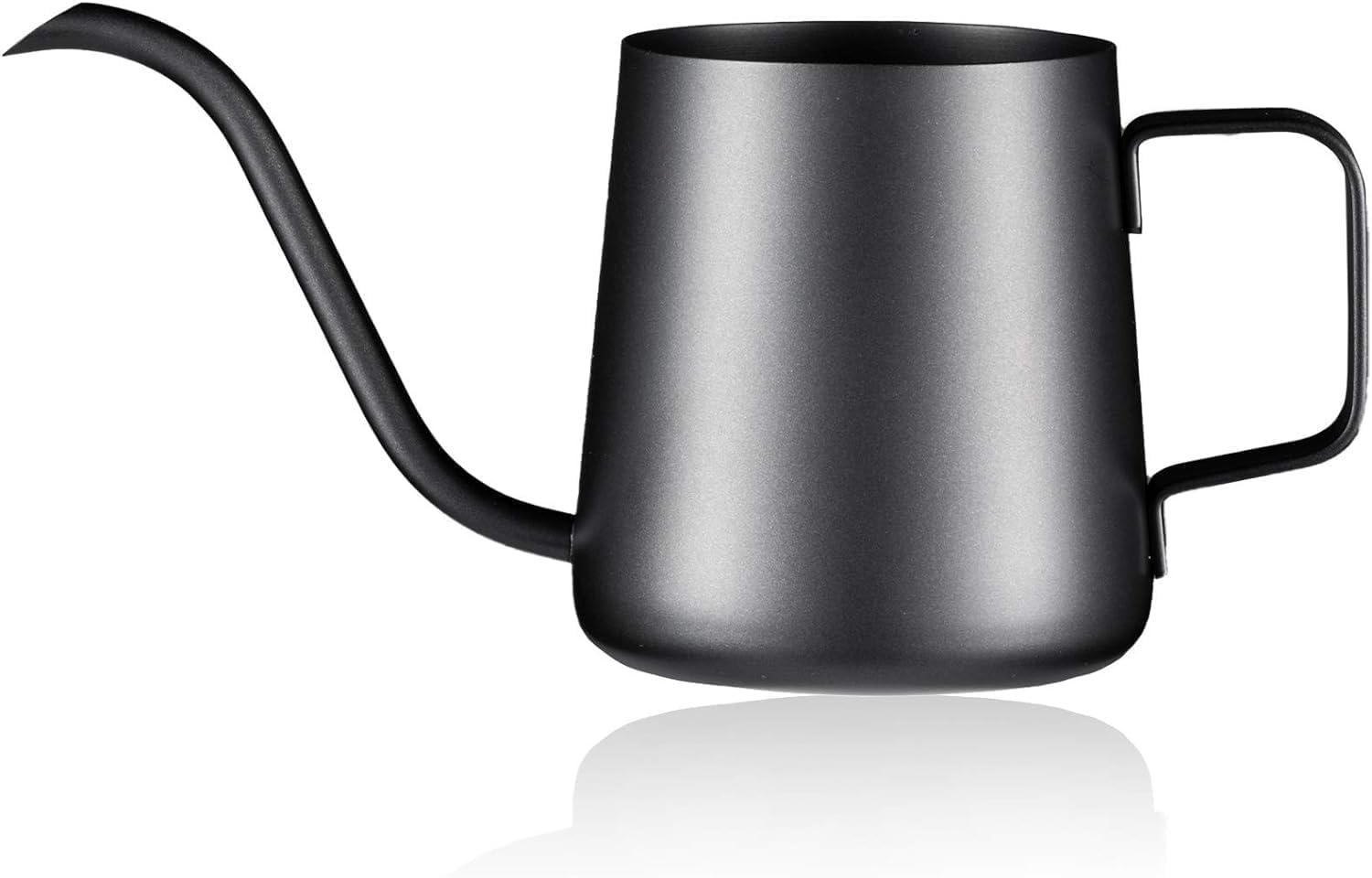
The Lizhluzh 12 oz can offers a slightly larger capacity than the Bamworld while maintaining the same compact, one-handed silhouette. The distinguishing feature here is the Teflon coating applied to both the interior and exterior of the stainless steel body, which provides an extra layer of rust resistance that is especially relevant if you use liquid fertilizer in your seedling water. The black finish is sleek and does not show fingerprints or water marks as easily as lighter-colored cans.
The long spout is slender and tapered, producing a thin, laminar stream that you can guide into tiny 1-inch cells of a seed-starting plug tray. The wide-mouth top makes filling from a faucet or a measuring cup easy, and the ergonomic handle is slightly thickened for a more comfortable grip compared to bare wire handles. Owners note that the packaging includes a foam shield over the spout to prevent bending during shipping, which indicates attention to potential damage during transit.
At 12 oz, you will get roughly 3 to 4 full refills for a standard 72-cell tray of seedlings, depending on how dry the medium is. Like the Nakaya and Bamworld, this is a single-task tool — it excels at precision, not volume. There is no rose head, so overhead watering of newly germinated seeds is not ideal. For the price, the Teflon-coated stainless steel construction and the well-designed spout make this a solid budget-friendly choice for the grower who wants a durable metal can without spending premium money.
What works
- Teflon coating inside and out provides excellent rust resistance for fertilizer use.
- Thickened ergonomic handle is more comfortable than thin wire handles.
- Packaging includes spout protection to prevent bending in transit.
What doesn’t
- 12 oz capacity still small; not practical for more than a few pots or one small tray.
- No rose attachment available for this model.
- Teflon coating may wear off over years of abrasive cleaning.
Hardware & Specs Guide
Spout Length and Diameter
The spout is the single most important spec for seedling safety. A spout between 6 and 12 inches lets you reach the root collar without leaning over the tray, which prevents your hand or arm from casting a shadow that could cool the growing medium unevenly. The spout’s exit diameter should be no wider than 0.5 inches — any larger, and the water column becomes too thick to meter into individual cells. The Nakaya’s 12.5-inch spout is the longest here, while the Fiskars and CEWOR spouts sit in the more moderate 7- to 8-inch range that balances reach with stability.
Rose Heads and Flow Rate
A rose head (also called a sprinkler head) breaks a single stream into dozens of fine droplets, reducing droplet kinetic energy by roughly 80 percent compared to an open spout at the same height. Brass roses, like the one on the Haws, are preferred because the material resists corrosion and the holes are precision-drilled for even distribution. Plastic roses can work but tend to clog faster if you use hard tap water. The droplet size matters: seedlings germinated under a fine rose (holes under 1 mm) are less likely to develop damping-off than those watered with an open stream that splashes soil onto the cotyledons.
FAQ
Should I use a rose head or an open spout for newly germinated seedlings?
What capacity is best for a single 1020 propagation tray?
Can I use a stainless steel watering can with liquid seedling fertilizer?
Why do some watering cans leak from the spout connection?
Final Thoughts: The Verdict
For most gardeners, the watering can for seedlings winner is the Haws Light Blue Plastic 1 Pint because the removable brass rose head delivers the most gentle rain pattern for fragile sprouts, and the compact size forces the careful watering rhythm that seedlings need. If you want a larger capacity with a comfortable wood handle and a corrosion-proof steel body, grab the CEWOR Sage Green 35 oz. And for a decorative piece that handles precise root-zone watering without taking up shelf space, nothing beats the HB Design Co. Printed White 35 oz.