
When flowering plants stall, produce sparse buds, or fail to set fruit, the missing link is almost always phosphorus — the nutrient that drives bloom formation, root expansion, and energy transfer at the cellular level. A targeted application delivers visible results within two growing cycles.
I’m Rikta — the co-founder and writer behind Lawn Gear Lab. I’ve spent hundreds of hours digging into soil chemistry, analyzing NPK ratio data, and cross-referencing thousands of verified owner experiences to isolate which phosphorus sources actually deliver measurable bloom increases without burning roots.
Whether you grow prize-winning roses, heavy-yielding tomato plants, or lush perennial borders, choosing the right high phosphorus fertilizer means understanding P-source solubility, soil pH synergy, and application timing — details this guide unpacks with hard data and real-world results.
How To Choose The Best High Phosphorus Fertilizer
Not all bloom boosters are the same. The difference between a good phosphorus fertilizer and a great one comes down to three things: the P-source chemistry, the accompanying micronutrient package, and the delivery form that fits your growing method. Here is what matters most.
Decoding the NPK Ratio
The three numbers on the bag represent Nitrogen, Phosphorus, and Potassium in that order. For a bloom-focused product, you want the middle number — the P — to be the highest. Formulas like 10-30-20 or 0-46-0 signal a heavy phosphorus content. This drives flower initiation, bud set, and root mass building. A ratio that spikes nitrogen instead of phosphorus pushes leafy growth at the expense of blooms.
Water Soluble vs. Granular Delivery
Water-soluble powders deliver phosphorus to the root zone within hours of application, making them ideal for potted plants and hydroponic setups where uptake speed matters. Granular superphosphates release their P content over weeks, feeding the soil ecosystem slowly and safely at planting time. Choose solubility based on your watering schedule and whether you want immediate correction or long-term soil building.
Organic Certification and Soil Safety
Organic phosphorus sources like bone meal and rock phosphate rely on soil microbes to break them down, making them slower but gentler and more sustainable. Synthetic sources like triple super phosphate and monoammonium phosphate give you faster, more predictable results but require careful pH management to avoid locking out zinc or iron. Read the label for OMRI certification if clean soil biology is a priority.
Quick Comparison
On smaller screens, swipe sideways to see the full table.
| Model | Category | Best For | Key Spec | Amazon |
|---|---|---|---|---|
| Grow More Super Bloomer | Water-Soluble | High-volume bloom production | NPK 15-30-15 | Amazon |
| Jack’s Classic Blossom Booster | Water-Soluble | Consistent feeding programs | NPK 10-30-20 | Amazon |
| FoxFarm Open Sesame | Water-Soluble | Early flowering transition | NPK 5-45-19 | Amazon |
| RAW All in One Bloom | Powder | Hydroponic & soil flexibility | NPK High-P formula | Amazon |
| Dr. Earth Flower Girl | Organic Granular | Organic flower gardens | NPK 4-10-7 | Amazon |
| Cz Garden Triple Super Phosphate | Granules | Soil phosphorus correction | 0-46-0 | Amazon |
| Hi-Yield Super Phosphate | Granules | General bloom boosting | 18% Phosphate concentration | Amazon |
In‑Depth Reviews
1. Grow More Super Bloomer 15-30-15 Fertilizer

The Grow More Super Bloomer delivers a tight NPK ratio of 15-30-15 that puts phosphorus front and center while keeping nitrogen low enough to avoid leafy overgrowth. The powder dissolves rapidly in water, making it suitable for both soil drench applications and foliar feeding on flowering vines and fruiting shrubs. Chelated iron and manganese included in the formula address trace element deficiencies that often accompany high-P feeding regimens.
User reports consistently describe plant sizes doubling and bloom counts increasing two to three times after switching to this formula. The 3-pound bag yields a substantial volume of liquid feed — about 48 gallons at the standard mixing rate. This fertilizer works across roses, tomatoes, peppers, and ornamentals, and the uniform nutrient distribution makes it a staple in greenhouses and nurseries looking for reliable, repeatable results.
The American-made manufacturing gives confidence in quality control, but the strongest evidence comes from the field: gardeners see noticeable flower density improvement within two weeks of regular application. For sheer bloom power per dollar invested, this is the most balanced high-phosphorus solution on the market.
What works
- Balanced NPK targets flowering without excessive leaf growth
- Contains chelated micronutrients for comprehensive plant health
- Dissolves quickly with minimal effort for consistent mixing
What doesn’t
- Higher strength requires careful dilution to avoid root burn in young plants
- Not organic; uses synthetic nutrient salts
2. Jack’s Classic 10-30-20 Blossom Booster
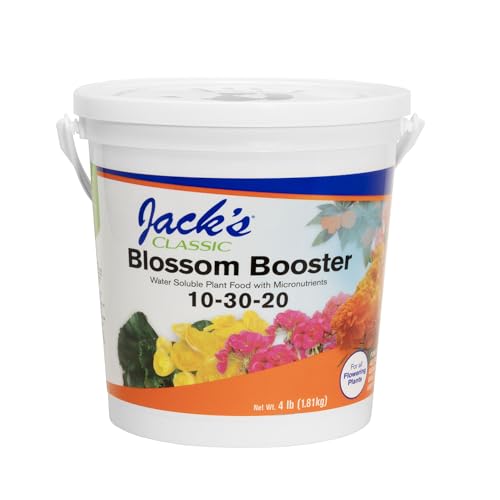
Jack’s Classic uses a 10-30-20 analysis that provides a higher potassium component than most bloom boosters, supporting strong stem development alongside the phosphorus-driven flower production. The powder comes in a convenient 4-pound container with a measuring spoon included for accurate dosing — a small but practical touch that reduces guesswork. This formula works in continuous feed systems, hose-end sprayers, and standard watering cans alike.
Gardeners who feed annuals, hydrangeas, and heavy feeders like squash report that plant health and flower color improve visibly after just a few applications. The inclusion of full micronutrients means you don’t need to supplement with additional trace elements during the bloom phase. This is especially valuable for growers who prefer a one-piece solution over complex multi-part nutrient schedules.
Users note that the blue crystalline powder dissolves without clumping and leaves minimal residue. The price per gallon of mixed feed is competitive with other premium water-soluble brands, making this a smart choice for gardeners covering large borders or multiple raised beds. If you want consistent, professional-grade results with minimal fuss, Jack’s Classic is a proven performer.
What works
- Added potassium strengthens stems and supports heavy blooms
- Comes with a measuring spoon for dosage accuracy
- Full micronutrient package eliminates need for supplements
What doesn’t
- Requires mixing before each use for best freshness
- Higher price point than basic granular options
3. FoxFarm Open Sesame 5-45-19 Fertilizer
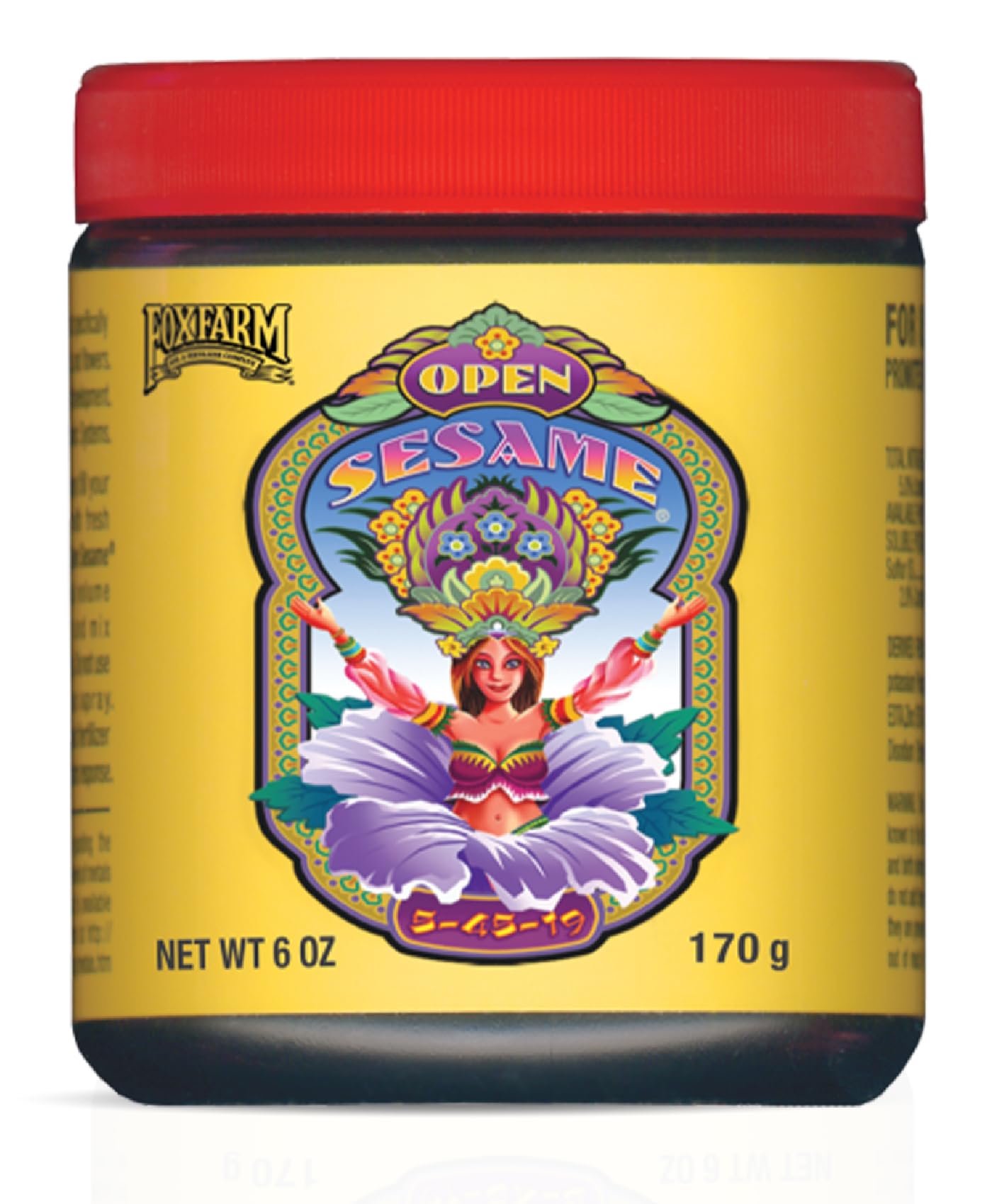
FoxFarm Open Sesame is engineered for the early flowering stage, with an aggressive 5-45-19 ratio that delivers massive phosphorus content to trigger bloom initiation. The low nitrogen level prevents the plant from reverting to vegetative growth at exactly the moment you want flower sites to form. This product is part of FoxFarm’s three-part blooming system but works effectively as a standalone booster for any gardener targeting heavy bud set.
Being water-soluble, it integrates easily into hydroponic reservoirs, drip irrigation lines, and hand-watered containers. Users who grow peppers, cannabis, and flowering ornamentals report faster transition to bloom and increased flower density compared to general-purpose fertilizers. The 6-ounce jar treats a surprisingly large number of plants given the concentration of the formula.
FoxFarm’s reputation in the horticulture community is strong, and Open Sesame specifically is praised for its consistency batch to batch. The key consideration is timing — this is not a maintenance fertilizer but a targeted tool for the window when plants switch from growing leaves to developing buds. Used correctly, it produces conspicuously bigger and earlier flowers.
What works
- Extremely high phosphorus triggers rapid bloom initiation
- Works across hydroponic, soil, and container setups
- Trusted brand with consistent formulation quality
What doesn’t
- Very concentrated formula demands precise measurement
- Contains synthetic additives not suitable for organic growers
4. RAW All in One Bloom 2 oz

RAW All in One Bloom positions itself as a complete flowering nutrient by packing essential NPK values alongside kelp extract, humic acids, and a full suite of micronutrients into a single water-soluble powder. The formula emphasizes high phosphorus for flower development and elevated potassium for stem strength and plant resilience. Its pH tends to settle around 6.5 when mixed — a neutral range that works well in most soil and soilless media.
The 2-ounce size is compact and concentrated: the recommended dose is just half a teaspoon per gallon of water. Users growing in both soil and hydroponic systems report success, noting that the mix dissolves cleanly without sediment. Several experienced growers comment that this formula makes transitioning from vegetative to bloom nutrition seamless compared to using separate base and booster products.
The most striking feedback comes from flower gardeners who report the best fragrance and color intensity they have ever achieved. The presence of humic substances improves nutrient uptake efficiency, meaning less fertilizer is wasted. For growers who want a simple, comprehensive bloom solution that performs across multiple environments, RAW delivers strong results from a small package.
What works
- Contains kelp, humics, and micronutrients for complete feeding
- Highly concentrated; small package goes a long way
- Adjusts well to both hydroponic and soil cultivation
What doesn’t
- Very strong concentration can burn plants if over-applied
- Small container size may need frequent reordering for large gardens
5. Dr. Earth Flower Girl Bud & Bloom Booster 4-10-7

Dr. Earth Flower Girl delivers a 100 percent organic and natural handcrafted blend with a 4-10-7 NPK analysis, making it the strongest organic phosphorus option in this guide. Because organic sources break down through microbial activity, the phosphorus release is slower but gentler on soil biology compared to synthetic salts. This formulation is free from GMOs, chicken manure, and sewage sludge — key considerations for growers who prioritize clean food production.
Users growing dragon fruit and guava saw bloom counts jump from three to twenty-five per tree after switching to this product. Dahlia enthusiasts recommend it for producing exhibition-quality flower size. The 4-pound bag covers a significant area when used as a top-dress or worked into the planting hole, making it practical for perennial beds and fruit trees.
One important note is that the label may read 3-9-4 on the bag versus the advertised 4-10-7, so check the actual package if you need an exact ratio. However, the formula works consistently for organic gardeners who want visible bloom improvement without synthetic inputs. Dr. Earth offers the closest experience to a clean, sustainable phosphorus feed without sacrificing garden performance.
What works
- OMRI-certified organic with no synthetic chemicals
- Safe for people and pets after application
- Proven bloom increase on fruit trees and ornamentals
What doesn’t
- Bag label discrepancy between 4-10-7 and 3-9-4 reported
- Slower release requires patience compared to synthetic formulas
6. Cz Garden Triple Super Phosphate 0-46-0

Cz Garden Triple Super Phosphate is the highest-concentration phosphorus source in this lineup at a pure 0-46-0 analysis. With no nitrogen or potassium, this is a targeted soil amendment designed to correct phosphorus deficiency without throwing off your other nutrient ratios. The product is made in the USA and comes in a heavy-duty resealable pouch for convenient storage between applications.
Small-scale farmers particularly value this product for building custom NPK blends — you can add exactly as much phosphorus as your soil test recommends without buying extra nitrogen or potassium. Users report that applying this to fruit trees and cane berries results in visibly healthier plants with larger fruit. A single 5-pound bag can cover over 3,000 square feet of garden space when applied at maintenance rates, making the cost per treatment exceptionally low.
The granular form requires working into the soil or applying before rain to dissolve, so it is not ideal for quick foliar correction. However, for pre-plant incorporation or side-dressing established perennials, the high phosphorus concentration gives you precise control. If your garden already has adequate nitrogen and potassium but needs a phosphorus boost, this is the cleanest, most economical way to deliver it.
What works
- Extremely high 46% phosphorus concentration corrects deficiencies fast
- Resealable pouch keeps granules dry and usable
- Great value per square foot of coverage
What doesn’t
- No nitrogen or potassium included — not a complete fertilizer
- Granular form needs soil incorporation or moisture for activation
7. Voluntary Purchasing Group 32115 Hi-Yield Super Phosphate

Hi-Yield Super Phosphate from Voluntary Purchasing Group provides a straightforward 18 percent phosphate content in granular form, making it one of the most accessible and cost-effective phosphorus sources for home gardeners. With a simple 1:0:0 NPK ratio — effectively phosphorus only — this product is designed for direct application at planting time or as a side dress during the growing season. The 4-pound bag is small enough for compact gardens, raised beds, and container soil blends.
Users consistently comment on the visible increase in bloom production across vegetables, wildflowers, and shrubs. Tomato growers report larger stalks, healthier plants reaching over six feet, and harvest yields approaching 100 pounds from nine plants. The granular texture is easy to spread by hand, though it does have a tendency to stain concrete surfaces if spilled — a minor inconvenience given the effectiveness.
The 18 percent phosphate level is lower than premium options like triple super phosphate, but for general garden use, it provides a reliable and gentle phosphorus supply that reduces the risk of over-application. This is a sensible entry-level product for gardeners who want to test the benefits of phosphorus targeting without committing to concentrated formulas. For simple, proven bloom boosting at a modest cost, this product delivers exactly what it says.
What works
- Simple 1:0:0 formula makes it easy to apply without altering other nutrients
- Proven to increase bloom count and fruit yield in vegetable gardens
- Gentler phosphorus concentration suitable for first-time users
What doesn’t
- Granules can stain hardscapes like concrete and stone
- Only contains phosphorus; may need additional NPK supplementation
Hardware & Specs Guide
NPK Ratio Interpretation
The middle number in the NPK sequence is the percentage by weight of phosphorus expressed as P₂O₅. A ratio of 15-30-15 means 30 percent of the product mass is available phosphate. Higher middle numbers deliver more bloom-driving power per application but require correspondingly smaller doses to avoid salt buildup.
Water Solubility vs. Granular
Water-soluble powders (like 15-30-15 or 10-30-20 formulas) enter the root zone within hours, making them suitable for immediate deficiency correction and constant-feed systems. Granular superphosphates require soil moisture and microbial activity to release phosphorus, providing a slow-release option best applied at planting or early in the season for sustained availability.
FAQ
What does high phosphorus fertilizer do for flowering plants?
Can I use a high phosphorus fertilizer on vegetables?
How often should I apply a bloom booster fertilizer?
Final Thoughts: The Verdict
For most gardeners, the high phosphorus fertilizer winner is the Grow More Super Bloomer 15-30-15 because its balanced NPK ratio delivers powerful bloom results across flowers, vegetables, and ornamentals without requiring complex mixing schedules. If you want an organic formulation that builds healthy soil biology, grab the Dr. Earth Flower Girl Bud & Bloom Booster. And for correcting a pure phosphorus deficiency at the lowest cost per application, nothing beats the Hi-Yield Super Phosphate.