
Every autumn, homeowners spend hours bagging leaves that could be turned into free mulch. Leaf mulchers solve this by shredding debris into fine organic material that feeds your lawn and garden beds, but choosing the wrong machine means dealing with constant clogs, weak motors, and wet-leaf jams. The difference between a frustrating afternoon and a quick cleanup comes down to motor power, blade material, and the reduction ratio — specs that separate a tool from a toy.
I’m Rikta — the co-founder and writer behind Lawn Gear Lab. I study market trends, compare thousands of owner-reported experiences, and break down the engineering specs that determine whether a mulcher earns its place in your shed or becomes a paperweight.
My research focuses on the measurable metrics that matter: amp ratings, RPM thresholds, reduction ratios, blade composition, and hopper design. After analyzing hundreds of verified owner reports, I built this guide to help you find the best leaf mulcher that fits your yard’s volume and debris type.
How To Choose The Best Leaf Mulcher
Choosing a leaf mulcher isn’t about picking the most expensive unit — it’s about matching motor power, cutting mechanism, and reduction ratio to the debris volume and the types of leaves your property produces. Understanding these three pillars will prevent buyer’s remorse.
Motor Amps and RPM: The Power Foundation
A 12-amp motor paired with 8000 RPM handles dry oak and maple leaves with ease, but drops off significantly when wet leaves or small twigs enter the hopper. For properties with mixed debris, a 15-amp motor at 3700-4000 RPM provides the torque needed to sustain blade speed without stalling. Higher RPM alone doesn’t guarantee better mulching — the blade geometry and impeller material matter just as much.
Cutting Mechanism: Metal Impeller vs. Trimmer Line vs. Blades
Metal impellers crush and shred leaves against the housing, making them ideal for branches, twigs, and rocks that accidentally enter the feed. Trimmer-line systems are quieter and safer but wear out after 30-45 minutes of use and cannot handle woody debris. Dedicated chipper blades work best on branches up to 1.8 inches thick, but they clog with light, leafy material if fed too fast. For pure leaf mulching, a metal impeller offers the longest service life with the least maintenance.
Reduction Ratio: Volume Math That Saves Time
A 10:1 ratio turns 10 full bags into one compressed bag — fine for small suburban lots. A 30:1 ratio processes the same volume into an even finer dust that composts faster, but requires more motor torque to maintain speed through the double-shredding process. If you bag your mulch for curbside pickup, a higher ratio means fewer trips. If you spread it directly on beds, a coarser 8:1 setting preserves aeration better.
Quick Comparison
On smaller screens, swipe sideways to see the full table.
| Model | Category | Best For | Key Spec | Amazon |
|---|---|---|---|---|
| Flowtron LE900 | Freestanding | High-volume dry leaf reduction | 30:1 mulch ratio | Amazon |
| WORX WG509 | Handheld 3-in-1 | Blowing, vacuuming, and mulching | Metal impeller | Amazon |
| AIVOLT WR3003 | Standalone Chipper | Branches and leafy debris mix | 1.8-inch cutting capacity | Amazon |
| WORX WG505.2 | Handheld 3-in-1 | One-second mode switching | LeafPro collection system | Amazon |
| Yard Force YF8000LS | Freestanding | Adjustable dry/wet leaf shredding | 8000 RPM motor | Amazon |
| LawnMaster FD1503 | Standalone Chipper | Small branch shredding for compost | 14:1 reduction ratio | Amazon |
| Yeryork YE004 | Standalone Chipper | Budget branch and twig processing | 21:1 reduction ratio | Amazon |
In‑Depth Reviews
1. Flowtron LE900 Electric Leaf Mulcher

The Flowtron LE900 is the benchmark freestanding leaf mulcher for homeowners with significant leaf drop. Its universal motor powers a patented two-step double-shredding process that reduces 30 bags of dry leaves into one, and the sliding control lever lets you adjust from a coarse 8:1 setting for quick mulch to a fine 30:1 setting for compost-ready material. The 21-inch hopper rotates 180 degrees, so you can feed from any position without moving the machine.
Owner feedback consistently praises the mulching quality on dry leaves but notes that wet, matted material causes stalling and requires the motor reset button — a minor inconvenience given the 30:1 reduction ratio. The steel legs feel sturdy, though some users report hopper screw loosening during storage. Replacement cutting lines are simple to install, and the included bungee cord for bag attachment adapts to standard trash cans.
For yards producing 20-plus bags of leaves each fall, the Flowtron LE900 saves hours compared to bagging or vacuum-based units. The adjustable coarseness makes it equally useful for feeding garden beds with coarse mulch or producing fine material for composting. Just avoid wet leaves and clear debris from the hopper between runs to prevent motor overload.
What works
- Industry-leading 30:1 mulch ratio reduces bag count drastically
- Adjustable coarseness lever suits both compost and garden mulch
- Lightweight at 17 lbs with carry handles and storage compartment
What doesn’t
- Struggles with wet leaves and requires frequent resetting
- Hopper screws can loosen during storage and transport
- Not designed for branches or woody debris of any size
2. WORX Trivac WG509 3-in-1

The WORX WG509 switches between blower, vacuum, and mulcher with a simple flip switch, making it the most versatile tool on this list for homeowners who want one machine for leaf management. The 12-amp motor delivers 350 CFM and 210 MPH for blowing, and an 18:1 mulch ratio when vacuuming through the metal impeller — the same impeller that shrugs off small rocks and twigs that would destroy plastic bladed units.
Real-world owners report that the mulcher works best when you blow leaves into piles first, then switch to vacuum mode for pickup. The quick-release bag empties easily, though it fills quickly at the advertised 3:1 to 4:1 reduction when actually measured. The metal impeller holds up over multiple seasons, and variable speed control lets you dial down for light sweeping or max out for wet leaf piles.
Noise is a real drawback — owner reports consistently mention hearing protection as mandatory. The unit weighs 9.3 pounds, and the bag makes it heavier when full, causing shoulder fatigue during extended use. Pine needles and very large leaves can clog the vacuum tube, requiring you to clear debris from the impeller manually. Best for small to medium yards where a dedicated mulcher feels like overkill.
What works
- Metal impeller survives accidental rocks and twigs without cracking
- 3-in-1 design eliminates need for separate blower and mulcher
- Variable speed adds control for different leaf types
What doesn’t
- Very loud — ear protection required for extended sessions
- Bag fills quickly, requiring frequent emptying mid-job
- Clogs on pine needles and wet leaf clumps without pre-raking
3. AIVOLT WR3003 Electric Chipper
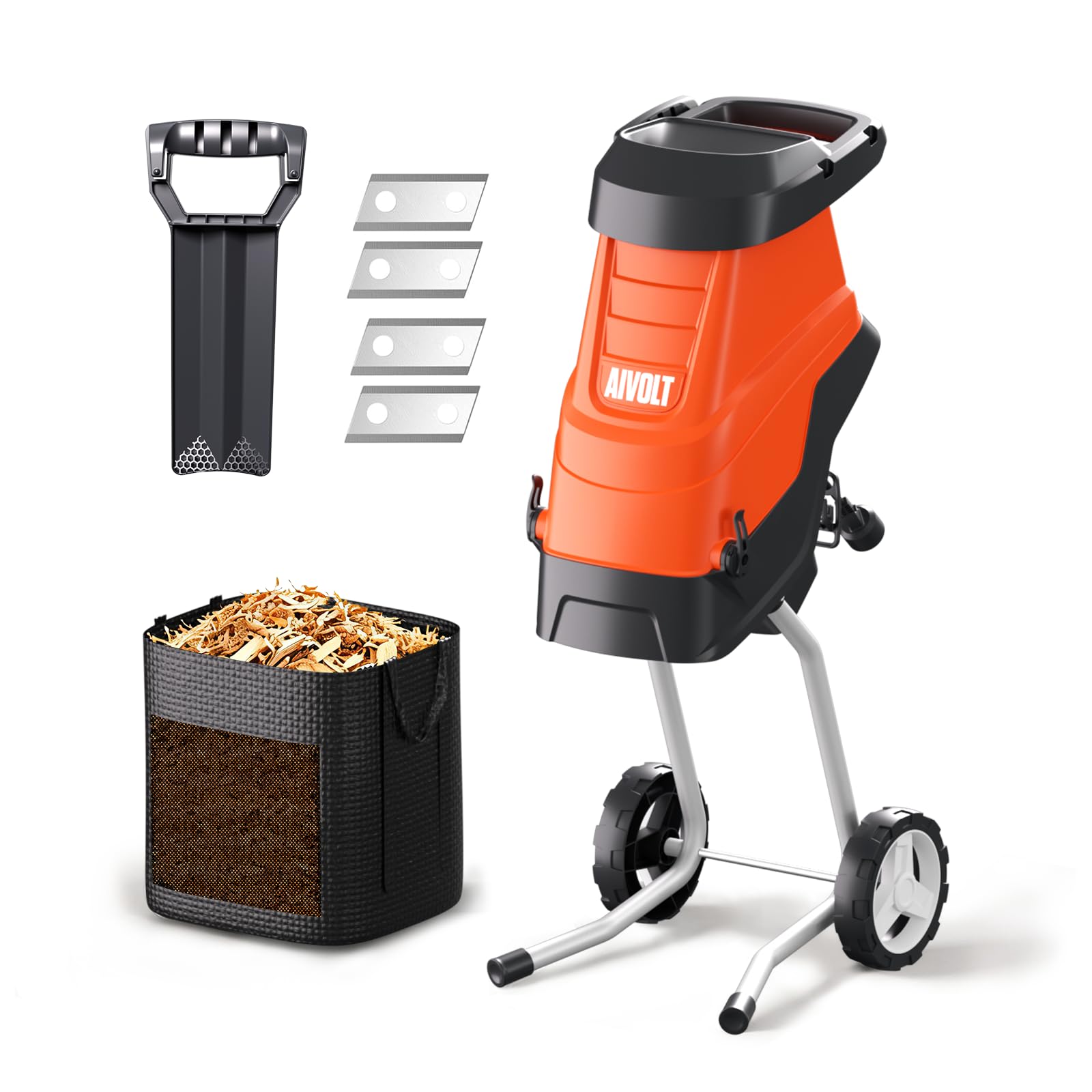
The AIVOLT WR3003 bridges the gap between leaf mulchers and wood chippers with a 15-amp motor spinning SK5 dual-edge blades at 4000 RPM. The 18:1 reduction ratio handles both leaves and branches up to 1.8 inches thick, making it a strong contender for homeowners who need to process mixed yard waste. The self-feeding design pulls material in aggressively, reducing the need for a push paddle on straight branches.
Owner reports highlight the anti-jam safety knob, which stays functional even after eight full blockages, and the anti-blowout bag that contains dust and chips better than open collection systems. The AIVOLT weighs just 19 pounds with 7-inch wheels for rolling across the lawn, and the included two extra SK5 blades effectively double the machine’s cutting life before replacement is needed.
Y-shaped branches and hard fruitwood can stall the motor, and the bag overfilling leads to steaming hot plugs that require cool-down time. The hopper design works best with straight material — side branches require trimming first. For the price point, this unit offers the best balance of branch capacity and leaf processing speed among standalone chippers.
What works
- Self-feeding reduces manual pushing for straight branches
- Anti-blowout bag keeps workspace cleaner than open chute
- Two spare blades included, extending usable life significantly
What doesn’t
- Stalls on dense fruitwood and Y-shaped branch jams
- Bag overfill causes motor overheating and plug issues
- Not designed for high-volume pure leaf mulching jobs
4. WORX Trivac WG505.2 LeafPro

The WORX WG505.2 improves on the classic WG509 design with the LeafPro collection system, which uses a hose attachment to suck leaves directly into a trash can — eliminating the need for the collection bag entirely. The 12-amp motor still delivers 350 CFM and 210 MPH, but the curved vacuum tube makes it easier to reach under decks and patio furniture without repositioning the unit.
Owner feedback over three years of use confirms the metal impeller’s durability against twigs and small acorns, and the 16:1 mulch ratio reduces 16 bags to one. The one-second flip switch between blower and vacuum modes remains the standout feature — no tools or attachments needed to switch functions mid-job. Owners also note that the netting attachment for direct trash can deposit saves significant time on large properties.
The WG505.2 is slightly heavier at 9.7 pounds, and some users report that the LeafPro netting can come loose during operation if not secured properly. The unit requires a heavy-duty extension cord and careful nozzle angle adjustment for effective suction. For homeowners who already own the WG509, the LeafPro system alone doesn’t justify the upgrade, but for first-time buyers, it’s the superior all-in-one option.
What works
- LeafPro system vacuums directly into trash can, no bag needed
- Curved vacuum tube reaches under low furniture easily
- Proven metal impeller holds up against rocks and acorns
What doesn’t
- Netting attachment can come loose during heavy use
- Heavier than WG509 at 9.7 lbs, noticeable with full bag
- Requires careful angle adjustment for consistent suction performance
5. Yard Force YF8000LS String Mulcher

The Yard Force YF8000LS uses a 13-amp motor spinning a trimmer-line cutting head at 8000 RPM to shred leaves into fine particles. The adjustable legs level the machine on uneven terrain, and the no-tools quick-change line replacement uses standard 0.095-inch trimmer line. The 12:1 reduction ratio is lower than the Flowtron’s, but the unit weighs under 15 pounds and stacks inside itself for compact storage.
Owners report 30-45 minutes of usable line life before replacement, which translates to about 10-12 bags of mulched leaves per set. The line works well on dry leaves, pine needles, and small twigs, but fails on wet leaves and larger debris. The bag attachment uses a bungee cord system that many owners replace with a 30-gallon barrel for better collection without spillage.
Noise is significant — hearing protection is mandatory. The air filter requires cleaning between each use to prevent motor overheating, and the plastic cutting strips are difficult to replace when they wear down. Best suited for small properties with very dry conditions where portability and storage space matter more than raw throughput.
What works
- Ultra-lightweight at 13.5 lbs for easy carrying and storage
- Adjustable legs level the unit on slopes and uneven ground
- Standard trimmer line is widely available and inexpensive
What doesn’t
- Line wears out every 30-45 minutes, requiring frequent replacement
- Bag attachment with bungee cords is poorly designed and messy
- Loud operation and air filter cleaning required every session
6. LawnMaster FD1503 Chipper

The LawnMaster FD1503 focuses on branch shredding with a 15-amp motor driving a two-sided blade at 3700 RPM. The 14:1 reduction ratio is lower than other chippers on this list, but the 1.8-inch cutting diameter handles dried maple, walnut, and mulberry branches up to 1.5 inches consistently. The dent-resistant polypropylene housing keeps the unit light at 23.2 pounds, and the included push paddle adds a layer of safety.
Owner reports over two years note that the blades dull after processing four full bins of mixed debris, but replacement is straightforward with basic tools. The self-feeding design works best on straight material between 0.5 and 1 inch thick — side branches and Y-shaped forks cause jams that require manual clearing. The FD1503 processes vines like crepe myrtle and wisteria well, making it popular among home composters.
This unit is not a primary leaf mulcher — it struggles with large volumes of loose leaves and is best reserved for woody debris that would damage string-based mulchers. For composters who need to break down garden waste and small prunings, the FD1503 offers reliable service at a mid-range investment level.
What works
- Eats dried hardwood branches up to 1.5 inches consistently
- Lightweight at 23 lbs for a chipper, easy to move and store
- Blades are easy to change and sharpen with standard tools
What doesn’t
- Poor choice for loose leaves — clogs without dense material
- Blades dull noticeably after four bins of woody debris
- Jams on Y-shaped branches and material over 2 inches
7. Yeryork YE004 Chipper
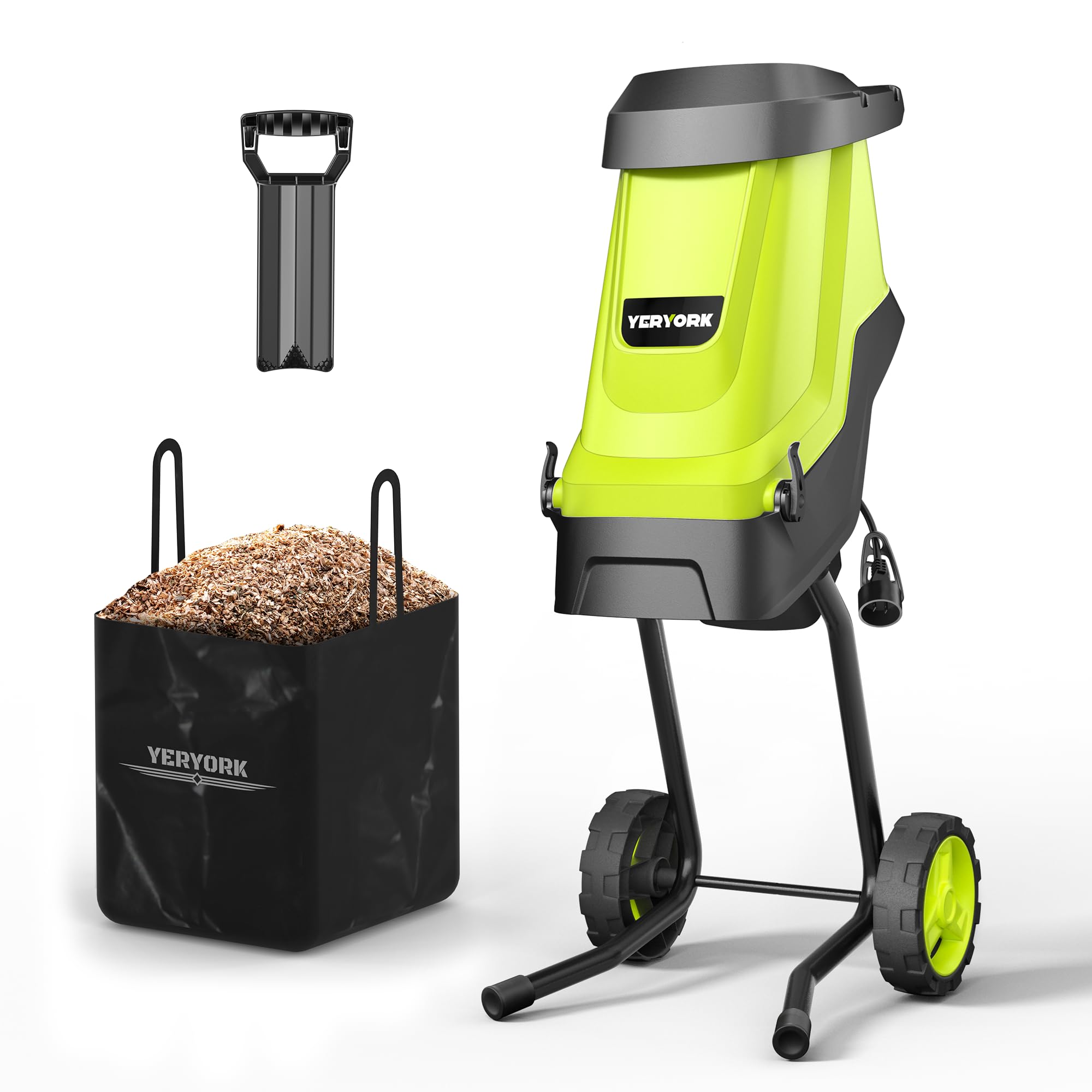
The Yeryork YE004 is the entry-level standalone chipper for homeowners who need to process small branches and twigs without spending on premium models. The 15-amp motor spins SK5 dual-edge blades at 4000 RPM, achieving a 21:1 reduction ratio that beats many more expensive units. The dual feed chutes allow loading sticks into either opening, and the 7-inch wheels make the 21.6-pound unit easy to roll around the yard.
Owners report that the YE004 handles branches up to 1.5 inches without stalling, but struggles to reach the advertised 1.8-inch max on hardwood. The anti-jamming design works well on straight material, and the 50L collection bag fits standard paper yard waste bags for direct curbside disposal. The cTUVus safety certification and IPX4 waterproofing add reassurance for outdoor storage and operation.
This chipper explicitly warns against feeding leaves, old roots, bamboo, dry hay, or frozen branches — it is strictly a wood chipper, not a leaf mulcher. The all-plastic housing is less durable than metal alternatives, and the blades will need replacement after heavy use. For the price point, it delivers solid branch processing capability but cannot substitute for a dedicated leaf mulcher.
What works
- 21:1 reduction ratio outperforms many mid-range chippers
- Lightweight and mobile with 7-inch wheels and compact frame
- cTUVus safety certified with IPX4 weather resistance
What doesn’t
- Cannot handle leaves, roots, or bamboo as the manual warns
- Struggles with branches near the 1.8-inch capacity limit
- All-plastic housing less durable than steel alternatives
Hardware & Specs Guide
Mulch Reduction Ratio
The reduction ratio tells you how many bags of loose debris convert into one bag of mulch. A 10:1 ratio means ten full bags become one, while a 30:1 unit produces much finer particles that compost faster. Higher ratios demand more motor torque and sharper blades — if your unit can’t maintain blade speed under load, the actual ratio drops below the advertised figure. For pure leaf mulching, aim for 16:1 or higher. For chippers that also handle branches, 12:1 to 18:1 is standard because woody material takes more energy to process.
Impeller vs. Blade vs. Line
Metal impellers use a solid rotor with fins that smash leaves against the housing — they handle rocks, twigs, and occasional acorns without damage. Blade-based chippers slice branches against a stationary anvil and produce cleaner cuts but jam on flexible leaves. Trimmer-line mulchers whip leaves into shreds but the line wears out every 30-60 minutes of use and cannot touch wood. For a machine that does one thing well, pick impeller for leaves and blade for branches. For mixed debris, an impeller with a separate branch chipper port gives the best coverage.
FAQ
Can a leaf mulcher handle wet leaves?
What is the difference between a leaf mulcher and a wood chipper?
How often do I need to replace the cutting line on a string mulcher?
Final Thoughts: The Verdict
For most gardeners, the leaf mulcher winner is the Flowtron LE900 because its 30:1 reduction ratio and adjustable coarseness handle high-volume dry leaf processing better than any other standalone unit. If you want blowing and vacuuming versatility in one tool, grab the WORX WG509 with its metal impeller and 3-in-1 design. And for mixed debris with branches up to 1.8 inches, nothing beats the AIVOLT WR3003 for its self-feeding capability and included spare blades.