
Every seasoned gardener knows that the soil inside the bag is the single most critical variable separating a bumper harvest from a wilting disappointment. Cheap, dense mixes can suffocate roots, harbor persistent pests, or break down into a crusty mess within weeks, sabotaging the effort you put into every seed and transplant. The challenge is cutting through the marketing claims to find a blend with the right texture, nutrient profile, and drainage characteristics for your specific container setup.
I’m Rikta — the co-founder and writer behind Lawn Gear Lab. By spending dozens of hours studying lab-certified ingredient lists, cross-referencing soil science with thousands of verified buyer reports, and comparing specifications like aeration ratings and organic certifications, I’ve built this guide on hard data, not hype.
Whether you are potting up finicky indoor tropicals, filling raised vegetable beds, or starting an organic herb garden, finding the right 2 cubic foot potting soil can make the difference between stressed plants and a vigorous, low-maintenance growing season.
How To Choose The Best 2 Cubic Foot Potting Soil
A two-cubic-foot bag represents a significant investment in your growing medium, and selecting the wrong one can set your plants back weeks. The key is matching the physical properties of the soil to the specific needs of your containers and watering habits.
Base Ingredient: Peat Moss, Coir, or Compost
The primary component dictates nearly everything about your soil’s behavior. Sphagnum peat moss offers excellent water retention and a naturally acidic pH but can become hydrophobic when dry and is a non-renewable resource. Coconut coir buffers pH higher and re-wets easily, but it contains negligible nutrients on its own. Compost-based mixes provide richer organic matter for feeding but may be denser and require better drainage to avoid compaction in containers.
Amendments and Nutrient Load
A bag loaded with earthworm castings, bat guano, kelp meal, and mycorrhizal fungi provides a more complete starter charge for sensitive roots, reducing the need for immediate liquid feeding. Cheaper blends may contain only perlite and a synthetic fertilizer charge that can burn tender seedlings. If you are growing edibles, look for OMRI-listed ingredients to confirm organic compliance.
Texture and Drainage Aids
Perlite adds white, airy particles that improve drainage and oxygen flow, while pumice offers a longer-lasting, heavier alternative that resists floating to the surface. The presence of aged forest products or rice hulls can further increase porosity. A mix that feels dense and heavy when dry will likely compact after a few waterings, while a light, fluffy bag with visible aeration materials will hold its structure for the entire season.
Quick Comparison
On smaller screens, swipe sideways to see the full table.
| Model | Category | Best For | Key Spec | Amazon |
|---|---|---|---|---|
| Espoma Organic | Organic | All-Purpose Containers | Myco-Tone mycorrhizae | Amazon |
| Sun Gro Black Gold | Natural/Organic | Seedlings & Delicate Roots | Aeration: Perlite + Pumice | Amazon |
| FoxFarm Happy Frog | Premium Organic | High-Yield Containers | Bat Guano & Earthworm Castings | Amazon |
| Miracle-Gro Standard | Synthetic Blend | Indoor Houseplants | Pre-Mixed Nutrients & Minerals | Amazon |
| FoxFarm Cultivation Nation | Soilless | Hydroponic & Coir Growers | 70:30 Coir to Perlite | Amazon |
| Organic Mechanics | Peat-Free | Sustainable & Replanting | Compost, Rice Hulls, Worm Castings | Amazon |
| Miracle-Gro Moisture Control | Moisture Management | Overwaterers & Beginners | AquaCoir Formula | Amazon |
In‑Depth Reviews
1. Espoma Organic Potting Soil Mix

Espoma’s AP2 blend hits the sweet spot of ingredient quality and proven performance that most gardeners need. The formula starts with sphagnum peat moss and perlite, then adds earthworm castings, alfalfa meal, kelp meal, and feather meal for a broad-spectrum organic nutrient profile. The proprietary Myco-Tone introduces a consortium of endo and ecto mycorrhizae that aggressively colonize root systems to improve water and nutrient uptake.
Verified buyers consistently highlight the loamy, chunky texture that resists compaction and stays crumbly even after weeks of watering. Unlike some brands that ship bags full of oversized wood chunks and bark, this mix arrives clean with few large particles that require sifting. Its versatility covers everything from repotting a decade-old fiddle-leaf fig to starting vegetable seedlings in an outdoor container.
The lightweight nature of the bag can be surprising given the volume, but that buoyancy translates directly into excellent aeration for roots. For growers who want a single reliable bag that supports both indoor tropical plants and an outdoor herb garden without needing to blend separate amendments, this is the most balanced entry point in the category.
What works
- Clean, loamy texture with minimal debris or large sticks
- Mycorrhizal additive provides a strong biological head start for roots
- Works equally well for vegetables, herbs, and general container plants
What doesn’t
- May be too light for heavy-feeding plants that prefer a denser base
- Organic charge may require supplemental feeding mid-season for heavy feeders
2. Sun Gro Black Gold Natural and Organic Soil

The Black Gold mix from Sun Gro has cultivated a loyal following among container growers who need a fluffy, forgiving medium that won’t burn young roots. The base incorporates screened earthworm castings and Canadian sphagnum peat moss, then dual-aerates with both perlite and pumice to guarantee that the mix stays oxygenated deep in the pot. The result is a soil that smells rich and earthy, not sour or chemical.
One of the standout reports from long-term users is that this soil remains lightweight and workable even after two years in the same container, suggesting that the organic components break down slowly compared to cheaper alternatives. It is gentle enough for starting seeds directly, avoiding the “hot” nutrient spikes that cause damping off in tender seedlings.
The consistent complaint revolves around fungus gnats, which some buyers attribute to the organic castings content. While this is a manageable issue — treatment with Bacillus thuringiensis (mosquito bits) clears it up in a few waterings — it is a factor for indoor growers who want zero pest introduction. For the price per cubic foot, the structural longevity of this soil is hard to beat.
What works
- Dual aeration from perlite and pumice keeps it fluffy for multiple seasons
- Mild nutrient load won’t burn delicate seedlings
- Rich, pleasant earthy smell indicates healthy decomposition
What doesn’t
- Some batches harbor fungus gnats that require proactive treatment
- Price can vary significantly depending on the seller and shipping distance
3. FoxFarm Happy Frog Potting Soil
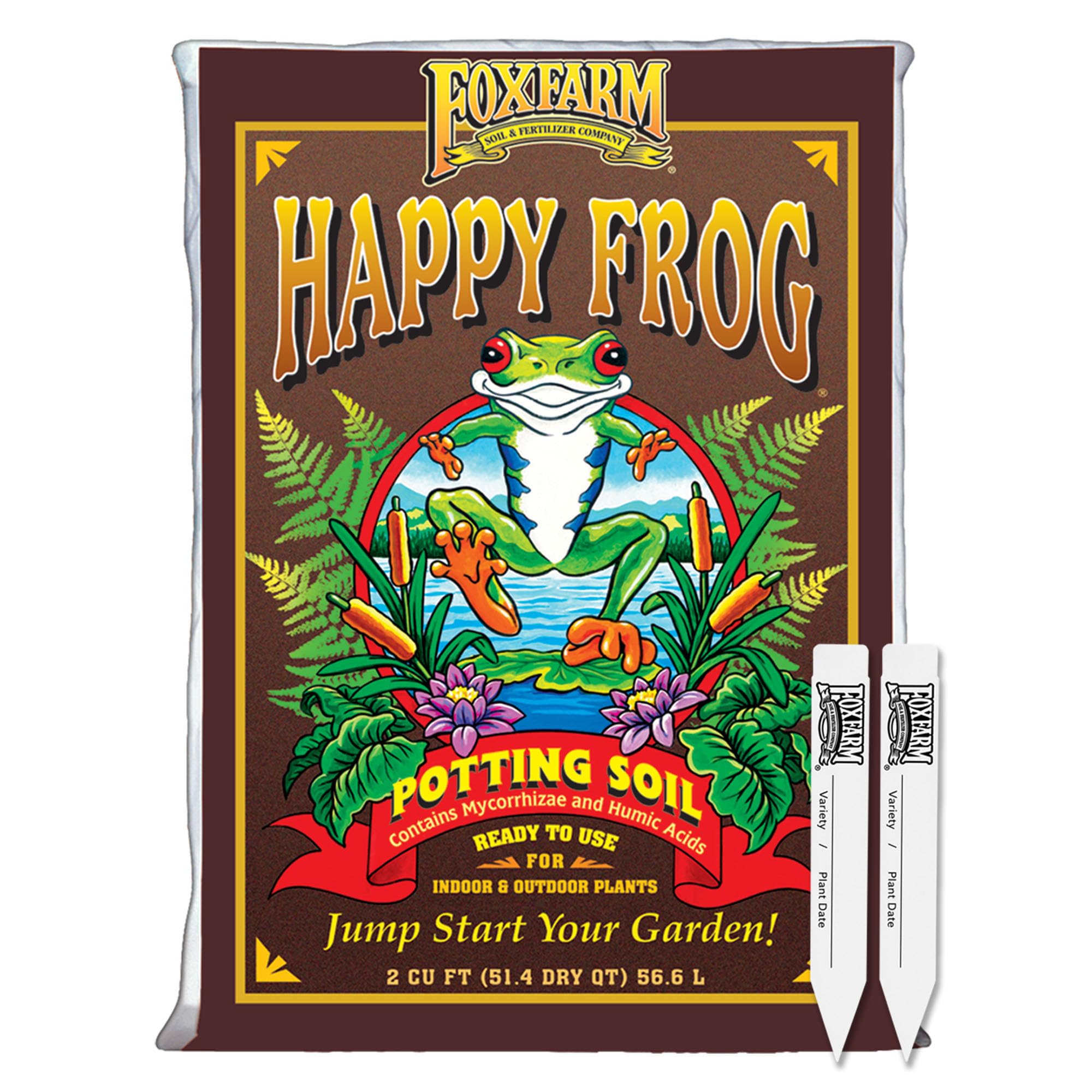
FoxFarm has engineered Happy Frog around a robust blend of 50-60% aged forest products combined with sphagnum peat moss and a host of premium amendments including bat guano, earthworm castings, oyster shell, and dolomite lime. This mix arrives alive with beneficial soil microbes and mycorrhizal fungi that dramatically expand root development, converting nutrients into a form your plants can immediately use.
The texture is visibly chunky and well-aerated straight from the bag, offering enough structure to anchor larger plants while still draining freely for sensitive root systems. Buyers using it for high-intensity container gardening report that plants grow noticeably larger — often doubling in size compared to generic mixes — which justifies the higher cost per bag for serious home gardeners.
A minor consideration is the weight: at 42 pounds per bag, this is one of the heavier options in the category, partly due to the moisture content and the density of the forest products. That weight also means the soil holds structure well and doesn’t shrink as much over time. For anyone looking for an all-in-one organic mix that can push a container garden toward maximum production, Happy Frog is a top contender.
What works
- High-quality organic inputs like bat guano and kelp meal deliver visible results
- Microbe and mycorrhizae content accelerates root development
- Retains structure without compacting, even through multiple waterings
What doesn’t
- One of the pricier options per cubic foot in this lineup
- Heavy bag at 42 pounds may be difficult to carry and pour
4. Miracle-Gro Potting Soil Mix
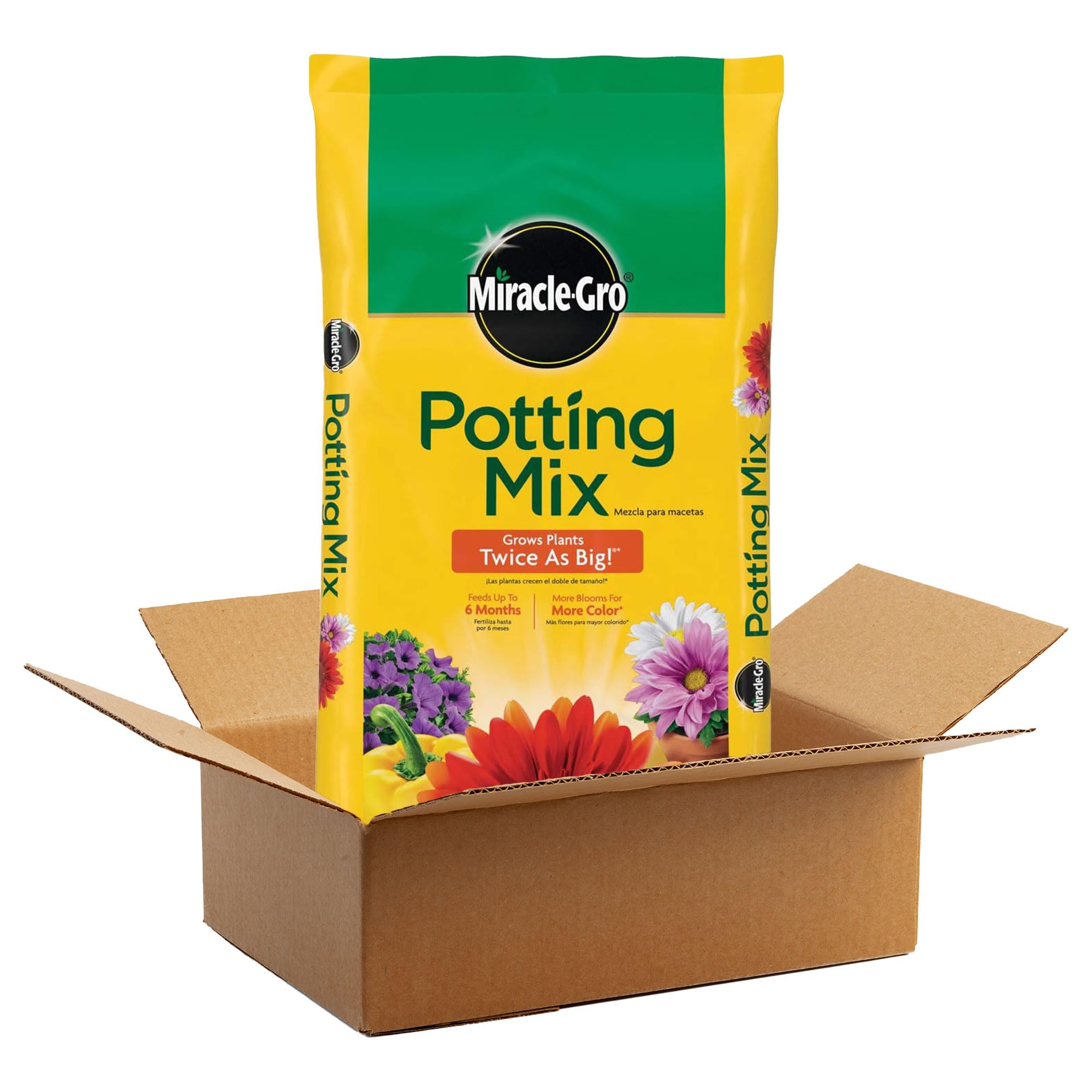
Miracle-Gro’s standard potting mix is the baseline that millions of home gardeners reach for, and its broad availability and consistent formulation make it a reliable choice for general container use. The formula includes a blend of sphagnum peat moss, composted bark fines, perlite, and a wetting agent, plus a synthetic fertilizer that feeds plants for up to six months. The texture is fine enough for houseplants yet holds together well for outdoor planters.
Buyers appreciate the convenience of having the nutrients already incorporated, as it eliminates the need to dose liquid fertilizer for the first couple of months. The lightweight nature of the bag also makes it easier to maneuver compared to dense organic mixes. Long-time users who have repurchased for years cite consistency in quality from bag to bag as a major advantage.
The synthetic fertilizer component disqualifies it for strict organic gardeners, and some customers have reported a mild ammonia smell when the bag is first opened. Additionally, the fine texture can lead to compaction over time if the soil is not aerated periodically. For standard houseplant repotting and seasonal container flowers, this mix delivers dependable performance at a reasonable price point.
What works
- Built-in monthly-release nutrients reduce early-season fertilizing effort
- Consistent quality batch-to-batch over years of production
- Lightweight and easy to transport compared to premium organic blends
What doesn’t
- Not OMRI-listed due to synthetic fertilizer ingredients
- Fine texture can compact and reduce drainage in long-term containers
5. FoxFarm Cultivation Nation 70:30 Growing Media

FoxFarm’s Cultivation Nation breaks away from traditional soil blends by delivering an inert 70:30 ratio of buffered coconut coir to perlite. This soilless medium has no added nutrients, giving the grower full control over the feeding schedule — a critical feature for hydroponic setups and those who prefer to tailor their fertilizer regimen precisely. The coir is buffered to a stable pH, eliminating the acidity fluctuations common with peat.
Growers report that this medium excels in drainage while retaining enough moisture to prevent roots from drying out between waterings. The light texture makes handling and root inspection easy, and the bag itself is significantly lighter than soil-based products. Users who transplanted into this coir mix saw faster growth rates, particularly in leafy greens and herbs, compared to the same plants grown in peat-based soil.
The main limitation is that Cultivation Nation requires you to provide all the nutrition; there is no starter fertilizer. Beginners who rely on “water only” mixes will need to supplement with liquid nutrients immediately. For experienced growers who want a clean, consistent blank slate that resists compaction and stays aerobic for the entire grow cycle, this is the top pick.
What works
- Perfect drainage combined with excellent moisture retention from buffered coir
- Inert and pH-stable base gives complete control over nutrient inputs
- Much lighter than soil-based alternatives, making handling and mixing easier
What doesn’t
- No starter nutrients included — requires immediate liquid feeding
- Not suitable for gardeners who want a “water only” growing experience
6. Organic Mechanics Container Blend Potting Soil
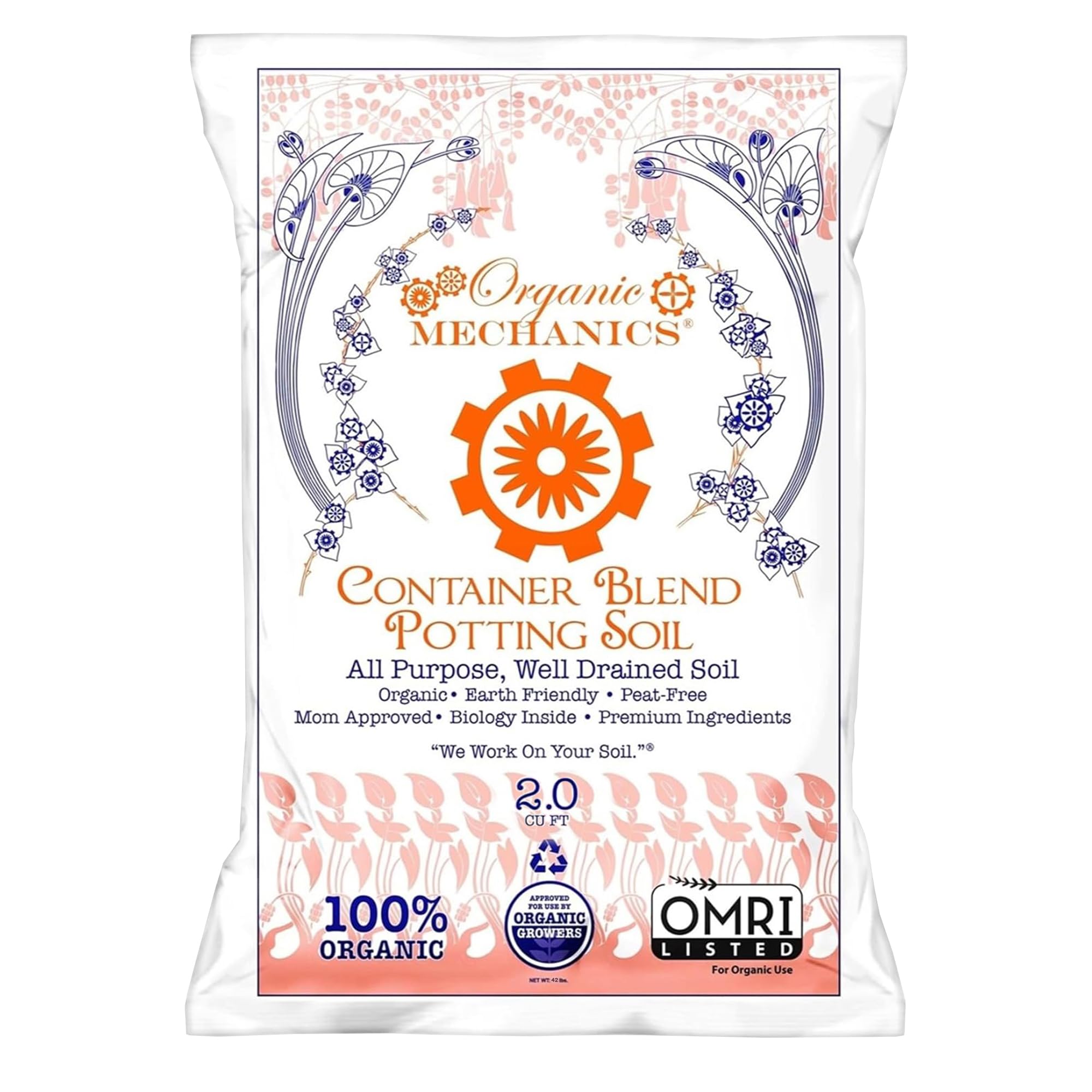
Organic Mechanics has formulated a unique peat-free mix that relies on compost, aged pine bark, coconut coir, worm castings, and rice hulls for structure and nutrition. This approach not only avoids the environmental concerns of peat harvesting but also creates a medium that breaks down more slowly than peat-based soils, allowing you to refresh and reuse the same batch for multiple seasons with simple amendments.
The texture is dark and rich, with visible organic particles that hold moisture well without becoming waterlogged. Growers in sandy, coastal areas particularly value this mix for its ability to retain water close to the root zone. The compost-based foundation also provides a steady release of micronutrients that supports a wide range of plants from annual flowers to woody perennials and houseplants.
A small number of buyers have reported finding plastic debris in their bag, which is a quality-control concern that should be noted. Though this appears to be an outlier issue, it is worth inspecting the mix before use. For the environmentally conscious gardener who prioritizes sustainability and wants a soil that can be revitalized year after year, Organic Mechanics delivers a compelling option.
What works
- Completely peat-free formula with compost, coir, and rice hulls
- Structurally durable — can be refreshed and reused for multiple growing seasons
- Excellent moisture retention for containers in dry or sandy environments
What doesn’t
- Occasional reports of plastic debris contamination in the mix
- Denser texture may require extra perlite amendment for very heavy feeders
7. Miracle-Gro Moisture Control Potting Mix

Miracle-Gro’s Moisture Control formulation is engineered specifically to address the most common cause of houseplant death: incorrect watering. The exclusive AquaCoir formula absorbs up to 33% more water than basic potting soil and releases it slowly, reducing the risk of both overwatering and underwatering. The mix also incorporates a fertilizer charge that feeds plants for up to six months.
The real-world results are striking: one buyer transplanted weak pepper plants into this mix and saw a complete turnaround in foliage color and fruit production within weeks. Beginners and those with a history of killing plants through inconsistent watering report that this soil provides a much wider margin of error. The texture is slightly heavier and more spongy than standard potting soil, which helps it hold moisture in porous terracotta pots.
However, this moisture-holding capability is a double-edged sword. Plants that prefer dry conditions — succulents, cacti, lavender — will likely suffer root rot if potted in this mix without substantial drainage amendment. A few buyers also note that the spongy texture can attract fungus gnats in consistently moist conditions. For moisture-loving species like ferns, pothos, and calatheas, this is an excellent safety net.
What works
- Forgiving moisture management perfect for novice or inconsistent waterers
- Built-in fertilizer reduces early-season maintenance for six months
- Revived struggling plants in controlled tests with peppers and houseplants
What doesn’t
- Too moisture-retentive for succulents, cacti, and other dry-loving plants
- Can remain swampy if container drainage is poor, risking root rot
Hardware & Specs Guide
Mycorrhizal Inoculation
Endo and ecto mycorrhizal fungi form a symbiotic relationship with plant roots, extending the effective root zone by hundreds of percent. Blends that include these beneficial microbes — such as Espoma’s Myco-Tone and FoxFarm’s Happy Frog — can dramatically improve nutrient and water uptake, reducing transplant shock and boosting stress tolerance. Not all potting soils include them, so checking the ingredient list is worthwhile for high-value plants.
pH Buffering and Stability
Peat-based mixes typically land around pH 3.5-4.5, requiring lime amendments to raise the pH into the 5.5-6.5 range preferred by most container plants. Brands that pre-add dolomitic or calcitic lime save you the guesswork. Coir-based mixes are naturally buffered closer to neutral, which makes them more predictable for growers who want precise pH control without extra amendments.
Organic Certification Standards
“Organic” on a bag label can mean different things. OMRI (Organic Materials Review Institute) listing is the gold standard for US organic growers, verifying that every ingredient is approved for organic production. Products like Espoma and Organic Mechanics carry OMRI certification, while others may use the term “natural” without third-party verification. If you are growing certified organic vegetables, the OMRI seal is non-negotiable.
Moisture Retention Ratio
The ratio of water-holding components (peat, coir, compost, worm castings) to drainage components (perlite, pumice, rice hulls, pine bark) controls how often you need to water. A 70:30 coir-to-perlite mix like FoxFarm Cultivation Nation drains faster and requires more frequent irrigation than a peat-based blend. Miracle-Gro’s Moisture Control uses AquaCoir to hold extra water, which is beneficial for forgetful waterers but risky for drought-tolerant plants.
FAQ
Can 2 cubic foot potting soil be used for raised garden beds?
How long does an open bag of potting soil stay usable?
Should I add perlite to 2 cubic foot potting soil?
What is the difference between potting soil and garden soil in a 2 cubic foot bag?
Final Thoughts: The Verdict
For most gardeners, the 2 cubic foot potting soil winner is the Espoma Organic Potting Soil Mix because it combines a verified organic ingredient list, mycorrhizal inoculation, and a clean, loamy texture that performs well across a huge range of container plants without requiring immediate amendments. If you want a premium, nutrient-dense blend that pushes plants toward maximum growth, grab the FoxFarm Happy Frog. And for those who struggle with consistent watering and need a forgiving medium that protects against both drought and saturation, nothing beats the Miracle-Gro Moisture Control.