
Aphids, mealybugs, and powdery mildew don’t stand a chance against a properly diluted castile soap spray, but the wrong concentration can burn foliage and strip beneficial oils from your plants. The difference between a rescue treatment and a leaf-damaging mistake comes down to understanding saponification and pH balance. This guide compares six concentrated liquid soaps to find the safest, most effective options for treating your indoor and outdoor plants.
I’m Rikta — the co-founder and writer behind Lawn Gear Lab. I’ve spent dozens of hours studying horticultural data from university extension programs, analyzing organic surfactant chemistry, and cross-referencing thousands of verified owner reports to determine which castile soap formulations are truly plant-safe.
Whether you are fighting spider mites on your monstera or treating black spot on your roses, finding the right castile soap for plants involves balancing purity, concentration, and the absence of synthetic additives that harm foliage.
How To Choose The Best Castile Soap For Plants
Not every bottle labeled “castile soap” is safe for foliar application. The saponification process, oil base, and additive profile determine whether a soap acts as a gentle pest deterrent or a leaf-burning irritant. These three criteria filter out the formulations that belong in your shower from those that belong in your sprayer.
Pure Oil Base — Olive Oil vs. Coconut Oil Ratio
Traditional castile soap uses 100% olive oil, which produces a mild, moisturizing lather that is less likely to strip the waxy cuticle from plant leaves. Soaps that lean heavily on coconut oil create more suds but can be harsher on tender foliage. For a plant spray, look for olive oil as the primary saponified fat.
Zero Synthetic Additives — No Fragrances, Dyes, or Thickeners
Synthetic fragrances often contain phthalates and petroleum derivatives that clog leaf stomata and inhibit gas exchange. Dyes can interfere with photosynthesis. Even essential oils like tea tree or peppermint, while natural, can cause phototoxicity when leaves are exposed to direct sunlight after spraying. The safest choice for routine plant care is an unscented formulation with no added color or thickeners.
Concentration and Viscosity for Dilution Control
Thicker, more concentrated soaps require precise dilution to avoid over-strength applications. A soap with honey-like viscosity is harder to mix uniformly than a thinner liquid. Pour-test the consistency: if it flows like water, you’ll get even distribution in your spray bottle. If it pours like gel, you risk localized hot spots that burn leaf tips.
Quick Comparison
On smaller screens, swipe sideways to see the full table.
| Model | Category | Best For | Key Spec | Amazon |
|---|---|---|---|---|
| WEBE Pure Unscented Castile Liquid Soap Refill | Bulk Refill | Large garden spray treatments | 64 oz, 100% organic olive oil base | Amazon |
| Dr. Bronner’s Unscented Baby Mild | Unscented Base | DIY custom essential oil blends | 32 oz, no synthetic preservatives | Amazon |
| Pura Vitalia Lavender Organic Castile Soap | Organic Aloe | Tender seedlings and sensitive leaves | 16 oz, organic aloe vera + citric acid | Amazon |
| Bamboo and Birch Pure Castile Soap Unscented | Palm Oil Free | Eco-conscious plant parents | 32 oz, EWG Verified, certified palm oil free | Amazon |
| Dr. Bronner’s Citrus Orange Castile Soap | Scented | Aphids on hardy outdoor ornamentals | 32 oz, citrus essential oil fragrance | Amazon |
| Adams Handmade Soap Thick Organic Castile Liquid | Premium Thick | Foaming hand soap for post-gardening | 1 gallon, honey-like viscosity | Amazon |
In‑Depth Reviews
1. WEBE Pure Unscented Castile Liquid Soap Refill
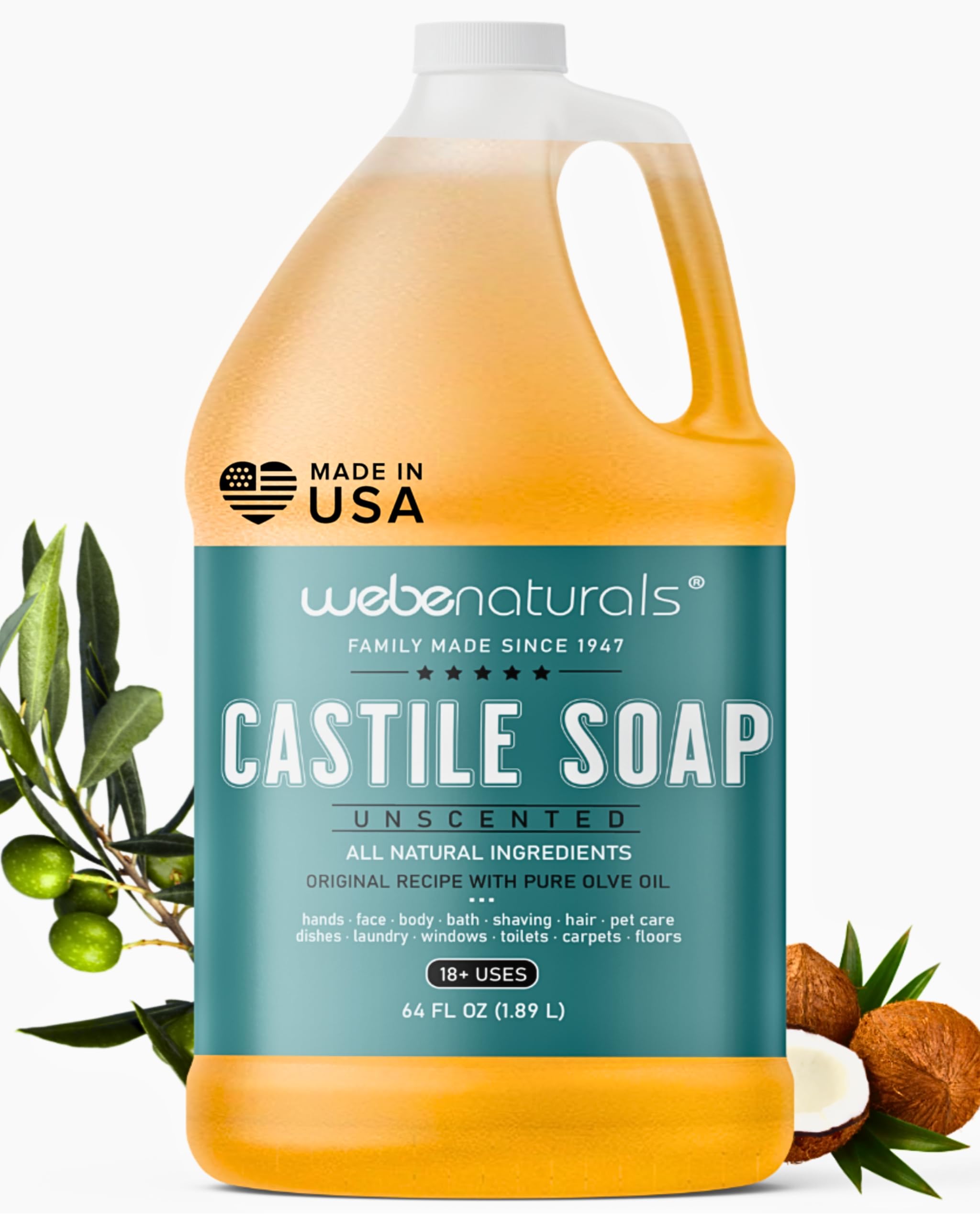
The WEBE refill is formulated with 100% organic olive oil as its sole saponified fat, which produces a mild, creamy lather that is gentle on leaf cuticles. At 64 ounces, this unscented, sulfate-free liquid provides enough concentrate for dozens of spray treatments without the risk of synthetic fragrance residues blocking stomatal function. The consistency is fluid enough to mix uniformly in a pump sprayer, eliminating the hot-spot dilution issues common with thicker soaps.
Verified buyers consistently note that this soap cleans without drying skin or causing irritation, which translates directly to plant safety — the same gentle saponification that respects human skin also preserves the waxy leaf surface. The family-owned manufacturer produces small batches in the USA, and the absence of parabens, dyes, and detergents means you can spray directly on edible crops like tomatoes and peppers with minimal wash-off concern.
For serious gardeners treating large vegetable beds or greenhouse collections, the bulk refill format and certified vegan, non-GMO, gluten-free credentials make this the most practical and trustworthy concentrate for routine pest management. The faint natural scent of saponified oils dissipates quickly after drying, so beneficial pollinators are not repelled.
What works
- Pure olive oil base is the gentlest option for leaf cuticles
- Bulk 64-ounce size reduces plastic waste and cost per treatment
- Unscented formula avoids phototoxicity and pollinator repellency
What doesn’t
- Pour spout can drip if not stored upright
- Slightly thinner consistency than some premium brands
2. Dr. Bronner’s Unscented Baby Mild Castile Soap (Tea Tree)
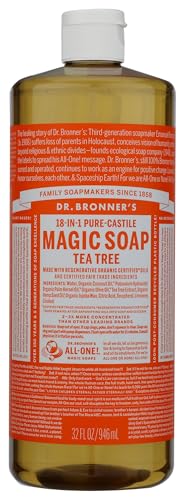
Dr. Bronner’s tea tree variant is the most versatile option for gardeners who want a single soap that handles pest control, soil drench fungicide applications, and post-gardening hand cleaning. The tea tree oil provides natural antibacterial and antifungal properties that suppress powdery mildew and dampening-off fungi when diluted at 1 tablespoon per gallon of water. The 32-ounce bottle is highly concentrated — a single bottle yields over 8 gallons of finished spray solution.
Verified user feedback highlights the soap’s ability to repel insects like aphids and whiteflies when applied weekly as a preventative foliar spray. The saponified coconut, olive, and hemp oil blend produces a robust lather that penetrates soft-bodied insect exoskeletons effectively. However, the tea tree essential oil can cause leaf burn on delicate plants like ferns and calatheas if sprayed during midday sun, so apply during late afternoon and test on a single leaf first.
This formulation contains no synthetic preservatives or thickeners, and the iconic label with the late Dr. Bronner’s philosophical text is a bonus conversation starter in the potting shed. For gardeners who want a multi-surface soap that transitions from kitchen counter cleaning to rose bush treatment, this is the most field-tested option on the market since 1948.
What works
- Tea tree oil adds antifungal and antibacterial benefits to spray
- Extremely concentrated — dilutes far beyond standard ratios
- Proven track record as a gentle body wash means it’s leaf-safe
What doesn’t
- Tea tree scent can cause phototoxicity on sensitive leaves
- Bottle lacks a pump for easy spray bottle refilling
3. Pura Vitalia Lavender Organic Castile Soap
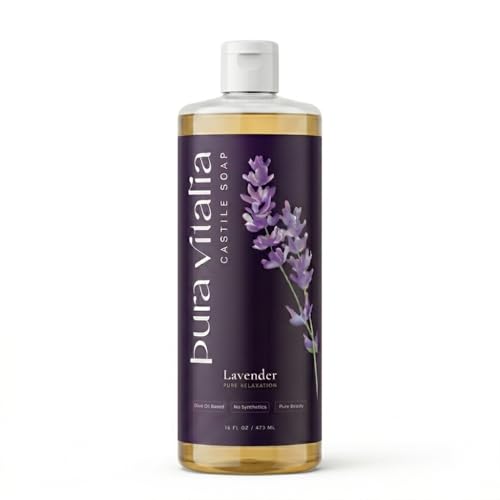
Pura Vitalia distinguishes itself from every other castile soap on this list by incorporating organic aloe vera and citric acid into the formula, which buffers the pH closer to neutral and reduces the alkaline burn risk that standard castile soaps pose to tender new growth. The Mediterranean formula uses olive, sunflower, castor, and fair-trade coconut oils — a four-oil blend that provides gentle saponification without the harshness of single-source coconut oil soaps. For seedlings, microgreens, and recently propagated cuttings, this is the safest concentrate to use.
The lavender essential oil provides a soothing, anti-inflammatory profile that works well on fungal leaf spots and powdery mildew, but as with any scented soap, you should apply it in the evening to avoid light-induced plant stress. Verified users report that it leaves hands and leaves soft rather than stripped — a direct indicator that the aloe vera is depositing a protective film after rinsing.
At 16 ounces, the bottle is smaller than the bulk options, but the concentration is high enough to produce several gallons of finished spray. The packaging (glass-like plastic with a fine-tip dispenser) allows precise measurement for small batch mixing, making this the top choice for indoor plant collectors and bonsai enthusiasts who treat small leaf surfaces and cannot tolerate any leaf margin burn.
What works
- Aloe vera buffers pH to reduce alkaline leaf burn on tender growth
- Four-oil blend produces a milder lather than coconut-only soaps
- Fine-tip dispenser enables precise dilution for small batches
What doesn’t
- Lavender essential oil can still cause phototoxicity if sprayed in direct sun
- Smaller bottle size requires more frequent repurchase for large gardens
4. Bamboo and Birch Pure Castile Soap Unscented
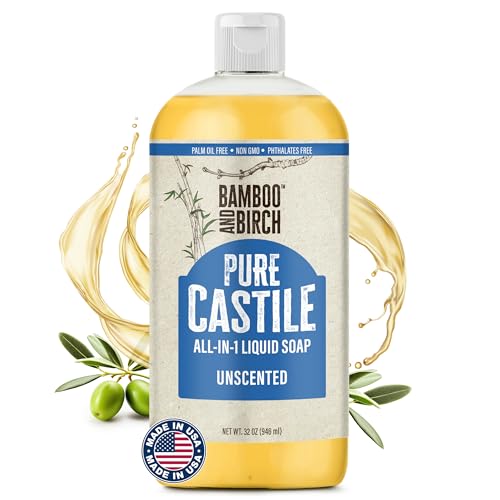
Bamboo and Birch is the only certified palm oil free castile soap in this comparison, which matters if you are treating plants in a certified wildlife habitat or trying to avoid contributing to deforestation in Southeast Asian palm plantations. The unscented 32-ounce bottle uses a natural oil base that produces a clean, mild lather suitable for foliar sprays on both indoor tropicals and outdoor vegetable crops. Users report that the soap lathers well from a small palm-sized amount, indicating high saponification efficiency that translates to effective pest control at low dilution ratios.
Verified reviews emphasize that this soap leaves skin feeling moisturized and clean without dryness, a sign that the saponification process preserves natural glycerin that also helps plant leaves retain moisture after spraying. The EWG Verified badge means the formula has been screened for known toxins and irritants, giving you confidence that no hidden synthetic detergents will clog leaf stomata.
The unscented version allows you to customize your spray with specific essential oils (rosemary, neem, or peppermint) without competing fragrance notes. For organic growers who maintain OMRI-listed certifications and need a traceable, transparent supply chain, this soap’s certification status and cruelty-free, vegan credentials make it a compliant choice.
What works
- Certified palm oil free with full supply chain transparency
- EWG Verified ensures no hidden synthetic detergents or toxins
- Unscented base allows custom essential oil blending for targeted pest control
What doesn’t
- Not as widely available in retail stores as Dr. Bronner’s
- Some users found it less effective as a shampoo for hair
5. Dr. Bronner’s Citrus Orange Castile Soap

Dr. Bronner’s citrus orange variant delivers the same trusted saponified coconut, olive, and hemp oil base as the tea tree version but with a bright citrus fragrance that is less antimicrobial and more repellent-specific. The d-limonene in citrus oil acts as a solvent that can dissolve the waxy exoskeleton of aphids and scale insects on contact, making this a fast-acting option for acute infestations on hardy outdoor ornamentals like roses, hibiscus, and citrus trees.
Verified users consistently praise the scent as fresh and long-lasting, but this comes with a critical caveat for plant use: d-limonene is a known phytotoxin on thin-leaved plants like lettuce, basil, and spinach. Do not spray this concentrate on edible crops or any plant with pubescent (fuzzy) leaves like African violets or coleus, as the citrus oil can cause browning and leaf drop. The soap lathers beautifully for post-gardening hand cleaning and leaves skin feeling hydrated rather than stripped.
For gardeners who want a single bottle that serves as both a greenhouse pest spray for tough plants and a pleasant-smelling shower soap, this is the most cost-effective dual-purpose option. The 32-ounce bottle at the lowest entry price point provides the best per-ounce value among scented options, but reserve it strictly for ornamental use to avoid crop damage.
What works
- D-limonene dissolves aphid and scale exoskeletons on contact
- Bright citrus scent is pleasant for outdoor spray sessions
- Excellent dual-purpose soap for garden and personal care
What doesn’t
- Citrus oil can cause phytotoxicity on thin-leaved and edible crops
- Not suitable for pubescent or fuzzy-leaved plants like African violets
6. Adams Handmade Soap Thick Organic Castile Liquid Lemongrass
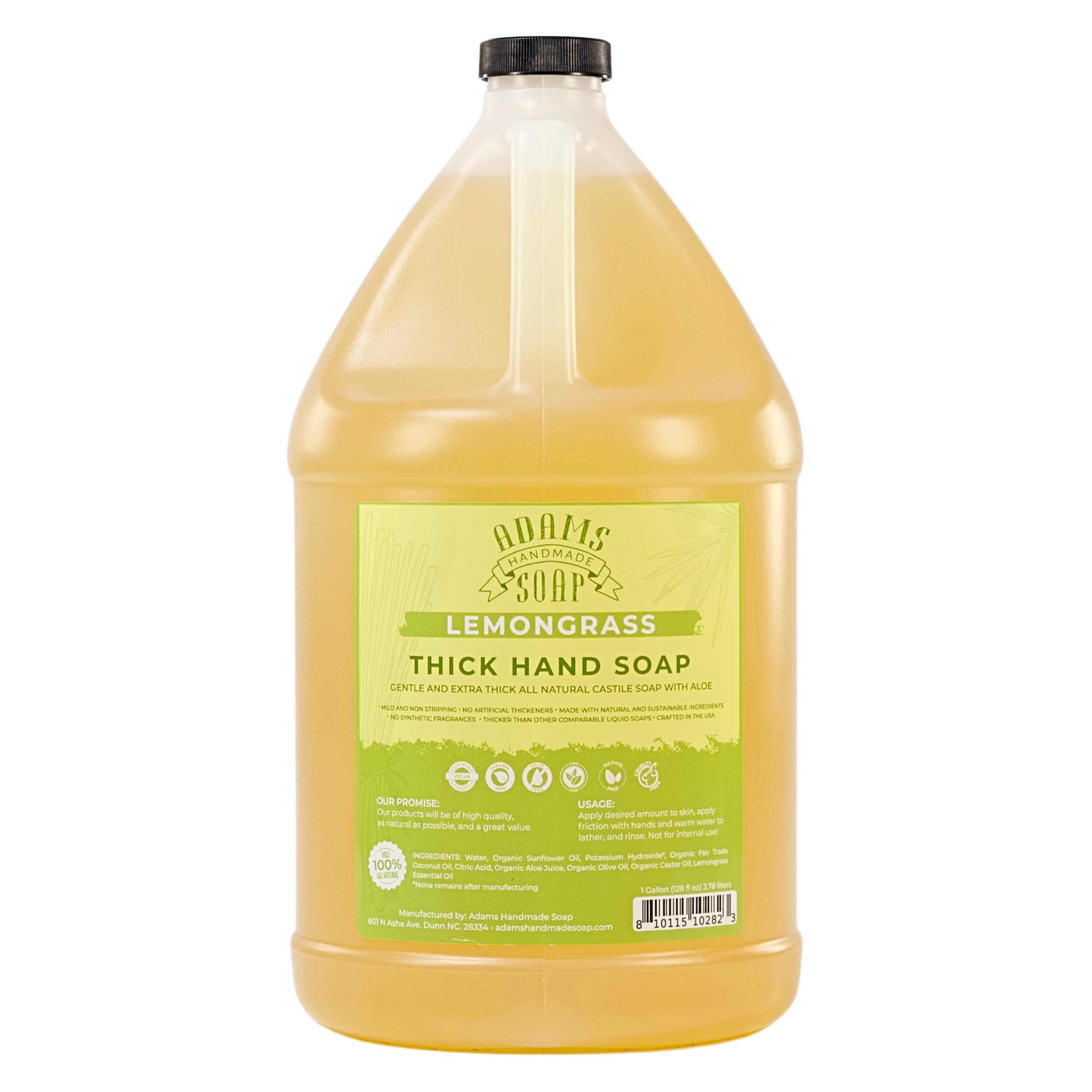
Adams Handmade Soap stands apart from every other castile soap on this list due to its honey-like viscosity and lemongrass essential oil profile. The thick consistency means it is extremely concentrated — a single gallon can be diluted into dozens of refill bottles. However, this same thickness creates a mixing challenge for plant sprays: if you do not vigorously shake the diluted solution before each use, the soap can settle and create a concentrated layer that burns leaf tips. The organic vegetable oil and aloe base are mild on skin, and verified users consistently praise the long-lasting lemongrass scent.
The lemongrass essential oil provides natural insect-repelling properties against mosquitoes, gnats, and whiteflies, making this an excellent choice for greenhouse perimeter sprays and outdoor patio plants. The soap is certified vegan and cruelty-free, and the family-owned manufacturer has been producing small batches for over 17 years. The thick consistency works brilliantly in foaming soap dispensers for hand cleaning after gardening, but for spray bottle use, you must pre-dilute the soap in hot water to break the viscosity before adding cool water.
This is the premium bulk option for gardeners who want a concentrated, long-lasting soap that doubles as a luxurious hand soap and a perimeter pest deterrent. The lemongrass scent is milder than expected based on verified reviews, which works to your advantage — lower essential oil concentration reduces the risk of phototoxicity on nearby sensitive plants. If you have a large family garden and want a single gallon that lasts an entire season, this is your most durable investment.
What works
- Extremely thick honey consistency means high concentration per drop
- Lemongrass scent naturally repels mosquitoes and flying pests
- Family-owned manufacturer with 17+ years of small-batch production
What doesn’t
- Thick consistency requires pre-dilution in hot water for even mixing
- Lemongrass oil can still cause phototoxicity if applied in direct sunlight
Hardware & Specs Guide
Dilution Ratio Precision
Standard castile soap for plant pest control calls for 1 to 2 teaspoons of soap per 1 quart of water. Thicker formulations (like Adams Handmade) require less soap by volume but more aggressive mixing to avoid hot spots. Unscented, thin-consistency soaps (like WEBE) distribute more evenly in cool water and reduce the risk of leaf burn from localized over-concentration. Always test your dilution on a single leaf 24 hours before full application.
pH Impact on Leaf Health
Unbuffered castile soap has a pH of roughly 9 to 10. Most plant leaves prefer a pH range between 5.5 and 7.0. Spraying high-alkaline soap directly onto leaves without proper dilution (below 1% soap concentration) can damage the cuticle and cause chlorosis. The inclusion of citric acid or aloe vera, as seen in Pura Vitalia, buffers the pH closer to neutral. If using standard castile soap, add 1 teaspoon of apple cider vinegar per quart of water to neutralize alkalinity before spraying.
FAQ
Can I use any castile soap as an insecticidal spray on edible crops?
Why does my castile soap spray burn the leaves of my ferns and calatheas?
Does the essential oil in scented castile soap harm beneficial insects like ladybugs?
Final Thoughts: The Verdict
For most gardeners, the castile soap for plants winner is the WEBE Pure Unscented Castile Liquid Soap Refill because its organic olive oil base, neutral unscented profile, and bulk 64-ounce format deliver the safest, most versatile concentrate for routine pest management. If you want a soap that provides antifungal protection and works as a personal care product too, grab the Dr. Bronner’s Tea Tree Castile Soap. And for treating delicate seedlings and sensitive indoor plants where pH burn is a real risk, nothing beats the Pura Vitalia Lavender Organic Castile Soap with its buffering aloe vera formula.