
Beets are heavy feeders that demand a precise balance of nitrogen for leafy tops and phosphorus-potassium for bulb development, yet most all-purpose blends push foliage at the expense of the root. The wrong fertilizer produces tall greens with woody, undersized beets — the exact opposite of what you want from the harvest.
I’m Rikta — the co-founder and writer behind Lawn Gear Lab. My approach to this guide involved cross-referencing NPK ratios against the specific phenological stages of Beta vulgaris, analyzing macro- and micronutrient availability in granular versus liquid formats, and threading hundreds of verified purchaser reports to separate signal from marketing noise.
After weeks of side-by-side spec analysis, these are the formulas that earned a spot in the lineup of the best beet fertilizer for growers who care about yield density and sugar content.
How To Choose The Best Beet Fertilizer
Selecting the right feed for beets requires understanding that they are root crops with a distinct nutrient demand curve. Too much nitrogen early produces lush tops at the cost of bulb density, while insufficient phosphorus stunts root initiation entirely. The following factors separate maintenance blends from performance feeds.
NPK Ratio — Phosphorus Is the Driver
Beets thrive on a ratio where the middle number (phosphorus) is equal to or higher than the first (nitrogen). A formula around 4-6-4 or 3-4-4 supports early leaf growth without tipping into excessive vegetation, then channels energy into bulb swelling. Avoid high-first-number blends designed for lawns — those push top growth and delay root maturity.
Organic vs. Synthetic Release Profiles
Organic granular fertilizers break down via soil microbial activity, providing a steady nutrient supply over 4–8 weeks. This slow-release behavior matches the beet’s 55–70 day maturation cycle well and reduces the risk of salt burn. Synthetic fast-release formulas can work if split into smaller applications, but they demand more precise timing to avoid nutrient leaching.
Micronutrient Density — Boron and Calcium
Beets are sensitive to boron deficiency, which causes internal black spot and cavity formation. Calcium supports cell wall structure in the developing root. A fertilizer that lists kelp meal, rock phosphate, or langbeinite in its ingredient deck typically supplies these trace elements. Formulations relying on straight NPK salts without micronutrient sources may require separate amendments.
Quick Comparison
On smaller screens, swipe sideways to see the full table.
| Model | Category | Best For | Key Spec | Amazon |
|---|---|---|---|---|
| Down To Earth 4-6-2 | Granular Organic | Balanced root & top growth | 4-6-2 NPK with kelp & rock phosphate | Amazon |
| FoxFarm Happy Frog 6-4-5 | Granular Organic | Microbe-rich soil amendment | 6-4-5 NPK + mycorrhizal fungi | Amazon |
| Espoma Garden-tone 3-4-4 | Granular Organic | Long-season feeding | 3-4-4 NPK with 5% calcium + Bio-tone | Amazon |
| Ferti-lome Root Stimulator 4-10-3 | Liquid Synthetic | Transplant root initiation | 4-10-3 NPK with IBA hormone | Amazon |
| Bloom City SuperMicrobe | Liquid Organic | Soil biology activation | Microbial inoculant, 32 oz concentrate | Amazon |
| Espoma Triple Phosphate 0-45-0 | Granular Synthetic | Phosphorus boost for bulbs | 0-45-0 NPK, 6.5 lb bag | Amazon |
| Gaia Green 4-4-4 | Granular Organic | Single-source general feeding | 4-4-4 NPK, 2 kg bag | Amazon |
In‑Depth Reviews
1. Down To Earth 4-6-2 All Purpose Mix

The 4-6-2 NPK ratio in this Down To Earth blend hits the sweet spot for beet growers who want steady top development without sacrificing root mass. Fish bone meal, rock phosphate, and langbeinite provide not just the primary nutrients but also calcium, potassium, and trace sulfur that prevent common beet disorders like hollow heart and internal black spot.
OMRI listing confirms suitability for certified organic plots, and the granular form releases gradually as soil microbes process the fish bone meal and feather meal. Gardeners report visible greening within two weeks of application and noticeably denser bulbs at harvest compared to straight synthetic feeds. The 5-pound bag covers roughly 50 linear feet of row at typical side-dress rates.
The main trade-off is the initial odor — blood meal and fish bone meal produce a strong smell for the first few days after watering, which some indoor or raised-bed growers find unpleasant. The odor dissipates once the granules are incorporated into the soil surface.
What works
- Balanced NPK with phosphorus slightly elevated for root crops
- Contains rock phosphate and kelp meal for micronutrients
- OMRI listed for organic production
What doesn’t
- Strong fish-meal odor for 2–3 days after watering
- Granules can cake in high humidity
2. FoxFarm Happy Frog All Purpose 6-4-5

Happy Frog differentiates itself through its microbial inoculant load — beneficial soil microbes and mycorrhizal fungi are blended directly into the granules. For beets, these organisms improve phosphorus solubilization around the root zone, effectively making the 6-4-5 ratio work harder than the numbers alone suggest. The OMRI listing adds credibility for organic growers.
The 6-4-5 analysis carries slightly more nitrogen than ideal for mature beets, but the slow-release microbial breakdown mechanism moderates the delivery curve. Users report strong early leaf color after a single application, then steady bulb expansion in the second month. The 4-pound bag is compact enough for small raised beds or container plantings of 8–12 beets.
User reviews consistently warn about the manure-based odor, which is noticeably pungent during application and lingers if the granules sit on top of dry soil. Wearing gloves and watering immediately after spreading minimizes the smell, but indoor storage is not recommended.
What works
- Mycorrhizal fungi enhance phosphorus uptake at root level
- Slow microbial release reduces burn risk on seedlings
- OMRI listed and ready to use without mixing
What doesn’t
- Pungent manure smell during and after application
- 4-pound bag covers less area than similarly priced options
3. Espoma Garden-tone 3-4-4 (Pack of 2)

Espoma’s Garden-tone formulation uses a 3-4-4 ratio that aligns almost perfectly with a beet’s nutrient demand curve — enough nitrogen for healthy leaf production while the extra phosphorus and potassium drive root thickening. The 5% calcium content is a meaningful bonus for preventing internal browning and tip burn in developing bulbs.
Each pack contains two 4-pound bags, giving a total of 8 pounds of material at a competitive per-pound cost. The Bio-tone microbial inoculant accelerates organic matter breakdown in the soil, releasing nutrients in sync with the beet’s 60–70 day growth window. Gardeners note that monthly application from seeding through mid-season produces uniform bulb size without the leaf burn associated with synthetics.
A small subset of users mention the fertilizer has a noticeable earthy smell, though less intense than manure-based blends. The 3-4-4 ratio is also slightly lower in overall NPK concentration than some competitors, meaning you may need to reapply sooner in sandy soils where leaching is faster.
What works
- NPK ratio specifically suited for root vegetables and herbs
- 5% calcium helps prevent boron-related beet disorders
- Two-bag pack offers strong coverage for the price
What doesn’t
- Lower NPK concentration may require more frequent application
- Mild odor persists if granules are not watered in
4. Fertilome Root Stimulator 4-10-3

Fertilome takes a different approach by using a liquid concentrate with indole-3-butyric acid (IBA), a synthetic auxin that triggers root cell division. The 4-10-3 ratio is heavily skewed toward phosphorus, which makes this product unsuitable as a standalone feed for the full growing cycle but extremely effective as a transplant drench or first-week application for direct-seeded beets.
The liquid format allows precise dosing — 0.25 tablespoons per pint of water — and the solution can be applied directly to the seed furrow at planting. Users in clay-heavy soils report that the root stimulant helps seedlings push through compacted layers faster. One gallon of concentrate yields approximately 256 pints of working solution, enough for several hundred row feet.
The limitation is that this is not a maintenance fertilizer. Beets will need a balanced granular feed starting three to four weeks after emergence. The synthetic auxin also has a storage shelf life; opened bottles should be used within one growing season for maximum potency.
What works
- IBA hormone accelerates root initiation in transplants
- Liquid concentrate allows precise per-plant dosing
- Cost-effective for large garden areas
What doesn’t
- Not a complete fertilizer — requires follow-up feedings
- Synthetic auxin degrades; use within one season
5. Bloom City SuperMicrobe Root Fertilizer

Bloom City’s product focuses entirely on the biological side of feeding — it delivers live beneficial microbes rather than NPK salts. For beet growers with compacted or exhausted soil, this liquid inoculant restores the microbial community that mineralizes organic phosphorus and fixes atmospheric nitrogen near the root zone. The 32-ounce bottle treats approximately 16 gallons of water at the recommended label rate.
Users report that the most visible effects occur in the second week after application, with root systems becoming noticeably denser and leaf color deepening. The microbial species in the bottle are designed to colonize the rhizosphere and persist for 3–4 weeks, making biweekly applications the recommended rhythm. The product is nearly odorless, which is a practical advantage for indoor or greenhouse use.
The main consideration is that this product supplies biology, not bulk nutrients. In poor or sandy soil, it must be paired with a complete organic fertilizer to avoid nutrient starvation. The small bottle size also means frequent repurchasing for large in-ground plots.
What works
- Restores soil microbial activity for better nutrient cycling
- Odorless formula suitable for indoor growing environments
- Improves phosphorus availability in low-OM soil
What doesn’t
- Contains no primary NPK — must combine with a complete feed
- 32 oz bottle covers limited area for direct-soil gardens
6. Espoma Triple Phosphate 0-45-0

Espoma’s Triple Phosphate is a straight phosphorus supplement at 0-45-0, designed to correct deficiencies during the bulb-filling phase. For beet growers whose soil test reveals adequate nitrogen and potassium but low available phosphorus, this granular product provides a concentrated correction without throwing the NPK balance off. The 6.5-pound bag supplies phosphorus for a 200–300 square foot garden area at typical application rates.
The granules are 100% triple superphosphate with no organic fillers, which means the phosphorus is water-soluble and immediately available after watering. This fast action is useful when beets are at the 4–6 leaf stage and the grower wants to redirect energy from leaf expansion into root bulking. The product is Made in the USA and has a long shelf life when stored dry.
Because it contains zero nitrogen or potassium, this product cannot serve as a standalone fertilizer. Applying it without first confirming a phosphorus deficiency risks tying up other nutrients in the soil. The superphosphate form can also accumulate in soil over multiple seasons, so annual soil testing is recommended.
What works
- Concentrated phosphorus for targeted mid-season correction
- Water-soluble granules provide rapid plant availability
- Long shelf life with proper dry storage
What doesn’t
- Not a complete feed — requires nitrogen and potassium sources
- Can accumulate in soil; needs regular pH and P testing
7. Gaia Green All Purpose 4-4-4
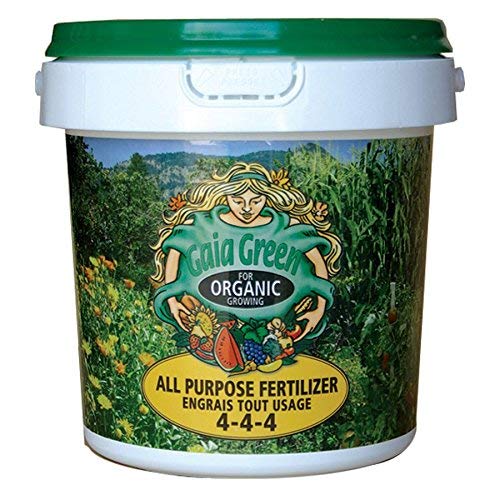
Gaia Green’s 4-4-4 is an equal-ratio organic granular that works as a foundation feed for beets when combined with a phosphorus top-up. The formulation uses feather meal, bone meal, and sulfate of potash to provide a balanced macronutrient profile, while variable-release-rate ingredients feed plants across the full growing season. The 2-kilogram (4.4-pound) bag is well-suited for container growers or small raised beds.
Gardeners who use this as the sole fertilizer report solid leaf development and decent bulb formation, though the equal NPK ratio delivers slightly less phosphorus than a beet-optimized formula. Users in loamy soil with naturally adequate P levels see the best results. The granular texture is fine enough to incorporate into the top inch of soil without clumping, and the odor is mild compared to fish- or manure-based products.
The limiting factor for dedicated beet growers is the 4-4-4 ratio itself — it is a generalist blend rather than a root-specific formula. For maximum bulb density, growers may need to supplement with a phosphorus source during the second half of the growing cycle. The 2-kilogram bag also costs more per pound than larger bulk options.
What works
- Balanced 4-4-4 ratio suitable for mixed vegetable gardens
- Variable release rates feed plants across the full season
- Fine granules incorporate easily without clumping
What doesn’t
- Equal NPK ratio is not optimized for root-heavy crops
- Higher per-pound cost than larger bag options
Hardware & Specs Guide
NPK Ratio Interpretation
The three hyphenated numbers on every fertilizer label — nitrogen, phosphorus, potassium — represent percentages by weight. For beets, a ratio where the second number (P) equals or exceeds the first (N) promotes root development over foliage. Ratios like 4-6-4 or 3-4-4 are ideal; a 6-4-5 blend requires careful timing to avoid excessive leaf growth.
Granules vs. Liquids
Granular fertilizers release nutrients over weeks through microbial breakdown or water dissolution, making them suitable for pre-plant incorporation and monthly side-dressing. Liquid concentrates provide immediate availability but require more frequent application — every 1–2 weeks. For beets, a granular foundation feed with a liquid transplant stimulant is the most resource-efficient strategy.
FAQ
Can I use a tomato fertilizer on beets?
How often should I fertilize beets during the growing season?
What causes beets to be woody or fibrous even with regular feeding?
Final Thoughts: The Verdict
For most gardeners, the best beet fertilizer winner is the Down To Earth 4-6-2 because its elevated phosphorus and micronutrient-rich ingredient deck target the root-development phase without excessive nitrogen. If you want a microbial-driven soil approach for poor or compacted ground, grab the Bloom City SuperMicrobe. And for a low-odor, all-season foundation that pairs easily with a phosphorus supplement, nothing beats the Gaia Green 4-4-4.