
Tomatoes are heavy feeders that demand a carefully balanced supply of nitrogen, phosphorus, potassium, calcium, and trace minerals to push out large, blemish-free fruit. The wrong soil amendment can cause lush foliage with zero fruit, or worse, introduce blossom-end rot that ruins your harvest. Landing on the right formula is the difference between a mid-season disaster and a record-breaking yield.
I’m Rikta — the co-founder and writer behind Lawn Gear Lab. I dissect NPK ratios, analyze OMRI listings, compare calcium percentages, and cross-reference verified owner feedback to identify the products that deliver measurable results for tomato growers.
After evaluating dozens of formulations across granular, compost, and liquid categories, this guide breaks down the top performers so you can directly compare what works best for your soil. Read on for a complete breakdown of the very best soil amendments for tomatoes available today.
How To Choose The Best Soil Amendments For Tomatoes
Selecting the right amendment means understanding the specific demands of tomato plants at different growth stages. The product you choose should align with your soil’s current condition and your desired harvest outcome.
Understand The NPK Ratio For Fruiting
Tomatoes need a lower nitrogen number compared to phosphorus and potassium. Nitrogen fuels leaf growth, but too much delays fruiting. A ratio around 4-6-2 or 5-7-3 supports balanced early growth and transitions into heavy fruit set without excessive foliage.
Calcium And Blossom-End Rot Prevention
Blossom-end rot is caused by a calcium deficiency at the fruit’s developing tip, often triggered by inconsistent watering. A soil amendment that includes calcium — ideally in a slow-release form — helps buffer the soil against this issue so the plant can access it when it needs it most.
Organic Certification And Microbial Life
Products listed by the Organic Materials Review Institute (OMRI) guarantee no synthetic inputs. Beyond that, amendments containing mycorrhizal fungi or worm castings improve the soil’s living biology, making existing nutrients more available to the root system over the long term.
Quick Comparison
On smaller screens, swipe sideways to see the full table.
| Model | Category | Best For | Key Spec | Amazon |
|---|---|---|---|---|
| Down To Earth 4-6-2 | Granular | All‑purpose organic feeding | NPK 4-6-2 | Amazon |
| FoxFarm Happy Frog 5-7-3 | Granular | High‑yield fruiting | NPK 5-7-3 + Calcium | Amazon |
| Espoma Garden-Tone 3-4-4 | Granular | Monthly feeding schedule | NPK 3-4-4 + Bio-tone | Amazon |
| BuildASoil Craft Blend | Granular | Living soil gardens | NPK 3-5-2 + Rock Dust | Amazon |
| Espoma Land & Sea Compost | Compost | Soil conditioning + biology | Lobster/Crab Meal | Amazon |
| Fish Head Farms Liquid | Liquid | Microbial activation | 4,000+ Microbial Species | Amazon |
| Wiggle Worm Castings | Organic Castings | Long‑term soil building | 40 lb Bag + Worm Eggs | Amazon |
In‑Depth Reviews
1. Down To Earth All Natural Organic All Purpose 4-6-2

Down To Earth’s 4-6-2 blend brings together fish bone meal, blood meal, feather meal, rock phosphate, langbeinite, greensand, humates, and kelp meal into a single box that covers nearly every base a tomato plant needs. The 4-6-2 ratio provides enough nitrogen for early vegetative growth while keeping phosphorus and potassium higher to support flower and fruit development later in the season.
This is a gentle, non-burning formula that works well for transplants and established plants alike. Gardeners report seeing pale, weak plants turn deep green and vigorous within two weeks of application. The product is OMRI-listed for organic production, which means no synthetic chemicals make it into your soil or your fruit.
The 5-pound bag covers a solid area for the entry-level cost. While the smell is noticeable right after application — a common trait with fish-based organics — it fades within a few days. For a balanced, ready-to-use granular amendment, this is the most straightforward recommendation for the majority of tomato growers.
What works
- Complete organic ingredient profile with fish bone, kelp, and humates
- OMRI-listed and safe for organic gardening
- Gentle, non-burning formula safe for seedlings
What doesn’t
- Noticeable fishy smell for the first few days after application
- Small bag size may require multiple purchases for larger gardens
2. FoxFarm Happy Frog Tomato & Vegetable 5-7-3

FoxFarm designed Happy Frog Tomato & Vegetable specifically for vigorous feeders that demand extra phosphorus and potassium during flowering and fruiting. The 5-7-3 NPK ratio pushes the phosphorus higher than most all-purpose blends, which directly supports blossom formation and fruit set in indeterminate tomato varieties.
The formula includes added calcium to combat blossom-end rot, plus mycorrhizal fungi that colonize the root zone and improve the plant’s ability to pull water and nutrients from the soil. Gardeners note that this product delivers visible results within days of application, with baby fruit appearing rapidly on previously slow plants. There’s no strong fish odor, which makes it more pleasant to work with than many organic granular options.
The 4-pound bag is smaller than some competitors at a similar price point. For gardeners with large in-ground plots, the cost per pound runs higher than bulk alternatives. But for raised beds and container tomatoes where every ounce of soil needs maximum efficiency, the Happy Frog formulation justifies the premium.
What works
- High phosphorus ratio (7) supports heavy fruiting and flower set
- Added calcium reduces risk of blossom-end rot
- Mycorrhizal fungi improve long-term root efficiency
What doesn’t
- Small bag size (4 lb) for the price point
- Not ideal for nitrogen-heavy early vegetative stage
3. Espoma Organic Garden-Tone 3-4-4 (2-Pack)

Espoma’s Garden-Tone uses a 3-4-4 analysis that leans conservative on nitrogen to avoid over-stimulating foliage at the expense of fruit. The Bio-tone formula — Espoma’s proprietary blend of beneficial microbes — helps break down organic matter in the soil, making nutrients available on the plant’s schedule rather than all at once.
The 2-pack configuration gives you 8 pounds total, which covers a full season for a medium-sized garden without needing to reorder mid-summer. Gardeners report that this product is forgiving if you apply slightly too much — it won’t burn roots the way synthetic fertilizers can. The calcium content sits at 5%, adding another layer of protection against blossom-end rot.
The main trade-off is the lower nitrogen number. For gardeners with very sandy or nutrient-poor soil, you may need to supplement with a nitrogen source early in the season. But for established beds with decent organic matter, the 3-4-4 profile keeps the plant balanced from transplant through final harvest.
What works
- 2-pack provides excellent value for season-long feeding
- Bio-tone microbes improve nutrient cycling in the soil
- Forgiving formula — low risk of burning plants
What doesn’t
- Lower nitrogen (3) may require early-season supplementation in poor soil
- Noticeable organic smell during application
4. BuildASoil Craft Blend 3-5-2 Organic Fertilizer
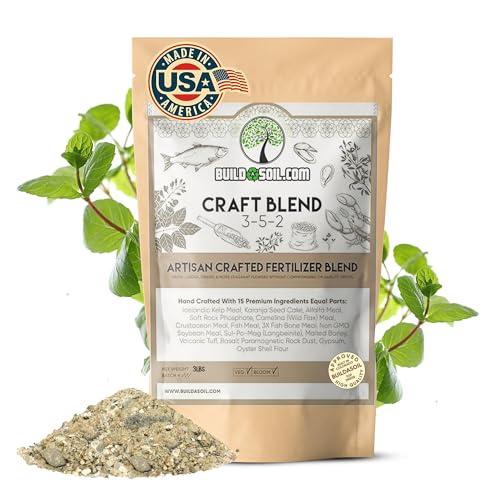
BuildASoil’s Craft Blend is a high-end granular amendment built for growers who manage living soil systems. The 3-5-2 NPK ratio prioritizes phosphorus for root and flower development, while the 15 premium inputs include rock dust and calcium sources that most commodity blends skip entirely. This is not a simple N-P-K product — it’s a complete soil re-mineralizer.
Gardeners report explosive growth when using this as a top dress in outdoor beds, with visible changes in plant vigor within 24 hours of application and watering. The blend is odorless compared to fish-based fertilizers, which makes indoor or greenhouse application much more pleasant. The medium bag size covers several feedings for a typical home garden, and the non-burning formula allows for generous application rates.
The price per pound is the highest in this comparison, making it a premium option. For gardeners working with basic potting soil or synthetic programs, the microbial advantages may be underutilized. But for anyone building biologically active soil, the Craft Blend delivers a nutrient density that standard bagged fertilizers cannot match.
What works
- 15 premium ingredients including rock dust and calcium
- Odorless formula — pleasant for indoor use
- Rapid visible results reported within 24 hours
What doesn’t
- High cost per pound compared to standard organic blends
- Best results require an active living soil system
5. Espoma Organic Land and Sea Gourmet Compost

Espoma’s Land and Sea Gourmet Compost is not a fertilizer in the traditional sense — it’s a soil conditioner that adds organic matter, trace minerals, and beneficial biology all at once. The lobster and crab meal base provides a slow-release source of chitin and calcium, which strengthens plant cell walls and improves disease resistance in tomatoes.
This product includes Espoma’s Myco-tone blend of endo and ecto mycorrhizae, which establish a symbiotic relationship with tomato roots to increase water and nutrient absorption. Gardeners report dramatic improvement in plant health, particularly when used as a side-dress at transplant time or as a top-dress for established beds. The 1-cubic-foot bag weighs 24 pounds and covers a large area.
Because this is a compost rather than a concentrated fertilizer, the NPK numbers are lower and more variable. It works best when paired with a granular fertilizer like Garden-Tone rather than used alone. For gardeners focused on building long-term soil fertility rather than quick correction, this is an effective foundation amendment.
What works
- Lobster and crab meal provide calcium and chitin for disease resistance
- Myco-tone mycorrhizae improve root function
- Large bag (24 lb) covers extensive garden area
What doesn’t
- Low NPK numbers require a supplemental fertilizer for heavy feeding
- Bulky bag may be difficult to store for small-space gardeners
6. Fish Head Farms Organic Liquid Soil Conditioner

Fish Head Farms takes a fundamentally different approach — instead of adding nutrients directly, it adds over 4,000 microbial species and billions of active microbes per dose that unlock nutrients already trapped in your soil. The concentrated liquid format makes it easy to apply through regular watering at a rate of just 2 teaspoons per gallon.
This product is 100% organic, OMRI-listed, and USDA Bio preferred-certified with a 95% carbon-based renewable rating. It’s safe around children and pets and leaves no harmful residue. Gardeners report significant improvement in nutrient uptake, with stressed plants bouncing back quickly and harvest quality improving noticeably. The 250-milliliter bottle is highly concentrated and lasts many applications.
This is not a standalone fertilizer — it’s a soil biology activator. If your soil is already heavily depleted, you will still need a granular amendment to supply the base NPK. But as a companion product that makes every other input work harder, the Fish Head Farms liquid conditioner is a unique tool for serious tomato growers.
What works
- Over 4,000 microbial species activate dormant soil nutrients
- Highly concentrated — 2 tsp per gallon goes a long way
- OMRI-listed, USDA Bio preferred, and safe for pets/children
What doesn’t
- Must be used alongside a base fertilizer, not as a standalone
- Small bottle size requires careful measuring for large gardens
7. Wiggle Worm 100% Pure Worm Castings 40 lb
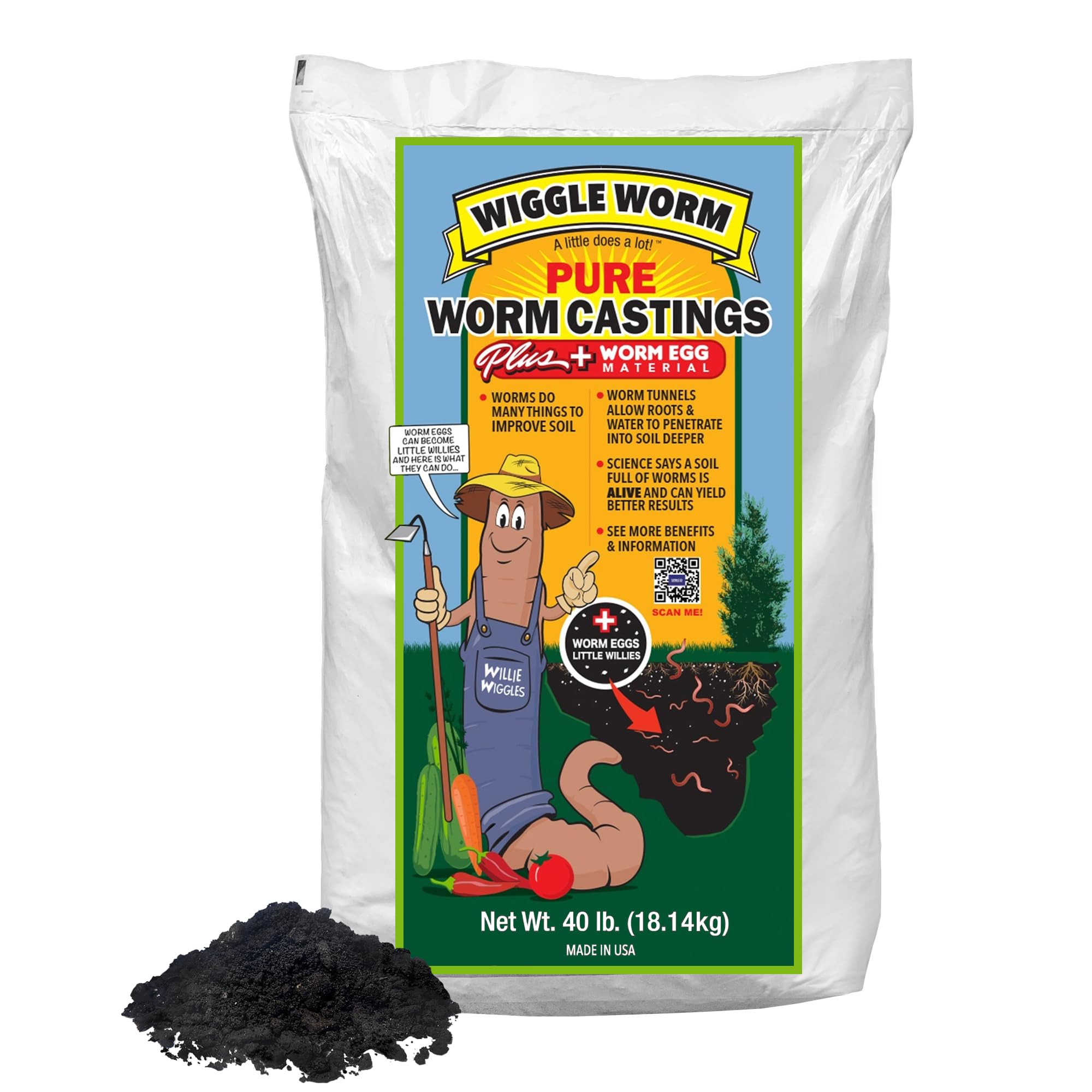
Wiggle Worm’s 40-pound bag of pure worm castings is the largest and most cost-effective option per pound in this guide. Worm castings are not a fertilizer with a fixed NPK number — they are a complete soil amendment that improves soil structure, aeration, drainage, and microbial activity simultaneously. The castings are finely textured, odorless, and mix easily into any potting mix or garden bed.
The unique advantage of this product is the inclusion of worm egg material — tiny cocoons that can hatch in your soil and establish a self-sustaining worm population. These worms continue to aerate the soil and produce castings long after the initial application. Gardeners report that this product enables them to grow tomatoes in harsh desert conditions with triple-digit summers, producing prolific fruit in soil that would otherwise be unproductive.
The 40-pound bag is physically large and requires storage space. The texture is a loose granular form that can be dusty when poured. But for gardeners committed to building living soil over multiple seasons, a single bag of Wiggle Worm castings delivers more long-term biological value than any synthetic or granular fertilizer.
What works
- 40 lb bag provides the best cost per pound in this comparison
- Worm eggs can hatch and establish a self-sustaining population
- Odorless, finely textured, and safe for all plant types
What doesn’t
- Large bag requires significant storage space
- Low NPK concentration; works best as a soil builder, not a quick fix
Hardware & Specs Guide
NPK Ratio Interpretation
The three numbers on any fertilizer bag represent Nitrogen (N), Phosphorus (P), and Potassium (K). For tomatoes, the middle number (phosphorus) should be equal to or higher than the first (nitrogen) to support fruit development rather than excessive leaf growth. A ratio like 4-6-2 or 5-7-3 is ideal. Avoid blends where the first number is significantly higher than the middle number unless you are correcting a specific nitrogen deficiency.
Calcium and Blossom-End Rot
Blossom-end rot appears as a dark, sunken lesion on the bottom of the fruit. It is caused by a localized calcium deficiency at the fruit tip, often triggered by inconsistent soil moisture. Soil amendments containing calcium — either through ingredients like bone meal, crab meal, or added calcium supplements — help buffer the plant against this condition. Even with adequate calcium in the soil, consistent watering is still required to transport it.
FAQ
When should I apply soil amendments to my tomato plants?
Can I use a high-nitrogen lawn fertilizer on my tomatoes?
What is the difference between OMRI-listed and organic-labeled soil amendments?
Final Thoughts: The Verdict
For most gardeners, the soil amendments for tomatoes winner is the Down To Earth 4-6-2 because it delivers a complete organic nutrient profile at an accessible price point without sacrificing quality. If you want a formula laser-focused on fruit production with calcium and mycorrhizae, grab the FoxFarm Happy Frog 5-7-3. And for long-term soil building that keeps improving year after year, nothing beats the Wiggle Worm 40 lb Castings.