
Whether you’re hauling feed through a rain-soaked pasture, standing ankle-deep in a flooded worksite, or pulling fence posts in a slick paddock, the right pair determines whether your day ends dry and comfortable or soaked and sore.
I’m Rikta — the co-founder and writer behind Lawn Gear Lab. I’ve spent hundreds of hours cross-referencing manufacturer spec sheets, studying ASTM slip-resistance standards, comparing neoprene thickness and steel shank ratings, and analyzing verified owner feedback from ranchers, builders, and groundskeepers to separate the waterproof contenders from the leaky pretenders.
This buyer’s guide delivers the clearest route to a dry, confident stride for anyone hunting a tough pair of men’s wellington boots that holds up to real outdoor abuse without draining your wallet.
How To Choose The Best Men’s Wellington Boots
Wellington boots look simple, but the differences in shank material, shaft height, outsole compound, and insulation make or break their usefulness for your specific environment. The buying decision hinges on where you’ll spend the most time: wet grass, deep mud, concrete floors, or frigid standing water. Here are the three specs that matter most.
Steel Shank vs. Fiberglass Shank
A steel shank running through the midsole adds rigidity and puncture protection — critical if you’re walking over nail-studded boards, rocky creek beds, or barbed wire. Fiberglass shanks are lighter but flex more under heavy loads. For ranching, construction, or hunting in brush, a steel shank is the safer bet; for light yard work and gardening, a fiberglass shank keeps the boot lighter for all-day wear.
Shaft Height and Calf Circumference
Standard wellingtons hit mid-calf (around 13–15 inches), but the inside circumference varies wildly — some brands run 12 inches, others 17 inches. If you plan to tuck heavy denim or a second layer of wool socks inside, look for boots listing a shaft circumference of 14 inches or more. Adjustable calf straps (like those on the HISEA models) give you fine-tuned control to keep mud and debris from sloshing in.
Outsole Tread Pattern and Material
Deep, widely spaced lugs (8–10 mm deep) are essential for mud and loose soil — they shed debris rather than packing solid. For slick concrete or wet barn floors, a chevron or multi-directional pattern with a softer rubber compound (40–50 Shore A hardness) delivers better grip. Some premium boots use a wedge sole, which won’t trap mud but offers less bite on steep, slippery slopes.
Quick Comparison
On smaller screens, swipe sideways to see the full table.
| Model | Category | Best For | Key Spec | Amazon |
|---|---|---|---|---|
| HISEA NINGO Steel Toe | Leather Wellington | Construction & welding | Steel toe + full-grain leather | Amazon |
| Georgia Boot Carbo-Tec | Leather Wellington | All-day work comfort | Carbo-Tec outsole, 4.5 lb weight | Amazon |
| Georgia Boot Wedge | Leather Wellington | Mud-shedding carpentry | Wedge sole, 5.07 lb | Amazon |
| Skechers JDW Respected Tanzier | Rubber Rain Shoe | Garden & wet grass | Easy on/off elastic laces | Amazon |
| Trudave Rubber Boots | Rubber/Neoprene | Hunting & fishing | 5mm neoprene, 13″ circ. | Amazon |
| HISEA Men’s Rain Boots | Rubber/Neoprene | Heavy farm use | Steel shank, 5mm neoprene | Amazon |
| HISEA Ankle Bootie | Short Rubber Boot | Lawn & muddy kayaking | Ankle height, lightweight | Amazon |
In‑Depth Reviews
1. HISEA NINGO Steel Toe Work Boots
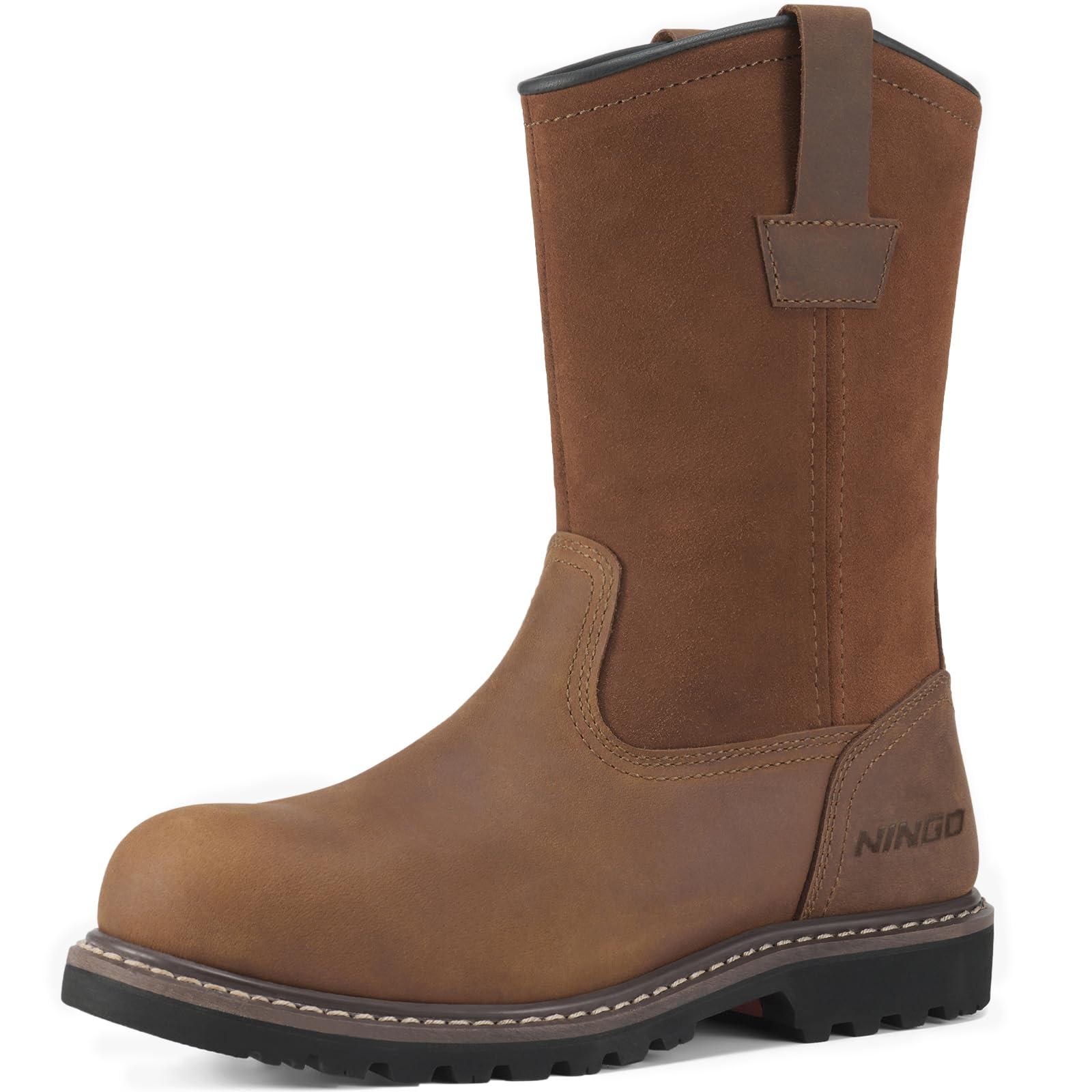
The HISEA NINGO is a steel-toe Wellington built with full-grain leather and an oil/slip-resistant outsole, making it the most serious safety boot in this lineup. Three-season owners report that the leather takes a break-in period of roughly a week before it softens to match the foot, but once settled, the comfort rivals premium domestic brands at roughly half the cost.
The steel toe cap meets standard impact protection for construction and welding environments, and the pull-on design with side gussets allows quick entry even with thick work pants. One owner in a manufacturing facility noted that the boots handled daily exposure to oil, chemicals, and standing water without leaking or losing tread grip after nearly a year. The reddish-brown dye lightens with wear, so expect the color to shift toward a more traditional work-brown as the leather ages.
For anyone who spends 10-hour shifts on concrete or gravel, the steel shank provides enough arch support to reduce foot fatigue, though adding a gel insole improves comfort for those with high arches. The main constraint is that the steel toe runs slightly snug for wide-footed buyers, so ordering a half-size up is a common adjustment.
What works
- Full-grain leather outlasts synthetic competitors in abrasive worksites
- Steel toe provides genuine impact protection for industrial settings
- After break-in, comfort is comparable to boots costing twice as much
What doesn’t
- Snug fit for wide feet — size up for thick socks or E-width
- Leather dye shifts color noticeably during the first month of wear
2. Georgia Boot Men’s Carbo-Tec Wellington Work Boots
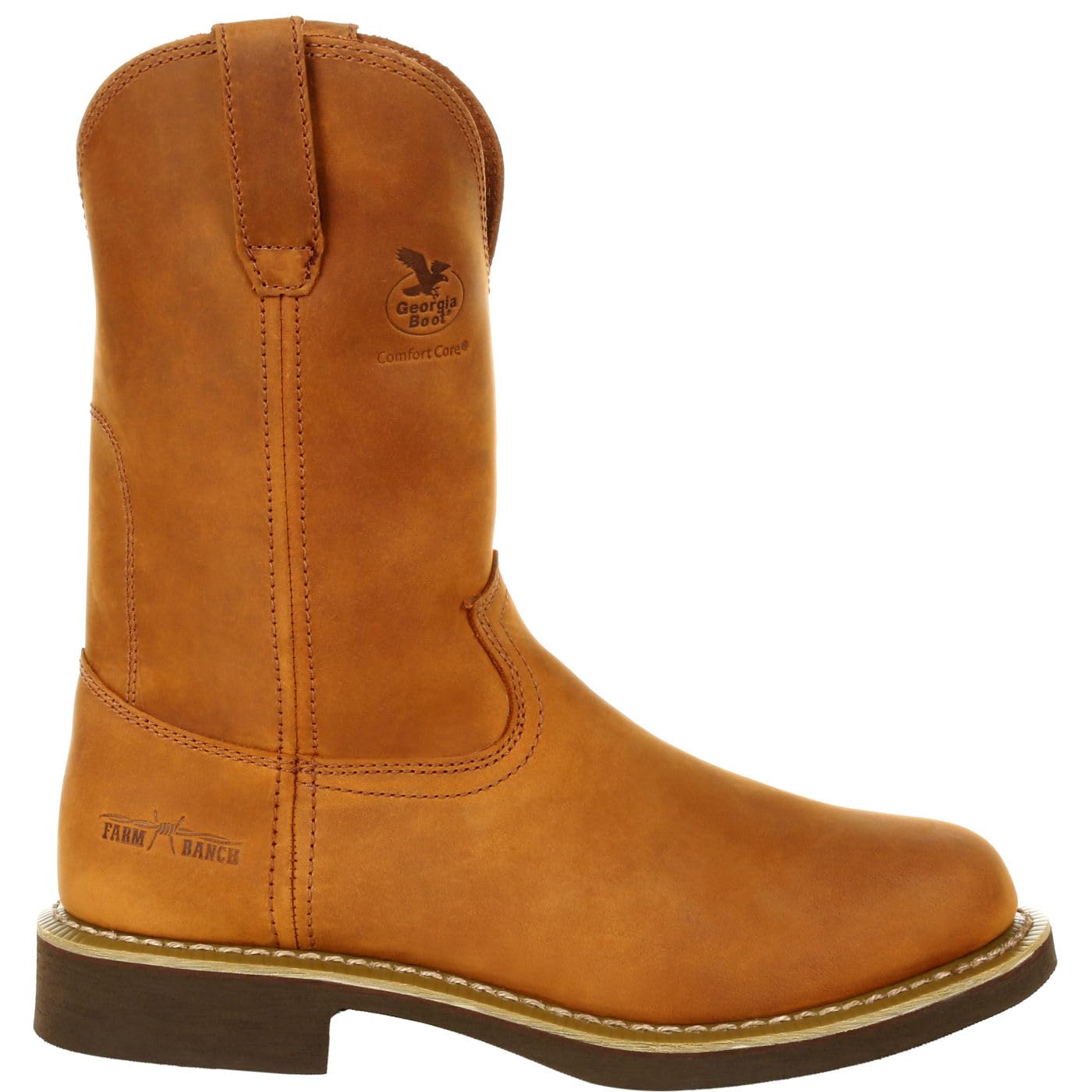
The Georgia Boot Carbo-Tec has been a staple for nearly two decades, and the 2024 version retains the same rugged pull-on silhouette that made it a favorite among ranchers and mechanics. The Carbo-Tec outsole is noticeably harder than typical rubber — it resists oil, heat, and chemical degradation, and it takes months of daily wear before the tread shows significant wear. Multiple long-term owners report two to three years of consistent use before the sole needs replacement, with many noting that the full-grain leather upper outlasts every other component.
Arch support is a standout feature: the steel shank runs full length, and the built-in heel cup provides enough structure to avoid the flat-foot fatigue common in cheaper wellingtons. However, the boot runs narrow through the forefoot and instep — buyers with standard-to-wide feet often need a professional stretching session or weeks of wear with damp, thick socks to achieve a comfortable fit. Once broken in, the leather molds tightly around the ankle, reducing heel slip during ladder work or walking on sloped ground.
For those who prioritize longevity over immediate out-of-box comfort, the Carbo-Tec is a premium investment that rewards patience. The 4.5-pound weight per boot is moderate for a steel-shank work Wellington, though the rigid sole offers minimal cushioning on concrete unless paired with a polyurethane insole.
What works
- Three-year lifespan reported by heavy-use owners in muddy and oily conditions
- Superior arch support from the full-length steel shank
- Heat/oil-resistant outsole suitable for garage and shop environments
What doesn’t
- Runs narrow — expect a break-in period of several weeks
- Hard outsole provides little shock absorption on hard surfaces
3. Georgia Boot Men’s Wedge Industrial Boot

The Georgia Wedge Industrial Boot swaps the traditional lugged sole for a flat wedge design — a deliberate choice for carpenters and concrete workers who spend hours on surfaces where mud would otherwise pack into deep treads. The wedge sole distributes weight evenly across the foot, reducing pressure points, and the dark tan color hides dirt and cement stains better than black or brown. Owners report that the sole remains mud-free even after a day of setting forms in wet soil, a major advantage over conventional wellies that require constant scraping.
The boot runs slightly large in the width department — a size 13 Wide offers generous room for heavy insoles and thick wool socks, while a standard D-width may feel loose if you prefer a snug heel lock. The leather is soft and comfortable from the first wear, though it scratches easily and shows scuffs more readily than the thicker hide on the Carbo-Tec model. The boot neck fits tightly around the calf without a strap, preventing debris from entering but making entry a bit of a squeeze for those with larger calves.
At 5.07 pounds per boot, this is the heaviest Wellington in this guide, but the weight is balanced well and the shock-absorbing sole softens over time. For anyone whose primary complaint about wellies is mud-building and foot fatigue on flat concrete, the Wedge boot solves both problems directly.
What works
- Wedge sole sheds mud instead of packing it — ideal for wet construction sites
- Comfortable out of the box with minimal break-in required
- Room to accommodate custom orthotic insoles
What doesn’t
- Soft leather scratches and scuffs easily
- Tight boot neck makes entry difficult for large calves
4. Skechers Men’s JDW Respected Tanzier Rain Shoe
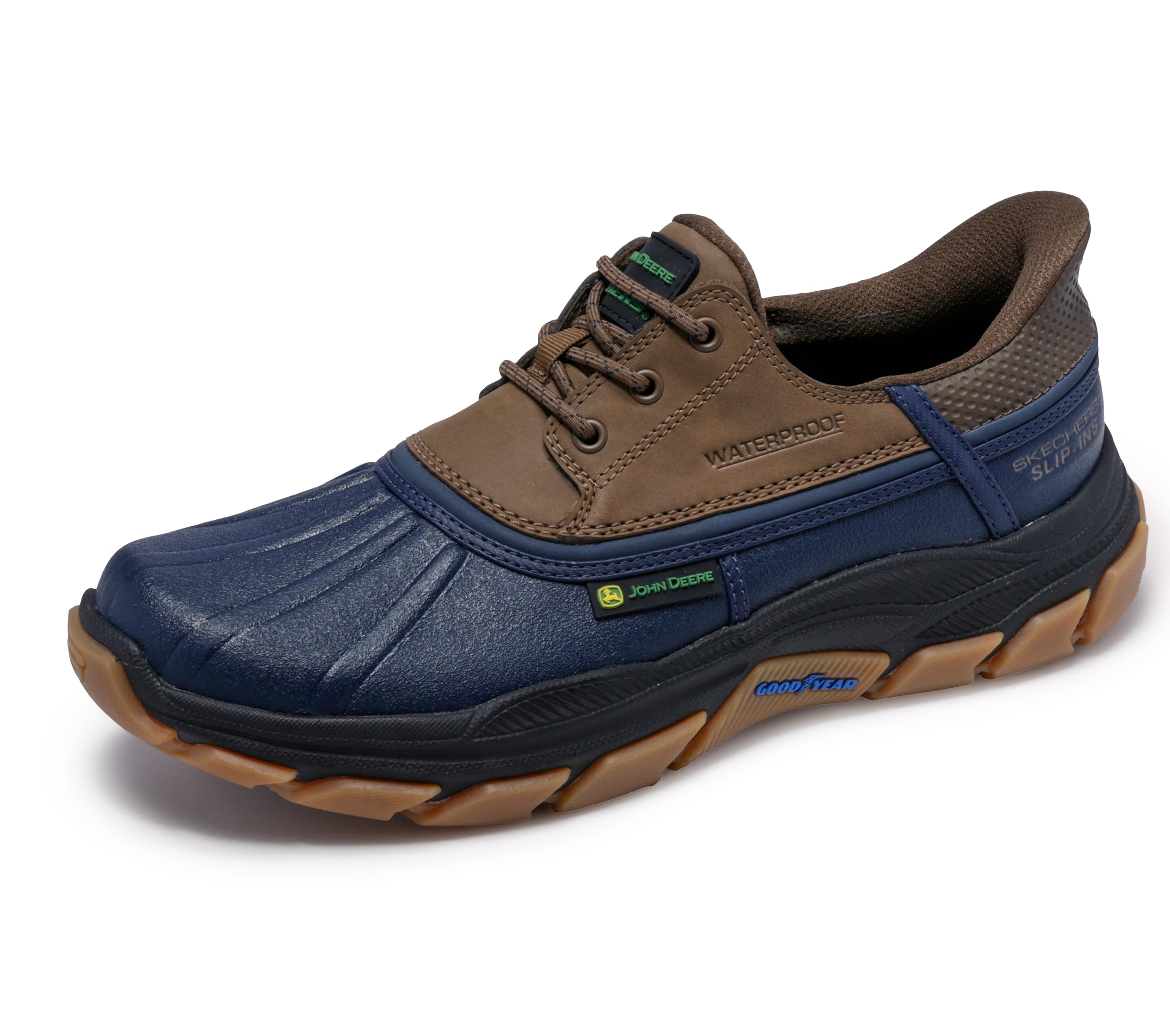
The Skechers JDW Tanzier breaks from the traditional tall Wellington profile — it sits lower on the ankle and uses elastic laces for a slip-on feel that’s closer to a sneaker than a rain boot. This makes it the best choice for gardeners and property owners who need waterproof coverage for wet grass, puddles, and light mud but don’t require the shin-high protection of a full Wellington. The synthetic upper is 100% waterproof, and after dozens of uses in rainy conditions, owners confirm no moisture penetration through the seams.
The boot opening is the biggest friction point: the collar is narrow and requires a shoehorn or a deliberate shove to get foot through. Some owners noted that the elastic laces are not adjustable, so the fit depends heavily on choosing the correct size — and even then, the tongue can press into the top of the foot. Ordering a half-size larger than your normal shoe size is the recommended workaround. Once on, the interior is cushioned with Skechers’ Memory Foam insole, offering noticeably better arch support than standard rubber rain boots.
The outsole uses a multi-directional tread that clears mud quickly and provides solid grip on wet pavement, though it lacks the deep lugs needed for soft mud or loose gravel. The heel lining in a long-term pair broke down after about six months, but the overall waterproof performance and lightweight feel keep this model competitive for casual wet-weather chores.
What works
- Memory Foam insole provides all-day comfort for yard work
- True waterproof performance with no leaks reported after extended wet use
- Lightweight, low-profile design — easy to pack in a truck or gear bag
What doesn’t
- Very tight opening — shoehorn or half-size up is necessary
- Heel lining may degrade after 6 months of regular wear
5. Trudave Rubber Boots for Men with Steel Shank

The Trudave boot earned its reputation from owners who tested it in extreme conditions — one reviewer used it for Zodiac landings and hiking during an Alaska trip and reported that it stayed warm, dry, and comfortable through repeated immersion. The 5mm neoprene lining provides genuine insulation for standing water and cold mud, and the steel shank adds enough rigidity for rocky creek beds and uneven hunting trails. The 13-inch shaft circumference is narrower than the HISEA models, which means it fits snugger on slimmer calves but won’t accommodate thick layering for those with larger legs.
Sizing runs large — owners consistently recommend ordering a full size down or pairing the boots with thick fleece socks to fill the extra volume. The rubber compound is pliable enough to roll the boots down for compact packing, a useful feature for fishermen and hunters who need to stow boots in a duffel. The outsole uses a chevron-style tread that sheds mud effectively and grips well on wet boat decks and slick rocks, though the platform heel can feel unstable when walking on steep, loose terrain.
For the price point, the Trudave delivers a combination of insulation, waterproofing, and packability that typically costs more from heritage brands. The main trade-off is the relatively narrow shaft — it’s ideal for slim-to-average calves but restrictive for anyone needing to tuck insulated pants inside the boot.
What works
- Excellent insulation for cold-water fishing and fall hunting
- Rolls up tight for packing — great for travel or boat storage
- Steel shank provides good puncture protection on rocky ground
What doesn’t
- Shaft is narrow — not suitable for large calves or multiple pant layers
- Runs large; expect to size down at least one full size
6. HISEA Men’s Rain Boots with Steel Shank
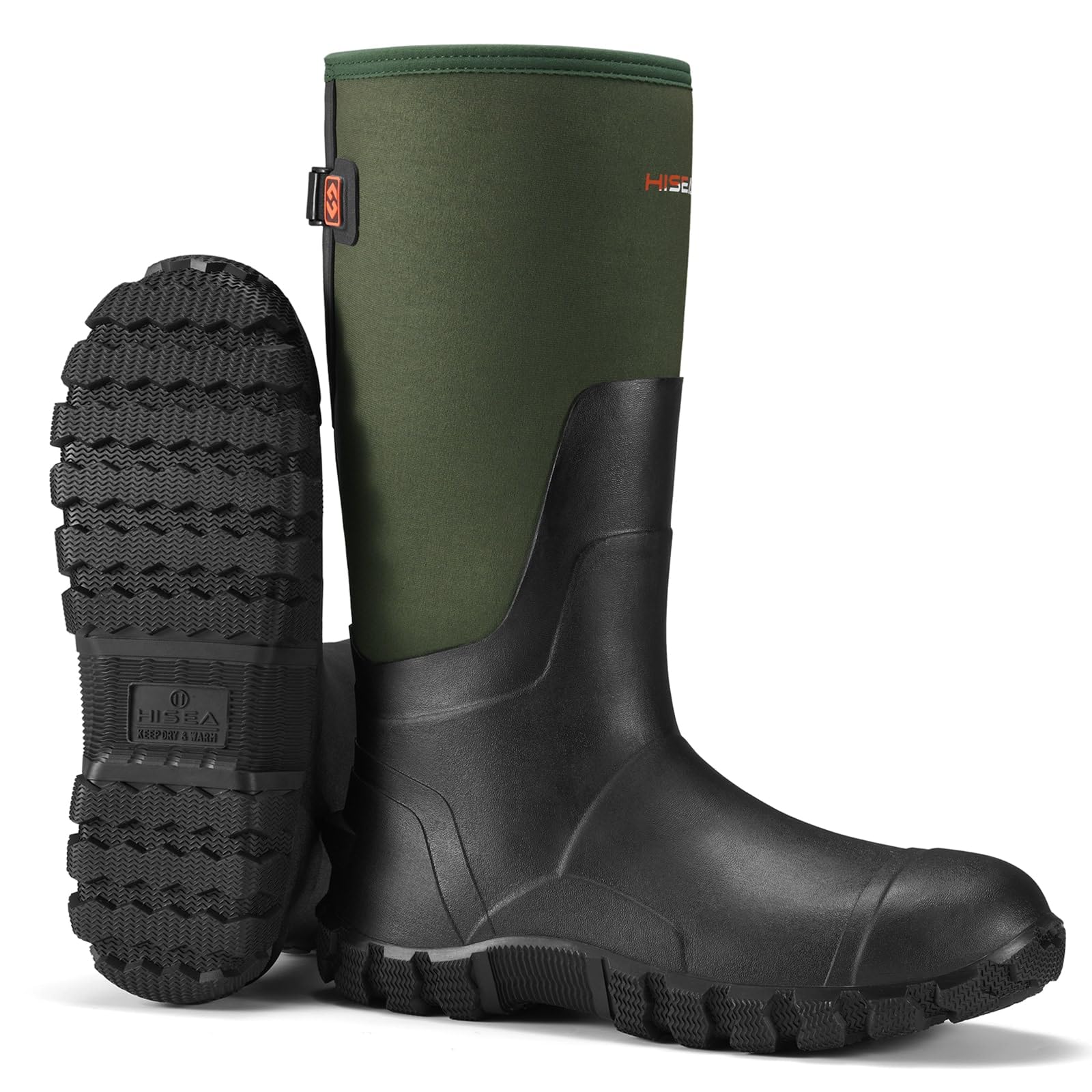
The full-height HISEA Rain Boot has become a go-to for farm and ranch owners who previously wore brands that cracked within four months. The steel shank runs the length of the footbed, providing the puncture resistance needed in barns and pastures littered with sharp debris. Owners report consistent waterproofing even when standing in water nearly reaching the boot’s brim, and the 5mm neoprene layer keeps feet warm during cold-weather chores without causing overheating in milder conditions.
The adjustable calf strap is a standout feature — it lets you tighten the upper shaft to prevent mud and water from splashing in, a detail missing from many competitors at this price level. The boot runs about a half-size large, so adding a thicker insole or wearing heavy socks achieves a secure fit. Multiple owners noted that the rubber outsole delivers reliable traction in deep mud and wet grass, though it can feel a bit stiff on hard pavement during long walks. A couple of reviewers reported a strong rubber smell that persisted for weeks, which may be an issue for hunters or anyone storing the boots inside a vehicle cab.
At roughly one-third the cost of premium American-made wellingtons, the HISEA offers a compelling mix of durability, adjustability, and waterproof performance. The main durability concern is that the crease point at the ankle may develop a crack after 19 months of heavy use, but for the price, many owners consider that acceptable and simply reorder.
What works
- Adjustable calf strap prevents water intrusion on deep mud
- Steel shank gives solid arch support and puncture resistance
- Waterproof performance holds up in near-brim-depth water
What doesn’t
- Strong rubber odor may be off-putting for hunting or vehicle storage
- Ankle crease can crack after 18+ months of daily use
7. HISEA Men’s Rubber Boots Ankle Rain Boots

The HISEA Ankle Bootie is the shortest boot in this guide, standing at roughly ankle height and designed specifically for lawn care, light gardening, and kayaking. Owners describe it as a direct competitor to short Muck Boots, offering 100% waterproof performance in wet grass and shallow puddles without the bulk of a full-height Wellington. The outsole uses a rugged tread pattern that provides good grip on wet grass and loose soil, though it can slip slightly on smooth, wet concrete.
The boot is true to size for most users, and the wide toe box accommodates broad feet comfortably. The interior footbed is remarkably supportive for a boot at this price — one reviewer who works in land maintenance noted that it provided enough arch support for full eight-hour shifts. The large pull loops make entry and exit easy, even when wearing thick gloves or cold, wet hands. After two heavy winters, owners report the boots remain waterproof with no delamination or sole separation.
If you need a tall Wellington for deep mud or flood conditions, this isn’t the right shape. But for anyone who has been looking for a lightweight, easy-on alternative to heavy rubber boots for everyday lawn work, the HISEA ankle bootie delivers reliable waterproofing with a fraction of the weight and break-in time.
What works
- Lightweight and easy on/off — ideal for quick trips into wet grass
- Supportive footbed with good arch support for all-day wear
- True-to-size fit with roomy toe box for wide feet
What doesn’t
- Slight slip on wet, smooth concrete surfaces
- Not suitable for deep mud or standing water above ankle height
Hardware & Specs Guide
Steel Shank vs. No Shank
A steel shank is a rigid metal insert that runs from the heel to the ball of the foot. In wellingtons, it prevents the boot from flexing under load, reducing arch fatigue and adding puncture protection. Boots without a shank (like the Skechers Tanzier or HISEA Ankle) are lighter and more flexible but offer less stability on uneven ground and no defense against sharp objects underfoot. For farm, hunting, and construction use, a steel shank is non-negotiable. For lawn care and casual wet-weather wear, a shankless boot is fine.
Neoprene Insulation Thickness
Neoprene is the foam layer bonded to the inner lining of rubber wellingtons. A 3mm neoprene layer provides light insulation for mild rain and fall chores, while 5mm neoprene (used in the HISEA and Trudave models) offers meaningful warmth for standing water and near-freezing conditions. Thicker neoprene also adds cushioning and helps the boot conform to the calf, reducing chafing. The trade-off is reduced breathability — 5mm boots can feel warm in summer unless the boot has a vented upper.
FAQ
Should I size up or down for men’s Wellington boots made of rubber?
How do I prevent the strong rubber smell in new wellingtons?
Final Thoughts: The Verdict
For most men who need a do-everything work Wellington, the winner is the HISEA NINGO Steel Toe because it combines steel-toe safety, full-grain leather durability, and oil resistance at a price that undercuts traditional work boot brands while delivering comparable comfort after break-in. If you prioritize a classic leather Wellington with proven longevity and strong arch support, grab the Georgia Boot Carbo-Tec. And for straightforward wet-weather protection without the bulk of a full-height boot, nothing beats the HISEA Ankle Bootie — it disappears on your feet while keeping you dry in the yard.