
Daffodils are remarkably self-sufficient once established, but the difference between a decent showing and a traffic-stopping display of oversized, richly colored trumpets comes down to one thing: the specific ratio of phosphorus and potassium you deliver at planting and just after bloom. A generic balanced fertilizer often pushes leaf growth at the expense of flower development, which is the exact opposite of what spring bulbs need.
I’m Rikta — the co-founder and writer behind Lawn Gear Lab. I spend hundreds of hours cross-referencing granular analysis reports, studying how different NPK ratios affect bulb energy storage, and synthesizing verified owner data to separate genuine performance from marketing claims in this category.
Whether you are planting new bulbs this fall or feeding an established naturalized drift, this guide to the best fertilizer for daffodils will help you match the right formula to your soil conditions and blooming expectations.
How To Choose The Best Fertilizer For Daffodils
Daffodils are heavy feeders of phosphorus and potassium during their brief post-bloom window when foliage is still green and actively photosynthesizing. Choosing the wrong ratio or application timing can reduce next year’s flower count significantly.
Understanding the NPK Ratio for Bulbs
The three numbers on a fertilizer bag represent nitrogen (N), phosphorus (P), and potassium (K). For daffodils, a low first number (nitrogen) prevents excessive leafy growth that can weaken bulbs over winter. The second number (phosphorus) should be the highest — look for ratios like 3-5-3, 4-10-10, or 5-7-10. High phosphorus supports strong root establishment and large, vibrant blooms.
Granular vs. Liquid: Which Form Works Best
Granular slow-release formulas are ideal for daffodils because they break down gradually, matching the bulb’s nutrient uptake window after flowering. Liquid feeds act too quickly and can leach below the root zone before the bulb absorbs them. Choose a granular product you can sprinkle onto the soil surface or mix into the planting hole.
Organic vs. Synthetic Formulations
Organic options like bone meal (high phosphorus), rock phosphate, and composted manures feed the soil microbiome and release nutrients slowly over several seasons. Synthetic bulb foods deliver precise ratios and faster visible results but require careful reapplication. Both work; organic choices reduce the risk of burning newly planted bulbs if instructions are followed.
Additional Micronutrients: Calcium and Iron
Calcium strengthens cell walls in bulb scales, helping daffodils resist rot in wet spring soils. Iron prevents yellowing between leaf veins. Products with 6% calcium or 2% iron (like the 4-10-10 blends) offer an advantage in soils that test low in these elements. A soil test before purchasing can confirm whether these extras are necessary.
Quick Comparison
On smaller screens, swipe sideways to see the full table.
| Model | Category | Best For | Key Spec | Amazon |
|---|---|---|---|---|
| FoxFarm Happy Frog All Purpose | Organic Slow-Release | Bulb vigor all season | 6-4-5 with active soil microbes | Amazon |
| Fertilome Dutch Bulb Food | Bulb-Specific Granules | Root development at planting | 7-8-5 analysis | Amazon |
| Espoma Organic Bulb-Tone | Organic Granules | Fall bulb planting & feeding | 3-5-3 with 6% calcium | Amazon |
| Cz Garden 4-10-10 Bulb & Bloom | High-Phosphorus Granules | Maximizing bloom count | 4-10-10 with 2% iron | Amazon |
| Lilly Miller Bulb & Bloom Food | Slow-Release Powder | Established bulb beds | 4-10-10 analysis | Amazon |
| Miracle-Gro Performance Organics Blooms | Organic Flower Food | Blooms on potted daffodils | 5-7-10 granules | Amazon |
| Espoma Organic Bone Meal | Single-Nutrient Organic | Adding phosphorus to soil | 4-12-0 analysis | Amazon |
In‑Depth Reviews
1. FoxFarm Happy Frog All Purpose Fertilizer

The FoxFarm Happy Frog All Purpose sits at the premium end of the spectrum but earns its place with a unique 6-4-5 ratio that includes active beneficial soil microbes and mycorrhizal fungi. For daffodils naturalized in garden beds with mixed plantings, this formulation supports the soil food web while still delivering enough phosphorus to encourage strong bloom stalks. The microbes enhance nutrient uptake around the bulb root zone without the risk of synthetic salt burn.
Users consistently report that plants perk up within a week of application, with yellowing foliage returning to deep green. The slow-release granular form feeds over about four weeks, matching the post-bloom window when daffodil leaves are still photosynthesizing to recharge the bulb. It works equally well for new bulbs placed in the planting hole and for top-dressing established clumps in early spring.
The main trade-off is the strong manure-like odor that comes from the organic ingredients. While the smell fades after a day outdoors, it can be overwhelming if you apply it to indoor pots or window boxes without ventilation. For outdoor daffodil beds, this is a minor inconvenience for the premium biological activity you get.
What works
- Contains beneficial soil microbes that improve phosphorus availability to bulbs
- Gentle slow-release formula unlikely to burn tender new roots
- OMRI listed for organic gardening peace of mind
What doesn’t
- Strong odor during application, especially noticeable indoors
- Higher price per pound compared to synthetic bulb foods
2. Fertilome Dutch Bulb Food
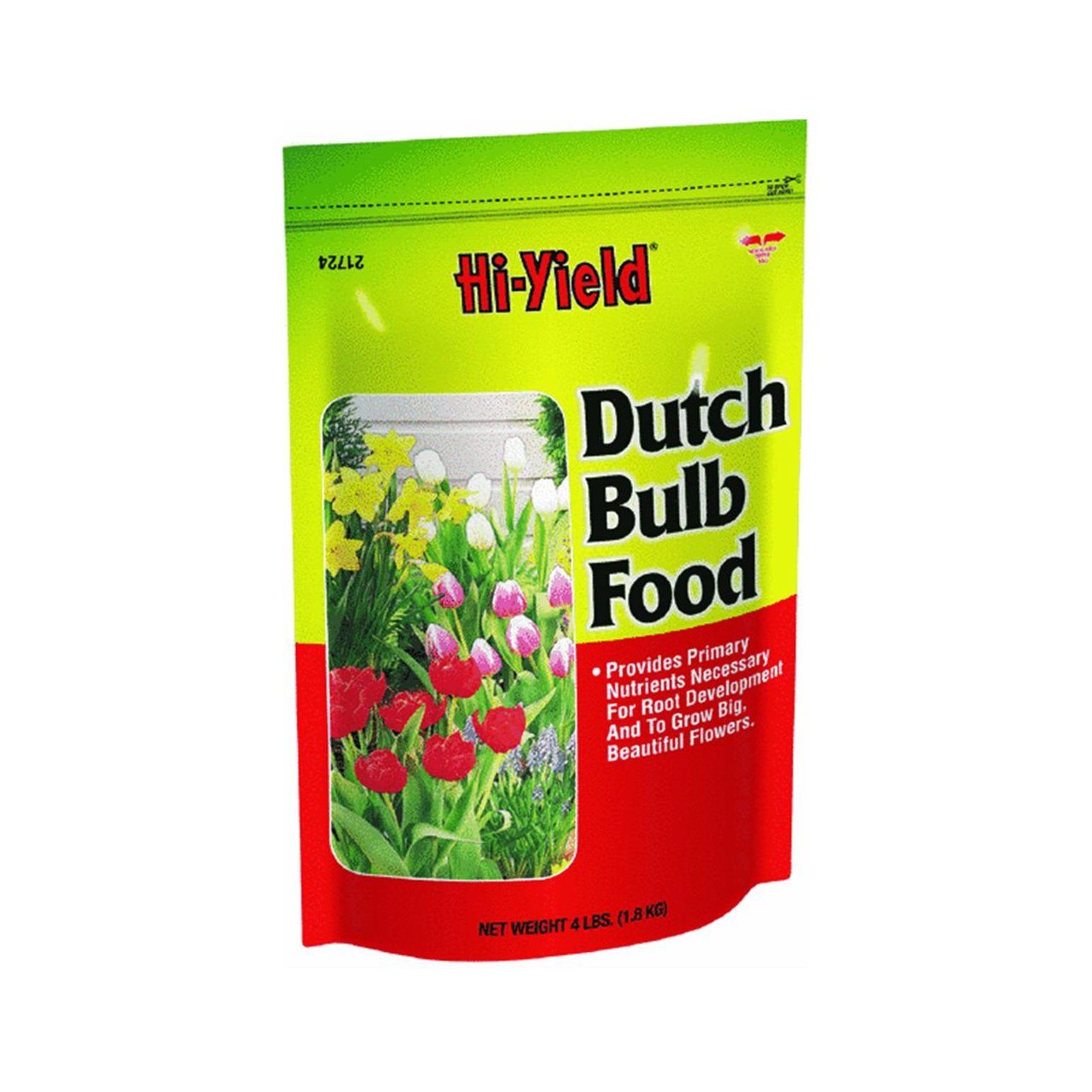
Fertilome 21724 Dutch Bulb Food is one of the few products on the market with a 7-8-5 analysis specifically designed for flowering bulbs at planting time. The elevated phosphorus and potassium levels target both root initiation and flower bud differentiation. The 7% nitrogen is moderate enough to avoid forcing excessive leaf growth while still providing the green-up signal that emerging daffodil shoots need in early spring.
The granular formula covers 50 square feet per bag at the recommended rate of 4 cups per 50 sq. ft. for established beds. Gardeners with large naturalized drifts will appreciate that a single bag handles a substantial area. It can be worked into the soil at planting or scratched into the surface around emerged shoots. The manufacturer recommends application both at fall planting and again as shoots appear in spring.
A few users note that the price per bag is slightly higher than generic all-purpose fertilizers, but they also report that the precision formulation reduces the amount you need to use compared to a 10-10-10 approach. The smaller recommended dose means the bag lasts longer, offsetting the upfront cost. The only real downside is availability — it is less commonly stocked in big-box garden centers.
What works
- Tailored 7-8-5 ratio matches the specific needs of daffodil bulbs at planting
- Large 4-pound bag covers 50 square feet at full dose
- Dual-use formulation suitable for both new plantings and established beds
What doesn’t
- Not certified organic, which matters for some growers
- Can be harder to find in local garden centers
3. Espoma Organic Bulb-Tone

Espoma’s Bulb-Tone has been a staple among organic bulb gardeners since 1929, and the 3-5-3 analysis with 6% calcium is precisely what daffodils need for strong bloom development without excessive nitrogen. The calcium content is a hidden advantage — it strengthens cell walls in bulb scales, reducing the risk of soft rot during wet springs. The Bio-tone formula includes beneficial microbes that help break down organic matter around the root zone.
The product works as a no-mix granular that you place directly in the planting hole for new bulbs or sprinkle on the soil surface for established clumps. Users consistently report that daffodil bulbs treated with Bulb-Tone produce thicker stems and larger flowers by the second season. The 4-pound bag is lightweight, which makes handling easy, and the resealable top keeps the granules dry between uses.
Because the NPK numbers are lower than synthetic options, some gardeners accustomed to high-analysis fertilizers may feel the need to apply more than recommended. The 3-5-3 ratio is actually ideal for bulbs — more concentrated formulas risk pushing foliage at the expense of flower buds. The only limitation is that this product is designed specifically for bulbs, so you cannot use the same bag for vegetable beds without supplementing with a higher-nitrogen source.
What works
- Organic formula with 6% calcium for bulb cell strength and rot resistance
- Registered organic input material for certified growers
- Requires no mixing and is ready to apply straight from the bag
What doesn’t
- Lower NPK numbers mean slightly more volume needed per application area
- Limited to bulb-specific use — not a general garden fertilizer
4. Cz Garden 4-10-10 Bulb & Bloom Fertilizer

The Cz Garden Supply 4-10-10 Bulb and Bloom formula takes a no-nonsense approach: high phosphorus, moderate potassium, and minimal nitrogen — exactly what daffodils need to focus energy on flower formation. The added 2% iron is a smart inclusion for soils with high pH that tend to lock up iron, which often causes interveinal chlorosis (yellowing between leaf veins) in daffodil foliage. The 4-10-10 ratio is among the most phosphorus-dense options available without stepping into pure bone meal territory.
Users growing bougainvillea, African daisies, and gerbera daisies reported impressive bloom responses, but the same high-phosphorus logic applies equally to trumpet daffodils. The heavy-duty resealable pouch keeps granules dry and pours cleanly. The 4-pound bag is adequate for a medium-sized daffodil bed or multiple smaller planting pockets. Cz Garden is committed to premium-grade ingredients, and the lack of filler salts means you get actual nutrient weight per pound.
The product does not carry an organic certification, which may be a dealbreaker for strict organic growers. Additionally, because the phosphorus content is quite high, over-application in already phosphorus-rich soils can lead to runoff concerns. A simple soil test before purchasing is recommended to confirm your garden actually needs this level of phosphorus supplementation.
What works
- Very high 4-10-10 ratio pushes maximum bloom output from daffodil bulbs
- 2% iron helps correct yellowing foliage in alkaline soils
- Resealable pouch packaging keeps fertilizer dry and easy to store
What doesn’t
- Not certified organic despite clean ingredient profile
- High phosphorus can be excessive in already fertile soils
5. Lilly Miller Bulb & Bloom Food 4-10-10

Lilly Miller has been producing bulb-specific food for decades, and the 4-10-10 formulation remains one of the most straightforward mid-range options for daffodil growers. The slow-release mechanism means that you apply it once at planting and once after bloom, and the nutrients meter out gradually through the root zone. Gardeners who prefer a set-it-and-forget-it approach appreciate not having to mix or reapply every two weeks.
The powder form is finer than typical granules, which helps it incorporate into soil more evenly. Users with established daffodil beds report that the formula produces consistently bright blooms and sturdy stems even in less-than-ideal soil conditions. Several customers mention that this product is hard to find in brick-and-mortar stores, making Amazon the most reliable source. The 4-pound bag covers roughly the same area as other 4-pound bulb foods — figure 10 to 15 square feet per pound depending on your application rate.
The packaging has remained basic for years — no resealable zipper, no measuring scoop. You will need your own measuring cup or spoon to get the 4:10:10 ratio exactly right. A few users also note that the bag can arrive dusty due to the powder consistency, so opening it over a bucket or tarp is advisable to avoid a mess.
What works
- Proven 4-10-10 ratio that bulb specialists have trusted for years
- Slow-release formulation reduces application frequency
- Fine powder incorporates well into both loose and compacted soils
What doesn’t
- Bag lacks a resealable closure, making long-term storage messy
- Powder consistency can create dust clouds during application
6. Miracle-Gro Performance Organics Blooms

Miracle-Gro Performance Organics Blooms takes the brand’s trusted granular delivery system and reformulates it with OMRI-listed organic ingredients at a 5-7-10 analysis. The potassium-heavy ratio (10) supports general plant health and disease resistance, while the 7% phosphorus keeps daffodil bloom production on track. This product covers up to 165 square feet per bag, making it one of the best values for gardeners with large naturalized daffodil drifts.
The granules are easy to scatter, and the recommended reapplication interval of 4 to 6 weeks aligns well with the daffodil post-bloom period. Users growing potted daffodils on patios report that the formula helps reluctant bloomers finally produce flowers. The organic certification means it is safe for edible gardens as well, which matters if your daffodils share a bed with vegetables or herbs.
The 2.5-pound bag is smaller than most bulb-specific options on this list, which limits its utility for very large planting areas. You may need to purchase two bags for a significant drift. Additionally, because this is a general bloom formula rather than a bulb-specific product, the nitrogen content (5) is slightly higher than ideal for daffodils — you may see marginal extra leaf growth at the expense of a few blooms.
What works
- OMRI listed organic formula with familiar Miracle-Gro reliability
- Covers up to 165 sq. ft., excellent for large planting areas
- Shows visible bloom improvement within 1-2 weeks of application
What doesn’t
- 2.5-pound bag is smaller than most bulb-specific competitors
- 5% nitrogen is slightly higher than optimal for pure bulb development
7. Espoma Organic Bone Meal 4-12-0

Espoma Organic Bone Meal provides the most concentrated phosphorus source on this list — a 4-12-0 analysis that delivers a massive phosphorus boost with zero potassium. For daffodil bulbs planted in soils that already test adequate for potassium, this single-nutrient approach allows precise correction without oversupplying other elements. The pack-of-two configuration offers double the value, giving you 8 pounds total for the price of a single premium bag.
Bone meal is one of the oldest organic phosphorus sources, and Espoma sources from steam-processed bone that breaks down slowly over the growing season. Users report success using it for tomato, garlic, and shrub strength, but for daffodils, its primary role is in the planting hole — a tablespoon mixed into the backfill soil provides the phosphorus the bulb needs for root development and next year’s bloom formation. Because bone meal is slow to release, you must apply it at least a few weeks before the bulb’s active phosphorus uptake period.
This product lacks potassium entirely, so it cannot serve as a complete feeding solution on its own. Daffodils still need potassium for disease resistance and strong stems. You would either need to combine it with a balanced fertilizer or ensure your soil already contains adequate potassium levels. The granular form can also attract dogs and wildlife if not worked into the soil, as the bone content carries a strong scent.
What works
- Highest phosphorus concentration (4-12-0) for targeted bloom support
- Pack of two provides significant value per total weight
- Organic and suitable for certified organic gardens
What doesn’t
- Contains no potassium — requires soil testing or supplemental feeding
- Granules can attract digging animals if not fully incorporated into soil
Hardware & Specs Guide
NPK Ratio — The Critical Trio
The three numbers represent nitrogen, available phosphate (P2O5), and soluble potash (K2O). For daffodils, a ratio where the middle number (phosphorus) equals or exceeds the other two is non-negotiable. A 3-5-3, 4-10-10, or 5-7-10 ratio ensures that energy flows to bloom development rather than leaf growth. Products with a first number above 8, such as general lawn fertilizers, should be avoided for daffodil beds.
Application Timing — When Matters Most
Daffodils have a narrow window for nutrient uptake: immediately after flowering while the foliage is still green and photosynthesizing. Applying fertilizer at planting in fall supplies phosphorus for root initiation. The most important application, however, is in early spring as shoots emerge and again right after blooms fade. Granular products should be watered in after application to move nutrients into the root zone.
FAQ
Can I use a general 10-10-10 fertilizer on daffodils?
Should I fertilize daffodils after they bloom or in the fall?
How much fertilizer should I apply per daffodil bulb?
Is bone meal a good choice for daffodils?
Final Thoughts: The Verdict
For most gardeners, the best fertilizer for daffodils winner is the Espoma Organic Bulb-Tone because its 3-5-3 ratio with added calcium delivers the precise phosphorus-to-nitrogen balance daffodils need without risking salt burn, and its organic certification suits the majority of home bulb beds. If you want the absolute highest bloom count from a phosphorus-heavy formula, grab the Cz Garden 4-10-10 Bulb & Bloom. And for gardeners with very large naturalized drifts who want simplicity, nothing beats the FoxFarm Happy Frog All Purpose for its microbial activity and gentle long-term feeding profile.