
A garden shovel is the single most abused tool in your shed. You stomp on it, lever against rocks, slice through roots, and scoop heavy soil—all in one session. The difference between a frustrating chore and a productive afternoon comes down to blade gauge, handle material, and edge retention. Most shovels on the shelf bend under pressure or snap at the handle within a season, forcing you to buy twice. A well-chosen model eliminates that cycle entirely.
I’m Rikta — the co-founder and writer behind Lawn Gear Lab. I’ve spent countless hours studying metallurgy specifications, handle tensile strength ratings, and ergonomic data from thousands of verified owner reports to build this guide with category-specific precision.
Whether you are breaking new ground in clay or maintaining established beds, choosing the right tool starts with knowing which specs actually matter. This guide cuts through the noise to present only the top contenders for the best garden shovel you can buy today.
How To Choose The Best Garden Shovel
Selecting a shovel isn’t about which one looks the toughest in the store display. The real decision hinges on three interconnected factors: the steel’s composition and thickness, the handle’s material and length, and the grip design that matches your height and digging style. Ignore any of these, and you risk buying a tool that fails exactly when you need it most.
Blade Material and Gauge
The blade is where all the force concentrates. Alloy steel and carbon steel are the standards here, with 13-gauge or 14-gauge thickness marking the difference between a lightweight casual digger and a serious ground-breaker. Thinner blades (often hidden behind a painted finish) bend when you lever against a buried root. Look for a sharpened edge that is ground, not stamped—ground edges penetrate compact soil with noticeably less effort per stomp.
Handle Length and Material
Handle length dictates your leverage and posture. A 48-inch straight handle shifts the fulcrum point, letting you dig deeper with less back strain, while a 41-inch D-handle gives you more control in tight raised beds. Fiberglass handles absorb vibration better than wood but can crack if left in direct sun for years. Aluminum handles, like those on Fiskars Pro models, offer the best strength-to-weight ratio and resist weather entirely.
Grip Style and Rivet Construction
The handle-to-blade connection is the most common failure point. Double rivets are the baseline for any heavy-duty shovel; single rivets shear off under repeated prying. D-shaped grips provide two-handed control for precision work, while O-handles or extended cushioned grips improve comfort during long sessions. If you have wide hands, test the grip diameter—some ergonomic designs are too narrow for comfortable leverage.
Quick Comparison
On smaller screens, swipe sideways to see the full table.
| Model | Category | Best For | Key Spec | Amazon |
|---|---|---|---|---|
| Root Slayer 22211 | Premium | Root cutting & heavy digging | 13-ga carbon steel blade | Amazon |
| Fiskars 60″ Pro Digging | Premium | Maximum leverage & reach | 60-inch aluminum handle | Amazon |
| Fiskars 44″ Pro D-Handle | Premium | Compact power in tight spaces | 44-inch aluminum D-handle | Amazon |
| Truper Tru Pro PRL-F | Mid-Range | Professional industrial use | 48-inch fiberglass handle | Amazon |
| Ashman Heavy-Duty Digging | Mid-Range | Non-conductive handle safety | Plastic/fiberglass handle | Amazon |
| KOLEIYA 41″ Round Point | Budget | Lightweight everyday gardening | 41-inch wood handle | Amazon |
| VNIMTI Round Point | Budget | Compact car trunk storage | 41-inch wood handle | Amazon |
In‑Depth Reviews
1. Root Slayer 22211 Round Head Garden Shovel

The Root Slayer stands apart from every other shovel on this list because of its inverted V cutting tip with integrated ripsaw-style teeth. That serrated edge lets the blade bite into sod and small roots with a slicing motion rather than relying on pure stomp force. The 13-gauge mid-carbon steel blade is noticeably thicker than the 14-gauge standard found on most mid-range models, which translates to less flex when you lever against buried rocks. Owners report cutting through river rock piles without the blade edge rolling, which speaks to the heat-treatment quality of the steel.
The ergonomic O-handle provides a larger gripping surface than traditional D-handles, which helps distribute pressure across the palm during repetitive digging. At six pounds, this is the heaviest shovel reviewed here—the weight gives it momentum when chopping through compacted ground, but it becomes fatiguing during extended transfer work. The shaft length sits at 43 inches, which is shorter than a full-length professional handle but longer than the compact 41-inch models, placing it in a middle ground that suits average-height users best.
Several owners mention that the twin prongs at the base of the cutting tip can limit volume capacity when scooping loose soil, and the serrations do tend to dull faster if used in extremely rocky terrain. The lifetime warranty from Radius Garden provides peace of mind, but the shovel’s design clearly prioritizes root-slashing aggression over general-purpose scooping efficiency. If your primary task involves breaking new ground with established roots, this is the most capable option available.
What works
- Serrated blade cuts through roots and sod with minimal effort
- 13-gauge carbon steel resists bending under heavy prying loads
- O-handle reduces hand fatigue during extended use
What doesn’t
- Heavier than most competitors at six pounds total weight
- Serrated edge can degrade in consistently rocky soil
- Scoop volume is reduced due to the V-shaped cutting tip design
2. Fiskars 60″ Pro Garden Shovel
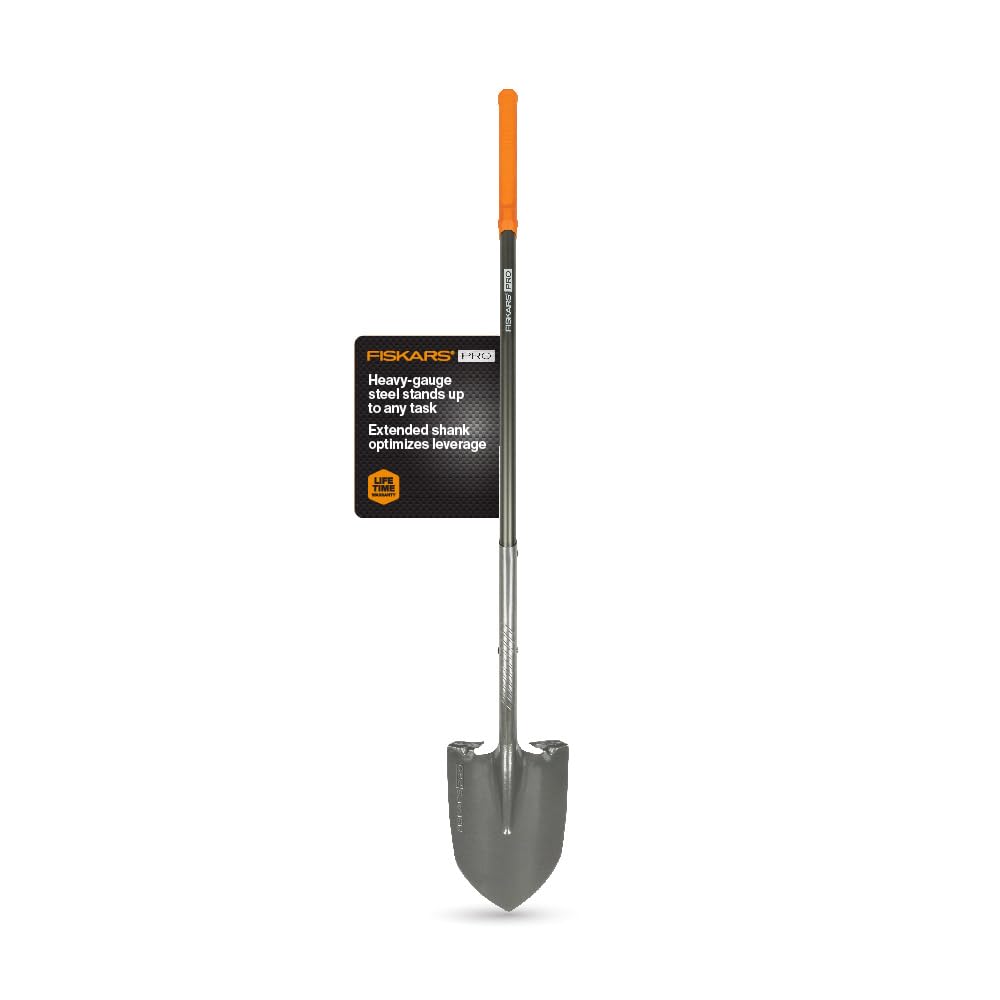
The Fiskars 60-inch Pro Digging Shovel redefines what leverage feels like in a hand tool. The teardrop-shaped aluminum shaft is aeronautically inspired—it resists twisting torque better than a round or D-shaped shaft while keeping the total weight at just two pounds. That weight-to-length ratio is what makes this shovel feel effortless to swing and control, even for a full-height 60-inch tool. The sharpened alloy steel blade arrives with a factory-ground edge that penetrates compact clay without requiring a pre-stomp warm-up.
Multiple owner reports confirm that this shovel withstands prying against concrete chunks and buried boulders without the blade bending or the handle flexing under 200 pounds of downward force. The rubber over-mold grip on the straight handle provides traction even with muddy gloves, though some users with smaller hands find the grip diameter slightly large for extended sessions. The full lifetime warranty from Fiskars is a strong indicator of the build confidence, and owners consistently describe this as the last shovel they expect to buy.
The primary trade-off is the 60-inch length itself. For shorter gardeners, the extra reach can make the tool feel unbalanced and harder to control for precision work like transplanting or edging. The straight handle also lacks the two-handed control that a D-handle offers for close-quarters bed work. However, for deep digging, trenching, or any task where maximum leverage matters, this model outperforms everything else in its category by a noticeable margin.
What works
- Extremely lightweight at just two pounds despite 60-inch length
- Teardrop aluminum shaft resists twisting better than round handles
- Sharp blade penetrates hard soil immediately without pre-work
What doesn’t
- 60-inch reach may feel unwieldy for short users
- Straight handle lacks precise control for close-quarters tasks
- Grip diameter may be uncomfortable for smaller hands over time
3. Fiskars 44″ Pro Garden Shovel with D-Handle

This 44-inch D-handle variant from Fiskars shares the same teardrop aluminum shaft and heavy-gauge alloy steel blade as its longer sibling, but the shorter length and ergonomic D-grip transform its handling characteristics. The D-handle allows two-handed control that makes scooping, lifting, and transferring soil noticeably easier than a straight handle permits. Owners frequently mention using this shovel to move eight tons of river rock without structural failure—the blade stays sharp and the handle doesn’t flex.
The 44-inch length hits a sweet spot for users between 5’4″ and 5’10”. It provides enough reach to dig deep planting holes without forcing you to stoop excessively, while remaining short enough to control in raised beds and tight garden rows. The weight sits at roughly 2.5 kilograms, which is heavier than the 60-inch model due to the additional metal in the D-handle assembly, but still significantly lighter than fiberglass or wood-handled alternatives with similar blade strength.
Several owners note that the blade’s non-stick coating can chip off with heavy use, and the D-handle’s aluminum construction can feel cold in winter conditions. The shovel excels at digging down and levering through root-heavy clay, but its wider blade profile makes it less efficient for scooping and pitching loose material than a dedicated transfer shovel. For gardeners who need one tool that digs, scoops, and moves material without breaking, this is the most versatile premium option.
What works
- D-handle provides superior two-handed control for scooping and lifting
- 44-inch length suits average-height users best for all-day comfort
- Blade remains sharp and straight even under extreme rock loads
What doesn’t
- Non-stick blade coating can chip with abrasive soil contact
- Aluminum D-handle feels cold in winter without gloves
- Wider blade makes precise transfer and pitching less efficient
4. Truper Tru Pro Round-Point Shovel PRL-F
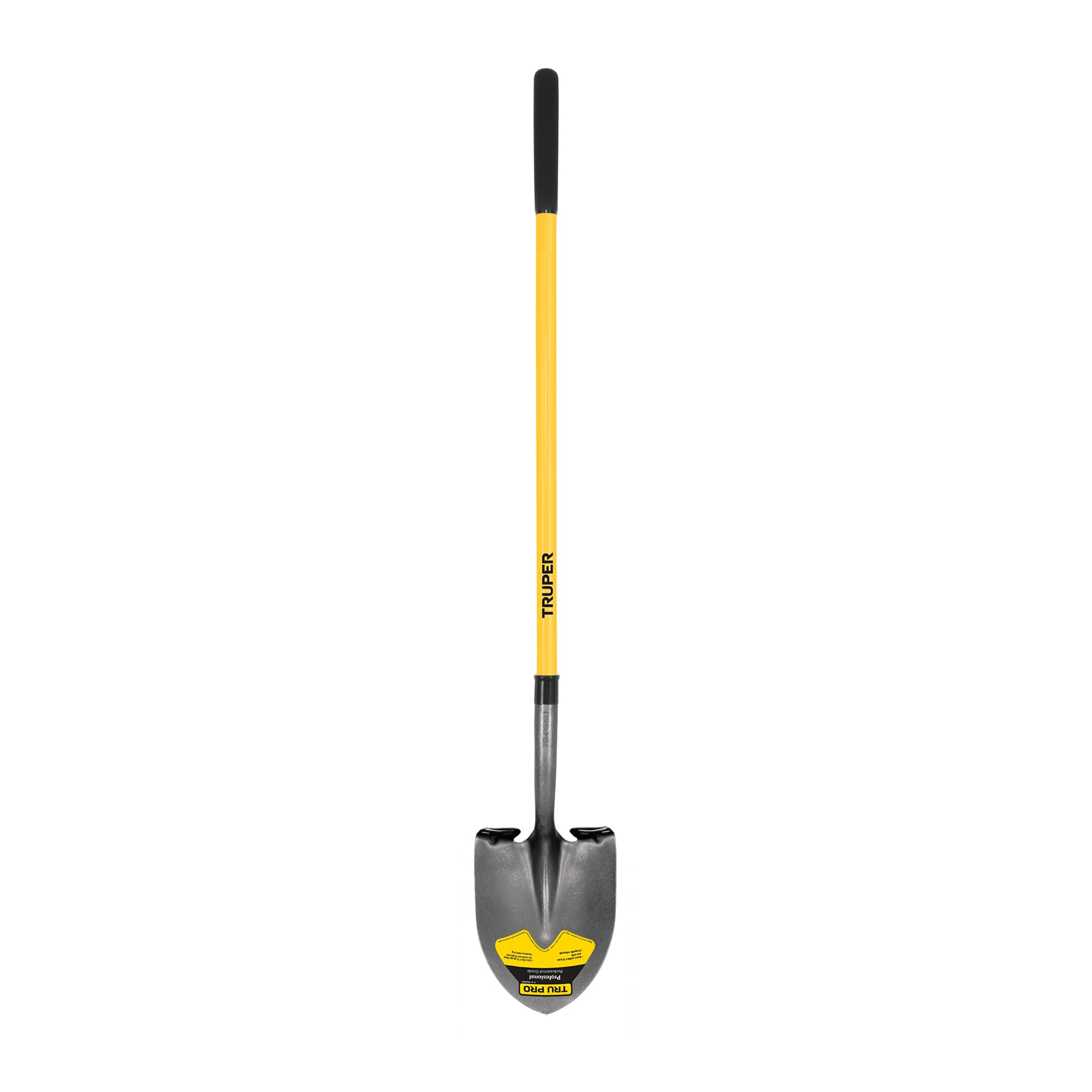
The Truper Tru Pro PRL-F is engineered for industrial and professional job sites where shovel failure means lost billable hours. The 48-inch fiberglass handle is the defining feature here—fiberglass offers better weather resistance than wood and better vibration dampening than aluminum, making it ideal for users who work in wet or cold conditions. The 14-gauge high-carbon steel blade is tempered for hardness, and the extended nine-inch cushioned grip provides comfort that standard rubber sleeves can’t match.
Owner feedback consistently highlights the blade’s ability to withstand prying force without bending, with one user confirming that the handle showed zero flex under 200 pounds of downward pressure. The 4.5-pound weight is moderate—heavier than the Fiskars aluminum models but noticeably lighter than the Root Slayer. The white fiberglass finish stays cool to the touch in direct sun and doesn’t splinter like wood can after moisture exposure.
The main drawback is the shorter 9-inch grip area relative to the 48-inch overall length, which can feel cramped for users with large hands during heavy prying motions. The shovel also lacks the ultra-sharp factory edge that the Fiskars models come with, meaning it requires more initial force to penetrate hard-packed soil. Truper backs it with a lifetime replacement warranty, and for professional landscapers or anyone who works in tough conditions daily, the durability justifies the mid-range investment.
What works
- Fiberglass handle resists weather, splintering, and temperature extremes
- 14-gauge high-carbon steel blade holds up to heavy prying without bending
- Extended cushioned grip reduces vibration transfer to hands
What doesn’t
- Factory edge arrives less sharp than premium competitors
- 9-inch grip area may feel short for users with large hands
- Heavier than aluminum-handled options at 4.5 pounds
5. Ashman Heavy-Duty Digging Shovel

The Ashman Digging Shovel differentiates itself with a non-conductive handle made from fiberglass or similar plastic composite, making it the safest choice for any digging near buried electrical lines or outdoor lighting conduits. The orange handle is highly visible, reducing the chance of leaving it behind in a garden bed. The alloy steel blade is sharpened from the factory and designed to cut through hard soil with a slicing motion rather than requiring brute stomp force.
At just 2.2 pounds, this is one of the lightest full-size shovels available, which makes it ideal for users who need to carry the tool long distances across a property or for older gardeners who fatigue easily. The 41-inch blade length combined with the 48-inch total length gives the shaft a relatively long reach, but the lightweight construction means the shovel doesn’t carry the same momentum as heavier models when digging deep holes. Owners praise its ability to survive years of home use while stored in a garage, noting that it outlasted hardware-store alternatives.
Several tall users report that the 48-inch overall length feels short for their frame, especially when digging from a standing position. The plastic handle can become slippery when wet, and the absence of a cushioned grip means vibration transfers directly to the hand during repetitive impacts. The Ashman is a solid mid-range choice for homeowners who value lightweight carry and electrical safety over raw digging power, but serious diggers handling rocky soil should look to the heavier Fiskars or Root Slayer options.
What works
- Non-conductive handle provides electrical safety for utility-adjacent digging
- Extremely lightweight at 2.2 pounds reduces carrying fatigue
- Sharp blade cuts through hard soil with less downward force
What doesn’t
- Handle feels short for users over six feet tall
- Plastic handle becomes slippery in wet conditions
- Lacks cushioned grip, transmitting vibration during heavy use
6. KOLEIYA 41 Inch Round Point Shovel
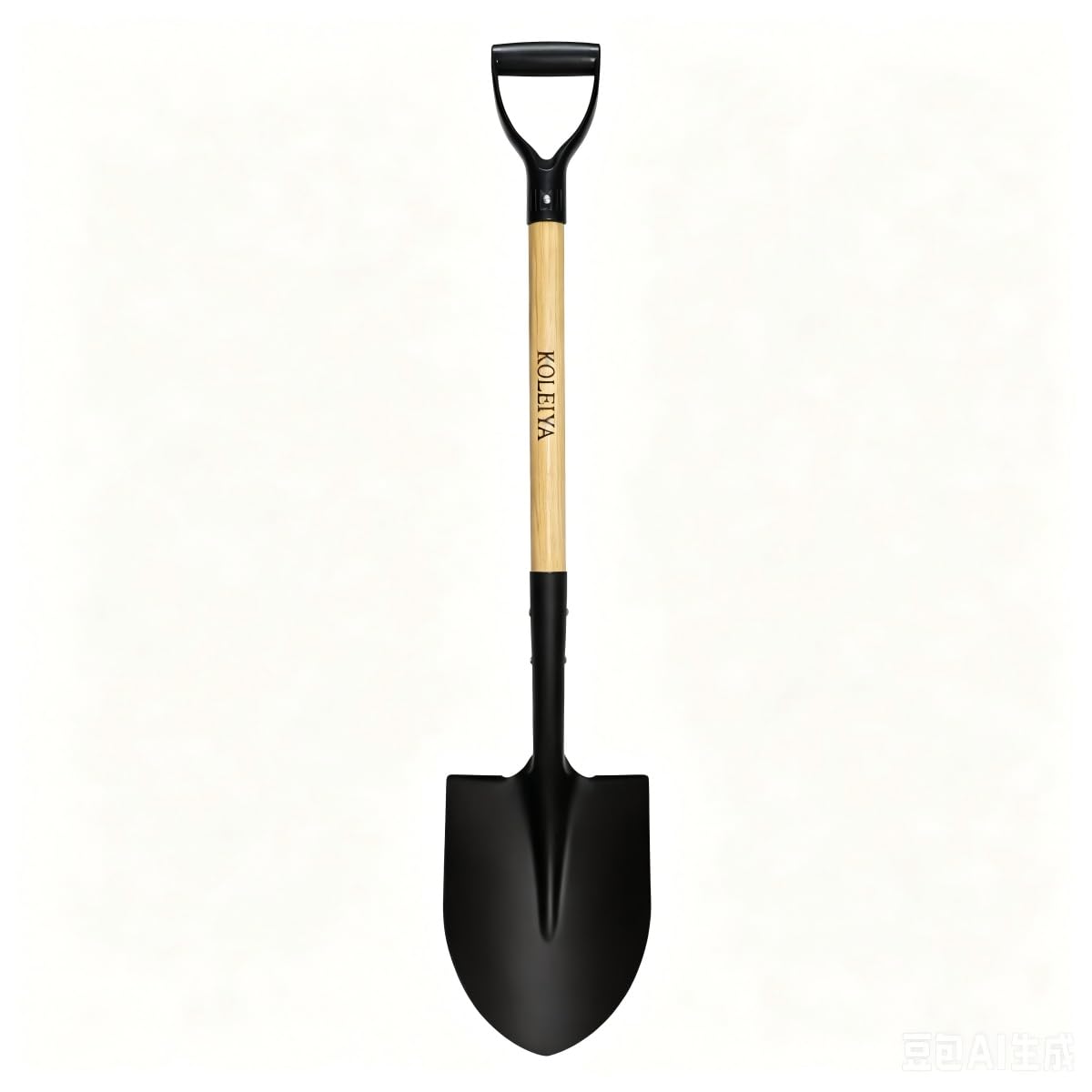
The KOLEIYA 41-inch shovel is a budget-friendly tool that punches above its price point through careful material choices. The solid wood handle is ash or similar hardwood, providing good strength-to-weight characteristics, and the shovel head is secured with double rivets—a feature often missing on budget shovels. At 3.3 pounds and 41 inches, it’s compact enough for trunk storage or for elderly gardeners who struggle with longer handles, yet still long enough for most digging tasks without excessive stooping.
Owner reviews consistently mention the shovel’s surprising durability, with one user describing it as a “little titan” for its ability to break down snow drifts and handle rocky soil without the blade bending. The D-handle is wide and smooth, providing comfortable leverage for transplanting, weed removal, and gravel transfer. The drop-shaped blade design narrows at the top and widens at the base, which helps the shovel penetrate soil more efficiently than a uniform-width blade.
The main compromise is in the blade steel itself. While the alloy steel is strong enough for general gardening, it isn’t heat-treated to the same standard as premium models, meaning the edge will dull faster with heavy use. Owners of the KOLEIYA should expect to sharpen the blade periodically, especially if used in sandy or rocky soil. For weekend gardeners who need a reliable tool for seasonal planting and light landscaping, this shovel offers exceptional value without the premium price tag.
What works
- Solid wood handle with double rivets for reliable durability
- Compact 41-inch length ideal for shorter users and car storage
- Drop-shaped blade design improves soil penetration efficiency
What doesn’t
- Blade steel edge dulls faster than premium heat-treated alternatives
- Wood handle requires dry storage to prevent swelling and cracking
- Lacks cushioned grip for prolonged heavy digging sessions
7. VNIMTI Round Shovel with D-Handle

The VNIMTI Round Shovel targets buyers who need a compact, lightweight tool for car trunks, camping kits, or small-space storage. At 41 inches and 3.3 pounds, it matches the KOLEIYA in form factor but distinguishes itself with a cold-rolled steel blade that undergoes high-temperature quenching to improve hardness. This heat-treatment process helps the blade resist deformation when striking hard stones during use, a common failure point for budget shovels.
The D-handle design is ergonomically shaped with a smooth wood finish that provides a secure grip without requiring gloves. Owners consistently rate it as one of the sturdiest shovels they’ve ever used, with one long-time gardener describing it as the best they’ve owned across decades of seasonal work. The drop-shaped blade transitions from a narrow contact point at the tip to a wider scoop body, making it effective for both digging and transferring loose material.
Several buyers note that the blade could be sharper from the factory, requiring more effort than expected to penetrate very hard-packed soil. The wood handle, while durable, lacks the weather resistance of fiberglass or aluminum and requires indoor storage to prevent moisture damage. The VNIMTI serves well as a secondary shovel for car or camping use, or as a primary tool for gardeners who work primarily in loose, well-tended soil rather than heavy virgin ground.
What works
- Cold-rolled steel with heat treatment resists deformation from stone impacts
- Compact 41-inch length fits easily in car trunks and camping gear
- Drop-shaped blade works well for both digging and scooping tasks
What doesn’t
- Factory blade edge is not as sharp as competitors for hard soil
- Wood handle requires dry storage to prevent long-term moisture damage
- Not ideal for heavy prying due to compact length and wood handle
Hardware & Specs Guide
Blade Gauge and Steel Type
Blade thickness is measured in gauge numbers—lower numbers mean thicker steel. A 13-gauge blade (Root Slayer) is approximately 2.3mm thick, while 14-gauge (Truper) is about 1.9mm. Alloy steel typically contains chromium and molybdenum for corrosion resistance, while carbon steel (Root Slayer) offers higher edge retention at the cost of being more prone to rust if not oiled. The sharpening method matters: forged and ground edges hold their profile longer than stamped edges.
Handle Material Trade-Offs
Wood handles (KOLEIYA, VNIMTI) offer natural vibration dampening and a warm grip but require dry storage and seasonal oiling. Fiberglass handles (Truper, Ashman) resist moisture and temperature extremes but can become brittle after extended UV exposure. Aluminum handles (Fiskars models) provide the best strength-to-weight ratio and complete weather resistance, though they transmit more cold and vibration to the hands without a cushioned grip layer. Handle insertion depth into the blade socket also matters—deeper insertion with multiple rivets creates a stronger joint.
FAQ
What blade gauge is ideal for heavy digging in rocky soil?
Should I choose a D-handle or a straight-handle shovel for gardening?
How often should I sharpen a garden shovel blade?
Final Thoughts: The Verdict
For most gardeners, the best garden shovel winner is the Fiskars 60″ Pro Digging Shovel because it combines an ultra-lightweight aluminum handle with a sharpened alloy steel blade and teardrop shaft design that maximizes leverage without adding weight. If you want serrated root-slicing capability, grab the Root Slayer 22211. And for a compact D-handle that balances digging power with control, nothing beats the Fiskars 44″ Pro Digging Shovel with D-Handle.