
A cow panel fence has one job: stay rigid when a thousand pounds of muscle leans into it. The worst ones buckle under tension, sag between posts, and let calves squeeze through the bottom. The best ones use hot-dipped galvanized wire, graduated mesh that shrinks at the base, and a gauge thick enough to bounce a shoulder check without deforming. Whether you are protecting a pasture, a garden, or a mixed herd of goats and cattle, the right roll of wire defines whether you spend the season fixing fence or moving animals.
I’m Rikta — the co-founder and writer behind Lawn Gear Lab. I’ve spent hundreds of hours studying livestock fencing specifications, comparing tensile strengths, wire gauges, and weave patterns, and cross-referencing real owner experiences to identify which cow panels fencing delivers actual durability without wasted money.
This guide breaks down seven distinct options, from budget-friendly field fence to heavy-duty horse-safe mesh, so you can match the right strength and coverage to your animals and terrain. Here is the best cow panels fencing you can buy right now, ranked by build quality, wire gauge, and real-world owner feedback.
How To Choose The Best Cow Panels Fencing
Livestock fencing is a structural purchase. The wrong gauge or mesh size can mean calves escaping, hooves caught in large openings, or wire sagging after one wet season. These three specifications matter more than brand names or unrolled length alone.
Wire Gauge and Tensile Strength
Gauge number drops as wire thickens: 14-gauge is the lightweight baseline suitable for sheep, dogs, and garden perimeter work, but it will buckle under full-grown cattle pressure. 12-gauge is the sweet spot for mixed herds and permanent pasture fence — it resists deformation and maintains tension over long spans. Premium rolls rated 11-gauge or those with 12-gauge reinforced borders add enough rigidity to contain horses that test boundaries. Always check whether the listing specifies “high-tensile” galvanized wire; mild steel with thin coating rusts within two years in humid climates.
Woven vs. Welded Construction
Welded wire mesh has neat square intersections, but each weld is a stress point that can snap when a cow leans or a branch falls. Woven (also called hinge-joint) construction lets the wire grid flex under pressure without breaking — the horizontal wires wrap around verticals rather than being spot-welded. For cattle, horses, and pigs, woven fence is significantly more durable and easier to repair if a section gets damaged. Reserve welded mesh for garden trellises or small-animal pens.
Graduated Mesh Size
A fixed-size grid traps problems. Top-to-bottom graduated mesh (for example, 8-inch openings near the top stepping down to 3.5-inch openings near the bottom) keeps adult cattle from sticking heads through while preventing piglets, goat kids, and rabbits from slipping out at ground level. If you fence mixed species, graduated mesh is non-negotiable. If you fence only full-grown cattle, a uniform 6×6-inch grid suffices, but that same grid will let a calf crawl right under a bottom wire that isn’t tight.
Quick Comparison
On smaller screens, swipe sideways to see the full table.
| Model | Category | Best For | Key Spec | Amazon |
|---|---|---|---|---|
| ZESHANGUS 328ft | Premium Woven | Large pastures & mixed herds | 14GA body / 12GA border | Amazon |
| Rilth Horse Fence | Horse-Safe Mesh | Equestrian & high-impact use | 12GA / 2×4 mesh | Amazon |
| HMOLIKH 164ft | High-Tensile | Cross fencing & hilly terrain | 14GA / 5ft height | Amazon |
| Mymawzey 164ft | Light Field Fence | Deer & garden perimeter | 14GA / 164ft roll | Amazon |
| YESON 164ft | Mid-Value 14GA | Sheep, dogs & light livestock | 14GA / graduated mesh | Amazon |
| Toriexon 100ft | Mixed-Gauge | Medium dogs & property line | 11GA / 14GA mix | Amazon |
| Jotesnew 100ft | Garden Trellis | Heavy trellis & goat pen | 12GA / 4ft height | Amazon |
In‑Depth Reviews
1. ZESHANGUS 4ft x 328ft Woven Wire Fence
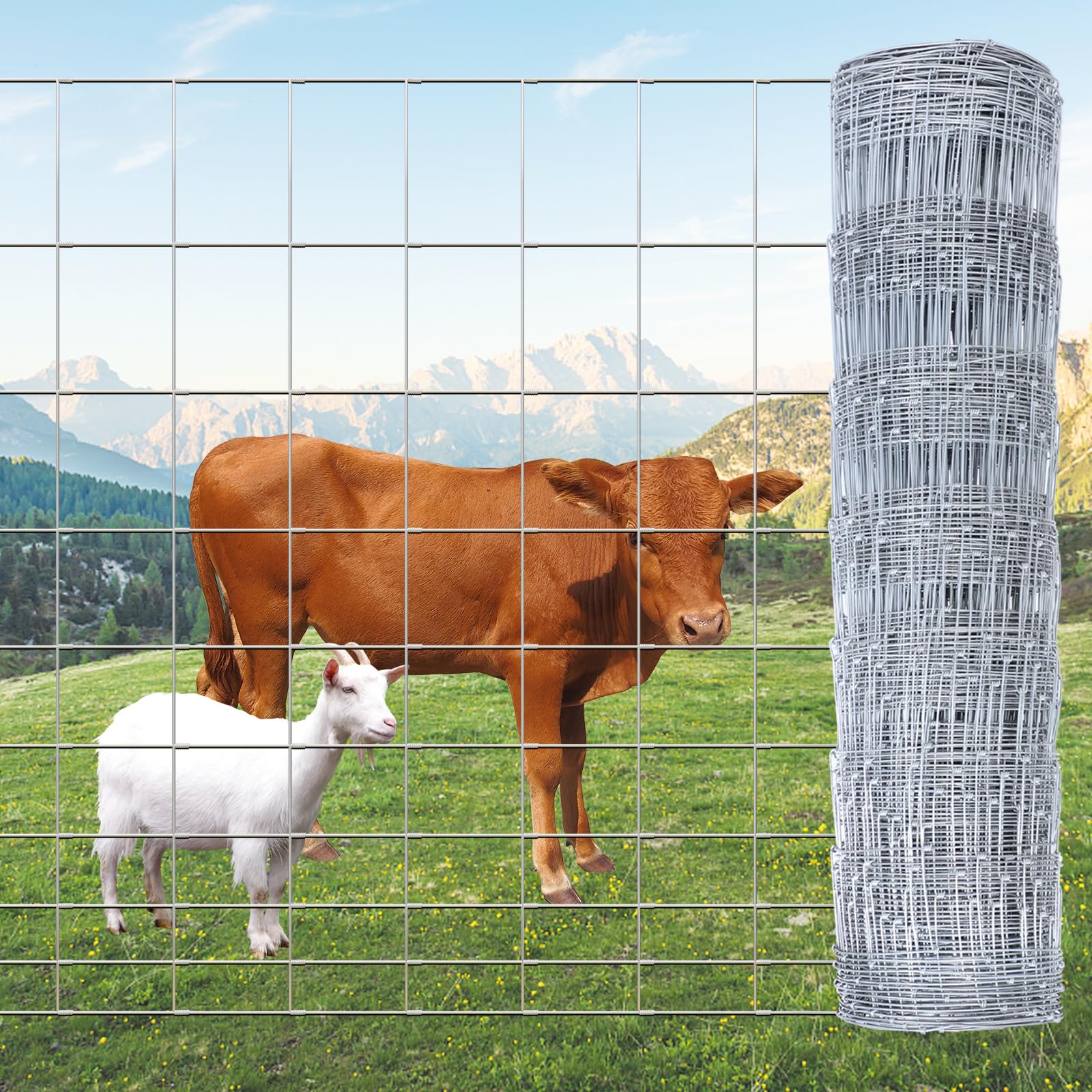
The ZESHANGUS panel uses 14-gauge galvanized wire for the main body but reinforces the top and bottom edges with 12-gauge wire — a structural detail that directly addresses the sagging failure point most cattle fences develop after two seasons. The woven hinge-joint construction distributes impact stress across the entire grid instead of snapping at welds, making it genuinely suitable for cattle, hogs, and goats on uneven terrain. At 328 feet long and 4 feet tall, one roll covers a sizable pasture perimeter without needing multiple joins that form weak spots.
The graduated mesh starts at 3.5-inch openings near the ground and widens to 8 inches at the top, keeping piglets and poultry contained while preventing adult cattle from getting a hoof caught. Multiple verified buyers report solo installation is feasible because the woven roll unrolls without the violent spring-back you get from cheaper welded rolls. The hot-dip galvanized coating is rated for 15-20 years in normal conditions, and buyer feedback confirms no rust issues after the first wet season.
The main downside is packaging: some units arrive with bent sections from shipping, although the woven structure makes those easier to shape back than welded mesh would. The 14-gauge body, while reinforced at borders, is not as impact-resistant as a full 12-gauge panel if you have extremely aggressive bulls. For the price per linear foot and the graduated mesh density, this is the most balanced cow panels fencing option for medium-to-large farms.
What works
- Reinforced 12-gauge borders prevent top and bottom sagging.
- Woven construction flexes under livestock pressure without broken welds.
- Graduated mesh from 3.5″ to 8″ contains mixed species.
- Excellent value per linear foot at 328ft roll length.
What doesn’t
- 14-gauge body is less rigid than full 12-gauge alternatives.
- Packaging sometimes results in bent sections during transit.
2. Rilth Heavy Duty Livestock Fence 4ft x 100ft
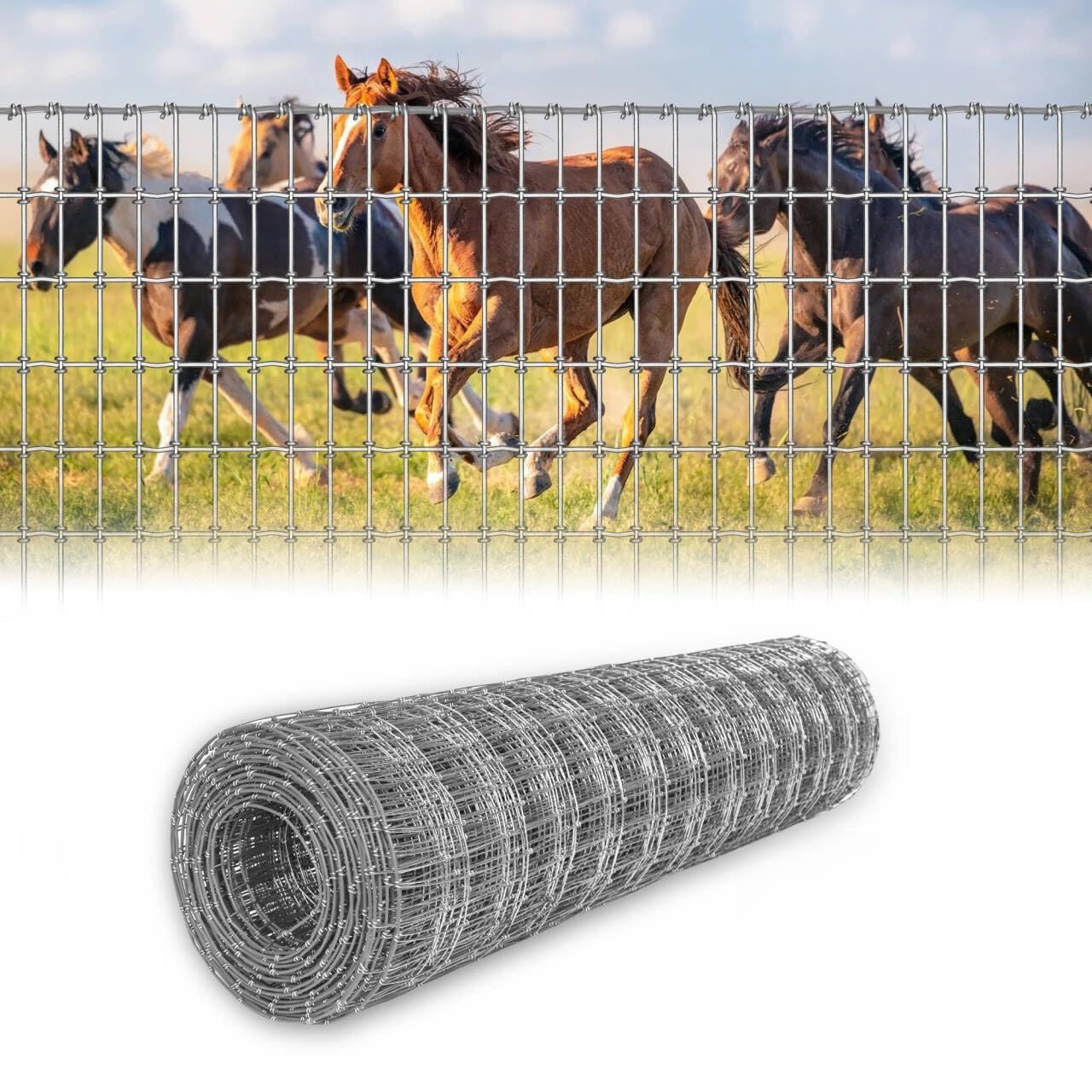
The Rilth fence is engineered specifically for horses — the 2×4-inch mesh pattern is small enough that hooves and legs cannot punch through, which prevents the panicked entanglement that larger-grid fences cause. The 12-gauge wire is heavier than most cattle panels and combined with the tight grid, it resists deformation when a thousand-pound animal kicks or leans. The 4-foot height prevents horses from stepping over the top wire, a common failure with 3-foot sheep fence used as a cheap substitute.
Multiple owners with goats confirm this fence withstands the constant climbing and rubbing that destroys 14-gauge alternatives. The galvanized coating resists rust, though some users note the wire is lighter than premium brand “red brand” equivalents — but the price difference makes that a compromise most are willing to accept. The 100ft roll is compact enough for solo handling but covers enough linear footage for a paddock or turnout area. Installers report it stretches evenly and conforms to gentle slopes without buckling.
The tradeoff is the limited height: 4 feet is adequate for horses and most cattle but insufficient for deer control if you also need garden protection. Some buyers note the aluminum variant is weaker, so confirm you are buying the galvanized steel version. For equestrian safety and medium-duty livestock containment, the Rilth fence punches above its price point.
What works
- 2×4 mesh prevents hoof entanglement and goat head penetration.
- 12-gauge wire resists kicking and climbing deformation.
- Easier to stretch solo than heavier branded equivalents.
What doesn’t
- 4ft height may not stop determined deer or large goats.
- Some rolls sold as aluminum rather than galvanized steel.
3. HMOLIKH Cattle Fence 5ft x 164ft
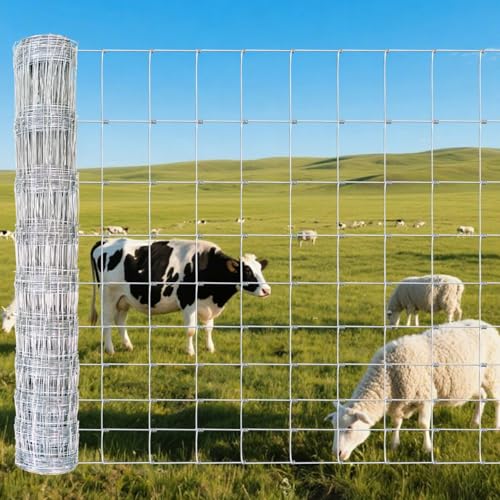
The HMOLIKH fence is built with high-tensile galvanized wire that retains tension across long spans better than standard mild steel fencing. At 5 feet tall, it provides extra height for cross fencing on hilly terrain where cattle may try to step over lower barriers. The 14-gauge wire is lighter than 12-gauge, but the high-tensile formulation means the same diameter wire stretches less and stays taut through freeze-thaw cycles. The manufacturer claims it is less prone to burning in bushfires — a useful property for properties in fire-prone regions.
Buyer feedback highlights that the PVC coating on some units adds an extra layer of weather protection, and the weave is tight enough to contain medium-sized dogs without them squeezing through. Several owners used it as a garden perimeter fence after discovering the mesh spacing blocked deer while remaining visible enough to prevent wildlife collisions. The 164-foot roll length is long enough for moderate paddocks without requiring multiple splice connections.
The biggest issue is that some rolls have oversized mesh openings that small goats or lambs can walk through — the product description does not specify graduated mesh, so buyers with young livestock should verify dimensions before ordering. A few users reported the fence is not as sturdy as the photos suggest, describing it as “light duty” for the price. For cross fencing and deer control where weight savings matter, this is a capable option, but it is not the right choice for full-time bull confinement.
What works
- High-tensile wire retains tension better than standard 14GA.
- 5ft height reduces jumping attempts by cattle and deer.
- PVC-coated versions offer extra weather protection.
What doesn’t
- Mesh openings can be large enough for goat kids to pass through.
- 14GA wire is light for permanent bull or heavy cattle pens.
4. Mymawzey Livestock Fence 4ft x 164ft

The Mymawzey fence is a lightweight field fence designed for garden perimeter protection and deer exclusion rather than heavy livestock containment. The 14-gauge galvanized wire is hot-dipped for basic rust resistance, and the twisted weaving technique used between horizontal and vertical wires prevents the joints from slipping under moderate tension. The mesh features graduated openings that shrink near the bottom, making it effective at stopping groundhogs, rabbits, and poultry from escaping.
Buyers consistently report this fence is ideal for protecting vegetable gardens from deer — multiple owners say deer have run into it without causing serious damage. The 164-foot roll provides generous coverage for a typical home garden or small pasture boundary. The lightweight construction makes solo installation straightforward; one reviewer noted it unravels easily when clipped to t-posts every five feet for optimal stiffness. The pricing lands squarely in the entry-level tier for this length, making it a low-risk test if you are not sure how much fencing you need.
The tradeoff is that several owners explicitly warn it is not suitable for active livestock — the wire bends under sustained pressure from goats and cattle, especially if they rub against it. The fence can also unroll like a spring if not handled carefully, with one buyer calling it a “time bomb” during installation. For garden defense and light animal exclusion, this is a solid value, but it lacks the wire diameter to serve as a permanent cattle barrier.
What works
- Lightweight enough for solo installation on t-posts.
- Graduated mesh stops deer and rabbits effectively.
- Excellent value for garden perimeter coverage.
What doesn’t
- 14GA wire is too flimsy for cattle or large livestock.
- Roll tends to spring open unpredictably during unrolling.
5. YESON Farm Fence 4ft x 164ft

The YESON fence is a 14-gauge galvanized steel roll with twisted weaving and a hot-dip surface treatment that buyers confirm shows no rust after two months of outdoor exposure in humid conditions. The graduated mesh design shrinks at the bottom specifically to stop rabbits and groundhogs from digging through, while the larger openings at the top reduce wind load and material weight. Multiple owners use this successfully for sheep containment, noting the wire holds up to daily rubbing and fence-line grazing without sagging.
The 164-foot length provides enough coverage for a medium garden or small paddock, and the 4-foot height works well for dogs, sheep, and deer exclusion. One reviewer reported that t-posts and zip ties create a strong enough joint to keep a pit bull from bending the fence outward. The red top line is a thoughtful visibility feature that reduces the chance of animals or people walking into the fence. Buyers who paired it with wooden 2×4 frames for garden beds found the mesh easy to staple and tension.
The main complaint is the wire is not strong enough to stop human trespassers or contain large cattle — one user described pushing the fence over by hand. The roll also tends to stick to itself during unrolling and may require two people to manage without damage. For light livestock, garden protection, and property boundary marking, the YESON fence is a capable mid-range option, but it will not hold a determined bull.
What works
- Graduated mesh effectively stops rabbits and groundhogs.
- Red top line improves visibility for animals and people.
- Hot-dip galvanizing shows no rust after extended outdoor use.
What doesn’t
- 14GA wire is not strong enough for large cattle containment.
- Roll adheres to itself and may require two people to unroll.
6. Toriexon Farm Fence 4.5ft x 100ft
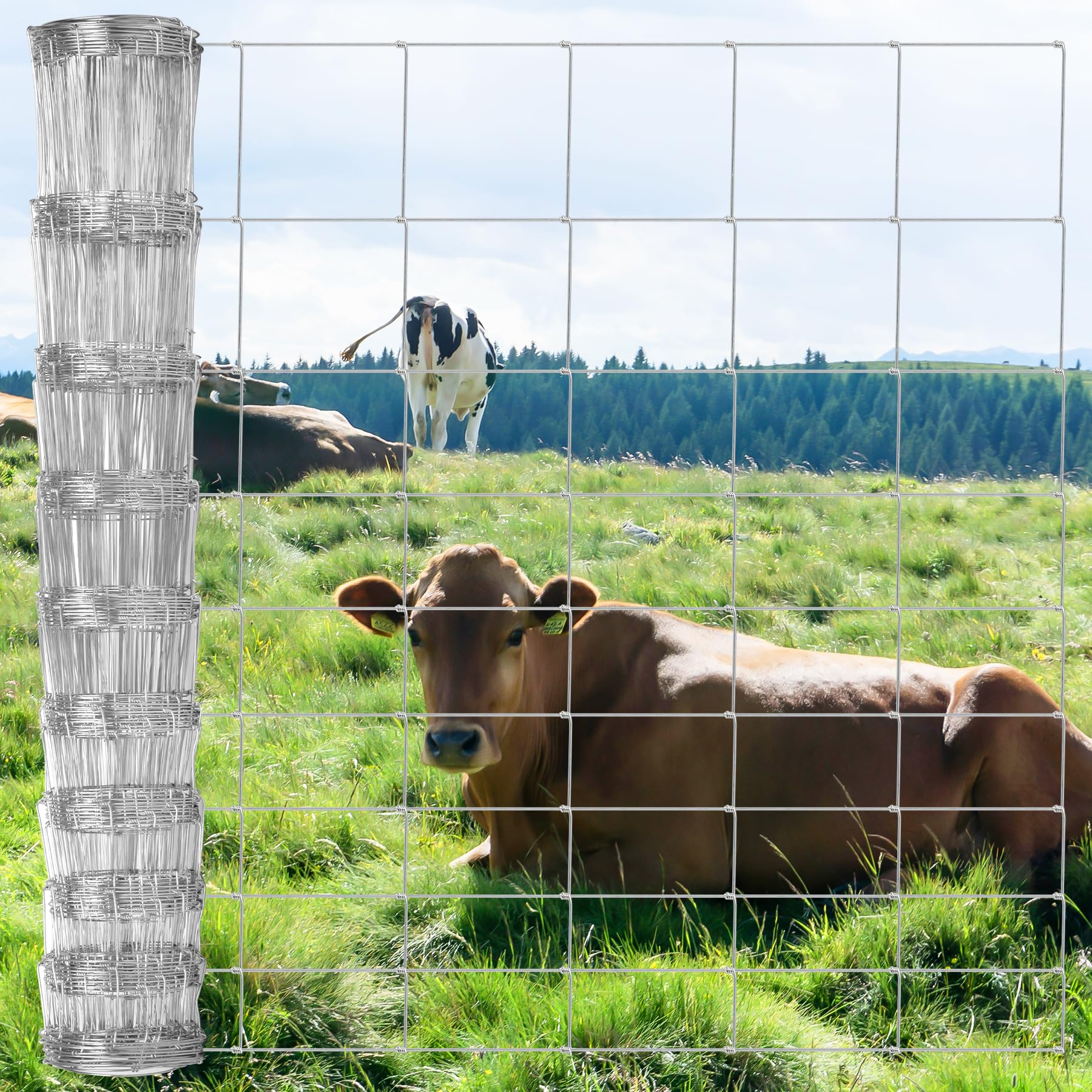
The Toriexon fence uses an uncommon mixed-gauge construction — 11-gauge vertical wires for strength combined with 14-gauge horizontal wires for flexibility — to balance rigidity with ease of handling. The 4.5-foot height is a half-foot taller than standard 4-foot rolls, which helps deter deer and larger dogs from jumping. The graduated mesh tapers from wide at the top to small at the bottom, creating a barrier that prevents dogs and small predators from reaching through the lower section.
Buyers with 80-pound dogs report the fence holds up well against leaning and scratching, with the thicker 11-gauge verticals resisting the deformation that thinner wires suffer. The roll includes a free pair of needle-nose pliers for tightening, a thoughtful addition that saves a trip to the hardware store during installation. The 100-foot length is shorter than many alternatives, making this a better fit for suburban property lines, dog runs, and garden perimeters rather than large pastures. Multiple verified purchasers appreciated the easy solo installation and the smaller bottom squares.
The drawback is that the 14-gauge horizontals limit the fence’s suitability for cattle and horses — several owners explicitly recommend it for dogs and light use, not livestock. The 100-foot roll also means larger operations would need multiple splices, introducing weak points. For a medium-duty boundary fence that offers extra height and mixed-gauge reinforcement, the Toriexon is a strong choice for pet owners and gardeners, but it is not a cattle panel first.
What works
- Mixed 11GA / 14GA design balances strength and flexibility.
- 4.5ft height provides extra jump deterrence for dogs and deer.
- Small bottom squares prevent dogs from reaching through.
What doesn’t
- Not recommended for cattle or horse containment.
- 100ft length requires multiple rolls for larger pastures.
7. Jotesnew Cattle Panels 4ft x 100ft, 12 Gauge
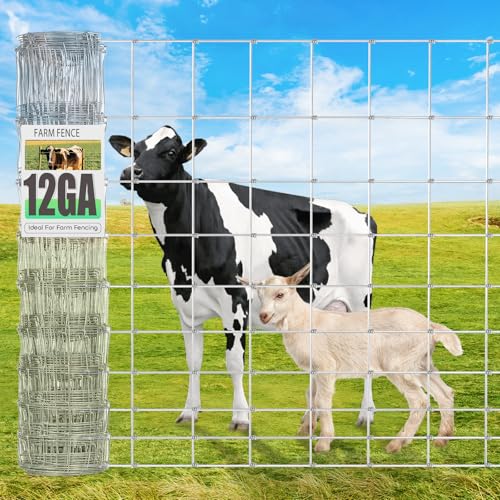
The Jotesnew panel is a true 12-gauge woven wire fence designed for heavy livestock containment, including cattle, horses, and hogs. The hot-dip galvanized surface treatment provides superior rust resistance compared to electro-galvanized alternatives, and the hinge-joint weave allows the fence to absorb impact without snapping. The mesh tapers from larger openings at the top to smaller ones at the bottom, preventing calves and piglets from escaping while maintaining visibility and reducing overall weight.
Buyers who used it as a garden trellis for peas and beans found the 12-gauge wire sturdy enough to support heavy climbing vegetables without bending. The 100-foot roll is manageable for solo installation, though cutting the 12-gauge wire requires a bolt cutter — standard diagonal cutters will not work. Multiple reviewers confirm the fence is genuine 12-gauge and holds its shape under tension better than 14-gauge alternatives, with one noting it is “very heavy and sturdy” for tall garden trellis applications.
The primary complaint is that one buyer received a roll that appeared to be not 12-gauge as advertised, describing it as flimsy and too tightly rolled, causing stretch damage. This suggests some quality control inconsistency at the factory. A few buyers also noted the wire tends to buckle against fence posts rather than conforming smoothly. For buyers who need true 12-gauge strength for livestock or heavy garden structures, the Jotesnew panel delivers when the quality is consistent, but the variability is a risk worth checking upon arrival.
What works
- Genuine 12-gauge wire is stout enough for cattle and horses.
- Hot-dip galvanizing offers excellent rust protection.
- Works as both livestock fence and heavy garden trellis.
What doesn’t
- Quality control inconsistencies: some rolls are not true 12GA.
- Wire can buckle against posts during installation.
Hardware & Specs Guide
Wire Gauge (AWG)
The American Wire Gauge system assigns a lower number to thicker wire. 11-gauge wire (0.091 inch diameter) is the thickest commonly found in cattle fencing and resists bending from heavy animal pressure. 12-gauge (0.081 inch) is the industry standard for permanent cattle and horse fence, balancing flexibility with impact resistance. 14-gauge (0.064 inch) works for sheep, goats, and garden perimeter, but will deform under repeated pressure from large cattle. Mixed-gauge rolls use thick vertical wires for rigidity and thinner horizontals for weight savings, a compromise suitable for pet enclosures and light livestock.
Hot-Dip vs. Electro-Galvanizing
Hot-dip galvanizing immerses the steel wire in molten zinc, creating a thick alloy layer that resists rust for 15-20 years in normal outdoor conditions. Electro-galvanizing applies a thinner zinc coating via electrolysis, which is cheaper but begins showing rust within 2-3 years in humid or coastal climates. All premium cattle panels in this guide use hot-dip galvanizing. Buyers in high-rainfall regions should avoid electro-galvanized rolls entirely, as the coating flakes off and exposes bare steel to oxidation.
FAQ
Is 14-gauge wire strong enough for full-size cattle?
How do I install cattle panels on uneven or hilly ground?
Can I use cattle panels as a garden trellis?
Final Thoughts: The Verdict
For most gardeners and small farmers, the cow panels fencing winner is the ZESHANGUS 328ft roll because it offers reinforced 12-gauge borders, graduated mesh for mixed herds, and a woven construction that flexes without failing — all at a competitive price per linear foot. If you need horse-safe 2×4-inch mesh that prevents hoof entanglement, grab the Rilth 12-gauge fence. And for a budget-friendly garden perimeter that keeps deer out without breaking your back during installation, the Mymawzey 164-foot roll is the best value for light-duty use.