
Peppers demand exactly one thing from their growing medium: a consistently warm, well-aerated root zone that never stays soggy. A potting blend heavy in peat or topsoil will suffocate the fine feeder roots, leading to blossom-end rot and stunted fruit — problems that no amount of sunlight or watering can fix. The difference between a basket of flat, thin-walled peppers and a harvest of thick, crunchy bells and super-hot habaneros is measured in the density, drainage, and nutrient profile of the soil you pour into that container or raised bed.
I’m Rikta — the co-founder and writer behind Lawn Gear Lab. I’ve spent hundreds of hours comparing bagged aggregate blends, analyzing NPK ratios and pH buffering capacities, and cross-referencing owner feedback to find which commercial soils actually deliver the deep root penetration and steady calcium uptake that Capsicum plants require to produce heavy fruit sets.
Whether you’re growing sweet bells or scorching ghost peppers, the right mix determines your yield — and this breakdown of the best soil for peppers cuts through the marketing to give you the spec-based picks that matter.
How To Choose The Best Soil For Peppers
Peppers are light feeders compared to tomatoes, but they are brutally sensitive to root compaction and pH drift. A soil that works for foliage-heavy plants will produce thin-walled, bitter fruit. Here are the three traits that separate a productive pepper blend from a failure.
Drainage and Aeration: The 30-Second Drain Rule
Water should flow through a proper pepper mix in under 30 seconds. If the top inch stays wet for longer than a minute after watering, the mix lacks perlite, pumice, or coarse sand. Saturated roots prevent the plant from accessing calcium — the mineral that builds thick fruit walls and prevents blossom-end rot. Look for a blend that contains at least 15–20 percent perlite by volume. Avoid soils labeled “moisture control” or “water retention,” because they hold too much water for pepper root systems.
pH Range: The Calcium Gate
Peppers lock out calcium below pH 6.0 and above pH 7.0. Below 6.0, manganese and iron become too available, causing leaf tip burn. Above 7.0, phosphorus and zinc get trapped, stunting fruit development. The sweet spot is 6.2 to 6.5. Bagged blends labeled “for tomatoes and vegetables” are usually already buffered, but you should still test the runoff pH after the first watering. If the bag contains dolomitic lime or oyster shell flour, the pH is likely stabilized for 4–6 weeks.
Organic Matter and Slow-Release Nutrition
Worm castings, aged compost, and crab/krill meal deliver micronutrients without overwhelming the root zone. These ingredients feed the soil microbiome, which in turn cyclically feeds the pepper plant. Stay away from soils that rely on synthetic timed-release nitrogen — it pushes leaf growth at the expense of flower buds and fruit set. A good pepper soil has an NPK ratio around 4-6-3 or 5-4-4. Nitrogen should be the lowest number.
Quick Comparison
On smaller screens, swipe sideways to see the full table.
| Model | Category | Best For | Key Spec | Amazon |
|---|---|---|---|---|
| Brut Organic Potting Soil | Premium All-Purpose | Container peppers & seed starts | pH 6.3–6.5, no filler wood | Amazon |
| Espoma Organic Potting Mix | Premium Organic | High-yield container gardens | Myco-Tone (endo & ecto mycorrhizae) | Amazon |
| Coast of Maine Bar Harbor Blend | Premium Organic | Raised beds & large pots | Lobster/crab shell & kelp meal | Amazon |
| Down To Earth All Purpose Mix 4-6-2 | Organic Fertilizer | Amending existing soil mixes | 4-6-2 NPK, 5-lb granular | Amazon |
| Coast of Maine Tomato & Veggie Soil | Mid-Range Blend | In-ground beds & transplants | 20qt, composted manure & peat | Amazon |
| Back to the Roots Worm Castings | Soil Amendment | Boosting existing soil fertility | 5lb pure vermicompost | Amazon |
| Miracle-Gro Potting Mix 3-Pack | Budget Entry | Quick fill for multiple small pots | Feeds 6 months, 8qt x3 | Amazon |
In‑Depth Reviews
1. Brut Organic Potting Soil
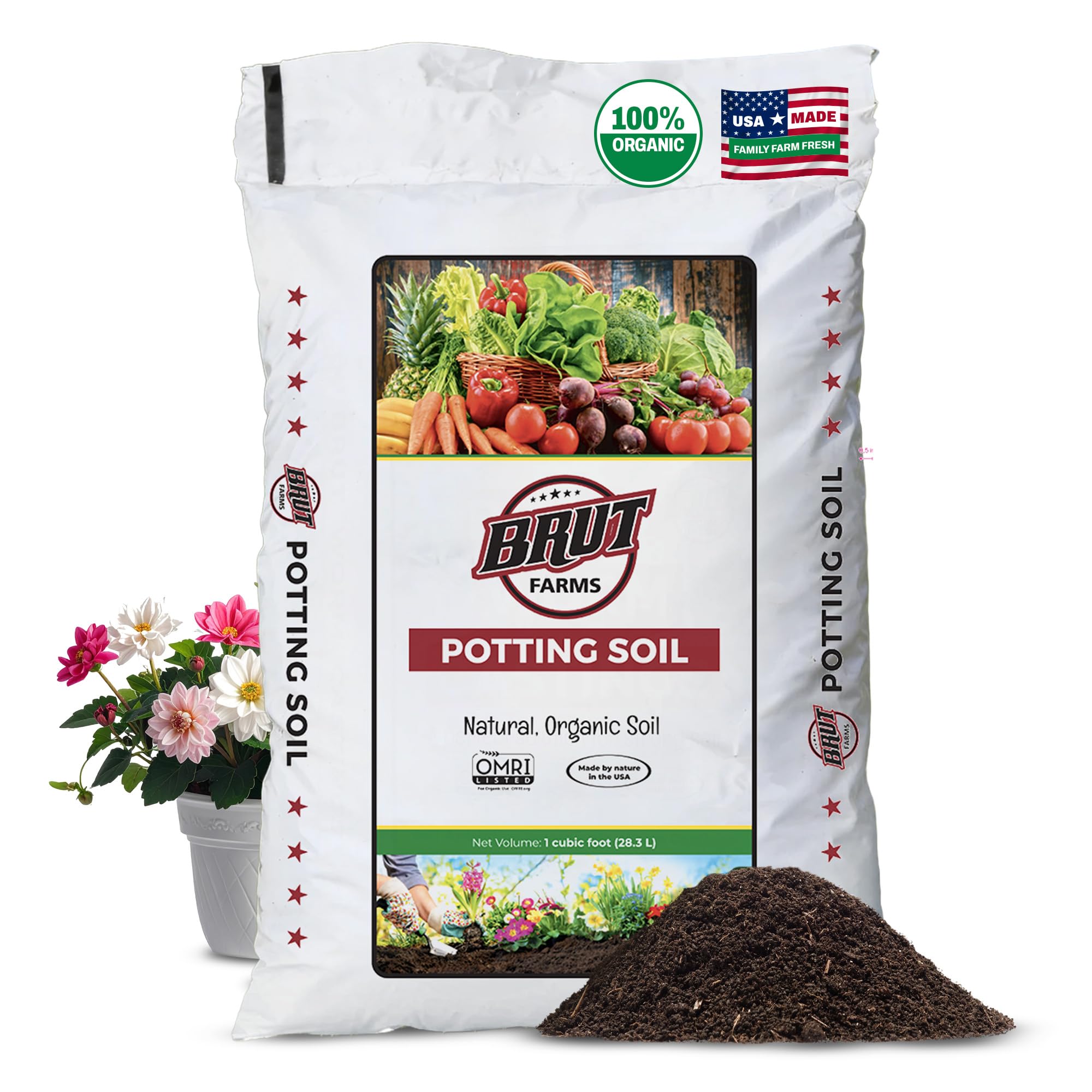
This Bag hits the exact pH sweet spot of 6.3–6.5 right out of the bag, which means you won’t have to chase calcium lockout during the first month of flowering. The particle distribution is notably uniform — fine enough to hold moisture but coarse enough to drain completely within 30 seconds. There is zero woody debris or bark chips, which eliminates the nitrogen-robbing decomposition that cheaper blends cause during the initial growth stage.
Brut loads the mix with microbe-rich worm castings, Azomite, and kelp meal, providing trace minerals that support capsaicin production in hot varieties. The OMRI listing confirms no synthetic fertilizers are present, making this a clean choice for organic growers who want a single-bag solution without needing to amend. One reviewer noted that the fish-meal content attracted flies when the bag was left open, so storing it in a sealed bin is recommended for indoor use.
For anyone starting pepper seeds or transplanting into 5-gallon containers, this is the most plug-and-play premium product on the market. It delivers the drainage, pH stability, and biological activity that peppers need without requiring additional perlite or lime.
What works
- Pre-adjusted pH eliminates calcium lockout worry
- No wood chips, bark, or synthetic fillers
- Microbe-rich ingredients drive root colonization
What doesn’t
- Fish-based meal may attract flies if bag is left open
- Premium price point per cubic foot
2. Espoma Organic Potting Mix (2 cu ft)

Espoma’s signature Myco-Tone — a proprietary blend of endo and ecto mycorrhizae — gives this mix a distinct advantage for peppers transplanted into containers. The fungi colonize the root surface immediately, increasing the effective root zone by 40–60 percent, which directly translates to better water uptake during the hot days when peppers start setting fruit.
The loamy, chunky texture is the opposite of the dense, crust-forming soils that suffocate peppers. Users consistently report that it doesn’t compact into a hard surface layer after repeated watering. The base of sphagnum peat moss, humus, and perlite is enriched with earthworm castings, alfalfa meal, kelp meal, and feather meal — an NPK profile that leans slightly higher in nitrogen than ideal for peppers (around 5-3-3), so you may want to supplement with a potassium-heavy feed after the first month.
At 2 cubic feet, this is the largest premium bag in this lineup, making it cost-effective for filling multiple 10-gallon grow bags or a 3×6 raised bed. The organic certification and complete absence of synthetic chemicals make it a reliable workhorse for the entire growing season.
What works
- Myco-Tone fungi boost root mass dramatically
- Loamy texture resists compaction
- Large bag size offers strong value per cubic foot
What doesn’t
- Slightly nitrogen-heavy for pepper flowering
- May need extra perlite for heavy clay pot conditions
3. Coast of Maine Bar Harbor Blend (16 QT x2)
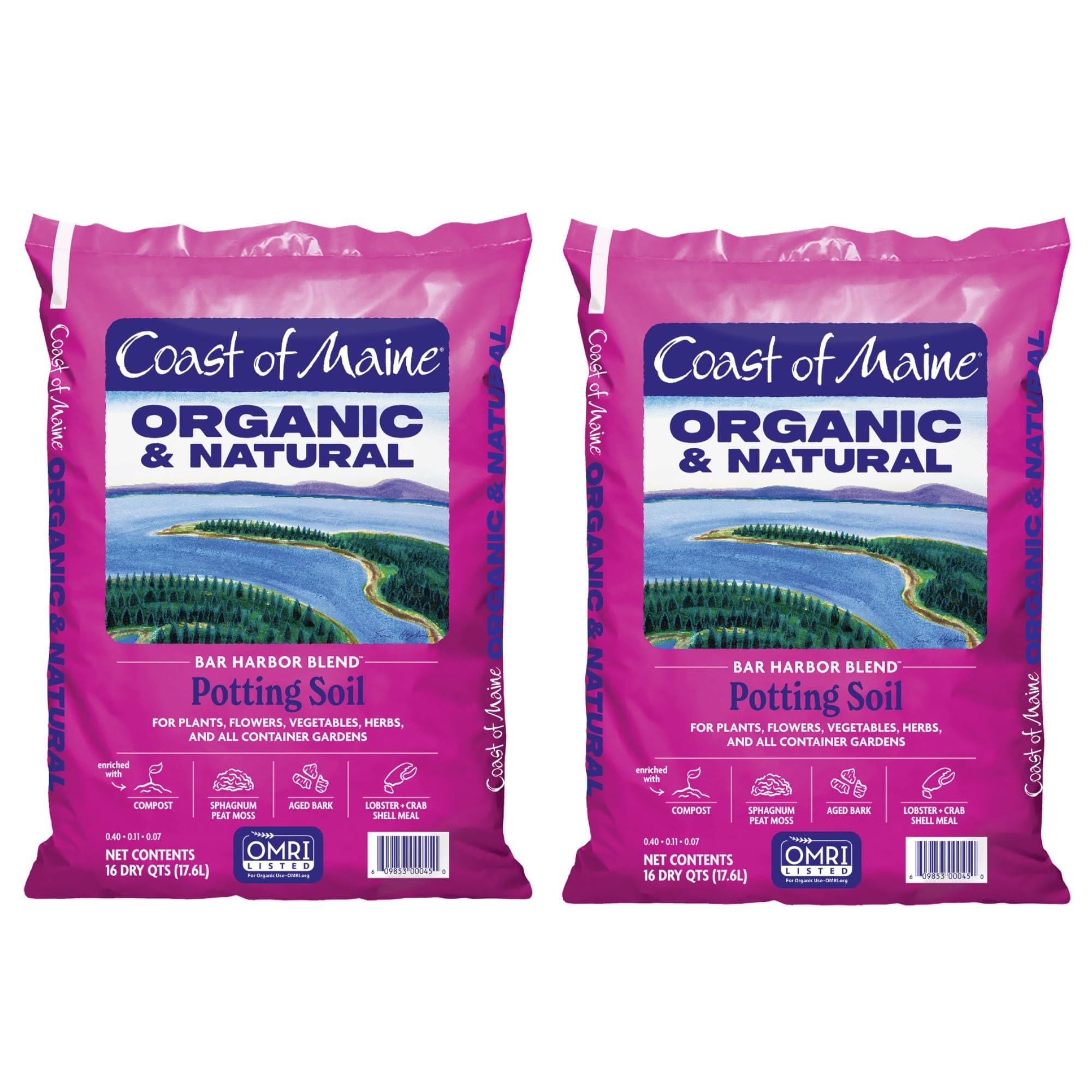
Coast of Maine uses a uniquely regional ingredient base — lobster and crab shell meal mixed with sphagnum peat moss, compost, perlite, and kelp meal. The shellfish meal provides a slow-release source of calcium and chitin, which naturally suppresses soil-borne nematodes and fungal pathogens. For pepper growers who have battled root rot in past seasons, this biological protection is a serious advantage.
The darker color of this blend indicates a higher compost-to-peat ratio than typical mass-market mixes, which means it holds slightly more moisture — a double-edged sword for peppers. In 5-gallon containers with full sun, this moisture retention is beneficial because it reduces watering frequency. In small nursery pots or dense clay planters, you may need to mix in 20 percent extra perlite to prevent the medium from staying wet longer than six hours.
Reviewers repeatedly describe this as “some of the best soil” for container tomatoes and peppers, noting explosive root growth and dark green foliage within the first two weeks. The two-pack format (16 quarts each) makes it practical for larger projects like a 4×4 raised bed or a dozen 7-gallon grow bags.
What works
- Shellfish meal supplies bioavailable calcium & chitin
- Rich compost base feeds plants for weeks
- Excellent for raised beds and large containers
What doesn’t
- Higher moisture retention requires drainage watch in small pots
- Premium price for the two-pack format
4. Down To Earth All Purpose Mix 4-6-2

This is not a bagged soil — it is a granular organic fertilizer designed to be mixed into an existing base. With an NPK of 4-6-2, the phosphorus is intentionally higher than nitrogen, which shifts the plant’s energy toward root development and flower production rather than leafy growth. For peppers, this ratio aligns perfectly with the pre-fruiting stage where phosphorus demands spike.
The ingredient list is remarkably complete: fish bone meal, blood meal, feather meal, rock phosphate, langbeinite, greensand, humates, and kelp meal. One 5-lb box replaces 15 separate amendments. Users report that a single application at transplant time lasts for 6–8 weeks in containers, and the slow-release nature prevents the salt burn that synthetic granular feeds cause. The smell is strong for the first couple of days after application, but it dissipates once the granules are watered in and covered with topsoil.
For gardeners who already have a plain potting mix or compost base and want to tailor it specifically for peppers, this is the most precise amendment available. Simply mix 1–2 tablespoons per gallon of soil at planting time.
What works
- Phosphorus-heavy formula targets flower & fruit production
- Replaces a cabinet full of single-amendment products
- Slow-release granules minimize burn risk
What doesn’t
- Strong fish/feather odor for 2–3 days after application
- Must be mixed into soil, not used solo
5. Coast of Maine Tomato & Veggie Soil (20 QT)

This blend delivers a solid baseline for peppers without the premium price tag of the Bar Harbor counterpart. The primary components are composted cow manure and sphagnum peat moss, which together create a medium that holds moisture well while still draining fast enough for pepper roots — provided you use it in a container with adequate drainage holes.
The organic certification and OMRI listing matter here because the manure is fully aged, so there is zero risk of nitrogen burn during the first week after transplant. Several reviewers mention that this soil was especially effective for heirloom tomato varieties that require consistent moisture, which suggests the peat content is high enough to buffer against drying out in hot weather. A few users did report fungus gnat larvae in the bag, which is a common risk with compost-heavy soils stored in warm warehouses. Disinfecting the soil with a hydrogen peroxide drench before planting eliminates that risk.
For gardeners working with in-ground beds or large raised beds, this 20-quart bag is a practical, mid-range option that can be used as-is or mixed 50/50 with perlite for container peppers. It performs best when you need a large volume of affordable organic soil for a big planting area.
What works
- Aged manure provides steady organic nutrients
- Large 20-qt bag works for in-ground and raised beds
- OMRI certified for organic production
What doesn’t
- Potential for fungus gnats if not sterilized first
- Peat-heavy texture may compact over time in containers
6. Back to the Roots Worm Castings (5 lb)

Worm castings are the closest thing to a universal soil amendment for peppers, and this 5-lb bag from Back to the Roots is one of the cleanest, most consistent vermicompost sources available. The granules are fine and dry — not clumpy or muddy — which makes them easy to mix homogeneously into any base potting mix or top-dress around established plants.
What distinguishes this product is the presence of beneficial microbes that actively suppress the harmful pathogens responsible for damping-off disease in pepper seedlings. When used as a seed-starting medium amendment, the castings create a microbe-rich zone that colonizes the root hairs before pathogens can establish. The bag is resealable, which helps maintain moisture levels if you only need a portion at a time. Multiple reviewers note that it improved the health of milkweed and other sensitive plants, indicating it is gentle enough for even the most delicate root systems.
One review mentions that the castings hold a lot of moisture — about 30 percent more volume than dry peat — so you should reduce your watering schedule slightly after incorporation. For growers who want to boost soil biology without changing the base texture, this 5-lb bag is the most effective single addition you can make.
What works
- Pure vermicompost with no fillers or synthetics
- Beneficial microbes suppress seedling diseases
- Resealable bag keeps castings fresh for months
What doesn’t
- High moisture-holding capacity requires reduced watering
- Only 5 lb — not a standalone potting mix
7. Miracle-Gro Potting Mix (8 qt. 3-Pack)

This is the most recognizable name in bagged potting soil, and the three-pack of 8-quart bags offers an accessible volume for beginners setting up a few pepper plants. The mix is designed to feed for six months through a synthetic timed-release fertilizer, which means you do not need to add any additional nutrients during the growing season. For someone who just wants to buy a bag and see peppers grow, this simplicity has genuine appeal.
The downside for pepper specialists is the same feature that makes it easy: the synthetic nitrogen formula pushes vigorous green growth but often suppresses flower bud formation in pepper varieties that require a leaner start. The soil drains acceptably well for an entry-level product, though the perlite content is lower than premium blends. In the 8-quart size, you get exactly enough to fill two 8-inch pots per bag, making the three-pack sufficient for six medium containers. Several long-time pepper growers on forums note that this mix works fine when blended 50/50 with perlite or coarse sand to improve drainage.
If you are on a strict budget and need to fill multiple small containers immediately, this three-pack gets the job done. For dedicated pepper production, plan to cut it with additional drainage material and supplement with a phosphorus-heavy feed after the first month.
What works
- Convenient three-pack for multiple small pots
- Built-in six-month feeding saves steps
- Widely available and beginner-friendly
What doesn’t
- Synthetic nitrogen can reduce pepper flower sets
- Low perlite content leads to compaction over time
Hardware & Specs Guide
pH Buffering Capacity
Pepper roots absorb calcium only when the rhizosphere pH stays between 6.0 and 6.8. A soil with built-in buffering — such as dolomitic lime, oyster shell flour, or calcitic limestone — will hold pH steady for 4–6 weeks. Blends without a buffer (like pure coco coir or peat) require you to add lime at the time of planting. The Bar Harbor Blend and Brut Potting Soil include natural pH stabilizers; Miracle-Gro relies on synthetic buffers that dissipate faster in high-heat conditions.
Particle Size Distribution
Ideal pepper soil has a gradient of particle sizes: 40 percent fine organic matter (compost, peat), 35 percent medium aggregates (perlite, pumice), and 25 percent coarse material (coco chips, bark fines). This spectrum ensures capillary water movement while maintaining air pores. Coast of Maine uses a chunky texture that scores well here, while Down To Earth’s granular amendment is designed to be added to an existing mix, not used alone. Espoma’s loamy blend hits a good balance for most container scenarios.
FAQ
Can I reuse pepper soil from last year in containers?
Is cactus or succulent mix safe for pepper seedlings?
Should I add lime to my pepper soil if the bag already says “pH adjusted”?
Final Thoughts: The Verdict
For most gardeners, the best soil for peppers winner is the Brut Organic Potting Soil because it combines a pre-balanced pH, filler-free texture, and microbe-rich worm castings in a single bag that requires zero amendments for containers. If you want the biological advantage of mycorrhizal inoculation, grab the Espoma Organic Potting Mix. And for building a large raised bed with regional shellfish compost, nothing beats the Coast of Maine Bar Harbor Blend.