
Water damage is the single fastest way to destroy outdoor lumber, turning a sturdy fence post or a beautiful deck into a gray, cracked, rotting mess within a single season. The right formula penetrates the wood fibers, creating a barrier against moisture, UV rays, and mildew without trapping moisture inside.
I’m Rikta — the co-founder and writer behind Lawn Gear Lab. I’ve spent countless hours comparing technical data sheets, analyzing polymer chemistry, and studying thousands of owner reports to find the specific formulas that actually prevent water absorption and UV degradation in exterior wood.
Whether you are sealing a new cedar planter, refinishing a weathered deck, or protecting a fence that sees full sun, this guide breaks down the top options to help you find the best outdoor wood preservative that matches your specific project requirements and performance expectations.
How To Choose The Best Outdoor Wood Preservative
The right preservative depends on the wood type, the exposure level, and whether you want to change the color or keep it natural. Understanding the chemical base and the finish type will prevent you from wasting time on a product that peels or fails within a year.
Film-Forming vs. Penetrating Preservatives
Film-forming preservatives (like spar urethane and acrylic stains) sit on top of the wood and create a hard shell. They offer strong UV protection and a uniform finish but can peel, crack, or blister if moisture gets underneath. Penetrating formulas (like tung oil and semi-transparent stains) soak into the fibers, preventing peeling entirely but may require more frequent reapplication on horizontal surfaces like decks.
UV Protection and Climate Matching
If your wood is in direct sunlight for more than four hours a day, look for a product with zinc nano-technology or UV absorbers. Acrylic-based formulas generally offer superior fade resistance compared to oil-based stains in high-sun environments. For shaded or damp areas, prioritize water-repellent properties and mildewcide additives to prevent rot and fungal growth.
Finish Type and Aesthetic Control
Transparent finishes preserve the original wood grain and color, making them ideal for high-quality cedar or redwood. Semi-transparent stains add a subtle tint while still showing the texture, and solid stains create an opaque layer that hides imperfections. Matte finishes hide dust and imperfections, while satin and gloss options offer more shine and a wet-looking appearance.
Quick Comparison
On smaller screens, swipe sideways to see the full table.
| Model | Category | Best For | Key Spec | Amazon |
|---|---|---|---|---|
| DEFY Extreme Clear Sealer | Zinc Nano-Tech | Composite & Deck Revival | Znano UV Block + 100-150 sq ft/gal | Amazon |
| Garden-Seal Non-Toxic | Tricopolymer | Raised Beds & Planters | Food-safe tricopolymer + 1 gal | Amazon |
| KILZ Semi-Transparent Cedar | 100% Acrylic | Fences & Decks (3yr warranty) | 500-600 sq ft/gal (2nd coat) | Amazon |
| Garifon 100% Pure Tung Oil | Natural Oil | Food-Safe & Butcher Blocks | 100% Tung Oil + Food Grade | Amazon |
| Old Masters Gel Stain | Oil-Based Gel | Fiberglass & Detailed Woodwork | Oil-based gel + 32 oz quart | Amazon |
| Thompson’s WaterSeal Transparent | Waterproofer + Tint | Damp or Dry Application | 150-400 sq ft/gal + D4446 | Amazon |
| Varathane Spar Urethane | Water-Based Poly | Furniture & Trim (low odor) | 87 sq ft/qt + 30-min dry | Amazon |
In‑Depth Reviews
1. DEFY Extreme Composite Deck Sealer – Crystal Clear

The DEFY Extreme Clear Sealer is the most advanced option in this lineup, using zinc nano-particles to block UV radiation and prevent fading on both composite decking and natural wood. Its water-based formula dries to the touch in 2–4 hours and provides a water-beading effect that lasts through multiple rainstorms. Owners report that it restores faded 20-year-old composite decks to a rich, deep color with just one generous coat.
One gallon covers roughly 100–150 square feet for two coats, which is lower than many competitors, but the durability of the zinc nano-barrier justifies the extra volume for high-traffic deck surfaces. The clear finish enhances the wood grain without altering the base color, making it ideal for those who want to preserve the natural look of their Trex or cedar decking.
The formula works best on bare, unsealed surfaces and should not be applied over painted or varnished finishes. A small percentage of users note a temporary tackiness in direct sunlight that resolves within a week, and care must be taken to avoid overspray as the dried film is difficult to remove from surrounding surfaces.
What works
- Zinc nano-technology provides exceptional UV defense
- Revitalizes oxidized composite decking dramatically
- Water beads form immediately after curing
What doesn’t
- Lower coverage rate than acrylic stains
- Overspray is extremely difficult to remove
- Temporary tacky feel in direct sun after application
2. Garden-Seal Non-Toxic Wood Sealant

The Garden-Seal formula is built around tricopolymer, a vinyl acetate polymer that forms a flexible moisture barrier without introducing toxic fumes or oily residues. It was designed specifically for raised garden beds, trellises, and clay pots where food safety is a priority. The liquid dries milky white and then cures to a clear finish that deepens the natural color of redwood or cedar slightly.
This is the only product in the group that is genuinely non-toxic after curing, making it the best choice for any wood that will come into direct contact with edible plants. A single gallon can coat four large raised beds with two coats, offering excellent value per square foot. The formula also works on metal surfaces, preventing salt damage in coastal environments.
The main drawback is that the tricopolymer formula is runny and requires careful brushwork to avoid drips on vertical surfaces. It also takes a full hour to harden initially, so recoating must be timed carefully. Some users report a faint glue-like smell during application that dissipates quickly as the sealer dries.
What works
- Completely non-toxic once cured
- Excellent moisture seal for planters and raised beds
- One gallon covers multiple large beds
What doesn’t
- Runny consistency makes vertical application tricky
- Faint glue-like odor during application
- Requires careful timing between coats
3. KILZ Waterproofing Semi-Transparent Wood Stain

KILZ brings its decades of coatings expertise to this semi-transparent exterior stain, formulated with a 100% acrylic base that delivers UV protection and waterproofing with a 3-year warranty on decks and a 5-year warranty on fences. The Cedar Naturaltone tint adds a warm reddish hue while still allowing the wood grain to show through, making it ideal for homeowners who want a refreshed look without losing texture.
The coverage is impressive — a single gallon covers 250–300 square feet on the first coat and up to 600 square feet on the second coat, stretching your investment across large fence projects. The stain applies smoothly with a brush, sprayer, or pad and dries in 1–2 hours, allowing for same-day recoat schedules. Users with decades of experience in the paint industry consistently rate the formula’s consistency and fade resistance as best-in-class.
One common issue involves shipping: the product has a tendency to get lost in transit or arrive with damaged packaging due to its weight. Additionally, the semi-transparent nature means it performs best on properly cleaned, unsealed wood; applying over old stain or dirt will compromise adhesion and longevity.
What works
- Excellent fade resistance from acrylic base
- High coverage rate per gallon
- Trusted by professionals for consistent quality
What doesn’t
- Shipping issues with lost or damaged cans
- Requires pristine surface for adhesion
- Warranty only applies to specific surface types
4. Garifon 100% Pure Tung Oil
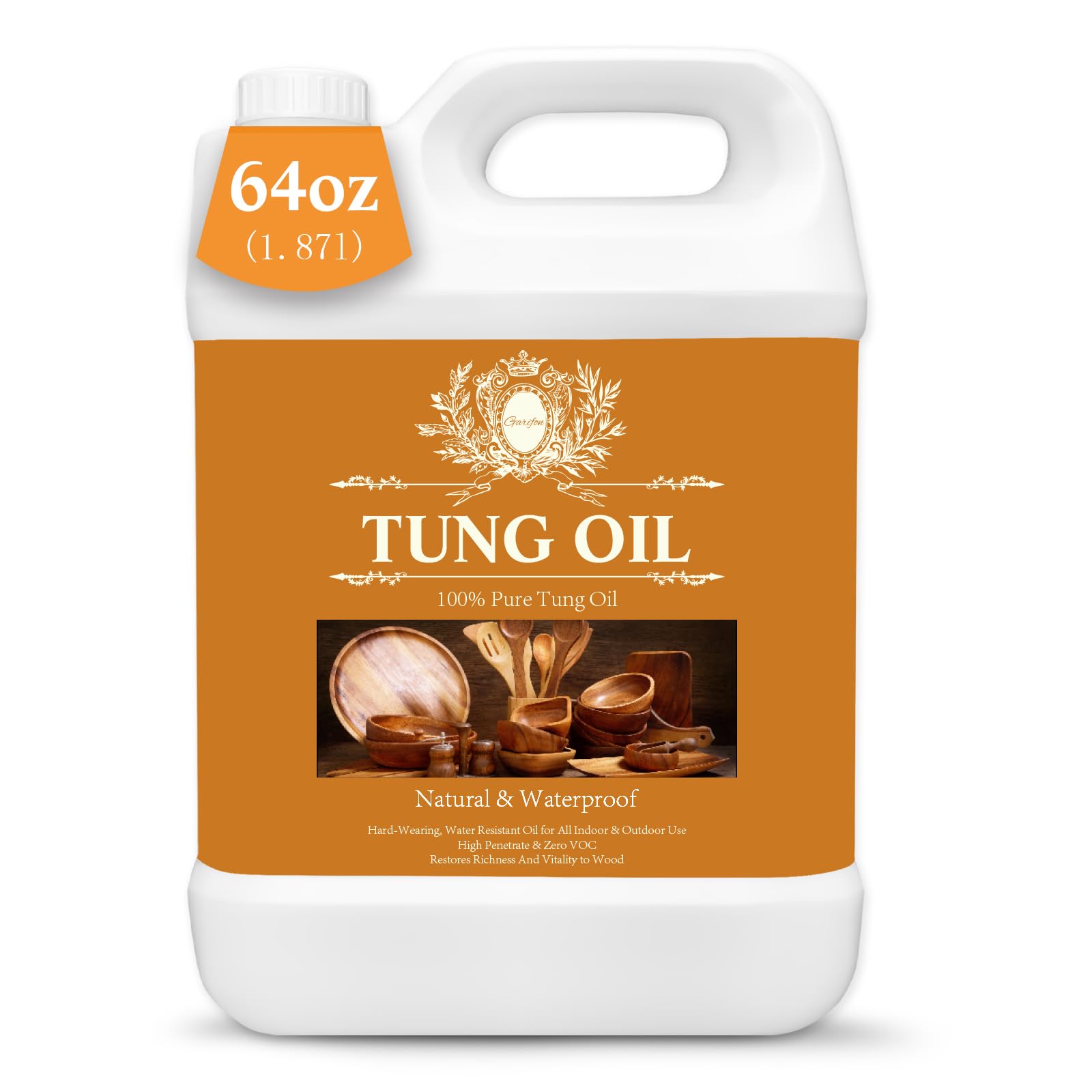
Garifon’s 100% Pure Tung Oil is extracted from tung tree nuts and offers a natural, food-safe finish that penetrates deep into the wood fibers rather than forming a surface film. Once cured, it creates a flexible, waterproof seal that resists cracking and peeling, making it suitable for both outdoor furniture and indoor cutting boards. The oil darkens the wood slightly, enhancing the grain pattern with a warm, matte-to-satin luster.
This is the only option in the list that can be used safely on food-contact surfaces like butcher blocks and dining tables after full curing. The application process requires patience — each coat needs 24 hours to dry, and the manufacturer recommends up to five coats for maximum protection. The natural tung oil smell is mild and dissipates completely as the finish cures.
The major trade-off is the time investment: achieving a truly durable, non-stick surface takes several days of coating and sanding. Some users also report that the bottle lacks explicit food-safe labeling, which may raise concerns for those planning to use it on cutting boards and kitchen surfaces. The product is also not compatible with surfaces that will later need gluing, as the oil prevents adhesion.
What works
- Food safe after full curing
- Penetrates deep for flexible, peel-proof protection
- Enhances natural wood grain beautifully
What doesn’t
- Extremely time-consuming process (several days)
- Bottle label lacks clear food-safe certification
- Prevents future glue adhesion on finished surfaces
5. Old Masters Gel Stain, Natural Oil-Based
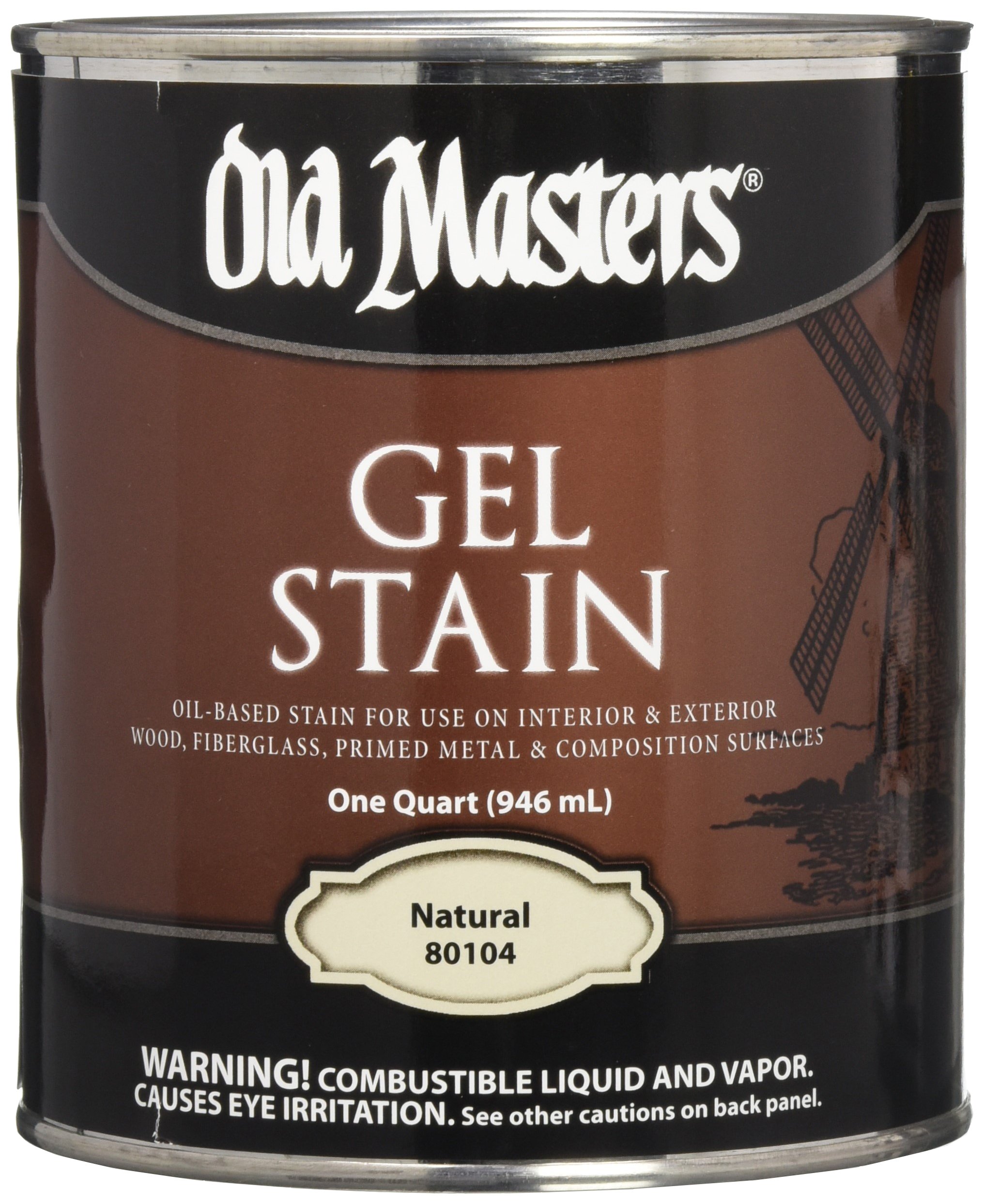
The Old Masters Natural Gel Stain uses an oil-based gel formula that provides exceptional color depth and coverage even on vertical surfaces without dripping. Unlike liquid stains, the thick gel consistency allows for precise control, making it ideal for detailed woodwork, fiberglass garage doors, and primed metal surfaces. The Natural shade adds subtle warmth without overwhelming the wood’s natural character.
Users consistently praise how well it covers large surface areas — a single quart can finish two single and one double garage door with careful application. The stain dries quickly in direct sun but requires a topcoat of sealer for outdoor longevity. It is particularly effective for transforming honey oak cabinets or alderwood by removing orange undertones and achieving a modern, rustic look.
The oil-based formula means cleanup requires mineral spirits, and the slow drying time in shaded areas can extend project timelines. Some users find that the gel leaves visible brush strokes if not applied with a cloth, and the product must be sealed for outdoor use as it is primarily a stain rather than a standalone preservative.
What works
- Thick gel formula prevents drips on vertical surfaces
- Exceptional coverage on fiberglass and wood
- Rich color with strong grain visibility
What doesn’t
- Requires separate sealer for outdoor use
- Oil-based cleanup requires mineral spirits
- Brush strokes may appear without cloth application
6. Thompson’s WaterSeal Transparent Waterproofing Stain
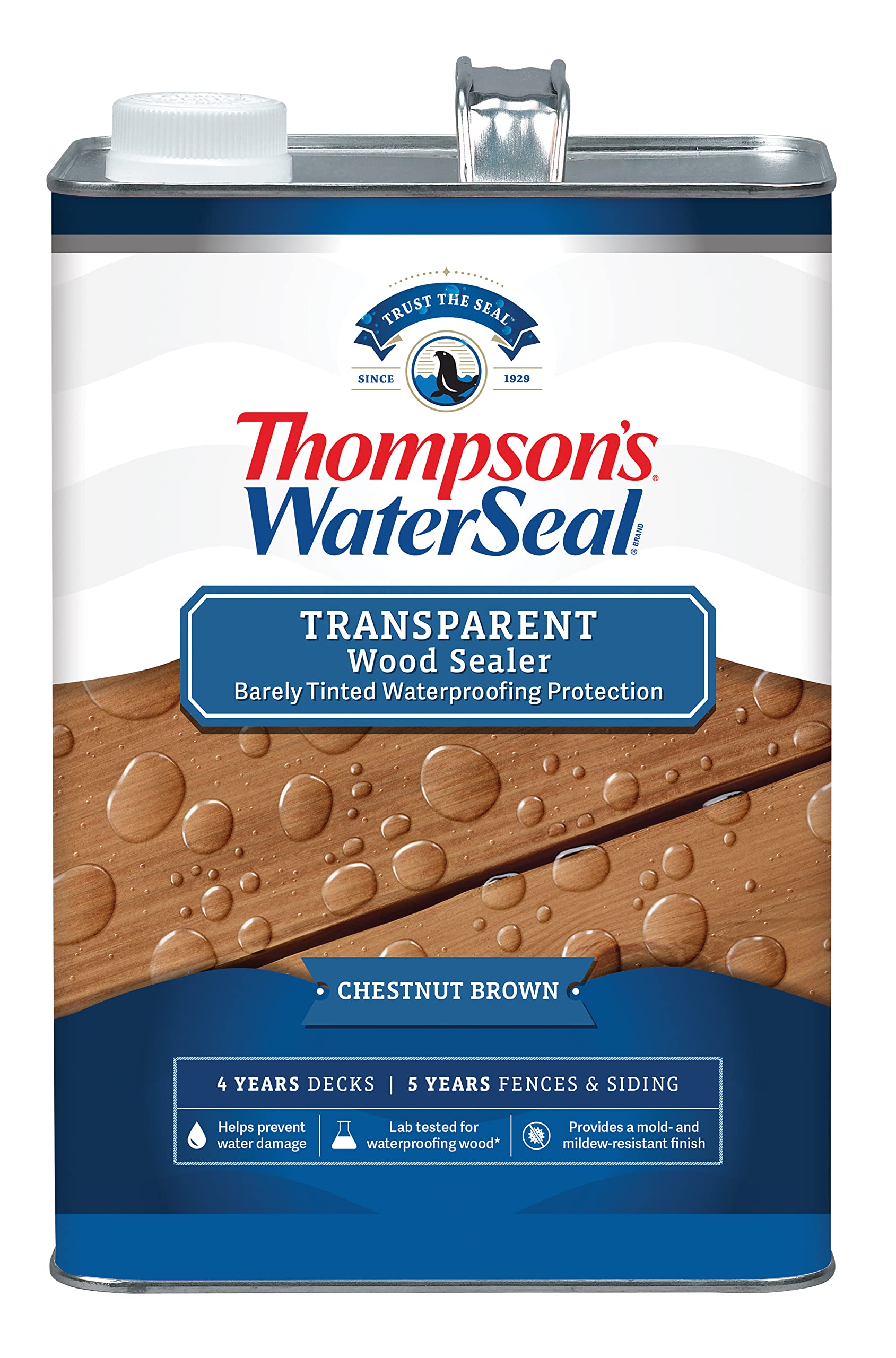
Thompson’s WaterSeal is a household name in exterior wood protection, and this transparent waterproofing stain in Chestnut Brown delivers the brand’s proven water-beading technology in a low-cost gallon that covers up to 400 square feet. The formula exceeds the ASTM D-4446 industry standard for waterproofing wood, and it can be applied to damp or dry wood — a rare flexibility that helps avoid weather-related project delays.
Owners apply it with garden sprayers for fast fence coverage, reporting that it dries quickly and produces a clean, even finish that beads water effectively. The chestnut brown tint provides noticeable color that transforms weathered gray wood into a warm, uniform brown while still allowing the original texture to show through. The advanced polymers in the formula resist UV fading to keep that color stable across seasons.
A significant number of long-time users note that the transparency claim is misleading — the chestnut brown is much more opaque than expected, essentially functioning as a semi-solid stain on lighter woods like mahogany or cedar. This can be a positive if you want bold color, but buyers expecting a truly transparent tint are often disappointed. The sheer volume per dollar is hard to beat for large fencing projects.
What works
- Can be applied to damp wood without issues
- Excellent water beading and repellency
- Exceptional value per gallon for large areas
What doesn’t
- Color is much more opaque than advertised
- Transparent claim feels misleading on light woods
- Thinner consistency may require multiple coats for evenness
7. Varathane Water-Based Ultimate Spar Urethane

Varathane’s Ultimate Spar Urethane is a water-based polyurethane formulated for outdoor wood surfaces like doors, windows, furniture, and trim. It dries to the touch in 30 minutes and allows recoat in just two hours, meaning you can apply three full coats in a single day. The satin finish remains crystal clear without yellowing, making it ideal for white trim or light-colored woods where ambering would ruin the aesthetic.
The quart covers 87 square feet, and the low-odor formula makes it usable indoors or in enclosed spaces without heavy ventilation. The non-yellowing chemistry is a standout feature — many spar urethanes shift toward amber over time, but this one holds its clarity across multiple seasons of direct sun exposure. Users report excellent adhesion on boat interiors and birdhouses, with no brush strokes on properly prepared wood surfaces.
The primary limitation is that it is a film-forming finish: if moisture gets underneath through an unsealed edge, it can peel or blister. It also requires clean, bare wood for optimal adhesion and is not ideal for previously finished surfaces without complete stripping. The water-based formula can leave visible brush strokes on non-absorbent plastic surfaces, though this is rarely an issue on raw wood.
What works
- Ultra-fast drying allows three coats in one day
- Crystal-clear, non-yellowing satin finish
- Low odor and soap-and-water cleanup
What doesn’t
- Film-forming barrier can peel if moisture intrudes
- Not suitable for non-absorbent plastic surfaces
- Lower coverage per quart vs. solvent-based alternatives
Hardware & Specs Guide
Film Thickness & Build
Film-forming preservatives like Varathane Spar Urethane create a measurable layer on top of the wood, typically ranging from 2 to 5 mils per coat. This build adds gloss and scratch resistance but introduces a failure risk if moisture penetrates the seam. Penetrating oils like the Garifon Tung Oil and acrylic semi-transparents like KILZ saturate the wood fibers with no measurable film thickness, meaning they cannot peel but may wear more quickly on horizontal, high-traffic deck surfaces.
UV Resistance Mechanisms
Preservatives defend against UV damage through three primary mechanisms: zinc nano-particles (DEFY Extreme), organic UV absorbers (Thompson’s WaterSeal), and titanium dioxide dispersion (Varathane Spar Urethane). Zinc nano-technology offers the broadest spectrum absorption and is particularly effective on composite decking where polymer degradation from UV is the main failure mode. Organic absorbers degrade faster but are more cost-effective for large fence projects.
FAQ
Can I apply a wood preservative over old paint or stain?
How long should I wait between coats of outdoor wood preservative?
Will a clear preservative darken my wood?
Final Thoughts: The Verdict
For most gardeners, the best outdoor wood preservative winner is the DEFY Extreme Composite Deck Sealer because its zinc nano-technology provides unmatched UV protection while restoring faded composite and natural wood to a like-new appearance. If you need a non-toxic formula for raised garden beds where food safety is paramount, grab the Garden-Seal Non-Toxic Wood Sealant. And for a budget-friendly bulk solution that handles large fence projects with damp-wood tolerance, nothing beats the Thompson’s WaterSeal Transparent Waterproofing Stain.