
Using dense garden soil in a container traps roots, blocks drainage, and eventually drowns your plants. The right potting mix stays light, holds moisture without getting soggy, and provides a structure that lets roots breathe and spread. Unlike ground soil, a quality mix for containers relies on ingredients like peat moss, perlite, and vermiculite to balance aeration and water retention.
I’m Rikta — the co-founder and writer behind Lawn Gear Lab. I’ve spent countless hours analyzing potting mix formulations, cross-referencing soil pH data, studying ingredient ratios, and sifting through thousands of verified owner reviews to separate the mixes that deliver consistent results from those that turn into compacted sludge.
This guide breaks down the top contenders based on drainage performance, nutrient content, and pH stability so you can confidently pick the right soil for potted plants.
How To Choose The Best Soil For Potted Plants
Container gardening demands a mix that drains well but retains enough moisture between waterings. The wrong soil compacts, suffocates roots, or holds too much water and causes rot. Focus on these factors to find a mix that matches your plants.
Texture and Drainage Components
Look for a blend containing perlite, vermiculite, or coarse sand. These create air pockets so water flows through without pooling. A mix that feels light and crumbly when you squeeze it is a good sign. Dense, muddy textures indicate too much compost or topsoil.
pH Level
Most potted plants thrive in a pH range of 5.5 to 6.5. Specialized plants like African violets prefer a slightly more acidic environment around 6.0. A pH-balanced mix prevents nutrient lockout and keeps leaves from yellowing.
Nutrient Content and Fertilizer Schedule
Some mixes include slow-release fertilizer that feeds plants for several months. Others are inert and require you to add liquid fertilizer regularly. For heavy feeders like tomatoes, a nutrient-rich blend with compost or worm castings reduces the need for frequent feeding.
Organic Certification
If you grow herbs or vegetables, an OMRI-listed mix ensures no synthetic chemicals are present. Organic mixes often contain compost, kelp meal, or alfalfa meal as natural nutrient sources.
Quick Comparison
On smaller screens, swipe sideways to see the full table.
| Model | Category | Best For | Key Spec | Amazon |
|---|---|---|---|---|
| Miracle-Gro Organic Indoor Potting Mix (2-Pack) | Indoor Organic | Houseplants and seed starting | 8 qt. per bag | Amazon |
| African Violet Natural Potting Soil Mix | Specialty Formula | African violets and blooming plants | 4 Dry Quarts | Amazon |
| Coast of Maine Organic Tomato & Vegetable Soil | Organic Vegetable | Tomatoes and vegetable containers | 20 Qt | Amazon |
| Midwest Hearth Premium Potting Soil Mix | All-Purpose Premium | General container plants and seed starting | 8 Dry Quarts | Amazon |
| Espoma Organic Potting Soil Mix (2-Pack) | Organic Premium | Indoor and outdoor containers | 8 qt. per bag | Amazon |
| Coast of Maine Bar Harbor Blend | Premium Organic | High-performance container gardening | 16 QT | Amazon |
| Miracle-Gro Potting Mix (3-Pack) | Outdoor All-Purpose | Outdoor containers and heavy feeders | 8 qt. per bag | Amazon |
In‑Depth Reviews
1. Miracle-Gro Organic Indoor Potting Mix (2-Pack)

This two-pack offers 16 total quarts of organic indoor mix formulated with sphagnum peat moss and coir to buffer against both overwatering and underwatering. The OMRI listing confirms no synthetic chemicals are present, making it safe for edible herbs grown on a windowsill. Many buyers report that switching to this mix noticeably reduced fungus gnat problems in their houseplants.
The texture strikes a strong balance between moisture retention and drainage — it holds enough water to keep roots hydrated between weekly watering but doesn’t turn into a muddy paste. Several reviewers noted healthier growth in struggling plants after repotting with this mix. The two separate bags are convenient for staggered use without risking the second bag drying out.
For general houseplant owners, herb growers, and anyone starting seeds indoors, this mix delivers consistent performance with minimal risk of root rot. Adding a handful of extra perlite can improve drainage further for succulents or cacti.
What works
- Helps regulate soil moisture automatically
- OMRI-listed organic ingredients
- Reduced gnat issues in multiple reviews
What doesn’t
- Some plants may need additional perlite for faster drainage
- Bag size is moderate for large containers
2. African Violet Natural Potting Soil Mix (4 Dry Quarts)

This specialized mix from Midwest Hearth uses a controlled pH range tailored specifically for African violets, which need slightly acidic soil around 6.0 to absorb nutrients properly. The blend combines peat moss, perlite, and vermiculite to create an airy structure that allows delicate violet roots to spread without resistance. The 4-quart bag is a convenient size for several small pots or a few medium containers.
Verified buyers consistently mention that repotted violets bounced back quickly and produced fuller blooms within weeks. The mix arrives light and fluffy, with no large bark chunks that can interfere with shallow root systems. Several reviewers noted the value was strong compared to searching for specialty soil at local garden centers.
African violet enthusiasts and owners of other acid-loving houseplants will find this mix performs reliably. It works well for miniature violets and standard varieties alike. For growers who repot frequently, the resealable bag keeps the remaining mix from drying out.
What works
- pH balanced specifically for African violets
- Light texture promotes root growth
- No large debris or sticks
What doesn’t
- Premium price per quart compared to general mixes
- Small bag size for larger collections
3. Coast of Maine Organic Tomato & Vegetable Planting Soil (20 Qt)

Coast of Maine packs this 20-quart bag with composted manure, sphagnum peat moss, and organic matter designed specifically for heavy-feeding vegetables like tomatoes. The mix balances moisture retention with drainage so roots of container-grown veggies don’t sit in water. Several users reported exceptional results with heirloom tomatoes and peppers in pots, citing faster growth and larger fruit sets.
The blend contains cedar and aromatic wood fines that naturally deter some insects, though a handful of reviewers noted fungus gnats can still appear if the soil is kept too wet. Pre-moistening the mix before planting helps activate the organic components. The formula is OMRI-listed and suitable for organic gardening both in-ground and in containers.
For serious vegetable growers using large containers or raised beds, this mix provides the nutrient density that leafy greens and fruiting plants demand. The 20-quart volume fills multiple large pots without needing frequent supplemental fertilizing in the first few weeks.
What works
- Nutrient-rich with composted manure
- Excellent drainage for container tomatoes
- OMRI-listed for organic gardening
What doesn’t
- Some batches may contain wood fines
- Premium cost for larger gardens
4. Midwest Hearth Premium Potting Soil Mix (8 Dry Quarts)

This Midwest Hearth blend uses the same peat-perlite-vermiculite ratio that professional growers rely on for consistent seed germination and root development. The 8-quart bag comes in a resealable package that keeps the mix fresh between uses. The texture is noticeably light and fluffy, which allows delicate seedlings to push through without resistance.
Verified buyers highlighted its performance starting petunias and other small seeds, with strong germination rates and no damping-off issues. The pH is controlled to suit a broad range of plants, from jade plants to flowers. A few users noted the price per quart is higher than basic garden center brands, but the consistent quality and clean, weed-free mix justifies the cost for small projects.
Home gardeners who want a reliable, ready-to-use mix for repotting a few plants or starting seeds indoors will appreciate the professional formulation. Adding a slow-release fertilizer is recommended for long-term container growth beyond four to six weeks.
What works
- Professional-grade peat-perlite-vermiculite ratio
- Resealable bag maintains moisture
- No weeds or pests reported
What doesn’t
- Higher cost per quart
- Needs additional fertilizer for long-term growth
5. Espoma Organic Potting Soil Mix (2-Pack, 8qt. Each)

Espoma combines sphagnum peat moss, humus, and perlite with organic amendments like earthworm castings, alfalfa meal, kelp meal, and feather meal to create a nutrient-dense mix. The inclusion of Myco-Tone — a blend of endo and ecto mycorrhizae — supports root colonization and nutrient uptake right from transplant. This two-pack delivers 16 total quarts of soil suitable for both indoor containers and outdoor planters.
Buyers consistently report vigorous growth after repotting, with several users switching to Espoma after struggling with other mixes that compacted. The organic ingredients provide a slow-release nutrient profile that reduces the need for liquid fertilizer during the first few weeks. A few users mentioned the mix arrived very dry, requiring thorough pre-moistening before planting to ensure even water absorption.
Gardeners who prioritize organic ingredients and want a single mix that works for vegetables, herbs, flowers, and houseplants will find this an excellent choice. The mycorrhizae additive gives it an edge for transplants establishing in new containers.
What works
- Rich organic nutrient profile with worm castings
- Myco-Tone for enhanced root development
- Versatile for indoor and outdoor use
What doesn’t
- Can arrive very dry and hard to rewet
- Premium price point
6. Coast of Maine Bar Harbor Blend Potting Soil (16 QT)
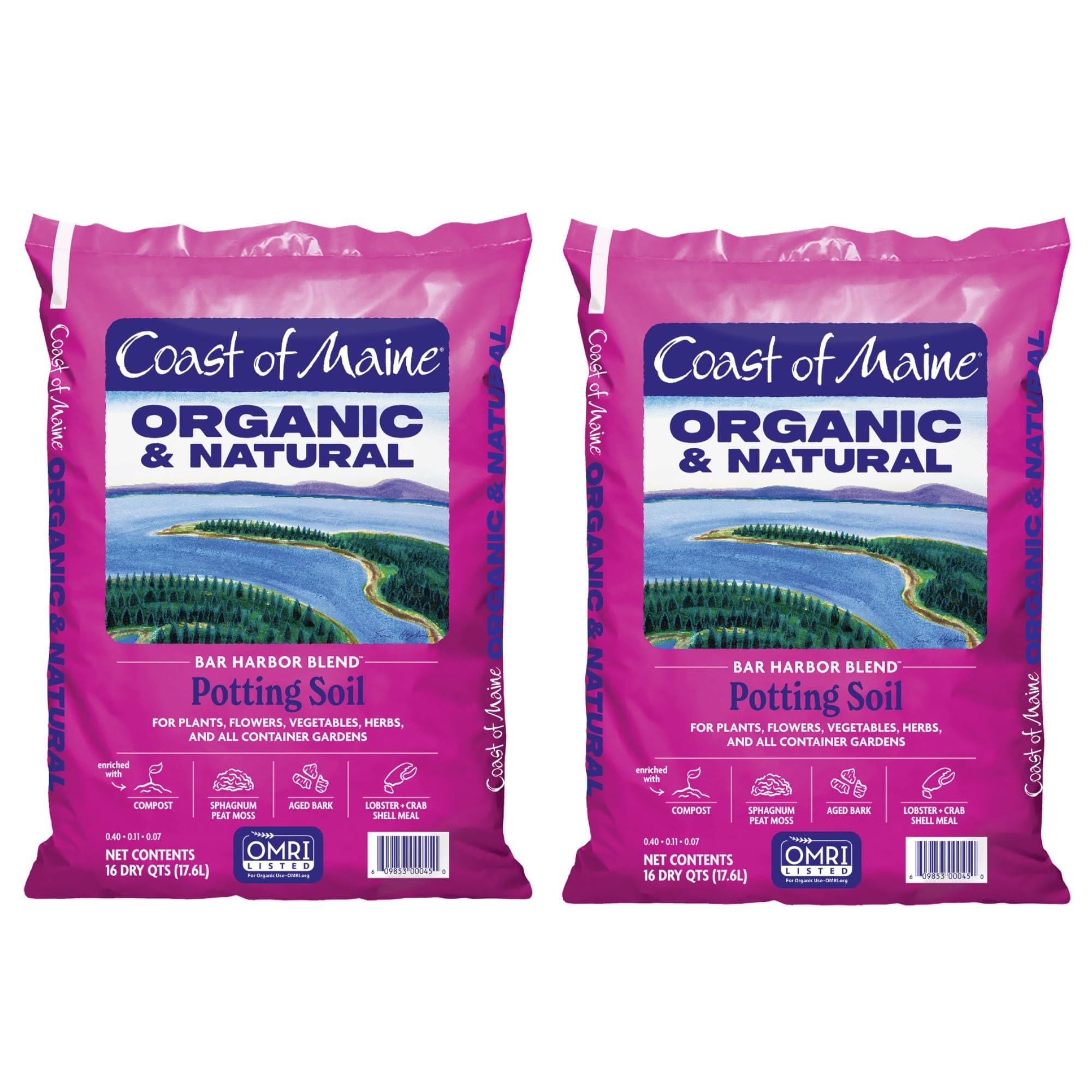
The Bar Harbor Blend takes organic potting soil to the next level with lobster and crab shell meal, kelp meal, and compost added to a sphagnum peat base. This 16-quart bag provides slow-release nitrogen that feeds plants steadily over several months without burning roots. The dark, rich texture indicates high organic matter content, and the blend drains well enough for hanging baskets and containers that require consistent aeration.
Multiple reviewers reported dramatic improvements in tomato and potato growth after switching to this mix, with plants outgrowing their neighbors grown in standard potting soil. The compost base adds beneficial microbes that support soil health over time. A few users noted the price is higher than commodity mixes, but nearly all agreed the plant performance justified the investment.
For dedicated container gardeners growing high-value vegetables, flowers, or herbs, this mix reduces the need for constant liquid fertilizing and creates a thriving root environment. The natural ingredients also make it safe for indoor use, though the earthy scent is more noticeable than lighter peat-based blends.
What works
- Rich organic blend with seafood meal nutrients
- Slow-release nitrogen for sustained feeding
- Excellent structure for containers and baskets
What doesn’t
- Higher cost than standard potting mixes
- Noticeable earthy organic scent
7. Miracle-Gro Potting Mix (3-Pack, 8qt. Each)

This three-pack of Miracle-Gro Potting Mix provides 24 total quarts of soil pre-loaded with a slow-release fertilizer that feeds outdoor container plants for up to six months. The mix promotes robust growth in flowers, vegetables, shrubs, and perennials — Miracle-Gro claims it grows plants twice as big compared to unfed plants. Each bag fills two 8-inch containers, making it the most volume-efficient option in this lineup.
Users consistently describe it as a reliable, no-fuss option that keeps plants green and vigorous through the growing season. The texture holds its structure well without compacting into a hard block, allowing water to reach roots. Several buyers appreciated the smaller bag size for ease of handling compared to lugging 40-pound bags from a garden center.
For gardeners with multiple outdoor containers who want a mix that includes built-in feeding for the entire season, this bundle delivers strong value. It works best for annual flowers and vegetables in pots on patios, decks, or balconies where regular fertilizing is inconvenient.
What works
- Built-in fertilizer feeds for 6 months
- Three bags for multiple containers
- Consistent, reliable performance
What doesn’t
- Not organic or OMRI-listed
- Less suitable for indoor plants needing sharper drainage
Hardware & Specs Guide
Peat Moss vs. Coir
Sphagnum peat moss is the standard water-holding component in most potting mixes, valued for its ability to retain moisture while maintaining a light texture. Coconut coir is a sustainable alternative that holds water even more efficiently and resists compaction. Both improve aeration, but coir has a neutral pH, while peat is naturally acidic and often requires lime adjustment.
Perlite vs. Vermiculite
Perlite is volcanic glass expanded by heat — it looks like small white pebbles and primarily improves drainage and aeration. Vermiculite is a mineral that expands when heated and holds water and nutrients while also adding air space. Mixes for succulents and cacti rely heavily on perlite, while moisture-loving tropical plants benefit from the water-holding capacity of vermiculite.
pH and Nutrient Buffering
Most container plants prefer a slightly acidic pH between 5.5 and 6.5. Specialty mixes for acid-loving plants like azaleas or blueberries drop that range lower. Calcium carbonate or dolomitic lime is often added to balance the acidity of peat moss. The pH level directly controls nutrient availability — iron, manganese, and zinc become locked out above pH 7.0.
Organic Matter and Slow-Release Fertilizer
Compost, worm castings, and meals (kelp, alfalfa, feather) provide a slow-release nutrient profile that sustains plants for weeks without synthetic chemicals. Some all-purpose mixes incorporate coated slow-release fertilizer pellets that activate with each watering. For container plants that stay in the same pot for a full season, a mix with built-in feeding reduces the need for liquid fertilizer applications.
FAQ
Can I use garden soil from my yard in pots?
How often should I replace potting soil in a container?
Why does my potting mix get moldy on top?
Is it worth buying premium organic potting mix for houseplants?
Can I mix different brands of potting soil together?
Final Thoughts: The Verdict
For most gardeners, the soil for potted plants winner is the Miracle-Gro Organic Indoor Potting Mix (2-Pack) because it balances moisture regulation, organic certification, and pest reduction for the broadest range of houseplants. If you want a heavy-feeding mix for vegetable containers, grab the Coast of Maine Organic Tomato & Vegetable Soil. And for premium long-term feeding with natural ingredients, nothing beats the Coast of Maine Bar Harbor Blend.