
A pecan tree that drops undersized nuts or shows yellow, crinkled leaves is almost certainly starving for zinc. Unlike a lawn or a flower bed, pecan trees have a unique physiological demand for this specific micronutrient—without it, kernel fill fails, and the tree’s immune system falters against pests like aphids and scab. Generic high-nitrogen blends can actually lock up available zinc in alkaline soils, making the problem worse. Selecting the right fertilizer for pecan tree nutrition means understanding the tree’s precise zinc-to-nitrogen ratio and its seasonal feeding windows.
I’m Rikta — the co-founder and writer behind Lawn Gear Lab. My process for this guide involved cross-referencing soil science bulletins from land-grant university extension services with hundreds of real-world owner accounts to isolate which products actually correct rosette disorder and boost kernel weight rather than just greening up the canopy.
To help you avoid the most common fertility mistakes that plague home orchardists, I have assembled the seven most effective formulations available today. This review of the best fertilizer for pecan tree options focuses on zinc content, NPK balance, and application method, so you can confidently choose the right amendment for your grove size and soil condition.
How To Choose The Best Fertilizer For Pecan Tree
Pecan trees are heavy feeders with a specific nutrient hierarchy that differs from standard fruit or shade trees. Selecting a product requires matching the formulation to your tree’s age, soil test results, and the visible health of the canopy. The three variables that matter most are zinc availability, the nitrogen-to-potassium ratio, and the release mechanism.
Zinc Content Is Non‑Negotiable
Pecan trees cannot metabolize zinc efficiently in high-pH soils, which is why foliar zinc sprays and soil-applied zinc sulfate are standard recommendations from agricultural extension services. A deficiency manifests as rosette—clustered, stunted leaves at branch tips—and directly reduces kernel fill. Look for products that list zinc in the guaranteed analysis; without it, the fertilizer is incomplete for pecans. Products like Hi‑Yield Zinc Sulfate deliver a concentrated 36-percent zinc source, while some spike formulations incorporate zinc directly into the matrix.
NPK Ratio for Mature vs. Young Trees
Mature, nut-producing trees require a balanced ratio such as 16-4-4 or 13-3-3 to support canopy growth, root energy, and kernel development without excessive vegetative growth that attracts pests. Young, non-bearing trees benefit from a higher phosphorus content—closer to a 10-10-10 ratio—to encourage root establishment and trunk caliper. Over-applying nitrogen on a mature tree can suppress zinc uptake and delay nut maturity, so always verify the first number in the N-P-K sequence against the tree’s life stage.
Application Method: Spikes, Granules, or Liquid
Spikes offer the most predictable, mess-free delivery for home orchardists because they bypass surface runoff and place nutrients directly into the root zone. Granular products require tilling or watering-in to reach feeder roots, which can be labor-intensive for large trees. Liquid fertilizers work exceptionally well for young trees and foliar feeding, but the volume needed to saturate a mature tree’s root zone (often 5-10 gallons per application) makes them cost-prohibitive for large groves. Consider your tree count and physical access before choosing a delivery system.
Quick Comparison
On smaller screens, swipe sideways to see the full table.
| Model | Category | Best For | Key Spec | Amazon |
|---|---|---|---|---|
| Pendelton Turf Supply 13-13-13 | Granular | General garden & young trees | 13-13-13 NPK + Pelletized Lime | Amazon |
| Hi‑Yield Zinc Sulfate | Granular | Correcting rosette deficiency | 36% Zinc, 17% Sulfur | Amazon |
| Jobe’s 16-4-4 Spikes (30pk) | Spikes | All‑season feeding for shrubs | 16-4-4 NPK, Time‑Release | Amazon |
| Old Farmer’s Almanac 13-3-3 Spikes (24pk) | Spikes | Twice‑seasonal feeding | 13-3-3 NPK, 5‑inch TruSpike | Amazon |
| Espoma Tree‑tone 6-3-2 (36lb) | Granular | Organic grove care | 6-3-2 NPK + 5% Calcium | Amazon |
| TPS Nutrients Pecan Liquid (1gal) | Liquid | Young & container trees | 3.6-3-5.1 NPK, 1‑Gallon | Amazon |
| Winchester Gardens Pecan Spikes (70ct) | Spikes | Large grove maintenance | 16-4-4 NPK, Contains Zinc | Amazon |
In‑Depth Reviews
1. Winchester Gardens Pecan Fertilizer Spikes, 16-4-4, 70 Count
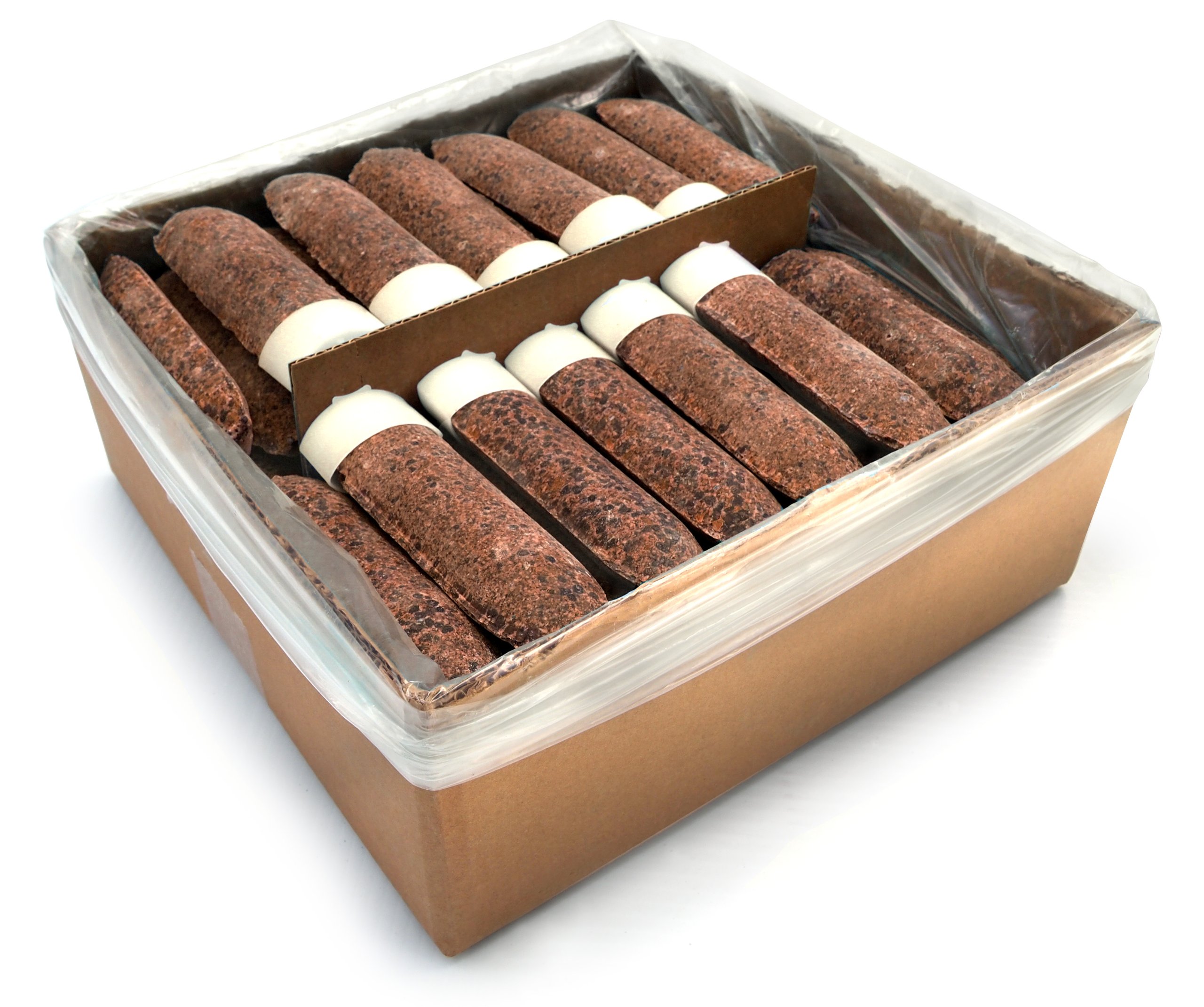
Formulated explicitly for pecan trees, this 70-count spike pack delivers a 16-4-4 NPK ratio with added zinc—the micronutrient that makes the difference between full, oily kernels and shriveled, empty shells. The spike format places nutrients directly into the root zone at the drip line, eliminating the surface runoff and volatilization losses common with granular broadcast. Landscape professionals favor this pack because the per-spike cost drops dramatically at this volume, making it practical to feed a dozen or more mature trees in a single afternoon.
Owner reports consistently note that trees treated with these spikes show denser canopies and visibly fewer bagworm infestations compared to neglected trees in the same neighborhood. The 16-4-4 ratio is ideal for established bearing trees: the nitrogen supports leaf area for photosynthesis while the moderate potassium bolsters nut quality and disease resistance. Each spike is pre-measured, so there is no scooping, mixing, or guessing how much to apply per inch of trunk diameter.
Some users note that the spikes lack plastic caps for hammering, which can make driving them into dry clay soil more difficult. For compacted ground, pre-drilling a pilot hole with a steel rod or auger bit is recommended. Despite this minor handling quirk, the targeted zinc delivery and extended-release formula make this the most complete and convenient all-in-one solution for pecan trees available.
What works
- Specifically formulated for pecans with zinc included in the matrix
- 70-count bulk pack provides excellent value per feeding for large groves
- Pre-measured dosage eliminates guesswork and risk of over-fertilization
What doesn’t
- No plastic caps included for driving spikes; pilot holes needed in hard soil
- 16-4-4 ratio is too nitrogen-heavy for young, non-bearing saplings
2. Hi‑Yield Zinc Sulfate (21624) 4 lbs.
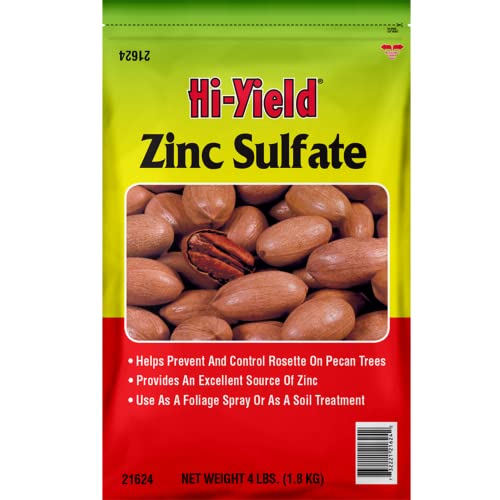
Rosette disorder—the clustering of tiny, deformed leaves at branch tips—is the hallmark of zinc deficiency in pecan trees, and this 36-percent zinc sulfate product from Hi‑Yield is the most direct corrective measure you can apply. Unlike blended fertilizers that contain a token amount of zinc, this granular amendment is almost pure zinc sulfate with 17 percent sulfur to help acidify the root zone and improve bioavailability in alkaline soils common to pecan-growing regions like Texas and Georgia.
The product can be applied either as a soil broadcast from the trunk to the drip line or as a foliar spray mixed at one tablespoon per three gallons of water. Foliar application is particularly effective for rapid symptom reversal during the growing season because zinc is immobile in the plant—new leaves rely on direct supply rather than redistribution from older tissue. Multiple verified buyers report that trees on the verge of defoliation recovered fully within six weeks of consistent weekly sprays.
Because this is a straight zinc source rather than a complete fertilizer, it must be used in conjunction with a balanced NPK program. Applying zinc without nitrogen and potassium will not sustain overall tree health. The 4-pound bag is a modest quantity; for a mature orchard, you will want to stock multiple bags or pair it with a complete fertilizer that also contains micronutrients.
What works
- Highest available zinc concentration (36%) for correcting severe deficiency
- Effective as both soil broadcast and foliar spray for flexible application
- Fast symptom reversal reported in 4-6 weeks with consistent use
What doesn’t
- Single-nutrient product; must be paired with a complete NPK fertilizer
- 4-pound bag covers only a few large trees at the recommended broadcast rate
3. Espoma Organic Tree-tone 6-3-2, 36 lb. Bag

Espoma’s Tree-tone is the top organic granular choice for orchardists who want to avoid synthetic salts while maintaining steady nutrient release. The 6-3-2 NPK ratio is deliberately low in nitrogen to prevent the lush, pest-attracting growth that high-nitrogen synthetic feeds can cause on mature pecan trees. The Bio‑tone formula includes five percent calcium, which aids cell wall structure in developing nuts and helps buffer soil pH fluctuations.
The 36-pound bag provides enough material to treat a substantial home orchard—one verified user applied 160 pounds around an 80-year-old white oak over several seasons. For pecan trees, the recommended approach is to drill holes six to eight inches deep at the drip line, fill with granules, and water in. The organic matter content improves soil tilth and microbial activity over time, creating a more resilient root environment than salt-based fertilizers can deliver.
The primary trade-off is the lower nutrient density: you must apply a larger volume of product compared to a concentrated 16-4-4 spike to achieve the same nitrogen input. Additionally, the product has a noticeable natural odor that some users find strong during application. For growers committed to organic certification or those managing sensitive soil ecosystems, however, the environmental safety and slow-release profile more than justify the extra physical effort.
What works
- Organic OMRI-listed formula with calcium for nut cell development
- Low nitrogen content reduces pest pressure and bitter pit risk
- Bulk 36-pound bag offers strong per-pound value for groves
What doesn’t
- Low NPK density requires large physical volume per tree
- Strong natural smell during application may be unpleasant
4. The Old Farmer’s Almanac Tree & Shrub Fertilizer Spikes, 13-3-3, 24-Count

The Old Farmer’s Almanac spikes use a 13-3-3 ratio with molasses-based ingredients to feed soil biology while supplying nitrogen for canopy density and potassium for root and nut quality. The five-inch TruSpike design is thicker and more robust than many competing spikes, which reduces the chance of breakage when hammering into compacted lawn soil. The formula is intended for twice-seasonal feeding: once in early spring as the tree breaks dormancy and again in late fall to support root storage before winter.
Because the phosphorus content is kept low at three percent, this spike is well-suited for mature pecan trees where phosphorus buildup in the soil is a concern. The molasses base provides a carbon source for beneficial soil fungi, which can help unlock trace minerals that conventional spikes ignore. For homeowners who want a simple “hammer and forget” solution that improves soil health rather than just dumping salts, this package delivers clear advantages.
Each spike contains natural ingredients that can be softer than synthetic resin spikes; some users report that the spikes can crumble if overdriven with a heavy hammer. Additionally, the 24-count box covers roughly four to six medium-sized trees, making it a seasonal purchase for smaller yards rather than a bulk option for larger orchards. For the environmentally conscious grower with a modest number of trees, the soil-building benefit is compelling.
What works
- Natural molasses base feeds soil biology and improves mineral availability
- Thick 5-inch TruSpike resists shattering during installation
- Low phosphorus content prevents buildup in mature orchard soils
What doesn’t
- 24-count box provides limited coverage for larger groves
- Spikes can crumble if hammered too aggressively into hard soil
5. Jobe’s Tree Fertilizer Spikes, 16-4-4 Time Release, 30 Spikes (2-Pack)

Jobe’s is a household name in tree spikes, and this 30-count twin pack provides a dependable 16-4-4 time-release formulation that feeds deciduous trees for an entire growing season without the risk of fertilizer burn. The spike matrix dissolves slowly as soil moisture wicks nutrients into the root zone, which is particularly valuable for pecan trees where surface-applied nitrogen can volatilize rapidly under hot southern sun. Each spike is formulated to not burn feeder roots, making it safe for use even during drought stress.
Verified reviews from pecan and shrub growers highlight that trees treated with Jobe’s spikes showed recovery from drought stress within the first growing season, with denser foliage and more consistent flowering the following spring. The dual-pack of 30 spikes is well-calibrated for a home orchard of five to eight mature trees, with the convenience of storage until the next season. Unlike granular fertilizers that must be watered in, these spikes function even in dry conditions as long as they are inserted into damp soil or pre-drilled holes.
The 16-4-4 ratio, while effective for established trees, lacks the targeted zinc that pecan trees specifically require. Users in zinc-deficient areas will need to supplement with a separate zinc sulfate product. Furthermore, the spikes are designed for general trees and shrubs rather than pecan-specific physiology, so the micronutrient profile is generic rather than optimized for nut production. For a straightforward, no-mess maintenance feed, these spikes are reliable, but they are not a complete solution for pecan groves.
What works
- Time-release formula prevents burn and lasts a full season
- Safe for use in drought-stressed trees with no surface runoff
- 30-spike twin pack offers good value for medium-sized home orchards
What doesn’t
- Does not contain added zinc; must be used with a zinc supplement
- Generic NPK profile not tailored to pecan tree physiology
6. TPS Nutrients Pecan Tree Fertilizer – Liquid Plant Food, 1 Gallon
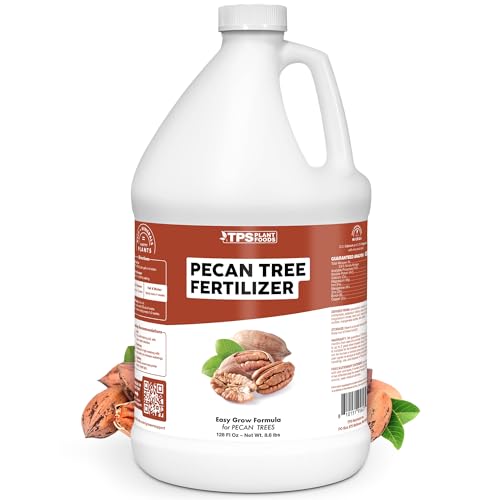
TPS Nutrients offers a liquid concentrate specifically marketed for pecan trees, featuring a 3.6-3-5.1 NPK ratio with a full suite of micronutrients including zinc. The liquid form is ideal for young or container-grown pecan trees where root systems are compact and granular products would be wasted beyond the pot rim. The mixing rate of two tablespoons per gallon of water yields roughly eight gallons of ready-to-use fertilizer, making the 128-ounce bottle economical for multiple small-tree feedings over a season.
Several verified buyers report using this product on stressed or dieback-affected walnut and peach trees with excellent results—greener leaves and new shoot growth within weeks. The liquid delivery allows for precise dosing and immediate root uptake, which is critical for correcting early-season deficiency before nut set. For pecan trees in their first three to five years, this product provides the nutrient density without the high nitrogen load that would push excessive vegetative growth at the expense of root development.
The primary limitation is the impracticality of using liquid concentrate on large, established pecan trees. A mature tree with a 40-foot canopy may require 10 to 15 gallons of diluted solution to saturate the root zone, which depletes the bottle quickly and becomes labor-intensive. Additionally, the shelf life is two years when stored between 50 and 80 degrees Fahrenheit, so the bottle should be used promptly after opening. For young trees and targeted foliar applications, however, the liquid format is unmatched in flexibility.
What works
- Liquid format allows precise dosing and rapid root uptake
- Balanced NPK with zinc supports young tree development
- Concentrated formula yields many applications per gallon bottle
What doesn’t
- Impractical for large mature trees due to high volume requirements
- Limited two-year shelf life requires timely use after opening
7. Pendelton Turf Supply 13-13-13 Garden Grower Fertilizer with Pelletized Lime, 6 lbs
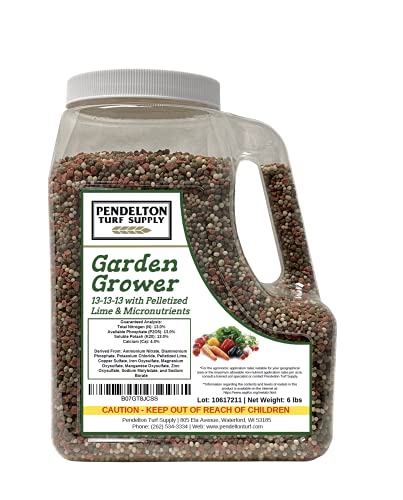
Pendelton Turf Supply’s 13-13-13 blend is a balanced, all-purpose granular fertilizer that includes pelletized lime and micronutrients, making it a versatile starting point for young pecan trees and companion garden plants. The 13-13-13 ratio is ideal for establishing trees because the equal nitrogen, phosphorus, and potassium distribution supports root growth, trunk thickening, and early foliage development without over-emphasizing any single nutrient. The added pelletized lime provides calcium and helps buffer acidic soil, which is beneficial for pecan trees planted in low-pH regions.
Verified users consistently praise this product for container gardening and vegetable rows, noting that a six-pound bag goes a long way when used at the recommended rate of half a pound per 25 feet of row. For a newly planted pecan sapling, broadcasting the granules around the root zone and watering in provides a balanced nutrient foundation during the critical first two years. The inclusion of micronutrients offers a broader spectrum than many simple NPK-only fertilizers, supporting trace mineral availability.
This product is not formulated specifically for pecan trees and contains no added zinc, so it cannot correct rosette deficiency or optimize kernel fill. The balanced 13-13-13 ratio is also too high in phosphorus for mature nut-bearing trees, where phosphorus accumulation in the soil can interfere with mycorrhizal fungi. For an entry-level, budget-friendly general fertilizer that gets a young pecan tree started, this product works, but it is not a long-term solution for a productive orchard.
What works
- Balanced 13-13-13 NPK supports young pecan sapling establishment
- Pelletized lime provides calcium and pH buffering for acid soils
- Small 6-pound bag is convenient for container-grown trees
What doesn’t
- No added zinc; cannot correct rosette or improve nut fill
- High phosphorus content is inappropriate for mature bearing trees
Hardware & Specs Guide
Guaranteed Analysis (N-P-K)
The three numbers on a fertilizer label represent the percentage by weight of Nitrogen, Phosphate (P2O5), and Potash (K2O). For mature pecan trees, a ratio around 16-4-4 or 13-3-3 is ideal because it supplies enough nitrogen to support the large canopy without overwhelming the tree with phosphorus, which accumulates in the soil and can harm beneficial fungi. Young, non-bearing pecan trees up to four years old benefit from a more balanced ratio like 13-13-13 to encourage root and trunk development. Always verify the first number—nitrogen—is not so high that it suppresses zinc uptake.
Zinc Content and Bioavailability
Pecan trees require 36-percent zinc sulfate as a standalone amendment or a spike-based product that incorporates zinc into the matrix. Zinc is immobile in plant tissue, meaning new leaves cannot draw it from older leaves; they must receive a fresh supply from the soil or through foliar application. Foliar sprays at a rate of one tablespoon per three gallons of water provide the fastest correction for deficiency symptoms. Soil-applied zinc works more slowly but is essential for long-term tree health. Products that list no zinc in the guaranteed analysis are incomplete for pecan trees.
FAQ
How often should I fertilize a mature pecan tree?
Can I use lawn fertilizer on my pecan tree?
What are the signs of zinc deficiency in pecan trees?
Final Thoughts: The Verdict
For most home orchardists, the fertilizer for pecan tree winner is the Winchester Gardens Pecan Spikes (70-Count) because it combines the correct 16-4-4 ratio with added zinc in a convenient, pre-measured spike format that eliminates runoff and application guesswork. If you need to correct an acute zinc deficiency and have mature trees showing rosette symptoms, grab the Hi-Yield Zinc Sulfate for rapid foliar and soil correction. And for organic growers who prioritize soil microbiome health and long-term sustainability, nothing beats the Espoma Tree-tone 36lb bag for its slow-release, calcium-rich formulation.