
Junipers demand a specific soil chemistry that most general-purpose plant foods simply cannot provide. When your evergreen conifer starts showing pale, yellowish needles or stunted new growth, the root cause is almost always an alkaline soil pH that locks away the micronutrients it needs to stay vibrantly green and healthy.
I’m Rikta — the co-founder and writer behind Lawn Gear Lab. I’ve spent countless hours cross-referencing horticultural data sheets, studying NPK ratios and sulfur content, and analyzing real-world owner feedback to isolate which formulations actually deliver the acidic conditions junipers require for sustained vigor.
Whether you’re tending a single bonsai specimen or a mature privacy hedge, choosing the right fertilizer for junipers means understanding how pH, nitrogen source, and release timing work together to prevent chlorosis and promote dense growth.
How To Choose The Best Fertilizer For Junipers
Junipers are low-maintenance evergreens, but they have a non-negotiable requirement: acidic soil in the 5.0–6.5 pH range. Choosing a fertilizer that lowers or maintains that acidity while delivering a balanced supply of nitrogen is the single most important decision you’ll make for your plant’s long-term health.
NPK Ratio and Sulfur Content
Look for a formulation with a moderate first number (nitrogen) to support needle growth, but avoid excessively high nitrogen that forces weak, leggy shoots. A ratio around 4-3-4 or 5-1-1 works well. Sulfur is the key ingredient that acidifies the root zone — products with at least 4–5% sulfur are ideal for counteracting alkaline tap water or naturally high-pH soil.
Release Mechanism: Granules, Spikes, or Liquid
Slow-release granules and spikes provide steady nutrition over weeks or months, reducing the risk of root burn and matching the juniper’s slow growth rhythm. Liquids act fast and are useful for correcting acute chlorosis, but they require more frequent application. For established landscape junipers, a granular or spike formula applied in early spring gives the best results with the least effort.
Organic vs. Synthetic Formulations
Organic fertilizers like fish emulsion or composted manure feed the soil microbiome and release nutrients gradually without harsh salts that can damage juniper roots. Synthetic acid-specific blends work faster and offer precise NPK control. Both can work, but organic options reduce the chance of over-application and are safer for surrounding beneficial soil life.
Quick Comparison
On smaller screens, swipe sideways to see the full table.
| Model | Category | Best For | Key Spec | Amazon |
|---|---|---|---|---|
| Espoma Organic Holly-Tone 36 lb | Granules | Large landscape junipers | 4-3-4 NPK with 5% sulfur | Amazon |
| Espoma Organic Holly-Tone 4 lb (2-Pack) | Granules | Multiple small junipers | 4-3-4 NPK with Bio-tone | Amazon |
| FoxFarm Happy Frog Acid Loving | Powder | Container junipers & bonsai | Contains mycorrhizal fungi | Amazon |
| Jobe’s Organics Granular All Purpose | Granules | General garden feeding | 4-4-4 NPK OMRI-listed | Amazon |
| Alaska Fish Fertilizer | Liquid | Quick green-up fix | 5-1-1 NPK liquid concentrate | Amazon |
| Earth Science Fast Acting Sulfur | Granules | Soil pH correction | Elemental sulfur granules | Amazon |
| Jobe’s Tree Fertilizer Spikes | Spikes | Deep-root juniper feeding | 16-4-4 time-release spikes | Amazon |
In‑Depth Reviews
1. Espoma Organic Holly-Tone 36 lb Bag

The Espoma Holly-Tone 36-pound bag is the definitive answer for any gardener managing multiple junipers or a large evergreen hedge. Its 4-3-4 NPK ratio is specifically calibrated for acid-loving plants, and the 5% sulfur content actively works to lower and maintain the soil pH that junipers crave. The natural organics break down slowly, creating a long-term nutrient reservoir that supports steady growth without the risk of synthetic salt burn.
Users consistently report that established junipers and other evergreens show visibly deeper green coloration and denser foliage within weeks of the first spring application. The Bio-tone formula enhances microbial activity in the root zone, which improves nutrient uptake efficiency. This bag provides enough material for two full feedings across a substantial landscape, making it both effective and economical for serious plantings.
The granular form is ready to use with no mixing required — simply spread it around the drip line and water it in. One of the few complaints is the bag’s weight, which can be cumbersome to handle, but for the coverage it provides, the trade-off is minor. This is the product professionals and dedicated homeowners reach for season after season.
What works
- High sulfur content effectively manages soil pH
- Slow-release organics prevent root burn on tender junipers
- Excellent value per pound for large-scale feeding
What doesn’t
- Heavy bag can be awkward to carry and pour
- Slightly more expensive per application than generic synthetic options
2. Espoma Organic Holly-Tone 4 lb (2-Pack)
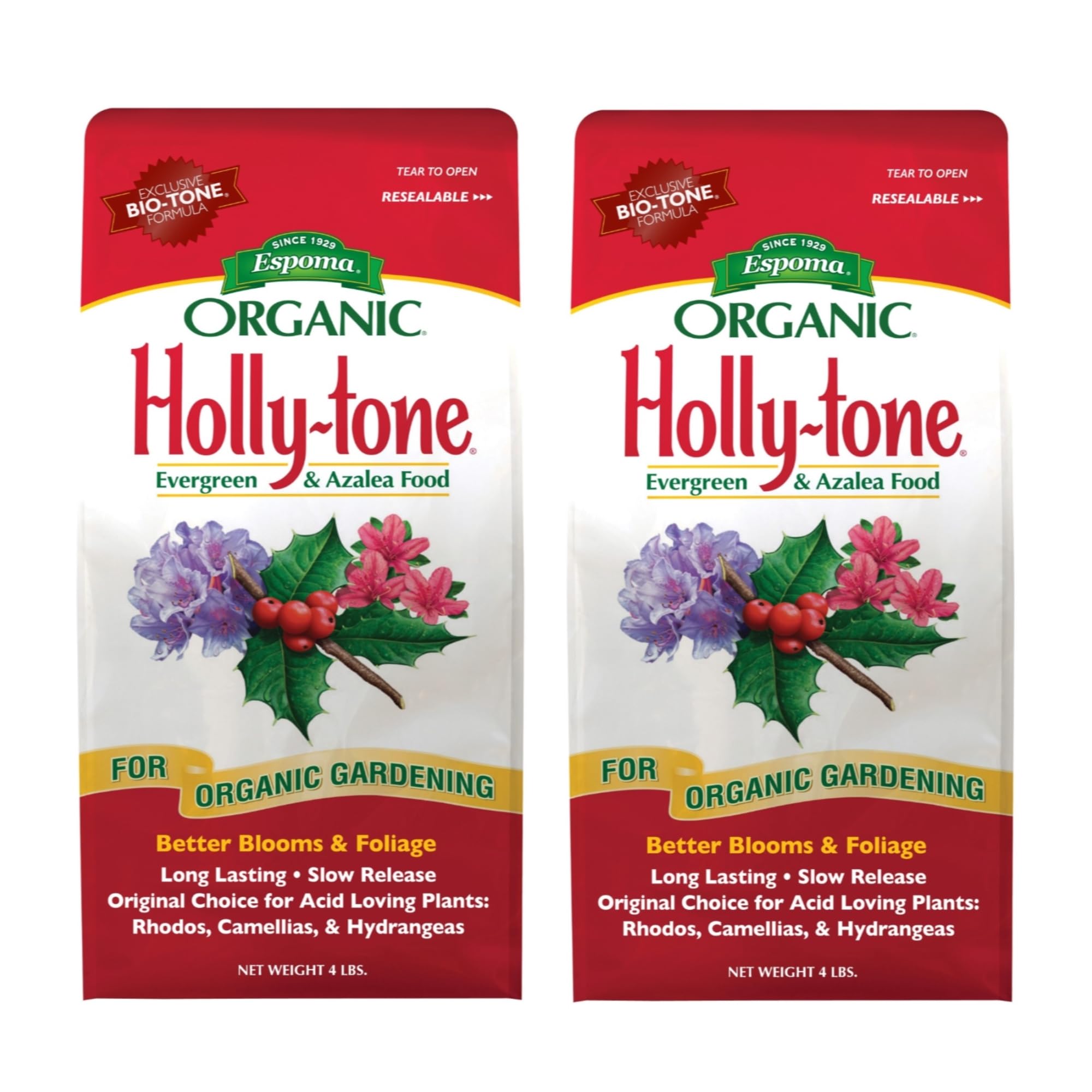
This two-pack of 4-pound bags delivers the same proven Espoma Holly-Tone formula as the giant sack, but in a much more manageable format for the home gardener with a small to moderate number of plants. The 4-3-4 NPK analysis paired with the Bio-tone microbial enhancer makes it an excellent choice for feeding a dozen or so juniper shrubs, bonsai specimens, or container-grown evergreens without committing to a bulk purchase.
Reviewers highlight how quickly rhododendrons and azaleas respond, and juniper owners report similar results — new growth emerges with a rich green hue and the overall plant structure looks tighter. The organic formulation is OMRI-listed, so it fits perfectly into an organic gardening regimen. Since the granules are ready to apply straight from the bag, there is no measuring or mixing headache.
Each bag covers about 40 square feet when used at the recommended rate, so the two-pack gives you plenty to treat a foundation planting of junipers plus a few additional acid-loving shrubs. The only downside compared to the 36-pound bag is the higher per-pound cost, but for gardeners who do not need bulk, this pack offers ideal portion control and freshness.
What works
- Compact bag size is easy to store and handle
- Bio-tone formula boosts soil biology for better uptake
- OMRI-listed for organic gardening compatibility
What doesn’t
- Pack of two costs more per pound than the bulk option
- Only 64 total ounces — not enough for large hedge rows
3. FoxFarm Happy Frog Acid Loving Fertilizer

FoxFarm’s Happy Frog Acid Loving formula stands apart because it includes mycorrhizal fungi and beneficial soil microbes that form a symbiotic relationship with juniper roots. These microorganisms extend the root system’s reach, improving water absorption and unlocking nutrients that would otherwise remain unavailable in the soil. For a juniper struggling with transplant shock or poor establishment, this is a powerful ally.
The slow-release powder provides gentle, consistent feeding that aligns with the juniper’s naturally slow growth cycle, so there is no risk of overwhelming the plant with a sudden nutrient surge. Gardeners using this on container junipers and even blueberries note visible improvement in foliage color and overall vigor within a couple of weeks. The OMRI listing adds confidence for anyone maintaining an organic landscape.
Application is straightforward — work the powder into the top layer of soil around the root zone and water well. Be aware that the 4-pound bag is best suited for targeted feeding of individual specimens rather than broad landscape coverage. The microbial content also means the product has a shorter shelf life if stored improperly, so use it within the same season for maximum effectiveness.
What works
- Mycorrhizal fungi improve root efficiency significantly
- Gentle slow-release formula safe for sensitive junipers
- OMRI-listed for organic gardens
What doesn’t
- Small bag size limits use to a few plants
- Microbes degrade if exposed to heat or moisture long-term
4. Jobe’s Organics Granular All Purpose Fertilizer

The Jobe’s Organics 4-4-4 All Purpose granular fertilizer is notable for its balanced NPK ratio and OMRI-listed organic certification, making it a safe bet for junipers planted in mixed garden beds where acid-specific feeding is not the sole focus. While it does not have the sulfur content of dedicated acid-lover formulas, its gentle organic composition avoids the risk of burning juniper roots, and it supports steady vegetative growth.
Customers have found creative ways to use this product, including brewing a liquid tea by steeping a cup of granules in a gallon of water overnight. This method provides a quick-acting organic boost for junipers showing signs of nitrogen deficiency. Applied dry as a top-dress, it improves soil texture and feeds the microbial community, which indirectly helps maintain a healthy root environment.
The 16-pound bag offers generous coverage for the price, making it a budget-conscious choice for feeding a large garden that includes junipers alongside other ornamentals. Keep in mind that if your soil is already alkaline, you will need to pair this with a sulfur supplement to keep your junipers from developing chlorosis. The granules spread easily with a hand spreader, and they produce minimal dust compared to powdered formulations.
What works
- Large bag provides extensive coverage for the money
- Can be used as dry top-dress or steeped into liquid feed
- No synthetic chemicals — safe for organic gardens
What doesn’t
- Lacks sulfur for active pH reduction
- Balanced NPK is not optimized specifically for junipers
5. Alaska Fish Fertilizer 5-1-1
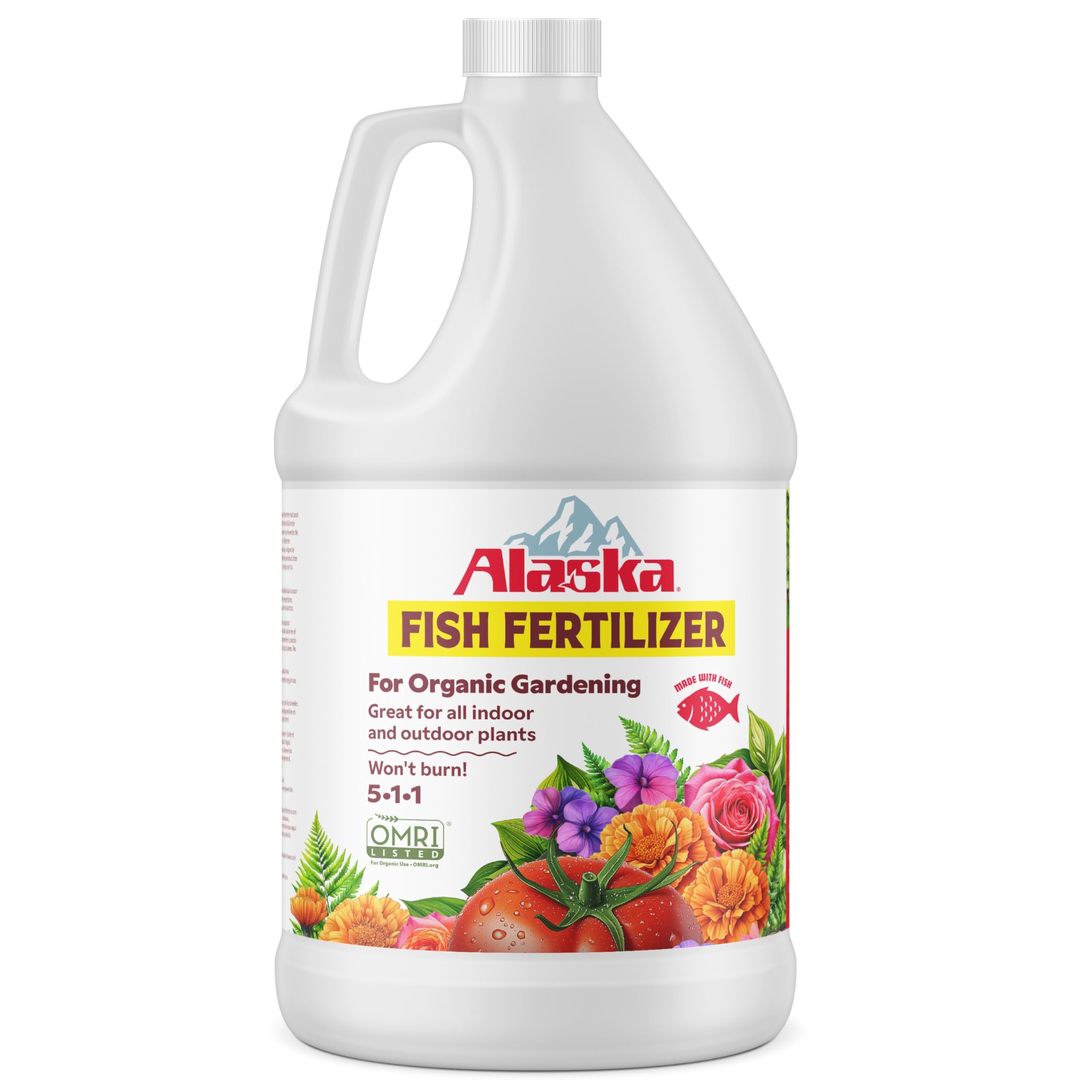
Alaska Fish Fertilizer is a time-tested liquid concentrate with a 5-1-1 NPK ratio that delivers a potent, fast-acting nitrogen dose to junipers that have turned pale or yellow. The nitrogen is derived from cold-processed fish emulsion, which provides a range of micronutrients and amino acids that support rapid chlorophyll production. For a juniper suffering from early-season chlorosis, this liquid formulation works noticeably faster than any granular product.
Reviewers consistently note that a single application greens up plants within a week, making it an excellent rescue treatment. The OMRI-listed organic certification ensures it meets organic standards. Because it is a liquid, you can adjust the concentration easily and target the root zone precisely, reducing waste. The large 115-ounce jug will last several seasons for a modest collection of junipers.
The most significant drawback is the strong fishy odor, which, while natural, can be unpleasant during mixing and application. The smell dissipates within 24 hours outdoors, but indoor or greenhouse use requires good ventilation. Avoid splashing the foliage to prevent leaf burn. This is not a complete long-term feeding solution for junipers — think of it as a targeted supplement for when they need a quick recovery.
What works
- Fast-acting liquid formulation reverses chlorosis quickly
- OMRI-listed organic fish-based nitrogen
- Large jug offers many applications for the price
What doesn’t
- Strong fish odor is off-putting during use
- Requires watering every 3 weeks for sustained results
6. Earth Science Fast Acting Sulfur Granules

The Earth Science Fast Acting Sulfur granules serve a very specific role in juniper care: lowering the soil pH when it has drifted too far into alkaline territory. If you have tested your soil and found a reading above 6.5, this product directly addresses the root cause of nutrient lockout. It uses elemental sulfur with Nutri-Bond Technology to keep the material in place and work efficiently over several weeks.
Gardeners have reported dramatic improvements in hydrangeas and azaleas after application, and junipers respond similarly — the granules gradually acidify the root zone, allowing iron and manganese to become bioavailable again. This is not a fertilizer in the traditional sense; it is a soil amendment that enhances the effectiveness of whatever fertilizer you choose to apply. It is safe for people and pets, which is a practical consideration for residential landscapes.
Application requires even spreading over the soil surface followed by thorough watering to initiate the chemical reaction. Some users note that the pellets take several waterings to fully dissolve, so patience is required — this is not an instant fix. Use it as a seasonal corrective measure in spring, and retest your pH in 30 days to gauge progress. It is also an excellent companion product to pair with any of the granular fertilizers on this list if your soil is stubbornly alkaline.
What works
- Directly lowers soil pH for acid-loving plants
- Nutri-Bond technology reduces runoff and waste
- Safe for lawns, people, and pets after application
What doesn’t
- Granules dissolve slowly; results are not instant
- Requires a soil test before use to determine dosage
7. Jobe’s Tree Fertilizer Spikes 16-4-4

Jobe’s 16-4-4 tree fertilizer spikes offer a completely different approach to feeding junipers: targeted, below-surface nutrient delivery that eliminates surface runoff and the risk of granules washing away. Each spike is hammered into the soil around the drip line, where it slowly releases a high-nitrogen formula directly to the active root zone. For a mature juniper tree or a tall privacy hedge, this method ensures the nutrition goes exactly where it is needed.
The time-release mechanism provides a continuous supply of nutrients for a full growing season, meaning one application in early spring is often sufficient. Users appreciate the convenience — no measuring, no mixing, no spreading. Reports from those with drought-stressed trees show that the spikes helped recovery by delivering nutrients deep into the root zone where surface-applied products could not reach.
The main consideration is the high nitrogen content (16-4-4), which is much richer than most acid-loving formulas. This makes the spikes better suited for established junipers that need a growth push rather than for young or sensitive specimens. In very compacted soil, you may need to pre-drill a pilot hole with a metal rod to insert the spike without bending it. For deep-root feeding convenience, these spikes are hard to beat.
What works
- No runoff or mess — nutrients go directly to roots
- Single application feeds for the entire season
- Ideal for large, established juniper trees and hedges
What doesn’t
- High nitrogen ratio not ideal for young or sensitive plants
- Hard soil may require pre-drilling for insertion
Hardware & Specs Guide
NPK Ratio for Junipers
Junipers benefit from a fertilizer with a moderate nitrogen level to support needle growth without encouraging excessive soft growth. Ratios like 4-3-4 or 5-1-1 provide balanced feeding. The first number represents nitrogen for green growth; the second is phosphorus for root support; the third is potassium for overall vigor. Avoid ratios above 10 in the first number unless you are using spikes for deep-root feeding on mature specimens.
Sulfur and Soil pH
Junipers thrive in soil with a pH between 5.0 and 6.5. Products with at least 4–5% elemental sulfur actively lower soil pH, making micronutrients like iron and manganese available. If your water source is alkaline or your soil naturally drifts above pH 7, a fertilizer with high sulfur content is essential. For severe pH issues, a dedicated sulfur amendment may be necessary alongside the main fertilizer.
Organic Matter and Mycorrhizae
Organic fertilizers improve soil structure and feed beneficial microbes. Products containing mycorrhizal fungi, like the FoxFarm Happy Frog formula, create a symbiotic network that extends root absorption capacity. This is particularly valuable for junipers in sandy or compacted soils where nutrient access is limited. Look for OMRI-listed products if you are maintaining an organic garden.
Release Mechanisms
Granular fertilizers release nutrients over 1–3 months, making them ideal for spring and fall applications. Spikes dissolve over an entire season and are best for deep-root feeding of established trees. Liquid fertilizers work within days and are suited for correcting deficiencies rapidly, but they require repeat applications every few weeks during the growing season. Choose based on your schedule and the specific needs of your junipers.
FAQ
Can I use a general-purpose fertilizer on my junipers?
How often should I fertilize my junipers each year?
What does it mean if my juniper needles are turning yellow?
Can I use fertilizer spikes for young juniper shrubs?
Should I stop fertilizing my junipers in the winter?
Final Thoughts: The Verdict
For most gardeners, the fertilizer for junipers winner is the Espoma Organic Holly-Tone 36 lb Bag because its 4-3-4 NPK ratio plus 5% sulfur delivers the precise acidic feeding profile junipers need, and the bulk size offers the best long-term value for a landscape full of evergreens. If you want the convenience of microbial support for container-grown or bonsai junipers, grab the FoxFarm Happy Frog Acid Loving Fertilizer. And for a fast-acting rescue of chlorotic or pale junipers, nothing beats the Alaska Fish Fertilizer 5-1-1 liquid concentrate.