
Every gardener knows the chaos: a shoebox overflowing with half-empty seed packets, wrinkled labels, and a frustrating search for that one specific tomato variety just as planting season hits. A proper seed box turns that mess into a system — protecting your collection from moisture, light, and disorganization so your seeds stay viable and your garden plan stays on track.
I’m Rikta — the co-founder and writer behind Lawn Gear Lab. I’ve spent hours digging through customer feedback and spec sheets across dozens of models to separate durable, well-designed storage from flimsy alternatives that waste space and let humidity in.
Whether you need something compact for a windowsill or a high-capacity system for a full seed library, this guide to the best seed boxes breaks down every material, closure, and compartment scheme worth considering before you buy.
How To Choose The Best Seed Boxes
Picking the right seed box isn’t just about capacity — it’s about matching the material, closure system, and internal layout to your specific seed collection size and storage environment. Here are the three factors that make the biggest difference in real-world use.
Material: Metal vs. Wood vs. Fabric vs. Plastic
Powder-coated galvanized steel offers the best rust resistance and light blockage, making it ideal for damp basements or outdoor sheds. Bamboo looks elegant on a kitchen counter but requires periodic oiling to prevent cracking in dry climates. Faux-leather binders are lightweight and portable but offer no crush protection — they depend on plastic pockets inside to shield seeds from moisture. Clear plastic organizers let you see everything at a glance but expose seeds to light unless housed inside an opaque outer box. Match your material to your primary threat: humidity, light, or physical crushing.
Compartment Layout and Pocket Fit
Standard seed packets measure roughly 3 by 5 inches, so the box interior must be tall enough to let them stand upright without the lid pressing down. Multi-compartment designs with removable dividers offer flexibility — you can dedicate sections by planting season or crop type. Pay close attention to the pocket size in binder-style systems: a 4-pocket sleeve that is 5.5 by 4 inches fits most commercial packets, but deep-cut square packets from some heirloom suppliers may require larger individual sleeves. Boxes with a single open tub force you to stack packets, making it hard to flip through your collection quickly.
Closure Type and Seal Security
A secure closure does two jobs: keeps the lid shut during transport and blocks light and moisture when closed. Spring-loaded latches with a metal catch are the most durable for frequent use. Flip-top lids on individual sleeves prevent seeds from spilling when you turn a page in a binder. Zippered bags offer a soft seal but no structural protection against being crushed under a stack of tools. Safety locks with a latch-and-loop system add an extra barrier against accidental opening — useful if you carry the box to a community garden plot. For long-term seed storage, a box with a gasket or double-lid design dramatically reduces humidity intrusion compared to a simple friction-fit lid.
Quick Comparison
On smaller screens, swipe sideways to see the full table.
| Model | Category | Best For | Key Spec | Amazon |
|---|---|---|---|---|
| Orionstar Metal Organizer | Metal | Heirloom protection on the go | 4 compartments, 13.2×7.3×5.2 in | Amazon |
| Intarsio Bamboo Box | Bamboo | Countertop display with double seal | 10mm side walls, 4 compartments | Amazon |
| RGJ Metal Storage Box | Metal | Dust-free vials and tool storage | 60 vial slots, 3 compartments | Amazon |
| MUQING Seed Binder | Faux Leather | Large collections in a portable book | 200 pockets, 50 sleeves | Amazon |
| IDekooror Photo Box | Plastic | Mass storage for seed packets | 18 inner cases, 16×13.5×6 in | Amazon |
| jixsloft 60-Slot Organizer | Plastic Vials | Small seeds in individual containers | 60 vials, zippered bag | Amazon |
| Katai Steel Tin | Galvanized Steel | Compact starter with monthly dividers | 6.2×4.3×4.7 in, flip-top lid | Amazon |
In‑Depth Reviews
1. Orionstar Metal Seed Storage Organizer
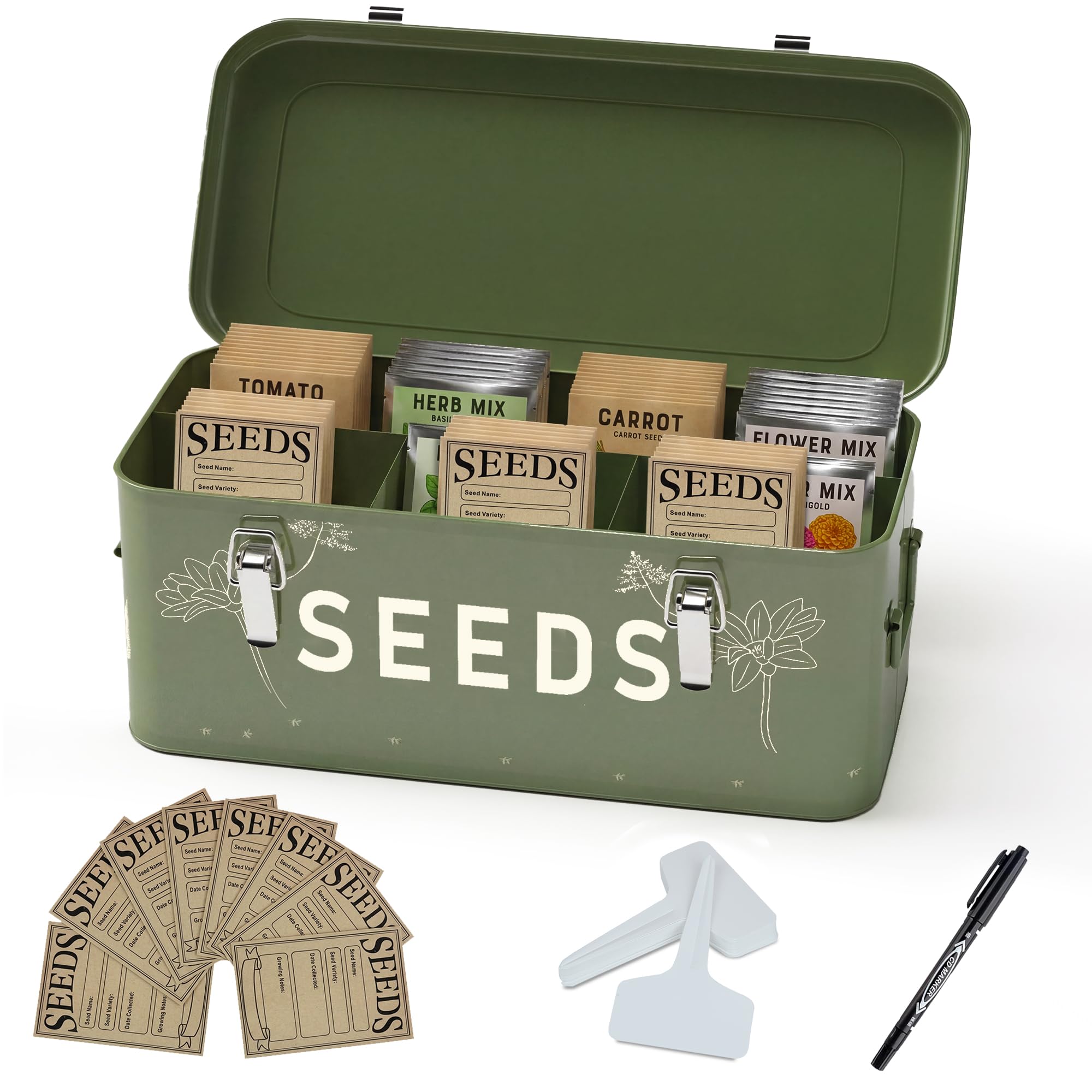
The Orionstar takes the top spot because it balances heavy-duty steel construction, a smart four-compartment layout, and a vintage dark green finish that looks at home in any potting shed. Each compartment stands 5.2 inches tall — enough room for standard 3×5-inch packets to stand upright on the shelf instead of getting crushed under the lid. The integrated spring-latch system keeps the lid firmly closed even when you carry the box across uneven terrain to a community plot.
Inside, the 30 included seed envelopes and waterproof plant labels get you started immediately, and the removable marker pen lets you label each section without hunting for a separate writing tool. The bottom compartments are deep enough to accommodate small hand tools like a trowel or pruning shears, turning the box into a portable garden workstation rather than just a container. Powder-coated steel resists rust far better than tin or cardboard alternatives, so this organizer holds up through multiple seasons of humid shed storage.
Some users note that the price sits above basic plastic boxes, but the all-metal build and included extras justify the step up for anyone serious about seed preservation. The vintage lettering and floral detailing make it a gift-worthy option for gardeners who value aesthetics as much as function. If you need a single box that handles everything from heirloom tomatoes to basil to bean seeds, this is the pick.
What works
- 5.2-inch height lets standard seed packets stand upright for browsing
- Rugged spring-latch system stays closed during transport
- Powder-coated steel outlasts plastic and cardboard alternatives
What doesn’t
- Metal corners can dent if dropped on concrete
- Included envelopes are thick but may not fit extra-large packets
2. Intarsio Bamboo Wood Seed Organizer
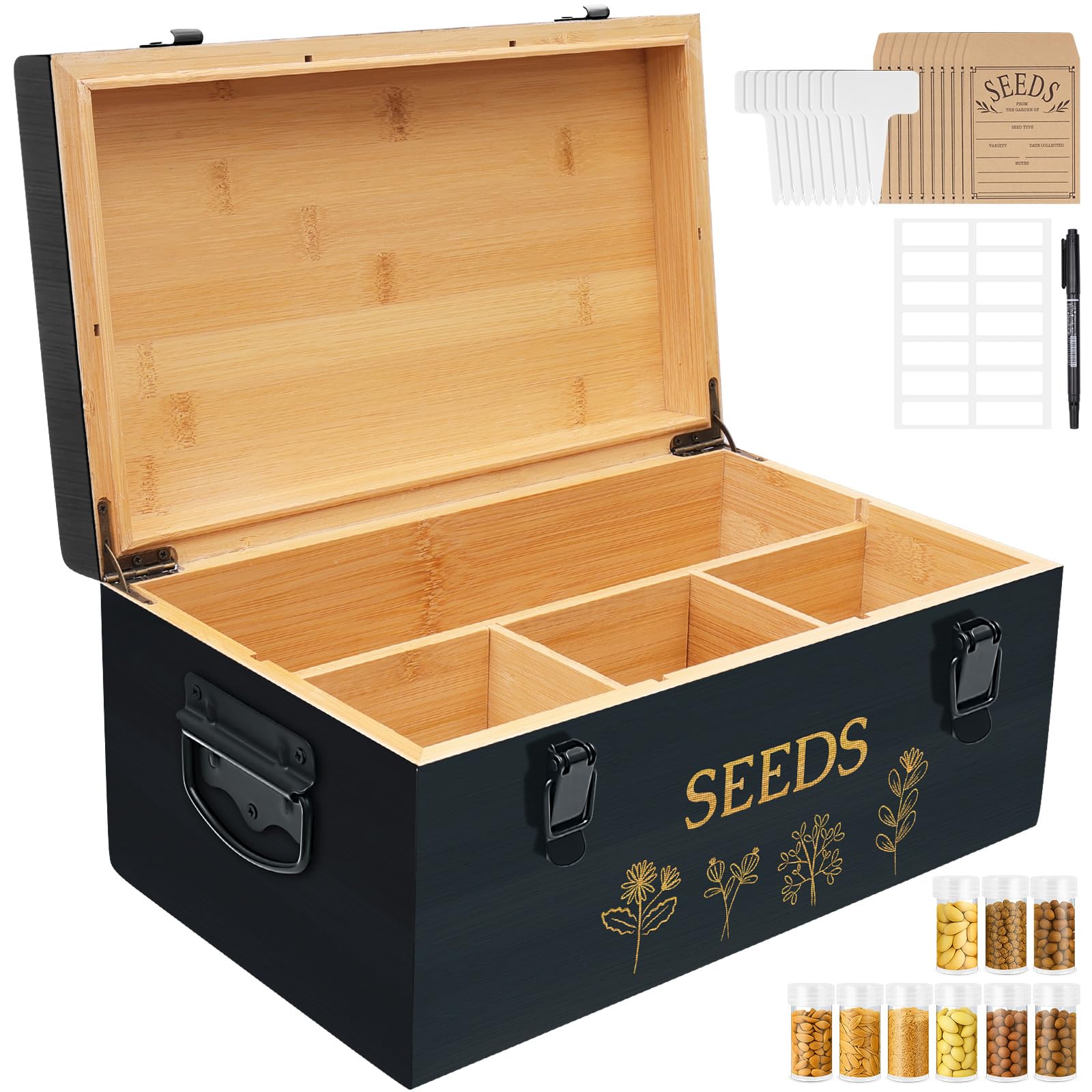
The Intarsio brings a double-layer lid design that is rare in the seed box category — a full inner lid sits beneath the main cover, creating an extra barrier against humidity and light. Combined with 10mm-thick bamboo side walls, this box feels substantially heavier and more protective than thin metal tins or fabric binders. The farmhouse-style floral engraving and “SEED” lettering make it a piece you’d leave out on a kitchen counter without a second thought.
Measuring 13.2 by 7.8 by 5.9 inches, the interior splits into four compartments via removable dividers, so you can reconfigure the layout for large seed packets on one side and small tools or vials on the other. The kit includes 10 envelopes, 10 plant labels, and 9 seed bottles — enough to get a medium collection organized in one session. Coated metal safety latches and reinforced handles feel durable, and the natural bamboo construction avoids the rust issues that haunt steel boxes in coastal climates.
The aesthetic focus comes with a maintenance trade-off: bamboo needs periodic conditioning with cutting board oil to prevent drying and cracking, especially in low-humidity homes. The price also sits at the higher end, but the craftsmanship and double-seal design deliver genuine long-term value for gardeners who store seeds year-round on an open shelf.
What works
- Double-layer lid adds meaningful moisture and light protection
- 10mm-thick bamboo walls absorb impacts better than thin metal
- Removable dividers let you customize compartment sizes
What doesn’t
- Bamboo requires periodic oiling to prevent cracking
- Higher price limits it to dedicated seed savers
3. RGJ Metal Seed Storage Box
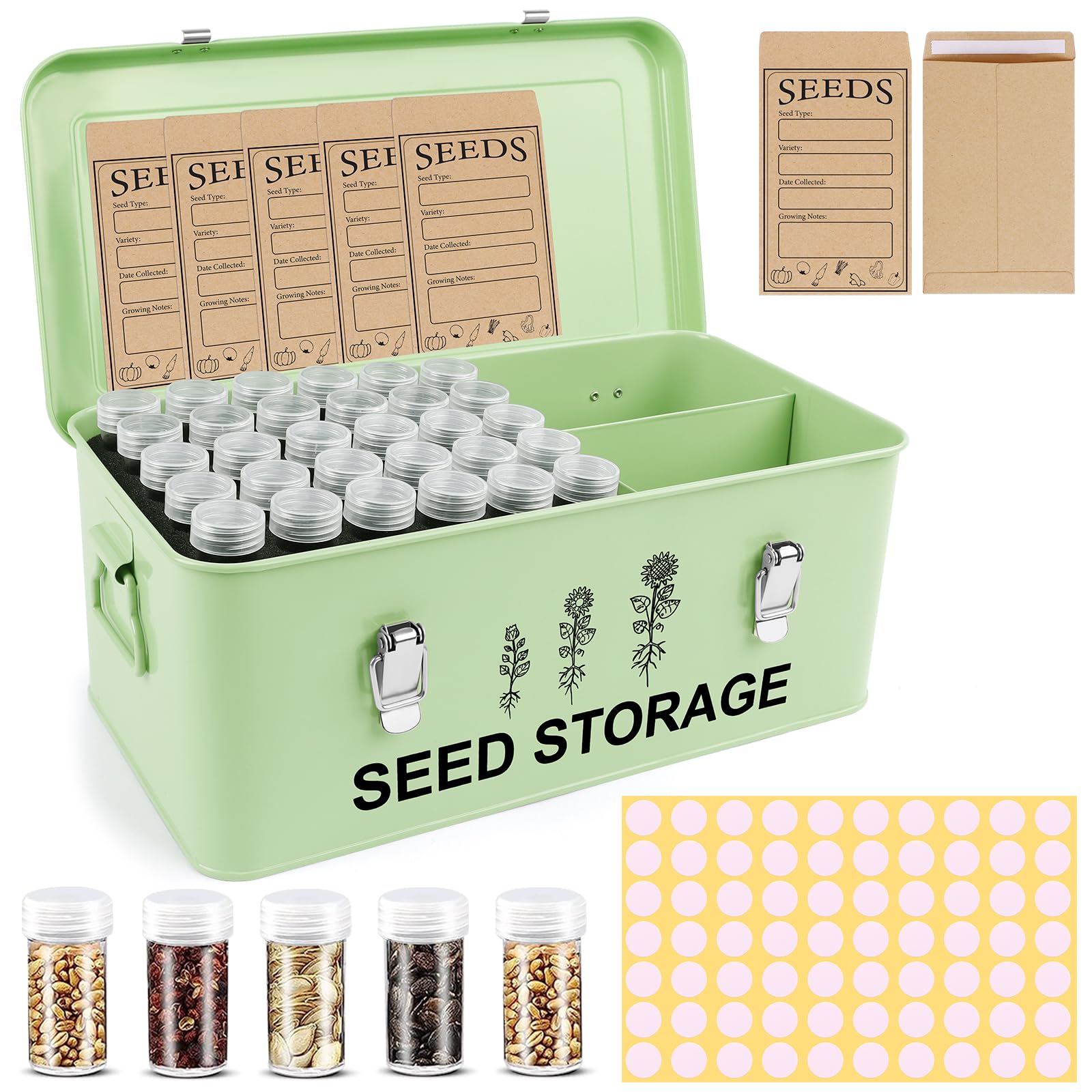
The RGJ model builds like an ammo box — powder-coated metal with two safety locks that ratchet down tightly, creating a near-light-proof seal. Inside, the largest compartment holds a high-density sponge pre-cut with 60 holes for plastic vials, which is ideal for tiny seeds like lettuce, poppy, or petunia that would otherwise get lost in an open packet. The remaining two compartments offer open space for seed envelopes, plant labels, or small hand tools.
Rust-proof coating and a wipe-clean surface mean this box survives damp potting benches and accidental water spills without degrading. The handle placement on the top and both sides makes it easy to grab from any angle, and the locking latches give you confidence that the contents won’t spill if the box gets jostled in a car trunk. The kit includes 60 seed envelopes and 64 label stickers, so you can set up a full system the day it arrives.
The main drawback is that the 60 vials are sized for small seeds — large bean or pea seeds won’t fit inside the tubes. You’ll need to stash bulky packets in the open compartments instead. The sponge also holds the vials firmly but can shed small foam particles over time. For anyone who starts most of their garden from fine seeds, this is an exceptional organizational tool.
What works
- 60 individual vials prevent tiny seeds from mixing or getting lost
- Sponge insert eliminates vial-to-vial collisions during transport
- Safety locks seal out light and reduce moisture intrusion
What doesn’t
- Vials are too narrow for large bean or pea seeds
- Sponge can shed foam particles after repeated use
4. MUQING Seed Storage Organizer Binder
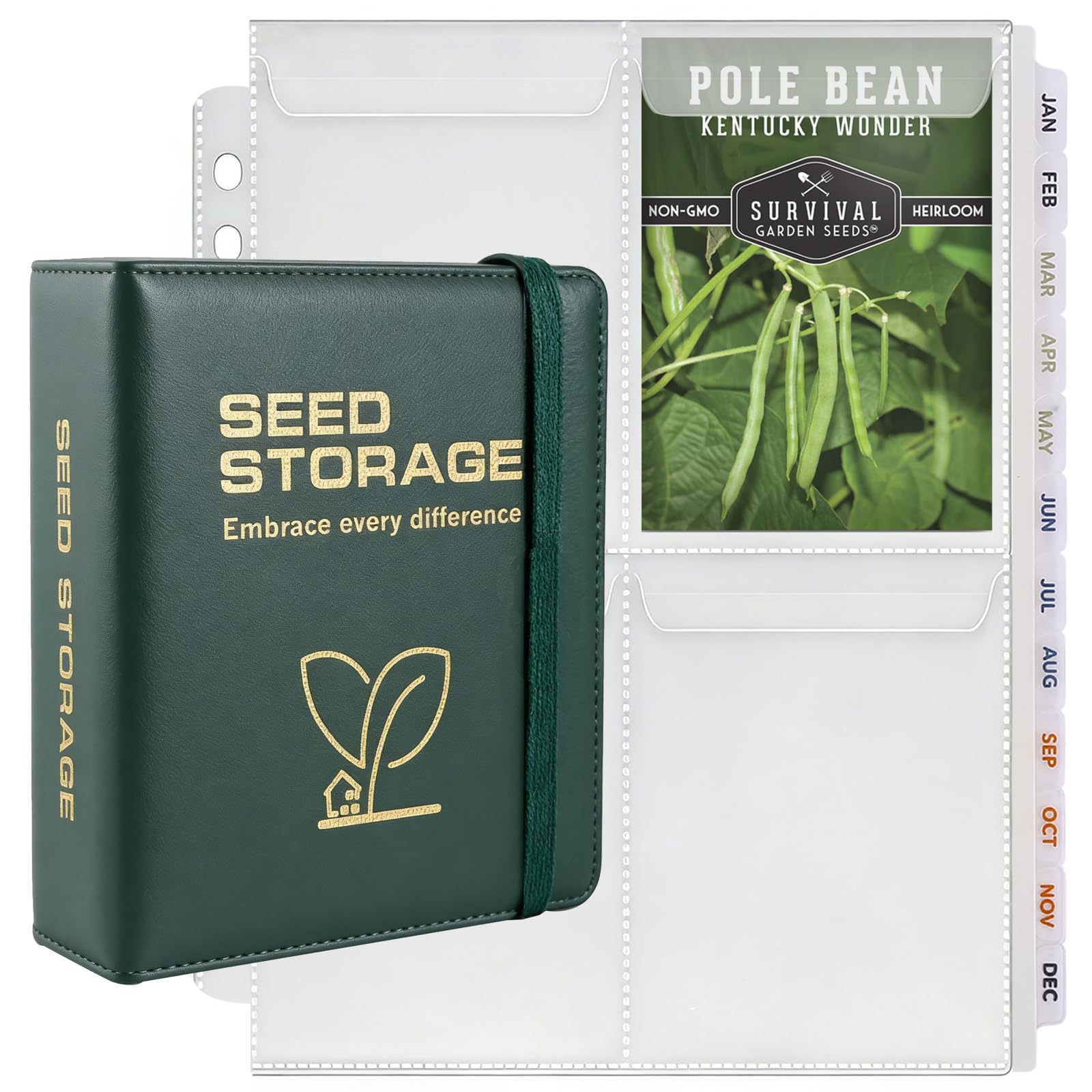
The MUQING binder rethinks seed storage as a book you flip through rather than a box you dig into. Fifty double-sided sleeves offer 200 pockets, each secured by a flip-top lid that keeps seeds from spilling even when you turn the page upside down. This is a massive capacity upgrade over most boxes, and the 4-season color-coded divider system — spring green, summer blue, fall orange, winter black — helps you plan planting schedules without separate calendar notes.
The faux-leather cover with embossed “SEEDS” lettering gives the binder a polished look, and the heavy-duty D-ring mechanism opens wide enough to add extra pages later. The transparent plastic pages are thick enough to resist tearing, and the elastic closure strap keeps everything compressed when the binder is shelved. Standard seed packets slide into the 5.5-by-4-inch pockets without folding, and you can store two packets in one pocket if you have duplicates of the same variety.
Because the pockets are plastic, the system is not completely airtight — moisture can still migrate inside if stored in a damp basement. Some users recommend drying seeds thoroughly before cataloging them in the binder, then placing the whole binder inside an airtight tote for long-term storage. For sheer organization visibility and ease of browsing, the binder beats any opaque box.
What works
- 200-pocket capacity handles large seed libraries without refills
- Flip-top lids prevent spills when pages are turned upside down
- Color-coded seasonal dividers keep planting schedules on track
What doesn’t
- Plastic sleeves are not fully airtight for humid environments
- Faux-leather cover offers no crush protection for seeds
5. IDekooror Photo Storage Box

This box is technically designed for photos, but its dimensions make it a dark-horse champion for seed storage. With 18 individual inner keepers, each measuring 7 by 5 by 1 inch, you can sort seed packets by crop family, planting month, or supplier — then stack the keepers inside the main latch-secured case. The polypropylene construction is acid-free and lightweight, and the transparent lids on each inner case let you identify sections without opening the main box.
The main case measures 16 by 13.5 by 6 inches, giving you enough room to store hundreds of seed packets alongside labels, pens, and even small garden scissors. The secure latches on both the outer case and each inner keeper prevent dust and humidity from reaching the contents, and the stackable design means you can add a second box as your collection grows without needing more shelf footprint. The opaque black exterior blocks light effectively, which is critical for maintaining seed viability over multiple seasons.
The trade-off is that this is not a purpose-built seed box — there are no pre-printed dividers, no seed envelopes included, and no planting calendar. You have to build your own organization system using labels and dividers. For anyone with a large collection who wants maximum flexibility and expansion potential, this box offers more raw capacity for the money than any garden-branded alternative.
- 18 removable inner cases provide customizable category sorting
- Acid-free polypropylene protects seeds from chemical degradation
- Stackable design scales easily as your garden collection grows
- No pre-printed dividers or envelopes included — you supply the system
- Individual inner case latches feel less robust than the main box latch
6. jixsloft 60-Slot Seed Storage Organizer

The jixsloft organizer strips the concept down to essentials: 60 plastic vials with screw-top lids, a soft zippered bag, and a set of label stickers. Instead of a rigid box, the vials nest inside foam slots that are held by a fabric case, making this the lightest option in the lineup — perfect for gardeners who carry seeds between home, greenhouse, and a community plot. The zipper closure on the bag keeps vials contained and blocks most light, though the fabric offers no impact protection against heavy items stacked on top.
Each vial has a 0.9-inch diameter opening that’s wide enough to accept small to medium seeds like tomato, pepper, or bean easily. The screw-top lids are more secure than snap-shut alternatives, and the interior foam keeps vials from rattling against each other during transport. The included 64 label stickers come in multiple colors, which helps you build a simple color-code system by crop type or planting priority.
Where this organizer falls short is large seeds: anything bigger than a lima bean won’t fit through the vial opening, and the bag lacks any rigid structure, so packets stored in the internal pocket can get bent. The zipper also tends to snag on the foam if you overstuff the bag. For a lightweight, portable system focused on small seeds, this is a solid budget-friendly choice that does the job without taking up shelf space.
What works
- Screw-top vials prevent spills and keep seeds dry far better than snap lids
- Foam insert eliminates rattle and protects vials during travel
- Zippered bag collapses flat when empty, saving storage space
What doesn’t
- Vial diameter is too narrow for large bean or squash seeds
- Fabric bag provides no crush protection under weight
7. Katai Steel Seed Storage Box Organiser

The Katai tin keeps things simple: a single compartment galvanized steel box with monthly divider cards and a pencil, designed for the gardener who wants to sort seeds by sowing date and nothing else. The powder-coated green finish is charming and the compact footprint — 6.2 by 4.3 by 4.7 inches — fits into a kitchen drawer or a shelf nook without crowding out other items. The flip-top lid snaps shut with a firm click and keeps light out effectively.
The set includes 20 blank seed envelopes and 12 monthly divider cards, which gives you a clear system: drop each seed packet behind the month when it should be planted. This eliminates the common problem of discovering forgotten seeds past their prime. The steel body is durable enough to survive being stacked under pots or tools, and the powder coating resists light moisture, though it is not designed for wet environments.
The biggest constraint is size: the interior is only 4.7 inches tall, so standard 5-inch seed packets must be folded or laid flat, reducing visibility and making it hard to flip through your collection. Some users also report that the lid fit can be loose out of the box, though it can be tightened by bending the lid edges inward. For a beginner with fewer than 20 packet varieties who wants a charming, date-sorted system, this is a strong budget-friendly entry point.
What works
- Galvanized steel resists rust longer than plain tin alternatives
- Monthly divider cards prevent missed planting windows
- Compact size tucks neatly into drawers or small shelves
What doesn’t
- 4.7-inch height forces tall seed packets to be folded or laid flat
- Lid fit can be loose out of the box and may need manual adjustment
Hardware & Specs Guide
Steel vs. Bamboo vs. Faux Leather
Powder-coated steel offers the best barrier against light and physical crushing, with galvanized varieties adding rust resistance for damp environments. Bamboo provides natural humidity buffering but requires oiling to maintain its seal over years of use. Faux-leather binders are the lightest option and excel at visual organization but offer no rigid protection against drops or crushing. The choice hinges on where you store the box: damp basements demand steel or sealed plastic; dry kitchens can accommodate bamboo; binders work best inside climate-controlled homes.
Compartment Height and Packet Orientation
Standard seed packets range from 4 to 6 inches in height. A box with an internal height of at least 5 inches allows packets to stand upright, making it easy to read labels without removing them. Boxes shorter than 5 inches force packets to lie flat or fold, which reduces visibility and can crease the seed packet label. If you prefer browsing through your collection like a file cabinet, prioritize a box tall enough for upright storage — anything under 13 inches long by 5 inches tall will require stacking.
Closures and Seal Integrity
Spring-loaded metal latches provide the most consistent closure pressure and the longest lifespan in frequent-use scenarios. Flip-top plastic lids on individual sleeves prevent seed spills when a binder page is turned, and zippered fabric bags offer a light-tight seal but no structural rigidity against stacking. Double-layer lids with a gasket create a near-airtight seal that dramatically slows moisture ingress — critical for gardeners in high-humidity regions who store seeds for more than one season.
Vial and Pocket Dimensional Limits
Bulk seed organizers that use plastic vials typically accept diameters up to 0.9 inches and heights up to 2 inches, which fits 95% of flower and vegetable seeds but excludes large squash, bean, and pea varieties. Binder sleeves with 4-inch by 5.5-inch pockets accommodate most retail seed packets, though heirloom suppliers sometimes use wider or taller packaging that requires a larger page. Always check the packet size of your seed supplier before committing to a system — a box that almost fits is worse than a box that fits loosely.
FAQ
How do I prevent my seeds from getting moldy inside a seed box?
Can I store all my seed types together in one box, or do they need separate containers?
How many seed packets does the average home gardener actually need to store?
Final Thoughts: The Verdict
For most gardeners, the seed boxes winner is the Orionstar Metal Organizer because its steel build, upright packet storage, and spring-latch closure offer the best all-around protection and organization for the price. If you want a countertop aesthetic with superior humidity defense, grab the Intarsio Bamboo Box. And for massive seed collections that demand quick browsing without digging, nothing beats the MUQING Seed Binder with its 200-pocket capacity and color-coded seasonal dividers.