
A spongy lawn that squishes underfoot is a classic sign of thatch—a dense mat of dead grass, roots, and organic debris blocking water and air from the soil. A thatching rake is the manual weapon of choice to rip that layer out, restore turf health, and save the cost of renting a power dethatcher. The trick is finding a tool with tines aggressive enough to penetrate without destroying the living grass beneath.
I’m Rikta — the co-founder and writer behind Lawn Gear Lab. I haven’t spent a career landscaping; instead, I’ve logged hundreds of hours comparing tine geometry, handle materials, and head widths across dozens of dethatching rakes, cross-referencing real owner feedback to find the models that actually hold up to repeated yard work.
The two most critical specs I look for in any best thatching rake are the number and shape of steel tines and the overall effective rake width, since both dictate how much dead material you extract per pass and whether you’ll spend the evening untangling grass clumps.
How To Choose The Best Thatching Rake
Thatching rakes look similar to standard leaf rakes, but their curved, sharp tines are designed to dig into the turf and pull upward, slicing through the thatch layer without ripping up healthy grass roots. The wrong choice will either slide over the thatch or gouge your lawn, so knowing the key specs is essential.
Tine Material and Count
Carbon steel and manganese steel are the preferred grades for dethatching tines because they resist bending when you lean into thick, wet thatch. Standard 19-tine models offer a good balance of penetration and debris pickup, while 24-tine designs (like the premium Bully Tools) cover more ground but require more arm strength to pull through compacted layers.
Head Width and Handle Length
A 15-inch head is nimble for flower beds and tight corners, but a 17- or 23-inch head accelerates work on open lawns. Handle length between 58 and 72 inches lets you stand upright while raking—any shorter and you’ll be hunched over, inviting back pain. Look for sectional handles that allow you to choose the length that matches your height.
Adjustable vs. Fixed Tine Angle
Some thatching rakes offer a pivoting head that lets you set the attack angle of the tines relative to the handle. This is useful when switching between aggressive dethatching (steeper angle) and light surface debris removal (shallower angle). Fixed-head rakes tend to be more robust under heavy pressure, but you lose that fine-tuning.
Quick Comparison
On smaller screens, swipe sideways to see the full table.
| Model | Category | Best For | Key Spec | Amazon |
|---|---|---|---|---|
| Bully Tools 24-Tine | Premium Steel | Large lawns & commercial use | 23.5-inch head / 24 tines | Amazon |
| Bow Rake 68-Inch (BlumeTrec) | Dual-Sided Bow | Multi-tasking soil & thatch work | 17-inch head / 17 tines | Amazon |
| Walensee Dethatcher | Adjustable Handle | Flexible length for varying user height | 15-inch head / 19 tines | Amazon |
| Dremmt Leveling Rake | Lawn Leveler | Leveling after dethatching | 30-inch plate / 72-inch handle | Amazon |
| YEELOR Thatch Rake | Lightweight Spring | Low-effort debris pickup | 17-inch head / 42 tines | Amazon |
| BARAYSTUS Thatch Rake | Angle Adjustable | Customizable attack angle | 15-inch head / 19 tines | Amazon |
| TCBWFY Dethatcher | Compact Finish | Narrow beds & small lawns | 15-inch head / 19 tines | Amazon |
In‑Depth Reviews
1. Bully Tools 24-Tine Thatching Rake

Bully Tools is the rare brand that proudly stamps “Made in USA” on its steel, and the 24-tine thatching rake lives up to that reputation. The head is forged from heavy-gauge domestic steel with a powder-coat finish that resists rust even after repeated exposure to wet grass clippings. At 23.5 inches wide, this is the widest head in the roundup, designed to cover large sections of lawn fast—but that width also demands more muscle to pull through thick thatch.
The 68-inch fiberglass handle uses a triple-wall construction that prevents splintering, and the rubber grip at the top provides a secure hold even when your palms get sweaty. The head-to-handle connection is overwelded, which is the single most common failure point on cheaper rakes; owners report that this joint stays tight after years of seasonal abuse. Several verified buyers mention using this rake for fire mitigation work and clearing heavy brush, confirming its commercial-grade resilience.
Where this rake sacrifices is weight: at nearly 4 pounds, it’s noticeably heavier than carbon-steel alternatives, and some users wish the handle were 6–12 inches longer for better leverage during thatching sweeps. It remains the best choice for someone with a half-acre or larger lawn who values toughness over lightweight convenience. The powder-coat finish also resists the cold-weather brittleness that plagues some painted rakes in freezing conditions.
What works
- Overwelded head joint eliminates the wobble that kills most rakes
- 24 tempered-steel tines cover ground faster than any 15-inch model
- Fiberglass handle won’t splinter or corrode like wood
What doesn’t
- Heavier than plastic-handle competitors—arm fatigue is real
- Fixed head offers no adjustable tine angle for fine debris work
2. Bow Rake, 68-Inch Adjustable (BlumeTrec)
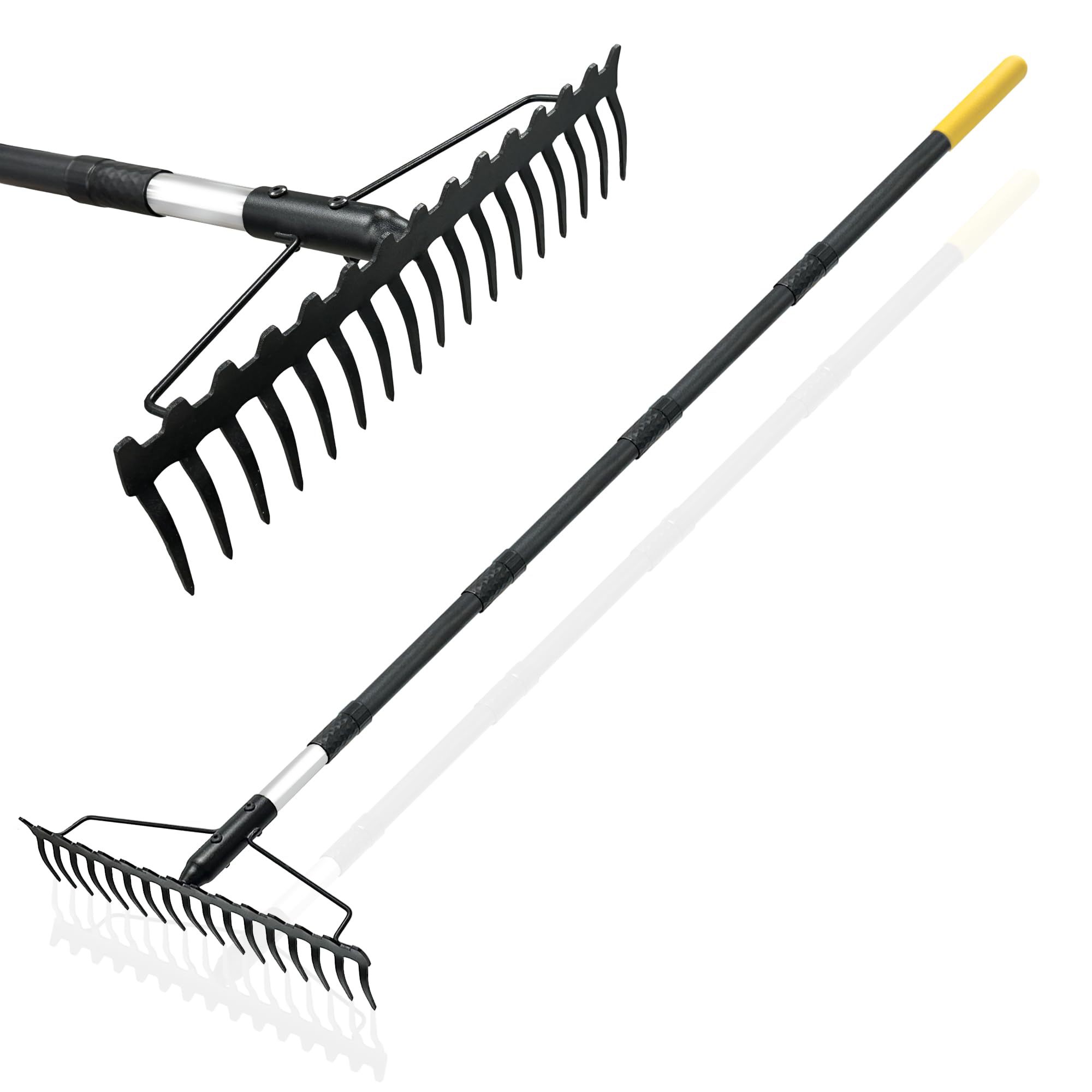
This BlumeTrec bow rake brings a clever dual-sided head to the dethatching game. One side features 4-inch-long tines that penetrate compacted soil and lift thatch, while the short-tine side handles leveling, spreading mulch, and smoothing gravel. Rotating the head takes two seconds, effectively giving you two separate tools without swapping heads. Manganese steel construction ensures the tines resist deforming even when you hit hidden roots or stones.
The 68-inch overall length is achieved through a detachable multi-section pole that lets you adjust the handle for different user heights or storage needs. Verified owners consistently praise the easy assembly—the threaded connection and screw-mounted head install in minutes—and the soft non-slip grip that prevents blisters during extended sessions. One reviewer specifically calls out that the handle is long enough for a 6-foot user to stand upright while raking, reducing lower back strain.
At 17 inches wide, the head is not the fastest for large open areas, but the tine spacing is optimized to avoid ripping out healthy grass roots while still grabbing thatch and debris. A few owners note that the rake is not ideal for massive lawns due to the moderate width, but for a homeowner with a quarter-acre lot who needs multi-role performance, this is the most versatile dual-sided option. The modular design also breaks down for compact shed storage.
What works
- Dual-sided head handles both dethatching and leveling without switching tools
- Manganese steel tines resist bending better than standard carbon steel
- Adjustable handle length fits users from 5’4” to 6’2” comfortably
What doesn’t
- 17-inch width is slower than 23-inch rakes for large lawns
- Short tine side is less effective on deep, dense thatch layers
3. Walensee Thatch Rake

Walensee focuses on user comfort with a sectional stainless-steel handle that can be set to approximately 40, 55, or 70 inches. This three-way adjustability makes it easy for shorter or taller users to find a position that keeps their spine straight while raking, directly reducing the next-day soreness that comes from a mismatched tool. A cushioned non-slip grip further improves control, especially when your hands start to fatigue halfway through a lawn.
The dual-sided head is built from quenched manganese steel with a protective powder-coat finish. One side functions as a dedicated thatcher rake with 19 curved tines that lift dead grass and surface buildup; the other side loosens topsoil for overseeding or light cultivation. Owners on St. Augustine and Bermuda grass report effective thatch penetration after a short learning curve with the angle and stroke technique. Several users filled a 96-gallon bin during a single session, which speaks to the rake’s extraction capacity.
The 15-inch head width is on the narrower side—some owners explicitly wish for a 20- to 24-inch version—so expect to make more passes than you would with a wider rake. The twist-lock handle sections also require occasional retightening during use, and the nylock nuts on the head need periodic checking to prevent loosening. Still, the lightweight feel and adjustable length make this the most back-friendly option for smaller yards or older gardeners.
What works
- Three handle lengths accommodate a wide range of user heights perfectly
- Manganese steel tines hold an edge and resist rust well
- Dual head lets you switch between thatching and cultivating instantly
What doesn’t
- 15-inch head requires more passes on lawns larger than 5,000 sq ft
- Handle sections can unscrew during aggressive raking motion
4. Dremmt Lawn Leveling Rake

While not a traditional thatching rake, the Dremmt leveling rake is the perfect second tool for any dethatching project. After you rip out the dead mat, you typically need to spread topsoil, sand, or compost to fill the divots exposed by thatch removal. The Dremmt uses a 30-inch-wide stainless steel plate that glides over the surface, knocking down high spots and pushing material into low areas in a single pass.
The 72-inch handle is ergonomically curved so you can stand completely upright while pulling the tool across your lawn, which is a massive upgrade over standard landscape rakes that force you to hunch. The 2mm-thick steel plate has a dead-weight stability that prevents the head from flipping over when it hits a dirt clod—a common frustration with cheap levelers. Owners note that the weight helps press down high spots while the wide head covers ground quickly, making leveling noticeably faster than with a bow rake.
This is a specialist tool: it does not have tines and cannot pull thatch. Its worth lies in the post-dethatching cleanup phase. Assembly is straightforward with included tools, though some owners mention the included gloves are low quality. The main tradeoff is weight—at over 10 pounds, this is the heaviest item here, but that heft is precisely what makes it effective at smoothing compacted soil. For anyone serious about achieving a carpet-like lawn finish after dethatching, this rake is essential.
What works
- 30-inch wide plate covers huge areas in very few passes
- Heavy steel construction provides the weight needed to flatten bumps
- Ergonomic handle keeps you upright, eliminating back strain
What doesn’t
- Not a thatching tool—only useful after thatch is already removed
- Heavy and cumbersome for small or irregularly shaped lawns
5. YEELOR Thatch Rake
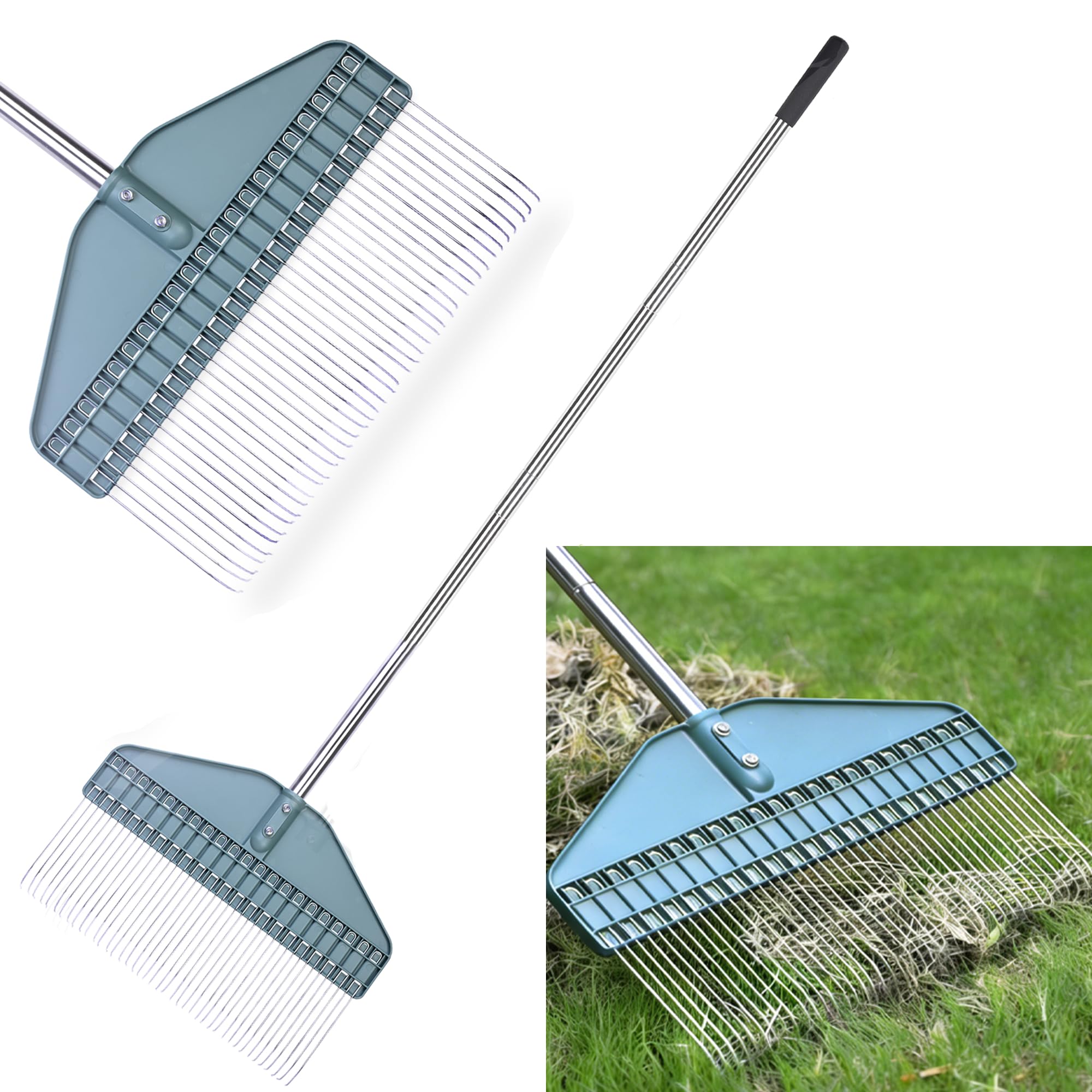
YEELOR takes a different approach to dethatching: instead of fewer, thicker tines, it uses 21 pairs of spring steel tines (42 total) arranged in a semi-circular hook pattern. This design allows the rake to lift thatch, dead grass, leaves, and pine needles using significantly less downward force than traditional rakes, which translates to less arm fatigue over a long afternoon. The company claims the hook shape improves cleaning efficiency by 45%, and owner reviews confirm it grabs small debris like acorns and “monkey balls” that standard tines tend to slide past.
The handle extends to 66 inches using a segmented stainless steel pole with nylon threads that screw together tightly. A dual-screw reinforced connection attaches the head, providing greater stability than single-screw designs. Owners report that the squeeze-style adjustment on the handle works well for changing length, though some note the sections can loosen during heavy use—a dab of thread-locker solves this. At only 2.5 pounds, it’s the lightest dedicated thatch rake in this lineup, making it ideal for users with limited arm strength or larger properties where weight adds up over time.
The tradeoff for the lightweight build is that the spring tines can clog more easily with wet thatch since the tine spacing is narrower than on standard steel rakes. A few reviewers mention having to stop frequently to clear packed grass from between the tines. The head is also made from reinforced polycarbonate plastic rather than all-metal, which keeps weight down but may concern buyers who prefer an all-steel construction. For quick debris cleanups and light-to-moderate thatch, this rake excels.
What works
- 42 spring tines grab even tiny debris without aggressive downward force
- At 2.5 lbs, fatigue is minimal even after hours of use
- Dual-screw head connection is more secure than single-bolt designs
What doesn’t
- Narrow tine spacing clogs frequently with damp, heavy thatch
- Polycarbonate head is less durable than all-metal alternatives
6. BARAYSTUS Thatch Rake

BARAYSTUS differentiates itself with a head that pivots to multiple angles, letting you dial in the optimal tine attack for your specific lawn conditions. Stiff, dry thatch responds best to a steeper angle, while a shallower setting works for light debris and loosening compacted soil. The 19 curved carbon steel tines are heat-treated and powder-coated for rust resistance, and owners in the Pacific Northwest report that this rake is particularly effective at tearing out deep moss layers—a common problem in shaded, wet climates.
The handle is made of four-section stainless steel poles that screw together for a total length of 58.5 inches. While this is shorter than the 68+ inch options on this list, it’s still sufficient for most users to avoid excessive bending. Assembly is tool-free and quick, and the rake disassembles into compact segments for storage. One side of the head is optimized for cleaning and dethatching, while the other side works for soil loosening and light cultivation, giving you a two-in-one function similar to the BlumeTrec but with the added angle adjustment.
Durability is the central concern echoed in owner feedback. Multiple reviews mention the connecting poles loosening during use, requiring periodic retightening. One verified buyer reported that the handle broke within 20 minutes of first use, while another noted that the metal teeth bent slightly after a single session on moderately compacted soil. The lightweight plastic components at the handle joints seem to be the weak link. For infrequent, light dethatching on small lawns, the adjustable angle is a genuine advantage, but heavy-duty users should expect to monitor the hardware closely.
What works
- Adjustable head angle lets you customize aggression for thatch type
- Carbon steel tines with powder coating resist corrosion well
- Dual-sided head switches between dethatching and cultivation
What doesn’t
- Handle sections come loose during use and may require thread-locker
- A few reports of bent tines and broken handles after first session
7. TCBWFY Dethatcher Rake
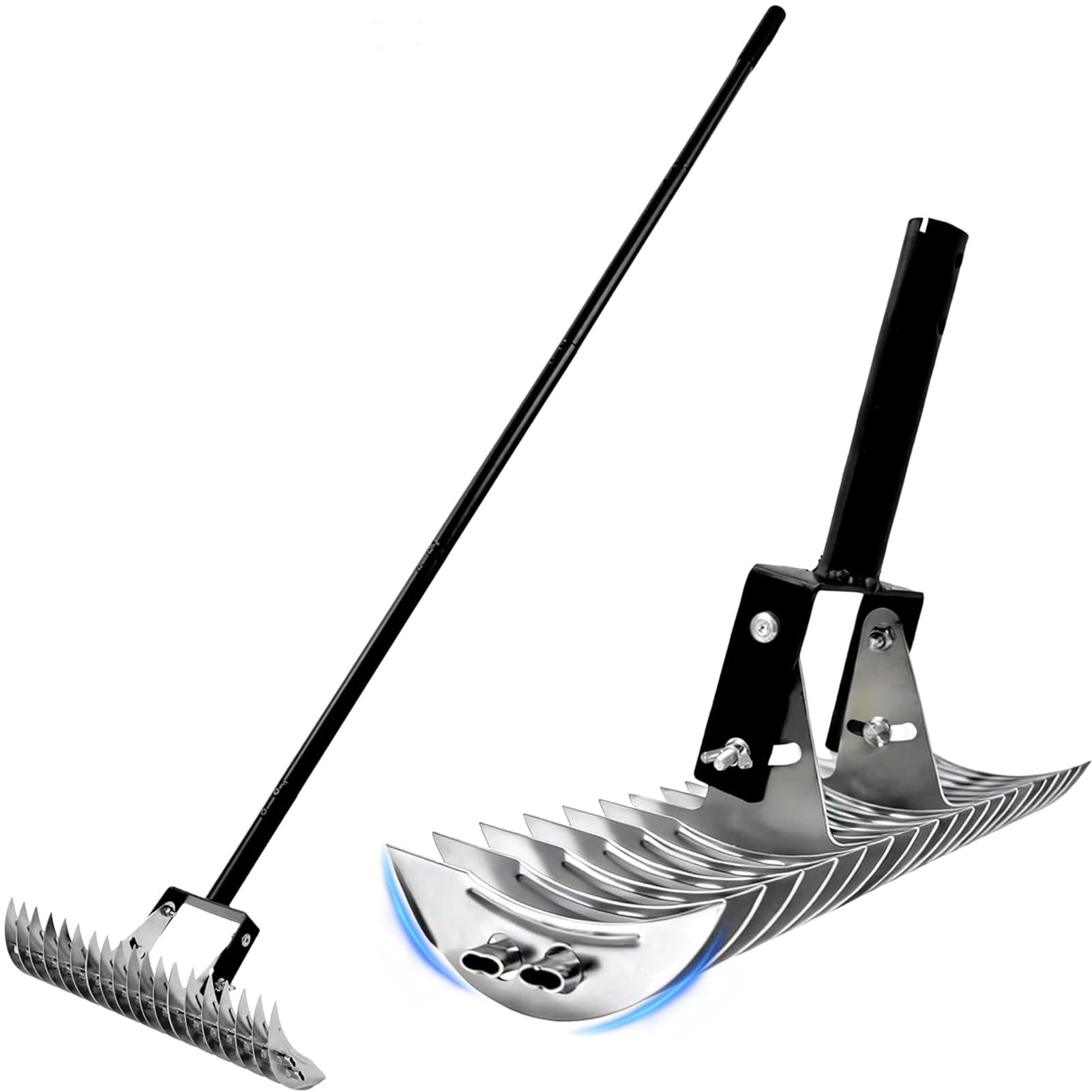
TCBWFY delivers a compact, chrome-plated dethatching rake that is tailor-made for homeowners with small lawns, narrow flower beds, and tight spaces between shrubs. The 15-inch head with 19 heavy-duty steel tines is noticeably smaller than the wider options, but that footprint becomes an advantage when you’re working around delicate plants or in raised beds where a larger head would cause damage. The chrome plating gives the tines a polished, corrosion-resistant surface that also reduces friction when pulling through thatch.
The adjustable angle mechanism uses a lever rather than a bolt, allowing on-the-fly changes to the tine pitch without tools. Owners describe assembly as simple, and the handle is a screw-together metal design that lets you adjust length by leaving off one section for shorter users. Verified buyers praise the rake’s ability to remove wood mulch from garden fabric and clear leaves from mulched beds in spring without catching on the underlying material. One reviewer specifically notes that the adjustable width (the tines fan out) is helpful for raking between closely spaced plants.
Build quality is solid for the entry-level price point, but this is not a tool for heavy thatch on a full-size lawn. The 15-inch head means you’ll make many passes on anything larger than 3,000 square feet, and the metal handle sections, while durable, lack the cushioned grip found on more premium models. A few users also mention that the tine adjustment lever can shift unintentionally during aggressive raking. For targeted use in gardens and compact lawns, it’s a precise and budget-friendly pick.
What works
- Chrome-plated tines resist rust and glide through debris smoothly
- Compact 15-inch head fits perfectly in tight garden beds and narrow paths
- Quick-adjust lever to change tine angle without stopping work
What doesn’t
- 15-inch width is too slow for larger lawns requiring heavy dethatching
- Angle lever can slip out of position during hard pulling
Hardware & Specs Guide
Tine Material and Heat Treatment
The three common steel grades in dethatching rakes are carbon steel, manganese steel, and spring steel. Manganese steel is the hardest and most wear-resistant—ideal for rocky or clay-heavy soil. Carbon steel offers good edge retention but can rust without a powder-coat finish. Spring steel (used in the YEELOR) is flexible, but the tines can lose shape if bent too far. Look for “heat-treated” or “quenched” in the specs; this process hardens the steel so the tines resist bending even when you lean into a thick thatch layer.
Head Width and Coverage Rate
Head width directly determines how many passes you need. A 15-inch head covers roughly 1.25 square feet per linear foot of rake stroke; a 23.5-inch head doubles that coverage to nearly 2 square feet per foot. For a 5,000-square-foot lawn, switching from a 15-inch to a 23.5-inch rake can save about 40 minutes of raking. The tradeoff is that wider heads require more arm strength to pull through dense thatch, especially if the tine count is also higher.
FAQ
Can a thatching rake damage my lawn if I use it incorrectly?
How often should I manually dethatch my lawn with a rake?
What is the difference between a dethatching rake and a regular garden rake?
Final Thoughts: The Verdict
For most gardeners, the best thatching rake winner is the BlumeTrec 68-Inch Bow Rake because its dual-sided manganese steel head handles both dethatching and leveling, and the adjustable handle fits a wide range of users without back strain. If you need commercial-grade width for a large lawn, grab the Bully Tools 24-Tine Rake. And for a lightweight tool that minimizes arm fatigue during long sessions, nothing beats the YEELOR 42-Spring-Tine Thatch Rake.