
Specs are compiled from manufacturer listings and verified buyer reviews and can change over time — please confirm the key details on the product page before buying.
If you are lining a raised bed, you need a plastic sheet that stops weeds from below, holds moisture where it belongs, and survives sun, rain, and the occasional careless trowel. The real battle is thickness — measured in mils (a mil is one-thousandth of an inch) — because a thin liner tears where a thick one shrugs off the pressure. This guide focuses entirely on the plastic sheets that keep your soil contained and your harvest clean, cutting through the marketing to the specs that actually matter.
I’m Rikta — the founder and writer behind Lawn Gear Lab. This guide is built by comparing the manufacturers’ published specifications and the patterns across verified customer reviews, so you get each pick’s real strengths and trade-offs instead of marketing spin.
Whether you are refreshing an old frame or building new, the right raised garden bed plastic liner means fewer weeds, less wasted water, and wood that stays dry for years to come.
Our Picks at a Glance
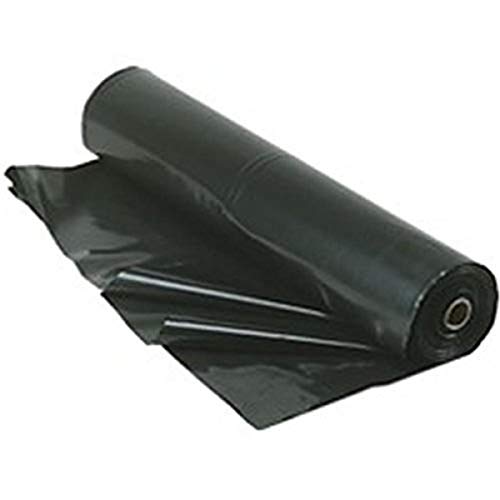

How To Choose The Best Raised Garden Bed Plastic Liner
Choosing a liner is mostly a math problem of coverage, thickness, and color. You want enough plastic to line the inside walls of your bed, thick enough to resist punctures from landscape staples and shifting soil, and dark enough to starve weeds of the light they need to sprout.
Match the Mil to the Job
Mil thickness is the universal language of plastic sheeting. A 4 mil sheet is flexible, easy to drape around corners, and fine for vertical walls where pressure is low. A 6 mil sheet is notably sturdier, resists tearing when you pull it taut, and handles the rougher treatment of being stapled or weighted down. For a permanent raised bed installation, the extra 2 mils of a 6 mil liner is usually worth it — it is the difference between a liner that lasts a season and one that lasts years.
Black Blocks, Clear Transmits
Color decides whether your liner fights weeds or feeds plants. Opaque black plastic blocks sunlight, which is exactly what you want between your soil and the ground below — no light, no weed germination. Clear or translucent film does the opposite; it lets light pass through for greenhouses and crop protection, but it will not stop weeds. For a raised bed liner, you want black, and you want it opaque enough that you cannot see through it when held to the sun.
Check the Coverage Before You Cut
Liners come in rolls measured in feet by feet, and the total square footage determines how many beds you can line. A compact 10′ x 25′ roll covers up to 250 sq. ft., while a 10′ x 100′ roll covers a full 1,000 sq. ft. Before you buy, measure the inside dimensions of your bed, double it for the walls, and add a few inches of overlap so the liner can sit above the soil line. Buying a roll that is barely too small is a common and frustrating mistake.
Quick Comparison
| Model | Best For | Material & Thickness | Coverage | Weight | Amazon |
|---|---|---|---|---|---|
| Weatherall 610B★ Best Overall | Filling big beds on a budget | 6 mil Poly | 10′ x 100′ | 30 lbs | Amazon |
| Beckett Pond LinerToughest Pick | Heavy-duty puncture resistance | 20 mil PVC | 8′ x 10′ | 10.4 lbs | Amazon |
| PRIMAX Opaque | Medium beds and greenhouses | 6 mil PE | 10′ x 25′ | 6.9 lbs | Amazon |
| Rocky Mountain Goods | Weed blocking under mulch | 4 mil Poly | 3′ x 50′ | 3.02 lbs | Amazon |
| Tldcdte 4 Mil | Budget single-bed lining | 4 mil Plastic | 4′ x 100′ | 4 lbs | Amazon |
| Farm Plastic Clear | Season extension covers | 6 mil Clear PE | 16′ x 10′ | 30 lbs | Amazon |
| Farm Plastic Weed | Long narrow bed strips | 4 mil LDPE | 3′ x 100′ | 25 lbs | Amazon |
In‑Depth Reviews
1. Weatherall 610B 6 Mil Black Poly Sheet
Our pick — over 4.5★ from 450+ verified ratings; the strongest balance of quality and price.
The heavy 6 mil roll that keeps weeds out for five-plus growing seasons.
The 10′ x 100′ roll delivers 1,000 square feet of 6 mil black polyethylene, enough to line a full row of raised beds or resheet an entire yard. At 30 pounds, this is the heaviest roll here, and that weight signals the industrial-grade thickness that resists tears. Buyers report it lasts five years or more when gravel or rock shields it from UV light.
What wins people over is the durability, with durability and functionality topping the list of owner praise. The plastic cuts cleanly without tearing along the edge, which makes trimming to bed dimensions frustratingly simple in a good way. It also blocks sunlight completely, so the dark environment underneath starves weeds and stops runners like bamboo from punching through. One owner confirmed 2-inch shoots could not poke through the surface.
The honest trade-off is handling: the material is stiff enough that unrolling and unfolding a 100-foot sheet takes two people and patience. A few owners also spotted the roll arriving a touch short of the full length, and an occasional pinhole can let a determined weed through. Compared to the PRIMAX roll below, this one is over four times heavier at 30 lbs versus 6.9 lbs, which is the cost of that industrial-grade thickness.
What Owners Love
- Lasts 5+ years under gravel or rock UV protection
- Cuts easily without tearing along the cut line
- Holds back 10+ gallons of water without leaking
What to Watch
- Unrolling the long sheet is a two-person job
- Occasional pinholes can let weeds through
Reach for this if: you have multiple beds or a large yard to line and want one roll to finish the whole job without buying again.
Look elsewhere if: you only need to line a single small bed — the 100-foot length is far more than you will use.
2. Beckett 20 Mil PVC Pond Liner
The 20 mil heavyweight that shrugs off rocks, staples, and clumsy trowels.
This liner is a different breed: at 20 mil thick, it is more than three times thicker than any 6 mil sheet in this list, and it is made of flexible PVC rather than polyethylene. That thickness is the whole story — it is puncture resistant enough that one owner drove screws through it without damage, and it survived a theatrical fountain holding 50 gallons for seven weeks straight.
The 8′ x 10′ pre-cut sheet is designed for ponds, and the math checks out: it can hold up to 266 gallons of water. But the maker explicitly lists raised garden beds and sub-irrigation planters as intended uses, which is why it earns a spot here. It is ice resistant and UV resistant, so it handles freezing winters and baking summer sun without turning brittle. Owners praise the thickness and the value, calling it heavy-duty at a fair price.
The catch is the seams. The sheet is assembled from about three welded panels rather than one continuous piece, which disappointed a few buyers who expected a single sheet. So far those seams have held with no leaks, but it is worth knowing before you order. It is also the priciest pick per square foot here — you pay for that 20 mil protection. For a single 4′ x 5′ bed, the pre-cut size is close to ideal with almost no waste.
Built for abuse: this is the liner to choose when your bed sits on rocky ground or you plan to walk on the liner while filling it. Nothing else here matches its tear resistance.
Not for budget jobs: the seams bother some owners, and the pre-cut size means you cannot stretch it to line a second bed.
3. PRIMAX Opaque 6 Mil Plastic Sheeting
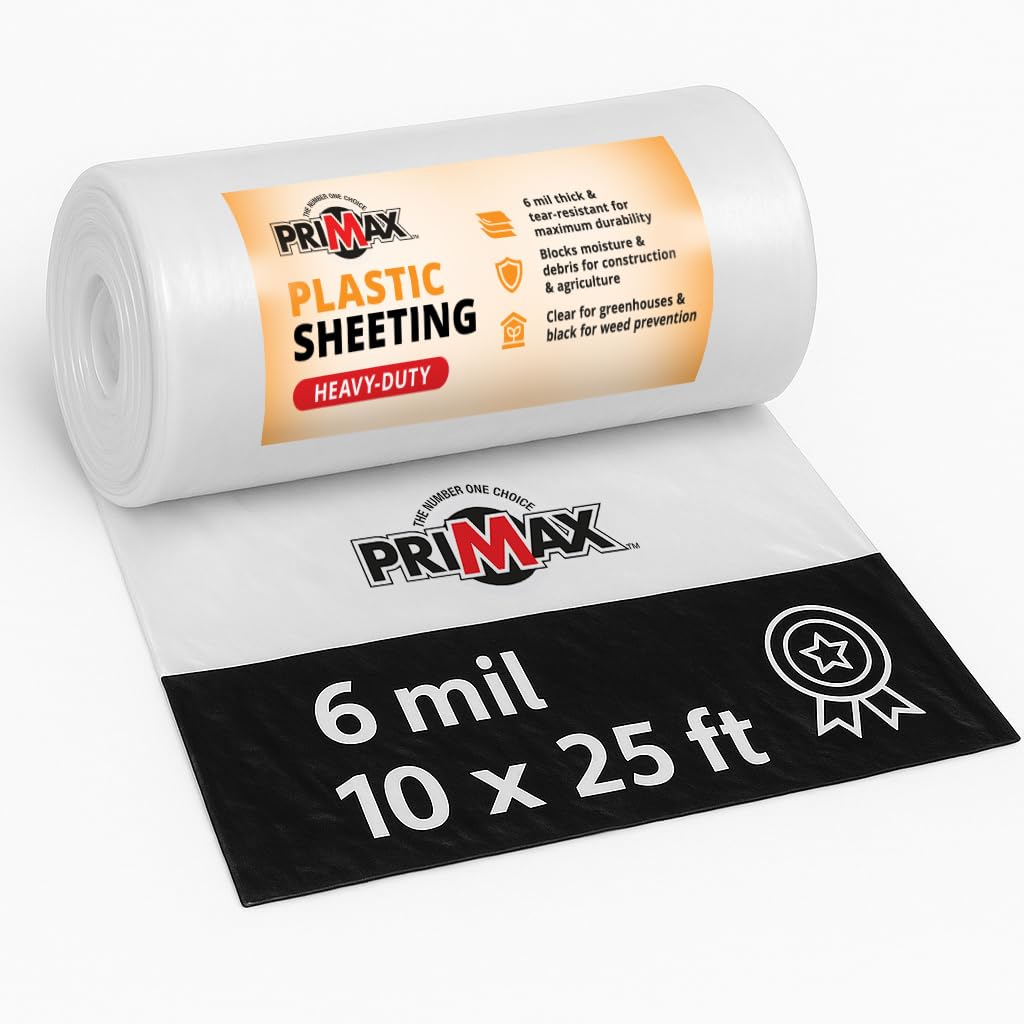
The mid-size 6 mil roll that handles a serious garden while staying affordable.
This 10′ x 25′ roll of 6 mil polyethylene covers up to 250 square feet, which is enough for a bed of roughly 4′ x 8′ with room to spare for the walls. It is the practical middle ground: thicker than the budget 4 mil sheets, lighter than the giant Weatherall roll above at just 6.9 pounds, and easy to cut to size with scissors or a utility knife. Owners use it successfully as a flower bed liner and to stop weeds from taking over a 33′ x 33′ garden plot.
Quality is the most-praised aspect here, with buyers calling the plastic thick and strong for the price. It is translucent rather than fully see-through, which means some light passes through — useful for a greenhouse barrier, but not the pure blackout you get from an opaque black sheet. For weed suppression in a raised bed, the manufacturer notes the material is spec’d with UV protection, though a few owners found it can rip if the wind catches an edge.
The recurring advice from owners is simple: poke drainage holes anywhere water pools on the surface, or you risk turning your bed into a mosquito nursery. That is true of any plastic liner, but worth repeating here because the material is good at holding moisture. Compared to the 4 mil Rocky Mountain roll below, this one is noticeably heavier and tougher, and the 6 mil thickness is the reason.
What Owners Praise
- Thick 6 mil feel that holds up through a season
- Large 250 sq. ft. coverage for the weight
- Ships flat in a sturdy cardboard box
Know Before You Buy
- Translucent film lets some light through
- Small rips can start if wind pulls an edge
Grab this for: a mid-size garden where you want 6 mil toughness without buying a 100-foot roll you will never finish.
skip it if: you need complete light blockage for serious weed control — this film is translucent, not opaque black.
4. Rocky Mountain Goods 4 Mil Black Sheeting

A narrow 3-foot wide roll that lays flat for tidy weed barriers between rows.
At 3 feet wide and 50 feet long, this 4 mil black sheet is built for a specific job: covering ground between planting rows or laying a barrier between soil and mulch. The narrow width means it is easy to handle solo, and the thin profile drapes neatly over contours without fighting you. It is also the lightest pick here at just over 3 pounds, which makes it the easiest to lug from the garage to the garden.
Owners find it does exactly what a weed barrier should: block moisture and stop weeds. The 4-year guarantee from the maker backs the claim, and one owner reported it held for a year and a half under California sun and rain. The black color blocks sunlight completely, creating the dark environment that prevents weed seeds from germinating under your mulch.
The trade-off is that at 4 mil, it is thinner than the 6 mil options above, and it will not survive being walked on or stapled aggressively. Owners note that punctures from staples or foot traffic let weeds through and can require monthly spot-treatment. It is at its best when covered thickly with mulch and left undisturbed. If your beds are already built and you just need to stop weeds between rows, this is the easiest shape on the list.
Row-ready roll: the 3-foot width is perfect for paths between beds, and the light weight makes it a one-person install.
Handle with care: this is a barrier for undisturbed areas — walking on it or stapling through it will create weak points.
5. Tldcdte 4 Mil Black Plastic Sheeting
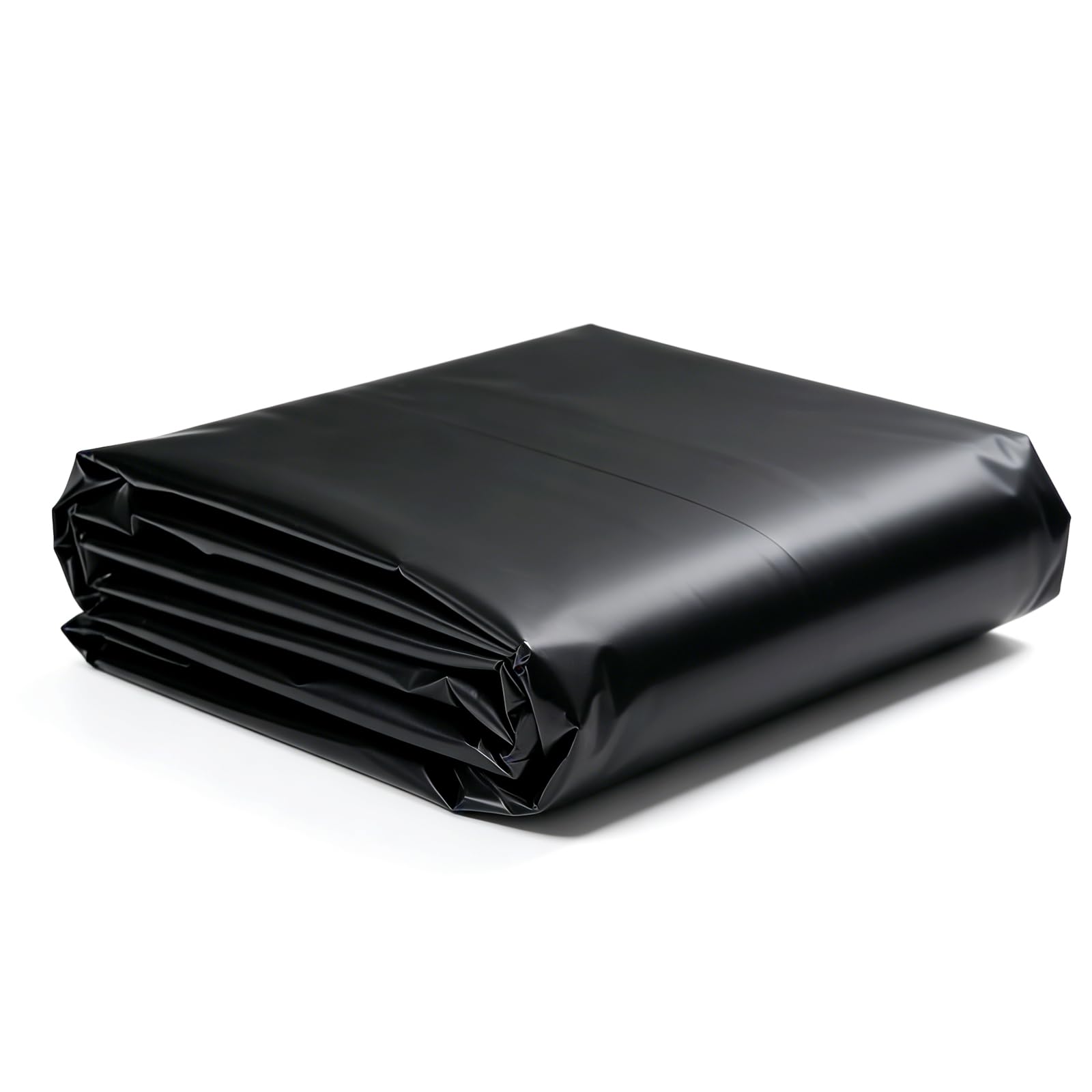
A wallet-friendly 4 mil roll that lines a single bed without the premium price tag.
This 4′ x 100′ roll is the entry-level choice for lining one or two raised beds on a tight budget. The 4 mil polyethylene is flexible enough to fold into corners and cut cleanly with scissors, and the maker designed it for one-person setup — it lays flat and does not fight you as you unroll it. It blocks sunlight to slow weed growth, which is the core job of any bed liner.
Owners who bought it for garden beds report it gets the job done, and one noted it was worth the money even though it required careful handling. The catch is that this is the thinnest material on the list at 4 mil, and a few buyers found it rips relatively easily compared to thicker sheets they had used before. It is also shipped folded inside the package rather than rolled, which leaves creases that take effort to flatten in the bed.
For a seasonal liner that you plan to replace, this is a reasonable budget bet. For a permanent installation where you want the liner to last several years, the extra cost of a 6 mil sheet is justified — this one is better treated as a stopgap. The 100-foot length gives you a lot of material for the money, and the narrow 4-foot width suits standard bed depths.
Why It’s a Budget Pick
- 100-foot length covers multiple beds cheaply
- Easy to cut and install by yourself
Its Limits
- Thin 4 mil material tears more easily than 6 mil
- Ships folded, leaving creases to flatten
Choose it when: the budget is the priority and you are comfortable replacing the liner after a season or two.
Pass it by if: you want a set-and-forget liner — the thinner material demands more careful handling.
6. Farm Plastic Supply 6 Mil Clear Greenhouse Film
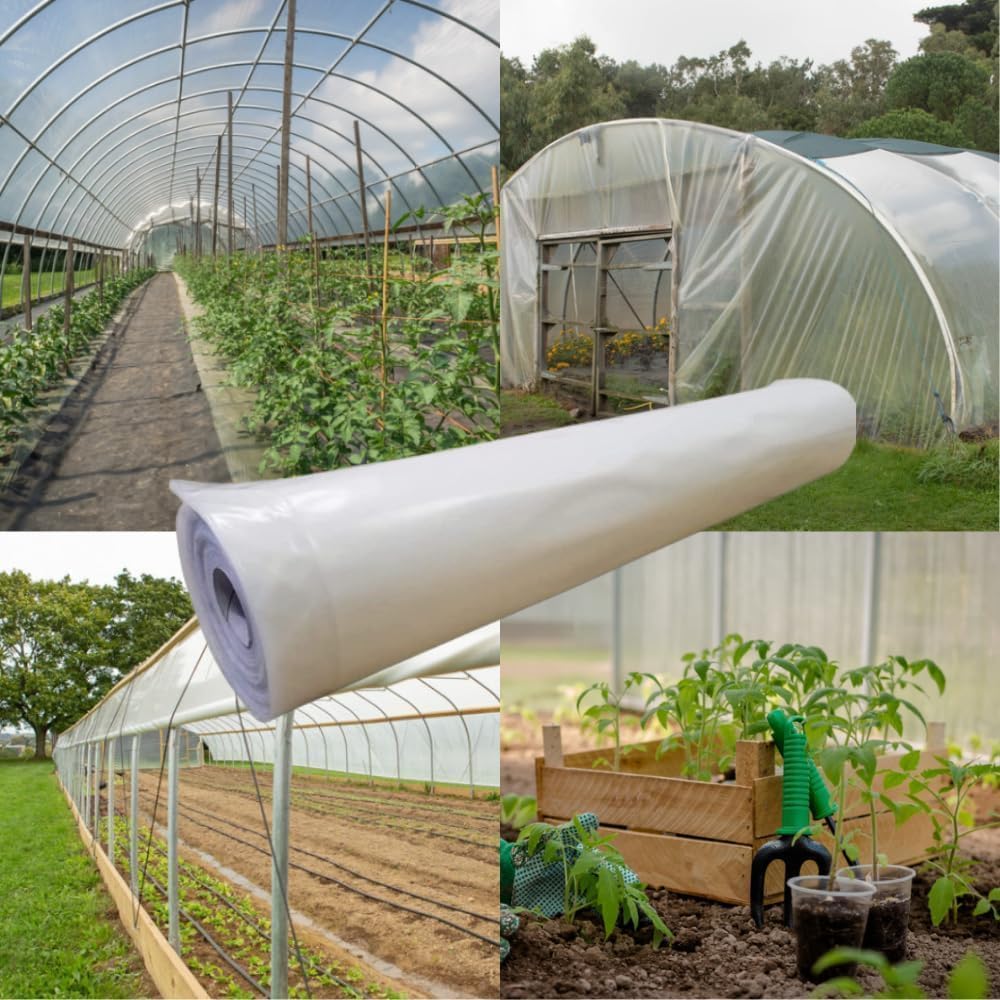
The clear 6 mil film that turns your raised bed into a mini greenhouse for a longer season.
This is the deliberate exception in a black-liner lineup: a clear 6 mil polyethylene film built to let sunlight through rather than block it. At 16′ x 10′ with a weight of 30 pounds, it is a substantial sheet designed to drape over hoop frames or garden arches. Owners use it over PVC pipe bent across raised beds, holding it in place with clips to create a protected growing tunnel.
The maker builds this film with anti-aging UV additives, which is what separates it from cheap clear plastic that turns brittle after one sunny season. It is rated for long-term outdoor use, protecting plants from extreme heat, heavy rain, frost, and strong winds while letting light distribute evenly for even temperature. Owners describe it as thick and sturdy, with one calling it sturdy enough to last a couple of seasons as a hoop house cover.
The caveat is obvious: clear film does not block weeds, so it cannot serve as a bed liner in the weed-suppression sense. Its job is to warm the soil and extend your growing window in spring and fall. If you already have a black liner protecting your bed from below, this clear sheet is the perfect partner for the top — a complete season-extension system. It is the most specialized pick here, but for gardeners who want an early start, nothing else on this list does that job.
Top-side protection: drape this over arches or a simple frame to add weeks to your growing season at each end.
Not a weed barrier: this is a light transmitter, not a light blocker — pair it with a black liner for full coverage.
7. Farm Plastic Supply 4 Mil Weed Control Black

A long, narrow 3-foot wide run of LDPE that handles vine rows and flower beds with ease.
This 3′ x 100′ roll is the longest narrow run on the list, built from 4 mil low-density polyethylene (LDPE — a flexible, slightly softer plastic that drapes well over contours). It is designed specifically for weed control: the black sheet creates a warm, dark environment that traps weeds and stops them from germinating, while also helping with seed germination by keeping seeds from washing away. At 25 pounds, it is heavy for a 4 mil sheet, which reflects the density of the LDPE material.
Owners use it to cover ground where they want to grow vine vegetables off the soil, then pile tree mulch on top to hold the plastic in place and keep the ground cooler. It is also popular for finishing flower beds with garden spikes. The quality is the most-praised aspect, with buyers calling it nice and thick and noting it works well for yard weed control.
If your beds are long and narrow, this liner saves you from cutting and joining pieces. Its 3-foot width fits a single row or a strip between established beds in one continuous run, so you avoid seams that can tear. But it will not cover the floor of a wide 4′ x 8′ bed in one piece — you would need to lay multiple strips side by side, which adds work and potential weak points.
Why It Earns Its Spot
- 100-foot continuous run covers long rows without seams
- Dense LDPE feels thicker than its 4 mil rating
Its Limitation
- 3-foot width means wide beds need multiple parallel strips
Built for runners: if you grow vining crops in long beds or want one unbroken weed barrier, this delivers the cleanest install.
Not for square beds: a wide bed will require two or more strips laid side by side, adding seams you have to secure.
Understanding the Specs
Mil Thickness
The mil rating is the liner’s armor. One mil equals one-thousandth of an inch — a 6 mil sheet is roughly the thickness of a heavy trash bag, while a 4 mil sheet is noticeably thinner and more pliable. For lining vertical bed walls where there is little stress, 4 mil works. For the bed floor where soil weight and tools press down, 6 mil gives you tear resistance that survives the season. The one outlier is the Beckett liner at 20 mil, which is essentially a pond-grade membrane that will outlast every other sheet here.
Polyethylene vs PVC
Polyethylene (PE) is the standard for garden sheeting — it is cheap, flexible, and does the weed-blocking job well, but it degrades in sunlight over time unless UV additives are included. PVC is a heavier, more puncture-resistant material that handles UV and ice exposure better, which is why it dominates the pond-liner world. For a raised bed that stays mostly shaded by soil and mulch, either works; for a liner that will see direct sun on the walls, check whether the spec mentions UV protection.
Color and Light Transmission
Black liners block sunlight, which is the entire mechanism of weed suppression — weed seeds need light to germinate, and a black sheet starves them. Clear films do the opposite and are used for greenhouses to boost light for growing plants. If you are choosing a liner for a raised bed, always pick the opaque black option; a clear sheet will let weeds grow happily beneath your soil.
Coverage Math
Roll dimensions determine how many beds you can line. Calculate the inside surface area of your bed (all four walls plus the floor), add a few inches of overlap at the top, and compare that to the roll’s total square footage. A 10′ x 25′ roll covers 250 sq. ft., while a 10′ x 100′ roll covers 1,000 sq. ft. Buying a slightly larger roll than you need is smart — you want enough to fold over the top edge of the bed so soil does not sit directly against the wood.
FAQ
What is the best mil thickness for a raised garden bed liner?
Should I use black or clear plastic to line a raised bed?
How long will a plastic liner last in a raised bed?
Do I need to poke drainage holes in the liner?
Can I use a pond liner instead of a plastic sheet for my raised bed?
Is a 4 mil liner too thin for a garden bed?
What is the difference between polyethylene and PVC liner material?
How do I calculate how much liner I need for my bed?
Can I use clear greenhouse film as a raised bed liner?
Why did my plastic liner rip when I stapled it to the wood?
Final Thoughts: The Verdict
For most people, the raised garden bed plastic liner winner is the Weatherall 610B because it delivers the most durable 6 mil protection and the largest coverage in one roll, backed by an industrial-grade reputation. If you want the toughest puncture resistance money can buy, grab the Beckett 20 mil liner. And for a budget-friendly mid-size job, the PRIMAX 6 mil roll is the one to reach for.
How We Picked
We do not accept paid placement. Every pick is matched to a real buyer and a real use-case; we do not hands-on test units.
Sources & Methodology
Specifications: manufacturer listings and product documentation. Review insights: verified customer reviews, as of August 2026. Pricing: not shown on this page (it changes often); check the current price via the retailer link.
As an Amazon Associate, Lawn Gear Lab earns from qualifying purchases. This does not affect which products we feature.