
Specs are compiled from manufacturer listings and verified buyer reviews and can change over time — please confirm the key details on the product page before buying.
You water, you weed, you wait — and then you get leaves but no fruit. That is the classic sign of an NPK ratio (the three numbers on the bag that stand for nitrogen, phosphorus, and potassium) that is too heavy on nitrogen, which feeds foliage instead of flowers. The right npk tomato fertilizer flips that script, and for most gardeners, that means the FoxFarm Happy Frog 4-pound bag — its 5:7:3 blend with added calcium and mycorrhizal fungi delivers the most consistent harvests, according to buyer reports.
I’m Rikta — the founder and writer behind Lawn Gear Lab. This guide is built by comparing the manufacturers’ published specifications and the patterns across verified customer reviews, so you get each pick’s real strengths and trade-offs instead of marketing spin.
From quick-dissolving liquids to slow-release granules, these eight options cover every growing style. A balanced npk tomato fertilizer beats a generic feed every time, and this guide shows you which ratios and brands deliver.
Our Picks at a Glance


How To Choose The Best NPK Tomato Fertilizer
Tomatoes are heavy feeders, meaning they pull a lot of nutrients from the soil. The three numbers on any fertilizer bag stand for nitrogen (N), phosphorus (P), and potassium (K). Nitrogen drives leafy growth, phosphorus supports roots and flowers, and potassium boosts fruit quality and disease resistance. For tomatoes, you want a mix that is lower in nitrogen and higher in the last two numbers.
Decoding the NPK Ratio
To get more blossoms and ripe fruit, you want a feed with higher second and third numbers, like 3-4-6 or 5-10-10. These ratios encourage the plant to put energy into producing blossoms and ripening fruit rather than growing more leaves. If you see a very high first number, like 17, that signals a nitrogen-heavy mix better suited to leafy greens or lawns, not fruiting vegetables.
Granular vs. Water-Soluble vs. Liquid
Granular fertilizers are worked into the soil or sprinkled around the plant’s base and break down slowly over weeks. Water-soluble powders dissolve in water and deliver nutrients quickly, which is helpful for a mid-season boost. Liquid concentrates are pre-mixed and easy to apply with a watering can, but they tend to cost more per feeding than granules.
The Blossom End Rot Connection
That ugly black, sunken patch on the bottom of a tomato is blossom end rot, often caused by a calcium deficiency. Many tomato-specific fertilizers include added calcium to help prevent this problem. If your soil is known to be acidic or nutrient-poor, choosing a feed with calcium is a smart insurance policy.
Quick Comparison
| Model | Best For | NPK Ratio | Form | Weight | Amazon |
|---|---|---|---|---|---|
| FoxFarm Happy Frog★ Best Overall | Best Overall | 5:7:3 | Granules | 4 lb | Amazon |
| Schultz Water SolubleQuick Boost | Quick Boost | 17-18-28 | Water Soluble | 16 oz | Amazon |
| Dr. Earth LiquidEasy Application | Easy Application | 3-2-2 | Liquid | 24 oz | Amazon |
| Lilly Miller Morcrop | Fruit Quality | 5-10-10 | Granules | 4 lb | Amazon |
| True Organic 4.5 lb | Large Gardens | 4-5-6 | Granules | 4.5 lb | Amazon |
| Espoma Tomato-Tone 2-Pack | Multi-Plant Value | 3-4-6 | Granules | 8 lb (2×4 lb) | Amazon |
| Espoma Tomato-Tone 18 lb | Long-Term Supply | 3:4:6 | Granules | 18.1 lb | Amazon |
In‑Depth Reviews
1. FoxFarm Happy Frog Tomato & Vegetable Fertilizer
Our pick — over 4.5★ from 650+ verified ratings; the strongest balance of quality and price.
The organic granule pick that turns stressed plants into heavy producers
This 4-pound bag is the top pick because its 5:7:3 mix leads with phosphorus and potassium, the two nutrients that push flowers and fruit instead of leaves. Added calcium tackles blossom end rot (the black, sunken patch on the bottom of fruit), and mycorrhizal fungi (helpful soil fungi that attach to roots) boost water and nutrient uptake, so your plants get more from every watering.
Buyers report their best-ever tomato harvests and revived zucchini plants after a single application. It is versatile enough for peppers, leafy greens, and root crops, whether you grow in containers or rows. The one caveat is the odor, which several owners describe as unpleasant, though they add the durable bag keeps the smell contained during storage.
Owners mention it is organic, easy to use, and well worth the price for the results it delivers. Compared to the Espoma Tomato-Tone at the same 4-pound size, the FoxFarm carries a notably different nutrient profile — 5:7:3 versus 3-4-6 — making it the better choice if your soil already has decent calcium and you want a more phosphorus-forward feed.
What wins people over
- Calcium helps prevent blossom end rot
- Mycorrhizal fungi improve root function and water uptake
- Works for tomatoes, peppers, berries, and leafy greens
What to know before buying
- The organic odor is noticeable, though the bag seals it in
- Granules take time to break down; not a quick fix
Your best match if: you want a single, organic granule that feeds the whole garden, not just tomatoes, and you care about preventing blossom end rot.
Think twice if: you need an immediate nutrient boost for plants already in distress — for that, a water-soluble option acts faster.
2. Schultz Water Soluble Tomato Food 17-18-28
The water-soluble shock treatment that revived a puny crop in three weeks
This 16-ounce box dissolves in water and delivers a fast-acting 17-18-28 mix, with the highest potassium number here — that is the nutrient that drives fruit development, so tomatoes ripen instead of stalling. One gardener saw tomatoes that refused to ripen turn red and juicy within three weeks of feeding.
Coverage is generous at 150 square feet per box, making it among the most economical options here. A single box lasted a full year for about a dozen pepper plants, with only half used. It dissolves clean with no mess and no smell, and it works well for the whole nightshade family (tomatoes, peppers, eggplant, and potatoes). The formula gets mixed reviews from a technical standpoint, with one owner noting the lack of micro-nutrients compared to pricier brands.
This is the pick to reach for when your plants need an immediate intervention, not a slow release. It beats the granular options on speed of action and is far cheaper per feeding than most liquid concentrates. The trade-off is a higher nitrogen number than a pure tomato feed, so follow the instructions carefully to avoid excessive leafy growth.
Why it stands out: at 17-18-28, the potassium-heavy ratio is purpose-built for pushing fruit set, and the price per use is remarkably low.
The honest catch: some owners want a more complete micronutrient package, which you will not find here.
3. Dr. Earth Home Grown Tomato, Vegetable & Herb Liquid Fertilizer
The sustainable liquid concentrate that kept seedlings leafing up all season
This 24-ounce liquid concentrate with a 3-2-2 NPK is made from 100% recycled grocery produce, fish, and meat, making it among the most sustainable options on the shelf. It is OMRI Listed, which means it meets strict organic standards, and it is safe to use around your family and pets. The concentrate dilutes to make anywhere from 12 to 320 gallons depending on how strong you mix it.
Owners rave about effectiveness, with seedlings leafing up quickly and gardens thriving all season. One gardener reported a fig tree growing from 2.5 feet to almost 8 feet tall. It is a favorite for root development and works beautifully as a summer-long feed when applied every other week.
The liquid form is more expensive per feeding than granules, but it is far easier to use — just shake the bottle thoroughly, dilute, and water. It is too strong for flower pots, so stick to garden veggies with this one. If you already use a granular feed at planting time, this liquid is the ideal partner for mid-season maintenance.
Why it earns its place: the OMRI certification and recycled-ingredient sourcing make it the cleanest choice here, and it is genuinely easy to apply.
The trade-off: you pay a premium for liquid convenience, and it is not suited for delicate container flowers.
4. Lilly Miller Morcrop Tomato & Vegetable Food 5-10-10

The high-phosphorus granule that boosts flavor and yields in the greenhouse
This 4-pound bag earns its spot for fruit quality because its 5-10-10 ratio doubles down on phosphorus, the nutrient that drives strong roots and abundant flowering — so you get more blossoms that turn into fruit. Customers note boosted yields for tomatoes, eggplants, potatoes, and zucchini. The high phosphorus enhances flavor, especially in tomatoes, making it ideal for preserving summer taste in homemade sauces.
A trusted greenhouse staple, reviewers point out it works every year to deliver a good crop of tomatoes. Another plus: this specific size and formula is often hard to find at local big-box stores, so Amazon is a convenient source.
The recurring downside is the smell. Several owners describe it as strong and unpleasant, though it does not seem to affect the results. It is also noted as being virtually the same as a name-brand iris fertilizer, just less expensive, so budget-minded gardeners can feel good about the value.
Compared to the Schultz pick, this granule releases slower but has a more balanced 5-10-10 profile that is gentler on young plants. It is the better choice for gardeners who want a single, reliable application at planting time rather than weekly mixing.
Best for: greenhouse and raised-bed growers who want a dependable, phosphorus-rich feed for better-tasting fruit all season.
Keep in mind: the strong organic odor is the price you pay for the results here.
5. True Organic Tomato and Vegetable Food Granular Fertilizer 4-5-6

The farm-grade organic granule that revived yellowing plants in three days
This 4.5-pound jug covers up to 80 square feet, making it the easiest pick for a substantial garden. It carries a 4-5-6 NPK and is both CDFA and OMRI Listed for organic gardening, made with 100% organic and natural ingredients, manufactured in the USA, and pet friendly. The hand-shaker jug makes monthly application during the growing season easy.
Shoppers say surprisingly large tomatoes and yellowing plants revived within three days. Grow bag users, who know their plants need extra water and nutrients, report stalks looking healthy and strong all season. It also adds organic matter back into the soil, improving its structure over time.
The strong smell is the recurring complaint, with some owners noting it is pretty potent — but they almost universally add that the results make it worth it. One owner cautions against using too much, as the top of the soil can get a bit moldy, though it washes away with the next watering. The versatility is a bonus, serving as both a fertilizer and a gentle deterrent for animals.
Compared to the Espoma 3-4-6, this has a slightly higher nitrogen number (4-5-6 versus 3-4-6), making it a touch better for plants that also need leafy growth. The 4.5-pound jug offers more product than most competitors at this tier.
Why it wins: the hand-shaker jug and 80-square-foot coverage make it the easiest way to feed a substantial garden.
The honest catch: the odor is noticeable, and over-application can create mold on the soil surface.
6. Espoma Tomato-Tone Organic Fertilizer – 2 Pack
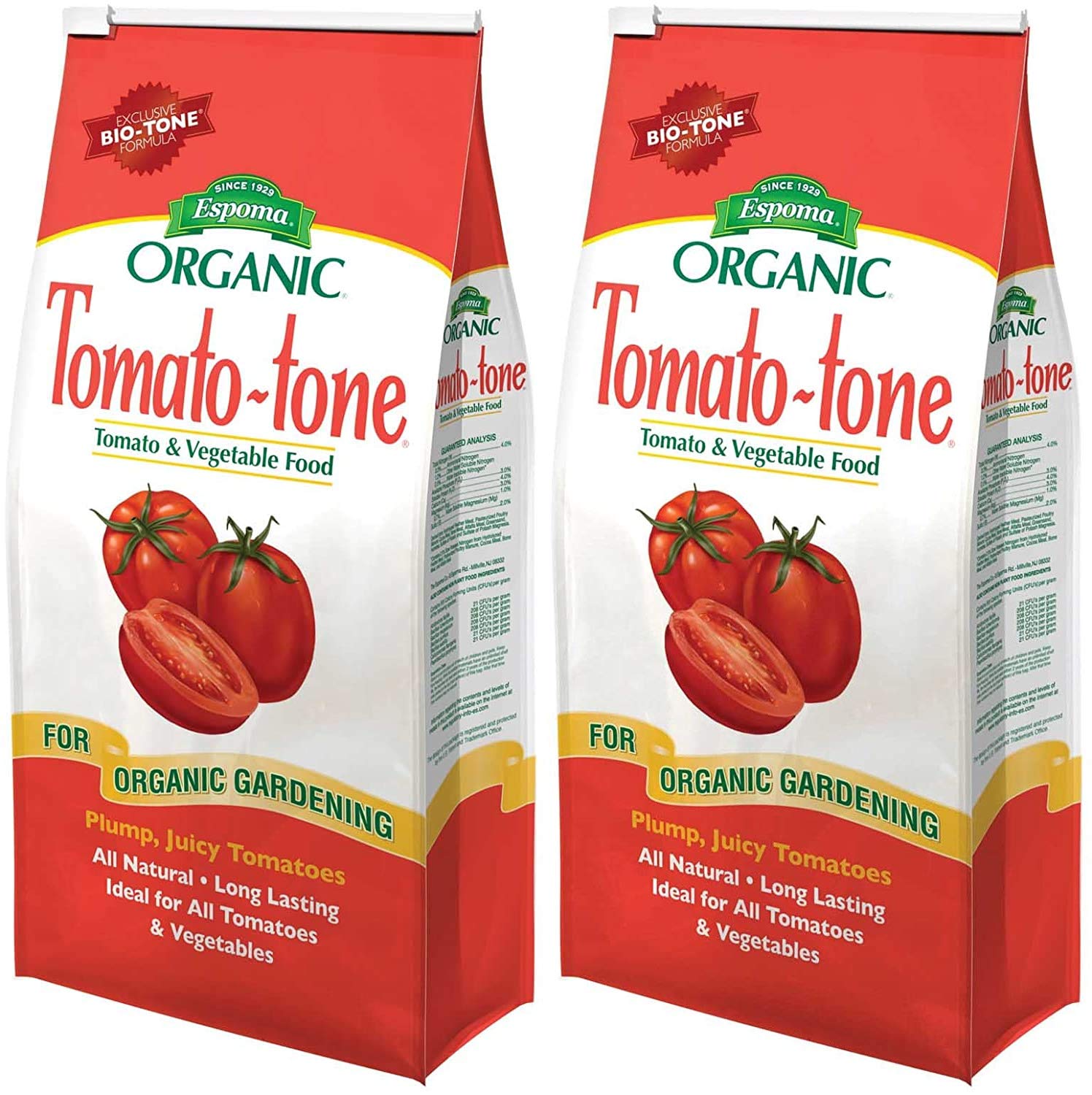
Two bags of the proven 3-4-6 formula for gardeners with many plants to feed
This 2-pack gives you two 4-pound bags of the university-tested 3-4-6 blend, so the per-bag cost drops compared to buying a single bag. It is an all-natural and organic plant food enhanced with thousands of living microbes, approved for organic gardening. The formula is complete, with all 15 essential nutrients, and it is specifically formulated to produce consistently plump, juicy tomatoes.
Owners highlight effectiveness, reporting boost tomato harvests and great results across the board. It helps prevent blossom end rot and provides a safe, continuous, complete balanced feeding.
This is the pick for gardeners who know they will need more than one bag across the season, whether for a large plot or multiple raised beds. You get the same trusted formula as the single-bag version, just with better economics. The trade-off is the upfront commitment to two bags, which is only worth it if you actually have the plants to use them.
Best for: serious tomato growers who want the proven Espoma formula and know they will use both bags by mid-season.
Think twice if: you only have a few plants — the single 4-pound bag is the more sensible first try.
7. Espoma Organic Tomato-Tone 3-4-6, 18 lb. Bag
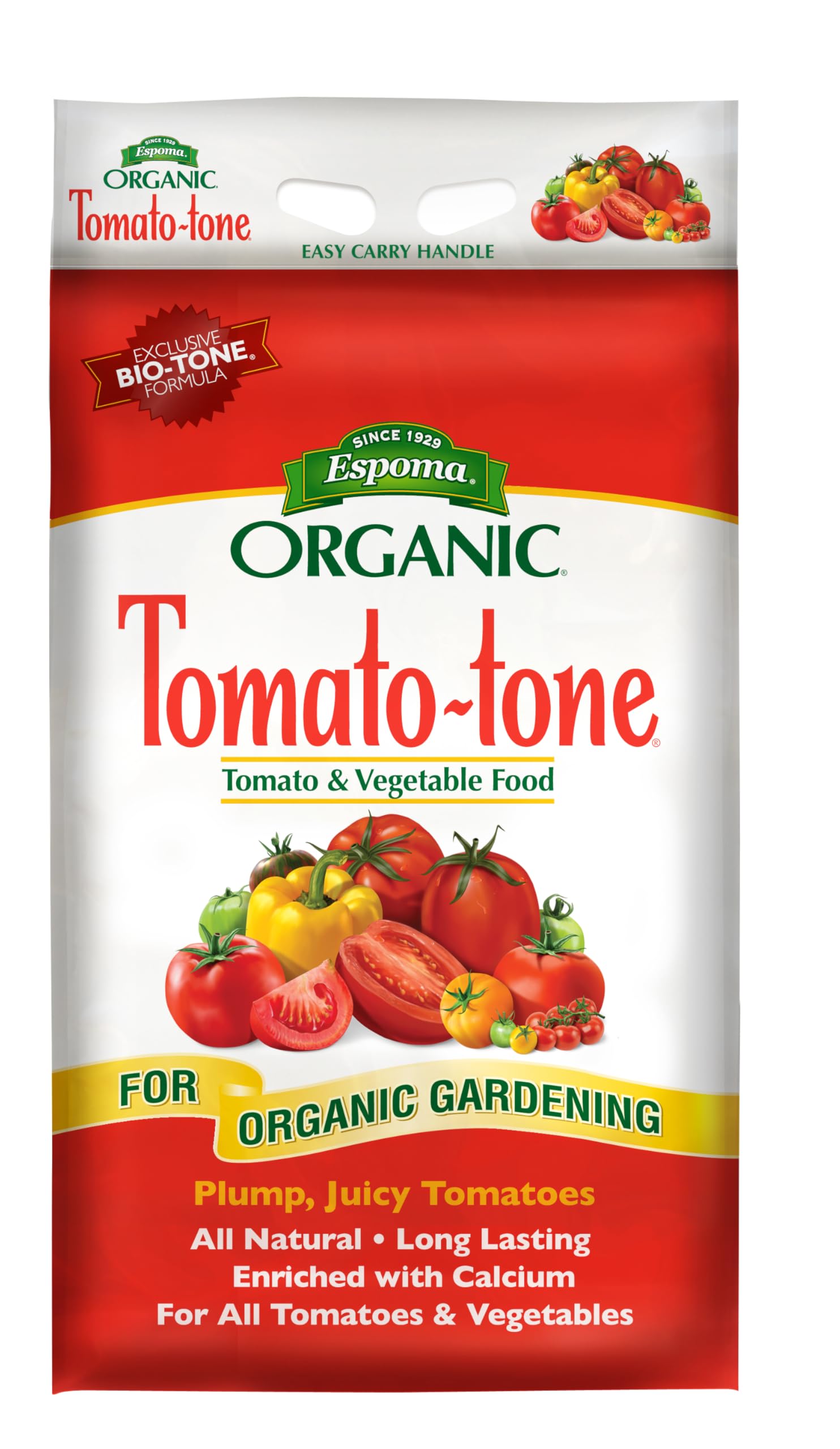
The 18-pound bulk bag for gardeners who swear by this “dynamite” formula
This 18.1-pound bag is the same Espoma Tomato-Tone 3-4-6 formula with 8% calcium, just in bulk, and the per-pound cost drops significantly at this size — making it the most economical way to feed a large garden or share with gardening neighbors. It is approved for organic gardening and registered as an Organic Input Material, made by the leader in natural organics since 1929.
Value for money is the most-praised aspect, and it is easy to see why. Owners who ordered the 18-pound bag call the stuff “dynamite,” reporting rapid growth on tomatoes and peppers and huge plants with abundant tomatoes. One gardener uses it every two weeks at 3 tablespoons per plant for incredible results: more flowers, no end rot, and tons of fruit.
Some owners note it works best applied in the fall with compost or manure, or brewed into a tea with 1 cup per 2 gallons of water. The strong fertilizer smell is a recurring mention, and one owner warns it can attract raccoons due to the blood and bone meal content. The 18-pound bag is a multi-season commitment to one product, but for the results, many find it unbeatable.
Why it is the pro pick: the bulk size delivers the lowest cost per feeding of any option here, and the results speak for themselves.
The honest note: you are committing to a lot of one product, and the smell plus potential wildlife interest are real considerations.
Understanding the Specs
NPK Ratio
The three numbers on the bag tell you the percentage of nitrogen, phosphorus, and potassium by weight. Nitrogen fuels leafy growth, phosphorus builds roots and flowers, and potassium strengthens the plant and improves fruit quality. For tomatoes, look for a second and third number that are equal to or higher than the first — patterns like 3-4-6 or 5-10-10 indicate the plant will focus energy on fruiting rather than foliage.
Organic Certification
Look for labels like OMRI Listed or CDFA certified, which confirm the product meets recognized organic standards. This matters if you are growing for a farmers market or just want to avoid synthetic chemicals. OMRI (Organic Materials Review Institute) listing means the product has been reviewed and approved for use in organic production, while CDFA is California’s state-level certification.
FAQ
What is the best NPK ratio for tomatoes?
How often should I fertilize my tomato plants?
Will fertilizer prevent blossom end rot?
What is the difference between granular and water-soluble fertilizer?
Are organic tomato fertilizers as effective as synthetic ones?
Can I use tomato fertilizer on other vegetables?
How do I apply granular fertilizer to tomato plants?
Why does my organic fertilizer smell so strong?
Final Thoughts: The Verdict
For most gardeners, the npk tomato fertilizer winner is the FoxFarm Happy Frog because its 5:7:3 blend with calcium and mycorrhizal fungi delivers the most consistent, impressive harvests across a wide range of plants. If you want a fast-acting boost for struggling plants, grab the Schultz Water Soluble — its 17-18-28 mix produces visible results in weeks. And for large gardens that need economical bulk feeding, the Espoma Tomato-Tone 18 lb bag is the one to reach for, offering the lowest cost per feeding of any option here.
How We Picked
We do not accept paid placement. Every pick is matched to a real buyer and a real use-case; we do not hands-on test units.
Sources & Methodology
Specifications: manufacturer listings and product documentation. Review insights: verified customer reviews, as of August 2026. Pricing: not shown on this page (it changes often); check the current price via the retailer link.
As an Amazon Associate, Lawn Gear Lab earns from qualifying purchases. This does not affect which products we feature.