
Specs are compiled from manufacturer listings and verified buyer reviews and can change over time — please confirm the key details on the product page before buying.
You want to spend your weekends watering and harvesting, not weeding. The right raised bed liner keeps soil contained, blocks weeds from below, and shields wooden or metal frames from damp-dirt rot. But a liner isn’t just a liner — it’s either a thick weed-blocking fabric you cut from a roll, or a finished fabric bag that drops straight into an existing frame. Choosing the wrong style wastes money and effort, so here’s how to pick.
I’m Rikta — the founder and writer behind Lawn Gear Lab. This guide is built by comparing the manufacturers’ published specifications and the patterns across verified customer reviews, so you get each pick’s real strengths and trade-offs instead of marketing spin.
You need a barrier that lets water drain while keeping soil and weeds out, and the raised bed liner choices below cover both roll-out fabric and ready-made grow bags.
Our Picks at a Glance


How To Choose The Best Raised Bed Liner
Your first decision: do you need a roll of landscape fabric to cut yourself, or a pre-shaped fabric bag that matches your bed’s footprint? A roll is more flexible for odd shapes and lets you cover paths and borders. A bag liner is simpler — you drop it in, fill it with soil, and start planting.
Fabric weight and thickness
Heavier fabric, measured in ounces, blocks more sunlight and makes it harder for weeds to force their way through. A 5 oz fabric is noticeably tougher than a 3.2 oz one, which matters if you have aggressive weeds like Johnson grass that can penetrate lighter barriers. Heavier fabric lays flatter and resists tearing under foot traffic.
Water flow and drainage
A liner that holds water like a bathtub will drown your plants’ roots. You want fabric that is permeable, meaning water passes straight through, while still holding soil in place. Look for descriptions of “high permeability” or “breathable” so your ground drains quickly after heavy rain.
UV resistance and lifespan
UV rays degrade cheap fabric within one season. A liner treated to resist UV rays keeps its strength through years of summer sun, which is why gardeners report some fabrics lasting multiple seasons without issue. If your bed sits in full sun all day, this matters more than almost any other spec.
Quick Comparison
| Model | Best For | Fabric Weight | Form | Size | Amazon |
|---|---|---|---|---|---|
| VIVOSUN Premium Weed Barrier★ Best Overall | Cut-to-size coverage | 5 oz | Roll | 4ft x 50ft | Amazon |
| Super Geotextile ProfessionalMaximum Defense | Maximum weed defense | 5 oz | Roll | 3 x 100 ft | Amazon |
| Dewitt Sunbelt Weed Barrier | Long planting rows | 3.2 oz | Roll | 3 x 200 ft | Amazon |
| CIEOVO Raised Garden Bed Liner | Drop-in convenience | Thick felt | Bag | 4 x 2 x 1 ft | Amazon |
| Niuyhe Oval Garden Bed Liner | Oval metal frames | 2mm thick | Bag | 4x2x1 ft (60 gal) | Amazon |
| Mizelu Liner 2-Set | Multiple beds at once | Non-woven | Bag (2-pack) | 4 x 2 x 1 ft | Amazon |
| Kijamilee Weed Barrier | Budget roll projects | 3.2 oz | Roll | 4FT x 50FT | Amazon |
In-Depth Reviews
1. VIVOSUN Premium Weed Barrier Landscape Fabric
Our pick — over 4.5★ from 900+ verified ratings; the strongest balance of quality and price.
The heavy 5 oz roll that takes daily foot traffic without wearing through.
If you want one roll that handles every bed, path, and border you own, this is the one to measure everything else against. It’s a true 5 oz fabric built from two layers — a woven layer for strength plus a non-woven layer that pulls water down through molecular attraction, so your soil drains fast instead of pooling. The 4ft x 50ft roll covers a lot of ground, and green line guides every foot help you line up rows and plants evenly.
Owners consistently praise the quality and durability of the VIVOSUN Premium Weed Barrier — people walk on it every day around their garden beds and it holds up, with one buyer calling it “The best weed barrier hands down!” The fuzzy backing grips the ground, so it won’t shift. The one honest complaint: cut edges fray and unravel when you trim it — so cut carefully and expect some loose threads.
The material gets mixed feedback because it’s a plastic weave, and a few people report tough weeds still pushing through. At 5 oz it’s noticeably heavier and denser than the 3.2 oz Kijamilee roll, which is exactly why it wins for permanent beds where you don’t want to redo the job next season.
Why owners pick it
- 5 oz dual-layer build shrugs off foot traffic and tools
- High water permeability for fast drainage
- Green line guides every foot simplify plant spacing
What to watch
- Cut edges fray and unravel after trimming
- A few buyers report stubborn weeds pushing through
Grab this for: permanent raised beds and paths where you want one tough, long-lasting barrier you won’t replace each year.
Think twice if: you need a pre-shaped liner for an existing frame — this is a roll you cut yourself.
2. Super Geotextile Professional 5oz Weed Barrier
The fence-line favorite that foundations beds still thank years later.
This roll takes the opposite approach to the VIVOSUN: it’s a true 5 oz geotextile with a woven polypropylene side for strength and a needle-punched felt side that filters and retains water. That dual-sided build is why durability and weed resistance are the two things owners mention most — one gardener reported more than 4 years of weed control in foundation beds with no ripping and no weeds pushing through.
It’s easy to cut with a razor blade, though the frayed edges are a known quirk, and some people find it tough to push staples through because the material is so dense. That density is the whole point — one buyer compared it to thinner store-brand rolls and called it “superior to thin store brands.”
The manufacturer rates it for up to 25 years, and 4+ year owner reports back that claim. If you’re lining a permanent bed and want the single toughest barrier you can buy, this is the crown jewel of the roll category.
Built for permanence: a dual-sided 5 oz build that owners mention holding strong for 4+ years in foundation beds, with no weeds getting through.
Choose this when: you want maximum long-term weed defense and don’t mind paying a bit more for fabric that outlasts the cheaper rolls.
skip it if: you need something you can staple down easily — the density that blocks weeds also resists staples.
3. Dewitt Sunbelt Weed Barrier Fabric 3.2 oz
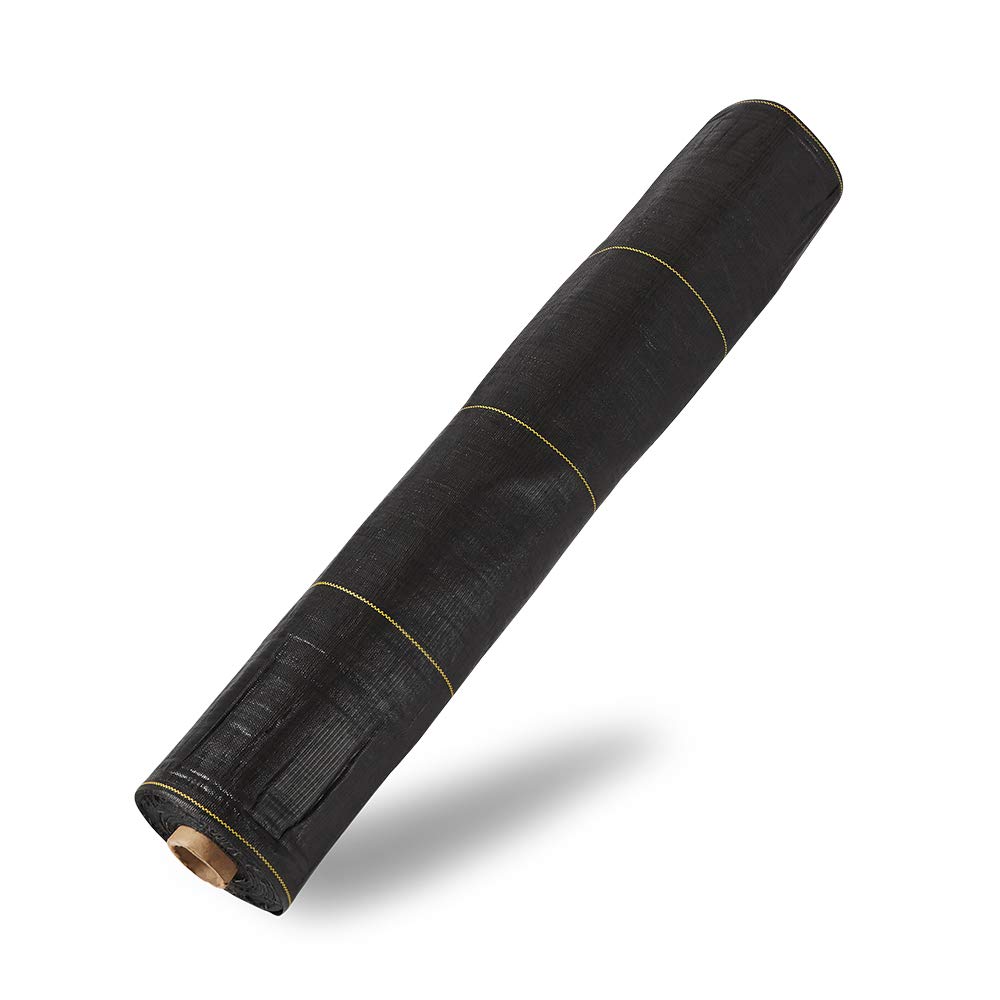
200 feet of UV-stabilized roll for sprawling gardens and long planting runs.
When your garden is measured in rows, not beds, the sheer length of this 3 x 200 foot roll is the headline. It’s a 3.2 oz woven polypropylene fabric that blocks weeds while letting air, water, and nutrients move through, and it’s UV-stabilized so it stands up to full-sun exposure season after season. Golden alignment stripes every 12 inches turn straight-row layout into a simple task.
Customers note the Dewitt Sunbelt Weed Barrier lasting multiple years and keeping weeds away effectively, with one calling it their “favorite durable weed cloth.” A common trick: burn holes in it and plant directly — one gardener says no mulch is needed and that it retains moisture well enough to cut down on watering. Water resistance gets mixed notes, but people clarify it lets water through without puddling, which is what you actually want.
The honest trade-off is that nowhere near as dense as the 5 oz Super Geotextile above, so if you have deeply aggressive weeds it’s not the ultimate shield. For standard garden rows and greenhouse floors, though, it’s a proven workhorse.
What stands out
- 200-foot roll covers long planting runs without seams
- UV-stabilized for years of full-sun use
- Golden stripes every 12 inches for straight rows
Keep in mind
- Lighter 3.2 oz weight won’t stop the most aggressive weeds
- Frays at cut ends unless sealed
Best suited for: greenhouse floors, long garden rows, and commercial-style planting runs where length and UV resistance matter most.
Not ideal for: small raised beds where a shorter, heavier roll gives better value.
4. CIEOVO Raised Garden Bed Liner
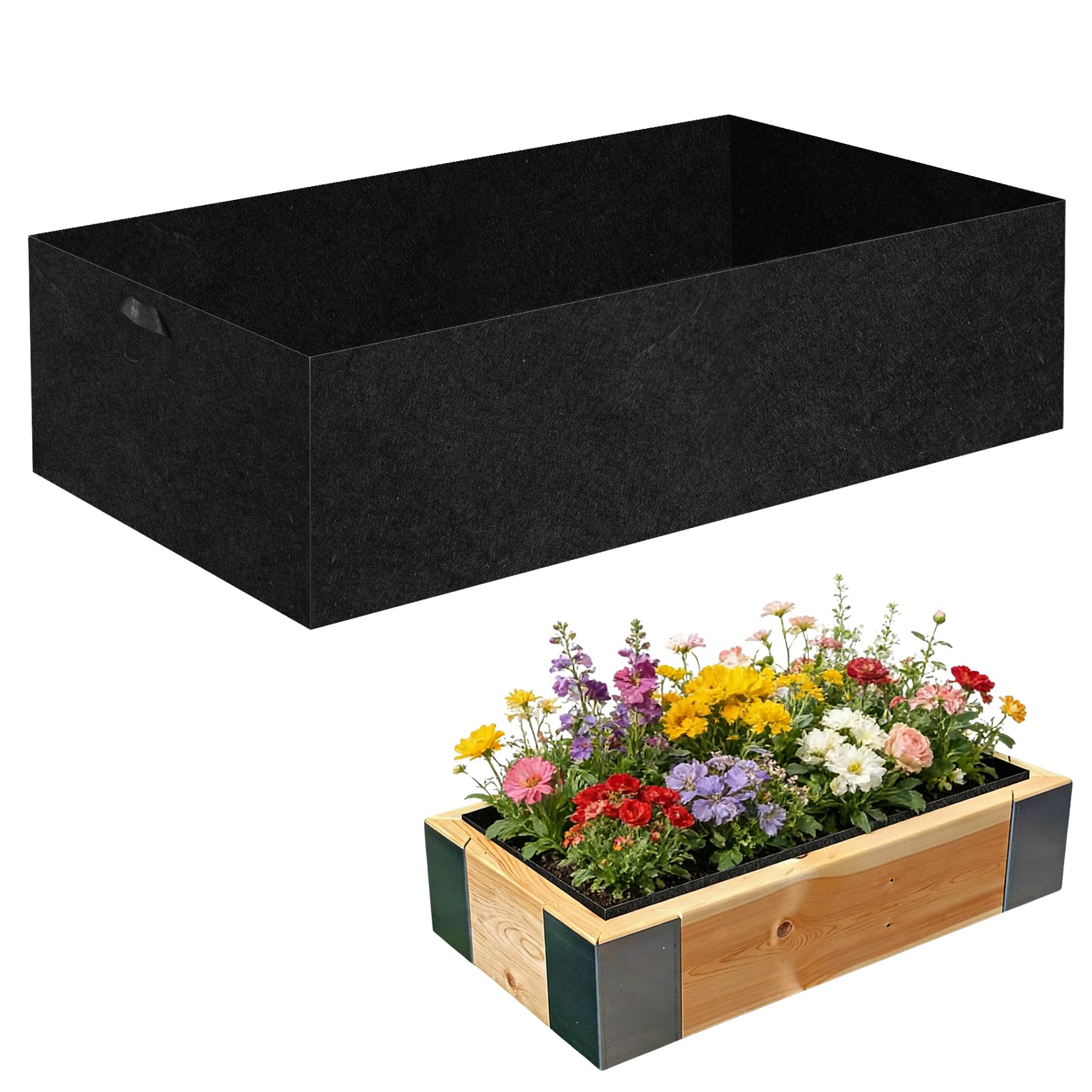
The ready-made felt bag that skips the cutting and drops straight in.
Unlike the rolls above, this is a finished liner bag sized at 4 x 2 x 1 ft that you simply drop into your existing raised bed frame, fill with soil, and plant. It’s made from thickened non-woven felt that’s tough and durable, with reinforced handles on both sides so you can move the whole bed around when needed. That handle design is the standout feature — no other liner in this list lets you relocate a planted bed so easily.
The breathable felt drains excess water quickly through the bottom, which is exactly what prevents root rot after heavy rain. Reviewers point out fitting 10 pepper plants in one bag, and beginners especially praise how easy it is to fill with soil and go. One person even used it as an in-pond planter, though they note the sides bow when the bag isn’t supported by a frame.
The walls are soft felt, so they need the support of your bed frame to hold their shape. If you’re looking for a freestanding structure, this isn’t it — but as a liner inside a frame, it’s one of the easiest ways to get planting.
easy setup: no cutting, no staples, no measuring — drop it in, fill it, and plant, with handles to move it later.
Reach for this if: you want a no-measuring liner for a standard 4x2x1ft bed and like the ability to move it.
Look elsewhere if: you need a freestanding planter — the felt walls bow without a supporting frame.
5. Niuyhe Oval Raised Garden Bed Liner
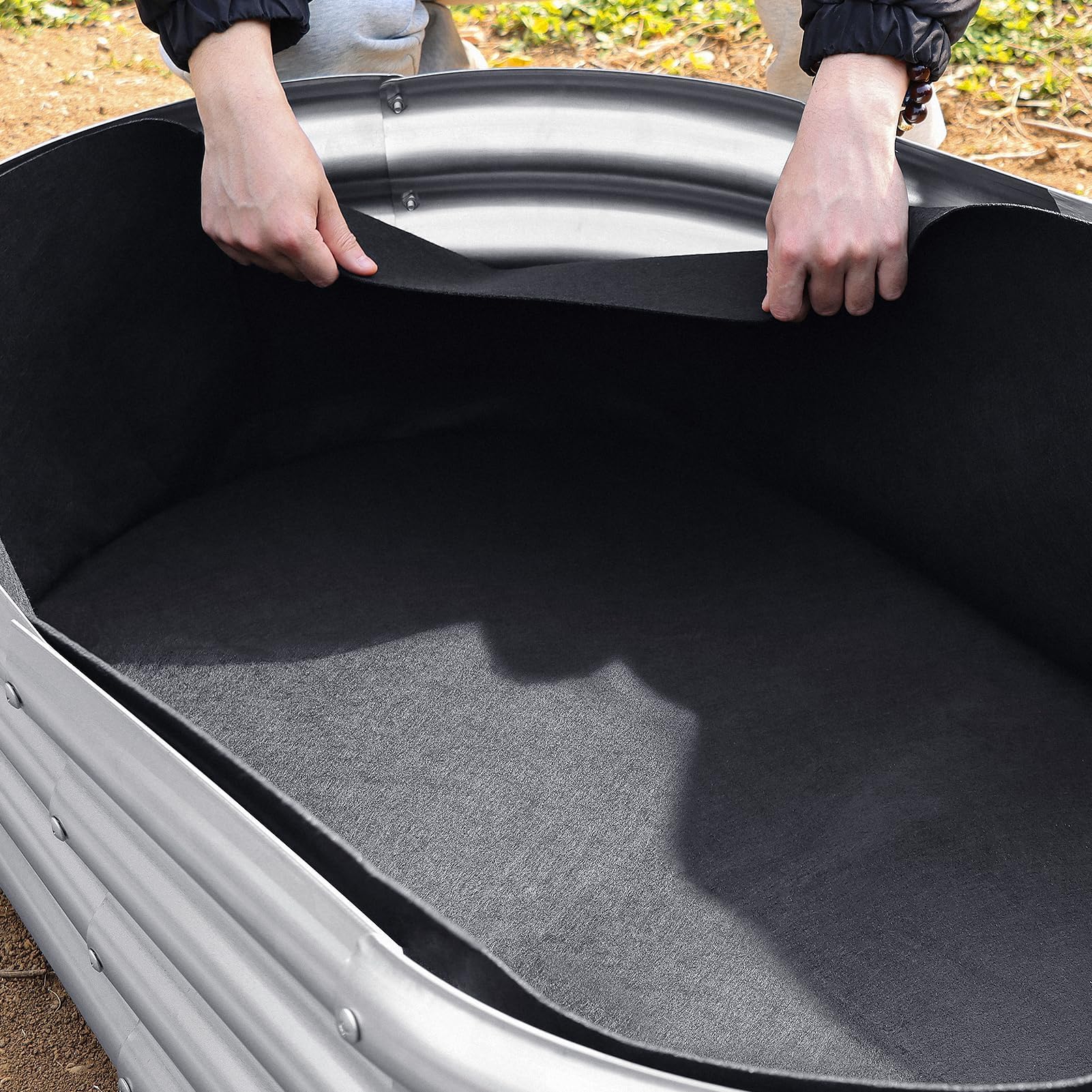
The oval-specific liner that keeps a 60-gallon bed’s soil perfectly contained.
Round and oval raised beds need a liner that matches their curve, and that’s exactly what this one is built for. It’s made from 260g/㎡ elastic non-woven fabric at about 2mm thick, sized at 48 x 24 x 12 inches for oval frames, and it holds a full 60 gallons of soil. The 2mm thickness gives it super strong puncture resistance, so it handles the pressure of a fully filled bed without tearing.
Owners describe it as thicker than expected yet still porous enough for proper drainage, and one gardener noted their garden is thriving with it in place. The breathable fabric keeps air circulating to expel excess water and lets roots settle in for healthy growth.
The one sizing warning is real: a few buyers ordered the wrong size and found the fabric loose and baggy, so measure your frame before buying. The same fabric is also available in rectangle and round shapes if oval isn’t what you have.
Why it works
- 2mm elastic fabric resists punctures from tools and roots
- 60-gallon capacity suits deep oval beds
- Porous build drains well and keeps gardens thriving
Double-check
- Ordering the wrong size leaves loose, baggy gaps — measure first
- Rectangular and round versions sold separately
Pick this for: oval metal beds where a straight-sided liner won’t fit the curve.
pass on it if: your frame is rectangular — choose a matching rectangle liner instead.
6. Mizelu Raised Garden Bed Liner 2-Set
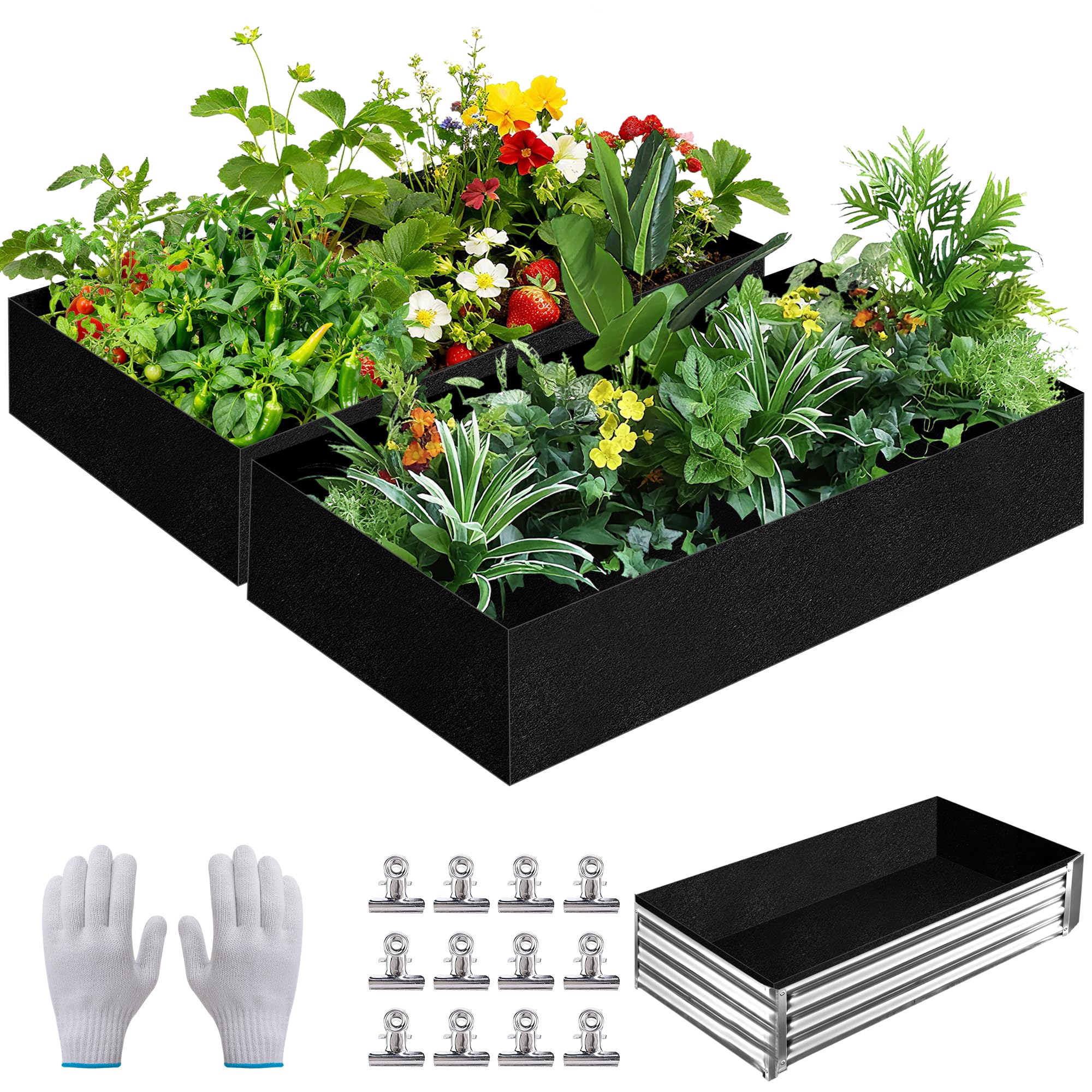
Two ready-made liners with clips and gloves so you can line two beds in one afternoon.
If you have two 4ft x 2ft x 1ft beds to line, the Mizelu Raised Garden Bed Liner 2-Set is the efficient route — you get two rectangular non-woven liners, 12 sturdy clips to hold the edges in place, and a pair of gloves. That complete setup means no separate trip for fasteners; one owner even added a few binder clips of their own for extra stability while filling with dirt.
Owners praise the quality most, noting the fabric is plenty thick and holds dirt and filler material well. The included clips are a mixed bag — some find them perfect for holding fabric in place while adding soil, while others supplement with their own clips. The depth also gets mixed feedback, with some finding it slightly deep and folding the edges over.
The 2-pack price point makes this a strong value for multiple beds, and the gloves are a thoughtful bonus. Just confirm your bed size before ordering, since these are sized specifically for 4ft x 2ft x 1ft frames.
Complete kit: two liners, a dozen clips, and gloves — everything you need to line two beds without extra purchases.
Best for: gardeners with two matching rectangular beds who want a ready-to-go setup with fasteners included.
Consider something else if: you have a single odd-sized bed or prefer a heavier 5 oz fabric.
7. Kijamilee Weed Barrier Landscape Fabric
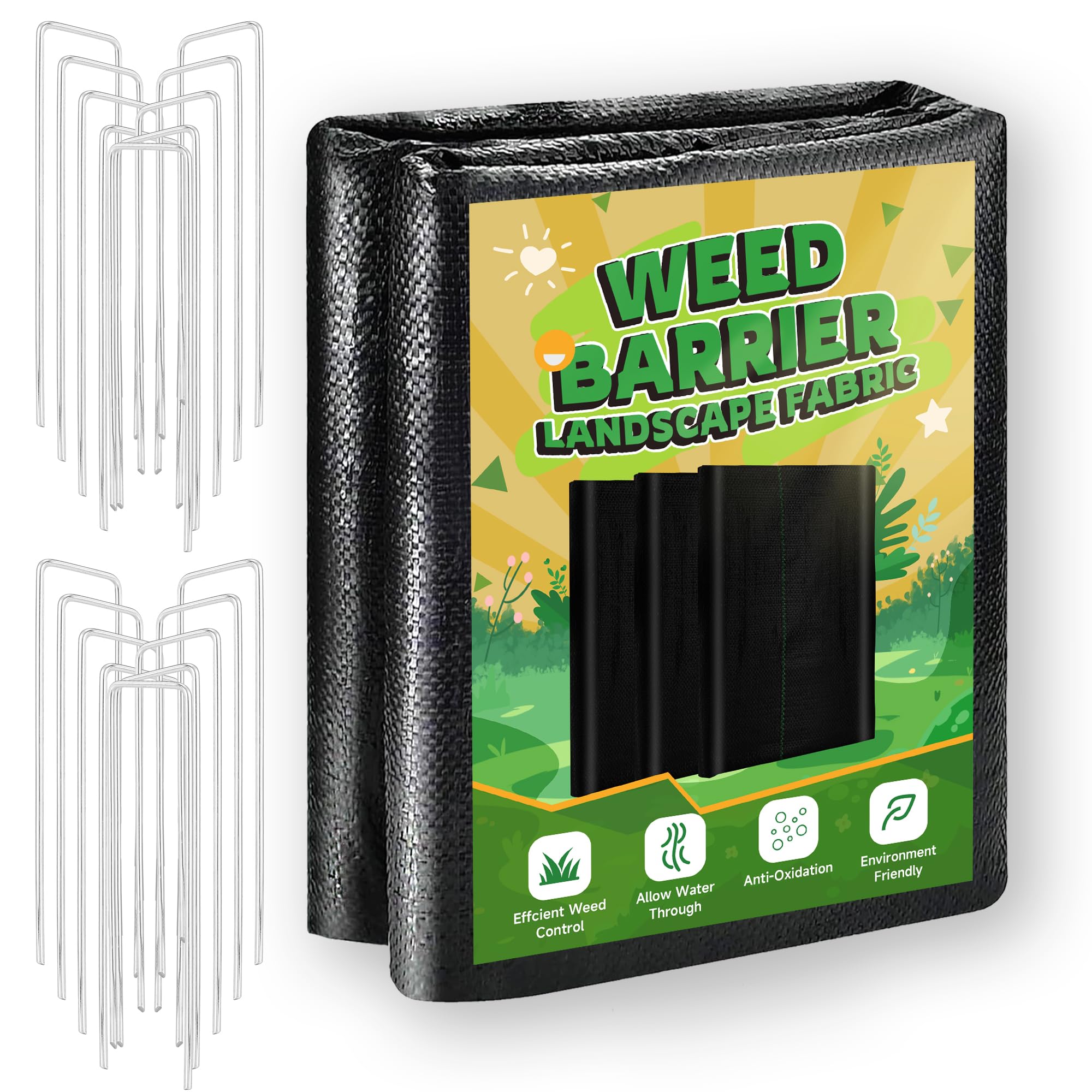
The budget-friendly 3.2 oz roll that’s easy to lay down and comes with 20 staples.
For a quick, affordable project, this 3.2 oz woven polypropylene roll hits the budget balance. It’s UV-resistant and permeable, letting air and water reach the soil while blocking weeds, and it comes with 20 U-shaped securing pegs so you don’t need a separate trip for fasteners. At 4ft x 50ft, it covers the same area as the VIVOSUN roll above but at a lighter weight and lower cost.
Owners find it easy to lay down and effective at blocking weeds, with one noting it worked well under a rock foundation for a shed. The included staples work best when pinned at an angle rather than straight down — a detail that makes installation noticeably easier. The fabric is durable yet lightweight and easy to cut with scissors.
The trade-off is clear: at 3.2 oz it’s a lighter cloth than the 5 oz options, and some buyers find it not as heavy-duty as advertised. For tomato rows and garden paths where cost matters more than maximum density, it’s a perfectly capable choice.
What you get
- 20 U-shaped staples included — no extra purchase needed
- Easy to cut and lightweight for fast installation
- Permeable weave lets water through effectively
Know this
- Lighter 3.2 oz weight isn’t as heavy-duty as 5 oz rolls
- Staples work best angled into the ground
Good for: budget-conscious projects like tomato rows, paths, and temporary beds where easy installation matters.
Upgrade if: you’re lining a permanent bed and want the extra density of a 5 oz fabric.
Understanding the Specs
Fabric weight (oz)
The weight of the fabric per square yard, measured in ounces, tells you how dense and tough the barrier is. A 5 oz fabric is noticeably heavier and more durable than a 3.2 oz one, which means it lays flatter, resists tearing under foot traffic, and makes it harder for weeds to push through. Lighter 3.2 oz fabrics are easier to cut and handle but may let aggressive weeds penetrate over time.
Permeability and drainage
Permeability means water can pass through the fabric while soil stays put. You want a liner that drains quickly after rain so roots don’t rot. Look for terms like “high permeability” or “breathable” — these describe fabric that lets air and water flow through while still blocking sunlight, which prevents weeds from germinating underneath.
UV resistance
Sunlight breaks down cheap fabric over a single season. UV-stabilized fabric is formulated to withstand sun exposure without becoming brittle, which is why quality liners last multiple years in full-sun locations. If your bed sits in open sunlight all day, UV resistance matters as much as fabric weight.
Roll vs. bag liner
A roll of landscape fabric gives you flexibility — you cut it to any size and shape, and it can cover paths and borders beyond just your raised beds. A pre-shaped bag liner matches a specific bed footprint and drops in with zero cutting. Rolls suit custom projects; bags suit standard-size frames where you want quick setup.
FAQ
What is the difference between a raised bed liner and a weed barrier?
Will water drain through a raised bed liner?
How long does a raised bed liner last?
Can I use a weed barrier roll as a raised bed liner?
What size liner do I need for a 4x2x1 ft raised bed?
Is a heavier fabric always better for a raised bed liner?
Can I plant directly through a weed barrier liner?
Will a liner protect my wooden raised bed from rotting?
What is the difference between woven and non-woven fabric?
Do I need staples or clips to install a raised bed liner?
Final Thoughts: The Verdict
For most gardeners, the strongest raised bed liner setup is the VIVOSUN Premium Weed Barrier — its 5 oz dual-layer build takes daily foot traffic and drains quickly, backed by thousands of owners praising its quality. If you want maximum long-term weed defense for foundation beds, the Super Geotextile Professional is the tougher 5 oz option with 4+ year owner reports. And for a ready-made liner that drops straight into an existing frame with zero cutting, the CIEOVO Raised Garden Bed Liner with its carry handles is the easiest route to planting.
How We Picked
We do not accept paid placement. Every pick is matched to a real buyer and a real use-case; we do not hands-on test units.
Sources & Methodology
Specifications: manufacturer listings and product documentation. Review insights: verified customer reviews, as of August 2026. Pricing: not shown on this page (it changes often); check the current price via the retailer link.
As an Amazon Associate, Lawn Gear Lab earns from qualifying purchases. This does not affect which products we feature.