
Specs are compiled from manufacturer listings and verified buyer reviews and can change over time — please confirm the key details on the product page before buying.
Your basil bolts, your parsley crisps, and no matter how much you water, the top inch of soil dries out by noon. The missing layer is mulch — but herbs are picky, and the wrong one can smother crowns, invite slugs, or drop a hundred grass seeds into your bed. The right one keeps roots cool, holds moisture, and feeds the soil as it breaks down.
I’m Rikta — the founder and writer behind Lawn Gear Lab. This guide is built by comparing the manufacturers’ published specifications and the patterns across verified customer reviews, so you get each pick’s real strengths and trade-offs instead of marketing spin.
Herbs thrive when their soil stays cool and damp, which is exactly what a smart layer of mulch for herbs delivers all season long without the guesswork.
Our Picks at a Glance

How To Choose The Best Mulch For Herbs
Herbs sit close to the soil surface, so the mulch you pick acts like a living blanket around their stems. You want something fine enough to settle around plants without trapping moisture against the crown, and clean enough that it doesn’t introduce weeds or disease.
Texture and particle size
Coarse bark chips work for shrubs but roll right off a thyme patch. Look for processed, chopped, or finely cut materials that knit together when watered — they stay put on slopes and create a barrier that blocks sunlight from reaching weed seeds.
Moisture retention vs. drainage
Herbs like rosemary and sage want sharp drainage, while basil and parsley demand steady moisture. Straw and cocoa shells reduce evaporation dramatically, while compost mulches hold water like a sponge. Match the material to the plant’s thirst level, not just the look of your garden.
Quick Comparison
| Model | Best For | Form | Volume | Moisture Retention | Amazon |
|---|---|---|---|---|---|
| R&M Organics Compost★ Best Overall | Feeding hungry herbs | Manure compost | 160 oz (10 lb) | High | Amazon |
| Out-Grow Wheat StrawBest Value | Insulation & moisture | Natural straw | 64 oz (1 cu ft) | High | Amazon |
| EZ Straw Seeding MulchTop Performer | Seed beds & new herbs | Processed straw + tack | 1 cu ft | High | Amazon |
| Back to the Roots Coco Mulch | Raised beds & containers | Compressed coconut husk | 2 cu ft (expanded) | Very high | Amazon |
| Garden Elements Cocoa Shell | Ornamental herb borders | Cocoa bean shells | 2 cu ft | Moderate | Amazon |
| Old Potters Organic Compost | Renovating tired soil | Plant-based compost | 768 fl oz (24 qt) | High | Amazon |
| HealthiStraw GardenStraw | Large herb beds | Compressed wheat straw | 3 cu ft (20 lb) | Very high | Amazon |
| Hull Farm Cocoa Shell | Potted herbs & scent | Cocoa bean shells | 2 cu ft | Moderate | Amazon |
| Blue Ribbon Organic Compost | Premium soil building | Organic compost | 7.9 gallons (32-35 lb) | Very high | Amazon |
In‑Depth Reviews
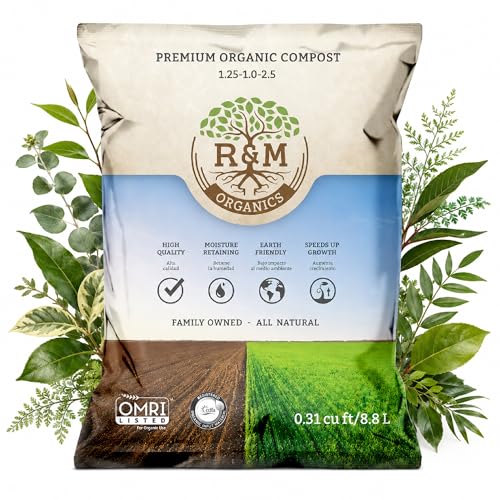
1. R&M Organics Compost Soil Amendment
Our pick — over 4.5★ from 500+ verified ratings; the strongest balance of quality and price.
A nutrient-packed soil blanket that feeds herbs as it mulches.
This is the two-in-one answer for herb beds — it mulches the surface and feeds the roots at the same time. It’s a fully composted dairy cow manure product, so it smells like clean earth rather than a barn, which makes it workable for both indoor pots and outdoor raised beds.
The texture is the standout. Its very fine-grained consistency spreads easily in a thin quarter-inch layer around plants, and the 10-pound bag is light enough to carry with one hand. Because it’s compost, it holds moisture longer than bare soil, cutting down how often you need to water during hot spells.
Buyers report dramatic rescues of struggling plants, including tomato plants whose yellowing leaves and spindly stems rebounded within a week of mixing the bag into a 27-gallon planter. The most-praised qualities are overall quality and plant performance, with gardeners noting their plants flourish after application. It also comes in at roughly half the volume of a cubic-foot straw bale (160 oz vs 64 oz), so it’s a more concentrated feed — a little goes a long way.
What herbs gain
- Feeds as it mulches — no separate fertilizer step
- Fine texture spreads easily around delicate stems
- Low-odor formula suits indoor containers
Consider this
- As a mulch, it won’t block weeds as long as straw
- Coverage is smaller than a straw bale
Reach for it if: you want one product that conditions soil and protects roots for container herbs or small raised beds.
Look elsewhere if: you need broad weed suppression across a large herb patch — a straw layer does that job better.
2. Out-Grow 100% Natural Wheat Straw
A clean, chemical-free straw that keeps herb soil moist for days.
If you’ve never mulched with straw, this is the gentle introduction. It’s 100% natural wheat straw with no additives, and it’s cleaned to be low-dust with minimal weed seeds — exactly what you want near a thyme or oregano patch where you don’t want surprise grass sprouts.
Its real superpower is moisture retention. Plants stay “happier and stay moist most of the time,” as buyers describe it, which means less frequent watering for your basil and parsley through the heat of summer. The straw also works as natural insulation, keeping soil cool in warm months and cushioning roots when temperatures drop.
What wins people over is its versatility — the same 1-cubic-foot box proves useful for garden beds, animal bedding, and craft projects, and buyers consistently praise the quality. The value proposition is mixed, though: some find it a great deal while others consider it pricey for the volume. It’s a 64-ounce bale, so expect to buy two if you’re covering a generous herb bed.
Why it works
- Retains soil moisture exceptionally well
- Free of additives and chemicals
- Clean and low-dust for easy handling
Keep in mind
- Volume is modest — large beds need multiple boxes
- Some buyers find the cost per box high
The verdict: a reliable, versatile straw mulch for small- to medium-herb patches that need consistent moisture.
The caveat: for expansive beds, the bigger HealthiStraw bale below delivers more coverage per dollar.
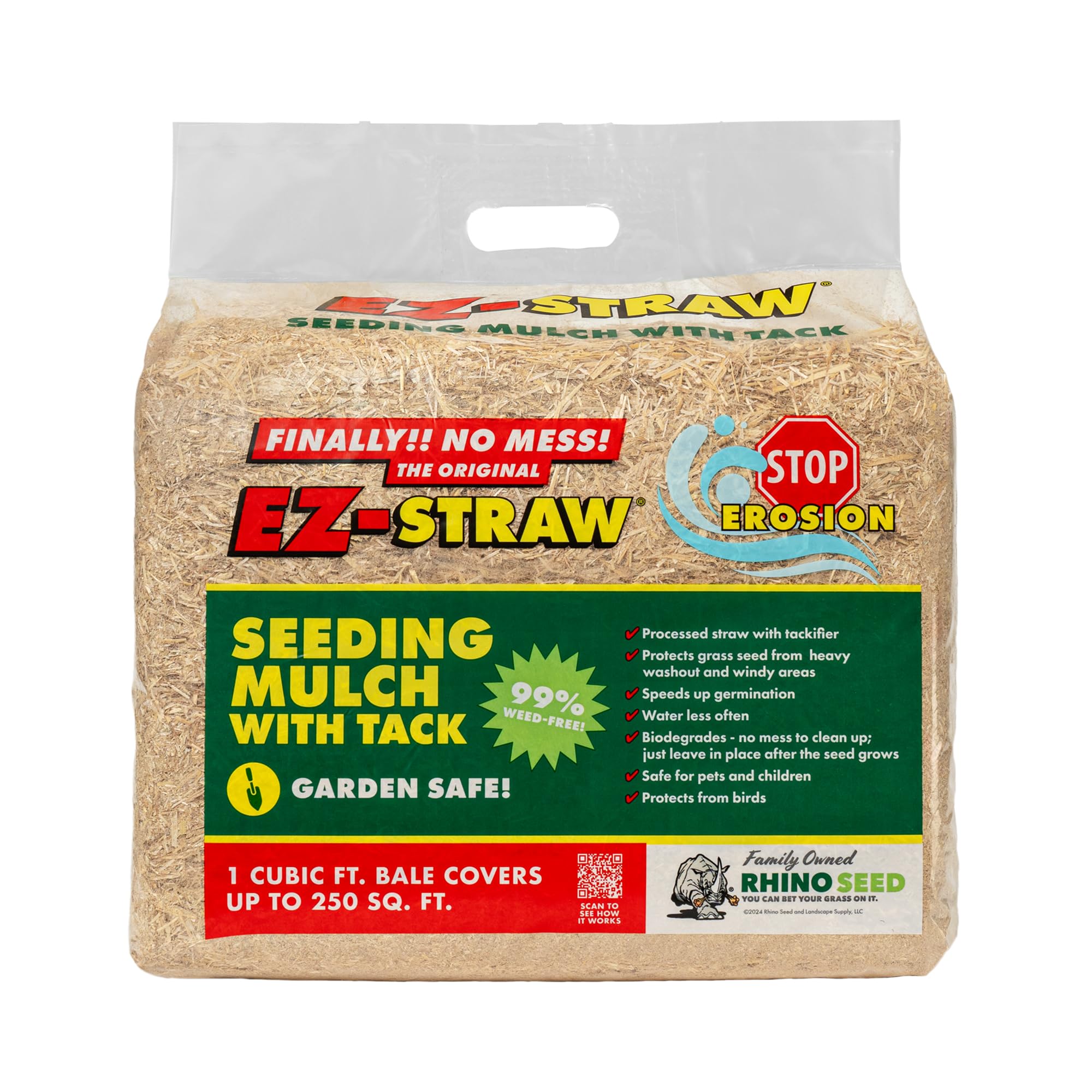
3. EZ Straw Seeding Mulch with Tack
Finely cut straw that stays put on slopes through wind and rain.
Starting herbs from seed? This processed straw has a natural biodegradable tackifier — a bonding agent that gives the straw a slight stickiness so it holds together and stays where you put it. That’s the difference between a mulch that survives a storm and one that ends up piled against your fence.
The fine cut is the feature buyers rave about — it’s easier to distribute than garden-center straw and covers soil evenly. It’s also 99-percent weed-free, so it won’t introduce invasive plants into your carefully tended basil row. The UV-protected bag with a handle means you can store it outside without it degrading.
It speeds up germination and keeps soil moist, reducing watering frequency — ideal for a new herb patch where seedlings are vulnerable. Owners mention it stays firmly in place on banks during wind and rain, and one gardener notes a single bale is sufficient for a 4×8 raised bed. The one caution: a few users find grass seeds mixed in, which can sprout in pots, though they’re easy to pull. Unlike the Out-Grow straw above, this one’s built to lock onto seed beds rather than just blanket an established patch.
Seed-bed strengths
- Sticks together, so wind and rain won’t move it
- Fine texture is easy to spread evenly
- Speeds germination and holds moisture
Watch for
- Occasional grass seeds sprout in pots
- Best suited to seed-starting, not perennial mulch
Grab this for: new herb seed beds, reseeding bare patches, or slopes where other mulches wash away.
Skip it for: established perennial herbs that need a longer-lasting feed — a compost mulch gives more nutrients.
4. Back to the Roots Organic Coconut Husk Mulch
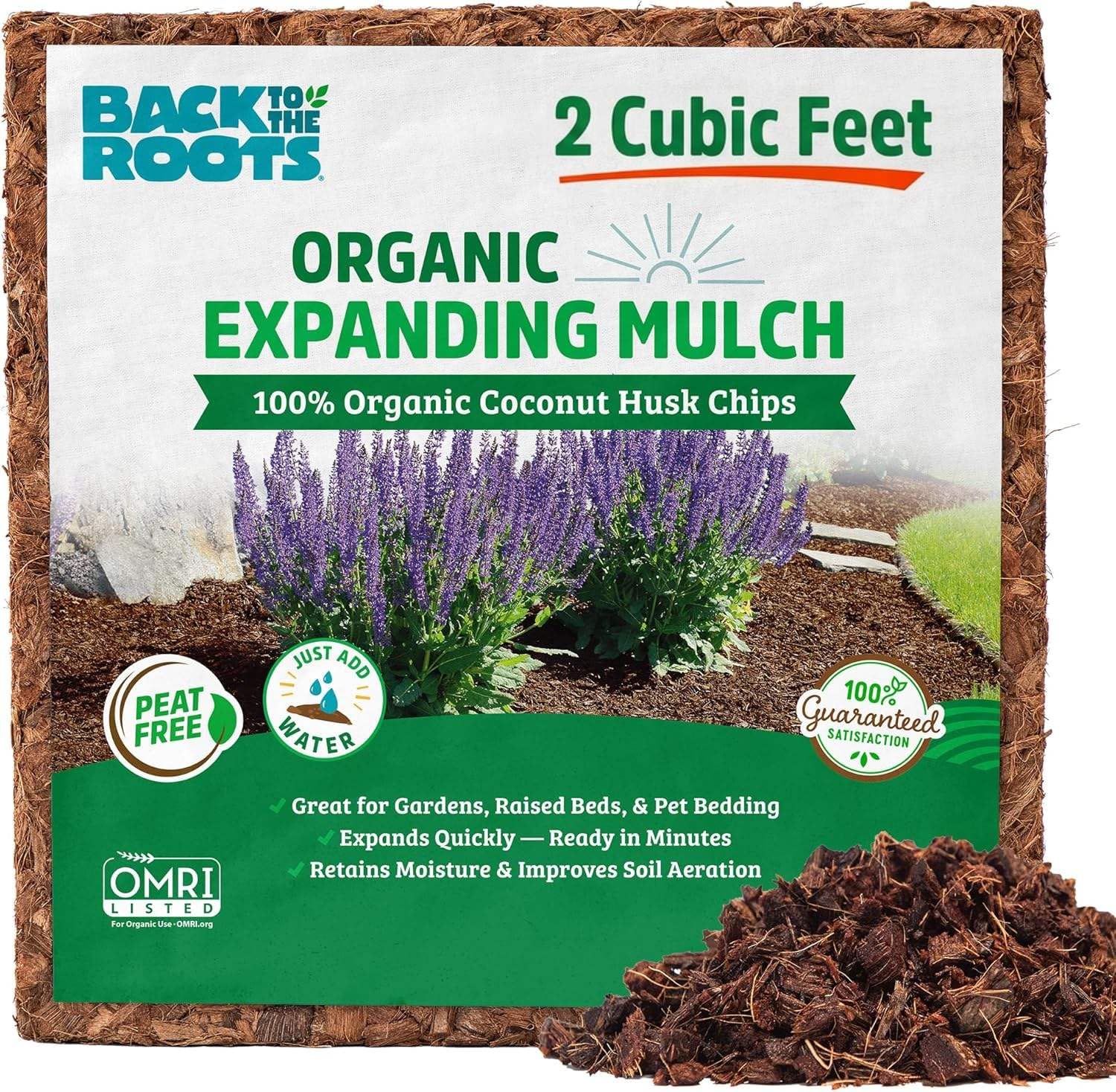
A 10-pound brick that expands into over 2 cubic feet of mulch — no heavy hauling.
Here’s the trick that solves the “mulch is heavy” problem: this comes as a compressed 10-pound block of coconut husk that expands to over 2 cubic feet when you add water. Customers note one block fills a wheelbarrow three-quarters full, which means you’re hauling a light package, not a soggy 30-pound bag.
Coconut husk is a natural moisture magnet, and owners note it helps with evaporation “immensely” — a genuine win for herb beds in hot, drying sun. It’s peat-free and OMRI-listed, meaning it meets organic production standards, so it’s safe to work into a bed where you’ll be eating the leaves. One happy gardener reports it saved their back compared to carrying heavy mulch and they will definitely buy more.
The trade-off is the breaking-apart process. Because it’s a compressed block, it’s genuinely hard to break apart by hand — reviewers consistently flag this as the fiddly step. Have a bucket of water and some patience ready. Once rehydrated, it’s easy to spread and has a pleasant natural color for raised beds.
The payoff
- Huge volume from a small, light package
- Exceptional moisture retention for thirsty herbs
- OMRI-listed for organic growing
The work
- Compressed block is difficult to break apart
- Needs water and effort before spreading
Choose this if: you have a raised bed or container setup and want maximum mulch volume without hauling wet bags.
Think twice if: you want a no-fuss, open-and-spread product — the hydration step adds time.
5. Garden Elements Cocoa Bean Shell Mulch

A rich chocolate-scented mulch that turns a herb border into a sensory treat.
If your herb garden doubles as a seating area, this changes the experience. Made from the outer shells of cocoa beans, it carries a natural dark brown color and a fresh chocolate aroma straight from the garden — no dyes or fragrances added. Buyers describe it as beautiful and easy to spread, with a fragrance that lingers for weeks.
It does real work, too: it retains soil moisture, suppresses weeds, and reduces plant stress through summer heat. As it decomposes, it releases natural nutrients — an NPK value of 2.5-1-3 — so it feeds herbs while protecting them. It’s lightweight, making it easy to handle even for container gardens.
The honest caveats matter here. It’s toxic to dogs due to theobromine and caffeine, so skip it if your pup patrols the garden. It’s prone to white mold in damp shade, so use it in sunny spots, and it breaks down in about a year — treat it as seasonal. For sunny herb beds, the trade-off between beauty and maintenance is worth weighing.
What shines
- Natural chocolate fragrance and rich dark color
- Suppresses weeds and retains moisture
- Feeds soil with nutrients as it breaks down
Be careful
- Toxic to dogs if ingested
- Mold-prone in damp, shaded areas
- Breaks down in about a year
Pick this for: sunny, dog-free herb borders where fragrance and appearance matter as much as function.
Pass on it if: you have pets that roam the garden or herbs in constantly shaded beds.
6. Old Potters Organic Plant-Based Compost
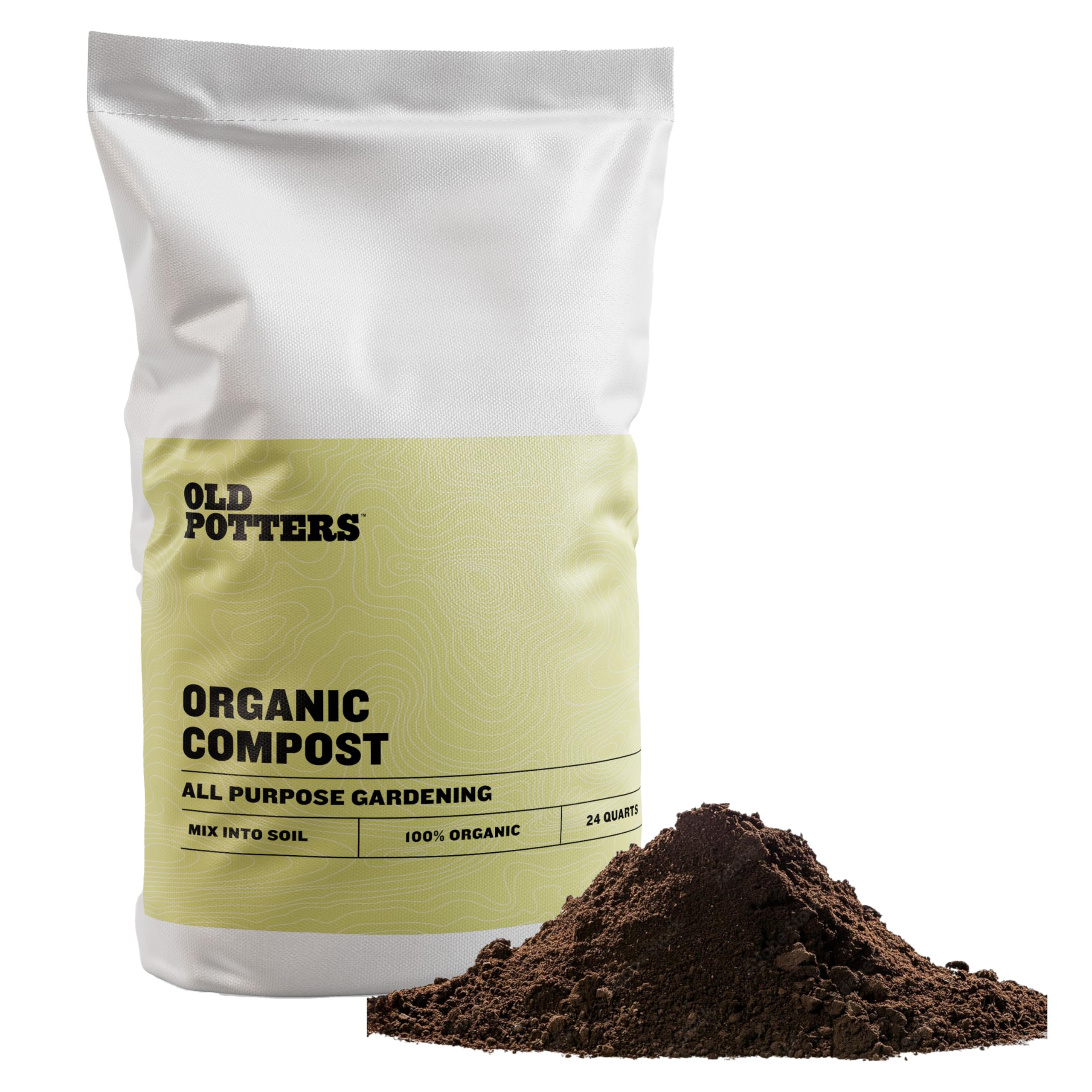
A plant-based compost that revives even the most stubborn heavy soil.
Some herb beds need more than surface protection — they need a soil overhaul. This 25-pound plant-based compost improves aeration, water retention, and nutrient availability, which is exactly what you want before planting a new herb bed in clay-heavy ground. It’s 100% organic and chemical-free.
The results speak loudly. One gardener working with harsh clay and rocky soil revived 10 bareroot roses that all bloomed, and another saw an indoor banana plant sprout leaves within days. For herbs, that translates to better drainage for rosemary and sage while still holding moisture for basil. Buyers describe the quality and plant growth as the top reasons to buy.
Two honest notes. The smell is intense — described as “awful” even sealed, so open the bag outdoors. And it can arrive clumpy with clayish bits that you’ll need to crumple by hand before spreading. But the effectiveness for heavy feeders earns repeat purchases.
Why it’s worth it
- Revives poor, clay-heavy soil effectively
- 100% organic and chemical-free
- Big 25 lb bag for serious beds
Expect this
- Strong smell — open the bag outside
- Clumpy texture needs manual crumbling
Use this for: renovating a tired or heavy-soil herb bed before the season starts.
Skip it for: a quick, pleasant top-dressing — the smell and clumps make it a workhorse, not a showpiece.
7. HealthiStraw GardenStraw
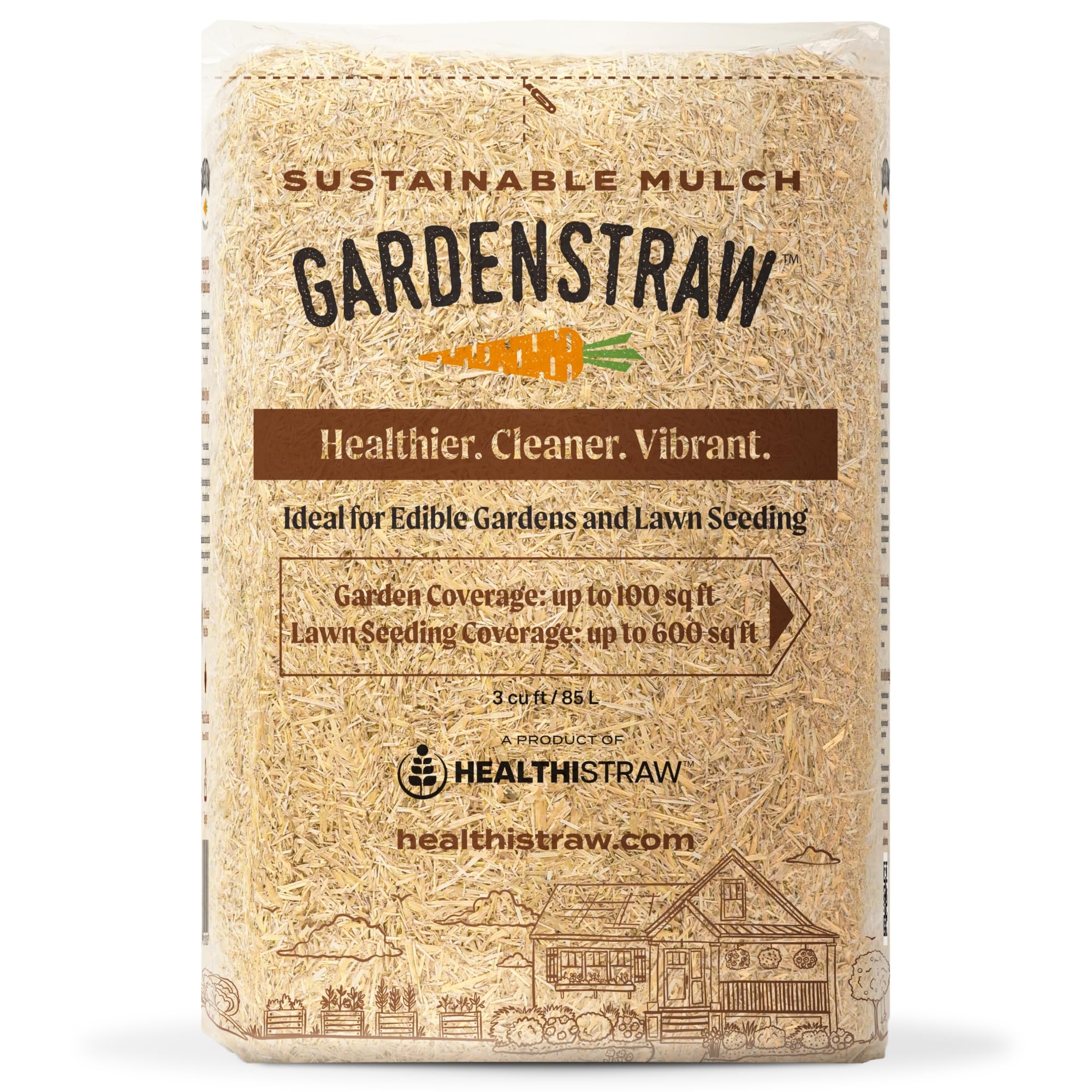
The big bale that blankets an entire herb bed with clean, water-saving straw.
For a serious herb garden, coverage is everything — and this 3-cubic-foot compressed bale covers up to 100 square feet at a 2-3 inch layer, or 600 square feet for lawn seeding at a quarter-inch. That’s roughly three times the volume of the Out-Grow box (64 oz), so you’re buying fewer bags and spending more time gardening.
The straw is specially cut so the fibers interlock when watered, staying in place naturally against wind and rain without chemical binders. It’s 100% non-GMO wheat straw, filtered to remove dust and seeds — a real advantage for herb beds where you don’t want rogue grass. Buyers call it the “best garden straw ever,” praising how it stays put and reduces weeds.
Moisture retention is exceptional — reviewers point out it keeps plants from drying out in hot weather and reduces watering needs. It’s also compost-friendly: used straw breaks down quickly, adds carbon to compost, and enriches soil. The trade-off is that some seeds may still sprout, though most buyers find it a minor issue. It’s a premium at, but the square-footage-per-dollar math works in your favor for large patches.
The big win
- Massive coverage from a single bale
- Fibers interlock to resist wind and rain
- Low seed count and clean feel
Weigh this
- Costs more upfront than smaller bales
- A few seeds may still sprout
Best for: large herb beds, vegetable patches, or anyone tired of buying straw one small bag at a time.
Not ideal for: tiny container gardens where a 3-cubic-foot bale would be excessive.
8. Hull Farm Cocoa Bean Shell Mulch

The chocolate-scented mulch that makes porch herb pots smell like a bakery.
This is the original cocoa shell mulch that gardeners keep coming back to. Its chocolate aroma makes porches smell like chocolate, and it’s been a staple since 2012. The 2-cubic-foot bag is lightweight and easy to spread, even across larger areas.
It carries a natural fertilizer value of approximately 2.5-1-3 NPK, and it won’t burn vegetation — so it’s safe to spread close to herb stems. As it decays, it enriches the soil below, which means your mint and oregano get a slow-release feed all season. It also keeps soil moist and doesn’t blow away too easily once settled.
The chocolate scent is the most-praised feature, with owners loving the fragrance and look. But there are caveats. The smell is strong when first applied (it fades over a week or two), and buyers caution it attracts pests like slugs and snails, which can be a problem in a damp herb bed. It’s lightweight and can blow away before you water it in. For potted herbs on a patio, it’s charming; for a slug-prone ground bed, consider a straw alternative instead.
What delights
- Chocolate scent that perfumes the garden
- Slow-release NPK 2.5-1-3 feed as it decays
- Won’t burn vegetation near stems
What to know
- Attracts slugs and snails
- Lightweight — can blow away before watering
- Scent fades after the first week
Choose this for: potted patio herbs and containers where the chocolate scent is a feature, not a flaw — and where slugs are less of an issue.
Pass if: you’re mulching a ground-level herb bed in a damp, shady area prone to slugs — the Garden Elements version above is better for sunny dog-free borders.
9. Blue Ribbon Organics OMRI Certified Compost

A rich, dark “black gold” compost that herbs visibly thrive in.
This is the premium option for gardeners who treat their soil like a five-star meal. It’s OMRI-certified for organic use, meaning it meets strict standards for organic production, and it’s safe to use at any concentration — you can’t overdo it with this bag. It improves soil structure, aeration, and water retention in one application.
Buyers are genuinely enthusiastic about the quality. One gardener calls it “black gold,” noting they’re growing greens indoors under a grow light year-round with this mix. Another reports their basil “grows like mad,” which is exactly the kind of vigor herb gardeners want. The compost is clean — no sticks, plastic, or debris — with a rich, dark, earthy texture that gardeners describe as beautiful.
The catch is cost. It’s pricey compared to bulk compost from a nursery or yard, and the 7.9-gallon bag (32-35 pounds) doesn’t go as far as a full cubic yard. But for a small raised herb bed where quality matters most, shoppers say it’s worth the premium and plan to buy more. Its compact volume means it’s best as a soil amendment rather than a sprawling surface mulch.
The advantage
- OMRI-certified for organic growing
- Rich, clean texture with zero debris
- Safe at any concentration — won’t burn roots
The trade-off
- Premium price per bag
- Smaller volume than bulk yard compost
Splurge on this for: a small, high-value herb bed where you want the best possible soil start and don’t mind paying for it.
Shop elsewhere if: you’re covering a large area — a straw bale like the HealthiStraw above gives more square footage for the money.
Understanding the Specs
Volume and coverage
Mulch is sold by cubic feet or pounds, and the gap can be surprising — a 64-ounce straw box is a much smaller footprint than a 3-cubic-foot bale. Think about the square footage of your herb bed before choosing, because a thin layer of 2-3 inches is what actually suppresses weeds and holds moisture.
Moisture retention
This is the #1 job of herb mulch. Materials like straw and coconut husk create a physical barrier that stops evaporation, while compost mulches hold water like a sponge. If your herbs wilt by noon, prioritize a material with high moisture retention; if you’re growing rosemary and sage, you want drainage first.
Nutrient content
Compost-based mulches feed the soil as they break down, delivering slow-release nutrients that benefit hungry herbs like basil. Straw adds carbon to the soil but little immediate nutrition. A cocoa shell mulch offers a middle ground, with a natural NPK rating that won’t burn vegetation.
Weed and seed content
A mulch that’s 99-percent weed-free saves you hours of pulling. Processed straws and clean composts minimize this problem, but cheaper straw can introduce grass seeds that sprout right in your herb bed. Check for “weed-free” or “low seed” claims before buying.
FAQ
What is the best mulch for herbs in containers?
Is straw mulch good for herb gardens?
Will cocoa bean mulch hurt my herbs?
How thick should I lay mulch around herbs?
Is compost considered a mulch for herbs?
Why does my mulch have grass growing in it?
Can I mulch herbs with grass clippings?
How long does straw mulch last in a herb garden?
Does mulch keep herbs from getting too much water?
Should I mulch around herbs in winter?
Final Thoughts: The Verdict
For most gardeners, the best mulch for herbs is the R&M Organics Compost — it feeds and protects simultaneously, and its fine texture and low odor make it the most versatile daily choice. If you want broad weed suppression and water conservation across a large bed, grab the HealthiStraw GardenStraw for its 3-cubic-foot coverage. And for container herbs where the look and scent matter, the Hull Farm Cocoa Shell turns a simple pot into a chocolate-scented showcase.
How We Picked
We do not accept paid placement. Every pick is matched to a real buyer and a real use-case; we do not hands-on test units.
Sources & Methodology
Specifications: manufacturer listings and product documentation. Review insights: verified customer reviews, as of August 2026. Pricing: not shown on this page (it changes often); check the current price via the retailer link.
As an Amazon Associate, Lawn Gear Lab earns from qualifying purchases. This does not affect which products we feature.