
Specs are compiled from manufacturer listings and verified buyer reviews and can change over time — please confirm the key details on the product page before buying.
Mulching around your trees keeps moisture in the soil, steadies root temperature, and feeds the soil as it breaks down. But not every bag labeled “mulch” helps your trees — dyed wood chips and synthetic blends do nothing for soil biology. That’s why this guide focuses on the best organic mulch for trees that decomposes into something beneficial while still looking great around your landscape.
I’m Rikta — the founder and writer behind Lawn Gear Lab. This guide is built by comparing the manufacturers’ published specifications and the patterns across verified customer reviews, so you get each pick’s real strengths and trade-offs instead of marketing spin.
Whether you’re refreshing a flower bed, protecting young saplings, or covering a large garden area, the right mulch matters. We’ve tracked down the options that offer real value — from expanding coconut blocks to classic pine bark — so you can make a confident choice. Our top pick is a crowd favorite with a 4.7-star rating across hundreds of owners, praised for its clean, consistent texture that makes it ready to use straight out of the bag.
Our Picks at a Glance
How To Choose The Best Organic Mulch For Trees
Choosing mulch for your trees depends on three things: what it’s made of, how much you get per bag, and how it behaves in your climate. Think through these before you add it to your cart.
Understand the raw material
bark and wood chips are the classic choice — they break down slowly, which means you won’t need to reapply as often, and they naturally acidify the soil as they decompose, which many trees love. Coconut husk chips are a modern favorite; they hold up to three times more water than regular bark, which is a huge win if you tend to forget watering during a dry spell. Wheat straw is a lighter option that breaks down fast and adds carbon to your compost pile, while cocoa bean shells offer a quick-release fertilizer value that enriches the soil as it decays.
Do the math on expansion
The most common mistake is comparing the weight of two bags instead of the final volume. A 10lb compressed coconut brick can expand to 15-16 gallons of finished mulch, while a bag of pine bark fines might only hold 2 gallons. Always check the expanded volume in the product specs — a heavy bag isn’t necessarily the better deal if it doesn’t fluff up to cover much ground.
Match it to your tree’s needs
For acid-loving trees like pines, oaks, or blueberries, pine bark fines gently lower soil pH as they break down. For young trees that need constant moisture, coconut chips hold water well. And for a front-yard specimen tree, cocoa bean shells add decorative flair while feeding the soil.
Quick Comparison
| Model | Best For | Expanded Volume | Material | Weight | Amazon |
|---|---|---|---|---|---|
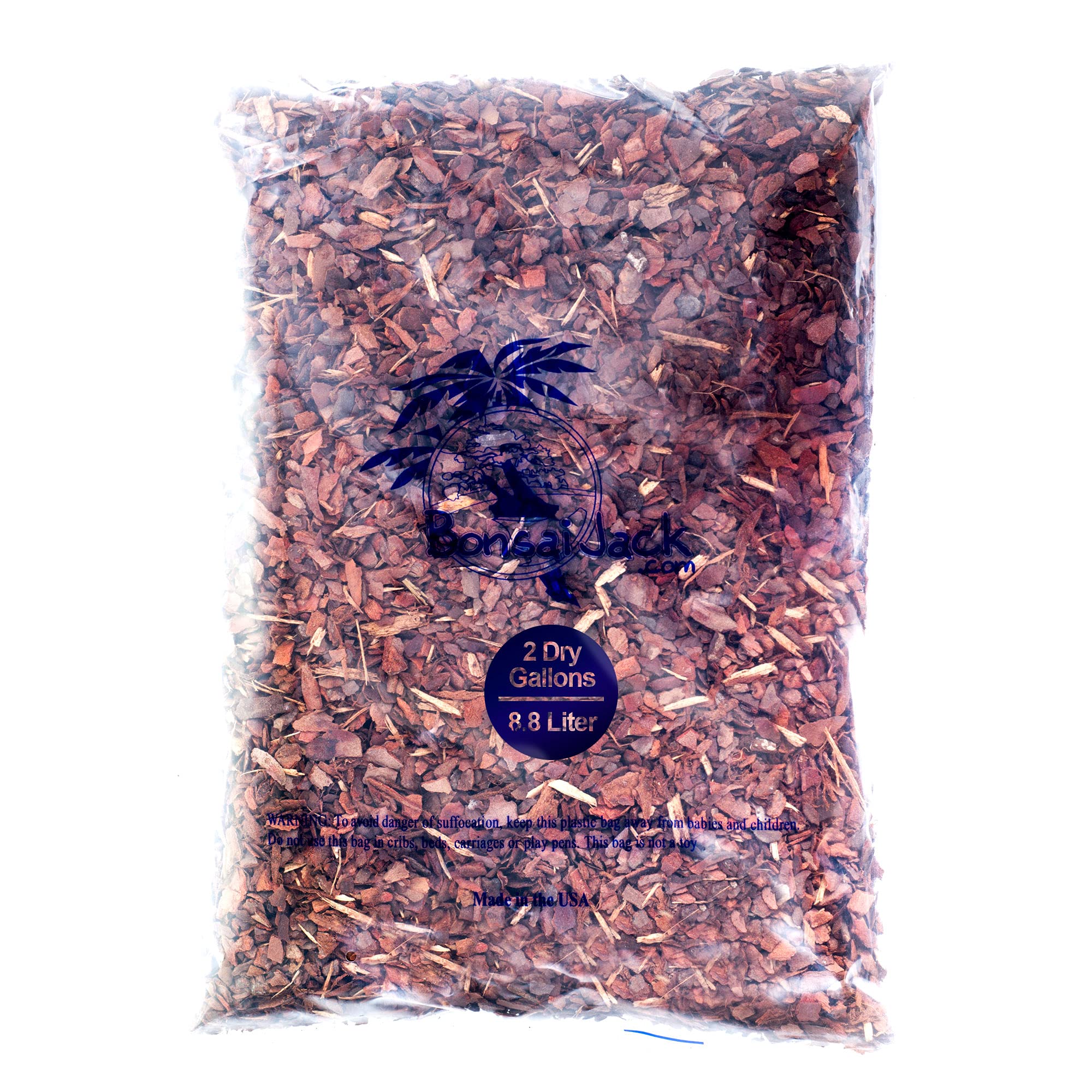
| Bonsai Jack Pine Bark Fines★ Best Overall | Soil amendment & bonsai mix | 2 gallons | Pine bark fines | — | Amazon |
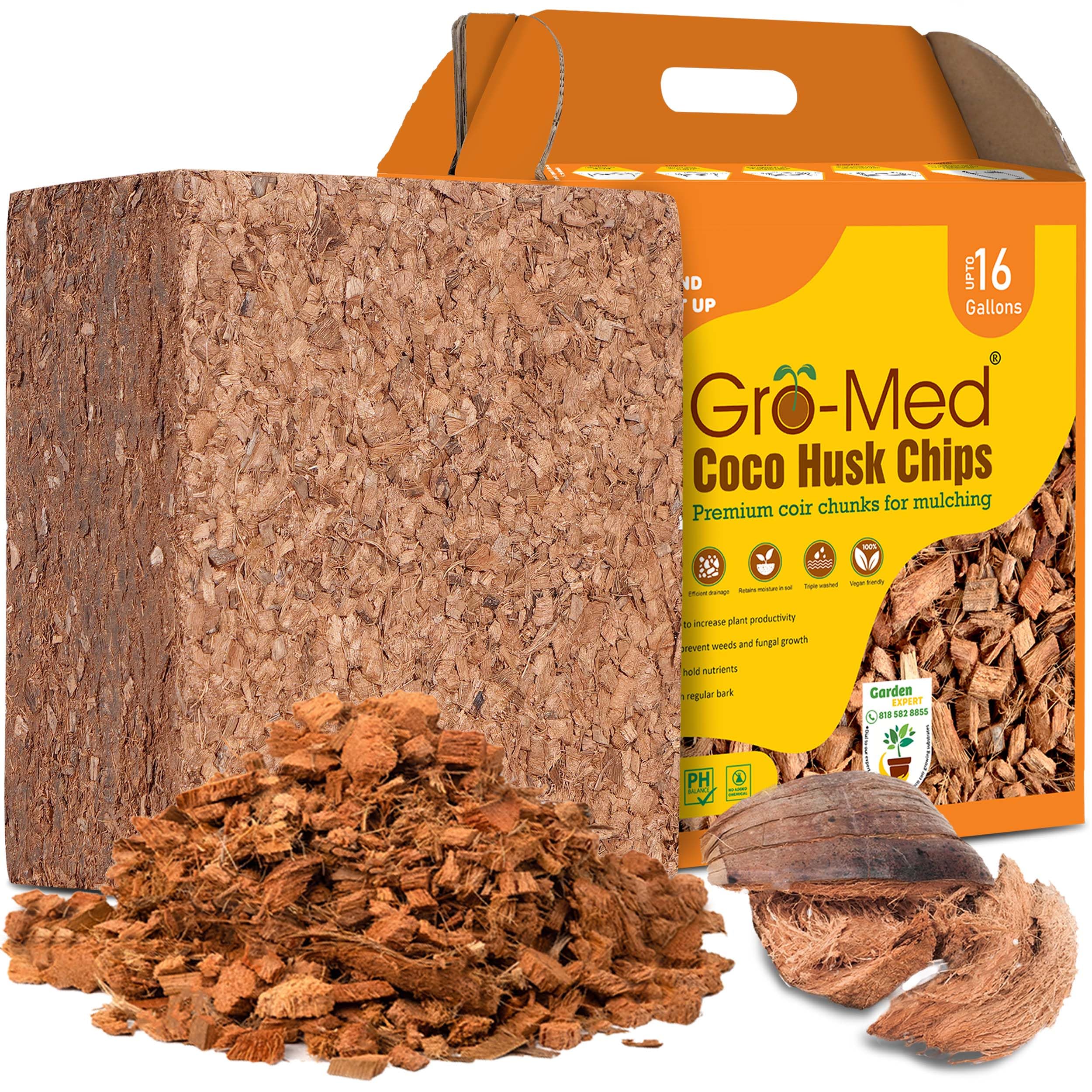
| Gro-Med Coco Husk ChipsBest Value | Moisture retention & potting mix | 16 gallons | Coconut husk chips | 10 lbs | Amazon |
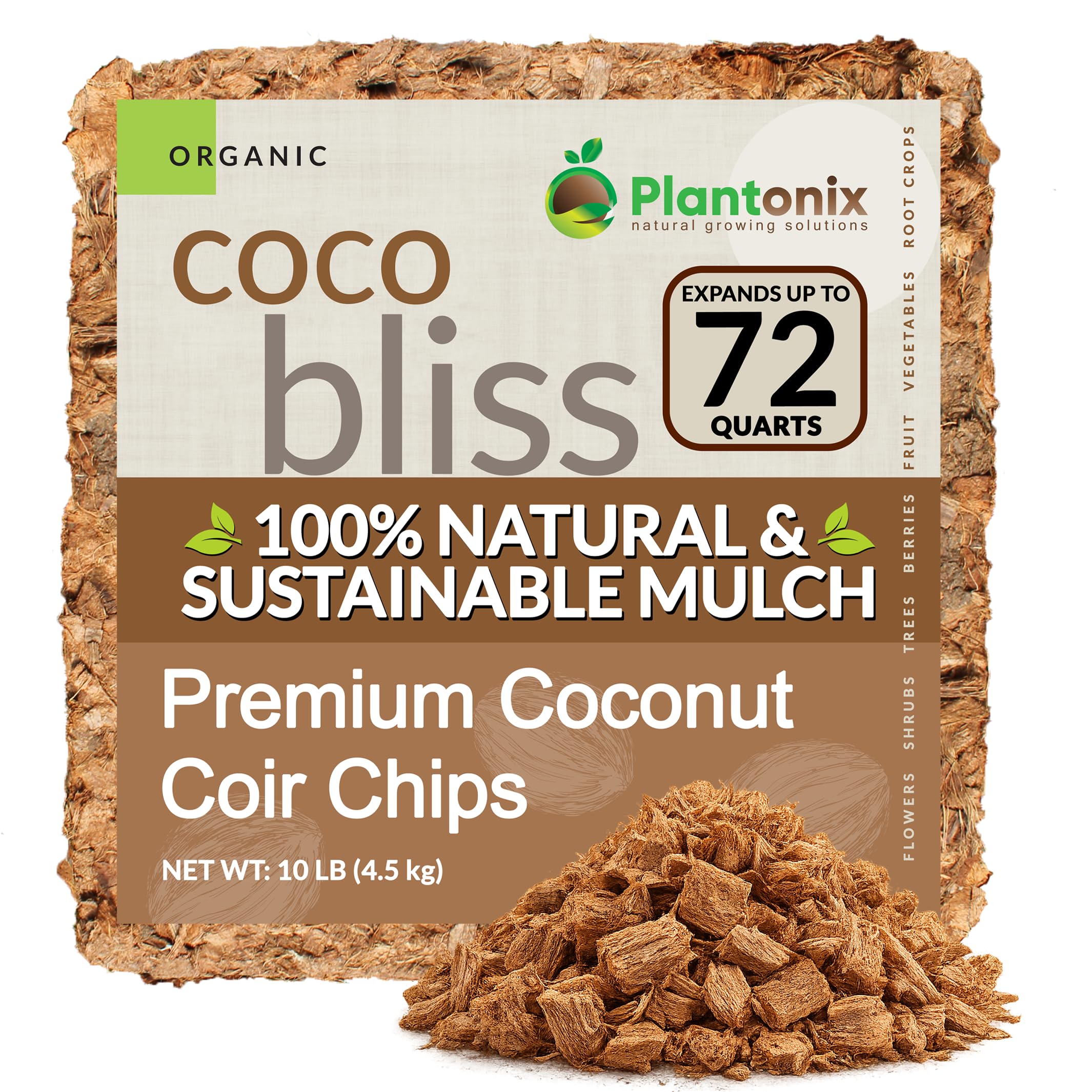
| Plantonix Coco Chips BrickTop Performer | Mulch for garden beds & containers | 15 gallons | Coconut husk chips | 10 lbs | Amazon |
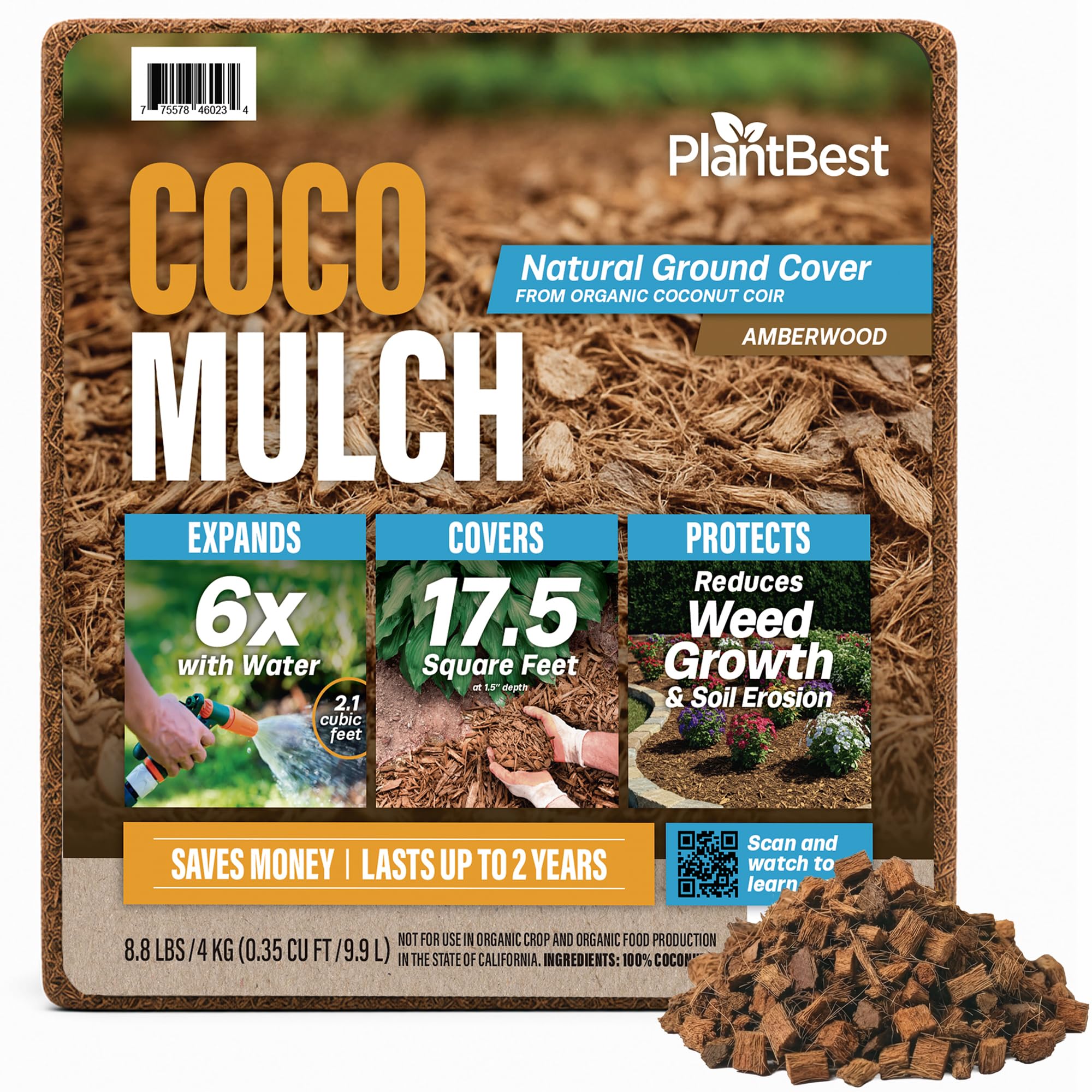
| PlantBest Coco Mulch Block | Landscaping & weed control | 16 gallons | Coconut coir & husk | 9.1 lbs | Amazon |
| Back to the Roots Coco Mulch | Vegetable gardens & raised beds | 2 cubic feet | Coconut husk | 10 lbs | Amazon |
| HealthiStraw GardenStraw | Lawn seeding & veggie beds | 3 cu ft | Wheat straw | 20 lbs | Amazon |
| Hull Farm Cocoa Bean Shell Mulch | Decorative beds & scent | 2 cubic feet | Cocoa bean shells | — | Amazon |
| Blue Ribbon Organics Compost | Soil enrichment for trees | 7.48 gallons | Organic compost | 32-35 lbs | Amazon |
| Colored Pine Straw Longleaf Roll | Large area ground cover | 125 sq ft coverage | Longleaf pine needles | — | Amazon |
In‑Depth Reviews
1. Bonsai Jack Pine Bark Fines (2 Gallons)
Our pick — over 4.5★ from 350+ verified ratings; the strongest balance of quality and price.
The cleanest, most consistent pine bark you can buy without sifting a single piece.
If you want a mulch that looks uniform and professional right out of the bag, this is it. The pine bark fines come in consistent sizes that are ready to use immediately — no sifting, no dust, no micro bits to rake out of the way. It’s the kind of clean texture that makes it a standout for bonsai soil mixes, where particle consistency actually matters for root health and drainage.
The honest trade-off is the price per gallon. A 2-gallon bag costs about the same as a 10lb coconut brick that expands to 16 gallons, so you’re paying for the precision and cleanliness, not the volume. That makes it a fit for potting mixes, container plants, and delicate bonsai roots — not for blanketing a wide tree ring. It also comes with a 1-year manufacturer warranty, which is a nice vote of confidence for a soil product.
What owners rave about
- Consistent particle size — no sifting needed
- Excellent drainage that prevents overwatering
- Comes clean without dust or debris
- Adds acidity that acid-loving trees appreciate
Who should think twice
- Only 2 gallons — too small for large tree rings
- Premium price per gallon for the volume
- Best as a soil mix additive, not a wide-area top dressing
Reach for this if: you’re building a high-quality potting mix for containers, bonsai, or acid-loving trees where drainage and clean texture are non-negotiable.
Look elsewhere if: you need to cover a large ground area — the 2-gallon volume won’t go far.
2. Gro-Med Coco Husk Chips (10lb Block)
A 10lb block that balloons into 16 gallons of water-holding mulch for a remarkably low cost.
This is the value king of the list — and it’s not close. The 10lb compressed block expands to a full 16 gallons of mulch — 16 gallons versus the Bonsai Jack bag’s 2 gallons — at a lower price. Owners mention the block “expands to 16 gallons” and call it “excellent value,” with one owner summing it up: the 10lb block is a huge bucket of chunky mix for a fraction of the cost of buying loose.
What sets these chips apart is the water-holding power. The husk chips hold up to 3 times more water than regular bark, which means you water less often and your tree roots stay consistently moist between soakings. It’s also triple-washed to keep the EC levels low and the pH balanced — this matters because it means the chips won’t steal nutrients from your soil or mess with the acidity around your trees. The quality earns the most praise by far, followed closely by plant health, with owners noting healthier roots and stronger growth when mixed into their potting soil.
The one mixed note is texture — a few owners find the chips vary in size, which is typical of a natural product. The chips are chunky and consistent enough for a big bucket of cactus or orchid mix, and they work equally well as a top-layer mulch for raised beds or a soil amendment at a 1/3 ratio. It’s OMRI listed, meaning it’s certified for organic production, which is a solid reassurance if you’re mulching around fruit trees or edible landscaping.
The big wins
- 16 gallons of mulch from a 10lb block — unbeatable value
- Holds 3x more water than regular bark
- OMRI listed for organic production
- Triple-washed for stable pH and low EC
The small catches
- Texture is mixed — chip sizes vary
- Requires soaking and breaking apart before use
- Lighter color may look different from traditional bark
Best for: budget-conscious gardeners who want maximum coverage and serious moisture retention for trees, shrubs, and raised beds.
Not ideal for: anyone who wants a ready-to-spread mulch with zero prep — this block needs water and a few minutes of breaking apart.
3. Plantonix Coco Chips Mulch Brick (10lbs)
A cleaner coconut alternative that keeps tree roots cool and moist through the hottest months.
If you’re tired of wood mulches that compact into a dense mat or break down unevenly, this compressed coconut brick is the refresh you need. Once hydrated, the 10lb brick expands to 15 gallons of chips that stay light, airy, and easy to work with while still covering the soil surface effectively. Customers note “the brick expands nicely” and note it creates a lot less dust than traditional coir — a real relief if you’ve ever choked on a cloud of fine particles while spreading mulch.
The quality here is the most-mentioned aspect by a wide margin, and the drainage and moisture retention follow close behind. The chips are bigger than standard coco-coir, which gives them better airflow while still shielding the soil from direct heat and sunlight. That dual action — keeping roots cool and holding moisture — is exactly what young trees need during a summer heatwave. It’s also made from recycled coconut husks that would otherwise be thrown away, so you’re keeping waste out of the landfill while improving your garden.
One important note from experienced growers: make sure you’re getting buffered coco coir. An owner flagged that unbuffered coir can absorb the nutrients you put in your soil, so a buffered product like this is the safer choice for feeding your trees. The main downsides are the value-for-money mixed reviews — some owners find it pricier than local hardware store options — and the bricks can vary in thickness. It’s a premium choice, but the clean handling and consistent chip size justify the cost for serious gardeners.
Why it earns its place
- Stays light and airy — no heavy compaction
- Less dust than traditional coco-coir
- Made from recycled coconut husks
- Excellent moisture retention for containers
What to watch
- Mixed value reviews — some find it pricey
- Bricks can be thinner than expected
- Needs watering to expand before spreading
Grab this for: container plants, raised beds, and small tree rings where clean handling and consistent chip size make the job pleasant.
Consider another if: you’re covering a large landscape area and want the lowest cost per square foot.
4. PlantBest Coco Mulch Compressed Block (9.1 lb)
One compact block that replaces heavy bags and covers up to 17.5 square feet of garden.
This is the mulch that makes you wonder why you ever wrestled with wet, bulky bags from the hardware store. The 9.1lb compressed block expands to roughly 16 gallons and covers up to 17.5 square feet at a 1.5-inch depth — enough to ring a good-sized tree or dress a flower border. Just add water and it expands in minutes, which is the ease-of-use that owners praise most after quality and effectiveness.
The coconut fibers and husk chips interlock into a stable layer that stays put on slopes and uneven terrain, resisting washout from rain and wind. It’s particularly good at suppressing weeds and keeping slugs at bay — reviewers point out it “keeps away weeds and slugs” while looking attractive in the garden. It’s also made from 100% renewable coconut coir with no dyes or chemicals, and it lasts for up to 2 seasons, which is longer than many straw or compost options.
The honest catch: value-for-money is the most criticized aspect, and a few owners found the expansion fell short. One noted the cubes are hard to break apart and recommended using a wheelbarrow to mix with water. It’s also lightweight enough that wind can blow it around before it’s watered in — one owner says it “gets blown out of the garden.” For established trees and shrubs, this is a solid, attractive choice, but skip it for exposed, windy sites.
The strengths
- Interlocking fibers resist erosion on slopes
- Suppresses weeds and deters slugs
- Lasts up to 2 seasons
- No dyes or chemicals — 100% renewable
The limitations
- Value for money gets mixed reviews
- Cubes need effort to break apart when wet
- Can blow away in strong wind before watering
Ideal for: gardeners who want a lightweight, easy-to-store option that handles slopes and suppresses weeds around established trees.
Skip if: you’re in a very windy spot or you want a mulch that spreads straight from the bag with no mixing required.
5. Back to the Roots Organic Mulch (58 Quart)
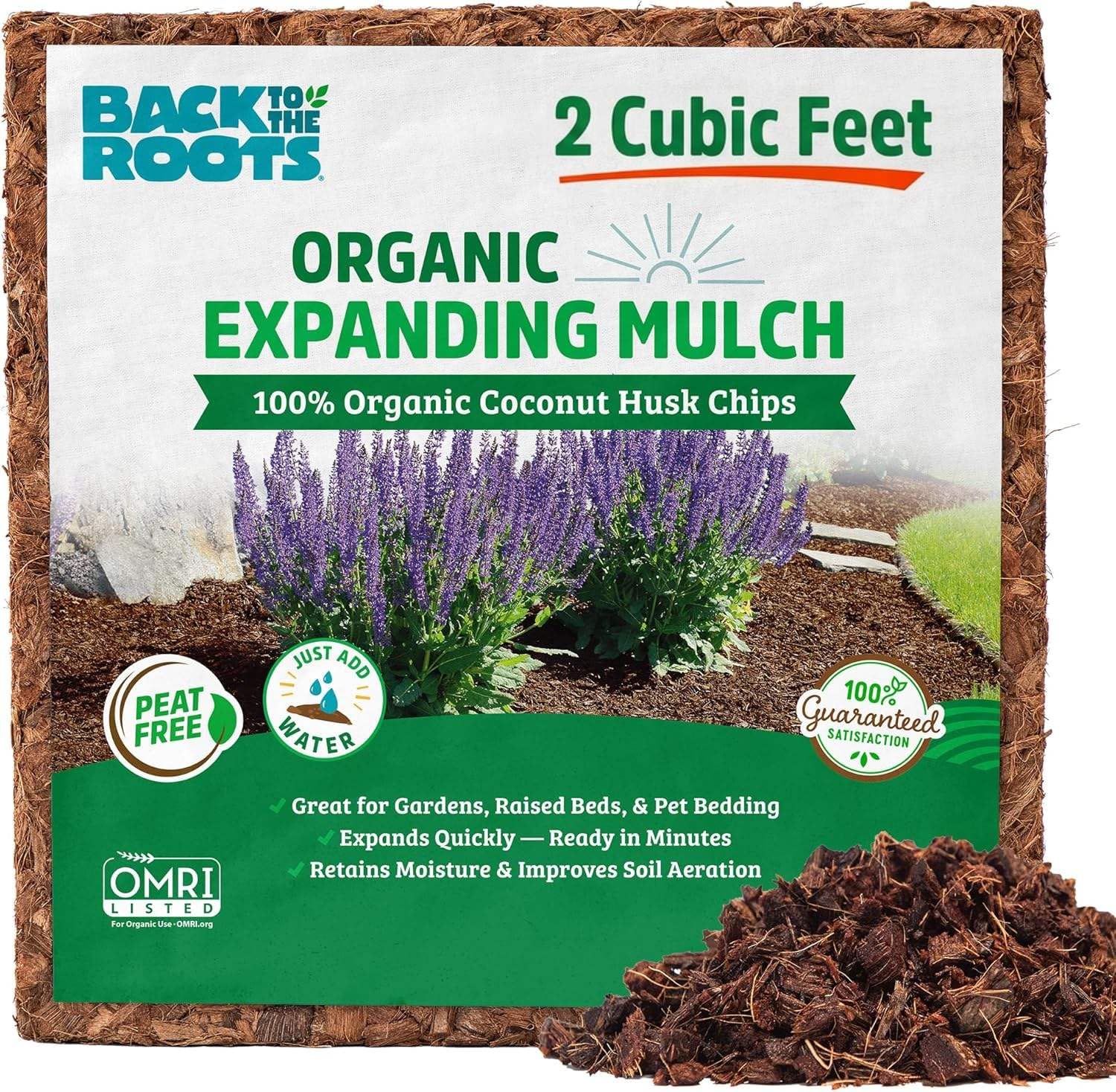
An OMRI-certified coconut mulch that saves your back by turning a 10lb block into a full wheelbarrow.
The standout feature here isn’t just what it does for your plants — it’s what it does for your back. A 10lb compressed block expands to over 2 cubic feet of mulch, which fills a wheelbarrow and saves you from hauling heavy bags around the yard. One owner put it simply: the block “filled my wheelbarrow” and “saved my back from carrying a heavy bag of mulch.” That’s a real convenience win if you’re mulching multiple trees or a large bed.
Owners praise the quality most, and it pairs with impressive ease-of-use. When soaked, the block quadruples in quantity — one buyer notes “it quadruples in quantity and I love the fact that’s it organic matter – coconut.” It works beautifully for hydrangeas and vegetable gardens, helping with moisture retention and evaporation control. It’s also peat-free and OMRI listed, which assures organic production, handling, and processing — a meaningful certification if you’re growing edibles or want to keep your soil completely natural.
The recurring difficulty is breaking the block apart — a few owners found it hard to separate into usable pieces, which is common with highly compressed bricks. The color also gets mixed feedback; it’s a natural tan-brown that some find less rich than dyed mulches. On the plus side, the brand backs it with a 100% satisfaction guarantee, so if you’re not happy, they’ll send a refund or replacement. For a premium, certified-organic option that’s genuinely easy on the body, this is a strong pick.
What stands out
- Expands to 2+ cubic feet from a 10lb block
- OMRI listed — certified for organic use
- 100% satisfaction guarantee
- Peat-free and easy on the back
The trade-offs
- Block is hard to break apart when dry
- Natural color is lighter than dyed mulches
- Premium price versus bulk options
Choose this if: you want a certified-organic mulch that’s easy to transport and you’re willing to spend a little more for the convenience and the OMRI certification.
Pass if: you’re covering a very large area and want the absolute lowest cost per cubic foot.
6. HealthiStraw GardenStraw (3 cu ft)
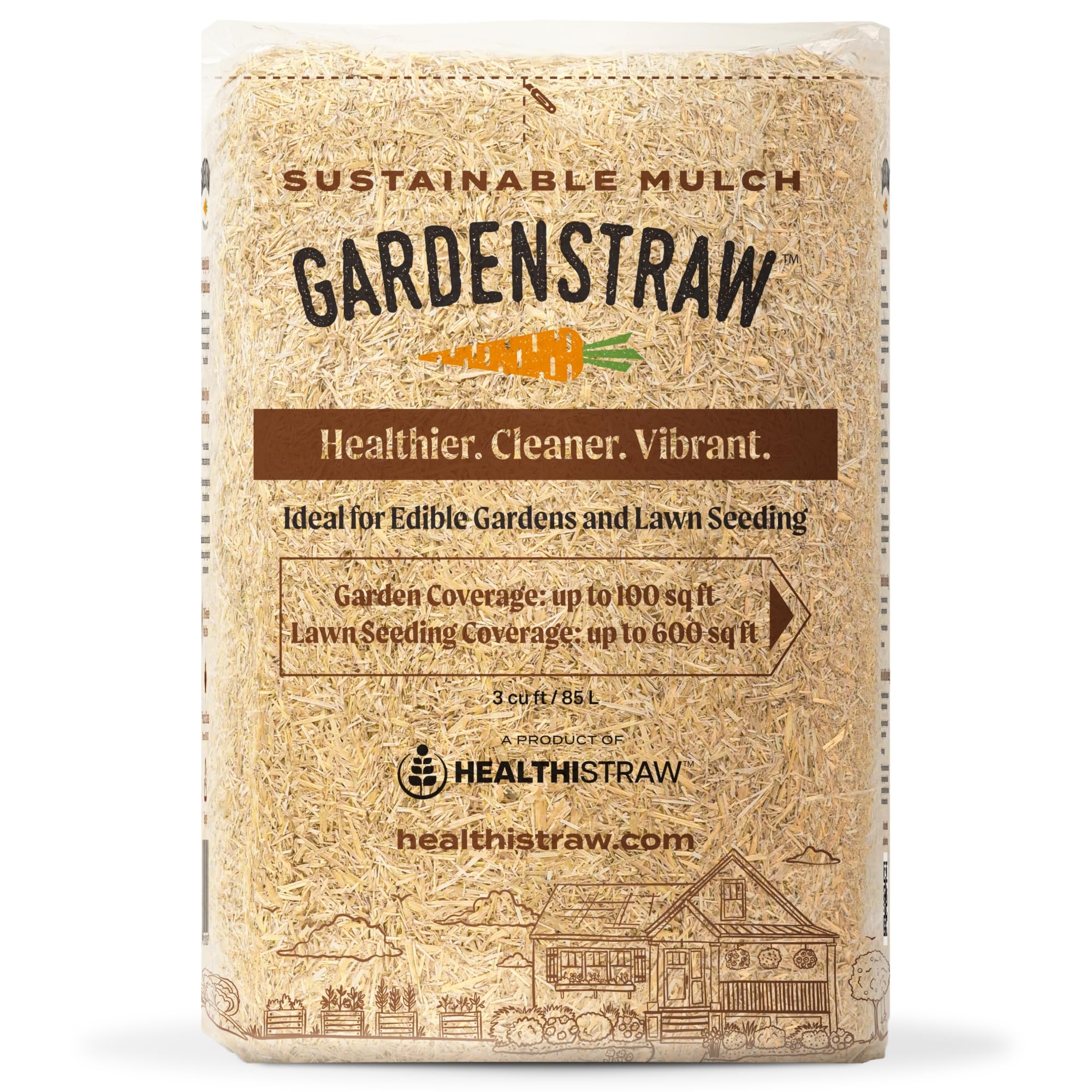
A clean wheat straw that covers up to 100 square feet and slashes your watering needs.
If you’re mulching vegetables, herbs, or a large tree ring on a budget, this straw gives you the most coverage per dollar. The 3-cubic-foot compressed bale covers up to 100 square feet at a 2-3 inch layer — far more ground than any coconut block on this list — and it’s sustainably sourced 100% non-GMO wheat straw. The fibers are specially cut and naturally filtered to remove dust, dirt, and as many seeds as possible, so you get a clean, pure mulch that’s easy to spread.
What owners love most is how it retains moisture and suppresses weeds. One buyer notes it “keeps my plants and flowers from drying out in the hot weather” and wishes they’d tried it years ago. The straw fibers interlock when watered, staying in place naturally and resisting wind and rain without any chemical binders — a real advantage over lightweight coconut chips on exposed sites. It’s also compost-friendly: the used straw breaks down quickly, adds carbon to your compost, and naturally enriches the soil.
There are a couple of things to know. A few owners did see some seeds sprout — one noted “there are a few seeds that sprouted but not a big deal” — and another mentioned grass seeds appearing, though the cleaning process catches most of them. It’s also important to note this is a lighter, more temporary mulch than bark or coconut; it will break down faster, which is great for enriching soil but means you’ll need to reapply more often. For lawn seeding, it’s unbeatable — covering up to 600 square feet at a 1/4-inch thickness.
The advantages
- Covers up to 100 sq ft — superb value
- Interlocking fibers resist wind and rain
- Breaks down to add carbon to compost
- Clean and easy to spread
Before you buy
- Some seeds may sprout in the bed
- Breaks down faster than bark or coconut
- Needs a thicker layer for weed suppression
Reach for this if: you’re mulching a large vegetable garden, seeding a lawn, or want a natural mulch that enriches the soil as it breaks down.
Look elsewhere if: you want a long-lasting mulch that won’t need reapplying for a couple of seasons.
7. Hull Farm Cocoa Bean Shell Mulch (2 Cubic Feet)

The mulch that makes your front porch smell like chocolate for a week after spreading.
This is the mulch people remember. The cocoa bean shells have a rich chocolate aroma that fills the air for the first week or so — owners describe it as making the front porch smell like chocolate, and it’s by far the most-praised aspect. Beyond the scent, it’s genuinely beautiful, with a rich dark color that looks polished around specimen trees, flower planters, and foundation plantings.
The fertilizer value is a real bonus that separates it from plain wood or coconut mulch. At approximately 2.5-1-3, the shells provide a slow nutrient release as they decay, and the makers say it will not burn vegetation. Shoppers say it enriches clay soil as it breaks down and note it works exceptionally well in potted plants, keeping soil moist and preventing it from drying out in hot climates. It’s also a clever choice if you’ve had trouble with squirrels digging in your planters — one owner found the smell deters them, unlike pecan mulch.
The catch, and it’s an important one, is that cocoa shell mulch is not safe for dogs — cocoa contains compounds that are toxic to them, and it can attract slugs and snails. One owner also flagged that it shouldn’t be used around flowers, and that warning wasn’t disclosed at purchase. It’s also lightweight when dry and can blow away before a watering settles it, and the scent fades over time. This is a decorative, sensory choice for a front yard, not a utilitarian one for a large back property.
The charm
- Lovely chocolate aroma for the first week
- Provides fertilizer value as it decays
- Beautiful dark color for front-yard beds
- Keeps soil moist in containers
Critical to know
- NOT safe for dogs — cocoa is toxic to them
- Can attract slugs and snails
- Lightweight and can blow away when dry
Perfect for: a dog-free home where you want a gorgeous, good-smelling mulch around flower beds and specimen trees.
Do not buy if: you have pets that roam the yard, or you need a large-area, low-maintenance mulch.
8. Blue Ribbon Organics OMRI Certified Compost (7.9 Gallons)

A rich, black compost that feeds your soil structure rather than just covering it.
This is a different kind of “mulch” — it’s a soil amendment that works from the ground up. Instead of just sitting on the surface, this OMRI-certified organic compost gets worked into the soil around your trees to improve structure, aeration, and water retention. Think of it as the foundation layer: spread it around the root zone and top it with bark or coconut chips for the best of both worlds — relentless soil feeding on the bottom, moisture retention on top.
Owners call it “black gold” and “the BEST compost I’ve ever used,” and the enthusiasm is justified. It’s rich, dark, and earthy-smelling with no debris — no sticks, plastic, metal, or glass to pick out. One owner’s basil “grows like mad” in it, and others report their vegetable gardens were amazing that season. It’s safe to use at any concentration, which means you can’t really overdo it, and it pairs wonderfully with worm castings and other soil builders.
The honest limitation is the volume-to-price ratio. A 7.48-gallon bag is heavy at 32-35 pounds, and for filling large beds, it gets expensive quickly — one owner notes it’s about half the price at a local big-box store. This isn’t a budget bulk mulch for covering ground; it’s a premium soil enricher. Use it around young trees as a planting amendment, or top-dress established trees in spring to give them a nutrient boost that mulch alone can’t provide.
Why gardeners love it
- OMRI certified for organic use
- Rich, clean texture with zero debris
- Improves soil structure and aeration
- Safe at any concentration
The drawbacks
- Heavy bag — 32-35 lbs
- Pricey for filling large beds
- More of a soil amendment than a surface mulch
Best for: gardeners who want to genuinely enrich the root zone of young trees or revitalize tired soil in established beds.
Not for: covering a large surface area cheaply — you’ll want a bulk mulch for that, with this as the nutrient layer underneath.
9. Longleaf Pine Straw Roll (Covers 125 Sq Ft)

The landscaper’s favorite — 14-inch needles that interlock to stay put and cover 125 square feet.
If you have a large property or a long tree line to mulch, pine straw is the classic professional choice, and Longleaf is widely considered the premium variety. Its needles are extremely long — approximately 14 inches — which makes them the preferred choice of landscapers, developers, and even golf course superintendents. The long needles interlock naturally, forming a mat that resists wind and heavy rain far better than chips or bark.
The quality is the most-praised aspect, followed closely by ease of spread. Owners describe it as “excellent clean pine straw” with no sticks or thorns, unlike some competitors, and it’s easy to unroll and lay out. One buyer came from the Midwest and was impressed it “holds up well against high winds and rain on a cleared, leveled area.” It’s a fantastic natural ground cover that keeps down weeds and looks beautiful and fluffy in flower beds, with no dye or coloring added.
The trade-off is the value — it’s a premium-priced product, and one owner noted the bales can be inconsistent in size and coverage. The same owner compared it to another brand’s round bales and found this one had roughly 98% needles versus the competitor’s 90%, meaning less waste and more usable material. Many owners say it’s expensive but worth it for the cleanliness and the finished look. If you’re mulching a modest front bed, this might be more than you need, but for larger landscape areas, the coverage — 125 square feet per roll — is genuinely efficient.
The strengths
- 14-inch needles interlock to resist wind and rain
- Clean — no sticks, thorns, or debris
- Easy to unroll and spread
- Covers up to 125 sq ft per roll
The considerations
- Premium price — value gets mixed reviews
- Bale size and coverage can vary
- Not the best choice for small container plantings
Reach for this if: you’re mulching a large landscape, tree line, or flower beds and want a natural, wind-resistant, professional-looking ground cover.
Consider something else if: you only have a few containers or a small bed — you’d be paying for more coverage than you need.
Understanding the Specs
Expanded Volume vs. Bag Weight
This is the single most important number to check. A 10lb compressed coconut brick can expand to 15-16 gallons, while a 2-gallon bag of pine bark fines weighs noticeably more per gallon. Always compare the *expanded volume* — that’s how much actual ground you’ll cover. A heavy bag is not necessarily a good deal if it doesn’t fluff up.
Water Retention and Drainage
Nutrient Contribution
Different mulches feed the soil differently as they break down. Cocoa bean shells offer a fertilizer value of approximately 2.5-1-3, giving a gentle nutrient release. Pine bark naturally adds acidity as it decomposes — ideal for acid-loving trees. Straw breaks down quickly and adds carbon to compost. Compost itself delivers the most complete nutrient and structure boost of all.
Organic Certification
Look for the OMRI seal if you’re growing edibles or want third-party assurance. OMRI Listed means the product is certified for organic production, handling, and processing — it’s been verified to meet organic standards, not just labeled “natural.” Gro-Med, Back to the Roots, and Blue Ribbon Organics all carry OMRI listing on this list.
FAQ
How much organic mulch do I need for a tree ring?
Is coconut husk mulch better than pine bark for trees?
Does cocoa bean shell mulch smell like chocolate for long?
Will organic mulch attract pests or insects?
How long does coconut mulch last before it needs replacing?
Is OMRI certification important for tree mulch?
Can I use organic compost as a mulch on top of the soil?
Which mulch is best for acid-loving trees like pines and oaks?
How do I expand a compressed coconut mulch block?
Can organic mulch hurt my trees if I use too much?
Final Thoughts: The Verdict
For most tree owners, the winner is the Bonsai Jack Pine Bark Fines because its ready-to-use, consistent texture and excellent drainage make it a dependable, high-quality soil builder for trees and containers alike. If you want maximum moisture retention and value from a single block, grab the Gro-Med Coco Husk Chips — 16 gallons of mulch from a 10lb block is the best cost-per-gallon story here. And for a large landscape or tree line, the Longleaf Pine Straw Roll is the professional-grade choice that interlaces to stay put through wind and rain.
How We Picked
We do not accept paid placement. Every pick is matched to a real buyer and a real use-case; we do not hands-on test units.
Sources & Methodology
Specifications: manufacturer listings and product documentation. Review insights: verified customer reviews, as of August 2026. Pricing: not shown on this page (it changes often); check the current price via the retailer link.
As an Amazon Associate, Lawn Gear Lab earns from qualifying purchases. This does not affect which products we feature.