
Specs are compiled from manufacturer listings and verified buyer reviews and can change over time — please confirm the key details on the product page before buying.
If your flowers are all leaves and no color, or your tomatoes flower but never set fruit, the missing piece is usually a feed rich in phosphorus and potassium. These two nutrients push a plant from growing leaves into making blooms, roots, and fruit. Here are nine of the best phosphorus and potassium fertilizers on Amazon, matched to your garden style—if you want a quick liquid feed, a slow-release granular, or a professional hydroponic formula.
I’m Rikta — the founder and writer behind Lawn Gear Lab. This guide is built by comparing the manufacturers’ published specifications and the patterns across verified customer reviews, so you get each pick’s real strengths and trade-offs instead of marketing spin.
You’ll learn exactly how to match a bloom booster’s N-P-K ratio to your plants, so you can confidently pick the best phosphorus and potassium fertilizer for a backyard full of color.
Our Picks at a Glance


How To Choose The Best Phosphorus And Potassium Fertilizer
Choosing a bloom booster depends on matching the feed to your plant’s life stage and your own watering habits. A fertilizer labeled for blooming has a higher middle number (phosphorus) and last number (potassium) compared to its nitrogen, which signals the plant to shift energy into flowers and roots instead of leaves.
Decode the N-P-K numbers
The three numbers on any fertilizer bag stand for Nitrogen, Phosphorus, and Potassium, in that order. For blooming, you want the middle and last numbers to be noticeably higher than the first. A ratio like 15-30-15 delivers double the phosphorus of nitrogen, which is why it is called a bloom booster.
Liquid, powder, or granular
Water-soluble powders and liquid concentrates act fast because the nutrients are immediately available to the roots. Granular, slow-release feeds break down over weeks, which suits gardeners who prefer to apply less often. Your choice depends on if you want quick results or steady, low-maintenance feeding.
Consider your plant type
Bulbs, flowering shrubs, and fruiting vegetables all respond to phosphorus and potassium, but they have different needs. Heavy feeders like pumpkins and tomatoes want a balanced boost through the season, while bulbs benefit from a feed applied at planting time. Match the product’s intended use to what you are actually growing.
Quick Comparison
| Model | Best For | N-P-K Ratio | Form | Size | Amazon |
|---|---|---|---|---|---|
| Grow More Super Bloomer★ Best Overall | Fast-acting flower power | 15-30-15 | Powder | 3 lbs | Amazon |
| Schultz Bloom PlusHouseplant Hero | Houseplants & winter color | 10-54-10 | Powder | 1.5 lbs | Amazon |
| Lilly Miller Bulb & BloomBulb Specialist | Bulbs & perennials | 4-10-10 | Granular | 4 lbs | Amazon |
| Dr. Earth Flower Girl | Organic, pet-friendly gardens | 4-10-7 | Granular | 4 lbs | Amazon |
| Blue Planet Liquid Blue | Mid-late flower feeding | PK Enhancer | Liquid | 32 oz | Amazon |
| Pumpkin Juice 11-8-5 | Pumpkins & giant veggies | 11-8-5 | Liquid | 32 oz | Amazon |
| TPS Nutrients 0-10-10 | Root strength & fruit set | 0-10-10 | Liquid | 32 oz | Amazon |
| Greenway Monopotassium Phosphate | Maximum P & K concentration | 0-52-34 | Powder | 1 lb | Amazon |
| Athena Blended Bloom A&B | Commercial & hydro growers | A 4-0-5, B 0.7-6-5 | Liquid | 5 gallons | Amazon |
In-Depth Reviews
1. Grow More Super Bloomer 15-30-15 Fertilizer – 3lbs
Our pick — over 4.5★ from 350+ verified ratings; the strongest balance of quality and price.
The fastest fix for a flower garden that refuses to bloom.
The headline here is the 15-30-15 mix — double the phosphorus of nitrogen, which is exactly what nudges a plant into flower production. This water-soluble powder delivers a quick 3.8x phosphorus boost compared to milder feeds like Lilly Miller’s 4-10-10, making it the strongest kick available for color-hungry gardens.
What wins people over is the sheer quality — it is the most-praised trait by a wide margin. The proof is in the results: buyers report a hibiscus that was dropping all its buds and not blooming produced “beautiful blooms within a week” of application. It works for vegetables too, with pumpkin plants becoming “absolutely massive pre-bloom” after feeding.
The 3-pound box mixes at a 1:64 ratio, stretching across flower beds, vines, and fruiting shrubs. It dissolves cleanly for both soil soaks and foliar sprays, which makes it easy to work into your normal watering routine.
It is note this is a fast-acting synthetic feed, not a slow-release organic. If you prefer to feed less often, a granular option will suit your style better.
What owners rave about
- Quality is the top praise, with 27 owners calling it out as a standout
- Bloom enhancement gets 17 mentions — flowers appear within days for many
- Versatile across flowers, vegetables, and shrubs
Who should look elsewhere
- Synthetic formula — not for strict organic gardens
- Needs regular mixing, not a set-and-forget feed
Reach for this if: you want the single fastest, most reliable bloom response from a water-soluble feed.
Look elsewhere if: you need a slow-release granular for a low-maintenance schedule.
2. Schultz Bloom Plus Water Soluble Plant Food 10-54-10
The indoor bloom machine that keeps Christmas cactuses flowering all winter.
This is the most phosphorus-heavy mix on this list — a 10-54-10 ratio that delivers a massive 2.5x phosphorus punch compared to Lilly Miller’s 4-10-10. That extreme middle number is why it is the undisputed favorite for getting stubborn houseplants to flower.
Effectiveness is the overwhelming theme across owner feedback, with 85 people praising it — the highest single aspect count in this entire lineup. The review pages sum it up: “my Christmas cactuses LOVE IT. All my house plants grow extremely well with it and bloom great.” For indoor gardeners, this is the one that produces spectacular color displays even through the dark winter months.
The 16-ounce box is a concentrated powder that mixes with water, stretching beyond its bag size. It is specifically formulated for flowers, vegetables, and houseplants — but not for bushes, trees, or cactus, so match it to your indoor collection.
Experienced users who have bought it yearly have one warning: stick to the Schultz brand, as other pink boxes are not the same formula. The only real gripe is delivery timing, not the product itself.
Why it earns its keep
- 85 owners call out its effectiveness — the top praise by far
- Bloom response gets 48 mentions, with winter flowering a common win
- Concentrated formula is easy to mix and budget-friendly
The honest limits
- Not meant for bushes, trees, or cactus
- Customers warn only the Schultz-brand box has the right formula
Best for: houseplant owners who want reliable, visible blooming from a concentrated water-soluble feed.
Think twice if: you grow woody shrubs or trees that need a different nutrient balance.
3. Lilly Miller Bulb & Bloom Food 4-10-10 Granular
The slow-release feed that turns a spring bulb bed into a neighborhood showpiece.
Some fertilizers are simply hard to find in local stores — and this 4-10-10 granular is exactly that. The combination of phosphorus and potassium is designed for one job: giving bulbs and perennials bright, vigorous blooms through a slow-release feeding that works for months from a single application.
The 4-pound granular bag weighs 33% more than Grow More’s 3-pound box and needs fewer applications. Owners mention it is the best for dahlias, and the blooms are so abundant that “neighbors enjoy the mass of flowers.” It is applied in spring and fall in zone 6 for clematis, peonies, and lilies — and it delivered vigorous growth on amaryllis bulbs that often get only the generic 10-10-10 at garden centers.
Effectiveness is the top praise, with 16 owners noting real results. The granules come in a ziplock bag, and the natural mild odor comes from the bone meal in the formula.
The honest trade-off: that bone meal smell can attract pets and rodents in the garden, so store the bag securely. And the slow-release nature means it works over the season rather than giving the instant kick of a water-soluble feed.
Season-long feeding: one application of this granular 4-10-10 feeds bulbs through the whole bloom cycle, which is why it is the pick for set-and-forget gardeners.
Know the smell: the natural bone meal odor is mild, but it can draw in curious pets and rodents.
Reach for this if: you plant bulbs and perennials and want steady, low-maintenance feeding from spring to fall.
Skip it for: a fast mid-season rescue — this works over weeks, not days.
4. Dr. Earth Flower Girl Bud & Bloom Booster 4-10-7

The organic, people-and-pet-safe feed that made one guava tree bloom 25 times over.
For gardeners who refuse synthetic chemicals, this 4-10-7 granular is a hand-crafted, 100% organic blend that is certified and Non-GMO Project Verified. It feeds vegetables, flowers, bedding plants, potted plants, trees, shrubs, annuals, and perennials — one bag covers nearly your entire yard.
The results speak for themselves: one eager gardener watched their dragon fruit go from three blooms on two trees one year to 25 blooms on two trees the next. Experienced dahlia gardeners also give it a strong recommendation, and the plant benefits are the most-praised aspect at 29 mentions, with plant health close behind at 23.
The 4-pound bag is free of GMOs, chicken manure, and sewage sludge, so you know exactly what goes into your soil. The label’s safety-first marketing checks out for most users, though opinions split on one point.
The honest caveat comes from the pet-safety angle: while it is marketed as safe for people and pets, some customers note the organic blend attracts flies — a common reality with natural feeds. If you are strict about zero synthetic inputs, this is your pick; if flies bother you near the garden, keep that in mind.
What wins people over
- Plant benefits top the list with 29 mentions
- Certified organic and Non-GMO Project Verified
- Safe for people and pets when used as directed
What to know
- Some reviewers point out it attracts flies — typical of organic blends
- Granular form works slower than liquid boosters
Best for: organic gardeners with mixed beds of flowers, veggies, and fruit trees who want one certified clean feed.
Consider its sibling instead if: flies near the garden would ruin your outdoor time.
5. Blue Planet Nutrients Liquid Blue PK Enhancer
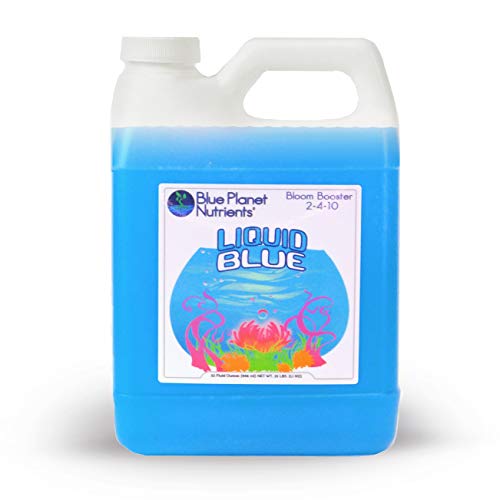
The mid-flower booster that made tomato buds swell into fruit.
This is not a general feed — it is a targeted phosphorus and potassium supplement designed for the mid-to-late flower stage. The idea is simple: once your plants are already flowering, you hit them with a PK boost to fatten up the blooms and fruit. Shoppers say it “helps to get tomatoes from flower to fruit.”
The 32-ounce liquid concentrate mixes at 5-10 ml per gallon, lasting a full growing season. You can water it in or use it as a foliar spray, and the brand from Houston, TX has been making professional-grade nutrients since 2010.
Growers tracking yields report a 15-20% bud swell when this booster is added to a complete nutrient line. It works for all plant varieties in almost any garden type.
The honest limitation: this is a supplement, not a complete fertilizer. Your plants still need their base nitrogen feed; this just adds the bloom-stage push. If you are looking for an all-in-one, this is not it.
Targeted boost: a 5-10 ml per gallon dose delivers phosphorus and potassium exactly when flowers need them most.
Not a standalone: pair it with a base nutrient line for complete feeding.
Reach for this if: you grow fruiting vegetables or flowers and want a dedicated bloom-stage finisher, not a general feed.
Look elsewhere if: you want a single all-purpose fertilizer with no extra mixing steps.
6. Pumpkin Juice 11-8-5 Foliar Liquid Fertilizer

The vine-doubling tonic that rescued a Halloween pumpkin project from failure.
This is a niche specialist with a cult following: a high-concentrate foliar feed built specifically for pumpkins and heavy vegetables. The acidity and blend of plant growth stimulants are designed to accelerate growth, and the 11-8-5 ratio with.02% Boron and.1% Iron covers the micronutrients big vines crave.
The results are dramatic. Buyers report a struggling pumpkin vine “tripling in size within a week” and another that “doubled in size after 2 uses” — enough to save a child’s Halloween project from total failure. The effectiveness is the top praise at 19 mentions, with plant growth close behind at 13.
The 32-ounce bottle is a concentrate: 1-2 oz per gallon yields up to 32 gallons of fertilizer. The squeeze-and-measure bottle lets you pour a precise dose without a measuring cup.
The honest reality: not every gardener sees magic. One owner who switched from Miracle-Gro mid-season reported no difference with the pumpkin juice, so this shines brightest when used consistently from early growth rather than as a late rescue.
Why giant-pumpkin fans love it
- Effectiveness is the top praise at 19 mentions
- Plant growth gets 13 calls — vines often size up within a week
- 1-2 oz per gallon stretches the bottle to 32 gallons
Where it falls short
- One owner saw no gain over Miracle-Gro when switched mid-season
- Focused on pumpkins and vegetables, not all flowers
Best for: pumpkin and vegetable growers chasing serious vine growth and fruit production with a concentrated foliar feed.
Think twice if: you only want a general-purpose flower feed — this is narrower in scope.
7. TPS Nutrients Phosphorus & Potassium 0-10-10 Liquid Bloom Booster
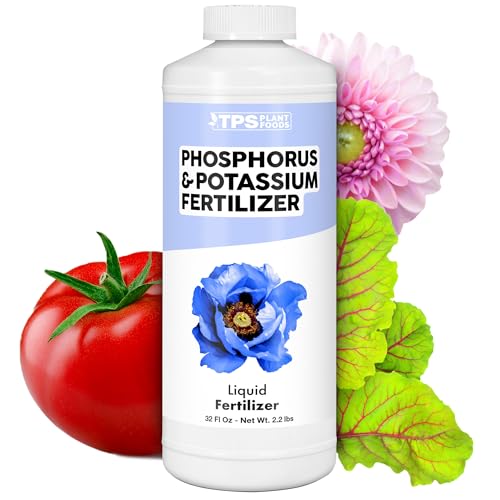
The zero-nitrogen feed that puts every ounce of energy into roots and fruit.
This one is distinctive for what it leaves out: the 0-10-10 ratio has no nitrogen at all. That means the plant is not encouraged to grow more leaves — every nutrient goes into root strength, flowering, and fruit set. For gardeners whose plants are already leafy but failing to produce, this is the targeted answer.
The results are concrete: one owner’s tomato plant flowered after use, another reported the “largest tomato yield ever,” and a watermelon grower credited it with a successful harvest. Effectiveness is the top aspect at 13 mentions, and the formula is made in the USA.
The 32-ounce liquid is designed for vegetables, fruits, and ornamental flowering plants, and it is concentrated enough for garden and houseplant use. The standard rhythm is to apply every 3 weeks, checking your soil condition first.
The honest caveat is twofold. Some buyers question whether a liquid is cost-effective versus granular options that last longer. And one recurring issue is the lid closure — it needs care to seat properly. The value-for-money opinions are genuinely mixed here.
Targeted energy: the 0-10-10 ratio skips leaf growth entirely to focus on roots, flowers, and fruit.
Watch the cap: the lid closure gets flagged by some owners — seat it firmly to avoid leaks.
Reach for this if: your plants are already big and leafy but failing to flower or set fruit — this is the direct fix.
Look elsewhere if: you want an all-purpose feed with nitrogen for ongoing growth.
8. Greenway Biotech Monopotassium Phosphate 0-52-34

The raw chemical powerhouse behind many name-brand bloom enhancers.
Here is the insider secret: this pure monopotassium phosphate is the main ingredient in many popular name-brand bloom boosters — at a fraction of the cost. The 0-52-34 ratio delivers an eye-watering 52% phosphorus and 34% potassium, making it the most concentrated source of both nutrients on this list.
The raw strength is exactly why it is a favorite among serious growers. Owners mention a gardenia that became a full bush in one season, carnations with double-headed stems, and Fuji apples that developed “extreme redness, flavor, sweetness.” Quality is the top aspect at 33 mentions, with plant growth at 20.
It dissolves completely and quickly in water, working across soil, coco coir, and hydroponic systems. Because it is so concentrated, a little goes a long way — one owner used just 0.5 tsp alongside their base nutrients every other day.
The honest warning is serious: this will burn plants if used alone, and it carries a smell during mixing. It must be combined with a complete base nutrient program, and excess potassium can cause issues. This is a tool for experienced gardeners, not a simple all-in-one.
The serious grower’s edge
- Quality tops the list at 33 mentions
- 0-52-34 ratio is the strongest P & K concentration here
- 100% water soluble with easy, complete dissolution
The catch
- Burns plants if used alone — must mix with base nutrients
- Carries an odor during mixing
- Requires experience to dose correctly
Best for: experienced growers who want professional-grade bloom results on a budget without paying for the brand name.
skip it if: you are a beginner — the risk of burning plants is real without a base nutrient line.
9. Athena Blended Bloom A&B 2-Part Flowering Fertilizer
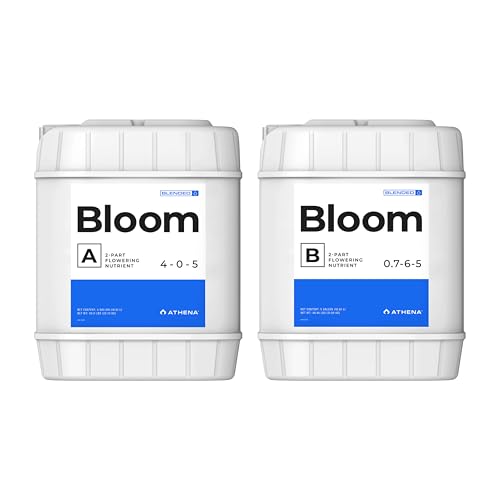
The professional 2-part system trusted by commercial growers for explosive flowering.
This is the heavy artillery of the list: a 5-gallon, 2-part liquid system designed for growers who want precision control through the entire bloom phase. The NPK splits as A 4-0-5 and B 0.7-6-5, with the B part carrying the phosphorus and potassium that drive bud and flower development.
The scale tells you the audience: 5 gallons and 640 fluid ounces of concentrated liquid, meant for hydroponics, coco coir, rockwool, and soil. It works with automated dosing systems like Dosatron, drip irrigation, and hand-watering — making it a genuine commercial-grade tool.
What makes it stand out for serious growers is the 100% soluble formula that dissolves completely in all water conditions with no sediment, buildup, or residue. That means no clogged lines and less maintenance on recirculating systems. Customers note plants doubling in size and exceptional vigor when fed per the recipe.
The honest reality: this is a 2-part system, so you mix both bottles. It is beginner-friendly by professional standards — adjustable dosing lets you customize strength through the flowering stages — but it is a commitment designed for large operations.
Precision bloom feeding: adjustable dosing across the full flowering stage, from early bloom to late harvest.
System-friendly: 100% soluble with stable pH means no clogs in recirculating and drip systems.
Reach for this if: you run a serious hydro or large-scale grow and want professional-grade control with minimal system maintenance.
Look elsewhere if: you have a small backyard bed — 5 gallons is far more than most home gardens need.
Understanding the Specs
N-P-K Ratio
The three numbers on a fertilizer label are Nitrogen, Phosphorus, and Potassium — always in that order. For a bloom booster, the middle number (phosphorus) should be higher than the first (nitrogen), because phosphorus drives flower and root development while nitrogen pushes leaf growth. A ratio like 15-30-15 has double the phosphorus of nitrogen, which tells the plant to shift energy from leaves into blooms.
Water Soluble vs Granular
A water-soluble powder or liquid concentrate makes nutrients immediately available to the roots, so you see results in days — perfect for a mid-season rescue. A granular slow-release feed breaks down over weeks or months from a single application, which suits gardeners who prefer to feed once and forget. Your choice depends on if you want speed or low maintenance.
Micronutrients
Beyond the big three N-P-K numbers, many bloom boosters add small amounts of trace elements like Boron, Iron, Manganese, and Zinc. These micronutrients support enzyme function and chlorophyll production, so they help a high-phosphorus feed work even better. Check the guaranteed analysis on the label to see what extras are included.
Application Method
Most liquid and water-soluble feeds can be used two ways: watered into the soil at the roots, or sprayed directly onto the leaves as a foliar feed. Foliar application delivers nutrients faster because the leaves absorb them directly. Granular feeds are always worked into the soil, where they release slowly over time.
FAQ
What does the middle number in N-P-K mean for my flowers?
Can I use a high-phosphorus fertilizer on all my plants?
How often should I apply a water-soluble bloom booster?
What is the difference between a PK booster and a complete fertilizer?
Will a bloom booster help my tomatoes produce more fruit?
How long do granular fertilizers take to work?
Is organic fertilizer as effective as synthetic for blooming?
Can I use a phosphorus and potassium fertilizer on houseplants?
What is monopotassium phosphate and why is it so strong?
Why does my granular bloom fertilizer smell like bone meal?
Final Thoughts: The Verdict
For most gardeners, the phosphorus and potassium fertilizer winner is the Grow More Super Bloomer because its 15-30-15 ratio delivers the fastest, most reliable bloom response across the widest range of plants. If you want a dedicated indoor bloom machine for houseplants, grab the Schultz Bloom Plus with its extreme 10-54-10 phosphorus kick. And for organic, pet-safe gardening with certified ingredients, the Dr. Earth Flower Girl is the one to reach for. Whichever you choose, match the ratio to your plant’s life stage — and your blooms will tell the story.
How We Picked
We do not accept paid placement. Every pick is matched to a real buyer and a real use-case; we do not hands-on test units.
Sources & Methodology
Specifications: manufacturer listings and product documentation. Review insights: verified customer reviews, as of August 2026. Pricing: not shown on this page (it changes often); check the current price via the retailer link.
As an Amazon Associate, Lawn Gear Lab earns from qualifying purchases. This does not affect which products we feature.