
Specs are compiled from manufacturer listings and verified buyer reviews and can change over time — please confirm the key details on the product page before buying.
When you plant seeds, the mix you use decides whether they sprout quickly or rot in a wet, dense clump. A good starting mix holds air and water in balance, so your seedlings get oxygen and moisture without drowning. That balance comes from the ingredients and how they trap space for air.
I’m Rikta — the founder and writer behind Lawn Gear Lab. This guide is built by comparing the manufacturers’ published specifications and the patterns across verified customer reviews, so you get each pick’s real strengths and trade-offs instead of marketing spin.
From peat-heavy classics to peat-free blends with worm castings, these mixes handle moisture very differently, so matching one to your seed type matters. organic seed starter mix choices reward a close look at texture and how each one drinks water.
Our Picks at a Glance

How To Choose The Best Organic Seed Starter Mix
Forget the bag’s marketing claims for a second. The real job of a seed starter mix is to hold moisture evenly while keeping air pockets open for the young roots, all without carrying weed seeds or disease. You are not feeding the plant yet — you are just giving the seed a safe, stable bed to crack open in.
Texture: The Fine Balance Between Fluffy and Chunky
Tiny seeds like basil, lettuce, and peppers need a fine, uniform texture so they can push through easily. A mix full of large bark chunks physically blocks small seedlings and can stall their growth. Finer mixes also hold water more consistently across the whole tray, which is why many owners say a fine, sifted blend is non-negotiable for small seeds.
Moisture: Why Pre-Wetting Beats Pouring Water On Top
Dry peat can be stubborn about absorbing water — pour water on top and it often runs straight off or pools. The fix that experienced growers use is to pre-wet the mix in a bucket before filling trays, letting it soak up water evenly. If a mix feels dry and dusty in the bag, plan on this extra step; it makes a huge difference in germination success.
Ingredients: The Feeding vs. The Structure
Some mixes are nearly sterile and contain almost no nutrients, which is fine for the first week or two but means you will need to fertilize once true leaves appear. Others come loaded with compost, worm castings, or added fertilizers that feed seedlings for weeks. The trade-off is that richer mixes can be chunkier and sometimes attract fungus gnats, so match the ingredient load to how long you plan to keep seedlings in the tray.
Quick Comparison
| Model | Best For | Volume | Key Ingredients | Texture | Amazon |
|---|---|---|---|---|---|
| Jiffy Natural & Organic (10 QT)★ Best Overall | All-purpose germination | 10 quarts | Peat moss, vermiculite, lime | Fine | Amazon |
| Espoma Organic Seed Starter (8 qt, Pack of 2)Root Builder | Root development | 8 qt each | Sphagnum peat, perlite, mycorrhizae | Light & airy | Amazon |
| Rosy Soil Seedling MixPeat-Free | Sustainable, peat-free starts | 4 quarts | Worm castings, biochar, mycorrhizae | Chunky | Amazon |
| Black Gold 16-Quart Seedling Mix | Fast, reliable germination | 16 quarts | Canadian sphagnum peat, perlite | Very fine | Amazon |
| Jiffy Natural & Organic (16 QT) | Bulk germination | 16 quarts | Peat moss, vermiculite, lime | Fine | Amazon |
| Purple Cow Organics Seed Starter | Soil blocking | 12 quarts | Activated compost | Compressible | Amazon |
| Espoma Organic (16 qt, Pack of 2) | Large sowing sessions | 16 qt each | Sphagnum peat, perlite, mycorrhizae | Light & airy | Amazon |
| Premier Organic Pro Seed Starting Mix | Vegetable seeds & perennials | 16 quarts | Organic fertilizer, MYCOACTIVE | Slightly chunky | Amazon |
| Coast of Maine Sprout Island | Herbs & nutrient-rich starts | 16 qt (2 bags) | Worm castings, kelp, compost | Ready-to-use | Amazon |
In‑Depth Reviews
1. Jiffy Natural & Organic Seed Starting Soil Mix, 10 QT
Our pick — over 4.5★ from 750+ verified ratings; the strongest balance of quality and price.
The classic fine-textured blend that holds together perfectly when you transplant.
This is the mix owners keep coming back to for starting garden seeds, and the reason is simple: it holds moisture near small seeds without turning into a brick. The 10-quart bag combines peat moss, vermiculite, and lime — the peat soaks up water, the vermiculite stops the soil from compacting, and the lime keeps the pH balanced for healthy growth.
What wins people over is how the mix behaves at transplant time. Buyers report it “holds together when transplanting to larger pots,” which means you can move a fragile seedling without the root ball crumbling apart. There is a technique involved, though — you have to pre-wet the mix before sowing, and pouring water on top after planting simply does not work as well as soaking it from below.
At 4.6 stars across a strong crowd of garden owners, this is the most trusted pick here, and for good reason. It handles tricky seeds like peppers, and while a few note the price, most say the quality justifies it.
compact and reliable
- Holds together during transplanting without compacting hard
- Fine texture with minimal bark chunks
- Seeds sprout fast and grow well
needs steady moisture
- Must be pre-wetted before use — water poured on top runs off
- Some find the price a little high for the bag size
small trays: you want a dependable fine mix for a wide range of garden seeds, especially if you hate transplant shock.
big pots: you want a mix with built-in fertilizer — this one is about structure, not feeding.
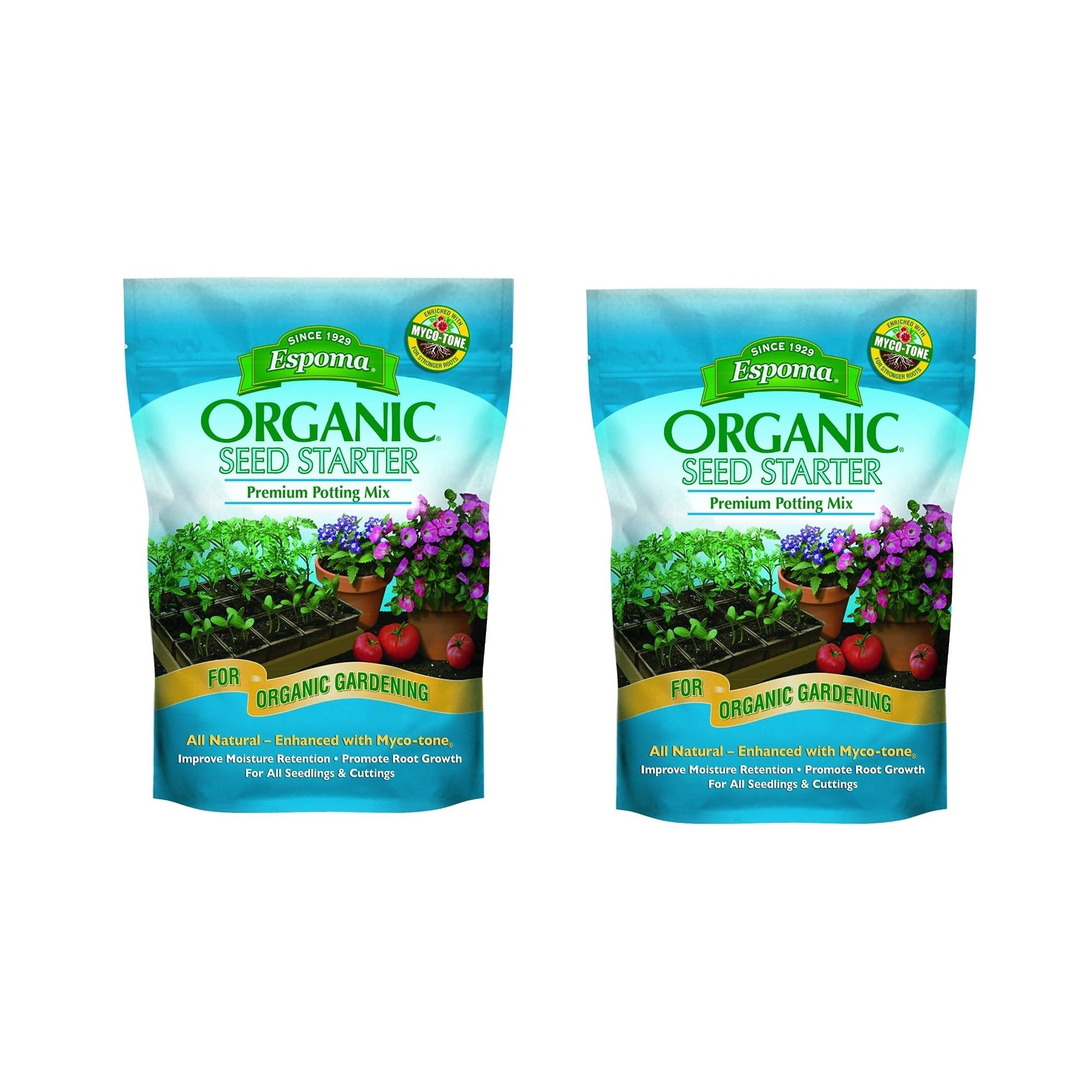
2. Espoma Organic Seed Starter Premium Potting Soil Mix, 8 qt
A light, airy blend boosted with mycorrhizae to build stronger roots from day one.
What makes this Espoma mix different from plain peat blends is the added myco-tone, a blend of endo and ecto mycorrhizae — beneficial fungi that attach to roots and help them take up water and nutrients more efficiently. For seedlings and cuttings, that translates to stronger, more resilient plants, which is exactly what owners mention.
The mix is composed of 80-90% sphagnum peat moss, perlite, limestone for pH adjustment, and yucca extract, making it all-natural for organic gardening. It is designed for seed starting flats, cell packs, or containers, and the perlite keeps it light and well-draining.
The one honest caveat is hydration: customers note the mix “is so dry, and it takes a while for the water to soak in.” Plan to pre-wet it thoroughly before sowing, just like the Jiffy above. At 4.5 stars across 138 ratings, the quality is consistently praised, so this is a solid mid-range choice for anyone serious about root development.
premium nutrient base: The mycorrhizae boost is the real differentiator here — if you want seedlings with a head start on root growth, this is the one.
rich starts: you are starting cuttings or seedlings and want the fungal boost for stronger roots.
tight budgets: The dry texture means you cannot skip the pre-soaking step.
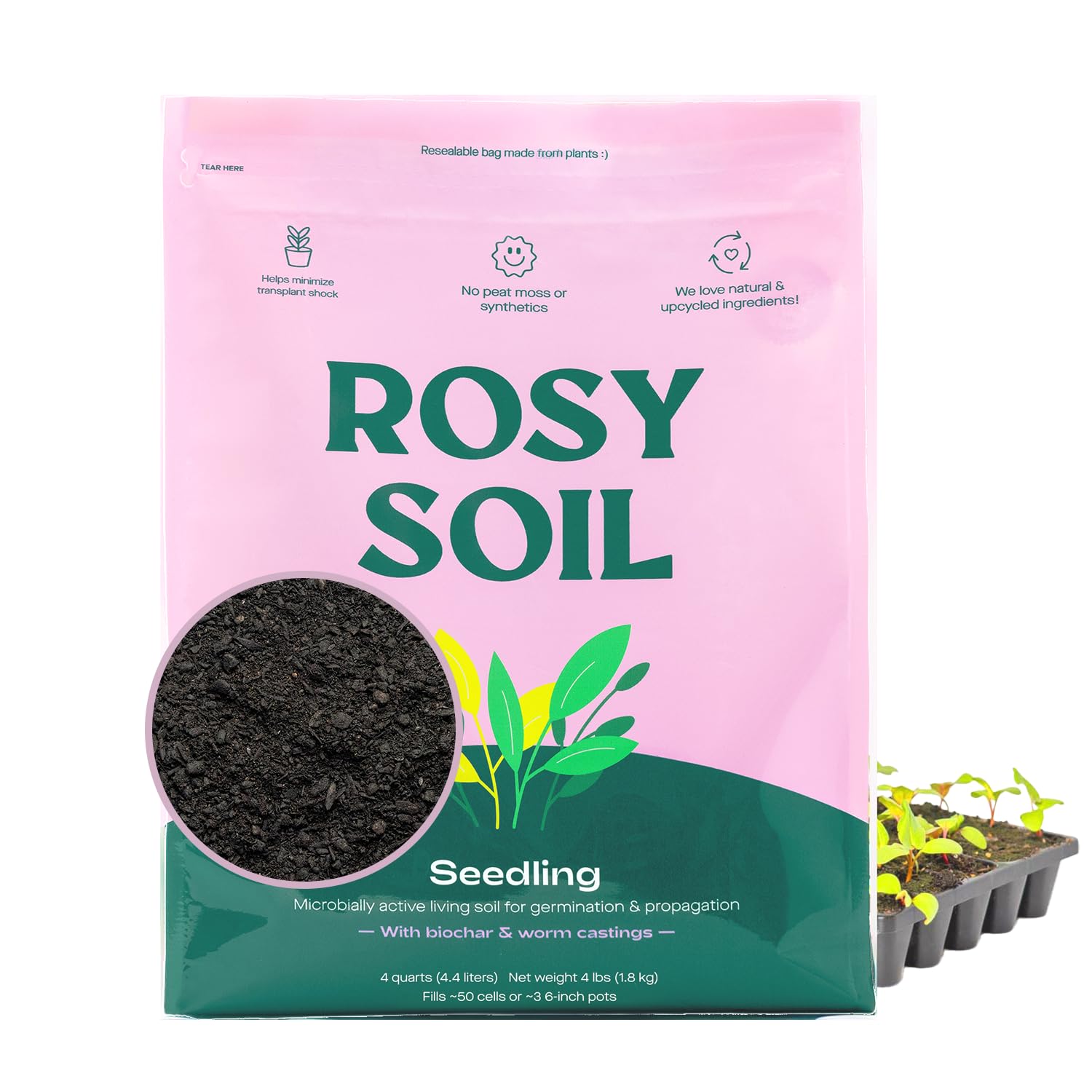
3. Rosy Soil Seedling Seed Starter Soil Mix
A sustainable peat-free formula where worm castings and biochar do the heavy lifting.
If you want to avoid peat moss entirely, this is the mix to consider. Rosy Soil skips the peat in favor of pine bark fines, compost, sand, and biochar — a charcoal-like material that stores carbon and helps hold nutrients. The result is a lighter, more breathable mix that drains well and creates a less hospitable environment for fungus gnats.
This is also the smallest bag here at just 4 quarts, which is a 2.5x gap compared to the 10-quart Jiffy bag. That makes it a premium, sustainability-focused choice rather than a bulk option, though the resealable packaging keeps the mix fresh between uses.
The germination results are genuinely split. Some reviewers point out “every single seed seemed to germinate so I was overflowing with starts,” while others find the mix too chunky and woody, with small seeds stalling until fertilized. If you are sowing tiny seeds, expect to sift it first; if you are starting larger seeds or cuttings, the chunkiness is actually easy to work with.
eco-friendly blend
- Peat-free and sustainably sourced with biochar
- Holds correct water-to-oxygen levels for strong roots
- Resealable 4-quart bag keeps it fresh
drains very fast
- Chunky woody texture can stall small seeds
- 4 quarts is a small volume for the price
sustainable grows: eco-conscious growers starting larger seeds, microgreens, or propagating cuttings.
heavy watering: you are germinating fine seeds like lettuce and do not want to sift the mix first.
4. Black Gold 16-Quart Seedling Mix
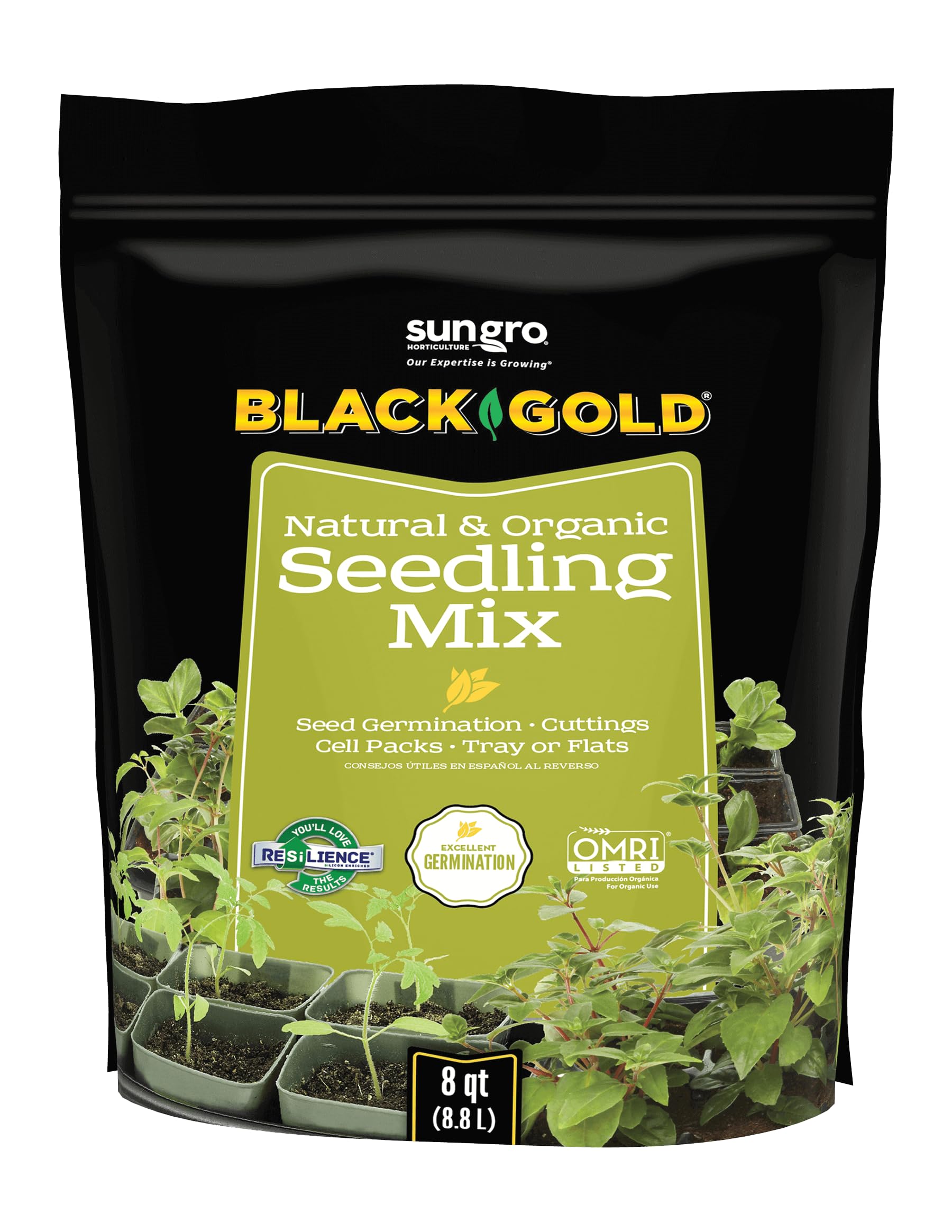
The finely ground Canadian peat blend that consistently out-germinates the competition.
This is the mix for growers obsessed with germination rates. Black Gold combines double-screened Canadian sphagnum peat moss with perlite, dolomite lime, and a wetting agent, resulting in a remarkably fine and uniform texture. Owners note it needs no pre-wetting at all — it absorbs water from the bottom of the tray easily, which is a huge convenience compared to the Jiffy above.
The proof is in the speed: strawberry seeds that normally take 14-21 days to sprout came up in just 7 days in this mix, and many shoppers say faster, higher germination rates than other brands. It is listed by the Organic Materials Review Institute for the production of organic food and fiber, so it meets organic standards.
At 4.6 stars across 659 ratings, this is a proven crowd favorite. The trade-off is that it contains no fertilizer, so seedlings need supplemental feeding once true leaves appear. One owner compared it directly to Espoma and found Black Gold germinated faster but produced slower-growing seedlings without added food.
large value bag: The finest texture here makes it the best pick for tiny, fussy seeds — just be ready to fertilize later.
big batches: germination speed and rate are your top priority, especially for small seeds.
fine seeds: adding fertilizer after the first true leaves, since this mix is nutrient-free.
5. Jiffy Natural & Organic Seed Starting Soil Mix, 16 QT

The bigger brother of the winner, giving you 16 quarts of the same trusted blend.
If you love the 10-quart Jiffy mix but need more volume for a bigger sowing session, this 16-quart version is the same formula in a larger bag. It brings the identical peat moss, vermiculite, and lime blend, designed to replicate greenhouse conditions right on your kitchen counter.
Owners are remarkably loyal to this one. The review pages show the same pattern as the smaller bag: “This is the only seed starting mix I will use anymore,” with seeds germinating well and plants thriving across multiple seasons. It holds moisture well, and the vermiculite content gets specific praise for keeping the mix from compacting.
At 4.6 stars across 478 ratings, it holds the same high score as the 10-quart winner. The practical difference is purely volume — for two or three trays of seedlings, the smaller bag is plenty, but for a serious spring sowing, this 16-quart size means fewer reorders.
bigger bag deal: The same great germination in a bigger bag — a smart upgrade if you know you will be sowing a lot.
bulk sowing: you are filling multiple trays or cell packs and want one bag to cover it all.
variety trials: Same pre-wetting requirement as the 10-quart version — do not pour water on top.
6. Purple Cow Organics Seed Starter, 12 Quart

A compost-based blend purpose-built for soil blockers that holds its shape beautifully.
Purple Cow takes a different approach than the peat-heavy mixes above. This one is built on Activated Compost, a premium soil amendment, and it includes enough fertility to feed seedlings for up to 45 days. That means you can start seeds and not worry about fertilizing for the first month and a half.
This mix excels at soil blocking — pressing soil into cubes so you skip plastic pots entirely. Buyers report the blocks “came out perfectly sized and held together well, making planting a breeze.” It also works in standard plastic trays, and the compost base makes it denser and more compressible than fluffy peat mixes, so cubes hold their shape.
The honesty note: germination results here are more mixed than the top picks. Moisture absorption gets mixed feedback, and some trays have variable results. At 4.5 stars across 662 ratings, most owners are happy, but this is a mix you need to match to your method — it excels at blocking, and it is more of a fit question for standard trays.
unique compost kick
- Ready-to-use with 45 days of fertility built in
- Fantastic for soil blocking — holds shape perfectly
- Quality and effectiveness praised by most owners
strong initial smell
- Moisture absorption can be inconsistent
- Some report seeds stalling where germination is patchy
organic boost: you use a soil blocker or want a mix that feeds seedlings for weeks without added fertilizer.
sensitive noses: you rely on consistent germination in standard trays — the results are more variable here.
7. Espoma Organic Seed Starter, 16 qt, Pack of 2
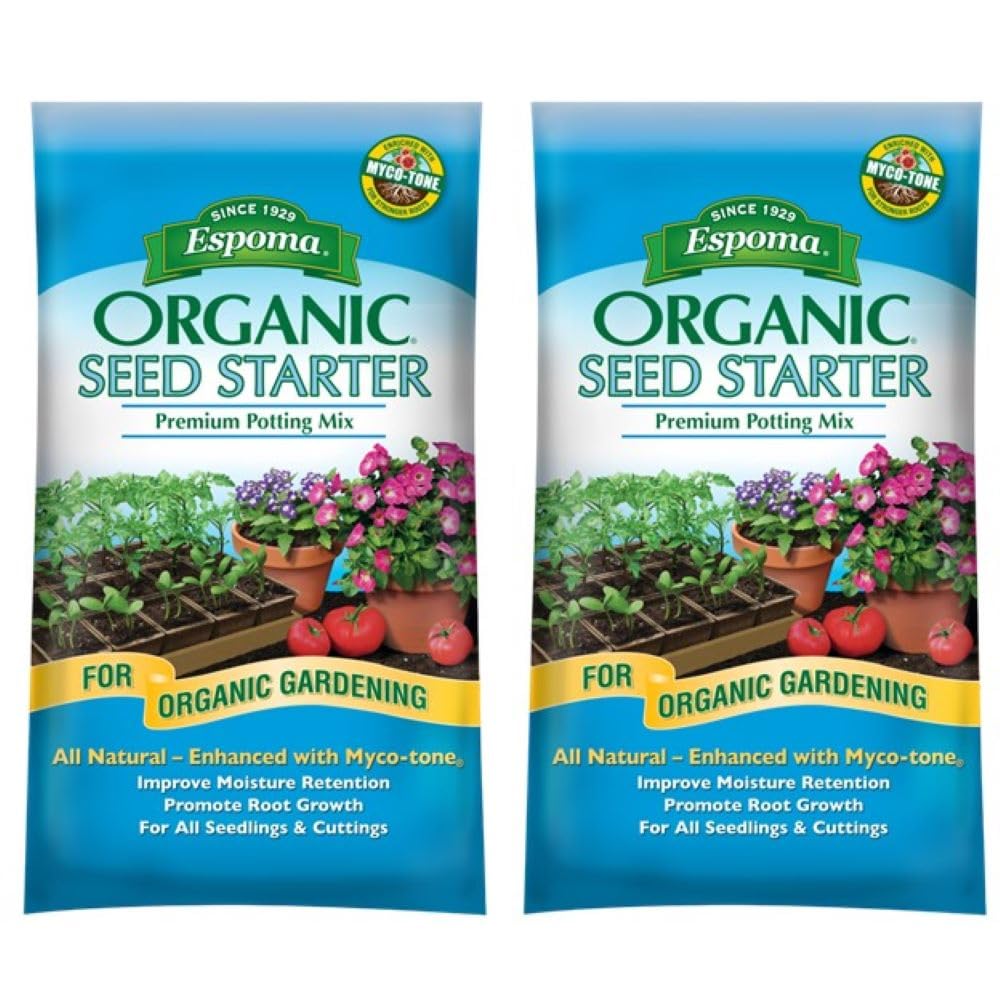
Two generous 16-quart bags of the same mycorrhizae-boosted blend for serious sowing.
This is the volume version of the Espoma mix, and you get two 16-quart bags in one purchase — enough to fill a full set of five standard trays with room to spare. The formula is identical to the smaller pack: sphagnum peat moss and perlite with yucca extract and lime for pH balance, plus the myco-tone blend of endo and ecto mycorrhizae.
Owners describe it as “light and airy” with great moisture retention that still drains well, making it a forgiving medium for a range of plant types — flowers, vegetables, herbs, and even rooting stem and leaf cuttings. The two-bag format means you can start seeds in one bag and pot up seedlings with the other.
At 4.5 stars across 340 ratings, it holds the same strong score as the smaller Espoma pack. If you know you are going to sow a lot, this gives you the root-boosting benefits of the smaller version without the need to reorder mid-season.
double pack value: The value play for Espoma fans — same quality, double the volume, and enough to handle a full seedling setup.
multiple flats: you want the mycorrhizae boost and need enough mix for multiple trays at once.
small shelves: Like the smaller Espoma bag, it arrives very dry and needs pre-soaking.
8. Premier Organic Pro Seed Starting Mix, 16 Quart

An organic mix with built-in fertilizer that gradually feeds seedlings for up to three months.
Here is a mix that handles the feeding question for you. The Premier Organic Pro contains an organic fertilizer that releases nutrients gradually for up to 3 months, so you can start seeds and let the mix do the work without worrying about a feeding schedule. It is also enhanced with MYCOACTIVE, a blend of beneficial mycorrhizae that stimulates vigorous growth and improves disease resistance.
This mix is specifically recommended for perennials and flowering shrubs, but owners mention excellent results with vegetable seeds too — many say it is the only mix that reliably starts their seeds. The germination speed gets consistent praise.
The honest trade-off is texture: at 4.6 stars across 309 ratings, the mix is solid, but a few owners note it is slightly chunky and needs sifting for very small seeds. One buyer’s method was to dump half a bag in a pail, add water, and let it sit 30 minutes before use — a technique that works well here.
professional grade
- Built-in organic fertilizer feeds for up to 3 months
- Quick germination with high success rates
- MYCOACTIVE improves vigor and resistance
needs extra perlite
- Slightly chunky texture needs sifting for fine seeds
- Some owners find the price high for the volume
serious growers: you want a mix that feeds on its own and you are starting perennials, shrubs, or vegetables.
casual starts: a quick sift before sowing tiny seeds like lettuce or basil.
9. Coast of Maine Sprout Island Blend Seed Starter
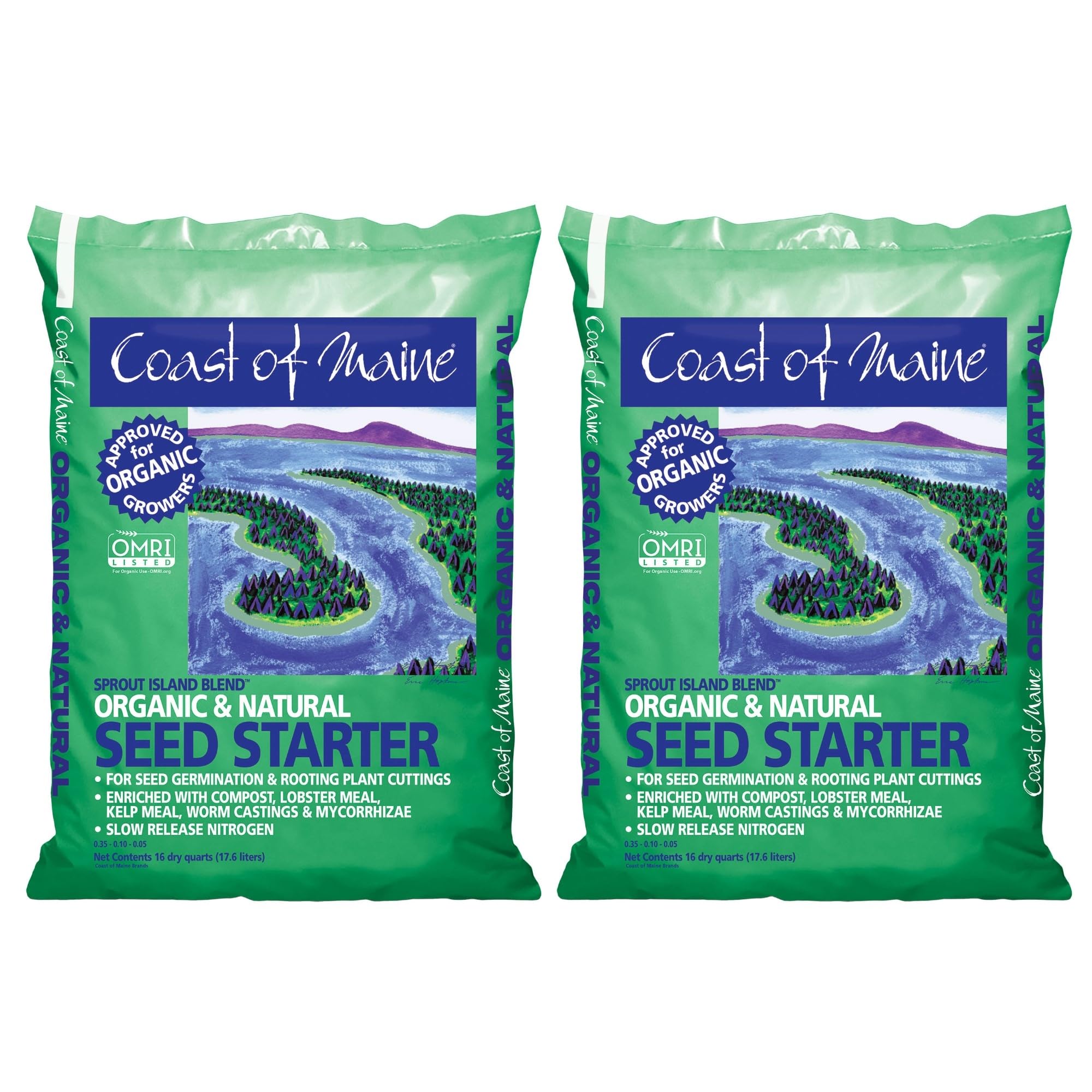
A rich, nutrient-dense blend that herbs absolutely love, with OMRI-listed organic certification.
For herb growers, this is a standout. The Coast of Maine Sprout Island blend combines sphagnum peat moss, worm castings, kelp meal, compost, and perlite, giving seedlings a genuinely nutrient-rich start. Customers note herbs like oregano, basil, sage, rosemary, and even strawberries thrive in it, with seedlings so healthy that many have cut back on how many seeds they sow.
You get two 16-quart bags per order, making this a premium option in both quality and volume. It is OMRI-listed and chemical-free, certified for organic production, and ready to use straight from the bag for cell packs, flats, or seedling trays. The mycorrhizae boost promotes strong root growth and improved nutrient uptake.
At 4.5 stars across 130 ratings, the soil quality gets consistent praise. The honest caveat is hygiene: a few reviewers point out issues with fungus gnats, which can happen with compost-rich mixes, and debris content gets mixed feedback. If you are sensitive to gnats, consider sterilizing the mix before use.
coastal blend charm: The best ingredient list for nutrient-hungry herbs, but the compost base means you may need a gnat prevention plan.
mild climates: herb growers and anyone who wants a ready-to-use, nutrient-dense organic mix that transplants easily at two true leaves.
hard water: If fungus gnats are a recurring problem in your setup, you will want to pre-sterilize this one.
Understanding the Specs
Peat Moss vs. Peat-Free
Peat moss is the classic base for seed starting because it is lightweight, holds many times its weight in water, and provides good aeration for roots. The trade-off is that it is strip-mined and can be slow to rehydrate once dry. Peat-free mixes swap it for pine bark fines, compost, sand, and biochar — more sustainable, but often chunkier in texture, which can be harder for tiny seeds to push through.
The Role of Amendments
Vermiculite prevents soil compaction and soaks up several times its volume in water, keeping moisture even. Perlite is the white lightweight material that improves drainage and aeration. Compost and worm castings add nutrients, while mycorrhizae are beneficial fungi that attach to roots and boost nutrient uptake. Lime is added to balance pH, which keeps the mix from being too acidic for seedlings.
FAQ
Do I need to pre-wet my seed starting mix before sowing?
What is the difference between a seed starting mix and regular potting soil?
Why is vermiculite in my seed starting mix?
Is a richer mix with compost better for seedlings?
Why is my seed starting mix so dry and hard to wet?
Can I use the same mix for cuttings and seeds?
What is mycorrhizae and why is it in my seed starter?
Do I need to fertilize seedlings started in a seed starting mix?
Why do some mixes cause fungus gnats?
Is peat-free seed starter mix better for the environment?
Final Thoughts: The Verdict
For most gardeners, the organic seed starter mix winner is the Jiffy Natural & Organic 10 QT because it pairs a fine, transplant-friendly texture with proven germination across a huge base of happy owners. If you want the mycorrhizae root boost, grab the Espoma Organic Seed Starter. And for eco-conscious growers or herb lovers, the peat-free Rosy Soil and the nutrient-rich Coast of Maine Sprout Island are the ones to reach for.
How We Picked
We do not accept paid placement. Every pick is matched to a real buyer and a real use-case; we do not hands-on test units.
Sources & Methodology
Specifications: manufacturer listings and product documentation. Review insights: verified customer reviews, as of August 2026. Pricing: not shown on this page (it changes often); check the current price via the retailer link.
As an Amazon Associate, Lawn Gear Lab earns from qualifying purchases. This does not affect which products we feature.