
Specs are compiled from manufacturer listings and verified buyer reviews and can change over time — please confirm the key details on the product page before buying.
You want a hoe that slices under weeds at the root and spares your back, not one that bends or snaps by midsummer. The key is forged steel — not stamped metal — and real owners’ experiences reveal which heads last and which don’t.
I’m Rikta — the founder and writer behind Lawn Gear Lab. This guide is built by comparing the manufacturers’ published specifications and the patterns across verified customer reviews, so you get each pick’s real strengths and trade-offs instead of marketing spin.
Modern versions of the classic old garden hoe blend tradition with comfort, but the steel quality decides if you get a lifelong tool or a throwaway. The steel quality, not the finish, determines whether a hoe lasts for decades or bends in a season.
Our Picks at a Glance

How To Choose The Best Old Garden Hoe
An old garden hoe is a simple machine, but the differences between a forged Japanese head and a welded hardware-store blade are enormous once you hit rocky soil or established weed roots. You are really choosing three things: the steel, the handle, and the blade geometry.
Forged Steel vs. Stamped Steel
Forged steel is heated and hammered into shape, which aligns the grain of the metal and makes it tough and resistant to bending. Stamped steel is pressed from a sheet, so it is thinner and can flex or warp when you lever it against a stubborn root. Look for words like “hand-forged,” “forged,” or “hammered” in the description — they signal a head that will hold an edge and survive years of abuse.
Blade Width and Angle
Blade width changes how the tool feels in use. A 6-inch blade covers more ground per pass, which is great for clearing beds, but a narrower head digs into tight spots between plants without damaging them. The angle of the blade relative to the handle sets how naturally you can work while standing upright — a precise angle means less bending and less back strain.
Handle Length and Material
Handle length is the single biggest factor in back strain. A long handle — around 54 to 60 inches — lets you stand tall and use leverage instead of stooping. The material matters too: wood is traditional and warm in the hand, while fiberglass is tougher but heavier. Your height and the size of your garden beds should decide which one you choose.
Quick Comparison
| Model | Best For | Blade Material | Handle Length | Weight | Amazon |
|---|---|---|---|---|---|
| Nisaku NJP178 Triangle Hoe★ Best Overall | Precision weeding & rocky soil | Japanese Stainless Steel | 14 inches (hand tool) | — | Amazon |
| YEELOR Long Handle HoeBack-Saver | Back-saving full garden work | Forged Steel Head | 60 inches | 2.4 lb | Amazon |
| Original Homi Hand HoeTraditional Craft | Traditional Korean planting & digging | Forged Alloy Steel | Hand tool (13.5 x 6.8 in) | 0.56 kg | Amazon |
| Japanese Forged Hoe & Cultivator | Hard clay & commercial landscaping | Alloy Steel (Forged) | Wooden Handle | 500 g | Amazon |
| TRUE TEMPER 6-Inch Welded Hoe | Budget-friendly wide weeding | Welded Steel | 48 inches | 16 oz | Amazon |
| ATFVERDEX 2-in-1 Weed Rake & Hoe | Upright weeding with no bending | Cast Iron / Manganese Steel | 60 inches | — | Amazon |
| BULLY TOOLS 12-Gauge Loop Hoe | Push-pull weeding in open rows | 12-Gauge Steel | Fiberglass (55 in overall) | 2.4 lb | Amazon |
| TRU PRO Forged Garden Hoe | Sturdy long-handle general use | One-Piece Forged Steel | 60 inches (Ash) | — | Amazon |
| Lehman’s Amish-Made Garden Hoe | Narrow rows & precision work | High Carbon Swedish Steel | 54 inches (Ash) | 2.05 lb | Amazon |
In-Depth Reviews
1. Nisaku NJP178 Handheld Triangle Hoe
Our pick — over 4.5★ from 100+ verified ratings; the strongest balance of quality and price.
The tiny triangle that out-digged every full-sized hoe in the shed.
This tool proves that a 6.25-inch stainless steel blade with a polished 14-inch wood handle can be the most useful thing you own. The sharp point focuses your whole weight into a single spot, so it pierces rocky soil and reaches the deep roots that a traditional hoe simply skips over.
The rust-proof and scratch-resistant blade is made by Japanese artisans under the Tomita name, and the construction feels dense and well-balanced in the hand. It is the crowd favorite — holding 4.7 stars across a thousand-plus owners — and what wins people over is how easily it digs, hoes, and cuts weeds in one motion.
One reviewer, age 73, calls it “the best hand tool I’ve ever used.” Others use it to clean excavator tracks and cut through hard clay in tight spots, saying it outperforms their sharpshooters — a sign of genuine precision, not a toy.
The Steel Does the Work
- Sharp point pierces hard, rocky soil
- Rust-proof stainless blade stays sharp
- Light and sturdy, won’t slip in hand
Know Your Limits
- Short handle means you work close to the ground
- Not built for clearing large open beds quickly
The precision pick: this is for gardeners who want surgical weeding and root removal in tight, rocky spots.
Reach for a long handle if: your main job is clearing big beds while standing tall — this one keeps you kneeling.
2. YEELOR Long Handle Garden Hoe
The 60-inch handle that puts your back on easy street.
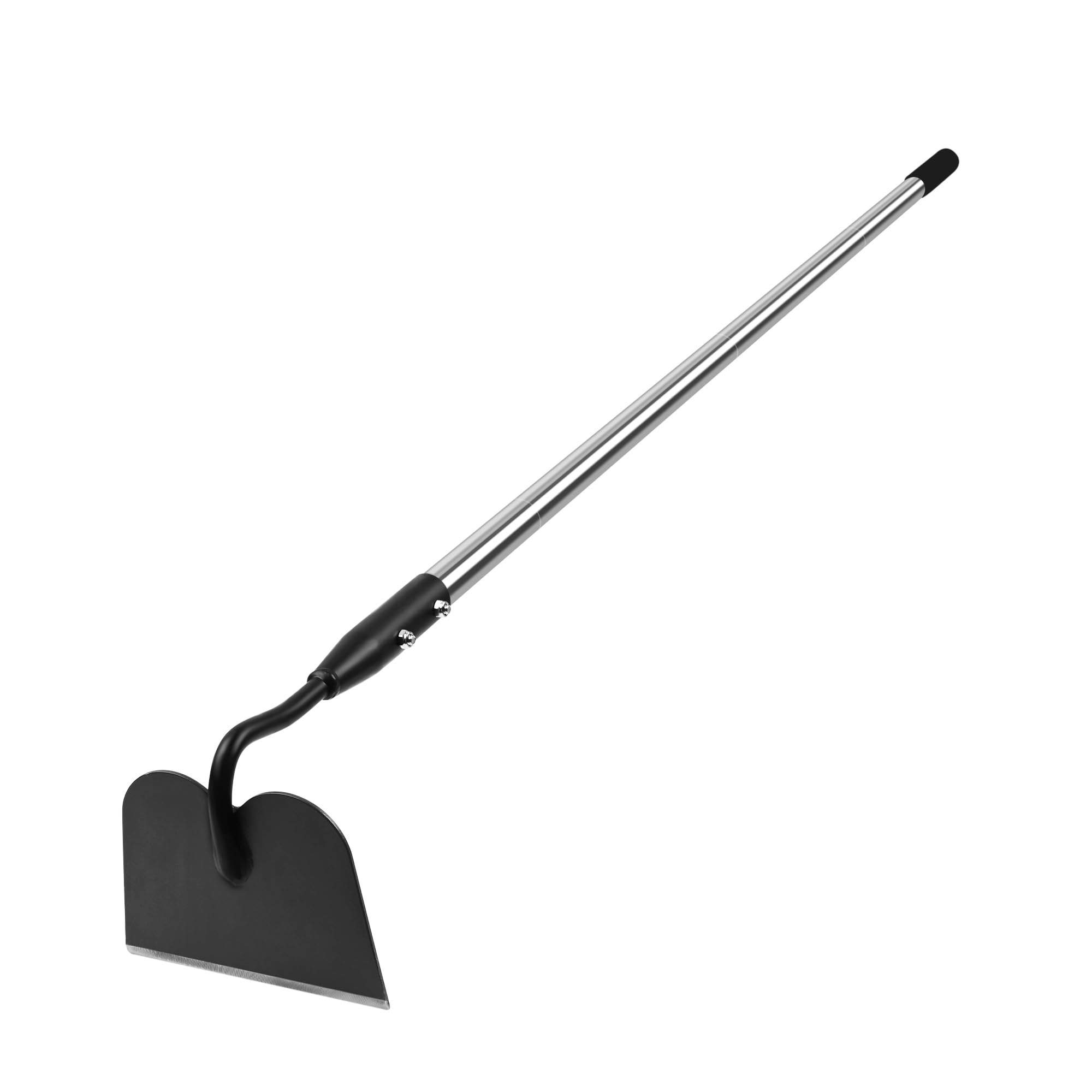
This 60-inch hoe handles loosening, weeding, furrowing, and leveling while you stand upright. The 60-inch stainless steel handle with a non-slip soft grip lets you stand tall and use leverage, which is exactly the ergonomic fix owners praise for reducing back strain and joint pain.
The forged steel head is rust-proof and bolts to the shaft with anti-loosening hardware. The segmented handle uses lathe-threaded connections so it stays solid mid-swing but breaks down for storage, and at just 2.4 pounds it feels featherweight compared to a 55-inch bulk steel competitor. That is a whole 4.3x the reach of the Nisaku’s 14-inch hand tool, so you are trading kneeling precision for standing power.
Buyers report the blade is sharp and “cuts into the ground with little effort,” but a few note the head can arrive dull and need a quick sharpening before first use. The screw-together collar is a common topic; some add thread-locker for security, though most find it holds fine as-is.
Why It Earns Its Place
- 60-inch handle saves your back on long jobs
- Forged steel head is rust-proof and sturdy
- Breaks down for easy storage
Fair Warning
- Head may need sharpening on arrival
- Screw threads can loosen with heavy use
Best for full plots: if you are maintaining garden beds all season while staying upright, this is your tool.
Think twice if: you want a single hand-tool for tight weeding — the long shaft is all about reach.
3. Original Homi Hand Hoe
The Korean workhorse that turns weeding into your favorite chore.
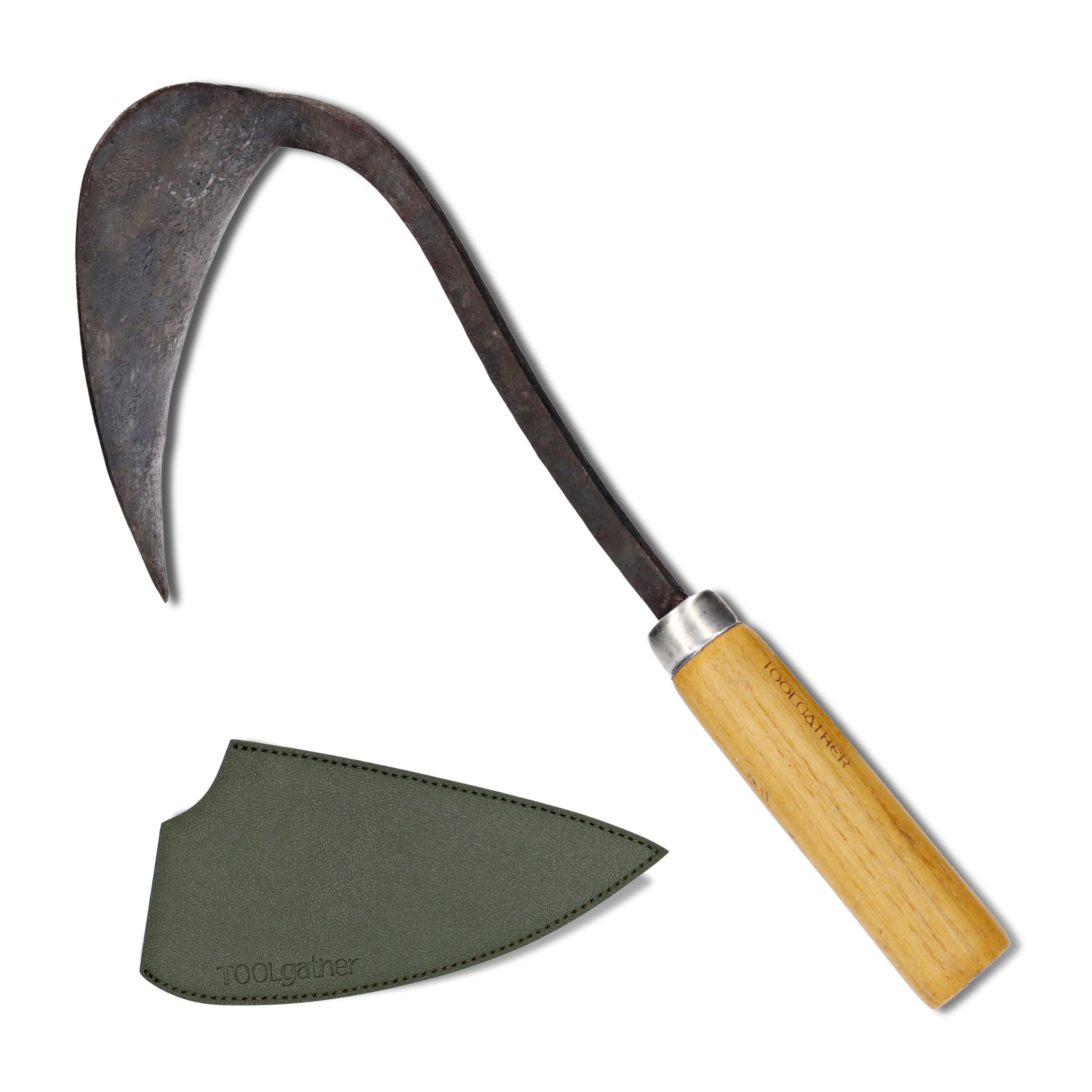
This traditional Korean Homi is hand-forged using the ‘Danjo’ method, where steel is heated over 800°C and hammered by hand. The curved neck keeps your wrist natural while digging, so owners say the “weight & balance are perfect” and use it for planting, digging, and weeding.
The handle is high-density Chestnut and Acacia wood, chosen to resist warping, and a secure metal clamp locks the head in place. It comes with a leather cover for protection, so this is a tool built to live in your garden bag for decades. The surface shows natural dark or reddish marks from the forging process — those are signs of real hand-work, not flaws, and the maker says to wipe with oil and never sand.
The 13.5 x 6.8 x 2.79-inch package is a compact hand tool, a full 4.2x smaller physically than the YEELOR’s 57-inch shaft, but don’t mistake size for weakness. The blade cuts into gravel-filled soil efficiently, and dozens of owners call it the best weeder they’ve ever owned — including one self-described “only tool I use” convert.
Craft you can feel: the hand-hammered steel and curved neck make this a joy for precise planting rows.
One honest note: like any forged tool, it thrives with a light oil wipe and dry storage — don’t sand the finish.
4. Japanese Forged Garden Hoe & Cultivator

A blacksmith’s wedge that laughs at hard clay and concrete.
This two-in-one tool comes from a classic Japanese blacksmith’s factory, and the difference shows the moment you hit packed earth. The forged alloy steel head digs deep below roots in hard clay while the hoe side slices through smaller roots, and the smith-forged thickness is balanced so it doesn’t tire your wrists even on long sessions.
The Japanese wood handle is durable and lightweight, and the wedge design keeps the head from loosening — one owner even reports the welds survived direct hits against concrete. Built for commercial landscaping crews, it has become a favorite for speeding up weeding in beds, which is high praise from people who do this for a living. Owners mention it arrives sharp and well-balanced, though a few add their own edge for extreme precision.
At 500 g it is a mid-weight hand tool, noticeably lighter than a long-handle model like the TRUE TEMPER’s 16-ounce design? Not quite — it is a different shape entirely, made for close-in work where you need control more than reach.
Built for abuse: the hammer-forged steel and tight wedge hold up where cheaper heads bend.
Who it’s for: home gardeners with tough, compacted soil and professionals who need a reliable daily driver.
5. TRUE TEMPER Ames 6-Inch Welded Garden Hoe

The classic American wide blade that still has fans after two decades.
This is the no-frills American standard: a 6-inch wide welded steel blade on a hardwood handle, made for covering ground fast. A steel ferrule locks the head to the handle, and the 48-inch hardwood shaft gives you a solid grip without the premium price of forged imports.
Durability splits opinions here. Some owners have used theirs for years in a one-acre garden and find the lacquered handle comfortable enough to avoid blisters, but others report the blade bending after a few uses in tilled soil, saying the metal is thinner than older versions. The 48-inch handle is shorter than the 60-inch designs on the YEELOR and ATFVERDEX, so you will bend more.
At 16 ounces, this is the lightest full-size hoe here and a budget-friendly entry into real garden tools. It suits occasional weeding and soft, prepared soil, but the forged-steel picks above are the safer bet if you regularly work hard ground.
Easy Entry
- 6-inch blade clears wide rows quickly
- Light at 16 oz, comfortable lacquered handle
- Familiar American design, easy to find
The Mixed Bag
- Blade can bend on hard or rocky soil
- Handle attachment gets mixed durability reports
Best for light duty: if your soil is soft and your weeding is casual, this keeps costs down.
Buy forged instead if: you hit clay, rocks, or roots regularly — that is where this blade gives ground.
6. ATFVERDEX 60″ Weed Rake & Garden Hoe
Two heads, one 60-inch shaft, zero back pain.
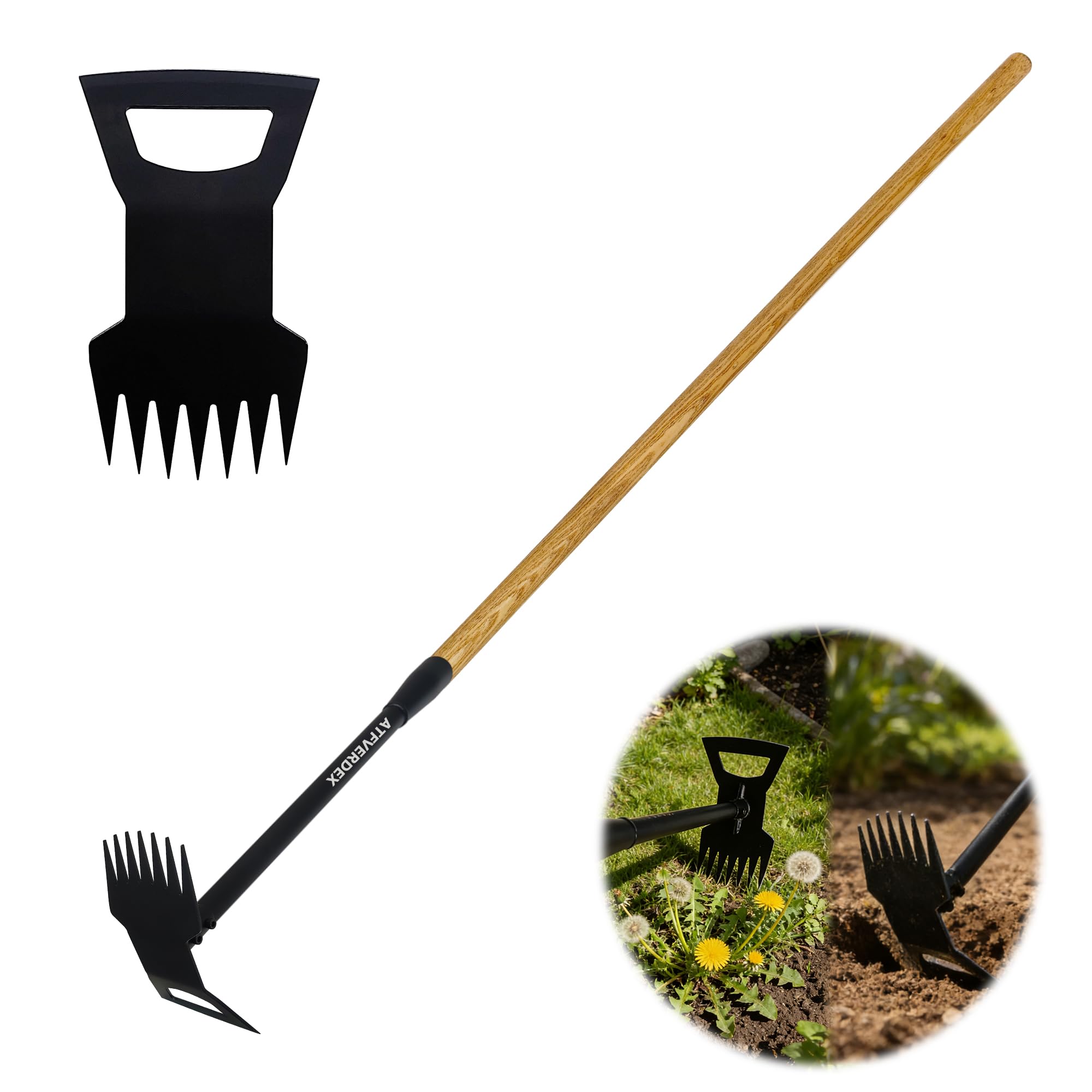
This 2-in-1 tool pairs a 7-tine rake on one end with a broad cast-iron hoe blade on the other, so you can chop, rake, and level without swapping tools. The rake tines are forged from manganese steel — a tougher alloy than standard carbon steel — and the tooth length is tune at 1.77 inches, which is 0.5 inches longer than previous models to grab deeper roots. The arched hoe blade is 4.7 inches wide, a full 80% wider than comparable products, making it ideal for clearing large areas fast.
The 60-inch wood handle is the star for anyone with back trouble. Customers note pulling grass and weeds easily while standing fully upright, with one 78-year-old buyer noting it is far easier to pull than a wider 7-inch hoe. The build quality is the thing everyone raves about — the head is heavy and sturdy, with multiple welds at the stress points, and the screwed attachment keeps everything tight.
The 1.77-inch rake tines are sharp, but the handle screws are the weak point—some owners swap in a lag bolt for security. If you want a dedicated weeder that covers large areas without bending, this is the most versatile single tool on the list.
Double duty: chop with the 4.7-inch hoe, then flip to the 7-tine rake to gather the debris.
Small fix, big payoff: upgrading the mounting screws is the one tweak owners suggest for total confidence.
7. BULLY TOOLS 12-Gauge Loop Hoe

The American-made loop that glides just under the weeds.
This is a different breed of hoe: the 12-gauge steel loop head is designed to skim just beneath the soil surface, cutting weeds off at the crown with a smooth push-pull motion. It is not a digger — it is a slicer, and it is devastatingly effective at clearing open rows and beds without raising dust clouds like a weed eater.
The fiberglass handle uses a triple-wall construction to withstand consistent use, and the extended steel ferrule reinforces the head connection. At 2.4 pounds it matches the weight of the YEELOR, but the loop design shifts the effort curve — you are pushing, not chopping, so work feels lighter over long sessions. Reviewers point out it “cut through weeds easily” and call it a tool built for pros, with one crew making it their go-to for weeding beds.
Specific gripes: the rivet holding the head can have a sharp edge that bites skin, and a few note the blade angle is steep or arrives with the bevel on the wrong side, needing a quick grind. These are fixable on a tool that otherwise earns “built for a lifetime” reviews.
easy Clearing
- Loop head slices weeds at soil level
- Push-pull action is easy on the body
- Triple-wall fiberglass handle is tough
Precision Check
- Rivet edge can be sharp from the start
- Blade angle may need a quick adjustment
Built for speed: if your main battle is top-growth weeds in open beds, this loop hoe is the fastest tool here.
skip it if: you need to dig out deep taproots — this slices tops, it doesn’t pry roots.
8. TRU PRO Forged Garden Hoe
The one-piece forged head that finally stops the breaking streak.
If you keep snapping cheap hoes, this is the cure. The head is one-piece forged steel — there is no welded joint to fail — and it is pinned to a 60-inch ash wood handle for a connection that is meant to outlast the gardener. The 6-inch head (15.24 cm) is the classic working width for clearing beds and prepping soil.
Owners describe it as sturdy and well-balanced, with one noting it “mixed up 8+ bags of Quikrete with ease” — a concrete-mixing test that would fold most stamped blades. The long ash handle gives you the same back-saving reach as the YEELOR, but the traditional pinned construction and wood shaft have a more classic, old-garden feel. Shoppers say the blade holds an edge very well after a quick touch-up.
It has a smaller following, but owners are uniformly positive and tend to keep it for years. For a no-frills, full-size forged hoe that won’t break, this is the quiet value pick.
Lifetime build: one-piece forging means there is simply nothing to snap or bend.
Your move: it arrives sharp but not scalpel-sharp — a quick file pass makes it perfect.
9. Lehman’s Amish-Made Garden Hoe

The 70-degree blade angle that New England Yankees swear by for onion rows.
This is the precision instrument of the group, made by an Amish saw-maker and forged from high carbon Swedish steel. The defining feature is the blade’s precise 70-degree angle, which cuts parallel to the ground while you stand upright — a geometry that turns weeding into a glide rather than a chop.
The 6-inch wide blade tapers from 1 inch at the ends to 2 inches at the center, a shape that wedges perfectly into narrow rows. Owners in New England call this an “Onion Hoe” and report it does a great job in tight onion rows while also excelling under bushes and in landscaping. At about 2.05 pounds with a 54-inch ash handle, it is light enough for extended work but heavy enough to feel substantial. One owner joked it “broke up road edge rooted grasses” thanks to the razor-sharp edge.
A few owners had to hone the edge themselves, though most found it sharp from the start. This specialist’s tool also handles general work well, making it a heirloom-quality investment.
Precision defined: the 70-degree angle and tapered blade make this the best narrow-row weeder money can buy.
Small caveat: the steel takes an edge brilliantly, but a few units need that final sharpening pass from you.
Understanding the Specs
Forging Method: Forged vs. Welded vs. Stamped
The forging method decides how long the head survives hard use. Forged steel is heated and hammered, aligning the metal’s grain so it bends instead of snaps. Welded heads join two pieces of steel, which is fine for light work but a potential failure point under heavy leverage. Stamped heads are pressed from a sheet and are the thinnest, prone to warping when you hit roots or rocks. For a tool you want for years, look for “forged” or “hand-forged” in the description.
Blade Width and Angle
Blade width trades coverage for precision. A 6-inch blade clears wide rows fast, while a narrower 4.7-inch head or a tapered design like Lehman’s sneaks between plants without damage. The blade angle matters: Lehman’s 70-degree cut lets you work upright without bending, but a poor angle forces awkward posture that tires you and strains your back.
FAQ
What is the difference between a forged and a welded hoe head?
How long should a good old garden hoe last?
What is the best handle length to avoid back pain?
Can one hoe handle both weeding and digging furrows?
Is a heavier hoe always better for tough soil?
Are Japanese and Korean hoes different from American ones?
Will a stainless steel blade stay sharp longer than carbon steel?
How do I maintain my old garden hoe to keep it sharp?
What is a loop hoe and what is it best for?
Are handmade hoes worth the higher price compared to mass-produced ones?
Final Thoughts: The Verdict
Across the board, the old garden hoe winner is the Nisaku NJP178 because its razor-sharp triangle blade and 4.7-star reputation make it the most universally loved tool for precision weeding and rocky soil. If you want full garden coverage without bending your back, grab the YEELOR Long Handle Hoe. And for traditional craftsmanship that excels in narrow rows, the Lehman’s Amish-Made Hoe is the one to reach for. Given that the crowd favorite holds a 4.7-star score across a thousand-plus owners, starting with the Nisaku is the lowest-risk, highest-reward first hoe you can buy.
How We Picked
We do not accept paid placement. Every pick is matched to a real buyer and a real use-case; we do not hands-on test units.
Sources & Methodology
Specifications: manufacturer listings and product documentation. Review insights: verified customer reviews, as of August 2026. Pricing: not shown on this page (it changes often); check the current price via the retailer link.
As an Amazon Associate, Lawn Gear Lab earns from qualifying purchases. This does not affect which products we feature.