
Specs are compiled from manufacturer listings and verified buyer reviews and can change over time — please confirm the key details on the product page before buying.
Yellowing leaves on a holly bush almost always mean one thing: the soil has drifted too alkaline for the roots to pull up iron. You do not need a chemistry degree to fix it — you need a fertilizer with an acidic kick and the right form for how you garden. This guide breaks down the top acid-loving plant foods so you can match one to your holly, your schedule, and your soil.
I’m Rikta — the founder and writer behind Lawn Gear Lab. This guide is built by comparing the manufacturers’ published specifications and the patterns across verified customer reviews, so you get each pick’s real strengths and trade-offs instead of marketing spin.
Deep, green foliage and steady growth come down to matching the right acidifying formula to your routine, and you can find the best plant food for holly bushes without any guesswork or wasted money.
Our Picks at a Glance


How To Choose The Best Plant Food For Holly Bushes
Holly bushes are acid-loving plants, meaning they prefer soil with a lower pH. When the soil turns alkaline, the roots cannot absorb iron properly, and the leaves fade to yellow. The right fertilizer supplies nutrients and often includes sulfur to bring the pH back down.
Water-Soluble vs. Granular vs. Slow-Release
Water-soluble formulas dissolve in a watering can and feed the roots almost instantly — ideal for a quick green-up every 7-14 days. Granular options like Espoma Holly-Tone are sprinkled on the soil and break down slowly, so you apply them in spring and fall. Slow-release blends with soil microbes feed gently over weeks, which suits busy gardeners who want consistent support without frequent mixing.
Read the N-P-K and the Sulfur
The three numbers on the bag — nitrogen, phosphorus, potassium — tell you what the plant gets. Acid-loving formulas often pair a balanced N-P-K with extra sulfur, the ingredient that actively lowers soil pH. If your holly looks pale despite regular feeding, a fertilizer with sulfur is the missing piece.
Quick Comparison
| Model | Best For | Form | Weight | N-P-K | Amazon |
|---|---|---|---|---|---|
| Miracle-Gro Water Soluble★ Best Overall | Fast feeding, 7-14 day routine | Powder | 5 lb | — | Amazon |
| Dr. Earth Acid LoversPremium Organic | Organic granules, no mixing | Granules | 4 lb | — | Amazon |
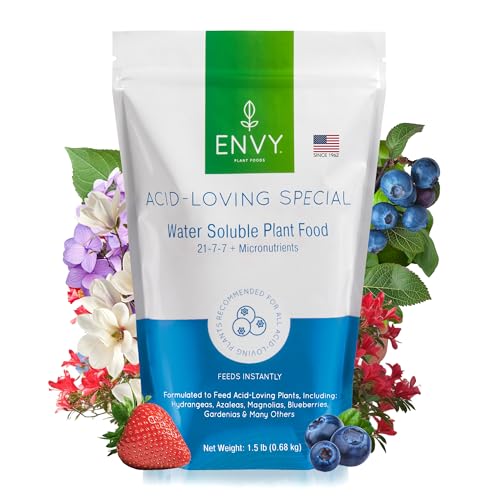
| ENVY Acid-Loving SpecialBest Value | Water-soluble with scoop | Powder | 1.5 lb | 21-7-7 | Amazon |
| HiThrive Azalea Fertilizer | Liquid, mixes 32 gallons | Liquid | 2.6 lb | — | Amazon |
| True Organic Berry Food | Berry + acid-loving plants | Granules | 4 lb | 5-4-4 | Amazon |
| FoxFarm Happy Frog | Slow-release with microbes | Powder | 4 lb | — | Amazon |
| Espoma Holly-Tone | Classic spring/fall granules | Granules | 4 lb (x2) | 4-3-4 | Amazon |
| Ferti-lome Soil Acidifier | Lowering pH fast | Liquid | 1 gal | — | Amazon |
| Down To Earth Acid Mix | Large organic feeding | Granules | 25 lb | 4-3-6 | Amazon |
In‑Depth Reviews
1. Miracle-Gro Water Soluble Azalea, Camellia, Rhododendron Plant Food
Our pick — over 4.5★ from 650+ verified ratings; the strongest balance of quality and price.
The fastest green-up for hollies, with a 5 lb bag that dissolves instantly in water
This water-soluble powder feeds acid-loving plants the moment it hits the roots — azaleas, camellias, rhododendrons, gardenias, hibiscus, hollies, hydrangeas, and orchids are all on the label. At 5 pounds, it is the heaviest water-soluble option here, giving you plenty of feedings from a single bag. Mix it at 1:144 for indoor plants and 1:18 for outdoor beds, then apply every 7-14 days with a watering can or a Miracle-Gro Garden Feeder.
What wins people over is effectiveness — by a wide margin, owners single out how well it performs, with ease of use and value for money close behind. As buyers report: it is an “acidic water soluble fertilizer” that “dissolves completely and easily,” and it has kept a 30+ year user loyal enough to abandon a pricier brand that failed on hollies. The formula is gentle enough that it will not burn foliage when used as directed, even on plants you are feeding indoors on a bookshelf.
The honest trade-off is the packaging. The resealable Velcro bag is a noted upgrade over ziplock bags, but the powder coats the Velcro over time, making the seal less reliable. Keep the closure clean when you pour, and this is the most simple to use way to feed a row of hollies on a regular schedule.
What owners rave about
- Dissolves completely with no residue left in the can
- Covers indoor and outdoor acid lovers
- Big 5 lb bag stretches across many feedings
What needs care
- Velcro seal weakens if powder gets on it
- Needs mixing every 7-14 days
The regular feeder’s pick: If you like a quick, water-in routine and want one bag to serve hollies, azaleas, and hydrangeas, this is the one.
Think twice if: You want a low-maintenance granular — this needs your watering can on a schedule.
2. Dr. Earth Acid Lovers Azalea, Camellia, Rhododendron & Maple Fertilizer
The toss-and-water organic granule that revived sad camellias without any digging
Dr. Earth positions itself as the only Non-GMO Project Verified fertilizer in the U.S., and the label backs that with OMRI, OIM, CCOF, and NOP certifications. It is handcrafted from human and feed grade ingredients, enriched with multi-minerals, proteins, carbohydrates, humic acids, and trace elements. For a 4 lb bag, that purity carries a premium price, and customers are split on whether the cost is justified — but the results speak for themselves.
Owners mention reviving sad camellias by simply tossing the granules on the soil and watering, with no digging or tea-brewing required. One gardenia bloomed “the best it ever has” after feeding, and a struggling azalea bush was saved outright. Plant health is the second most-discussed strength, right behind overall effectiveness, which tells you this is about long-term vigor, not just a quick flush of green.
Because it is people and pet safe with no synthetic chemicals or toxic ingredients, it is a strong choice for yards where kids and animals roam. The catch is quantity — the 4 pound bag may not cover a long hedge, so budget for repeat purchases if you have a long hedge of hollies.
Best for cautious yards: The people-and-pet-safe organic certification makes it the pick for families who want no synthetic chemicals near their garden.
The honest limit: A 16 oz bag goes fast on a full hedge, and some owners feel the per-pound cost is steep.
3. ENVY Plant Foods Acid-Loving Special Water Soluble Fertilizer
A 21-7-7 water-soluble blend with the measuring scoop already in the pouch
ENVY targets the buyer who hates guesswork. The 1.5 lb resealable pouch includes a measuring scoop, so you hit the optimal nutrient ratio every time without hunting for a tablespoon. The 21-7-7 analysis is heavy on nitrogen, which drives exactly what hollies need most: lush, deep-green foliage. It is 100% water soluble, so it dissolves fully into whatever ratio you need for azaleas, hydrangeas, magnolias, gardenias, camellias, rhododendrons, blueberries, and citrus.
In Florida full sun, customers note hydrangeas thriving within 4 weeks of the first feed, and spring applications boosted blooms significantly with healthier overall growth. The resealable pouch keeps the powder dry and mess-free between uses, and the included scoop removes the guesswork the label promises. Blueberries also came in strong, with one report of a great year for the berry patch.
It is the value play here — for the price of a comparable water-soluble brand, you get the scoop, the pouch, and a formula tuned for acid lovers. The trade-off is that 1.5 lb is a smaller total than the 5 lb Miracle-Gro bag, so high-volume gardeners will reorder sooner.
For the beginner: The included scoop and simple dissolve-in-water routine make this the easiest entry into acid feeding.
For the high-volume yard: The smaller 1.5 lb size means more frequent reorders than the bigger bags.
4. HiThrive Azalea Fertilizer Outdoor Liquid Concentrate
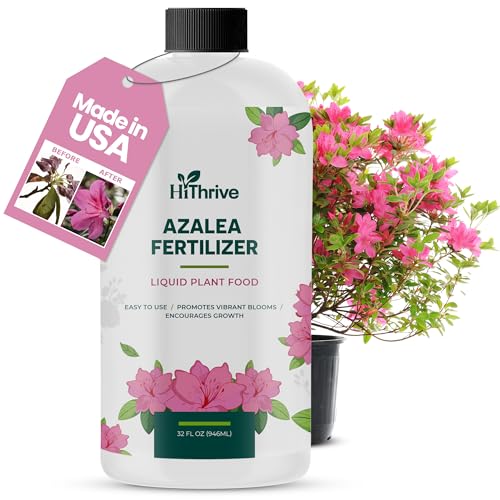
A 32 oz liquid that stretches to 32 gallons of ready-to-pour plant food
HiThrive takes the mixing math out of liquid feeding. The 32 oz bottle makes 32 gallons of azalea plant food, the 16 oz bottle makes 16 gallons.. At 2.6 pounds in the bottle, the HiThrive liquid weighs 2.6 lb, while the Miracle-Gro powder weighs 5 lb; this weight is all concentrated liquid — and it covers a whole season of feedings for a bed of acid lovers.
The formula packs nitrogen for lush foliage, phosphorus for roots, and potassium for long-lasting blooms, plus calcium, magnesium, and zinc to fix nutrient deficiencies. On a second-year azalea that barely bloomed, reviewers point out it was “exploding” within a week. Another gardener who was frustrated by azaleas blooming only about a month per year used this to keep them “blooming far into April.” For hollies, that same vigor translates to steady new growth and deeper green leaves.
It is ideal for Encore, Formosa, and every azalea variety, but the real strength is the flexible schedule: feed every 1-2 weeks in the growing season and every 4 weeks in cooler months. The routine is simple — mix with water and apply — which is why it earns high marks for ease of use.
Why it earns its spot
- 32 oz makes 32 gallons of feed
- Micronutrients fix pale, deficient leaves
- Simple mix-and-pour application
Consider this
- Liquid means hauling the bottle to each plant
- No resealable pouch — bottle only
Reach for this if: You want a precise liquid feed that revives weak blooms and pale leaves fast.
Look elsewhere if: You prefer a dry granular you can scatter and forget until next season.
5. True Organic Berry Food for Acid-Loving Plants

An organic 4 lb granule that tripled berry size and brings sulfur to your soil
True Organic is the crossover pick for gardeners who grow berries and hollies side by side. The 4 lb bag covers up to 58 sq. ft., and the 5-4-4 analysis is balanced for fruit and foliage alike. The label leans on seabird guano, shrimp and crab shell meal, and other proven ingredients — all 100% made in the USA with organic inputs. The sulfur content is the key for hollies: it actively lowers soil pH, which improves micronutrient availability and keeps those leaves green.
Berry production is what owners praise most, with one reporting their berries “tripled in size” and the yield abundant. Blueberry and strawberry plants thrive on it even after transplanting, and the granules spread easily by hand. For a holly hedge, the monthly application is a simple sprinkle before a rain, which helps work the nutrients into the root zone.
The recurring gripe is the odor — seabird guano and shell meal have a strong smell that lingers. One long-time user wears a mask when applying and calls the scent hard to stand, though the results keep them coming back. If you have a sensitive nose or feed near an open window, budget for that.
What stands out
- Sulfur actively lowers soil pH for hollies
- Organic inputs, made in the USA
- Monthly application covers 58 sq. ft.
What to know
- Strong natural odor from the ingredients
- Not water-soluble — dry granules only
For the berry-and-holly yard: If you feed blueberries, raspberries, and hollies from one bag, this is the organic all-rounder.
For the sensitive nose: The smell is real, so feed outdoors and before rain.
6. FoxFarm Happy Frog Acid Loving Plants Fertilizer

A slow-release feed with soil microbes that brought frosted bushes back to life
FoxFarm is the choice for gardeners who want gentle, consistent support rather than a quick spike. The 4 lb powder mixes at just 1/16 cup per gallon, and the slow-release design means you are not chasing the plants with a watering can every week. The formula is designed specifically for low-pH lovers — azaleas, rhododendrons, blueberries, hydrangeas, camellias, evergreens, and strawberries.
The soil microbes are the differentiator here. They may enhance nutrient uptake and water absorption, which is why shoppers say container raspberries and roses thriving, and why a frosted Katsura bush trimmed back to bare branches came bouncing back with healthy leaves. One gardenia produced 2 buds in 10 days, and a strawberry plant flowered heavily and fruited after feeding.
It is OMRI listed, so it fits an organic gardening routine, and the gentle feedings are forgiving for beginners who worry about burning plants. The catch is that it is not a rescue formula — it feeds steadily over weeks, so a holly that is already yellowing will green up more slowly than with a water-soluble option.
For the set-and-forget gardener: Slow-release granules with soil microbes mean steady support with minimal effort.
For the urgent fix: This builds health over weeks; a water-soluble feed acts faster on a pale holly.
7. Espoma Organic Holly-Tone 4-3-4 Plant Food (Pack of 2)
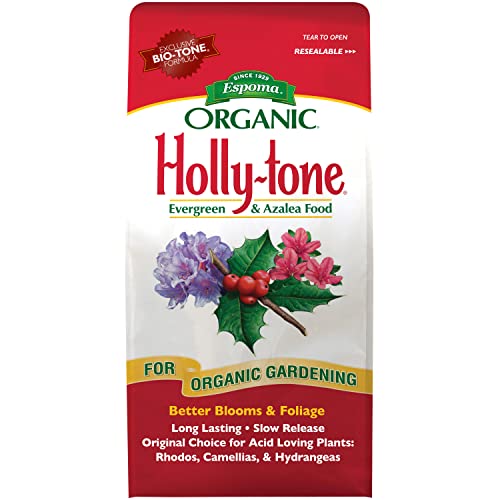
The original acid plant food since 1929, ready to use with zero mixing
Espoma Holly-Tone is the bag your grandparents used, and for good reason — it has been the original plant food for acid lovers since 1929. You get two 4 lb bags per order, and the 4-3-4 analysis with 5% sulfur sits right in the sweet zone for hollies, azaleas, rhododendrons, hydrangeas, blueberries, evergreens, strawberries, and camellias. No mixing required: sprinkle it around the drip line, water thoroughly, and the natural organics break down slowly to feed for months.
Plant benefits are what owners praise most, with large and beautiful blooms and dark green foliage after treatment. It keeps trees and shrubs healthy year-round, and the brand’s Bio-tone formula adds that extra microbial boost. Apply in spring and fall for flowering and evergreen shrubs, or early and late spring for berries.
The mixed feedback centers on value — some find the two-bag pack reasonable, others call it overpriced. There is also a noticeable odor that can linger for days after application, though watering helps it dissipate. For a pure, no-fuss granular that has proven itself for nearly a century, this is still the benchmark.
For tradition and simplicity: Sprinkle, water, and let the slow-release organics do the work twice a year.
For the impatient: It takes time to break down, so do not expect an instant color change.
8. Ferti-lome Soil Acidifier Plus Iron
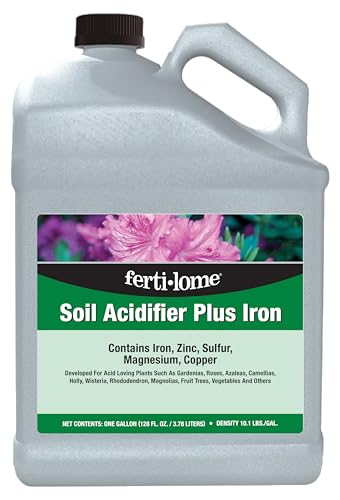
A liquid sulfur concentrate that fixed yellow leaves in just two applications
This is not a fertilizer in the traditional sense — it is a soil acidifier that reduces alkalinity while supplying the trace elements hollies crave. The 1 gallon bottle of liquid concentrate dilutes at 2 tablespoons per gallon of water and delivers iron, zinc, sulfur, magnesium, and copper. If your holly has classic yellow leaves from iron deficiency (chlorosis), this is the direct fix.
Buyers report it “works like magic” on yellow leaves, with lemon, hydrangea, and blueberry leaves turning green after 2 applications. It is faster-acting than dry sulfur powder and more potent than bagged acidifiers — a small amount goes a long way. The effectiveness is the most-praised aspect, with plant health and quality right behind it, and it corrects alkaline potting mixes and water up to pH 8.
The warning is real: it can lower pH too quickly if overused, especially in pots, so test your soil first and apply diluted and incrementally. In the ground, prep the soil a year ahead with pine bark or sulfur. Used carefully, it is the most precise tool here for a holly that refuses to green up.
Why it wins
- Fast-acting liquid corrects pH quickly
- Iron, zinc, copper, and magnesium in one bottle
- 1 gallon stretches across many treatments
Handle with care
- Can drop pH too fast in containers if overused
- Requires soil testing before application
Reach for this if: Your holly has classic yellow leaves and you want a targeted pH correction, not a general feed.
Look elsewhere if: You would rather not test soil or manage a concentrate — a granular feed is more forgiving.
9. Down To Earth Organic Acid Mix 4-3-6
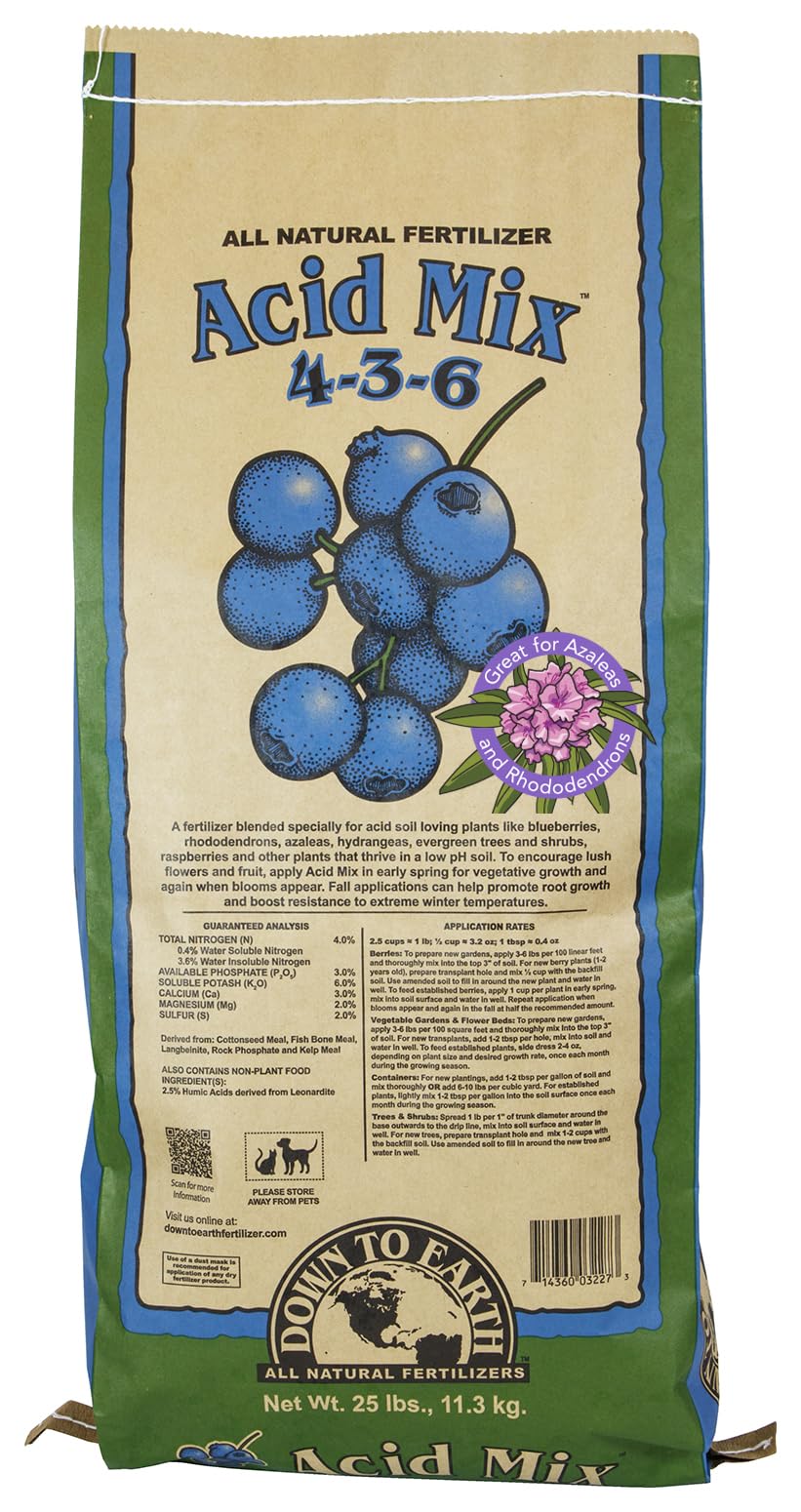
A 25 lb organic bag that lasts a couple of seasons on the whole acid garden
Down To Earth is the bulk buy for the serious gardener. At 25 pounds and 400 ounces, this single bag outlasts every other option here — one owner with rhododendrons, raspberries, and 8 blueberry bushes says it lasts a couple of seasons. The 4-3-6 analysis is blended for rhododendrons, azaleas, camellias, hydrangeas, evergreens, blueberries, raspberries, strawberries, and potatoes.
Effectiveness is the overwhelming consensus, with more owners praising it than any other aspect. The real ingredients — cottonseed meal, langbeinite, fish bone meal, rock phosphate, humates, and kelp meal — break down slowly and feed steadily. Blueberry bushes grow “much better” and produce berries, and rhododendrons grow “like crazy” under this mix.
You apply it in early spring for vegetative growth, again when blooms appear, or in fall to boost root growth and winter hardiness. It is an anytime fertilizer, so there is no strict calendar to follow. The trade-off is the upfront commitment — 25 lb is a lot of product to store, and the granules need working into the soil rather than a quick water-in.
For the acreage owner: The 25 lb size and slow-release organics make it the economical choice for a large acid-loving garden.
For the small yard: A bag this big can take years to use up on a single holly — a smaller option is less wasteful.
Understanding the Specs
N-P-K Ratio
The three numbers on any fertilizer bag represent nitrogen, phosphorus, and potassium — the primary nutrients plants draw from soil. Nitrogen drives leaf and stem growth, which is why hollies respond so well to higher first numbers like the ENVY 21-7-7. Phosphorus supports root development, and potassium strengthens overall plant health and bloom production. Acid-loving formulas balance these three while adding sulfur for pH control.
Sulfur Content
Sulfur is the active ingredient that lowers soil pH, making it the difference between a fertilizer that feeds an acid lover and one that simply feeds a plant. Espoma Holly-Tone carries 5% sulfur, and True Organic Berry Food uses sulfur to adjust pH naturally. If your holly sits in alkaline soil, a fertilizer or acidifier with sulfur is what actually corrects the imbalance at the root.
FAQ
How often should I fertilize holly bushes?
What is the difference between water-soluble and granular fertilizer for hollies?
Can I use azalea fertilizer on holly bushes?
Why are my holly leaves turning yellow?
Is organic fertilizer better for holly bushes?
When is the best time to fertilize hollies?
How much fertilizer does a holly bush need?
Can I use soil acidifier instead of fertilizer for hollies?
Final Thoughts: The Verdict
For most yards, the plant food for holly bushes winner is the Miracle-Gro Water Soluble because the 5 lb bag dissolves instantly and feeds a wide range of acid lovers every 7-14 days. If you want an organic, toss-and-water granular with certifications, grab the Dr. Earth Acid Lovers. And for a hedge that refuses to green up, the Ferti-lome Soil Acidifier is the one to reach for.
How We Picked
We do not accept paid placement. Every pick is matched to a real buyer and a real use-case; we do not hands-on test units.
Sources & Methodology
Specifications: manufacturer listings and product documentation. Review insights: verified customer reviews, as of August 2026. Pricing: not shown on this page (it changes often); check the current price via the retailer link.
As an Amazon Associate, Lawn Gear Lab earns from qualifying purchases. This does not affect which products we feature.