
Specs are compiled from manufacturer listings and verified buyer reviews and can change over time — please confirm the key details on the product page before buying.
Nothing sinks a vegetable garden faster than waking up to tomato hornworms strip leaves down to skeletons or aphids clustering on new growth. You want to fight back without worrying about coating your dinner in harsh chemicals, and that is exactly what this list is for. Every pick here is either OMRI Listed for organic gardening or built around a plant-based active ingredient, so you can protect broccoli, tomatoes, lettuce, and peppers with a clear conscience.
I’m Rikta — the founder and writer behind Lawn Gear Lab. This guide is built by comparing the manufacturers’ published specifications and the patterns across verified customer reviews, so you get each pick’s real strengths and trade-offs instead of marketing spin.
We dug into the most trusted sprays, concentrates, and granular baits that actually carry organic certification, and we found the organic insecticide for vegetables that takes out caterpillars while sparing bees, earthworms, and ladybugs when used as directed.
Our Picks at a Glance


How To Choose The Best Organic Insecticide For Vegetables
Before you grab any spray, you need to match the product to the pest actually eating your plants. A caterpillar-killer does nothing to aphids, and a contact spray that smothers soft-bodied bugs won’t stop a fungal disease. Get the pest identification right first, then pick the active ingredient that targets it.
Match the active ingredient to the pest
The single biggest mistake is buying a broad-spectrum spray when you have a specific worm problem, or vice versa. Bacillus thuringiensis (BT) is a naturally occurring bacterium that caterpillars ingest and it kills them by disrupting their gut, which is why it is the go-to for tomato hornworms and cabbage loopers. Spinosad, derived from a soil-dwelling bacterium, takes down a wider range of chewing insects including beetles and leaf miners. Mineral oil and neem oil work by smothering insects and also help control fungal diseases like powdery mildew.
Decide between concentrate and ready-to-spray
Ready-to-use bottles are the easiest entry point — you unscrew the cap and spray, no measuring required, ideal for a small patio garden or a quick spot treatment. Concentrates cost more upfront but dilute with water to make many times that volume, which is why they win for anyone with multiple raised beds or a serious row-crop garden. A 16 oz concentrate that makes 12 gallons of spray serves a much larger area than a 32 oz ready-to-use jug, so think about your garden’s size before you choose.
Check the OMRI listing, not the marketing
When you see “OMRI Listed” on a label, you know a third party has verified the product meets organic standards under the USDA’s National Organic Program. That listing is your strongest signal the product is genuinely safe for edible crops, so you can trust it for certified organic produce or just for confidence. It means the product meets a real standard, not just a natural-sounding claim.
Consider what else you are protecting
Organic doesn’t automatically mean harmless to everything. Some products are specifically formulated not to harm earthworms, honeybees, and ladybugs when used as directed, which matters if your garden relies on pollinators for fruiting vegetables like squash and tomatoes. Others, like iron phosphate slug baits, are very targeted but one owner reported it harmed beneficial earthworms. Read the label for what it protects and what it doesn’t, and time your sprays for early morning or evening when bees are less active.
Quick Comparison
| Model | Best For | Active Ingredient | Size | Approach | Amazon |
|---|---|---|---|---|---|
| Lost Coast Plant Therapy★ Best Overall | Soft-bodied bugs & mildew | Plant-based blend | 12 oz concentrate | Suffocates & dehydrates | Amazon |
| Bonide All Seasons Spray OilVersatile Pick | Smothering insects & disease | Mineral oil | 32 fl oz | Contact smother | Amazon |
| Neudorff Indoor Plant SprayIndoor Specialist | Houseplants & greenhouses | Canola oil & pyrethrins | 32 fl oz | Contact kill | Amazon |
| Fertilome Spinosad Soap RTU | Chewing insects on contact | Spinosad & soap | 32 fl oz | Contact + ingested | Amazon |
| Monterey Sluggo Plus | Slugs, snails & earwigs | Spinosad & iron phosphate | 1 lb granular | Ingested bait | Amazon |
| Evergreen Way Insecticide & Fungicide | Indoor & outdoor combo | Bio-based concentrate | 16 oz | Contact + systemic | Amazon |
| Garden Safe Fungicide3 | Fungus, insects & mites | Neem oil extract | 128 fl oz | Contact + preventative | Amazon |
| Garlic Barrier Concentrate | Large areas & repellency | Garlic extract | 1 gallon | Repels insects | Amazon |
In‑Depth Reviews
1. Lost Coast Plant Therapy (12 oz)
Our pick — over 4.5★ from 800+ verified ratings; the strongest balance of quality and price.
A gentle contact spray that eliminates bugs by suffocation and clears mildew fast.
This concentrate earns its reputation among serious growers because it kills insects through physical action — suffocation and dehydration — rather than toxicity, which is why it is safe for bees, ladybugs, and praying mantis. The 12 oz bottle mixes with water to create 12 gallons of application spray, making it among the most economical options per gallon on this list. It is formulated for houseplants, yards, gardens, and commercial farming, and it can be used right up to harvest without leaving harmful residue on your plants.
The thing everyone raves about is its effectiveness on spider mites and powdery mildew, with owners reporting mildew clears after the first application. Growers at 8 weeks into flowering have used it safely in a greenhouse, and it works “perfectly for almost any pest” in the experience of one long-time user. The scent is a genuine highlight — owners describe it as actually smelling great, a rare compliment for an insecticide.
The honest note here is value. At 12 oz it is the smallest bottle on this list, and while it dilutes to 12 gallons, the upfront cost is higher per bottle than the ready-to-use sprays. A few owners still call it expensive despite the results, so it is best for growers who want maximum safety for pollinators and mildew control in one product.
What makes it special
- Kills by suffocation and dehydration, not toxicity
- 12 oz makes 12 gallons — very economical diluted
- Clears powdery mildew fast and smells pleasant
Consider this
- Highest per-bottle cost in this lineup
- Contact action requires thorough coverage
- Smaller bottle size than ready-to-use options
Best for: growers who want maximum bee safety plus mildew control and are willing to pay for a concentrated, gentle formula.
Skip if: you need a cheap ready-to-spray for a small patio garden — the concentrate is overkill.
2. Monterey BT – Bacillus Thuringiensis Concentrate (16 oz)
The caterpillar specialist that saves tomatoes without touching a single bee.
If hornworms, cabbage loopers, or bagworms are stripping your plants, this is the targeted answer. The active ingredient, Bacillus thuringiensis (BT), is a naturally occurring bacterium that only harms leaf-chewing caterpillars when they eat treated foliage, and it has no effect on birds, earthworms, honeybees, or ladybugs when used as directed. Tomatoes, broccoli, celery, cabbage, cauliflower, melons, and lettuce are all on the approved list, plus shade trees and ornamentals.
This 16 fluid ounce concentrate is 2.0x smaller than the 32 oz Bonide spray oil above, but you dilute it with water and mix instantly, so the small jug goes much further than its size suggests. Buyers report saving their tomatoes from “those nasty, big tomato worms” and seeing none return after spraying, with several noting that while it costs more, “it doesn’t take much” per application. The one recurring gripe is the bottle itself; one owner had to cut it open because the cap would not budge, so have a spare container ready.
This is a preventive and curative spray for chewing worms only — it will not touch aphids, mites, or beetles, so identify the pest before you buy. Applied with a trigger spray bottle or pressure tank sprayer, it is the cleanest, most bee-safe way to end a caterpillar problem in a vegetable patch.
Why it wins the garden
- OMRI Listed, meeting USDA National Organic Program standards
- Zero effect on honeybees, ladybugs, and earthworms
- Concentrate mixes instantly with water and covers a large area
Know before you spray
- Only works on caterpillars and worms, not sap-sucking pests
- A few owners struggled with a stiff bottle cap
- Costs more upfront than ready-to-use sprays
Reach for this if: hornworms, loopers, or bagworms are your specific enemy and you want to protect pollinators while you spray.
Think twice if: your problem is aphids or beetles — this ingredient is not built for them.
3. Bonide All Seasons Horticultural & Dormant Spray Oil (32 oz)
One hose-end spray that smothers pests now and prevents disease through every season.
This is the broadest tool in the lineup because it tackles insects, mites, and fungal disease in a single 32 fluid ounce ready-to-spray jug, so you can use it at the dormant stage in late winter and again during the growing season. The active ingredient, mineral oil, envelops and smothers adelgids, aphids, scale insects, mites, mealybugs, and certain moths, while also helping control powdery mildew, rust, greasy spot, and botrytis. Because mineral oil leaves no toxic residues, it is approved for organic gardening and safe around people and pets.
Owners mention real results fast — one sprayed for bark scale on an azalea, attached the bottle to the hose, and saw results within a few days, while another wiped out black cherry aphids overnight. The leaf-health feedback is mixed, though: some plants come through glossy and healthy, while a few owners note you must dilute carefully because too strong a mix can stress leaves. It also has a noticeable smell while spraying, and timing matters because oil sprays work best when you plan around the pest’s life stage.
What wins people over is how easy the hose-end attachment makes application — no mixing, no measuring, just spray. Compared to the Monterey BT above, this one does not discriminate by pest type, so it is the better first purchase if you are not sure what is attacking your garden.
What it does for you
- One product for insects, mites, and fungal diseases
- Hose-end sprayer makes application take minutes
- Year-round use from dormant stage through growing season
Watch out for
- Requires careful dilution to avoid stressing leaves
- Strong smell while you spray
- Timing matters for best results
Grab it if: you want one bottle to cover aphids, scale, mites, and mildew all season long.
Pass if: you need something that also works as a caterpillar-specific killer — this is a smotherer, not a gut toxin.
4. Neudorff Indoor Plant Spray (32 oz)
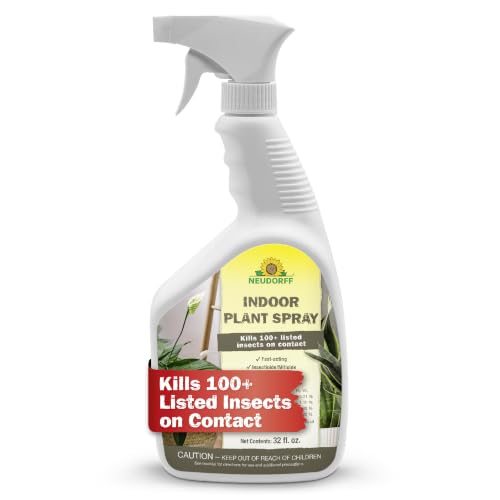
A contact spray for houseplants that kills 100+ listed insects, eggs included, with no lingering reek.
Fungus gnats and spider mites are the curse of indoor growing, and this spray is formulated specifically for houseplants and greenhouses rather than broad-acre fields. It combines two botanical insecticides — canola oil and pyrethrins — to kill fruit flies, fungus gnats, stink bugs, thrips, mites, aphids, beetles, mealybugs, moths, scales, and armyworms on contact. Because it is an ovicide as well, it also kills the eggs, which is the stage most sprays miss and the reason indoor infestations usually come back.
This 32 fluid ounce bottle holds 2.0x more liquid than the Monterey BT concentrate above, and it is ready to use out of the bottle with no mixing. Owners rave that it works on sensitive plants without damage — one greenhouse grower saw spider mites eliminated permanently with plants finishing beautifully. It is safe on edible fruits and vegetables right up to and including the day of harvest, so you can use it on indoor herbs or a greenhouse tomato. The honest caveat: its effectiveness on gnats is disputed — some see visible reduction in minutes and gone in days, while one owner sprayed three or four times directly on moving gnats with “no quick kill,” and it does not work for scale.
Smell is a genuine plus here, with buyers noting “no bad smell” and a mild scent compared to chemical sprays. If your battle is inside the house or a greenhouse, this pairs contact-kill power with egg control better than anything else on this list.
Why indoor growers pick it
- Kills eggs, larvae, and adults of 100+ listed insects
- Safe on edibles up to and including harvest day
- No harsh chemical odor in your living space
Keep in mind
- Gnat control results are inconsistent for some owners
- Ineffective against scale insects
- A few found it slower than expected on contact
Choose it for: houseplant parents and greenhouse gardeners battling gnats, spider mites, and aphids without chemical smells.
skip it if: you are fighting a serious scale infestation or want an outdoor field spray.
5. Fertilome Spinosad Soap Insecticide (32 oz)
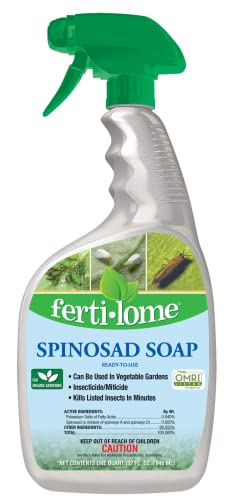
A ready-to-use spray that takes down chewing pests on contact and keeps working after.
This pairs two organic-approved ingredients — Spinosad, derived from a naturally occurring soil-dwelling bacterium, and potassium salts of fatty acids (soap) — to control a wide list of chewing insects including Colorado potato beetle, armyworms, caterpillars, borers, codling moth, earwigs, and fruit flies. The soap provides fast contact kill while the Spinosad gives residual control when insects ingest treated foliage, making it a one-two punch for vegetable gardens. It is designed for outdoor use on vegetables, trees, shrubs, flowers, fruits, and citrus, and it is OMRI Listed for organic production.
This 32 fluid ounce spray bottle is twice the volume of the Monterey BT concentrate above, and there is no measuring involved — you just spray all plant parts to wetting, including undersides of leaves. The results speak in action: bagworms on a tree were gone in a couple of days after a thorough spray, leaf miners on columbine were cleared, and one gardener “had so many caterpillars in my veggies garden” and got rid of them entirely. A few experienced growers note you should alternate with an oil-based spray to prevent insect resistance, which is solid advice for any repeated-use insecticide.
The main trade-off is that this is a contact and ingestion product, so it works best when you actually hit the pest or its feeding site, and full coverage matters. If you want a grab-and-go bottle that handles caterpillars plus beetles and fruit flies, this delivers the broadest chewing-insect coverage at this size.
What stands out
- Spinosad + soap gives contact kill plus residual control
- No mixing needed — ready to spray from the bottle
- Broad list including potato beetle, borers, and fruit flies
Be aware
- Full leaf coverage is required for best results
- Rotate with an oil spray to avoid resistance
- Outdoor-focused, less ideal for indoor use
Pick it for: vegetable gardeners who want a single ready-to-use spray for caterpillars, beetles, and fruit flies without mixing.
Look elsewhere if: you need something for mites or fungal disease — this is purely an insect killer.
6. Monterey Sluggo Plus (1 lb)
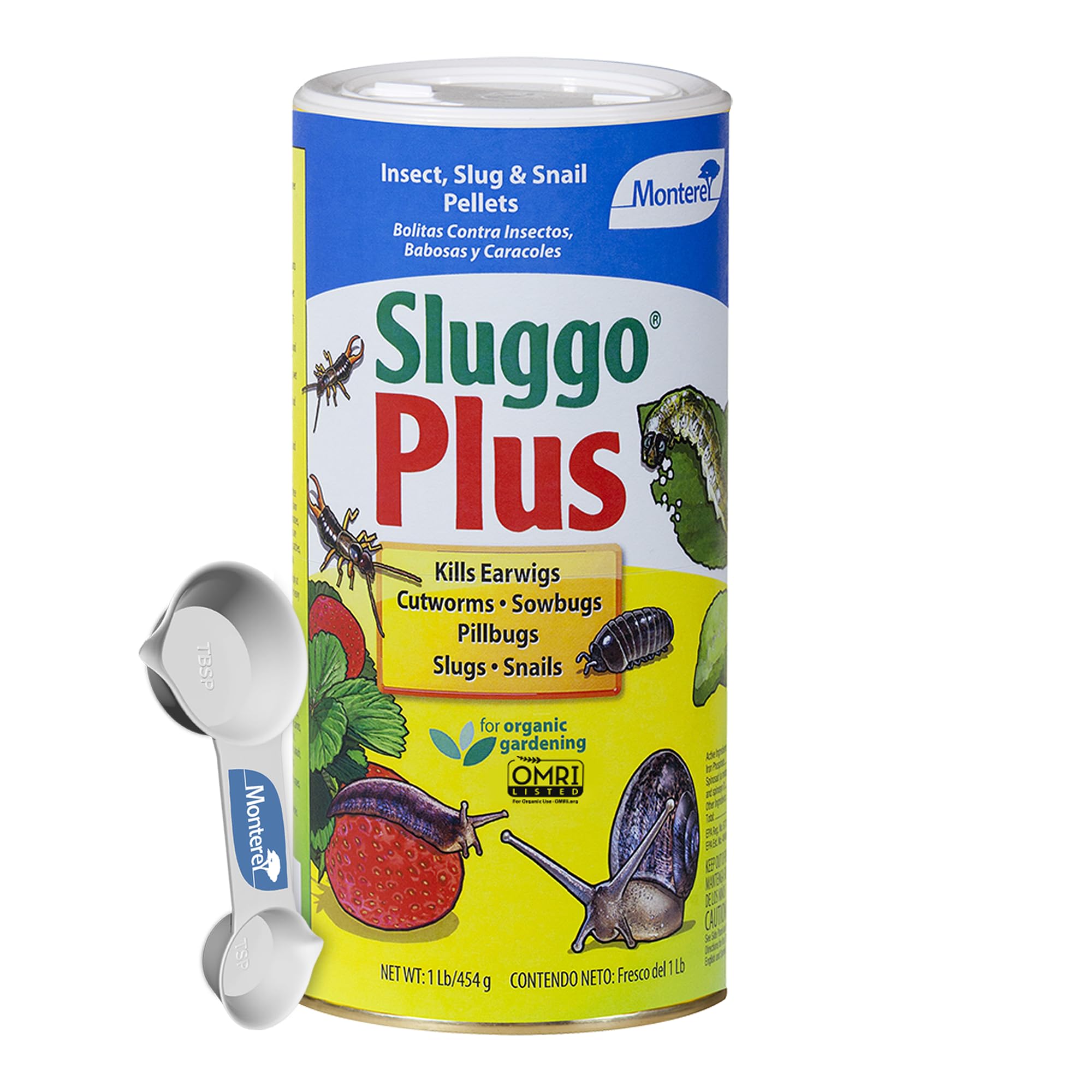
A sprinkle-on granular bait that clears slugs, snails, earwigs, and pill bugs overnight.
While every other pick here is a liquid spray, this one is a granular bait you scatter around the base of plants, and it solves a completely different problem. It combines Spinosad with iron phosphate, which occurs naturally in soil and breaks down into fertilizer over time, targeting slugs, snails, earwigs, cutworms, sowbugs, and pillbugs. Scatter it around vegetables, fruit trees, berries, ornamentals, and even in greenhouses, and the pests eat the bait and stop feeding.
One pound treats 2,000 square feet and stays effective for up to 4 weeks, and rain or sprinkling will not change its effectiveness — only heavy rainfall calls for a reapplication. That makes it the lowest-maintenance option on this list, and owners see dramatic results: an earwig infestation in hanging baskets was gone by the next morning after an evening application. It is OMRI Listed for organic gardening, meeting the same USDA National Organic Program standards as the BT concentrate above.
The honest downsides are cost and duration. One owner with a pill bug infestation called it “the only thing I have found that gets rid of them” but noted the container emptied quickly from all the reapplying, and another reported it killed beneficial earthworms alongside the pests. If slugs and their crawling cousins are your enemy, this is the most effective organic bait available — just budget for reapplications.
Why it earns its place
- Targets slugs, snails, earwigs, and pill bugs sprays miss
- Rain-proof — watering won’t wash it away
- 1 lb covers 2,000 sq ft for up to 4 weeks
The trade-offs
- Frequent reapplying empties the container fast
- One owner found it harmed beneficial earthworms
- Granular — not for sap-sucking insects like aphids
Best for: gardeners with a known slug, snail, earwig, or pill bug problem who want a set-and-forget sprinkle.
Not for: caterpillar or aphid issues — this bait does not touch them.
7. Evergreen Way Organic Insecticide & Fungicide (16 oz)

A two-in-one concentrate that tackles leaf disease and sap-sucking pests in a single pass.
This is the pick for gardeners dealing with both bugs and fungus at once, because the same bottle works as an insecticide and a fungicide. The advanced bio-based concentrate coats leaves and soil zones to disrupt pest life cycles while suppressing powdery growths, and it works on seedlings, established beds, containers, raised beds, and greenhouse starts. Tomatoes, herbs, ornamentals, fruiting shrubs, and cool-season lawns are all on the approved list.
It arrives as a 16 oz concentrate that you dilute with water and apply with a pump, hose-end, or battery sprayer, and the economics are real — one owner noted the 2-pack makes 8 gallons of spray solution, so a little goes a long way for weekly care. The plant-safety feedback is strong, with buyers noting no leaf burn on citrus and safe use around kids, pets, and pollinators when used as directed. One owner reported “10 drops in 32oz water killed bugs in 5-10 seconds,” calling it highly effective and odorless.
Where it shines
- One concentrate handles both insects and fungal disease
- Dilutes to many gallons — economical for weekly use
- Safe on seedlings, veggies, herbs, and citrus
Honest limitations
- Effectiveness varies by pest — some find it lacking
- Does not kill Japanese beetles
- Odor feedback is split between none and unpleasant
Ideal if: you want one concentrate to simplify insect and fungus prevention across indoor and outdoor plants.
Reconsider if: you have a confirmed Japanese beetle problem or need a guaranteed knock-down killer.
8. Garden Safe Fungicide3 with Neem Oil (1 Gal)
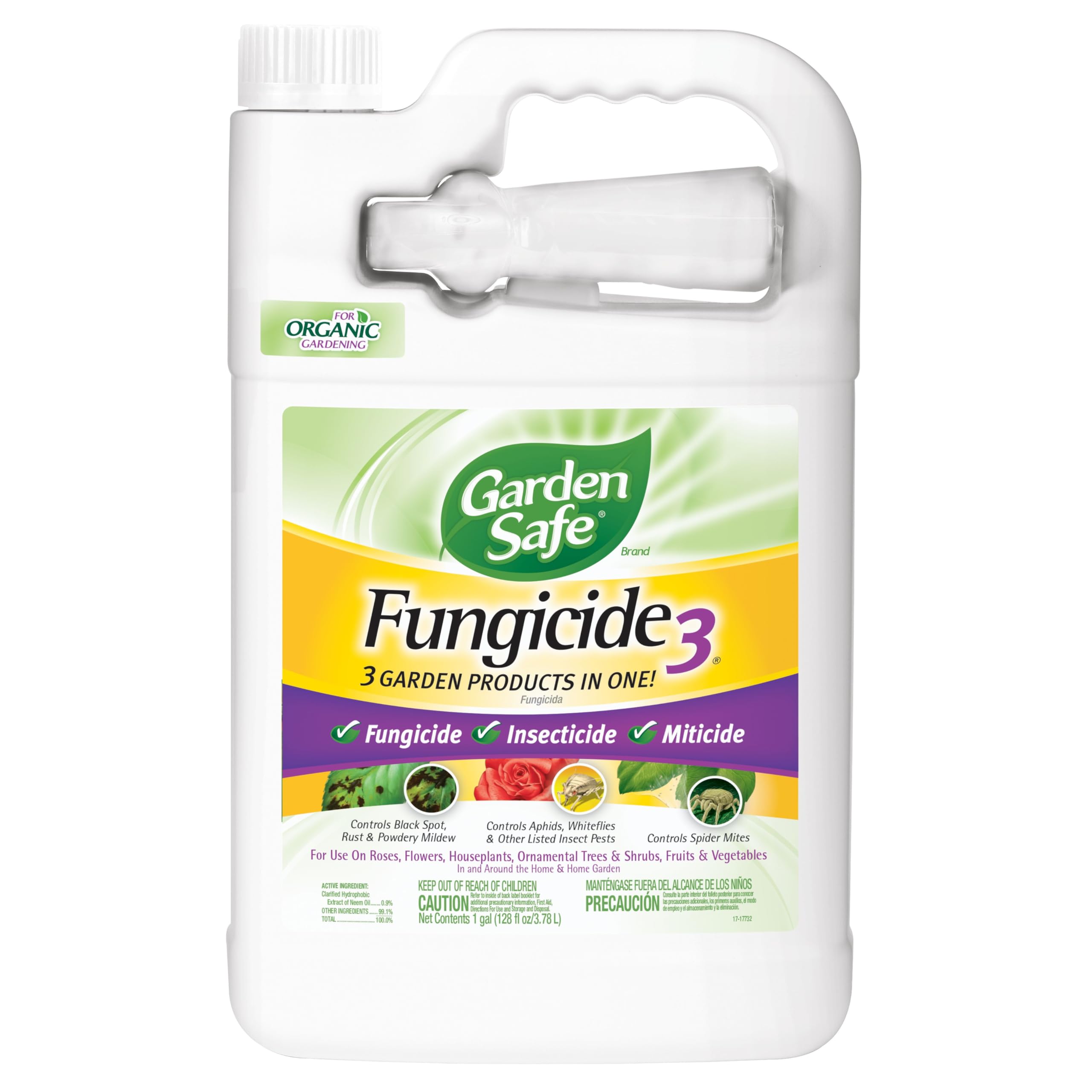
Owners specifically value it for vegetable gardens because of the organic formulation and the convenience of the attached sprayer. One reported it was “very convenient with the sprayer attached” and liked the organic aspects for use on their vegetable garden, while another found it effective on rose black spot and zucchini silver mold. It is EPA-spec certified and safe around the home, and the sheer volume means you will not be reordering mid-season.
The recurring complaints are mechanical, not chemical. The sprayer tends to clog, and the container is hard to refill — several owners recommend swapping in a better sprayer from the start. It also does not kill squash bugs or grubs, so if those are your pest, this is not the answer. For the gardener with a large vegetable patch who wants one neem-based product that covers fungus, insects, and mites all season, the gallon size is the easiest value.
Why it works
- 128 oz covers a large garden all season long
- Fungicide + insecticide + miticide in one jug
- Attached sprayer for grab-and-go convenience
What to fix
- Sprayer clogs and container is hard to refill
- Does not control squash bugs or grubs
- Neem requires thorough coverage to be effective
Reach for it if: you want a single large jug of neem oil for fungus, aphids, and mites across a big vegetable garden.
Look elsewhere if: squash bugs are your main problem or you hate fiddling with a finicky sprayer.
9. Garlic Barrier Concentrate (1 Gallon)

A commercial-strength garlic concentrate designed to repel pests across farms, orchards, and greenhouses.
Sometimes the best offense is a smell, and that is exactly what this garlic-based concentrate delivers. It is a highly concentrated liquid garlic extract built for farms, orchards, gardens, and greenhouse operations, designed to repel leaf-eating, fruit-scarring, boring, and sap-sucking insects including aphids, beetles, caterpillars, mites, thrips, whiteflies, and leafhoppers. Growers also use it on fruit trees to help discourage birds from feeding on ripening fruit, giving it a dual role most insect sprays lack.
At a full 1 gallon, this is by far the largest volume on this list, and it dilutes with water for large-area coverage across orchards, row crops, fruit trees, vegetables, herbs, berries, flowers, ornamentals, turf grass, and houseplants. It is OMRI Listed for organic growing, and the garlic taste does not linger on crops — the odor typically dissipates after application. Customers note it keeps mosquitoes away from sprayed areas for days, with one noting it is “pet friendly and easy to apply” and effective in hot, humid conditions.
The honest reality is that this is a deterrent, not a killer — it will not wipe out an existing infestation the way BT or Spinosad will. The odor is strong right after spraying, and results on mosquitoes are genuinely mixed, with some owners reporting mosquito-free areas and others seeing them everywhere. It also carries the highest upfront cost on this list, making it a serious investment best suited to larger planting areas or property lines where you want a broad repellent barrier.
Where it excels
- 1 gallon dilutes for very large-area coverage
- Repels a wide range of insects plus birds
- OMRI Listed with no garlic taste left on crops
Know the limits
- Repels rather than kills existing infestations
- Strong odor immediately after spraying
- Highest upfront cost in this lineup
Ideal for: serious gardeners or small farms managing large areas who want a broad repellent barrier, not a targeted killer.
Not for: anyone with an active caterpillar or aphid infestation who needs immediate knock-down — this deters, it does not destroy.
Understanding the Specs
BT (Bacillus thuringiensis)
This is a naturally occurring soil bacterium that acts as a targeted stomach poison for caterpillars. When a worm eats foliage treated with BT, the bacterium disrupts its gut and it stops feeding, usually dying within days. It is the safest organic option because it has no effect on bees, earthworms, or ladybugs, making it the first choice for hornworms and cabbage loopers.
Spinosad
Derived from a soil-dwelling bacterium, Spinosad attacks the nervous system of chewing insects that ingest it, controlling a broader range than BT including beetles, leaf miners, and fruit flies. It is frequently paired with insecticidal soap for faster contact kill, and it is OMRI Listed for organic production.
Mineral Oil & Neem Oil
These oils work by smothering insects — coating their bodies and blocking their breathing pores — rather than poisoning them. They also help control fungal diseases like powdery mildew and rust, making them true multi-purpose garden tools. Mineral oil, the active in Bonide All Seasons, leaves no toxic residue, while neem oil extract adds a fungicidal punch.
Contact vs. Ingested Action
A contact spray kills insects when it physically touches them, which means thorough coverage of leaf undersides is essential. An ingested poison must be eaten by the pest to work, which is why BT and Spinosad are effective even where spray coverage is imperfect. Knowing which mode your product uses tells you how carefully you must spray and whether it will reach hidden pests.
FAQ
What is the difference between BT and Spinosad for vegetable gardens?
Can I use these organic insecticides right up to harvest?
Will organic sprays kill bees and other beneficial insects?
What does OMRI Listed actually mean?
How often should I reapply these sprays?
Why is concentrate more economical than ready-to-use spray?
Will neem oil or mineral oil hurt my plants?
What kills slugs and snails in an organic garden?
Does garlic really repel garden insects?
Why is my spray not killing all the insects?
Final Thoughts: The Verdict
For most vegetable gardeners, the organic insecticide for vegetables winner is the Monterey BT Concentrate because it takes out the most destructive caterpillars — hornworms, loopers, bagworms — while leaving bees and earthworms completely untouched, backed by an OMRI listing. If you want one product that covers aphids, scale, mites, and mildew with zero mixing, grab the Bonide All Seasons Spray Oil. And for slugs, snails, and earwigs that laugh at sprays, the Monterey Sluggo Plus is the one to scatter around your beds, rain or shine.
How We Picked
We do not accept paid placement. Every pick is matched to a real buyer and a real use-case; we do not hands-on test units.
Sources & Methodology
Specifications: manufacturer listings and product documentation. Review insights: verified customer reviews, as of August 2026. Pricing: not shown on this page (it changes often); check the current price via the retailer link.
As an Amazon Associate, Lawn Gear Lab earns from qualifying purchases. This does not affect which products we feature.