
Specs are compiled from manufacturer listings and verified buyer reviews and can change over time — please confirm the key details on the product page before buying.
You spot chewed leaves or a sticky trail of sap on your tomatoes, roses, or fiddle-leaf fig, and you know the damage is spreading. The right spray stops it fast; the wrong one wastes your weekend and your crop. Here are nine formulas that actually protect your plants, from a gentle oil for houseplants to a heavy-duty concentrate for a whole garden.
I’m Rikta — the founder and writer behind Lawn Gear Lab. This guide is built by comparing the manufacturers’ published specifications and the patterns across verified customer reviews, so you get each pick’s real strengths and trade-offs instead of marketing spin.
From caterpillar-killing bacteria to smothering horticultural oils, here is the honest breakdown of the best pest control for plants so you can match the remedy to your specific bug problem.
Our Picks at a Glance


How To Choose The Best Pest Control For Plants
Matching the spray to the pest is the entire game. A product that wipes out caterpillars does nothing to a scale insect, and a broad-spectrum oil that smothers aphids can burn tender new growth if used in the heat of the day. Before you buy, identify what is actually eating your plant, then pick a formula built for that specific mouth.
Match the Ingredient to the Pest
Look at the active ingredient on the label first. Bacillus thuringiensis (Bt) is a bacteria that only affects caterpillars and worms when they eat treated leaves — it leaves beneficial insects alone. Mineral oil and neem oil work by smothering soft-bodied pests like aphids, mites, and scale on contact. If you want to stop sucking insects that hide in the soil and roots, a systemic concentrate is absorbed into the plant itself, so anything that feeds on it dies.
Decide Between Contact and Systemic
Contact sprays kill what they touch, so you have to hit every leaf top and bottom, and reapply after rain. Systemic treatments get drawn up into the plant’s tissues, protecting new growth you never sprayed — but they are often not safe for edible crops. Check whether the product label lists fruits or vegetables before you apply it to anything you plan to eat.
Consider Coverage and Format
Ready-to-use sprays in a trigger bottle are perfect for a few houseplants or a small raised bed. Concentrates are more economical for larger gardens, since a little goes a long way when diluted with water. If you want something that works right up to harvest, look for an OMRI-listed organic option. If you have a large yard or orchard, a gallon-sized concentrate or a repellent designed for big-area coverage saves you from buying multiple bottles.
Quick Comparison
| Model | Best For | Form | Size | Key Ingredient | Amazon |
|---|---|---|---|---|---|
| Monterey B.t.★ Best Overall | Caterpillars & worms | Concentrate | 16 fl oz | Bacillus thuringiensis | Amazon |
| Bonide All Seasons OilBest Value | Smothering pests & disease | Ready-to-spray | 32 fl oz | Mineral Oil | Amazon |
| Earth’s Ally 3-in-1Best for Edibles | Houseplants & edibles | Ready-to-use | 32 fl oz | Essential Oils | Amazon |
| Natural Guard Spinosad | Fast kill on contact | Ready-to-spray | 32 fl oz | Spinosad + Soap | Amazon |
| Bonide Systemic | Long-lasting ornamentals | Concentrate | 16 fl oz | Systemic Insecticide | Amazon |
| Lost Coast Plant Therapy | Mites & mildew | Concentrate | 12 fl oz | Botanical blend | Amazon |
| Garden Safe Fungicide3 | 3-in-1 garden coverage | Ready-to-spray | 128 fl oz | Neem Oil Extract | Amazon |
| SUPERthrive Neem Oil | Pure concentrate value | Concentrate | 32 fl oz | Cold-Pressed Neem | Amazon |
| Garlic Barrier | Large areas & repellency | Concentrate | 1 Gallon | Garlic Extract | Amazon |
In‑Depth Reviews
1. Monterey B.t. Concentrate
Our pick — over 4.5★ from 350+ verified ratings; the strongest balance of quality and price.
The caterpillar killer that targets only the chewing pests and spares your pollinators.
If hornworms are shredding your tomatoes, this is the product you want. It uses Bacillus thuringiensis (Bt), a naturally occurring bacteria that only harms caterpillars and worm-type insects like cabbage loopers, bagworms, and gypsy moths when they eat treated foliage. Beneficial insects like honeybees and ladybugs stay safe, which is why it carries an OMRI listing for organic gardening — a third-party review confirming it meets USDA organic standards.
You mix this 16 fluid ounce concentrate with water yourself, so it stretches further than the 32-ounce ready-to-spray options. Buyers report: “We were able to save our tomatoes from those nasty, big tomato worms.” It instantly mixes with water and goes on with a trigger sprayer or pressure tank, so it suits everything from a few tomato pots to a bed of melons, lettuce, and shade trees.
The honest trade-off is the container, which can be stubborn to open, and you must reapply after heavy rain since it washes off. It targets only chewing worms and caterpillars, so it won’t help with aphids or mites.
What wins people over
- Kills only chewing worms and caterpillars, leaving bees and earthworms untouched
- OMRI-listed for certified organic gardening
- Concentrate mixes instantly with water to cover a lot of plants
Know before you buy
- Works on caterpillars only, not aphids or mites
- Bottle cap can be difficult to twist off
- Needs reapplication after rain
Reach for this if: you grow tomatoes, cabbage, or ornamentals and want to stop leaf-eating worms without harming pollinators.
Look elsewhere if: your problem is sap-sucking insects like aphids or spider mites — this won’t touch them.
2. Bonide All Seasons Horticultural Oil
The hose-end oil that smothers aphids and mites while fighting fungal disease in one pass.
This is the workhorse for gardeners who want one bottle that handles both bugs and disease. Its active ingredient is mineral oil, which works by enveloping and smothering soft-bodied insects like aphids, scale, mites, and mealybugs, while also helping control powdery mildew, rust, and greasy spot. Because it leaves no toxic residue, it is approved for organic gardening and safe to use around people and pets.
You get year-round flexibility from a single 32 fluid ounce bottle. Use it at the dormant stage, at the green tip stage, or during the active growing season to prevent infestations before they start. Owners mention: “I saw results within a few days” when treating bark scale on an azalea. It screws onto a standard garden hose, so covering a tall 25-foot Spanish Broom or a row of roses takes minutes, not an afternoon with a pump sprayer.
Owners praise how quickly it cleared stubborn pests and even left leaves shinier. The recurring gripe is leaf health on some plants, so it is worth testing on a small branch first, and you should avoid spraying in hot direct sun to prevent leaf burn.
Why it earns its spot
- One product handles insects, mites, and fungal diseases
- Hose-end sprayer makes quick work of tall trees and big beds
- Year-round use from dormant season through growing season
Worth noting
- Leaf health gets mixed feedback — test on one branch first
- Not a targeted spray for caterpillars
Best for: anyone with a mix of aphids, scale, and mildew who wants a simple hose-end fix.
Think twice if: hornworms are your main worry — you need a Bt product like Monterey for those.
3. Earth’s Ally 3-in-1 Plant Spray
The essential-oil spray that moves from your houseplants to your vegetable patch without a worry.
This ready-to-use spray blends thyme, rosemary, clove, and peppermint oils to kill and control soft-bodied insects like spider mites, aphids, whiteflies, and mealybugs. It works like an insecticidal soap, breaking down soft-bodied pests on contact, while its botanical formula makes it suitable for both indoor houseplants and outdoor fruit trees, vegetables, and ornamentals. Every batch is independently tested and proven safe for bees, so you are not nuking your garden’s pollinators.
The 32 fluid ounce bottle is ready to go straight from the trigger — no mixing, no hose, no measuring. Customers note: “This worked well on leaf miner issues in our cucumbers.” It is also labeled fast-acting and long-lasting, and it is pet-safe, which matters if your cat nibbles your spider plant. What wins people over is having a natural alternative to chemical sprays that actually keeps up with the constant fungus and aphid pressure of hot, humid climates.
The scent gets mixed reactions — some find the essential oils pleasant, while others find the smell quite strong. You will likely need multiple treatments, especially outdoors where rain washes it away — one Florida gardener notes reapplying after downpours. It is a little pricier per ounce than a concentrate, but for small gardens the convenience justifies it.
Why it stands out
- Safe for use indoors and on edible crops
- Independently tested and proven safe for bees
- Fast-acting, long-lasting, and pet-safe formula
Keep in mind
- Essential-oil scent is strong to some noses
- Needs repeat applications after rain outdoors
Reach for this if: you want a natural, bee-safe spray that works on both your kitchen counter herbs and your backyard cucumbers.
Look elsewhere if: you have a large garden and want maximum coverage per dollar — a concentrate goes further.
4. Natural Guard Spinosad Soap

The soap-and-spinosad combo that starts killing spider mites within minutes of contact.
When you need a pest gone today, not next week, this formula pairs two active ingredients to work fast. It uses spinosad plus soap to kill foliage-feeding insects on contact, and it is specially formulated to protect vegetables, crops, lawns, and outdoor ornamentals. It starts killing within minutes after application — one gardener wiped out an entire cactus beetle infestation with a single spray and saw no return for days.
This 32 fluid ounce ready-to-spray bottle also tackles spider mites and powdery mildew when sprayed directly on contact, making it a solid two-in-one for the vegetable garden. Owners find it more effective than neem oil, which is a common go-to that can be finicky to mix. A single application cleared stubborn pests like cactus beetles and fruit-tree bugs for days.
The honest caveats: it comes in a 32-ounce bottle that is plenty for a modest garden but runs out fast on a massive plot, and a few reviewers point out the bottle leaking in transit. It can also burn plants if handled carelessly, so follow the dilution and spray timing on the label. Use it on outdoor residential areas, vegetable gardens, and non-commercial greenhouses.
The fast fix
- Kills spider mites and foliage pests on contact
- Also controls powdery mildew when sprayed directly
- Ready-to-spray — no mixing required
Handle with care
- Can burn plants if not applied carefully
- Some bottles arrive with a leaking seal
Best for: quick knockdown of a visible infestation in your vegetable garden or on fruit trees.
Think twice if: you need to protect a large commercial-scale planting — this bottle size suits smaller spaces.
5. Bonide Systemic Insect Control
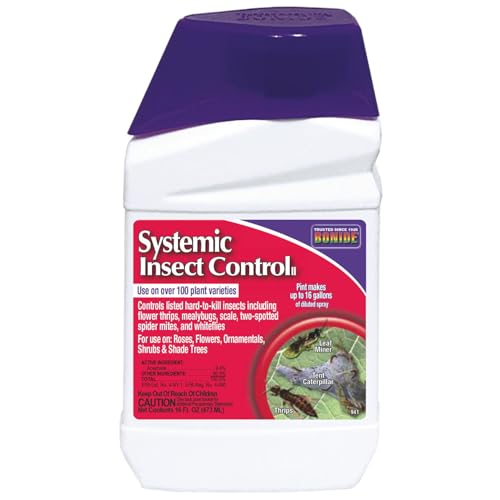
The underground bodyguard that protects your roses from thrips and mites for weeks.
Unlike contact sprays that wash off, this 16 fluid ounce concentrate works from the inside out. It is a systemic insecticide, meaning the plant absorbs it into its tissues, so any insect that feeds on the treated plant dies — including thrips, mealybugs, scale, two-spotted spider mites, and whiteflies. You mix it with water and pour or spray it around the base, and the 16 ounces makes 16 gallons of finished spray.
This is built for outdoor residential ornamentals — flower beds, roses, shrubs, and over 100 listed plant varieties — and it is EPA-specified. It is fast-acting to treat an existing infestation, and you reapply every 7 to 10 days while insects are present. It can even be mixed with certain fungicides or fertilizers for a combined application, saving you a trip around the garden. One gardener’s first dose killed the aphids on a potted willow.
It cleared fungus gnats immediately and handled thrips that other sprays missed. The trade-off is a smell that owners describe as horrible — strong at first, though it fades as you water. And this is not for anything you eat: it is labeled for flower beds and ornamentals, not vegetable or fruit plants.
What makes it different
- One 16 oz bottle makes 16 gallons of spray
- Protects new growth the spray never touches
- Wipes out thrips, mites, scale, and whiteflies
The real drawbacks
- Strong, unpleasant odor at application
- Not labeled for vegetables or fruit plants
Reach for this if: you tend ornamental beds, roses, and shrubs and want weeks of protection from one application.
Look elsewhere if: you are growing edibles — this is strictly for ornamentals and you will want an organic option like Earth’s Ally.
6. Plant Therapy Lost Coast Concentrate

The one-bottle arsenal that handles mites, mildew, and most pests while smelling great.
This premium concentrate is the definition of efficiency: a 12 fluid ounce bottle mixes with water to create 12 gallons of application spray. It eliminates bugs on contact by suffocation and dehydration, and it does not leave a harmful residue on your plants. It is safe for bees, ladybugs, and praying mantises, making it a strong choice for gardeners who want broad coverage without collateral damage.
It works on houseplants, yards, gardens, and even commercial farming, and it is famously versatile — owners use it right up to harvest, which is a big deal for food growers. Beyond insects, it clears powdery mildew, often after the first application. It works better than toxic chemical sprays and is particularly good at controlling spider mites.
The main hesitation is value: it is the priciest concentrate here per ounce, and opinions split on whether the cost is justified. For small gardens and cannabis growers who need a gentle, reliable product that works for almost any pest, the premium is worth it. For a sprawling vegetable patch on a budget, a cheaper concentrate might make more sense.
Why it is loved
- 12 oz makes 12 gallons of spray
- Safe for bees and beneficial insects
- Clears powdery mildew after the first treatment
Consider this
- Premium price per ounce
- Opinions split on overall value
Best for: growers who want one reliable, plant-safe product for mites, mildew, and general pests right up to harvest.
Think twice if: budget is the first concern — the value is debatable for large-scale spraying.
7. Garden Safe Fungicide3
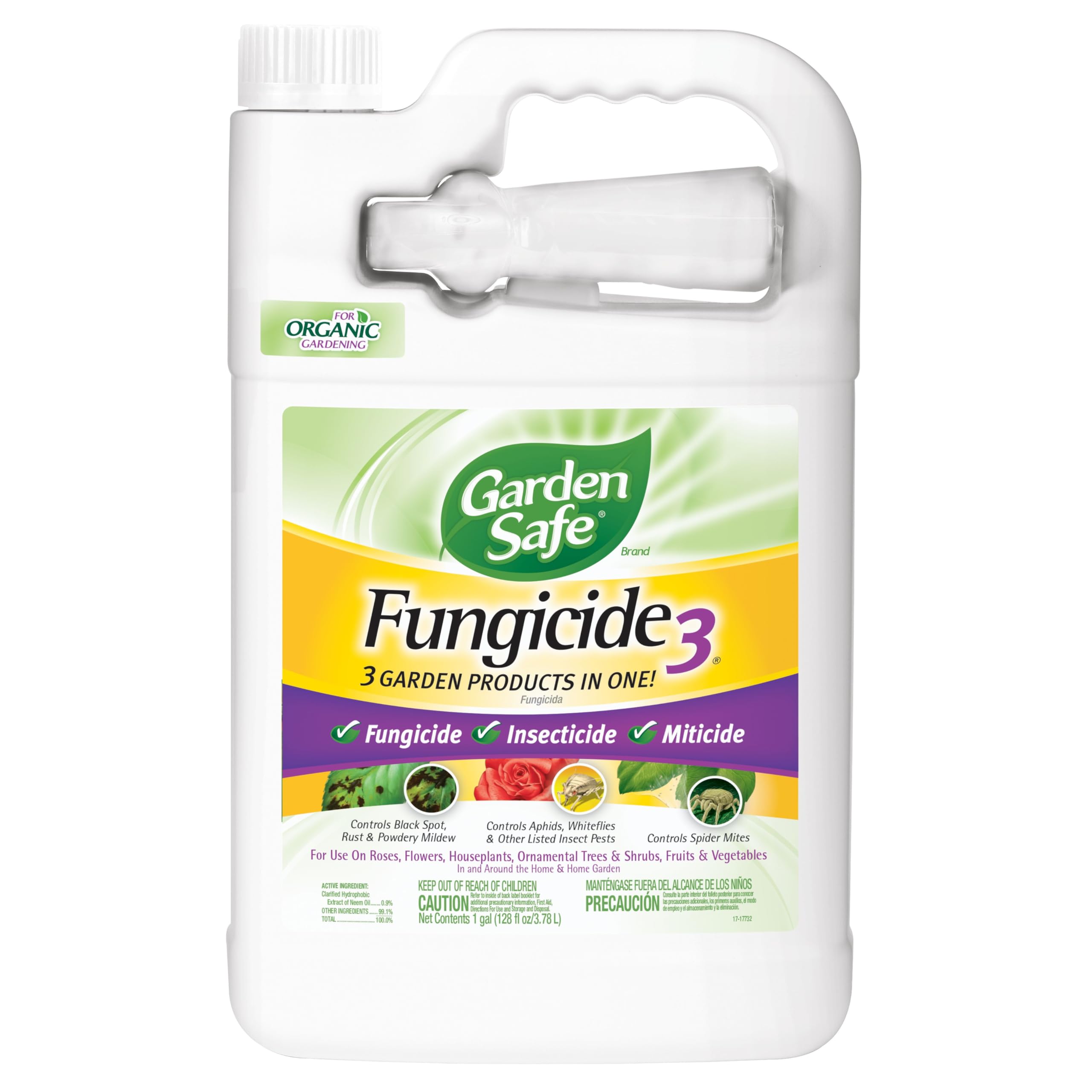
The giant ready-to-spray jug that fights fungus, insects, and mites in one pass.
It prevents and controls black spot, rust, and powdery mildew on roses, flowers, houseplants, ornamental trees, and shrubs, plus fruits and vegetables. For organic gardeners, the neem oil base is a big draw, and it is convenient for treating a vegetable garden thanks to the attached sprayer. Shoppers say it works on rose black spot and zucchini silver mold and is safe for vegetable crops.
The value is the standout — you get a full gallon of ready-to-spray product at a mid-range price. The recurring gripe is the sprayer itself, which can clog or fail, leaving you to hunt for a replacement. It also does not kill squash bugs or grubs, so it is not a total cure-all. Treat the included sprayer as a nice bonus, not the main feature.
The easy win
- Gallon-sized jug covers a large garden
- Fungicide, insecticide, and miticide in one
- Safe for vegetable gardens
The catch
- Attached sprayer can clog or fail
- Does not kill squash bugs or grubs
Reach for this if: you want a single, large-format product for fungus, insects, and mites on a mixed garden.
Look elsewhere if: you need a reliable precision sprayer — consider buying one separately or choosing a trigger bottle.
8. SUPERthrive Pure Neem Oil
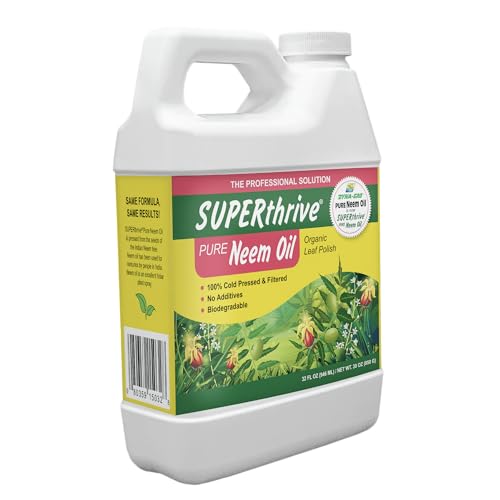
The pure cold-pressed neem concentrate that doubles as a leaf polish and a pest deterrent.
This is the old-school, straight-from-the-source option: 32 fluid ounces of 100% cold-pressed and filtered neem oil, pressed from the seeds of the Indian Neem tree. It is OMRI-listed for organic gardening and carries no additives, and it is fully biodegradable. It works as both a foliar spray and a leaf polish, which is why owners praise the shine it leaves on plants and shrubs.
For large yards, this concentrate is the cost-effective choice. One seasoned owner’s recipe — 2 tablespoons each of neem, ProTekt, and castile soap per gallon — yielded roughly 32 gallons of spray. It eliminated aphids on vegetables, salvia, roses, Texas sage, and crepe myrtle within a week after two applications, and owners even report it deterred deer from eating plants. It is a genuine all-rounder: effective against flies, garden pests, and gnats.
Neem oil takes a little expertise. It is hydrophobic and solidifies below room temperature, so you need a warm water bath to liquefy it, and it requires an emulsifier like mild dish soap to mix properly. The smell is a strong, nutty odor that earns mixed reviews. It is also not for use in direct sunlight, so plan your spraying for early morning or evening.
Why it is a keeper
- 32 oz makes roughly 32 gallons of spray
- OMRI-listed, biodegradable, no additives
- Adds a healthy shine to leaves
The learning curve
- Requires an emulsifier and warm water to mix
- Strong nutty smell
- Do not apply in direct sunlight
Best for: committed organic gardeners with big yards who want the most spray per dollar and do not mind a little mixing ritual.
Think twice if: you want grab-and-go convenience — this needs preparation before each use.
9. Garlic Barrier Concentrate

The commercial-strength garlic concentrate for orchards, farms, and yards crawling with bugs.
When your problem is measured in acres, not pots, this one-gallon garlic concentrate is the answer. It is a highly concentrated liquid garlic extract designed for farms, orchards, gardens, and greenhouses, mixing easily with water and applying with common sprayers. It helps repel leaf-eating, fruit-scarring, boring, and sap-sucking insects including aphids, beetles, caterpillars, mites, thrips, whiteflies, and leafhoppers — and growers even use it on fruit trees to discourage birds from feeding on ripening fruit.
The OMRI-listed garlic formula is safe for use around people, pets, and animals, and it does not leave a garlic taste on your crops — the odor typically dissipates after application. It works across a wide range of plants including orchards, row crops, fruit trees, vegetables, herbs, berries, flowers, ornamentals, turf grass, backyard gardens, and houseplants. One owner learned about garlic spraying from how a major theme park keeps its grounds mosquito-free and has bought this formula ever since.
It keeps mosquitoes and yard pests under control in sprayed areas, with reapplication after significant rainfall. The honest caveat is the strong garlic odor, which some find intense, and opinions split on value since results can vary with weather and pests. It is a repellent approach, not a contact killer, so it works best as part of a prevention routine.
What it does best
- One gallon covers large planting areas
- OMRI-listed and safe for people and pets
- Discourages birds as well as insects
Set expectations
- Strong garlic odor at application
- Results vary — some find it less effective than expected
- Repels rather than kills on contact
Reach for this if: you manage a large yard, orchard, or farm and want a pet-safe repellent that covers a lot of ground.
Look elsewhere if: you need a contact killer for a small garden — a ready-to-spray bottle will be easier and cheaper.
Understanding the Specs
The Active Ingredient
This is the chemical or natural compound that actually does the killing or repelling. Bacillus thuringiensis (Bt) is a bacteria that only harms caterpillars that eat treated leaves. Mineral oil and neem oil smother soft-bodied pests on contact. Spinosad is a fast-acting compound derived from soil bacteria. Garlic extract repels by smell. Knowing your ingredient tells you exactly which pests it will stop and whether it is safe for your edible crops.
Concentrate vs. Ready-to-Use
A concentrate requires you to mix it with water before applying, which makes it cheaper per gallon and lets you control the strength. A ready-to-use spray comes pre-mixed in a trigger or hose-end bottle — grab it and go, no measuring. If you have a few houseplants, ready-to-use is simpler. If you have a large garden, a concentrate that makes 16 or 32 gallons stretches your dollar much further.
FAQ
How do I know if I need a fungicide, insecticide, or miticide?
Is it safe to use these sprays on vegetables I will eat?
What is the difference between a contact spray and a systemic treatment?
Will these sprays hurt bees and other beneficial insects?
How often do I need to reapply pest control on my plants?
Will neem oil burn my plants in the sun?
Why does my spray smell so strong and will it go away?
Can I mix pest control with fertilizer to save time?
Final Thoughts: The Verdict
For most gardeners, the pest control for plants winner is the Monterey B.t. Concentrate because it solves the most dramatic garden problem — caterpillars shredding your tomatoes — while staying completely safe for bees, earthworms, and other beneficial insects, and it is the crowd favorite at 4.7 stars across 300+ owners. If you want one product that handles aphids, mites, and mildew with the convenience of a hose-end sprayer, grab the Bonide All Seasons Oil. And for a large yard or orchard where you need broad repellent coverage safe for pets, the Garlic Barrier is the one to reach for.
How We Picked
We do not accept paid placement. Every pick is matched to a real buyer and a real use-case; we do not hands-on test units.
Sources & Methodology
Specifications: manufacturer listings and product documentation. Review insights: verified customer reviews, as of August 2026. Pricing: not shown on this page (it changes often); check the current price via the retailer link.
As an Amazon Associate, Lawn Gear Lab earns from qualifying purchases. This does not affect which products we feature.