
Specs are compiled from manufacturer listings and verified buyer reviews and can change over time — please confirm the key details on the product page before buying.
You want a mulch that won’t vanish by mid-summer, and that means deciding how often you’re willing to re-apply it. Wood chips rot, straw blows away, and rubber sits there forever. For most home gardens, the best pick is a compressed coconut husk block: it expands into a chunky, long-lasting layer that holds moisture, so you won’t be re-buying it every season.
I’m Rikta — the founder and writer behind Lawn Gear Lab. This guide is built by comparing the manufacturers’ published specifications and the patterns across verified customer reviews, so you get each pick’s real strengths and trade-offs instead of marketing spin.
Your garden’s soil, local climate, and the plants you grow all change which option wins. The right mulch for a garden locks in moisture, blocks weeds, and feeds the soil as it breaks down.
Our Picks at a Glance

How To Choose The Best Mulch For A Garden
Mulch locks in moisture, blocks weed growth, and feeds the soil as it decomposes. Before you buy, think about which of those jobs matters most in your garden.
Match the texture to the plant
Fine materials like straw or shredded bark suit vegetable beds and new seedlings, because they let tender shoots push through easily. Chunky pieces like coconut husk chips suit trees, shrubs, and perennials, where you want air to reach the roots and a layer that stays put for two seasons or more.
Check the expansion ratio on compressed blocks
A 10-pound brick of coconut husk looks tiny in the bag, but it swells dramatically when you add water. The coverage you actually get depends on how many quarts or gallons the brick expands to — so always compare expanded volume, not the weight of the dry block. One block in this list expands to 72 quarts, while another delivers just 8 quarts ready to pour.
Decide how long you want it to last
Organic mulches like straw and pine needles break down in a season or two, enriching your soil. Rubber mulch never rots, which is great for play areas but useless for feeding the ground. If you are growing vegetables or flowers, pick something that decomposes; if you just want a tidy, lasting bed, a more permanent option wins.
Quick Comparison
| Model | Best For | Expanded Volume | Material | Weight | Amazon |
|---|---|---|---|---|---|
| Houseplant Mulch★ Best Overall | Indoor pots | 8 quarts | Bark chips | 1.35 kg | Amazon |
| Halatool Coco HuskAlso Great | Big beds & root zones | 72 quarts | Coconut husk | 10 lbs | Amazon |
| Gro-Med Coco HuskTop Performer | Raised beds & aeration | 65 quarts | Coconut husk | 10 lbs | Amazon |
| Back to the Roots | Organic veggie gardens | 2 cu ft | Coconut husk | 10 lbs | Amazon |
| EZ-Straw Seeding Mulch | Lawn seeding & erosion | Covers 500 sq ft | Processed straw | 21 lbs | Amazon |
| Rubberific Rubber Mulch | Play areas & permanent beds | 0.8 cu ft | Shredded rubber | 16 lbs | Amazon |
| HealthiStraw GardenStraw | Vegetable & flower beds | Covers 100 sq ft | Wheat straw | 20 lbs | Amazon |
| Hull Farm Cocoa Shell | Scent & soil enrichment | 2 cu ft | Cocoa bean shells | 12.72 kg | Amazon |
| Longleaf Pine Straw | Southern landscaping beds | Covers 125 sq ft | Pine needles | — | Amazon |
In‑Depth Reviews
1. Houseplant Mulch, Small Bark Wood Chips (8 Quarts)
Our pick — over 4.5★ from 850+ verified ratings; the strongest balance of quality and price.
Tidy little bark chips that keep indoor potting mix moist and looking uniform.
This is the only ready-to-pour option in the lineup — no soaking, no expanding, just open the bag and spread it. At 8 quarts, it is the smallest volume here, so it suits indoor planters and patio pots rather than garden beds. The bark chips are longer lasting than coconut coir or shavings, giving you a neat, consistent soil covering that holds moisture in.
Buyers specifically praise it as a soil amendment for houseplants, noting it adds aeration (air pockets for roots) and drainage, making repotting easier. The color is nice and it is simple to use — one owner sums it up as “Simply open and pour.” For overwintered outdoor plants brought into a garage, the results have been striking, with plants growing bigger and healthier than they did in summer.
The catch is value. Several owners note it is pricey for the quantity — roughly enough to cover 2.5 medium pots — so if you have a large collection, the compressed coconut blocks above will go much further. The 8-quart volume against the 72-quart Halatool brick is the starkest value comparison in this list.
What owners love
- Ready to pour — no watering or expanding step
- Adds aeration and drainage to potting mix
- Nice color that looks tidy in indoor pots
The honest trade-off
- Only 8 quarts covers a few medium pots
- Several buyers find it expensive for the volume
Grab this for: a handful of indoor plants where convenience and a clean look beat raw volume.
skip it if: you are mulching outdoor beds — a compressed block gives nine times the coverage.
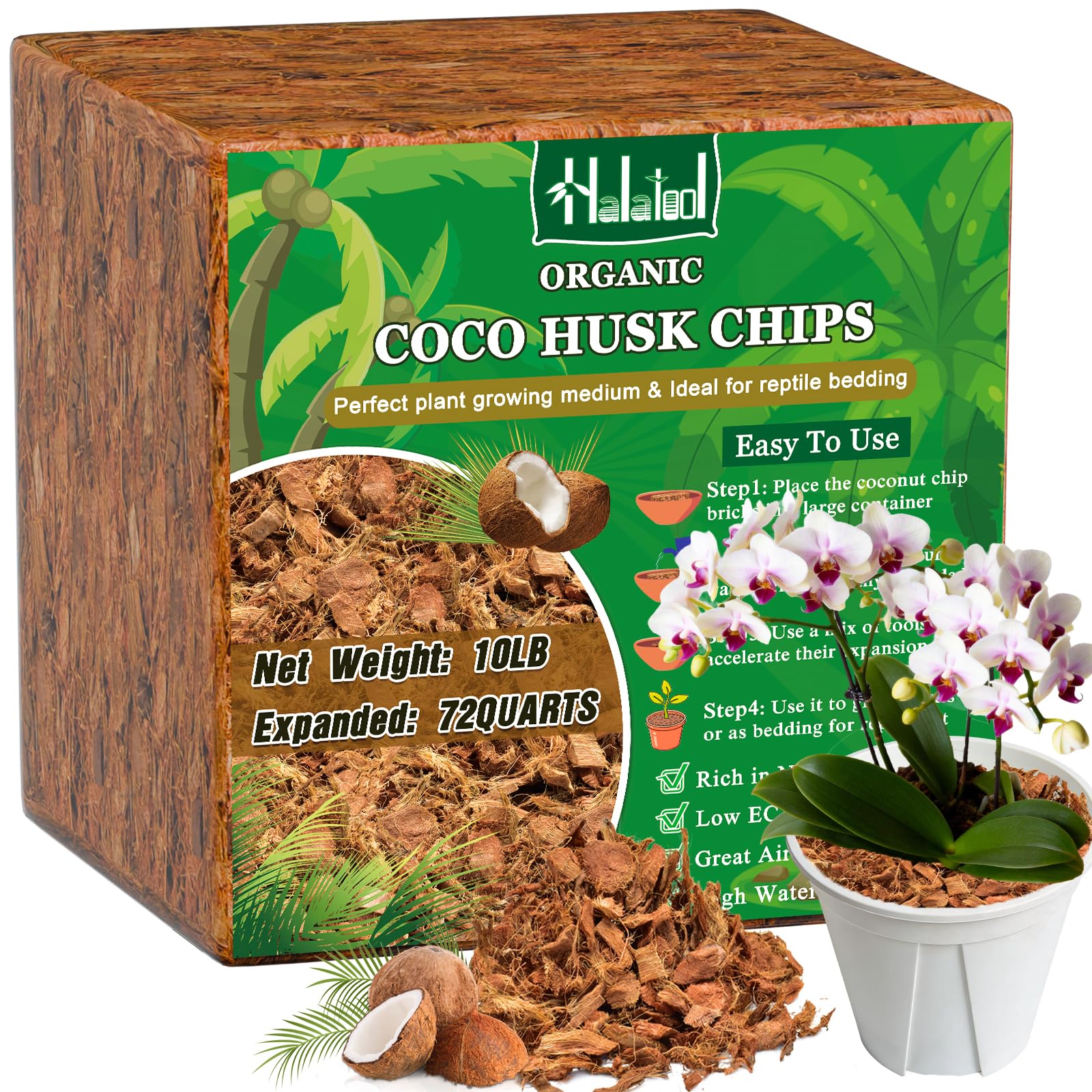
2. Halatool 10LBS Coco Husk Chips
The compressed brick that turns into nine times more mulch than the nearest bark bag.
A single 10-pound brick here expands to 72 quarts of mulch once you add water — a 9.0x gap versus the 8 quarts you get from a ready-poured bark bag. That volume makes this the pick for anyone mulching real garden beds, not just a few pots. The chips come from matured coconut husks, giving you low electrical conductivity and a balanced pH so roots are not fighting the soil chemistry.
The chips hold moisture well and stay put even in high wind, which is the thing owners rave about most. Dry bricks are light to carry, then expand fast once soaked — one buyer reports filling three 6-inch orchid pots with leftovers from a single package. It works as a garden mulch, a soil conditioner for vegetables and herbs, or bedding for climbing pets, so a single block covers a lot of different jobs.
The chunky texture suits aroid mixes and root zones but not a fine, uniform lawn finish. Some find the pieces vary in size, and you will want gloves when handling it. For the sheer volume per dollar and the moisture retention, this is the block to start with.
Why it wins
- Expands to 72 quarts — the biggest coverage in this list
- Low EC and balanced pH keep roots healthy
- Stays in place through wind, weeding, and watering
Know before you buy
- Chunk size varies, so not a fine-textured finish
- Best for root zones, not a whole-lawn dressing
Reach for this if: you mulch beds, borders, or raised vegetable gardens and want maximum coverage from one lightweight brick.
Look elsewhere if: you need a fine, uniform top dressing for a manicured ornamental bed.
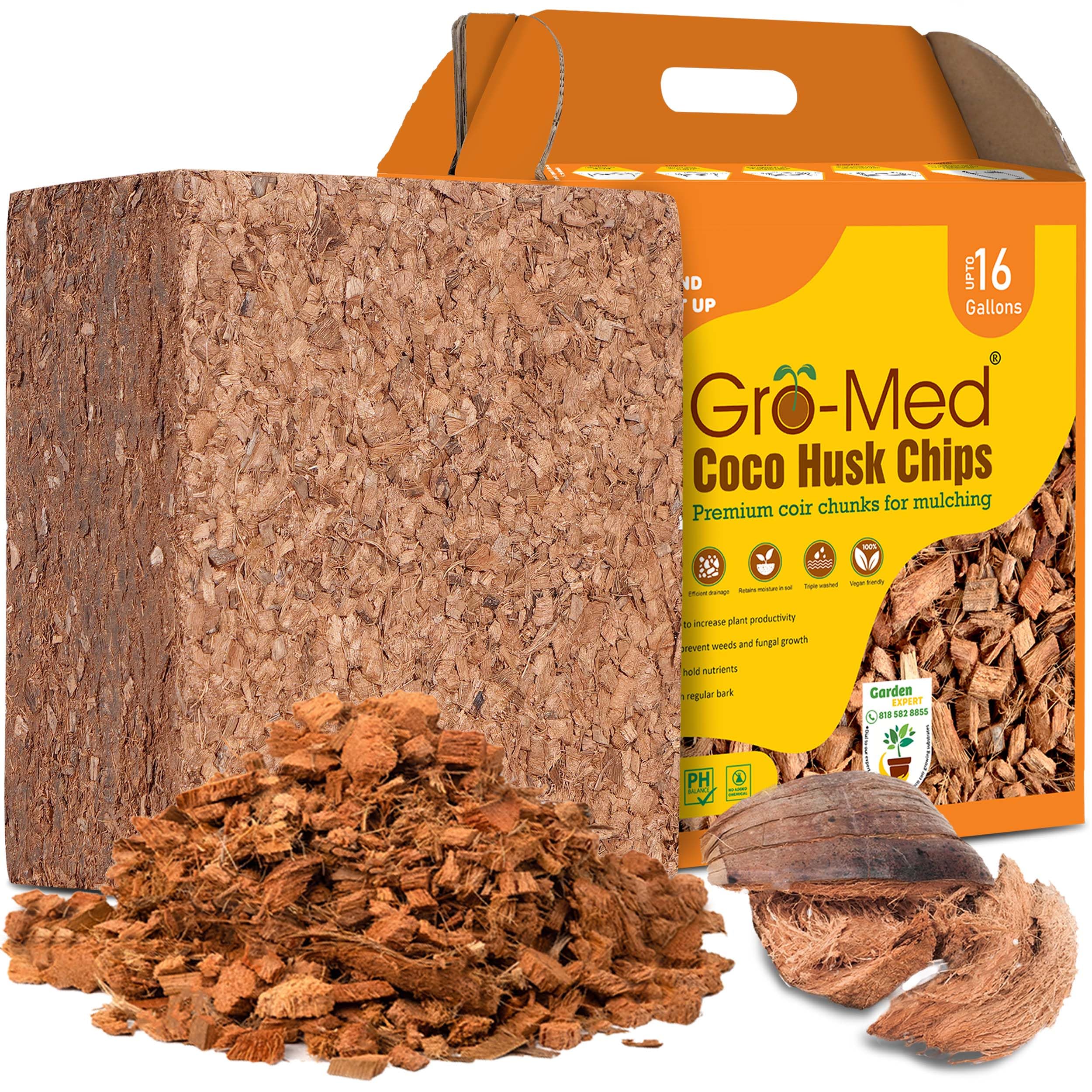
3. Gro-Med Coco Husk Chips 10lb Block
Triple-washed coconut chips that hold three times more water than regular bark.
The headline spec here is the 3X water retention — this block holds up to three times more water than regular bark, which means you water less often while the soil stays consistently moist. It is also OMRI listed, a third-party stamp for organic production, and triple-washed to keep electrical conductivity low and pH stable.
In the garden, these chips improve airflow around roots and prevent soil compaction. Buyers report healthier roots and stronger growth when mixing it into chunky blends with bark, perlite, and charcoal. To expand it, add 3 gallons of warm water, wait 20 minutes, and the block swells to 16 gallons of mulching medium — then spread a 2-to-3-inch layer on top of your soil.
Texture feedback is mixed, so it is not a one-size-fits-all finish. But for raised beds, pots, and even reptile bedding that needs humidity, this is a versatile workhorse. The 65-quart volume against the 72-quart volume of the Halatool block makes this the closer second choice.
Your best bet for: gardeners who want organic-certified chips with proven moisture retention and who are willing to spend a few minutes soaking the brick before spreading.
Worth noting: texture varies, so inspect the expansion a few minutes in if you need a uniform layer.
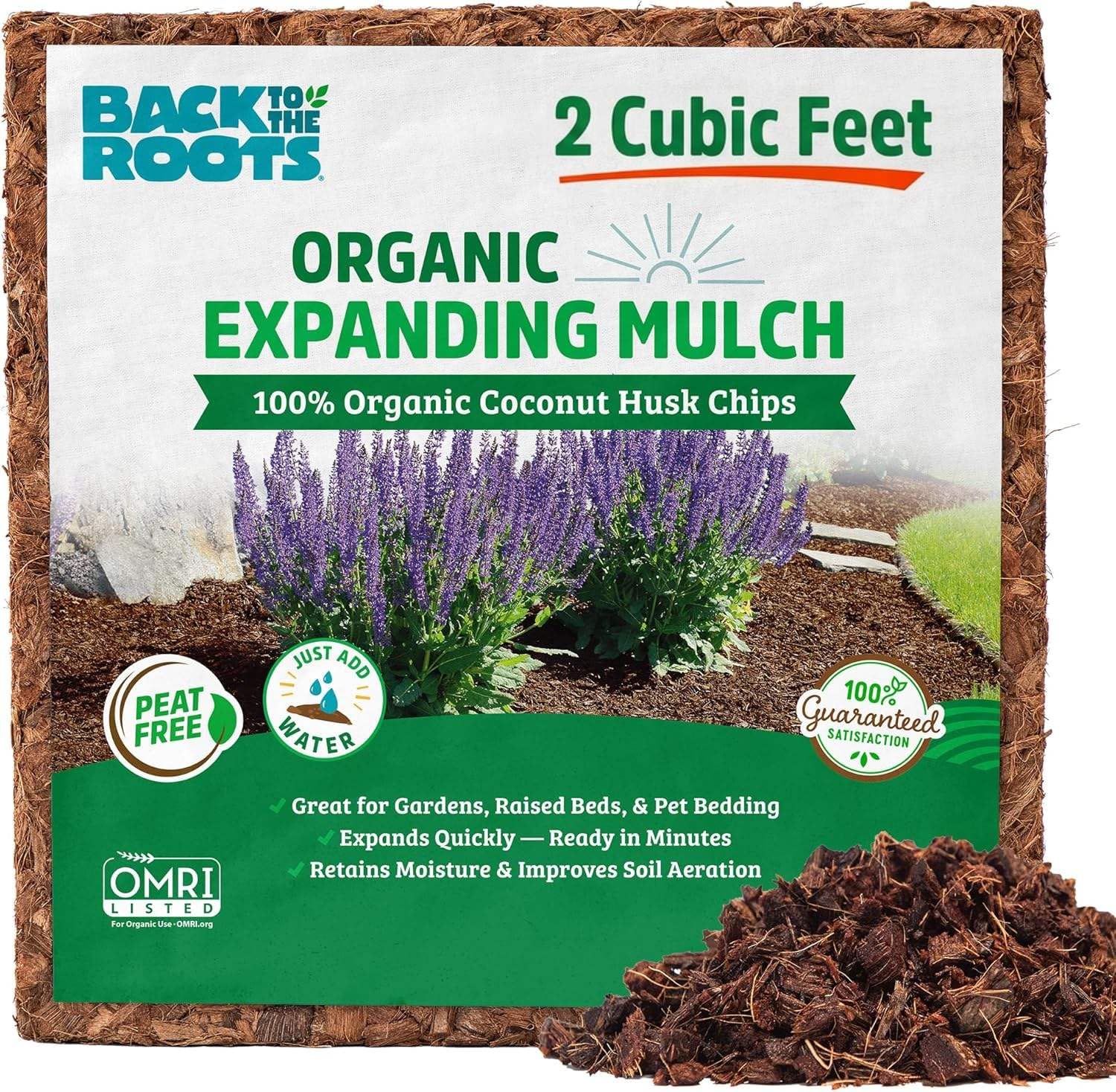
4. Back to the Roots 100% Organic Mulch, 58 Quart
The organic block that fills a wheelbarrow and saves your back from heavy bags.
A 10-pound compressed block of coconut husk that expands to over 2 cubic feet — that is the pitch, and buyers confirm it delivers. The most repeated story is one of relief: add water, and the brick swells to fill a wheelbarrow, saving you from hauling heavy wet bags of traditional mulch. For a vegetable garden, this is organic matter — coconut — that suppresses weeds and holds moisture as it breaks down.
It is peat free and OMRI listed, so you know it meets organic production standards. The brand even backs it with a satisfaction guarantee. Gardeners report success with hydrangeas and easier evaporation control, though the color is mixed — some love it when hydrated, others find it less rich than dyed bark.
The block is hard to break apart once dry. Plan to soak it thoroughly and give it a few minutes before trying to separate the chips. For an organic, peat-free option that does not punish your back, this is the premium choice.
Choose this when: you want certified-organic, peat-free material for a vegetable or flower garden and you value the convenience of a block that expands to a wheelbarrow’s worth.
Just know: the compressed block needs a good soak before it breaks apart easily.
5. EZ-Straw Seeding Mulch with Tackifier, 2.5 CU FT Bale

The tacky straw blanket that keeps fresh seed from washing away in the first rain.
This is not a decorative mulch — it is a seeding blanket. A 2.5-cubic-foot bale covers up to 500 square feet, making it the highest-coverage value in this lineup for lawn repair. The straw is mixed with a biodegradable tackifier, a natural bonding agent that gives the straw enough stickiness to hold itself together and protect grass seed from heavy washout and wind.
The stories from buyers are dramatic: a backyard torn up by 115 pounds of running dogs, reseeded, covered with this straw, and now a “beautiful green lawn.” It spreads easily, mats down when you step on it, and damp straw sticks to itself, holding the seed in place. It is also 99% weed free, so you are not planting a fresh crop of problems along with your grass.
Know that this is processed straw, so it breaks down in a season and is meant to be left in place after the grass grows. Texture feedback is mixed — some find it sticky, others wish it were tackier — and value opinions split. If the job is establishing turf, this is the one.
Built for: reseeding bare patches, erosion-prone slopes, and establishing new lawns where seed washout is the enemy.
Not for: ornamental beds or paths — it is a functional seeding tool, not a tidy top dressing.
6. Premium Shredded Rubber Mulch (0.8 Cu Ft, Brown)

The set-and-forget mulch that looks like wood but outlasts every plant in the bed.
If you never want to re-mulch again, this shredded rubber is the answer. It looks remarkably like natural wood mulch, but it will not fade, rot, compress, or lose its color — the manufacturer backs the color with a 12-year warranty. A 0.8-cubic-foot bag weighs 16 pounds, and while the coverage is modest, the material lasts for years rather than a single season.
The real niche here is play areas and paths. Shredded rubber provides a cushioned surface to protect children from falls, and the color does not rub off or bleed onto clothing. Owners mention it spreads easily, holds up well in heat, and — a pleasant surprise — cats and dogs tend to stay off it.
It smells strongly like rubber when fresh, and most owners find it pricey. It also does nothing for your soil — rubber never breaks down into organic matter. This is a permanent, low-maintenance surface, not a soil-feeding mulch. For a small garden bed by the garage or under a playset, it is a great trade-off.
Why choose rubber
- No maintenance — no fading, rotting, or compressing
- 12-year color warranty backs the longevity
- Cushioned surface is ideal for play areas
Why it is not for everyone
- Strong rubber smell when freshly laid
- Pricey, and it never feeds the soil
Pick this if: you want a one-time, durable surface for a play area, path, or small bed and do not need soil enrichment.
Look past it if: you grow vegetables or flowers that need organic matter cycling back into the ground.
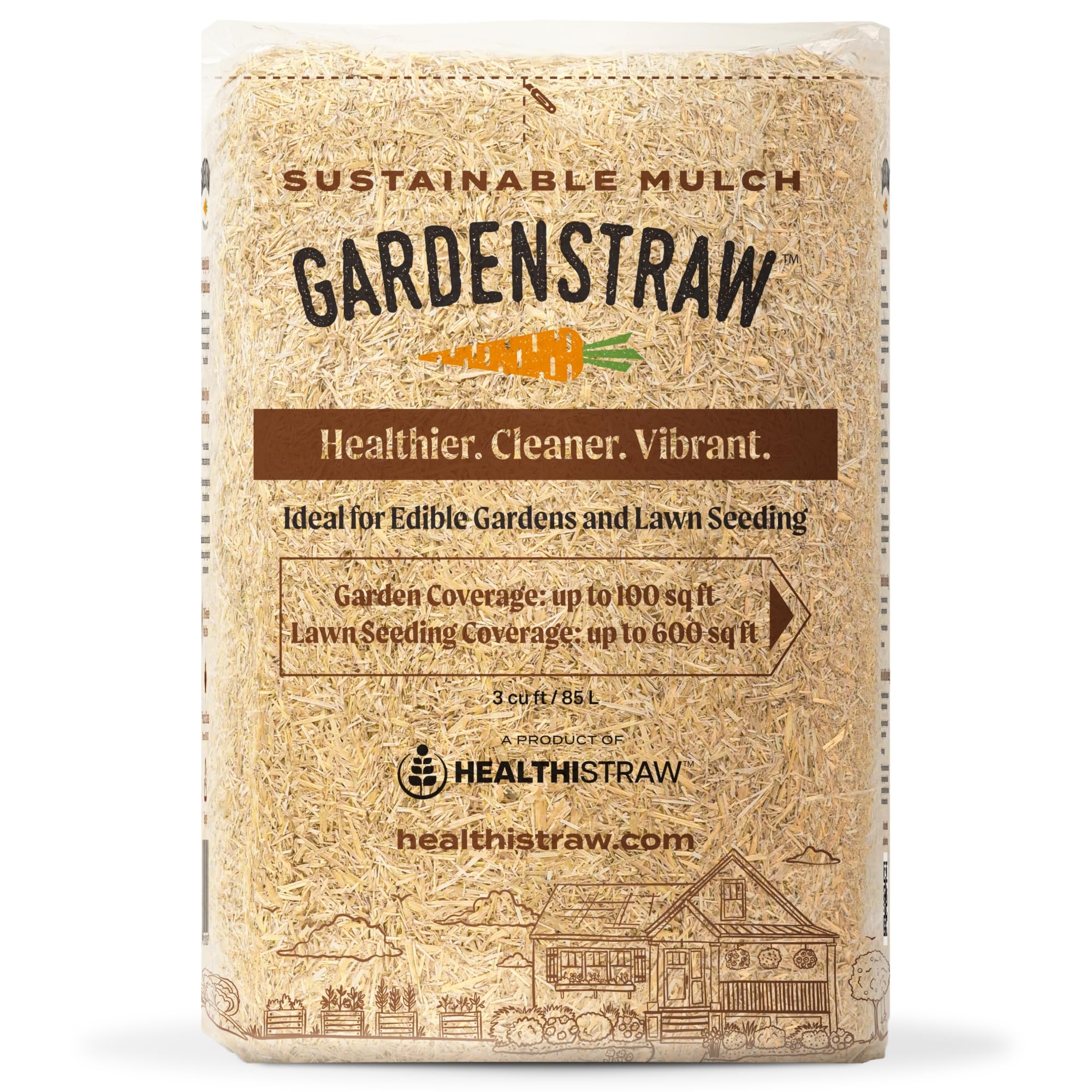
7. HealthiStraw GardenStraw, 3 cu ft (20 lbs)
Naturally filtered wheat straw that cuts watering needs by up to 50% in vegetable beds.
This is the mulch vegetable gardeners keep coming back to. A 3-cubic-foot compressed bale of 100% non-GMO wheat straw is naturally filtered to remove dust, dirt, and as many seeds as possible. The maker claims it conserves water — retaining soil moisture and limiting evaporation to reduce watering needs by up to 50% — and the owner feedback backs that up, with tomatoes and peppers thriving under a layer of it.
The straw fibers interlock when watered, so it stays in place and resists wind and rain without any chemical binders. One 3-cubic-foot bale covers up to 100 square feet at a 2-to-3-inch layer, or 600 square feet for lawn seeding at a quarter-inch thickness. It breaks down quickly, adds carbon to your compost, and reduces weeds — one buyer calls it “the best garden straw ever.”
The main gripe is that a few grass seeds can still sprout, though most owners shrug it off. It is also a bit costly for a single bale, but the coverage and moisture performance keep people coming back. For vegetable beds, herbs, and containers, this is the organic workhorse.
Reach for this if: you grow vegetables, herbs, or flowers and want a clean, compost-friendly mulch that slashes watering chores.
Worth knowing: a stray seed may sprout now and then, and the bale costs more than basic hay.
8. Hull Farm Cocoa Bean Shell Mulch, 2 Cubic Feet

The mulch that makes your front porch smell like chocolate for a week.
The single most-praised thing about this cocoa bean shell mulch is the scent — owners cannot stop talking about how it makes the whole garden smell like chocolate. A 2-cubic-foot bag covers a good amount of bed space, and the shells carry an approximate fertilizer value of 2.5-1-3, meaning they slowly feed the soil as they decay without burning vegetation.
This is a beautiful, soft, splinter-free material that enriches clay soil as it breaks down. Buyers find it ideal for containers and flower beds, and it keeps soil moist while holding up reasonably against wind once watered. It also tends to deter squirrels — more so than pecan mulch, one owner reports.
Three cautions apply. First, the chocolate smell fades after the first week or two. Second, the reviews split on pests — some report slugs and snails hanging around it. Third, and most important for dog owners: cocoa mulch can be dangerous if pets eat it, so skip this one if you have a curious chewer. It is also on the pricey side. The scent and soil benefits are real, but this is a niche pick.
Choose this for: a statement bed or container garden where the chocolate scent and soil enrichment are worth the extra spend.
Steer clear if: you have dogs that might eat it, or if you need a mulch that deters slugs and snails.
9. Longleaf Pine Straw Roll, Covers 125 Sq Ft

The Southeastern classic with extra-long needles that lock together against wind and rain.
This is the premium straw for Southern landscaping, and the reason is in the needle length. Longleaf pine needles run approximately 14 inches, and that length makes them interlock — once spread, they stay put through storms and high wind better than almost any other organic mulch. One roll covers up to 125 square feet, and buyers consistently call it clean, with no sticks or thorns that stab your hands.
It is a favorite of landscapers, developers, and golf course superintendents, and home gardeners agree. The needles look fluffy and natural, suppress weeds, and hold soil moisture — ideal for water-conservation gardening in the South. One owner says it looks “beautifully” fluffy in flower beds and withstood strong winds and rain with no problem. An occasional bale may vary in coverage, but overall quality earns devoted repeat buyers.
The trade-offs here are price and value perception — it is genuinely expensive, and opinions on whether it is worth the cost split down the middle. It also takes a bit of patience to lay. This is a regional, aesthetic choice: if you want that classic Southern look that stays put, it is class-leading.
What makes it special
- 14-inch needles lock together to resist wind and rain
- Clean — no sticks, thorns, or debris
- Excellent weed suppression and moisture retention
Before you commit
- Premium price, and value opinions are mixed
- Coverage can vary slightly from roll to roll
Perfect for: Southern flower beds and water-conscious landscaping where a long-lasting, wind-proof natural layer is the goal.
Pass on it if: you are on a strict budget or you need to cover a very large area in one go.
Understanding the Specs
Expanded Volume vs. Bag Weight
Compressed coconut blocks are sold by dry weight — usually 10 pounds — but what matters is how much they expand once you add water. A 10-pound brick can become 65 quarts or 72 quarts of actual mulch. Compare expanded volume in quarts or cubic feet across brands, because the dry weight alone tells you almost nothing about coverage.
Moisture Retention and Watering Frequency
Different mulches hold water very differently. Coconut husk can hold up to three times more water than regular bark, which directly cuts how often you need to water. Straw and pine needles also slow evaporation well. Rubber and gravel hold no moisture at all — they only block weeds and look tidy.
FAQ
How much mulch do I need to cover my garden bed?
Is coconut husk mulch better than wood bark mulch?
Will mulch attract bugs or pests?
How long does each type of mulch last before I need to reapply?
Can I use the same mulch for indoor plants and outdoor garden beds?
Is it safe to use mulch around vegetable gardens?
How do I expand a compressed coconut husk block?
Will mulch blow away in windy areas?
Does mulch change the pH of my soil?
How thick should I spread mulch for the best results?
Final Thoughts: The Verdict
For most gardeners, the best mulch for a garden is the Halatool Coco Husk Chips because one 10-pound brick expands to 72 quarts of moisture-holding, weed-blocking mulch at a price that beats bagged bark. The Gro-Med block is the close second for organic certification and triple-washed consistency. And if you are reseeding a tired lawn, the EZ-Straw is the one to reach for — its tacky binder keeps seed anchored through the first rain.
How We Picked
We do not accept paid placement. Every pick is matched to a real buyer and a real use-case; we do not hands-on test units.
Sources & Methodology
Specifications: manufacturer listings and product documentation. Review insights: verified customer reviews, as of August 2026. Pricing: not shown on this page (it changes often); check the current price via the retailer link.
As an Amazon Associate, Lawn Gear Lab earns from qualifying purchases. This does not affect which products we feature.