
Specs are compiled from manufacturer listings and verified buyer reviews and can change over time — please confirm the key details on the product page before buying.
Air layering asks one thing from a rooting hormone: it has to stay pressed against the wound long enough to trigger roots. Powders bead up and wash away when you wrap moss around a branch, which is why so many gardeners reaching for a Rooting Hormone For Air Layering end up staring at a bare, calloused stem months later. The best picks here are the ones that cling, keep the cut tissue coated, and get woody branches to push roots while they are still attached to the parent plant.
I’m Rikta — the founder and writer behind Lawn Gear Lab. This guide is built by comparing the manufacturers’ published specifications and the patterns across verified customer reviews, so you get each pick’s real strengths and trade-offs instead of marketing spin.
Gels and high-strength powders win for air layering because they hug the wound site. This guide ranks the best rooting hormone for air layering on stickiness, hormone strength, and real grower results.
Our Picks at a Glance

How To Choose The Best Rooting Hormone For Air Layering
Air layering is different from taking a cutting. You are rooting a branch that stays attached to the mother plant, wrapped in damp moss or another medium. The hormone has to work on a larger wound surface and survive being enclosed for weeks. That changes which form — gel, powder, or liquid — actually gets the job done.
Form matters more than you think
Gels are the usual first choice for air layering because they are thick and tenacious. A gel clings to the scraped ring of bark and stays in contact with the plant tissue while you wrap the moss around it. Powders can fall off the wound during wrapping. That said, a high-strength powder meant for hard or dormant woody cuttings can still work if you are careful to tap off the excess and seal the wrap well.
IBA concentration tells you the target plant type
The active ingredient in most of these products is Indole-3-Butyric Acid (IBA), a synthetic version of the rooting hormone plants make naturally. Lower strengths around 0.1% are for easy, softwood cuttings. Higher strengths like 0.8% and 1.6% are for the tough stuff — evergreens, dormant leafless cuttings, and hard-to-root woody ornamentals that air layering is often used for.
Think about how much you actually need
Air layering uses a thin coating per branch, so a small 15 ml gel tube or a 2 oz powder jar can last a long time. But if you plan to propagate dozens of branches, a larger 250 ml bottle or a 1/2 lb jug makes more sense. Check the weight before you buy: a 250 ml gel bottle weighs 8 ounces, while a 2 oz powder canister is a much smaller commitment.
Quick Comparison
| Model | Best For | Form | IBA Strength | Size | Amazon |
|---|---|---|---|---|---|
| Clonex Rooting Gel 250ml★ Best Overall | Overall air layering | Gel | Ideal IBA level | 250 ml | Amazon |
| Clonex Rooting Gel 100ml 2-PackBulk Gel Choice | Bulk gel users | Gel | Ideal IBA level | 200 ml total | Amazon |
| Hormex #16 Max-Strength PowderMax Strength | Hardwood air layers | Powder | 1.60% IBA | 1 count | Amazon |
| Hormodin Rooting Compound 1/2 lb | Difficult woody varieties | Powder | 0.8% IBA | 1/2 lb jug | Amazon |
| Root Drops Liquid | Indoor houseplant layers | Liquid | All-natural hormone | 4 oz | Amazon |
| EZ-Clone Rooting Gel | Dense root growth | Gel | Beneficial hormones | 2 oz | Amazon |
| Garden Safe Take Root | Everyday softwood cuttings | Powder | IBA-based | 2 oz (2-pack) | Amazon |
In‑Depth Reviews
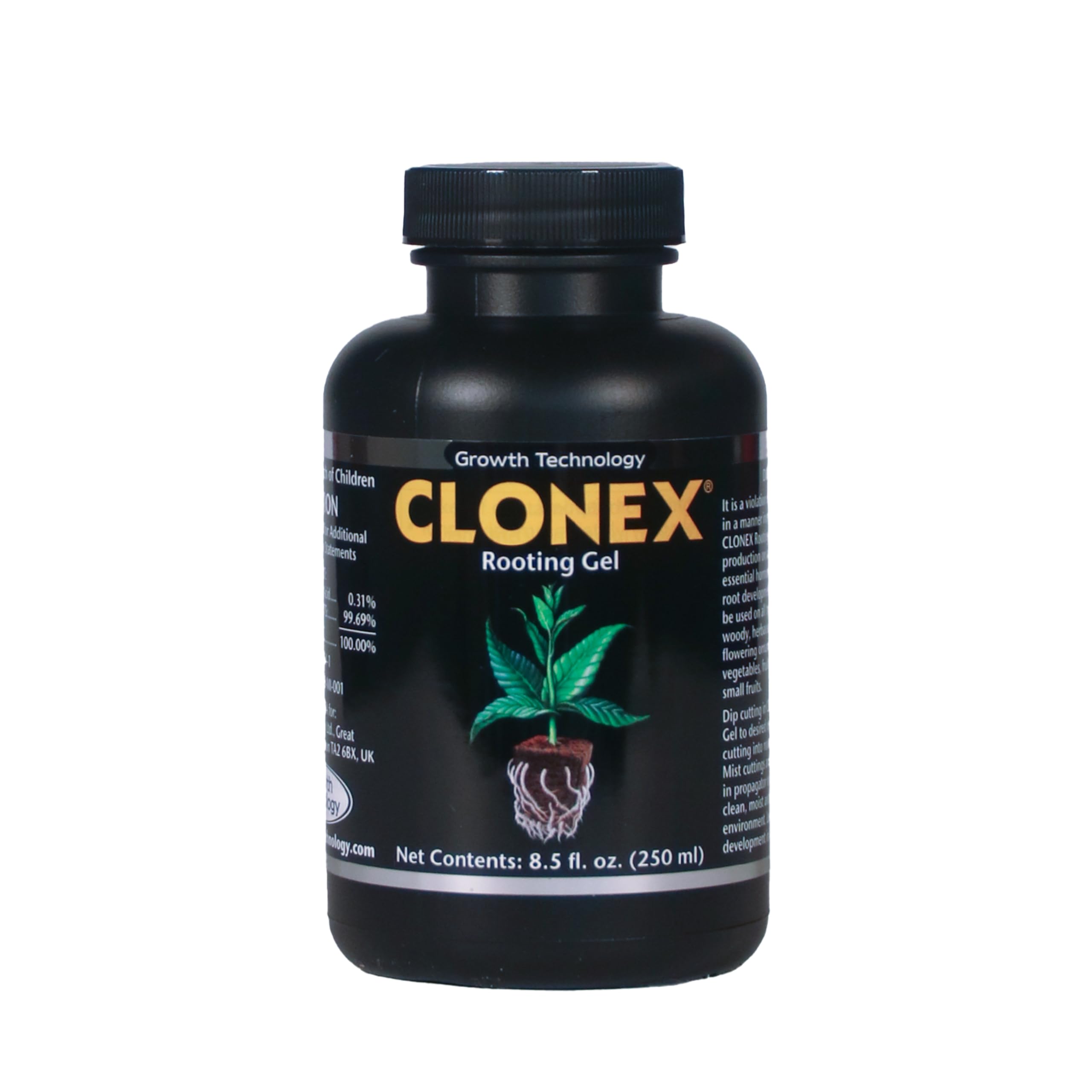
1. Clonex Rooting Gel 250ml
Our pick — over 4.5★ from 21,500+ verified ratings; the strongest balance of quality and price.
The industry-standard gel that stays put on a wrapped branch long enough to force roots
Clonex is the gel that serious propagators reach for when powders simply will not stick. Its water-based formula carries what the maker calls the ideal level of IBA (Indole-3-Butyric Acid, the synthetic version of the rooting hormone plants produce naturally) in a thick gel that holds firm contact with the wounded tissue. For air layering, that prolonged contact is the whole game — the gel sits against the scraped ring of bark while you wrap it in moss, instead of sliding off like a dusting of powder would.
What wins people over is the sheer effectiveness: Growers report massive root growth in as little as two weeks, with some describing a 100% success rate on their clones.. One long-time user has been relying on it for years. It is also a favorite for tomatoes and soft-tissue plants, so it is not a one-trick pony. The bottle holds 250 ml and weighs 8 ounces, which is four times the size of the Garden Safe powder canister at the bottom of this list — enough for a serious season of layering.
There is one honest caveat worth knowing before you buy. Clonex is effective because it is potent, and a careful buyer should know it carries toxicity and handling precautions that listings rarely shout about. Gloves and reasonable care keep this a non-issue for most gardeners. Aside from that, this is the pick that makes air layering feel easy, and it has built that reputation over decades of grower use.
What wins people over
- Effectiveness is the #1 thing owners praise — hundreds call it out
- Gel clings to wounds, so it suits air layering’s wrapped setup
- Rapid root growth reported in about two weeks
The fair warning
- Strong formula demands gloves and careful handling
- Some owners found value mixed for the price
- Occasional reports of plants failing within 24 hours
Reach for this if: you want the gel that growers and nurseries have trusted for decades and you propagate a range of soft-tissue plants, not just one species.
Handle with care: this is a potent compound — keep gloves on and read the safety notes before you start.
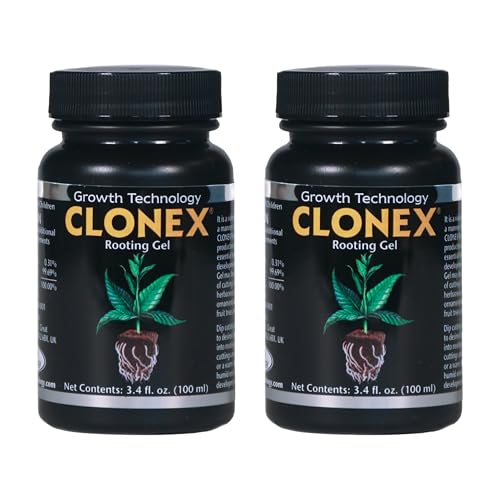
2. Clonex Rooting Gel 100ml 2-Pack
Two full jars of the gel that rooting stubborn fig trees and grape vines on the first try
When you are air layering multiple woody branches, you want the same reliable Clonex gel but more of it. This 2-pack delivers 200 ml total across two 100 ml jars, weighing 0.26 kg. Having two separate jars is genuinely useful in the garden — keep one at the bench and one in the greenhouse, or share the second with a gardening friend.
The gel performs on the tough stuff. Buyers report success with fig trees and grape vines, which are exactly the kind of stubborn, semi-hardwood species that air layering exists for. In a plant lab setting, it has increased propagation productivity and success rates, with a note that “the powders are hit and miss” while this gel is dependable. The 2-pack’s quality is the second-most-praised aspect, right behind effectiveness.
It is not a magic guarantee for every species — evergreens still gave one owner trouble even with this gel. But for most flowering plants, shrubs, and fruit vines, this is the workhorse quantity. If you are running a serious propagation setup or simply hate running out of gel mid-season, two jars remove that worry.
Propagation workhorse: two jars of proven gel for serious multi-branch layering.
Not for: anyone betting on evergreens cloning easily — those stay hit-or-miss even here.
3. Hormex Rooting Hormone #16 Max-Strength Powder
The 1.6% IBA powder built for the hard woody branches that softer formulas ignore
If your air layering targets are difficult hardwood cuttings — think established trees and woody ornamentals — this is the strength to reach for. Hormex #16 carries 1.60% IBA (Indole-3-Butyric Acid), the highest concentration in its four-strength lineup that also spans 0.1%, 0.3%, and 0.8%. That makes it a specialist tool for the stubborn species that frustrate gardeners, and one owner confirmed it worked beautifully for air layering a Japanese Maple.
The formula is clean and minimal, made in the USA and relied on by gardeners and professionals for over 65 years per the maker. Quality is what owners praise most, and the brand’s longevity across decades of use speaks to consistency. You use very little per branch — just coat the wound and tap off the excess — so the 21.27 g container goes further than the tiny weight suggests, which some buyers flagged as strong value.
Because it is a powder, you have to be a little more careful during the wrap. Unlike the Clonex gel above, a powder can shift when you bind the moss, so seal the wrap well. And while it is the right tool for wood, it is overkill for easy softwood cuttings. Read the strength chart and match it to your species, and this becomes a genuine propagator’s ally.
Choose this for: hard, woody, and dormant cuttings where low-strength hormones stall out.
Look elsewhere if: you mostly root soft-tissue houseplants — this strength is more than they need.
4. Hormodin Rooting Compound 1/2 Pound

A half-pound jug good for 17,500 cuttings, built for the difficult-to-root varieties
This is the volume play for anyone air layering at scale. The 1/2 lb jug carries 0.8% active ingredient specifically formulated for the more difficult-to-root varieties, including many evergreens and dormant leafless cuttings. The maker quotes a capacity of 17,500 cuttings per jug, so you will not run out mid-season.
Owners lean on this for cacti and woody shrubs, reporting roots that grow quickly. It earns strong marks across the board: effectiveness is the top-praised aspect, with rooting performance close behind, and quality and value both come in positive. Dabbing the cutting in the cap, tapping off the excess, and planting into a pre-made hole is all the technique it demands — no measuring or mixing required.
The catch for air layering specifically is that you still have to manage the powder during the wrap. It works perfectly on the wound, but you will want a careful moss seal to keep it in place. Also, the label advises discarding leftover powder rather than returning it to the jar, to keep the batch clean. For the price per cutting, this is the most economical way to propagate tough species in serious numbers.
Grab this if: you root woody shrubs, cacti, and difficult ornamentals in large batches.
skip it if: you only layer one or two branches a year — the powder will outlive your interest.
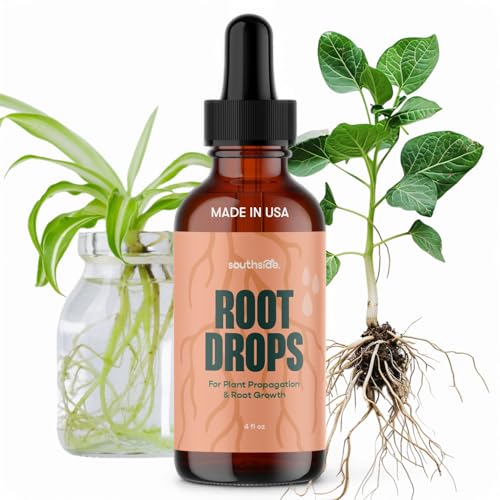
5. Root Drops Liquid Rooting Hormone
A no-mess liquid that roots pothos and monstera layers in days instead of months
For indoor houseplant lovers, this liquid is a completely different approach. Root Drops is an all-natural rooting hormone with vitamins, made in the USA by two sisters, and it works in water, soil, leca, pon, or sphagnum moss. For water propagation — which is how most people air layer or propagate pothos, monstera, and philodendron — you only need 2 drops per cup of water, refreshed every 4-5 days.
The results are fast. Owners mention pothos cuttings rooting in 5 days versus weeks normally. New growth appears within 3-5 days. The concentrated 4 oz bottle lasts much longer than competing products, and the included dropper makes dosing easy — no complicated mixing or measuring. Users note the drop size is just right and that the product keeps working for a long time.
Where this does not fit is traditional air layering of a thick woody branch outdoors. It is a liquid, so it is ideal for moss and water mediums, but it lacks the thick clinging body of the Clonex gel for a big bark wound on a tree. If your layering is indoors with houseplants, this is the most pleasant and effective option here; if you are girdling a maple branch, the gel or high-strength powder above suits you better.
The indoor advantage
- Roots appear in days, not weeks, on houseplants
- 2 drops per cup — the 4 oz bottle lasts a long time
- Dropper top means zero mess
The outdoor limit
- Liquid form lacks cling for thick woody branch wounds
- Targeted at houseplants, not hardwood trees
- One buyer wanted proof of longer-term results
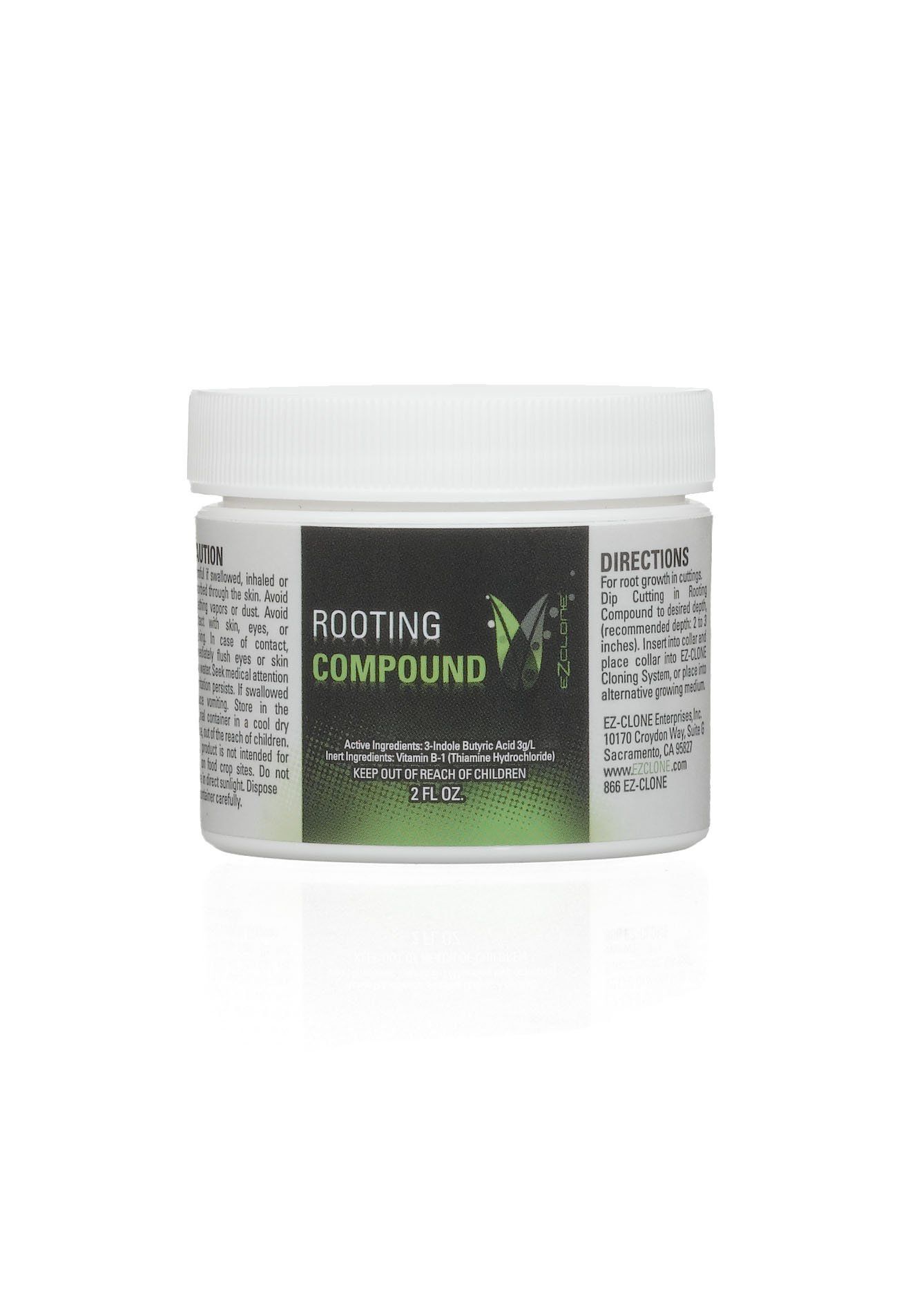
6. EZ-Clone Rooting Compound Gel 2 oz
A water-based gel that seals the cut and delivers minerals plus vitamins for dense rooting
EZ-Clone is built around one idea: initiating rapid and dense root growth. It is a water-based gel that seals the tissue around the cut stem (which helps prevent the wound from drying out during a long air layer), and it carries beneficial rooting hormones along with full-spectrum mineral nutrients and vitamins. That nutrient boost is the differentiator — most rooting products stop at hormones, while this one feeds the developing roots too.
The gel has a passionate following among clone-heavy propagators. One owner reports using it on about 120 clones and sums it up: “Works very well!!!!” It has earned praise for helping cuttings root every time in many repeat uses. The 2 oz size weighs 2.08 ounces and is a comfortable mid-point — bigger than the 15 ml Clonex tube but smaller than the 250 ml bottle, good for the home gardener who layers a handful of branches.
The honest truth is that effectiveness draws genuinely mixed opinions, and it is the highest-count aspect in the reviews. Some gardeners got roots in days from a cheaper brand after this one did nothing for a week, and it did not work on every vegetable cutting. Quality is solid, but value for money splits opinion. Think of it as a good gel with a nutrient bonus — not a guaranteed win on every species.
Good for: growers who want minerals and vitamins alongside rooting hormones in a sealing gel.
Hedged bet: results vary by species — do not expect a 100% strike rate everywhere.
7. Garden Safe Take Root Rooting Hormone 2-Pack

The simple cut-stir-plant powder that gets beginners into rooting without fuss
Garden Safe Take Root is the entry-level powder for gardeners who want to multiply roses, African violets, poinsettias, philodendrons, geraniums, coleus, and woody ornamentals without learning a complicated system. The active ingredient is Indole-3-Butyric Acid (IBA), the same synthetic rooting hormone found across this list, made to mimic the hormone plants naturally produce. The routine is as simple as cut, stir, and plant.
The 2-Pack delivers two 2-ounce canisters totaling 4 ounces by unit count, making this the lightest and most economical way to test rooting hormones if you are new. Customers note cuttings rooting within three weeks of application., and the quality is the most-praised aspect. It dissolves fast enough to mix into water for a turbocharged soak — a trick gardeners use on newly planted holly and fig trees.
There is a reason this sits at the budget end. As a stand-alone powder, some owners find it mediocre, and effectiveness gets mixed feedback. One experienced propagator uses it only combined with Clonex gel to make a rooting paste — reporting 100% success that way but lukewarm results when used alone.. For easy softwood cuttings it is perfectly fine; for difficult hardwood air layers, reach for the Hormex #16 instead. It is a friendly starting point, not a heavy-duty tool.
Perfect first powder: cheap, simple, and effective enough for roses and common softwood cuttings.
Graduate past it: for tough hardwood air layers, the stronger powders and gels on this list give better odds.
Understanding the Specs
IBA Concentration
IBA stands for Indole-3-Butyric Acid, the synthetic version of the rooting hormone plants make on their own. The percentage on the label tells you how strong the formula is. Low strengths around 0.1% suit easy softwood cuttings, while 0.8% and 1.6% are meant for hard, woody, or dormant branches. For air layering a difficult tree branch, you generally want a higher concentration — that is why Hormex #16 at 1.60% is the specialist pick here.
Gel vs Powder vs Liquid
The form changes how the hormone behaves on the wound. Gels cling to the scraped ring of bark and stay in contact with the tissue under a moss wrap — the ideal trait for air layering. Powders are cheap and easy but can shift during wrapping, so they demand a careful seal. Liquids are clean and absorb fast, perfect for moss and water mediums, but they lack the thick body of a gel for a large woody wound. Match the form to your species and your wrapping style.
FAQ
Can I use the same rooting hormone for air layering and stem cuttings?
What IBA strength should I use for hardwood air layers?
How long does it take for air layers to root with hormone gel?
Is rooting hormone safe to handle with bare hands?
What is the difference between IBA and IAA in rooting hormones?
Can I dip an air layer in powder instead of gel?
How much rooting hormone do I need for air layering?
Will rooting hormone work on fig trees and grape vines?
Does liquid rooting hormone work for air layering?
Why do my air layers fail even with rooting hormone?
Final Thoughts: The Verdict
For most gardeners, the rooting hormone for air layering winner is the Clonex Rooting Gel 250ml because its tenacious gel stays pressed against the wound for the weeks a wrapped branch needs, and it is the formula hundreds of owners praise most for effectiveness. If you are layering hard woody trees, the Hormex #16 at 1.60% IBA brings the strength those stubborn species demand. And for indoor houseplant layers in water or moss, the Root Drops liquid is the clean, fast option to reach for. Its 4.6-star average across tens of thousands of owner reviews makes it the safest first buy in the category.
How We Picked
We do not accept paid placement. Every pick is matched to a real buyer and a real use-case; we do not hands-on test units.
Sources & Methodology
Specifications: manufacturer listings and product documentation. Review insights: verified customer reviews, as of August 2026. Pricing: not shown on this page (it changes often); check the current price via the retailer link.
As an Amazon Associate, Lawn Gear Lab earns from qualifying purchases. This does not affect which products we feature.