
Specs are compiled from manufacturer listings and verified buyer reviews and can change over time — please confirm the key details on the product page before buying.
Bonsai roots suffocate in regular potting soil, which holds too much water and starves them of air. The right mix is a gritty, rocky blend that drains fast while still holding a little moisture for the roots to drink. This guide breaks down the top pre-mixed and single-ingredient options so you can repot with confidence and keep your tree thriving.
I’m Rikta — the founder and writer behind Lawn Gear Lab. This guide is built by comparing the manufacturers’ published specifications and the patterns across verified customer reviews, so you get each pick’s real strengths and trade-offs instead of marketing spin.
Whether you’re repotting a delicate Japanese Maple or a hardy Ficus, the right potting soil for bonsai determines root health, water retention, and long-term survival — so choose wisely before you repot.
Our Picks at a Glance


How To Choose The Best Potting Soil For Bonsai
Bonsai isn’t like other houseplants — the roots need both moisture and oxygen, which means the soil must be a coarse, granular mix rather than dense dirt. Your choice of mix affects how often you water, how well roots grow, and whether your tree stays healthy through the seasons.
Match the Mix to Your Tree Type
Tropical trees like Ficus prefer a mix with good drainage but some moisture retention, while deciduous trees like Japanese Maple need a balance that keeps roots hydrated without staying soggy. Conifers often thrive in a grittier, faster-draining blend that mimics their native rocky habitats.
Check the Particle Size and Purity
Look for a mix that is sifted and pre-washed to remove fine dust that can clog the spaces between particles. A consistent grain size — like akadama sifted through a 1/8-inch mesh — means water flows through evenly, and you won’t have to re-screen the bag before use.
Quick Comparison
| Model | Best For | Volume | Key Ingredient | Weight | Amazon |
|---|---|---|---|---|---|
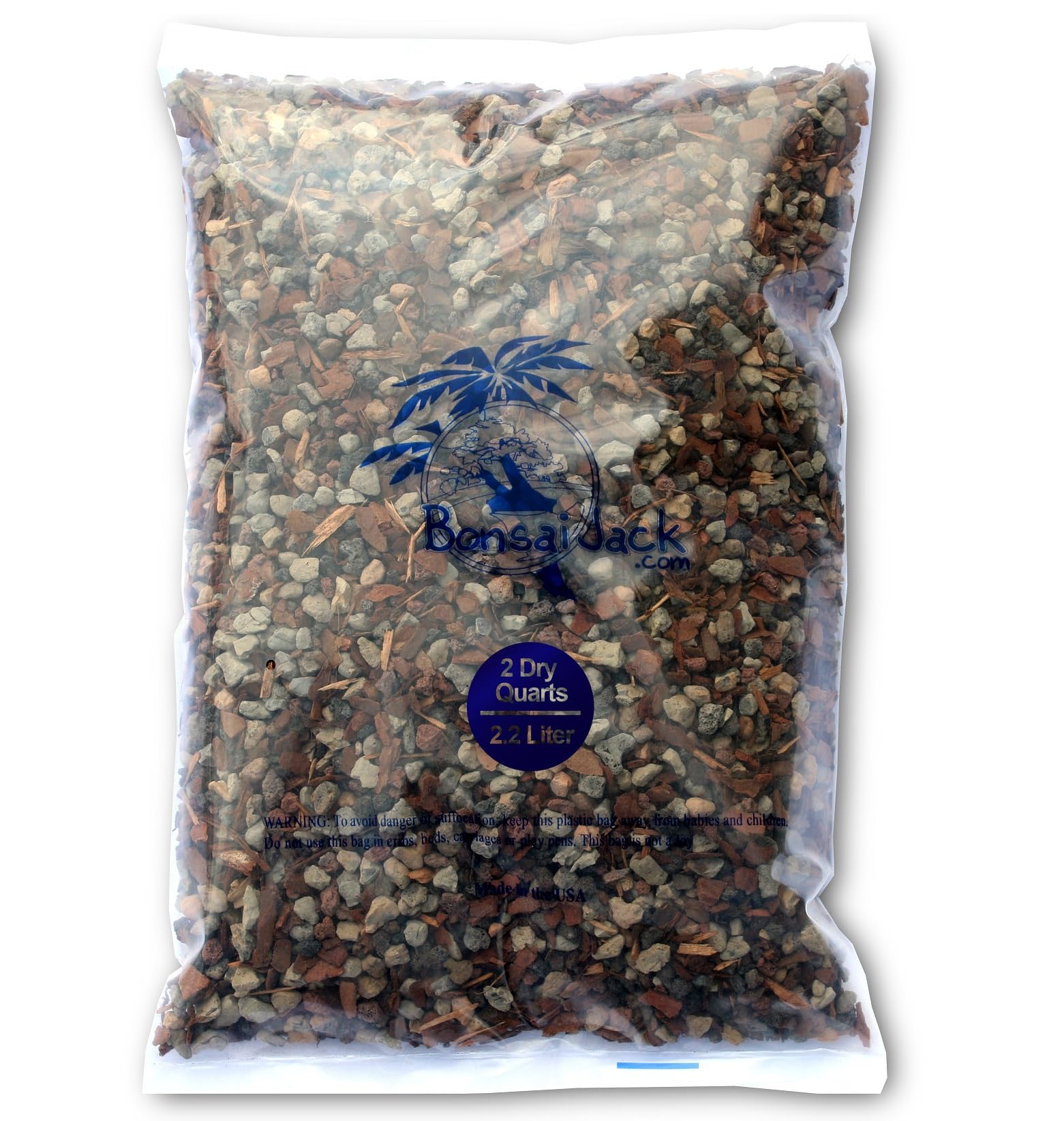
| Bonsai Jack Universal★ Best Overall | Universal use | 2 quarts | Bark & Soil Mix | 74 oz | Amazon |
| Tinyroots TropicalTropical Pick | Tropical species | 1.75 quarts | Calcined clay, pumice | 1.27 kg | Amazon |
| Tinyroots DeciduousDeciduous Pick | Japanese Maple, Elm | 2 quarts | Akadama, pumice | 83.7 oz | Amazon |
| Tinyroots Akadama | Traditional akadama | 2 quarts | 100% Akadama | 2 lbs | Amazon |
| Tinyroots Premium | Finished bonsai | 2 quarts | Akadama, lava, pumice | 83.25 oz | Amazon |
| Harris All Purpose | Seedlings & cuttings | 2 dry quarts | Forest humus, pumice | 1.2 kg | Amazon |
| Hoffman 10708 | Evergreens | 2 quarts | Stone & organic mix | 4 lbs | Amazon |
| NOHOBE Akadama | Cactus & succulents | 5 liters | 100% Hard Akadama | 5 lbs | Amazon |
| Tinyroots Pumice | Soil additive | 2.25 quarts | 1/4″ Pumice | 72 oz | Amazon |
In-Depth Reviews
1. Bonsai Jack Universal Organic Mix
Our pick — over 4.5★ from 750+ verified ratings; the strongest balance of quality and price.
The crowd favorite that keeps roots healthy in full sun without breaking down.
This is the bag most owners reach for when they want one mix that handles nearly everything, from tropicals to succulents. It arrives screened and pre-washed, so you can pour it straight into the pot — and the optimal pH of 6.4 means you don’t have to fuss with correcting the chemistry before planting.
What wins people over is the quality and the effect on plant health — the two things owners praise most by a wide margin. Buyers report it “hasn’t broken down significantly and holds enough water to keep my tree healthy in full sun,” which is the durability you want from a mix that stays in the pot for years.
The honesty caveat: water retention gets mixed reviews, so if your tree is thirsty, you may water more often than you would with a heavier blend. For the vast majority of trees and succulents, though, this is the proven pick from a supplier that has sold over a hundred thousand bags.
versatile mix base
- Screened and pre-washed for immediate use
- Holds enough water for full-sun health
- Does not break down significantly over time
needs extra grit
- Water retention is mixed — may need more frequent watering
- Not ideal for mature trees in refinement stage
all-rounder: you want a proven, ready-to-use mix that works for most bonsai and succulents without any prep work.
specialists: you’re refining a mature tree and need the specialized root development of pure akadama instead.
2. Tinyroots Tropical Bonsai Soil
A light, airy blend that keeps Ficus roots happy without staying soggy.
This mix is made for tropical species like Ficus, and it nails the balance between drainage and moisture. The blend of calcined clay, pine bark fines, pumice, and lava rock is formulated at a real bonsai nursery, so you’re getting professional-grade stuff, not a generic potting bag.
What stands out is how well it drains while still holding enough moisture for healthy growth. Owners mention it “worked perfectly when repotting my Ficus bonsai. Drains really well,” and the light texture means air reaches the roots easily — a big deal for tropical trees that hate wet feet.
The resealable pouch keeps the leftover mix fresh for the next repotting.
tropical moisture control: this is the blend to reach for when repotting Ficus or other warm-climate bonsai that need fast drainage with a bit of moisture retention.
3. Tinyroots Deciduous Bonsai Soil
The balanced blend for Japanese Maple and Elm that keeps roots hydrated without sogginess.
Deciduous trees are picky — they want water to flow through easily but still keep their roots from drying out. This mix answers that with a combination of 100% akadama, pumice, expanded slate, and horticultural charcoal, all pre-sifted with the heavy particles removed so you can use it straight from the bag.
Owners say the mix has “a great balance between drainage and moisture retention, which is exactly what deciduous trees need.” That balance is why quality and plant suitability are the two things buyers praise most about this blend.
The particle size is consistent and clean, so you won’t spend an afternoon sifting out fines before repotting. If your collection is mostly maples, elms, beeches, and hornbeams, this is the one to keep on the shelf.
deciduous ready blend: a no-prep mix for deciduous trees that need both airflow and steady moisture at the roots.
4. Tinyroots Akadama Bonsai Soil

The Japanese classic that darkens when wet, so you know exactly when to water.
For purists, nothing replaces akadama — the volcanic soil mined in Japan that Japanese master gardeners have used for generations. This version is sifted through a 1/8-inch mesh and then through a 1/16-inch mesh, so the dusty sediment is removed before it reaches your pot.
The visual indicator is the standout feature: the soil darkens when wet, giving you a clear signal of when to water your bonsai or succulent. Owners who’ve tried cheaper akadama note that this one’s granules are sturdy and produce minimal dust compared to the crumbly bags they’d used before.
Moisture retention is what owners praise most here — the akadama absorbs water and spreads nutrients to the roots while still providing the aeration that healthy growth needs. The honest note: particle size gets mixed reviews, so if you prefer a finer grain for smaller trees, check the mesh size before buying.
akadama fans: bonsai purists who want authentic akadama with the reliable water indicator and minimal dust.
budget buyers: you prefer a larger or smaller grain than the 5mm size this bag delivers.
5. Tinyroots Premium Bonsai Soil

The polished formula for finished bonsai that balances water retention and root development.
This one is formulated for trees that are already in refinement — the finished bonsai that need steady moisture and strong root growth. The 100% double-sifted blend of genuine akadama, red lava rock, and pumice provides optimum pH levels for healthy growth, and it’s trusted by the Kaikou School of Bonsai.
What owners appreciate is the quality and how it supports plant health — the two things that come up most in reviews. Long-time bonsai keepers report combining this premium blend with the all-purpose mix from the same brand to maintain their trees’ health and vitality for years.
The honest catch: a few owners found fine powder in the bag and chose to sift it themselves before use, since the mix is sifted before firing. That’s a minor step for the quality you get, and the resealable pouch keeps the rest fresh for your next project.
refinement stage soil: this is the blend for mature trees where root development and steady moisture matter more than fast growth.
6. Harris All Purpose Premium Blend

A forest-humus blend that’s gentle enough for seedlings and strong enough for transplants.
If you’re starting bonsai from seed or rooting cuttings, this mix is a forgiving place to begin. The premium blend of forest humus, pumice, calcined clay, organic amendments, basalt rock dust, and lime works for all species — Juniper, Pine, Fiscus, Fir, and more — and the 2 dry quarts is ideal for a single container or several small ones.
What surprises owners is how well it works for starting and transplanting. One grower sowed four bonsai seeds and watched three sprout, then moved the seedlings into this soil with happy results. The mix also holds moisture well in winter — some owners only wet it once a week, which takes the guesswork out of winter watering.
The quality is what buyers praise most, but the value gets negative mentions — it’s pricier than some comparable bags. For the convenience of a ready-to-use mix that handles cuttings and seedlings well, it’s a fair trade.
casual growers: this is a forgiving all-purpose mix that supports new seedlings and cuttings through their first season.
purists: you only repot mature trees and want a pure akadama or pumice blend instead.
7. Hoffman Bonsai Soil Mix

The beginner-friendly classic that brings astonishingly fast root growth.
Hoffman has been a go-to for bonsai newcomers for years, and this 2-quart bag is professionally formulated for evergreens and other bonsai. It arrives pre-mixed and ready to use, with clear instructions on the bag that make your first repotting feel manageable.
The value gets mixed reviews — some find it a great deal, others think it’s pricey for the 2-quart size. A recurring tip from owners: the bag is resealable and holds up well, but it can tear if shipped with hard items, so it’s worth ordering alone or with soft goods.
value pick: your first few repottings — it’s forgiving, drains well, and visibly boosts root growth.
drainage hawks: you may need to screen the mix before use if it gets jostled in shipping.
8. NOHOBE Hard Akadama Soil

A 5-liter bag of fired clay that’s a bargain for cactus and bonsai alike.
This is the budget-friendly way to buy genuine akadama — you get 5 liters (about 5 pounds) of hard akadama fired from 100% natural volcanic soil, with no fillers, paint, or dyes. The 1/8-inch to 1/4-inch grain size makes it a versatile addition to cactus, succulent, and bonsai mixes alike.
What owners praise most is the quality and versatility — the granules are sturdy and produce minimal dust, and the reddish-brown hue looks great in a display pot. The material is highly porous, favoring faster drainage while holding enough water to prevent your tree from drying out completely.
The recurring note is that akadama is rarely used on its own — it’s best combined with pumice and lava rock to create a custom blend. If you’re happy to do a little DIY mixing, this bag gives you the most bang for your buck.
long-term repot: you like building your own soil mixes and want a big bag of quality akadama to blend with other ingredients.
quick fixes: you want a pre-mixed, ready-to-use blend straight from the bag.
9. Tinyroots Horticultural Pumice

The professional-grade pumice that brightens your display and keeps roots breathing.
Pumice is the workhorse of many bonsai mixes — it’s light, porous, and holds moisture while letting air reach the roots. This 1/4-inch American pumice is hand-mixed, dried, and bagged, and it’s sifted to a uniform size with the dust removed, so you won’t need to rinse it before use.
What owners value most is the quality and drainage — pumice actually absorbs and releases moisture, which keeps succulents and bonsai roots healthy without staying soggy. The light color also brightens up a bonsai display, which is a nice bonus for the aesthetics of your tree.
The value gets mixed reviews — it’s quality pumice, but the small bag size is pricier per quart than buying in bulk. If you’re adding it to a custom mix or just need a small amount for a few pots, this is a clean, reliable option, though owners note it may need a rinse if you’re picky about dust.
mixing aid: mixing your own bonsai or succulent soil and want a premium, uniform pumice that won’t introduce dust or debris.
solo use: buying bulk pumice if you plan to pot many trees — the small bag is convenient but not the best value per quart.
Understanding the Specs
Akadama vs. Pumice vs. Lava Rock
Akadama is a Japanese volcanic clay that absorbs water and darkens when wet, making it a great water indicator. Pumice is a lightweight, porous rock that holds both water and air, supporting strong root growth. Lava rock adds structure and drainage, and it never breaks down. Most premium mixes combine all three for a balance of moisture retention and fast drainage.
Particle Size & Sifting
Bonsai soil needs a consistent grain size so water flows through evenly and air reaches the roots. A mix sifted through a 1/8-inch mesh removes fine dust that can clog the spaces between particles and suffocate roots. Pre-washed or pre-sifted mixes save you the chore of screening the bag yourself before repotting.
FAQ
Can I use regular potting soil for my bonsai tree?
How often should I water my bonsai in a fast-draining mix?
What is akadama and why is it used in bonsai soil?
Is the Tinyroots Tropical mix good for a Ficus bonsai?
How much soil do I need for an 8-inch bonsai pot?
Should I sift my bonsai soil before using it?
Can akadama be used for succulents and cactus?
What’s the difference between the Tinyroots Tropical and Deciduous mixes?
How long does bonsai soil last before it needs replacing?
Can I mix pumice with my existing bonsai soil?
Final Thoughts: The Verdict
Across the board, the potting soil for bonsai winner is the Bonsai Jack Universal Organic Mix because it balances proven quality, a 4.8-star crowd approval, and a screened, pre-washed formula that works across most species. If you repot tropical trees like Ficus, grab the Tinyroots Tropical for its fast-draining, airy texture. And for Japanese Maples and other deciduous trees, the Tinyroots Deciduous Blend delivers the gentle balance of hydration and drainage those trees crave.
How We Picked
We do not accept paid placement. Every pick is matched to a real buyer and a real use-case; we do not hands-on test units.
Sources & Methodology
Specifications: manufacturer listings and product documentation. Review insights: verified customer reviews, as of August 2026. Pricing: not shown on this page (it changes often); check the current price via the retailer link.
As an Amazon Associate, Lawn Gear Lab earns from qualifying purchases. This does not affect which products we feature.