
Specs are compiled from manufacturer listings and verified buyer reviews and can change over time — please confirm the key details on the product page before buying.
If striped cucumber beetles are shredding your squash and melon leaves, you need a spray that actually works without nuking the bees that pollinate your crop. The best neem oil for cucumber beetles is a cold-pressed concentrate you mix yourself — because cucumber beetles are stubborn and need repeated, consistent applications, not a one-time fix. This guide cuts through the marketing and compares nine real options on the factors that matter: purity, concentration, dilution math, and the honest smell-and-effort trade-offs every gardener hits.
I’m Rikta — the founder and writer behind Lawn Gear Lab. This guide is built by comparing the manufacturers’ published specifications and the patterns across verified customer reviews, so you get each pick’s real strengths and trade-offs instead of marketing spin.
You want a neem oil that actually stops cucumber beetles from shredding your leaves and spreading disease, without wasting money on a bottle that fails. The specs that separate the effective bottles from the frustrating ones are concentration, emulsifier needs, and coverage, and the honest verdicts from thousands of gardeners who have already fought this fight point to a clear winner.
Our Picks at a Glance

How To Choose The Best Neem Oil For Cucumber Beetles
Cucumber beetles are persistent — they chew leaves, spread bacterial wilt, and breed fast, so a single spray won’t save your plants. You need a neem oil you can mix into a foliar spray (a liquid you mist onto leaves) and reapply every few days, especially after rain. The three specs below separate the bottles worth your money from the ones that just sit on the shelf.
Purity and Pressing Method
Look for “100% cold-pressed” and “unrefined” on the label. Cold-pressed neem oil keeps more of the natural azadirachtin (the active compound that disrupts insect feeding) than heat-extracted oil, so it hits beetles harder per drop. Unrefined oil also tends to be thicker and may solidify below room temperature — that’s a sign of purity, not a defect; just warm the bottle in hot water before mixing.
Concentrate vs. Ready-to-Use Spray
For a real cucumber beetle invasion, a concentrate is the practical choice because it gives you far more spray for your money, but it demands a mixing step — typically 1 to 2 tablespoons of oil plus a drop of mild dish soap per quart or gallon of water to emulsify (blend the oil into the water so it doesn’t separate). A ready-to-use spray is convenient for small gardens, but the coverage per bottle is tiny, so you will run out fast.
Organic Certification and Safety
If you’re spraying edible vegetables, an OMRI Listed (Organic Materials Review Institute) product means it’s allowed in certified organic gardening. You also want to spray in the early morning or late evening so the oil doesn’t burn leaves in direct sun, and avoid coating open flowers so you don’t harm the bees doing the pollinating. Neem oil kills on contact and deters feeding, so thorough leaf coverage matters more than a heavier dose.
Quick Comparison
| Model | Best For | Form | Size | Organic Status | Amazon |
|---|---|---|---|---|---|
| Bonide Neem Oil★ Best Overall | Multi-purpose fungus + insect control | Concentrate | 16 fl. oz. | Organic-garden friendly | Amazon |
| Artizen Neem OilBest Value | Pure concentrate on a budget | Concentrate | 16 oz | Natural | Amazon |
| Pure Neem Oil (Plantovika)Biggest Bottle | Big bottle, plant + skin use | Concentrate | 32 oz | Natural | Amazon |
| Dyna-Gro DYNEM008 | Small gardens, quick mixing | Concentrate | 8 oz | Natural | Amazon |
| Neem Bliss (Plantonix) | Proven beetle & aphid killer | Concentrate | 16 oz | Organic | Amazon |
| Botanical Tradesman Spray | Instant beetle deterrent | Ready-to-use | 3.4 fl oz | Organic | Amazon |
| Monterey 70% Neem Oil | High-strength organic defense | Concentrate | 16 fl oz | OMRI Listed | Amazon |
| Garden Safe Fungicide3 | Large gardens, sprayer included | Ready-to-use | 128 fl oz | For organic gardening | Amazon |
| SUPERthrive Pure Neem Oil | Leaf polish + large-scale care | Concentrate | 32 oz | OMRI Listed | Amazon |
In‑Depth Reviews
1. Bonide Neem Oil Fungicide Miticide Insecticide Concentrate 16 fl. oz.
Our pick — over 4.5★ from 800+ verified ratings; the strongest balance of quality and price.
The gardener’s all-in-one that tackles cucumber beetles and the fungus they bring
The Bonide Neem Oil Concentrate earns the top spot because it fights the whole disease-and-pest package, not just the beetles alone. It’s a concentrate (you dilute it yourself), and buyers report: “Works well on tall fescue lawn to eliminate fungus” — the same action that keeps powdery mildew and rust off your squash leaves while the neem deters the beetles munching them. Because it’s a 16 fl. oz. bottle with a 473.18 ml liquid volume, it stretches into many gallons of finished spray for a mid-sized vegetable patch.
Effectiveness is the top praised trait, far ahead of any other feature in the review pool. Owners describe clearing mites from a neglected planter and treating rust disease on roses before it spread, and the natural, plant-friendly angle gets steady appreciation from organic growers. The honest trade-off is the smell; opinions split on the odor, which is typical of any unrefined neem oil, so plan to spray outdoors and let it air out.
One caution from the data: a mistaken heavy application on a dwarf Meyer lemon tree nearly killed it, which is your reminder that neem oil is potent and must always be diluted per the label. This bottle is made in the United States but is banned in DC, so check your local regulations before ordering. It’s the crowd favorite — around 4.6 stars from 800+ ratings — and the near-unanimous praise for effectiveness backs that up.
Why it wins the patch
- Effectiveness is the #1 praised aspect, covering beetles, mites, and fungus in one spray.
- Natural ingredients suit organic vegetable gardening
- Holds a strong 4.6-star average from 800+ gardeners
Know before you spray
- Odor draws mixed reviews — spray outdoors
- Always dilute; a heavy dose can harm sensitive trees
- Not legal to use in DC
Reach for this if: you want one concentrate that handles both cucumber beetles and the fungal diseases they often spread across your vegetable garden.
Look elsewhere if: you need a spray for a state where it’s restricted, or you’re extremely sensitive to strong neem smells.
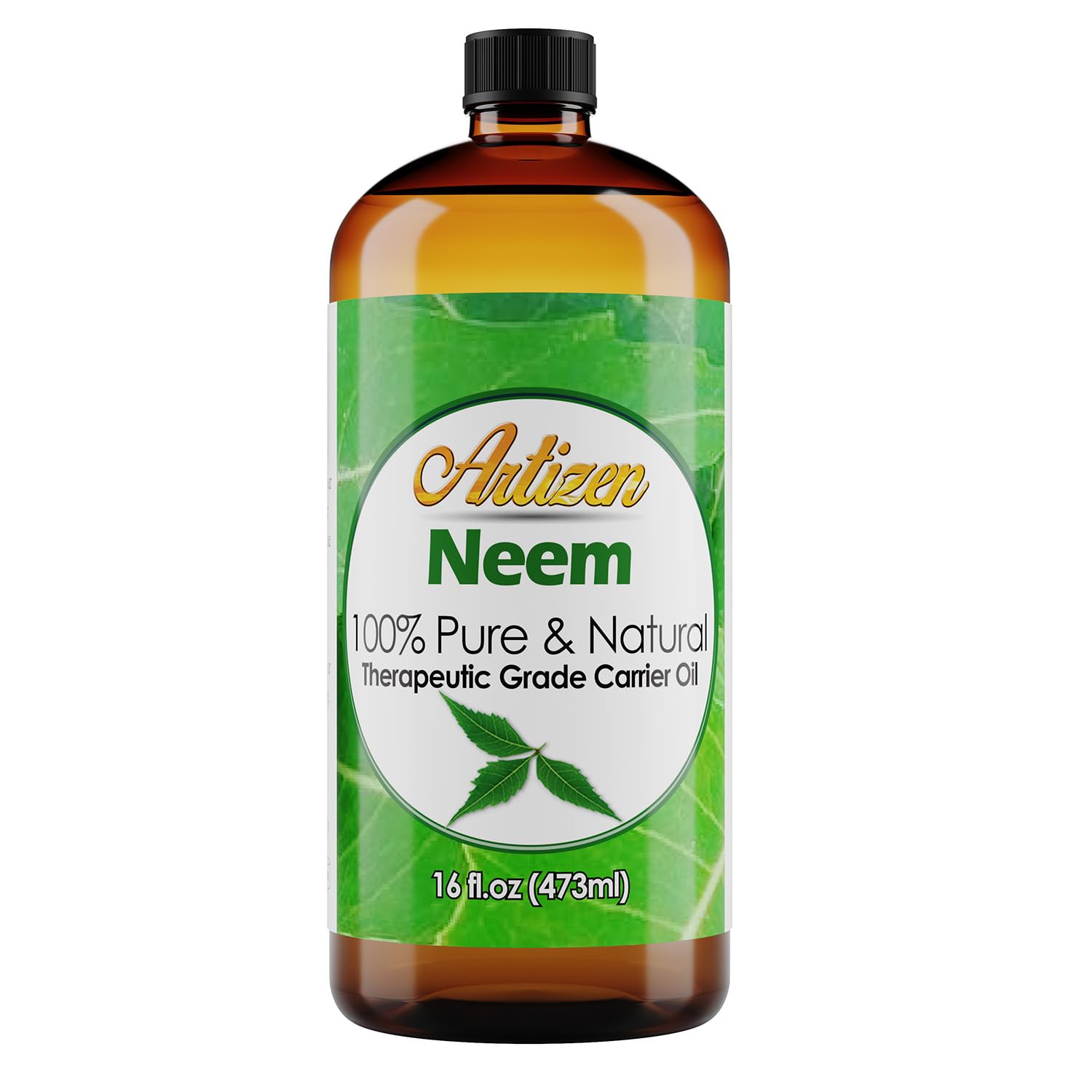
2. Artizen – Neem Oil (16 oz) 100% Pure Cold Pressed
A pure cold-pressed concentrate that turns a single bottle into 32 spray batches
This 16 oz bottle is the value pick because it’s a 100% cold-pressed, unrefined concentrate that stretches into up to 32 spray bottles — perfect for a season of cucumber beetle defense without constant reordering. The maker’s directions are beginner-friendly: mix 1 tablespoon of neem oil with 1 teaspoon of mild dish soap and 2 cups of warm water to make a garden-safe spray you shake well and apply to leaves, soil, and stems. That emulsifier step (the soap) is what blends the oil into water so it coats the beetles instead of beading up.
At 16 oz it’s exactly half the volume of the 32 oz Plantovika option, and it weighs 1.08 pounds to Plantovika’s 2.12 pounds — a convenient size to store and pour. The insecticidal performance gets real praise, with reports of success against fungus gnats and even a kitten’s fleas (“Stopped scratching within 12 hours,” owners mention). The recurring catch is the odor, which comes up as the most-discussed negative; even diluted, the smell is strong, and owners suggest airing plants out 24 to 48 hours before bringing them indoors.
Consistency gets mixed feedback — some find it not greasy while others find it thick — and the oil can separate over time, so shaking well before each use is non-negotiable. If you’re a gardener who also wants one bottle for skin, hair, or pet-adjacent DIYs, this dual-use flexibility adds real value. The overall rating sits near 4.2 stars from a few hundred owners, with effectiveness and quality leading the positive mentions.
The value math
- One 16 oz bottle makes up to 32 spray bottles
- Clear mix ratio: 1 tbsp oil + 1 tsp soap + 2 cups water
- Effectiveness and quality lead the positive reviews.
Handle with care
- Odor is the most-mentioned negative — gloves and ventilation help
- Thick consistency and separation mean shake before every spray
- Owners note it can solidify; warm the bottle first
Your move: grab this if you want a pure, budget-friendly concentrate with a simple DIY spray recipe and don’t mind a strong earthy smell.
Pass if: you’d rather skip mixing entirely and want a ready-to-spray bottle.
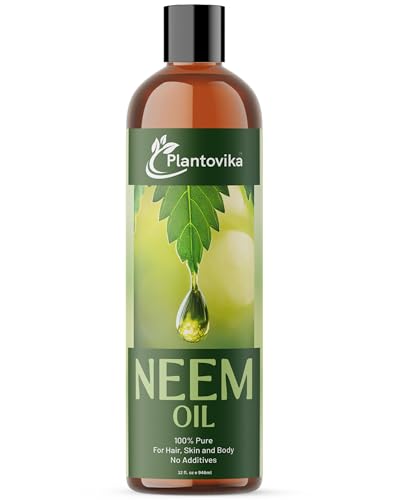
3. Pure Neem Oil (32 Oz) – 100% Cold Pressed Concentrate
Double the oil, double the duty — plants by day, skin and hair by night
This 32 oz jug from Plantovika is the volume play, and the math is simple: it’s two full bottles of the 16 oz Artizen option, so a heavy cucumber beetle season won’t leave you scrambling for a refill. The maker even frames the size as a feature — customers note it’s large enough to last all year, and the most-praised aspect by far is quality, with skin-irritation relief the second most-single-out benefit. It’s a true multi-purpose product: mix 1.5 teaspoons into a quart of water with a few drops of dish soap for your plants, or blend a few drops into lotion or shampoo for your own skin and hair.
For the garden, the 2.12-pound bottle doubles the 1.08-pound Artizen option, and reviews confirm it pulls double duty as a natural insect repellent and a base for homemade pet shampoo. The fragrance is where things get interesting — it’s the most-mentioned trait and it’s split right down the middle, with some owners loving how it makes them smell and others calling it horrific. That’s the unrefined neem reality; you’ll want to mask it with essential oils if you use it on your body.
Plant-friendliness also earns mixed feedback rather than pure praise, which is a fair warning to test any mix on a single leaf before dousing your whole cucumber row. If you want one big bottle that earns its shelf space both in the garden shed and the bathroom cabinet, this is your best bet. It holds a strong 4.6-star average from 600+ owners.
What you buy into
- 32 oz double-bottle volume lasts most gardeners all season
- Quality is the #1 praised aspect, with skin relief second
- Cold-pressed and versatile for plants, skin, hair, and pets
Fragrance warning
- Smell is divisive — some love it, many call it horrific
- Plant-friendliness gets mixed feedback; test first
- Oiliness is a minor but real consideration for skin use
Buy it for: the gardener who wants one large, quality concentrate that also serves skin, hair, and pet-shampoo DIYs.
skip it if: you’re put off by a strong, unpredictable neem scent or you only need a small bottle for a few pots.
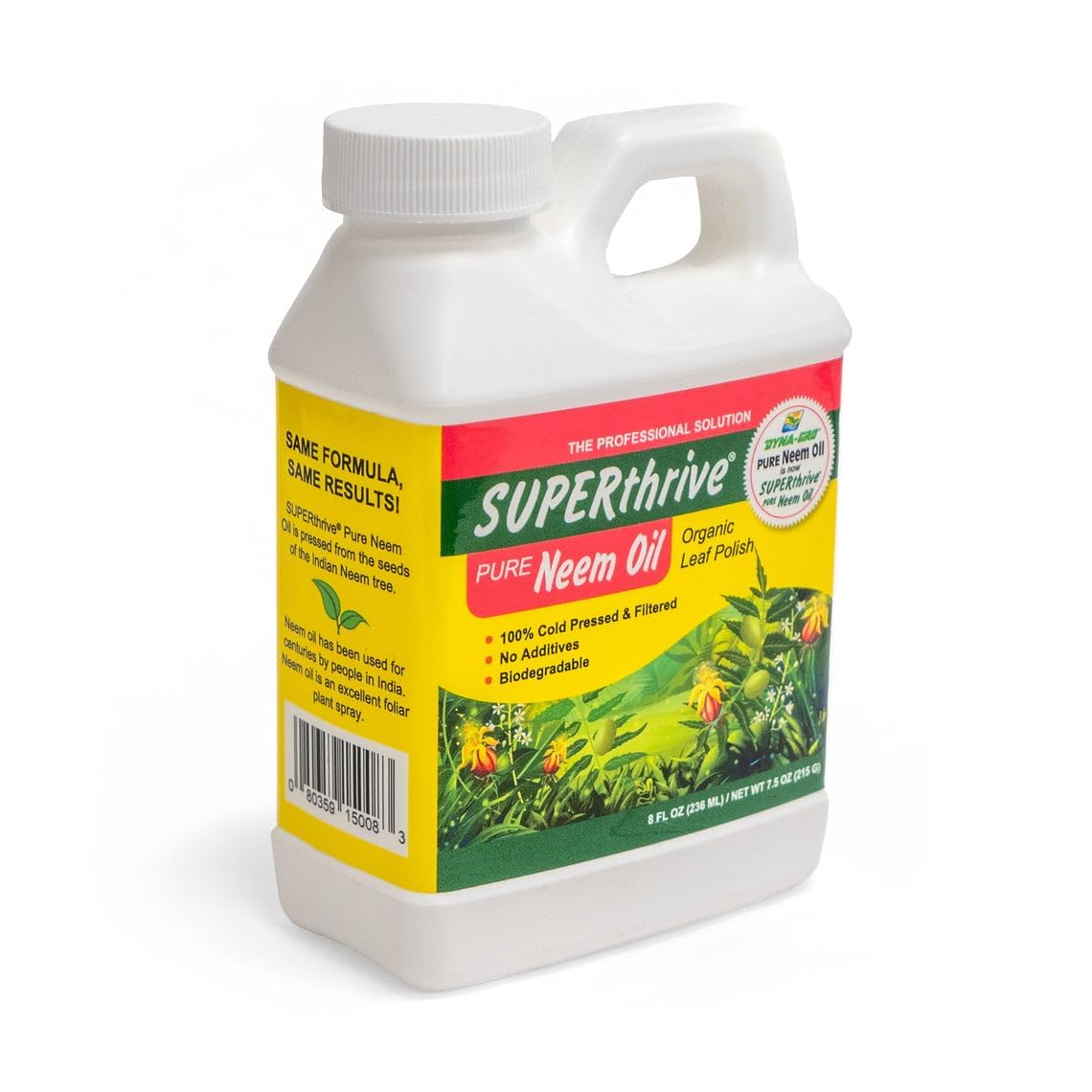
4. Dyna-Gro DYNEM008 8 Oz Pure Neem Oil
A small bottle that guards houseplants and starter cucumbers with serious punch
Don’t let the 8 oz size fool you — this Dyna-Gro concentrate is a proven aphid and gnat assassin, and for a small cucumber patch or a collection of houseplants it’s plenty. The container measures just 3.1 x 1.7 x 4.5 inches, so it tucks into a kitchen cabinet or garden caddy easily, and one capful per spray bottle goes a long way. Buyers describe wiping out an indoor insect swarm entirely and watching gnats die on contact, with the same mix handling aphids and whiteflies on treated plants. The bottle weighs just 5.28 ounces, so it’s the lightest option here by a wide margin.
What stands out in the reviews is the leaf sheen it leaves behind — owners note plants look shiny and dust-free after spraying, which is a visual bonus on top of pest control. Effectiveness and insect resistance are the two most-praised aspects, and the feedback is consistent: mix it with water and a gentle castile soap (like Dr. Bronner’s) rather than a harsh dish detergent, and reapply every couple of weeks to keep the protection going. The scent is pungent, so gloves and old clothes are the standard advice, though the smell does dissipate after drying.
The honest catch is the size — several owners were surprised it’s “about 3×4 inches,” smaller than the photo implies, and it’s built for frequent small-batch mixing rather than one-season bulk spraying. Compared to the 32 oz bottles above, this is the apartment-gardener’s neem, not the market-garden’s. It still earns a strong 4.6-star average from 250+ owners, with effectiveness leading the positive reviews.
Small but mighty
- Effectiveness is the top praised aspect, handling gnats, aphids, and whiteflies.
- Leaves a clean, shiny finish on foliage
- Compact size is easy to store and use for small batches
Size reality check
- 8 oz is the smallest bottle here — fine for pots, short for rows
- Pungent scent means gloves and old clothes
- Pair with gentle castile soap, not harsh dish soap
Select it if: you’re protecting container cucumbers, houseplants, or a modest raised bed and value a potent, easy-to-store concentrate.
Reconsider for: a large in-ground cucumber patch, where the 8 oz size will vanish fast.
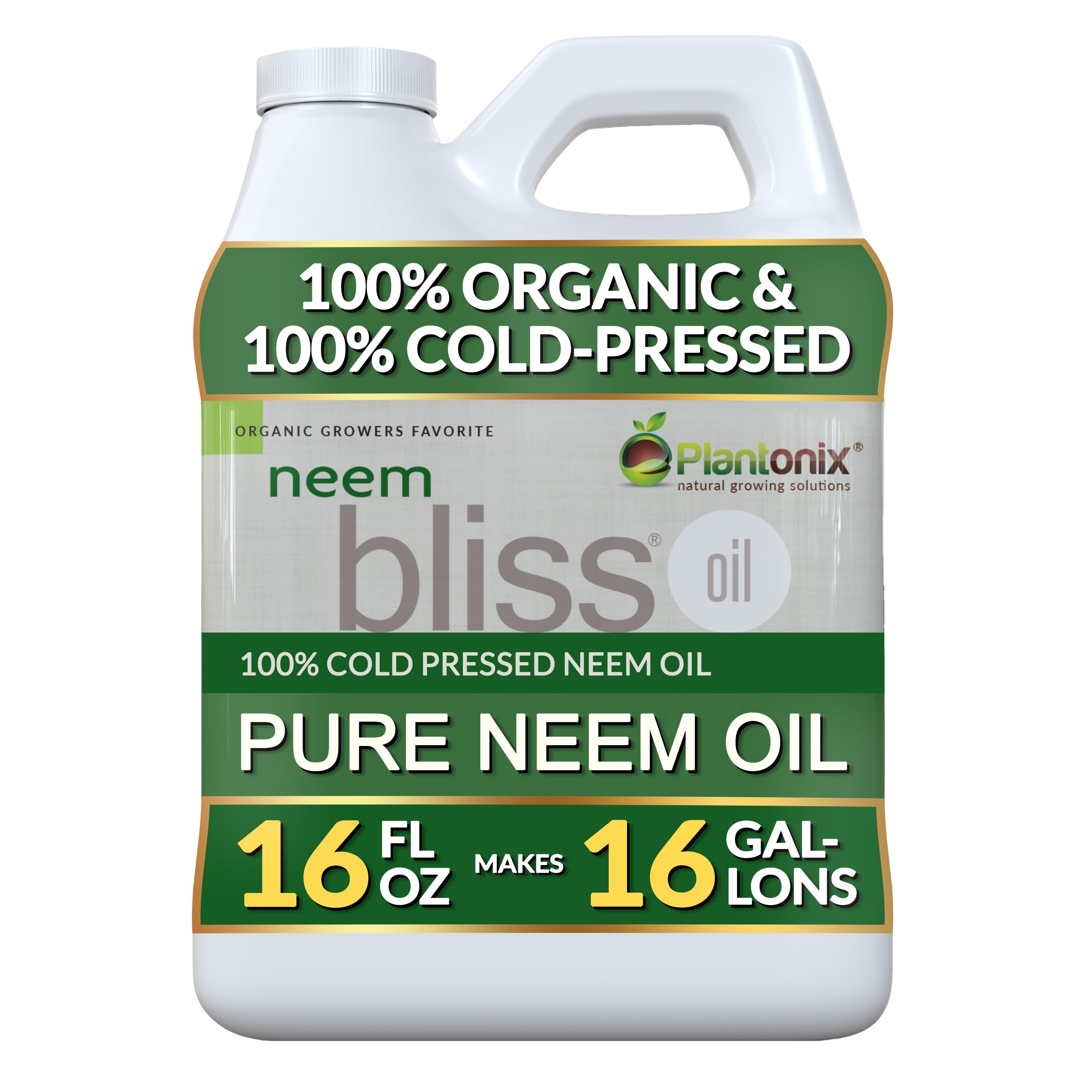
5. Neem Bliss (16 Fl Oz) by Plantonix – 100% Cold Pressed
The heavily-proven beetle buster with thousands of gardeners behind it
Neem Bliss by Plantonix has the deepest credibility — an organic, 100% cold-pressed 16 oz concentrate that’s been battle-tested by the largest owner base in this lineup. The proof is in the pattern: effectiveness is by far the most-praised aspect, with pest control the clear second, and the reviews show repeated wins against aphids, spider mites, scale, and powdery mildew on everything from shrubs to vegetables. One owner’s account of saving euonymus shrubs from severe scale and powdery mildew — spraying 1 oz of neem with 2 teaspoons of soap per gallon every 2-3 nights for two weeks, then weekly — is the kind of real-world recipe that works just as well on cucumber beetles.
It’s sourced from neem seeds in India and cold-pressed to keep more of the oil’s natural nutrients and bioactive compounds, which is why it’s so effective as a deterrent. The organic, additive-free formulation makes it a favorite for organic gardens, and the reviews sum it up: it killed 90% of an aphid infestation on day one with the rest gone by day three, with no plant burns and safety for cats and kids. The scent and consistency are the two most-mentioned gripes — the smell is strong (described like Top Ramen broth) and the pure oil solidifies in cold, so you’ll melt the bottle in hot water before mixing.
Weighing 16 ounces, it matches the Artizen bottle exactly, and it shares the same cold-thickening trait — that’s the signature of an unrefined product. It’s the highest-rated and most-reviewed option in this group, sitting near 4.5 stars, which makes it the safe, crowd-approved choice for a serious beetle season. For cucumber beetles specifically, its repeated application over 2-3 weeks is exactly the cadence the experts recommend.
The proven track record
- Effectiveness is the #1 praised aspect by a wide margin, with pest control second.
- Organic, additive-free, and safe for pets and kids when diluted
- Recorded wins against aphids, spider mites, scale, and mildew
Plan around these
- Strong smell lingers a few days — avoid spraying before guests arrive
- Solidifies in cold; melt in warm water before mixing
- Slight oily residue can settle on nearby surfaces
Pick this for: the gardener who wants the most proven, widely-reviewed neem oil and is willing to warm the bottle and manage the smell.
Look past it if: you want a ready-to-spray bottle with zero mixing, or you’re in a freezing shed without hot water nearby.
6. Botanical Tradesman Neem Oil Spray (Makes 320 Fl Oz)

The ready-to-spray bottle that keeps beetles off when you need instant action
Here’s the play for the gardener who wants to skip the measuring cup entirely: a ready-to-use 3.4 fl oz spray that’s already diluted and bottled with its own sprayer. The maker says this concentrate makes up to 320 fl oz of finished spray, but as sold it’s a grab-and-go bottle for spot treatments. For cucumber beetles specifically, the reviews are direct — reviewers point out the spray “helps to keep the beetles away if you spray every 2 days or so,” which is exactly the reapply-frequently cadence a beetle invasion demands. It saved outdoor plants including a beloved rosemary bush from a mold and fungus infestation.
The organic, cold-pressed-from-Indian-neem-nut formulation keeps it clean for edible gardens, and one citrus grower noted it works great against leaf miners while being nontoxic to kids. The catch is the sticker price per ounce despite the big “makes 320 fl oz” claim — because the oil is thick and not easily mixed with water, some owners found the DIY dilution fussy, and light infestations needed more than one bottle. This is a convenience purchase, not an economy one.
Compared to the concentrates above, this trades value for speed: it’s the smallest format at 3.4 fl oz, and you’ll reorder far sooner than with a 16 or 32 oz jug. But if your cucumber beetles are localized and you want a non-toxic spray in hand today, this earns its place. It averages a solid 4.3 stars from 500+ owners.
The instant option
- Ready-to-spray bottle, no mixing or measuring needed
- Buyers confirm it keeps beetles away with every-2-day sprays
- Organic and nontoxic around kids
Know the limits
- 3.4 fl oz is small; heavy infestations need multiple bottles
- Thick oil can be hard to mix evenly if you dilute further
- Frequent reapplication is mandatory for beetles
Reach for it when: beetles show up mid-season and you want immediate, non-toxic spray action without any prep.
Think twice if: you’re treating a whole row of cucumbers weekly — a concentrate will be far more economical.
7. Monterey 70% Neem Oil Fungicide/Insecticide/Miticide, 16 Fl Oz
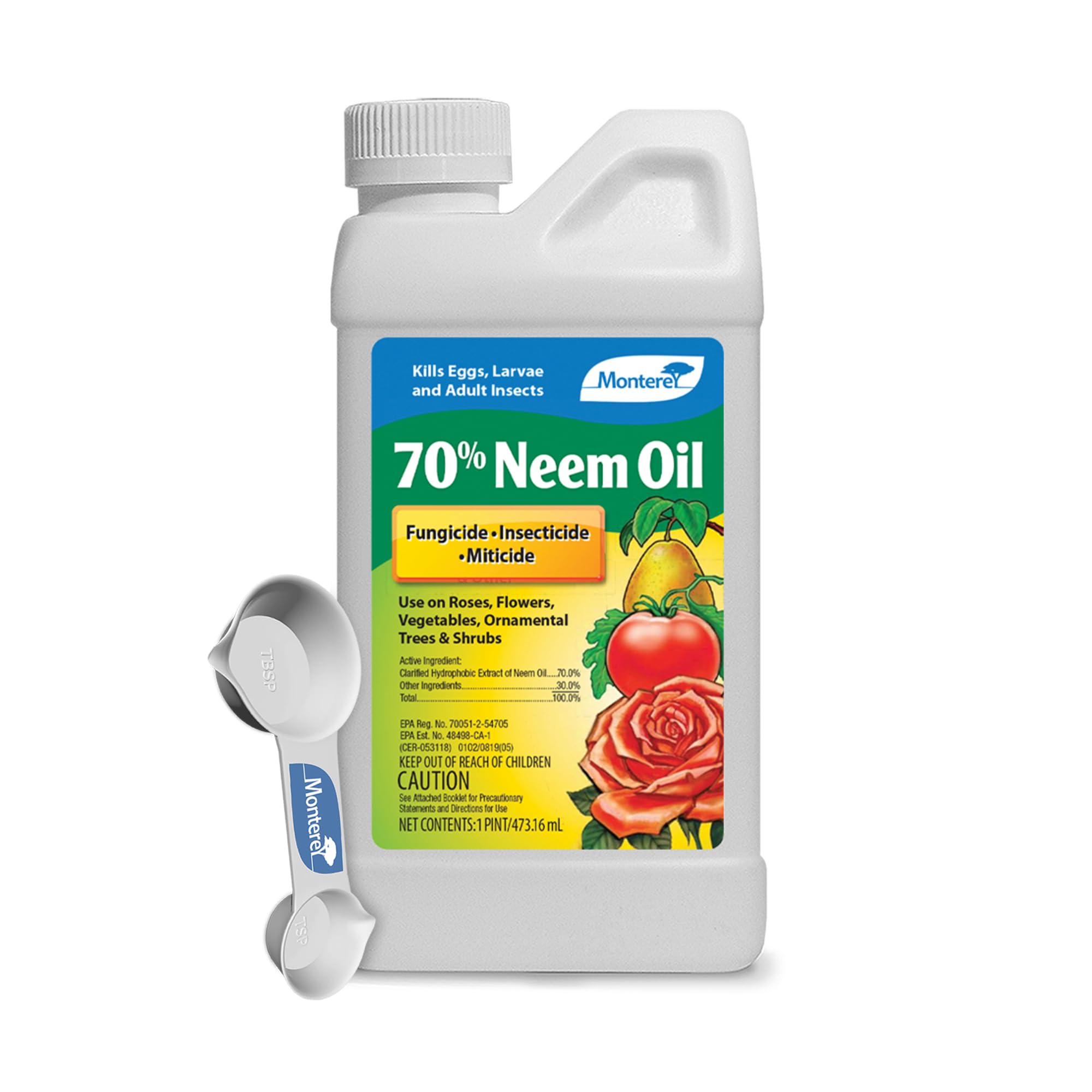
70% clarified neem oil for the gardener who wants maximum punch per drop
This is the highest-concentration option in the lineup, and that 70% clarified hydrophobic neem oil makes it a genuine heavy hitter for a stubborn cucumber beetle problem. It’s a concentrate, so you mix 5 ml per liter of warm water for a weekly spray — and the OMRI Listed certification means it’s fully approved for organic gardening under USDA National Organic Program standards. The reviews back up the strength: shoppers say controlling squash bugs and aphids, knocking out spider mites and sooty mold quickly, and one organic gardener calls it “supremely effective at stopping damage to plants without killing beneficial insects.”
It’s formulated to work as a fungicide, insecticide, and miticide in one, so you’re not just chasing the beetles — you’re also suppressing the black spot, powdery mildew, and rust that often follow an infestation. It’s labeled for outdoor ornamentals, flowers, roses, vegetables, trees, shrubs, and fruit and nut crops, making it among the most versatile labels in this guide. The scent is the recurring negative, which is standard for neem, and the pet-friendly angle gets mixed feedback — one owner found it safe for pets while another noted it’s not suitable for all flowering plants.
One real-world note from the data: overspray damaged an oregano plant, and the owner admitted it was user error for not covering it better. Also, one gardener found it doesn’t work well for flea beetles specifically, and pepper plants don’t love it — so this is a targeted cucumber beetle tool, not a universal fix. At 16 fl oz and 1.08 pounds, it matches the Artizen bottle in size, and it holds a 4.4-star average from 250+ owners with effectiveness leading the praise.
Maximum strength
- 70% neem oil is the highest concentration in this guide
- OMRI Listed for certified organic gardening
- Effectiveness is the #1 praised aspect — squash bugs, aphids, mites
Use it precisely
- Not effective on flea beetles, and pepper plants dislike it
- Overspray can damage sensitive herbs — cover what you don’t want hit
- Smell is the common complaint
Choose it for: a serious cucumber beetle infestation where you want the strongest organic-strength concentrate that’s also labeled for fruits and vegetables.
Pass on it if: you’re specifically fighting flea beetles or growing peppers alongside your cucumbers.
8. Garden Safe Brand Fungicide3 with Neem Oil, 1 Gal
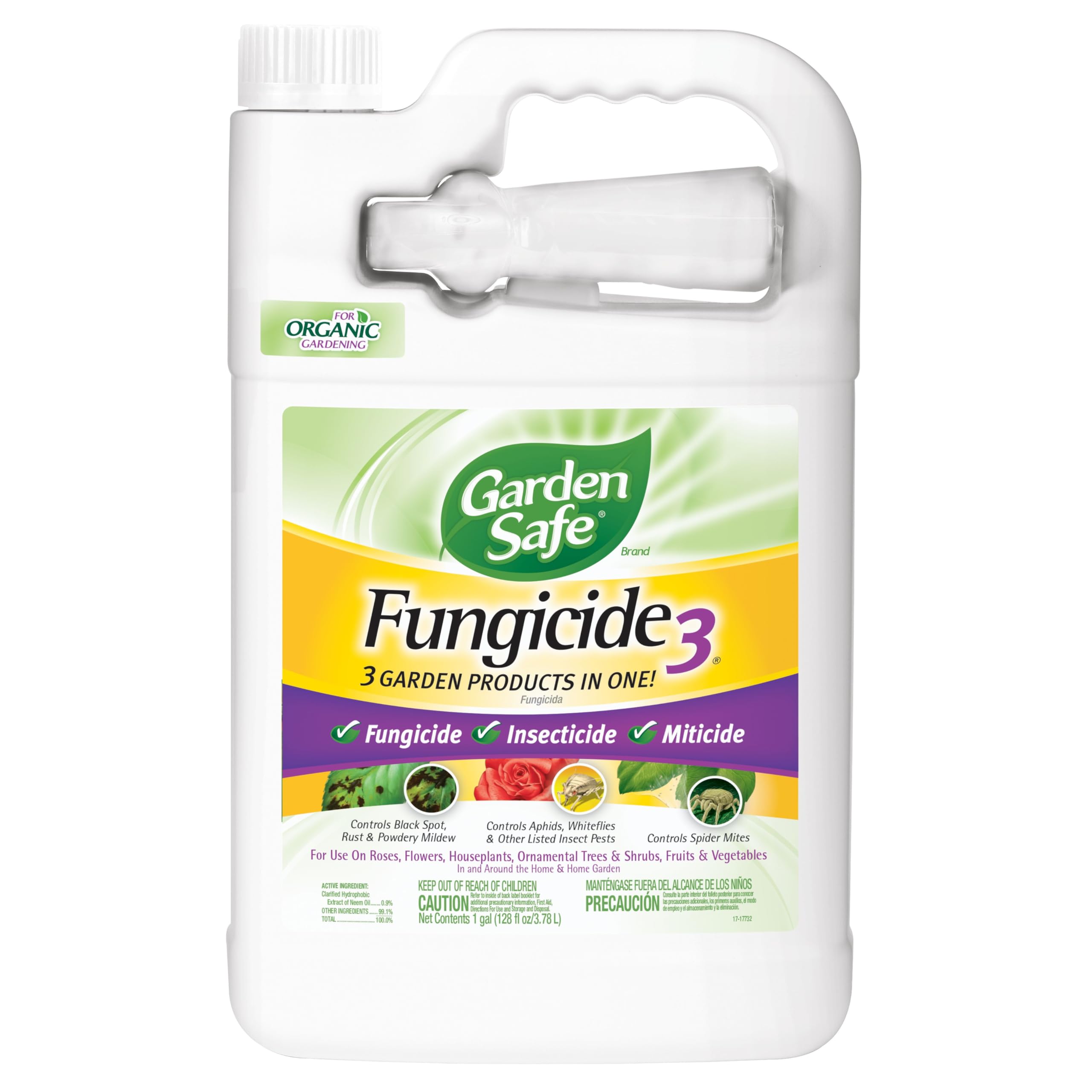
A full gallon of ready-to-spray neem with the applicator built in
The organic-friendly angle is a big draw — it’s made for use in and around the home garden on roses, flowers, houseplants, ornamental trees and shrubs, and fruits and vegetables. That EPA-approved label (the product meets EPA specifications) gives you a clear regulatory green light for edible crops. The honest trade-offs are real: the sprayer itself gets consistent criticism, with owners describing a coiled hose that only reaches about 4 inches and a spout that clogs, plus one report that it doesn’t kill squash bugs or grubs. The product works; the hardware is the weak link.
Compared to the concentrates earlier, you’re paying for convenience and volume here — 128 fl oz dwarfs the 16 oz bottles, so it’s built for repeated weekly spraying across a big garden without refilling. But because it’s pre-diluted, you can’t stretch it the way you can a concentrate. It averages a solid 4.3 stars from 850+ owners, with “works” and “good value” themes recurring throughout.
Built for volume
- 128 fl oz ready-to-use formula covers large gardens for weeks
- Attached sprayer means zero mixing or measuring
- EPA-spec product, safe on fruits and vegetables
Gear caveats
- Sprayer design draws complaints — short hose, clog-prone spout
- Doesn’t eliminate squash bugs or grubs
- Pre-diluted, so you can’t stretch it like a concentrate
Buy it if: you want a large, grab-and-go volume of neem protection and don’t mind upgrading the sprayer attachment.
Skip it for: precise spot spraying or if you prefer mixing your own stronger concentrate.
9. SUPERthrive Organic Pure Neem Oil, Cold-Pressed Concentrate, 32 oz
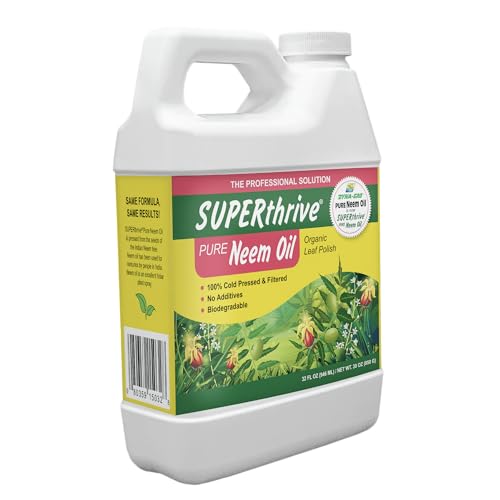
The premium, OMRI-listed concentrate that doubles as a leaf polish
This is the premium end of the lineup, and the label tells you exactly where the money goes: a 32 oz bottle of OMRI-listed, organic, cold-pressed neem oil that’s pressed from Indian neem tree seeds and marked biodegradable. It’s positioned as a leaf polish or foliar spray, and the reviews show it doing double duty — buyers report eliminating aphids on vegetables, roses, salvia, and crepe myrtle after just two applications, and one even credits it with reducing deer damage. The leaf shine is a genuine selling point: owners mention the “beautiful appearance” of treated plants and shrubs, which is a nice bonus beyond beetle control.
It’s the Dyna-Gro brand (the same company behind the compact DYNEM008), but at 32 oz and 1.5 pounds it’s a much bigger, garden-scale bottle. The manufacturer is explicit about how to use it: a mild dishwashing soap is required to emulsify the oil so it can be sprayed, and you should never apply it in direct sunlight. Effectiveness leads the praise by far, insect control is second, and “only brand I buy” recurs in top reviews. Cost-effectiveness is a recurring note for large yards because the concentrate stretches so far.
The catch is the same one that follows every unrefined neem: a strong, nutty smell that owners describe as persistent, plus the fact that the concentrated oil can irritate skin if you handle it bare-handed. It’s thick and hydrophobic, so the mixing step matters — experienced owners recommend an emulsifier like castile soap and a measuring cup for consistency. At a 4.6-star average from 600+ owners, it’s among the highest-rated here, and if you want a premium, garden-scale bottle that also polishes leaves to a shine, this is the one.
The premium edge
- OMRI-listed and biodegradable for organic gardens
- Effectiveness is the #1 praised aspect, insect control second
- Leaves a healthy shine on foliage as a bonus
Premium quirks
- Strong nutty smell lingers; odor draws mixed feedback
- Requires soap emulsifier and careful mixing
- Concentrate may irritate skin — wear gloves
Splash out for: a large, premium OMRI-listed concentrate that protects beetles while leaving your plants polished and shining.
Choose cheaper if: the smell matters to you or you’d rather not fuss with emulsifiers and measuring.
Understanding the Specs
Cold-Pressed and Unrefined
Cold-pressing means the neem seeds were pressed without heat, which preserves more of the azadirachtin — the natural compound that makes beetles stop feeding, molt incorrectly, and die. Unrefined oil keeps this potency but it’s thicker and can solidify in cool storage; just warm the bottle in hot water to return it to liquid.
The Emulsifier Step
Neem oil and water don’t mix on their own — that’s why every label tells you to add a few drops of mild dish soap or castile soap. The soap emulsifies (blends) the oil into the water so your spray coats leaves evenly instead of beading into oily spots that miss the beetles.
FAQ
How do I mix neem oil for cucumber beetles?
Will neem oil kill cucumber beetles on contact?
Can I spray neem oil on cucumber plants in the sun?
Is neem oil safe for bees and other pollinators?
Why does my neem oil get thick or solidify?
Is a ready-to-use spray or a concentrate better for cucumber beetles?
How often should I reapply neem oil to control cucumber beetles?
What does OMRI Listed mean for neem oil?
Final Thoughts: The Verdict
For most gardeners, the neem oil for cucumber beetles winner is the Bonide Neem Oil Concentrate because it pairs proven effectiveness against both insects and fungus with a strong 4.6-star average from 800+ owners — a one-bottle answer to the beetle-and-mildew problem. If you want the most battle-tested organic option, grab the Neem Bliss by Plantonix, the crowd favorite with thousands behind it. And for instant, no-mix relief when beetles show up fast, the Botanical Tradesman spray is the one to reach for.
How We Picked
We do not accept paid placement. Every pick is matched to a real buyer and a real use-case; we do not hands-on test units.
Sources & Methodology
Specifications: manufacturer listings and product documentation. Review insights: verified customer reviews, as of August 2026. Pricing: not shown on this page (it changes often); check the current price via the retailer link.
As an Amazon Associate, Lawn Gear Lab earns from qualifying purchases. This does not affect which products we feature.