
Specs are compiled from manufacturer listings and verified buyer reviews and can change over time — please confirm the key details on the product page before buying.
Choosing the right bulb food is the single biggest decision you’ll make for your lilies this season. Get the ratio wrong, and you’ll be staring at lush green leaves with zero flowers, wondering where you went astray. This guide cuts through the fertilizer aisle confusion to match you with the exact formula your bulbs need to put on a show.
I’m Rikta — the founder and writer behind Lawn Gear Lab. This guide is built by comparing the manufacturers’ published specifications and the patterns across verified customer reviews, so you get each pick’s real strengths and trade-offs instead of marketing spin.
If you want lilies that come back bigger and brighter every year, the right lily bulb food makes the difference. This guide cuts through the choices so you can pick the one that fits your garden and your routine.
Our Picks at a Glance


How To Choose The Best Lily Bulb Food
Bulb food isn’t a one-size-fits-all purchase. The right choice depends on whether you’re planting new bulbs in the ground, feeding established perennials, or nurturing aquatic varieties in a pond. Understanding the role of each nutrient is the first step to a garden full of flowers.
N-P-K Ratio: The Secret Code on the Bag
Every fertilizer label shows three numbers, like 4-10-10, which stand for Nitrogen (N), Phosphorus (P), and Potassium (K). Nitrogen fuels leafy, green growth. Phosphorus is the star for root development and those vibrant, abundant blooms you crave. Potassium supports overall plant health and disease resistance. For flowering bulbs like lilies, you want a formula where the middle number (Phosphorus) is higher than the first (Nitrogen), so the plant’s energy goes into flowers, not just foliage.
Granular vs. Liquid vs. Tablet
The form of the fertilizer dictates how you apply it and how fast it works. Granular formulas are the classic choice; you mix them into the soil at planting time or scratch them into the surface for established plants, and they release nutrients slowly. Liquid feeds, like those for aquatic plants, are diluted with water and absorbed quickly for a fast boost, though they may need more frequent application. Tablet forms are designed to be pushed directly into the soil or pond substrate, offering a controlled, mess-free release of nutrients right at the root zone.
Synthetic vs. Organic Ingredients
Synthetic fertilizers offer precise, immediately available nutrient ratios, often giving quick visual results. Organic options, like those made with bone meal or composted manure, release nutrients as the soil microbes break them down, improving soil structure over time. If you’re gardening with a focus on sustainability and soil health, look for labels that specify “organic” or “OMRI Listed,” which certifies the product meets organic standards.
Quick Comparison
| Model | Best For | N-P-K Ratio | Form | Size | Amazon |
|---|---|---|---|---|---|
| Espoma Organic Bulb-Tone (4 lb)★ Best Overall | Overall Versatility & Organic Gardening | 3-5-3 | Granules | 4 lb | Amazon |
| Lotus Fertilizer LiquidSpecialist Pick | Quick Aquatic Plant Boost | 1:0:0 | Liquid | 8 oz | Amazon |
| Dr. Earth Bulb FertilizerSoil Builder | Large-Scale Soil Improvement | 3:14:2 | Powder | 4 lb | Amazon |
| Lilly Miller Bulb & Bloom Food | Maximum Bloom Color | 4:10:10 | Powder | 4 lb | Amazon |
| Jobe’s Organics Granular | USDA Organic Certified Feeding | 3-5-4 | Granules | 4 lb | Amazon |
| Cz Garden 4-10-10 | Premium Versatility & Resealable Storage | 4:10:10 | Granules | 4 lb | Amazon |
| Fertilome Dutch Bulb Food | Trusted Root Development | — | Granules | 4.1 lb | Amazon |
| Espoma Bulb-Tone (18 lb) | Big Gardens & Best Value per Pound | 3:5:3 | Granules | 18 lb | Amazon |
| CrystalClear Thrive Tablets | Pond Lilies & Lotus Feeding | 10:14:8 | Tablets | 200 Count | Amazon |
In‑Depth Reviews
1. Espoma Organic Bulb-Tone 3-5-3 (4 lb)
Our pick — over 4.5★ from 350+ verified ratings; the strongest balance of quality and price.
The crowd-pleasing organic granules that make new bulbs thrive with zero mixing.
Espoma Bulb-Tone is the definition of low-maintenance planting. You simply toss a scoop into the planting hole for new bulbs or sprinkle it on the soil surface for established ones, then water it in—the 3-5-3 analysis with 6% Calcium does the rest. Because it’s a granular, slow-release feed, you won’t be mixing liquids or worrying about burning tender new roots, making it the easiest path to a vibrant spring display.
The effectiveness here is what wins people over, with owners consistently reporting that newly planted bulbs are “thriving” and producing large, blemish-free blooms. It’s a formula that clearly prioritizes flower and root development over excessive leaf growth, which is exactly what you want from a bulb food. As a registered Organic Input Material, it’s also a safe bet for anyone committed to organic gardening practices, and it comes from a company that’s been leading in natural organics since 1929.
Compared to the liquid Lotus Fertilizer which focuses on a quick 1:0:0 boost, Espoma’s balanced 3-5-3 granular offers a more comprehensive, long-term feeding strategy. The bag is a standard 4-pound size, ideal for the average home garden bed.
Why It Wins
- Approved for organic gardening, free of sludges and toxic ingredients
- Simple, no-mix application for planting or top-dressing
- High Phosphorus (5) and Potassium (3) for strong roots and vivid blooms
Trade-offs
- Requires thorough watering after application to activate
- Granular form may be slower to show results than liquids
The one to beat: This is the pick for planting day if you want a simple, organic-friendly feed that won’t burn your bulbs.
Look elsewhere if: You need an immediate nutrient hit for potted plants, where a liquid might act faster.
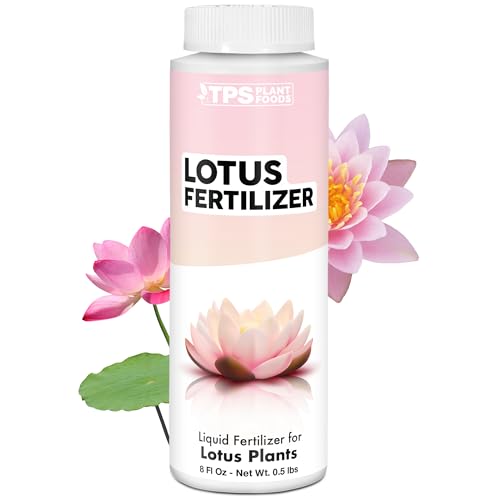
2. Lotus Fertilizer – Fish Safe Liquid Plant Food (8 oz)
A liquid boost formulated to revive wilty aquatic plants in a matter of days.
This 8-ounce liquid concentrate is the specialized solution for water gardens, designed specifically for lotus and aquatic plants. It’s a targeted formula with a 1:0:0 mixing ratio that prioritizes healthy foliage and steady development in the unique environment of a pond or water container. The beauty of a liquid feed is its speed—it’s absorbed quickly, making it perfect for giving struggling plants a fast pick-me-up.
What owners love most is its effectiveness at reviving tired plants, with reports of wilty lotus perking up within days of the first dose. The dosing is surprisingly economical—a tiny 1 tsp per quart of pond water—meaning that small bottle stretches a long way. It’s also a fish-safe product, which is a non-negotiable requirement for any pond owner with a stocked water garden, and it’s manufactured here in the USA.
The honest trade-off is that while it excels at plant strength and leaf growth, bloom production can be inconsistent, with some owners noting they saw no flowers after several applications. If you’re seeking a reliable bloom inducer, you might find this formula better as a general health tonic. Compared to the Espoma Bulb-Tone granular approach for soil, this is a different tool for a completely different—and very specific—growing environment.
Strengths
- Provides a rapid, visible boost to aquatic plant health
- Fish-safe formula ideal for ponds with koi or goldfish
- Highly concentrated, so the 8 oz bottle lasts through many doses
Consider This
- Results for actual blooming can be hit-or-miss for some species
- Liquid form needs careful measuring and dilution before use
Your aquatic health tonic: This is the fix for water lilies and lotus that look peaked, not necessarily those failing to flower.
Think twice if: Your main goal is forcing more blooms, as results there are less predictable.
3. Dr. Earth 700P Organic Bulb Fertilizer (4 lb)
The hand-crafted organic blend that powers over 200 bulbs from a single bag.
Dr. Earth takes a soil-first approach to bulb feeding. This 4-pound bag is a 100% organic and natural hand-crafted blend with a target pH of 6.5, meaning it doesn’t just dump nutrients on your plants—it actively works to improve the soil structure they grow in. It’s formulated to feed both in the short term and over the long haul, releasing nutrients as the soil biology breaks down the organic matter.
The proof is in the planting stories, with owners reporting they’ve “worked hard planting over 200 tulip and daffodil bulbs” and that a single bag was “enough for that many bulbs,” even in poor, windy, and cold conditions. The results speak to its potency and coverage. It’s not just about flowers either; the blend is also praised for increasing bulb multiplication, with gardeners digging up bulbs in spring to find one or two additional new bulbs attached to each original.
This feed uses an N-P-K ratio of 3:14:2 (nitrogen, phosphorus, and potassium), giving it the second-highest phosphorus level in our lineup, just behind Lilly Miller’s 4-10-10. That phosphorus boost is what fuels strong roots and, according to the brand, “bigger, more abundant blooms naturally.” The powder can get a little dusty when you sprinkle it, but it’s safe around people and pets, so it’s a solid pick for family gardens.
Garden workhorse: This is a high-coverage organic option that doubles as a soil amendment, a rare two-for-one in the fertilizer aisle.
Smart alternative: If Espoma is sold out, this is the closest organic equivalent for sheer planting volume.
4. Lilly Miller Bulb & Bloom Food 4-10-10 (4 lb)

The phosphorus-heavy formula known to make neighbors notice the mass of flowers.
When your only goal is a jaw-dropping display of color, Lilly Miller’s 4-10-10 Bulb & Bloom Food is engineered for exactly that. The combination of a high phosphorus (10) and potassium (10) content is explicitly designed to give “bright, vigorous blooms,” pouring the plant’s energy into flower production rather than just leaves. It’s a slow-release granular powder, meaning you apply it less often and let it feed your bulbs steadily.
Reviews consistently highlight its effectiveness on a range of flowering plants, from amaryllis to clematis, peonies, and lilies. Buyers report it’s the “best for dahlias” and that the blooms it produces are so abundant their neighbors take notice. The formula is prized for promoting vigorous growth and is a favorite for putting a garden to bed in the fall, acting as the key booster for the next season.
The one detail every buyer should know: this product contains bone meal, which can attract pets and rodents. The manufacturer recommends storing the resealable bag securely, and gardeners in critter-heavy zones should factor that in. But for sheer flower power, it’s a top contender.
Flower power specialist: Choose this when you want maximum visual impact and have already addressed any rodent concerns in your yard.
Feed schedule: Best applied in spring and fall to support both the bloom cycle and root storage.
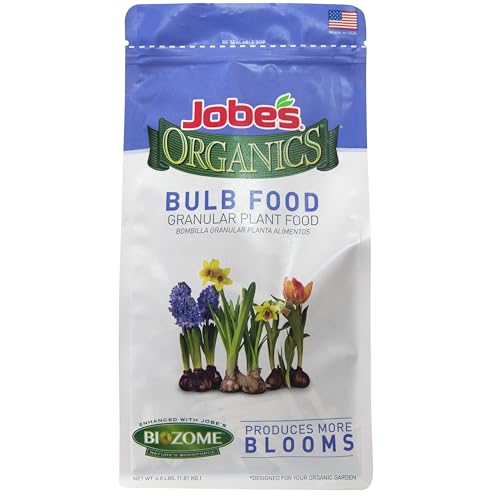
5. Jobe’s Organics Granular Bulb Fertilizer (4 lbs)
A USDA-certified organic granular that keeps feeding simple, scheduled, and mess-free.
Jobe’s Organics delivers a certified organic option that doesn’t skimp on results. This 4-pound bag of granules is OMRI listed for organic gardening by the USDA, meeting the strictest standards for natural input. The 3-5-4 NPK formula is balanced to create “abundant blooms” and “vibrant leaves,” and its granular form is produced to avoid wasteful runoff, mess, hazards, and smells.
Gardeners praise its effectiveness with lilies and dahlias, reporting flowers produce many blooms. The application schedule is forgiving too—simply feed every 3-5 weeks during the blooming season. Owners specifically highlight the “lower dust and easier application than most” granulars, and the formula is primarily bone meal, a natural and effective phosphorus source for flowering plants.
No organic product is without its quirks, and the recurring note here is the odor. The smell is often compared to chicken manure and can linger on hands after application, with some suggesting using it on rainy days to mask the scent. It’s a fair trade-off for a certified organic feed that works, but it’s worth knowing before you open the bag.
The Upside
- OMRI Listed and USDA certified for strict organic gardening
- Pellets produce less dust than typical powder fertilizers
- Simple 3-5 week feeding schedule for consistent results
The Downside
- The scent is notably pungent and can stick to your hands
- May need multiple applications per season to maintain vigor
Certifiably green: This is your pick if holding a USDA Organic certification is non-negotiable.
Be prepared for: A strong, earthy smell at application time—gloves are a must.
6. Cz Garden 4-10-10 Bulb and Bloom Fertilizer (4 lb)

A premium, low-nitrogen granular boosted with iron to green up foliage while it pushes blooms.
This Cz Garden Supply blend is a bit of a secret weapon for gardeners who want it all. The 4-10-10 ratio is nearly identical to Lilly Miller’s, giving you that same bloom-boosting phosphorus, but it adds an extra 2% iron and micronutrients. This means your plant’s leaves stay a healthy, rich green while the plant’s energy is still directed toward producing prolific flowers—a combination that makes for a stunning overall display.
Owners mention remarkable turnarounds, like transplanted peonies that “weren’t getting many blooms” becoming “taller, fuller, and significantly more buds after use” following two years of disappointing performance. It’s also a hit with dahlias, perennials, and even houseplants like spider plants and ferns, showcasing true versatility. This isn’t just a bulb food; it’s a general-purpose flower garden food that says it handles “flower bulbs, indoor/outdoor flowers, lawn, and garden vegetables.”
The premium presentation extends to the packaging—a 4LB heavy duty resealable pouch makes pouring and storing a breeze, a small but meaningful upgrade over flimsy bags. If you’re looking for a single, high-quality product to feed a varied garden, this is a compelling choice.
What Stands Out
- Added iron prevents yellowing while high phosphorus drives flowers
- Effective across bulbs, perennials, and indoor plants
- Practical, heavy-duty resealable pouch for easy storage
Keep In Mind
- May be more product than needed for a small single bed
- Results are visible, but not necessarily faster than competitive granulars
Versatility winner: Grab this to feed a mixed garden of bulbs, perennials, and planters from one bag.
Not the pick for: Pure aquatic or pond use—stick to the tablets or liquid for that.
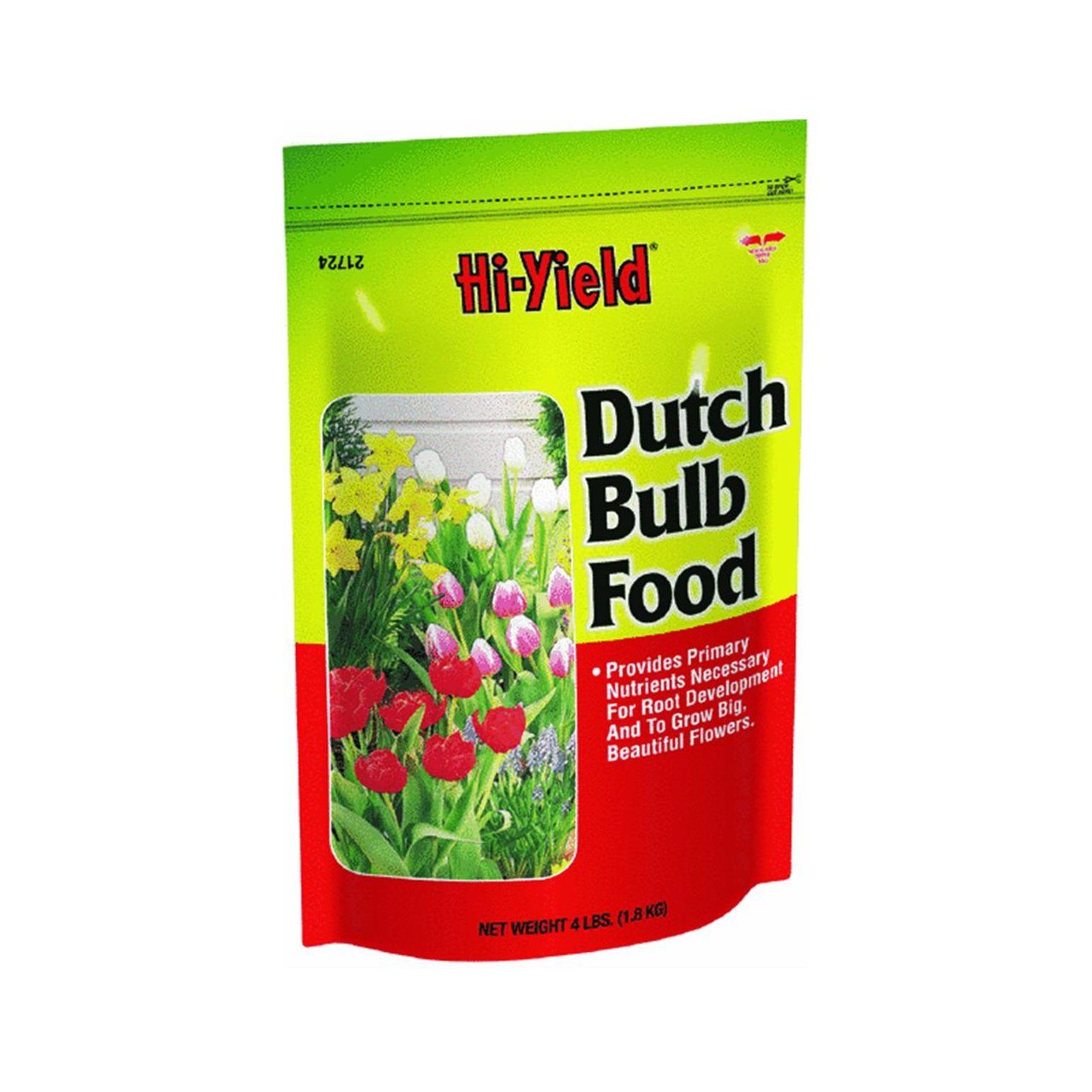
7. Fertilome Dutch Bulb Food (4-Pound)
The exact granular formula wholesale bulb suppliers trust for proper root development.
Sometimes the best recommendation comes from the experts, and this Fertilome blend is “the food our wholesale bulb supplier sells,” according to one experienced gardener. It’s specifically designed to work with all types of flowering bulbs at planting time, delivering the necessary nutrients for proper root development right when those roots are first forming. This targeted approach sets the stage for a healthy plant that can support a heavy bloom load later.
What makes this pick stand out is its incredible efficiency. The directions call for surprisingly small amounts—just 3/4 cup per 10 sq. ft for new plantings—and owners note that “half the bag did all my bulbs.” This makes the higher upfront cost a non-issue, as the value-per-application is exceptional. It’s a granular formula that’s simply “easy to apply,” especially when you’re planting a large number of bulbs at once.
The honest note is that the label doesn’t list a specific N-P-K ratio, so you’re trusting the proven formulation rather than nerding out on numbers. For many, that’s a perfectly fine trade-off for a product with such a strong professional pedigree.
Trust the pro: This is the one to choose if you want the same food commercial growers use, with a little going a long way.
Why it’s here: The upfront price looks higher, but because you use so little per square foot, it stretches further than most—making it a budget-friendly choice for large planting beds.
8. Espoma Organic Bulb-Tone 3-5-3 (18 lb)

The exact same award-winning Bulb-Tone formula, scaled up for expansive gardens and repeated plantings.
This is the big brother to our Best Overall pick, and it’s for the gardener who measures their beds in square feet, not inches. It contains the identical 3-5-3 fertilizer analysis with 6% Calcium, enhanced with the same exclusive Bio-tone formula, just in a massive 18-pound bag. If you know the 4 lb version works for your garden, this size simply eliminates the need to reorder mid-season.
Owners who buy this larger bag rave about the value and the results. It’s known to “kick start” irises that haven’t bloomed in three years and to turn “nothing but green foliage for years” into a garden full of blossoms for the first time. The effectiveness (33) tops the list of what customers praise most, followed closely by its value for money (15). It works on daffodils, tulips, and “all plants,” making it a versatile staple.
Weighing in at 18 pounds, this is a significant bag of organic goodness. The only complaint mirrors the smaller size—it has a strong, earthy odor that some find unpleasant, though most agree “it is worth it” for the floral payoff. For a multi-bed garden or neighborhood planting project, this is the smart, economical buy.
Big Bag Benefits
- Substantially better value per pound for extensive planting
- Proven formula for reviving long-dormant bulbs
- Still approved for organic gardening and ready-to-use
Before You Buy
- Heavy bag requires sturdy storage and a dry place
- The natural odor is present and can be noticeable
For the dedicated gardener: Choose this size if you’re planting bulbs across several beds or know you’ll feed repeatedly.
skip it if: You only have a small window box—the smaller 4 lb bag is a better fit.
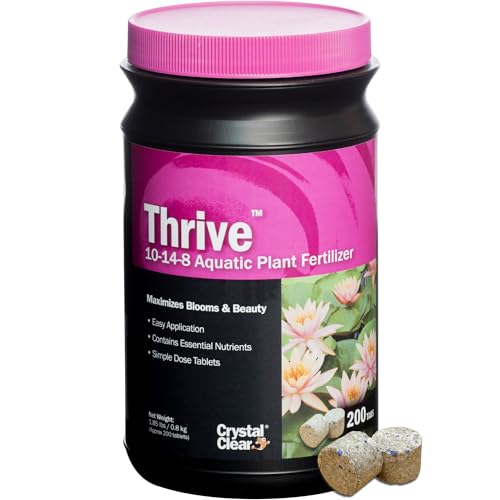
9. CrystalClear Thrive Pond Plant Food Tablets (200 Count)
A simple push-and-feed tablet that turns struggling pond lilies into vigorous bloomers.
Water gardening has a unique set of challenges, and CrystalClear Thrive is engineered to meet them head-on. This is not a soil fertilizer; it’s a 200-count container of tablets designed specifically for aquatic environments. The blend boasts a potent 10% nitrogen, 14% phosphate, and 8% potash mix to grow better pond plants, supporting root development and beautiful flowers without muddying your water.
The application is brilliantly simple: just push a tablet into the aquatic potting soil. No mixing, no measuring cups—just “one tablet. No brainer.” The results are fast and dramatic, with water lilies that have “never looked this good” blooming multiple times within a three-week period. It’s completely safe for fish, including koi, goldfish, frogs, and snails, which is the #1 concern for any pond owner. Customers note the water stays clear and their plants are “VERY happy now.”
The recurring note about durability is a fair one—the tablets can crumble and cause some foam in the pond. Also, the dosing math is something to watch: a large lotus needs 4 tablets per feeding, so while the 200 count sounds massive, it can deplete faster than you’d think for a big water garden. But for the dramatic improvement it brings to pond life, it’s a winner.
Why It Works
- Safe for all aquatic life including koi, frogs, and snails
- Push-in tablet design is ultra-convenient, no mixing
- Provides a strong 10:14:8 nutrient boost for rapid blooming
Watch Out For
- Tablets can be crumbly and may create surface foam
- Large lotus plants consume tablets quickly (4 per feeding)
Your pond’s best friend: This is the definitive choice for any water lily or lotus owner wanting dramatic, safe results.
Reconsider if: Your water garden is tiny, as the larger tablet count and feeding rate may be overkill.
Understanding the Specs
The N-P-K Ratio
This is the three-number code on every fertilizer label, standing for Nitrogen, Phosphorus, and Potassium. For bulb food, the middle number (Phosphorus) is the most important because it’s the nutrient responsible for root development and flower formation. A ratio like 4-10-10, with a high middle number, tells the plant to prioritize blooms over leaf growth.
Granular vs. Liquid vs. Tablet
This determines how you apply the food and how quickly it works. Granulars are mixed into the soil and release nutrients slowly over weeks, needing fewer applications. Liquids are diluted with water and absorbed fast, offering a quick boost but requiring more frequent feeding. Tablets are pushed into the soil or pond substrate for a controlled, targeted release directly at the roots.
FAQ
What is the best N-P-K ratio for lily bulbs?
Should I use granular or liquid fertilizer for my lilies?
Is organic bulb food better than synthetic?
How often should I feed my lily bulbs?
Can I use regular plant food on my lily bulbs?
Will bulb food attract animals like rodents?
What is the difference between a liquid and tablet fertilizer for ponds?
Can I use bulb food on other plants in my garden?
Why are my lilies growing leaves but no flowers?
How much bulb food should I use per square foot?
Final Thoughts: The Verdict
For most gardeners, the lily bulb food winner is the Espoma Organic Bulb-Tone because it pairs organic certification with proven, easy results for new and established bulbs alike. If you want to boost sheer flower output, grab the Lilly Miller Bulb & Bloom Food. And for your pond lilies, the CrystalClear Thrive tablets are the ones to reach for.
How We Picked
We do not accept paid placement. Every pick is matched to a real buyer and a real use-case; we do not hands-on test units.
Sources & Methodology
Specifications: manufacturer listings and product documentation. Review insights: verified customer reviews, as of August 2026. Pricing: not shown on this page (it changes often); check the current price via the retailer link.
As an Amazon Associate, Lawn Gear Lab earns from qualifying purchases. This does not affect which products we feature.