
Specs are compiled from manufacturer listings and verified buyer reviews and can change over time — please confirm the key details on the product page before buying.
Dyed mulch promises a rich, uniform color, but it often fades, stains, and adds nothing back to your soil. Natural color mulch skips the artificial pigments entirely, giving you a grounded brown or tan that breaks down and feeds your garden rather than just sitting on top of it. The real question is which natural material — jute felt, wheat straw, cedar, aspen, or coconut coir — actually fits the way you garden.
I’m Rikta — the founder and writer behind Lawn Gear Lab. This guide is built by comparing the manufacturers’ published specifications and the patterns across verified customer reviews, so you get each pick’s real strengths and trade-offs instead of marketing spin.
From moisture-holding jute to long-lasting cedar, here is the breakdown of the best natural color mulch for your beds, borders, and veggie patches.
Our Picks at a Glance

How To Choose The Best Natural Color Mulch
Natural color mulch is not a single material — it is a whole family of undyed options including straw, wood, and coir. The best choice depends on whether you are protecting a veggie patch, dressing up a flower bed, or creating cozy shelter for animals. Start with what you want the mulch to do, then pick the material that excels at that job.
Match the Mulch to the Job
Straw is the classic for vegetable gardens and strawberry patches because it breaks down fast and feeds the soil as it decomposes. Wood mulches like cedar and aspen last much longer and are better for permanent beds and pathways, but they tie up nitrogen in the soil as they decompose. For a balance of longevity and water retention, coir stands out — it holds moisture far better than most wood options.
Watch the Texture
Texture determines how well a mulch stays put and how it looks. Fine textures like aspen bark blend neatly around small plants and potted containers, while larger cedar chunks give a rustic look but can look out of place in a tidy flower bed. If you are laying mulch on a slope or an area that gets heavy wind, a denser material like jute felt or compressed coir will stay anchored better than loose straw.
Quick Comparison
| Model | Best For | Material | Coverage | Form Factor | Amazon |
|---|---|---|---|---|---|
| La cordeline Jute Felt★ Best Overall | Erosion & moisture control | Jute felt | 1.5 m roll | Felt blanket | Amazon |
| Acostop Wheat StrawBest Value | Animal bedding & shelter | Wheat straw | 1 lb bag | Loose straw | Amazon |
| CZ Grain Wheat StrawStrawberry Pick | Strawberry & veggie patches | Wheat straw | 2 lb / 8 sq ft | Loose straw | Amazon |
| Brut Organic Aspen | Potted plants & fine beds | Aspen bark | 10 quarts | Fine bark | Amazon |
| Double Tree Cedar Chips | Odor control & bug defense | Incense cedar | 8 quarts | Wood chips | Amazon |
| MIGHTY109 Shredded Cedar | Large landscape areas | Cedar | 40 qt + 8 qt free | Shredded wood | Amazon |
| FibreDust Coconut Coir | Water retention & longevity | Coconut husk | 2 x 4 kg blocks | Compressed blocks | Amazon |
| Blue Mountain Organic Straw | Raised beds & seeding | Organic straw | 5 lb box | Loose straw | Amazon |
| Rubberific Rubber Mulch | Long-lasting color | Rubber | Bagged | Shredded rubber | Amazon |
In-Depth Reviews
1. La cordeline Natural Jute Felt Mulch
Our pick — over 4.5★ from 100+ verified ratings; the strongest balance of quality and price.
The heavy felt blanket that locks moisture in and keeps weeds out
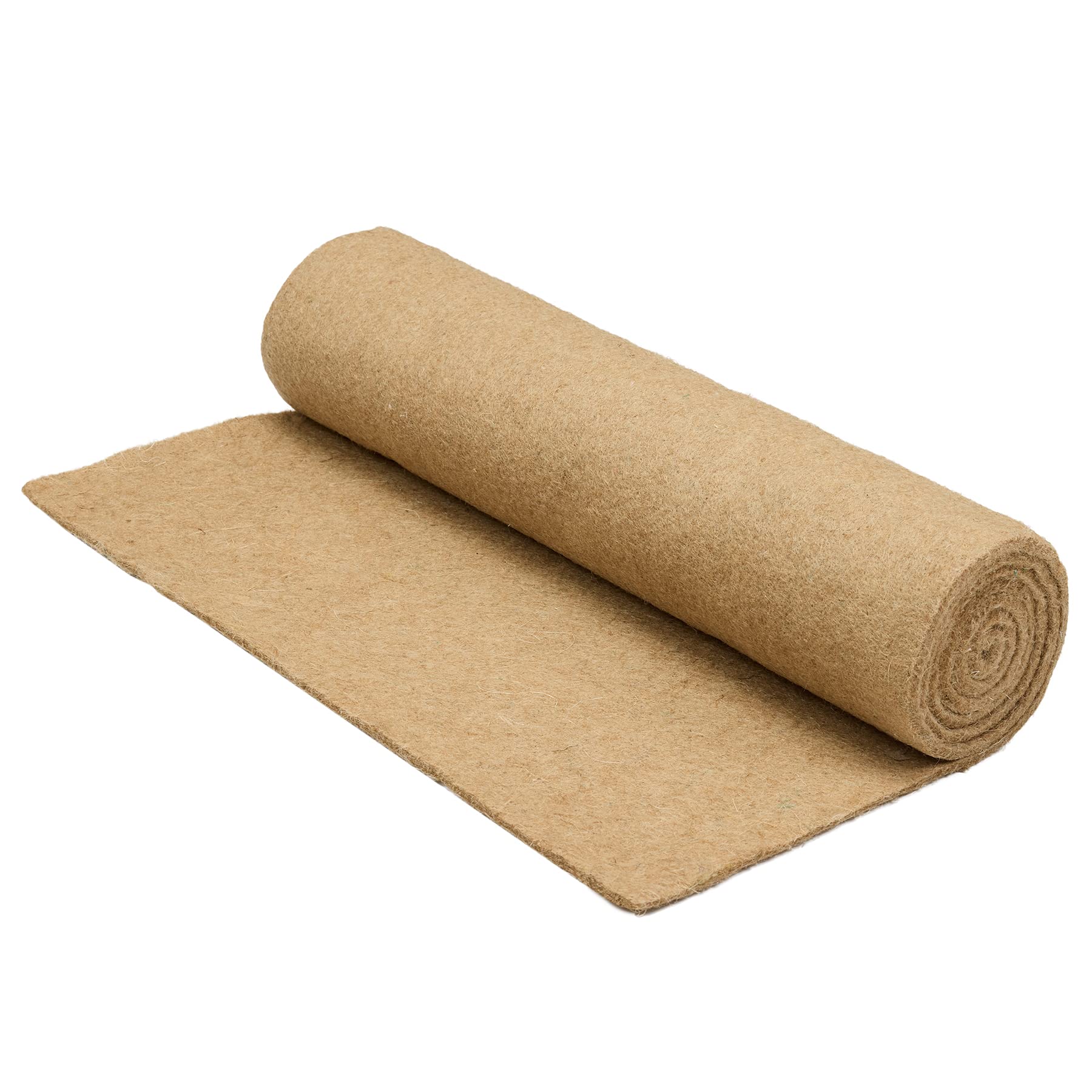
This is the sheet-mulch solution — instead of loose pieces, you get a thick jute felt roll measuring 59.06 inches long by 19.69 inches wide. At a fabric weight of 1000 grams per square meter, it is exceptionally dense, so it acts as a physical barrier that limits watering and blocks weeds while still letting air and water through.
Its insulating strength is the standout trait, protecting beds, shrubs, and vegetable plantings from temperature swings. Buyers using it during a heatwave say the higher-than-ever temperatures would have fried their new hedge without it — the felt trapped moisture so effectively that the plants survived the scorch. It is also easy to cut with a heavy knife, letting you fit it around existing plants without tearing.
The trade-off for this level of durability is that a single roll covers a limited area, and some buyers noted they wished it came in additional dimensions. It also needs a season or two to break down fully, so it is more of a long-term planting companion than a quick-fix seasonal mulch.
Why it wins
- Extremely strong 1000 g/m² jute felt holds up for multiple seasons
- Excellent at retaining soil moisture and limiting weed growth
- Breaks down naturally and improves soil over time
Consider this
- Single roll covers a modest footprint
- Slower to decompose than loose straw
Reach for this if: you want a tough, natural weed barrier that keeps moisture locked in for raised beds, shrubs, and vegetable rows without any dyes.
Look elsewhere if: you need to mulch a large open landscape quickly — loose straw or chips will spread much faster.
2. Acostop Natural Dry Wheat Straw
The sun-dried straw that warms shelters and anchors garden soil
This wheat straw shines in two very different roles. In the garden, it is a soil-safe mulch made from sun-dried straw with no chemicals or weed seeds, helping retain moisture, regulate soil temperature, and prevent erosion from rain and wind. In the yard, it is a go-to bedding for chicken coops, egg-laying boxes, cat shelters, and rabbit hutches.
The thing people rave about most is the quality — it keeps feral cats warm and dry through winter cold snaps, with the vacuum sealing keeping it clean and odor-free around animals. On seeded land it holds tight even in high winds, protecting new grass from birds and retaining moisture better than cheaper local straw options. It breaks down safely into the soil and supports organic gardening.
Be honest about the quantity: this is a compact 1-pound bag, and buyers frequently note the amount is smaller than expected for the cost. It works well in raised beds and small shelters, but if you are covering a large garden, you will need several bags.
Best for: winter animal shelters and small raised beds where clean, chemical-free straw matters most.
The catch: the premium price per pound — this is a specialty buy, not a bulk landscape purchase.
3. CZ Grain Wheat Straw Garden Mulch
The Iowa-grown straw that keeps strawberries and veggies thriving
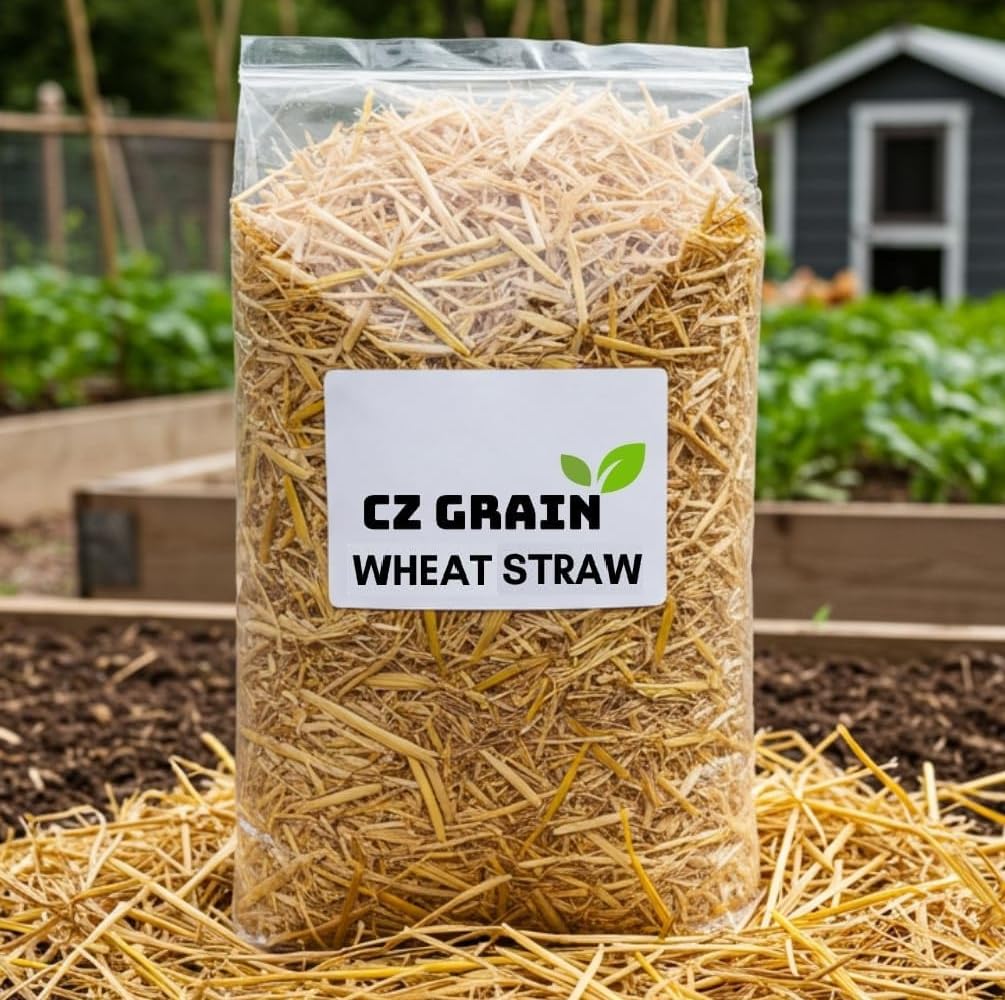
Grown on farms in Iowa each season, this all-natural, non-GMO wheat straw is built specifically for strawberry patches and vegetable gardens. It suppresses weeds naturally, holds moisture, and breaks down over time to feed the soil and plants critical nutrients — exactly what a productive edible garden needs from its mulch.
Strawberry growers are the happiest owners here, with the straw standing up beautifully to both rain and heat through the season. It is also praised as a great-value option for winter gardens, giving raised beds a protective layer that keeps roots insulated. The maker recommends spreading it about 1 inch thick over worked ground for best results.
The honest caveat is coverage: the 2-pound bag covers roughly 8 square feet, which suits small patches and containers but runs out fast on a full vegetable plot. It also needs a good watering after spreading to pack the straw down and keep it from blowing away.
Pick this for: small strawberry beds and veggie patches where you want a clean, natural straw from an American farm.
Note: buy multiple bags upfront if your garden is larger than a modest patch.
4. Brut Organic Aspen Mulch
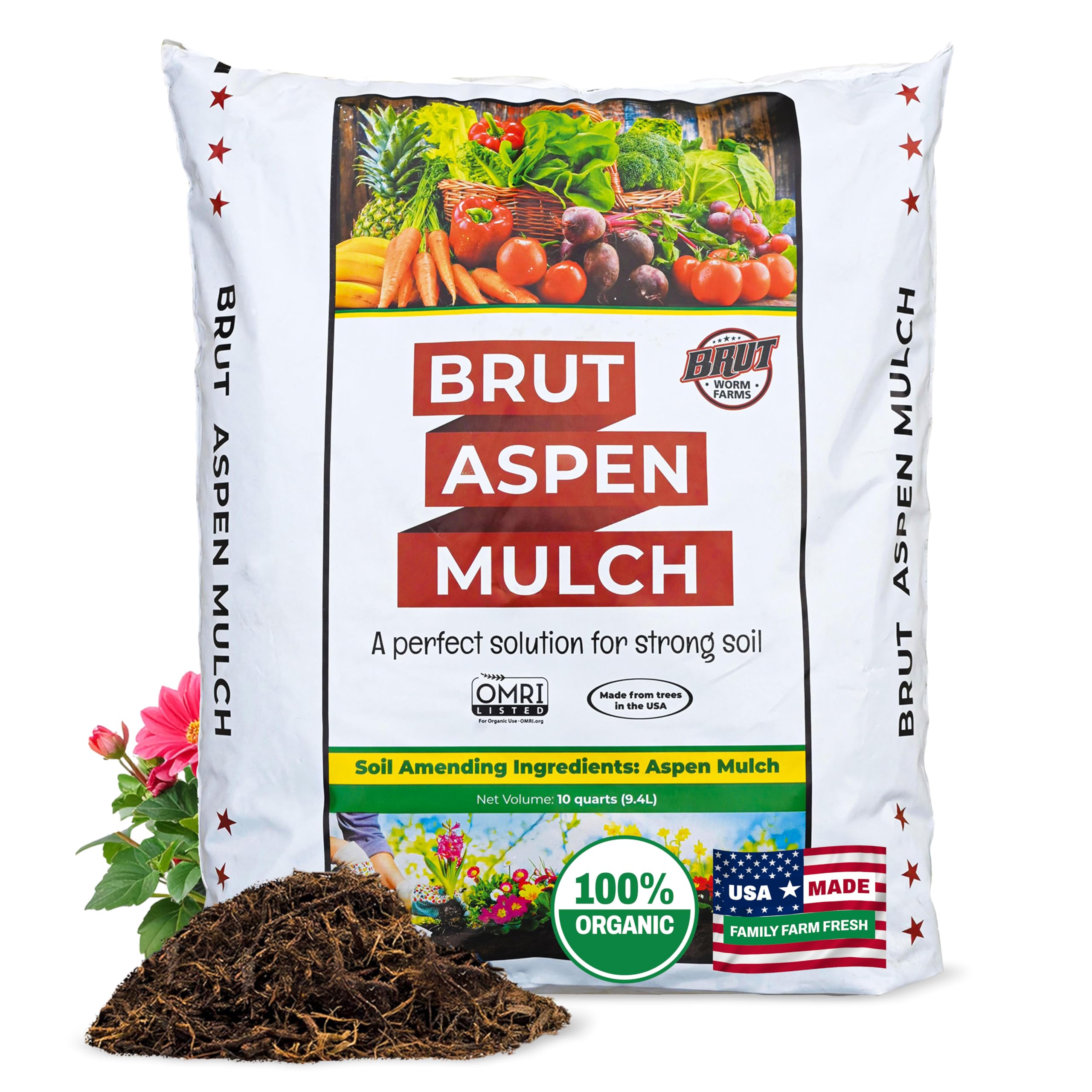
The fine aspen bark that doubles as a root protector for containers
This organic aspen mulch is formulated with 30% natural carbon, which fosters beneficial soil microbes and promotes overall soil vitality. It is OMRI-listed for organic gardening, meaning it meets strict standards for use in organic production — a genuine quality marker for gardeners who take soil health seriously.
The fine texture is a big draw for container gardeners, who use it on potted herbs and tomatoes. It retains moisture so well that some buyers report cutting their watering frequency roughly in half, and the clean aspen bark is odor-free and lightweight. It also helps minimize weed growth while supporting a healthy soil structure.
The recurring theme in owner feedback is price — this is a premium organic product, and the 10-quart volume goes quickly. A few buyers also noticed small black bugs around the mulch, so it is not the pick for indoor use if you are sensitive to that. One owner flagged an artillery fungus in a single bag, an occasional risk with any natural bark.
What stands out
- OMRI-listed organic certification for true organic gardening
- Fine, odor-free texture ideal for potted plants and planters
- 30% natural carbon content supports healthy soil microbes
What to weigh
- Premium per-bag cost for the coverage you get
- One occasional report of small bugs in natural bark
Choose this for: container gardens and tidy beds where you want verified organic mulch with a fine, clean finish.
Think twice if: you are mulching a large landscape — the volume-to-cost ratio favors coarser wood options.
5. Double Tree Incense Cedar Wood Chips

The aromatic cedar chips that repel bugs while dressing up beds
These incense cedar chips bring a genuinely pleasant natural scent to the garden — the thing owners praise most by a wide margin. Beyond the aroma, the cedar works as a bug deterrent, with buyers using it around plants and even in closets to keep beetle and moth larvae away. It is ground finely enough that the chips do not float away when watered.
The material is purely natural, offering an eco-friendly solution for landscaping, pathways, and play areas. It also doubles as pet-friendly bedding and litter box filler, controlling odors while creating a comfortable environment. The light hue blends well with existing landscaping and amplifies the look of both indoor and outdoor spaces.
Value is the sticking point — owners consistently call the price prohibitive for the 8-quart volume, with one noting they would buy more if it cost less. The scent also fades over time, so this works best as a decorative or targeted mulch rather than a budget bulk option.
Reach for this if: you want natural bug defense and a beautiful cedar aroma around flower beds, trees, or indoor planters.
Expect: a premium price tag for a relatively small volume of chips.
6. MIGHTY109 100% Natural Shredded Cedar Mulch
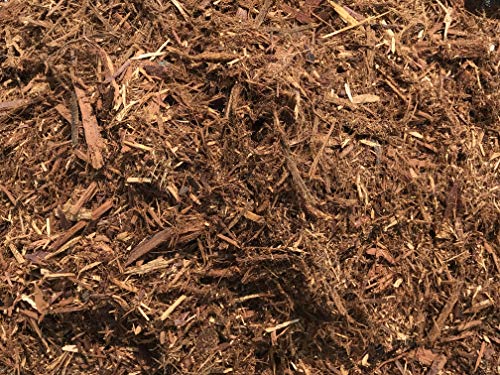
The large bag of shredded cedar for covering bigger landscape areas
This is the bulk option for natural cedar cover, offering 40 quarts with an extra 8 quarts free — a solid amount for planters, landscapes, and gardens. It is 100% natural shredded cedar with no added chemicals or dyes, giving you the classic brown-cedar look without any artificial colorants.
Satisfied owners mention the mulch looks exactly as pictured online and works well around trees, with one owner using it under a backyard Black Oak and watching the tree thrive. The 18-pound bag gives you real coverage for the money compared to the smaller premium chip bags, making it a sensible choice for medium-sized projects.
However, review feedback is split on consistency: some bags arrive with large chunks, some described as nearly hand-sized, which looks nothing like the fine shredded texture in the photo. A few buyers also reported excessive shipping costs that made the total far less of a bargain, and the cedar scent is not as strong as some expected.
The upside
- Large 40 qt + 8 qt volume covers substantial ground
- 100% natural cedar with zero dyes or chemicals
- Good choice for planters, landscapes, and gardens
The downside
- Chunk size varies widely — some pieces are very large
- Shipping costs can dramatically inflate the final price
Grab this for: covering larger beds and tree rings economically with undyed cedar.
Check first: confirm the shipping cost to your area before ordering, and expect chunkier pieces than the photos suggest.
7. FibreDust Coconut Coir Mulch

The compressed coir that expands into a moisture-holding powerhouse
This coconut coir mulch starts as two compact 4 kg blocks and expands to roughly 3.2 cubic feet of mulching medium after hydrating with 8 gallons of water. That expansion is the key — a small package transforms into a wheelbarrow full of natural, rust-colored mulch that adds a beautiful aesthetic to outdoor landscapes.
The water retention is genuinely exceptional here. Owners in full Arizona sun report putting a finger an inch into the soil and finding it still cool and moist, with the coir lasting longer than any other mulch they have used. It does not float away in rain the way loose bark does, and it keeps weeds down while maintaining soil temperature through summer heat.
Two practical notes: the coir can stain concrete when wet, so soak it away from patios, and the color is more of an orange-rust than a true brown — some buyers find that surprising. It is also a premium-priced product, though owners note it outperforms local vendors who were backordered.
Best for: hot, dry climates where moisture retention and longevity matter more than anything else.
Watch out for: the orange-rust tint on light concrete and the soak time needed before spreading.
8. Blue Mountain Organic Garden Straw
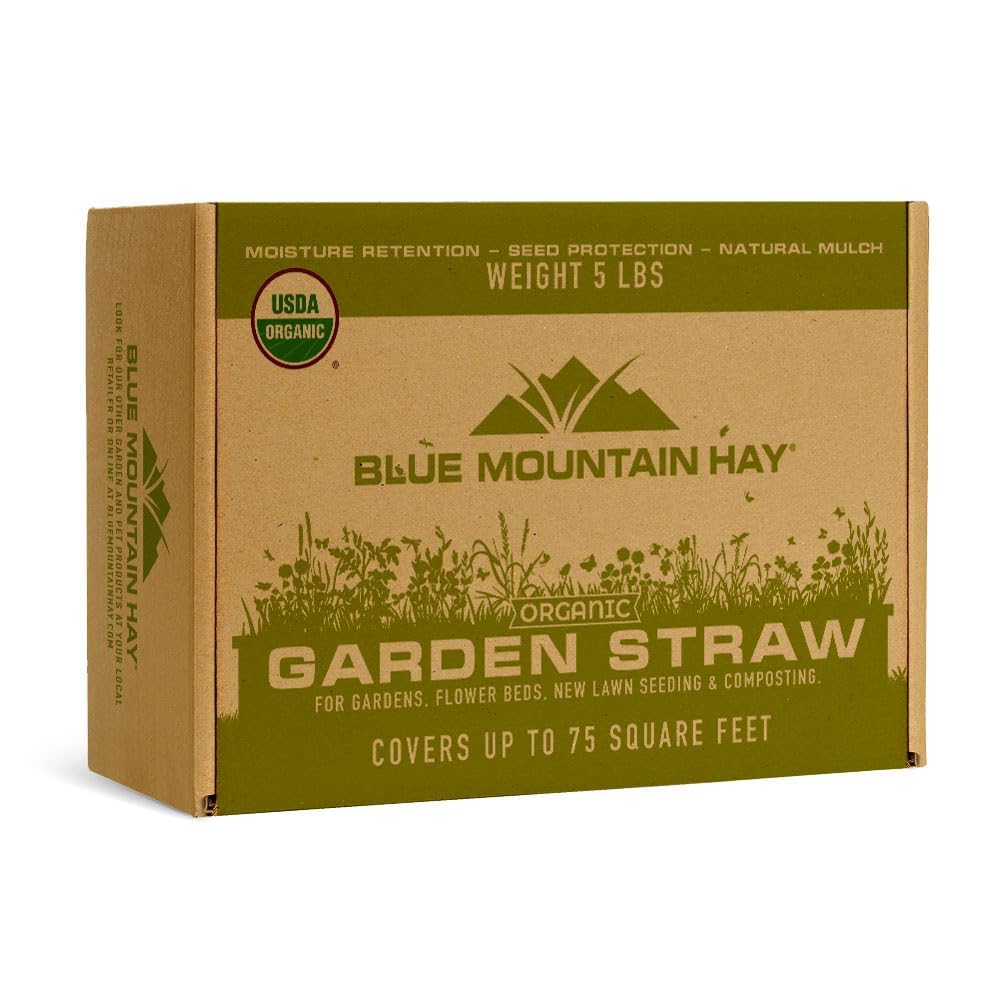
The clean, low-dust straw that lawns and raised beds love
This organic straw is naturally dried and minimally processed, making it remarkably clean, easy to spread, and safe for pets, gardens, and landscaping. The low-dust quality is a standout — owners describing it as clean, soft, and pure, with no dirt or bugs, perfect for potted plants, onions, garlic, and potato layering.
It is a multi-purpose workhorse: great for raised garden beds, vegetable gardens, flower beds, cat grass kits, and compost layering. During new lawn seeding, it protects grass seed and retains moisture while improving soil structure. The compressed 5-pound box expands when opened and spreads evenly, and one owner found the box yielded surplus for their needs.
The main concern is the cost — owners consistently say it is overpriced for the volume. There is also a split verdict on seeds: while many report minimal sprouting, a few found the straw introduced grass seeds into raised beds. It is ideal for tidy, seed-conscious gardeners, but if you are covering a large patch, the price per pound adds up quickly.
Pick this for: raised beds and containers where you want clean, low-dust straw that will not introduce dirt or debris.
Keep in mind: the premium price per pound makes bulk coverage expensive, and seed sprouting varies.
9. Rubberific Rubber Mulch Bagged Brown

The rubber shreds that keep their brown color for years
If your priority is color that never fades, this brown rubber mulch is the durability king. Owners replaced stone in a front garden with this mulch two years ago and say it still looks freshly laid — the lasting color is the thing people praise most. It also held up through a bad storm with not a single shred lost, a real advantage over loose bark.
It looks remarkably like standard wood mulch at a glance, and the brown tone works as a beautiful background for flowers. Unlike organic mulches, it will not break down and feed the soil — but it also will not need replacing every season, which is the whole point for many buyers. It is ideal for small projects around trees and bushes.
The honest trade-offs: the bag does not cover much ground, the price per bag is higher than bulk wood mulch, and one reviewer noted the same product is significantly cheaper at Lowe’s. Shred consistency also varies, so the pieces are not always uniform. This is a premium, low-maintenance choice, not a budget bulk buy.
Choose this for: permanent beds and tree rings where you want years of color without re-mulching.
Compare prices: check local home improvement stores, as Amazon pricing here runs higher per bag.
Understanding the Specs
Material & Decomposition
The material determines how your mulch behaves over time. Straw and aspen break down within a season or two, feeding the soil with organic matter. Cedar and coir last much longer, making them better for permanent beds where you do not want to re-mulch yearly. Rubber never decomposes, which is great for longevity but adds nothing to the soil.
Moisture Retention & Weed Control
The core job of any mulch is holding moisture in the soil and blocking weeds from sunlight. Dense materials like jute felt and coir excel at both, creating a physical barrier that loose chips cannot match. Loose straw still works well but needs to be laid at the right thickness (about 1 inch) and watered down to pack in place.
FAQ
What makes mulch “natural color” versus dyed mulch?
How much area will a bag of natural mulch cover?
Will natural mulch attract bugs or pests?
Is rubber mulch a natural color option?
How long does natural mulch last before it needs replacing?
Can I use wheat straw for animal bedding and garden mulch?
Will straw mulch introduce weeds to my garden?
Why does coconut coir mulch come in compressed blocks?
What is the best natural mulch for strawberry patches?
How do I keep loose straw mulch from blowing away?
Final Thoughts: The Verdict
For most gardeners, the natural color mulch winner is the La cordeline Jute Felt because its 1000 g/m² density delivers uncompromising moisture retention and weed control in a 100% natural form. If you want the cleanest organic option for containers, grab the Brut Organic Aspen. And for hot climates where water retention is everything, the FibreDust Coconut Coir is the one to reach for — the crowd’s clear favorite for longevity and cooling soil in full sun.
How We Picked
We do not accept paid placement. Every pick is matched to a real buyer and a real use-case; we do not hands-on test units.
Sources & Methodology
Specifications: manufacturer listings and product documentation. Review insights: verified customer reviews, as of August 2026. Pricing: not shown on this page (it changes often); check the current price via the retailer link.
As an Amazon Associate, Lawn Gear Lab earns from qualifying purchases. This does not affect which products we feature.