
Specs are compiled from manufacturer listings and verified buyer reviews and can change over time — please confirm the key details on the product page before buying.
Orchids are one of the few houseplants you can genuinely copy, not just buy again. With the right pots, moss, and a little cloning paste, a single healthy plant can turn into several — and this guide sorts through the gear that actually makes that happen.
I’m Rikta — the founder and writer behind Lawn Gear Lab. This guide is built by comparing the manufacturers’ published specifications and the patterns across verified customer reviews, so you get each pick’s real strengths and trade-offs instead of marketing spin.
The essential kits for rooting, repotting, and cloning break down into clear tiers, and this guide to the best orchid propagation supplies will help you match the right tool to the exact stage your plant is at.
Our Picks at a Glance


How To Choose The Best Orchid Propagation Supplies
Propagating an orchid means giving its roots the right environment to push out new growth. The three things that matter most are airflow around the roots, moisture that does not pool, and a way to encourage a new plant to form on the stem.
Match the tool to the stage
You rarely need everything at once. A clear pot with ventilation holes covers repotting, a bag of sphagnum moss covers mounting and moisture control, and keiki paste covers the actual cloning step. Buying a set that fits your current plant is smarter than stockpiling gear.
Quick Comparison
| Model | Best For | Key Feature | Volume / Count | Material | Amazon |
|---|---|---|---|---|---|
| Pavtner Pots★ Best Overall | Repotting multiple orchids | 4 sizes, 8 pots | 8 Pack | Polypropylene | Amazon |
| ZeeDix MossBest Value | Moisture retention | Long fiber, expands | 1.1 lb (25 qt) | Natural | Amazon |
| Keiki Power ProBest for Cloning | Cloning new plants | Stem node paste | 10 g | Paste | Amazon |
| CHPINDAM Vases | Water rooting cuttings | Borosilicate glass | 4 Pieces | Glass | Amazon |
| Legigo Moss | Large repotting jobs | 50 qt expanded | 2.6 lb (50 qt) | Natural | Amazon |
| Halatool Moss | Moss walls and top dressing | No dyes, fluffy | 2.2 lb (50 qt) | Natural | Amazon |
| QCQHDU Pots | Self-watering setup | Double-layer design | 2 Pack | Polypropylene | Amazon |
| Mulctun Bark Mix | Improving drainage | Pine bark + perlite | 9 qt | Bark / Perlite | Amazon |
| Molly’s Mix | Preventing overwatering | Soil-free chunky blend | 3.3 liters | Bark / Lava / Pumice | Amazon |
In-Depth Reviews
1. Pavtner Clear Orchid Pots 8-Pack
Our pick — over 4.5★ from 350+ verified ratings; the strongest balance of quality and price.
The clear-view repotting set that keeps every root visible and breathing.
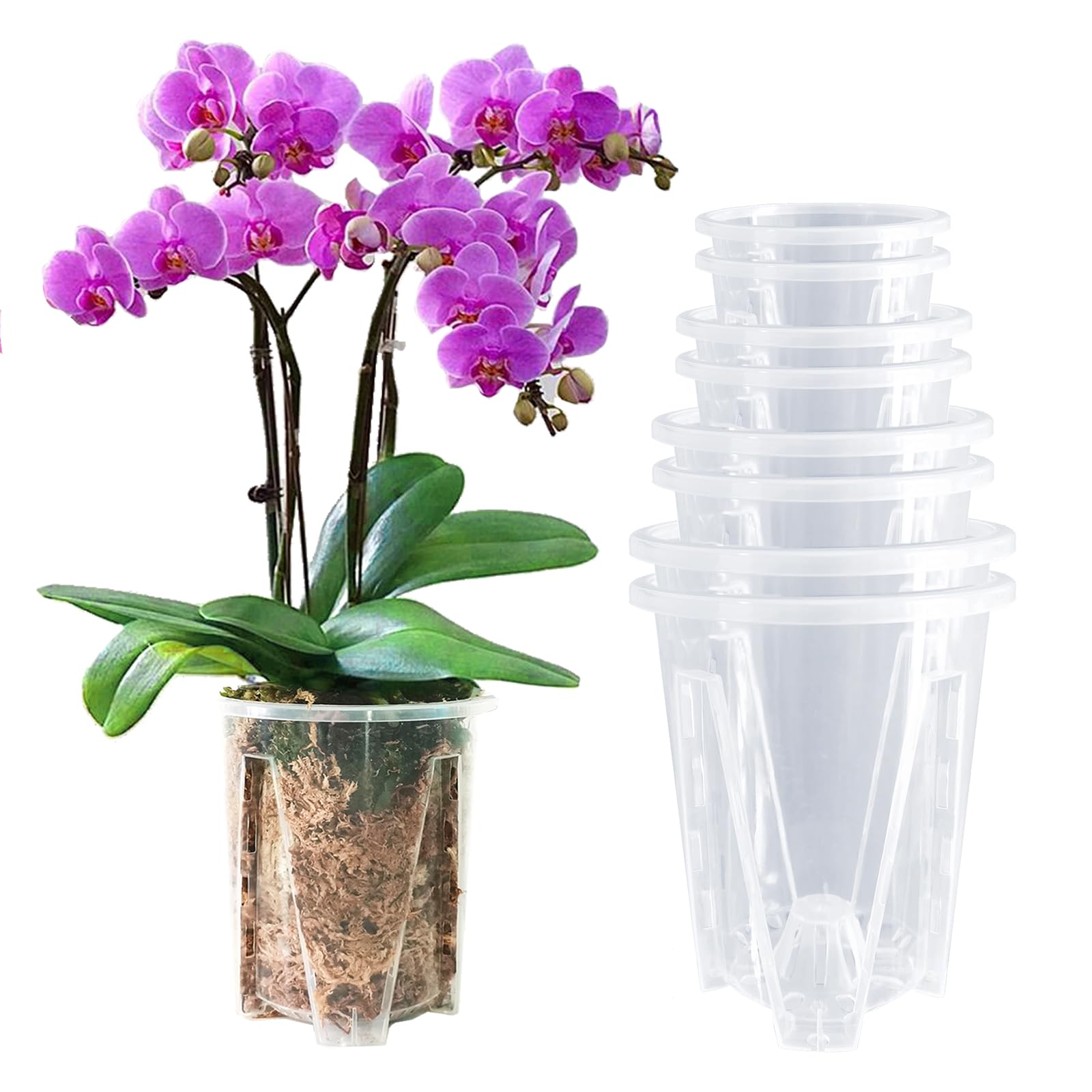
This 8-pack is the backbone of a propagation setup because it covers every pot size you will touch. You get two each of 3.9, 4.7, 5.5, and 6.3-inch pots, which means you can pot up a fresh keiki and a mature phalaenopsis in the same session without buying another set.
The clear polypropylene plastic is why owners keep coming back. You can watch the roots grow without disturbing the plant, and the multi-drainage-hole design — around the sides and the bottom — keeps air moving so roots do not stew in moisture.
The quality is the standout, with 47 owners singling it out as the top positive. As buyers put it, these pots use “stronger plastic then the cups the orchids come in,” so they hold up far better than the flimsy containers your orchid arrives in.
clear sight watering
- Clear sides let you check root health without repotting
- Tall design allows deeper planting for aroids like anthurium
- Four sizes in one box covers most repotting needs
needs daily checks
- Slightly taller than standard pots, which some find bulky
transparent growers: you are repotting several orchids or aroids and want to monitor root health at a glance.
forgetful owners: you need a single small pot for one mini orchid — the multipack is more than you need.
2. ZeeDix Long Fiber Sphagnum Moss
A compact brick that expands into a full bag of fluffy, clean moss.
This moss arrives as a small compressed package — roughly notepad-sized — but it expands to 25 quarts once you soak it. That is a lot of growing medium for the money, and it goes furthest if you use it for moss poles or as a top layer for moisture-loving plants.
The long-fiber texture stays fluffy rather than matting down, which keeps air pockets around orchid roots. Owner feedback highlights how clean it is: low dustiness, hardly any odor, and it absorbs water quickly without turning to mush.
It is safe for reptiles and carnivorous plants too, so one bag can serve a whole plant collection. The compressed brick expands to cover multiple repotting sessions, making it a cost-effective buy.
long-fiber hold: orchid mounts, moss poles, and venus fly traps where you need consistent moisture without soggy roots. The compressed size means it stores easily between uses.
3. Keiki Power Pro Orchid Cloning Paste
The tiny jar that nudges a bare stem node into a whole new plant.
This is the actual cloning step in orchid propagation. You apply a small dab of paste to a trimmed stem node, and the plant responds by pushing out new growth — a keiki, which is essentially a baby orchid you can eventually pot on its own.
The 10-gram container is small, but it lasts for dozens of applications. Buyers report phalaenopsis responding with new spikes or keikis within a month, and repeated applications on multiple nodes all succeeding.
It won’t force every orchid type to produce a keiki. Dendrobium orchids showed no visible results for some owners, and the process is slow — patience is part of the deal. But the effectiveness is the most-cited positive, with 91 owners calling it out.
clone exact bloom: phalaenopsis owners who want to multiply a healthy plant without buying new ones. skip it if you expect instant results on a struggling orchid.
4. CHPINDAM Glass Propagation Vases
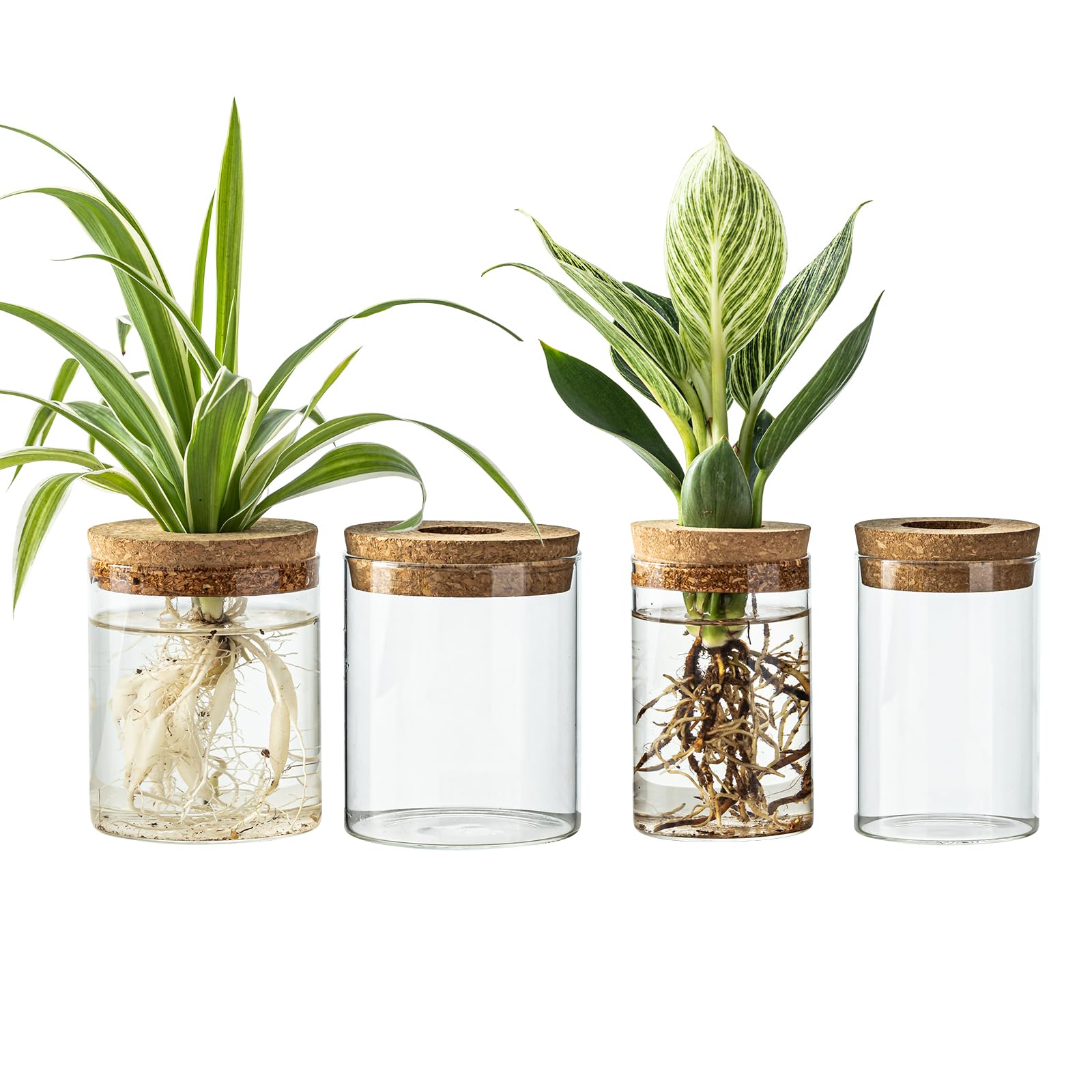
Water-rooting vases that double as shelf decor while cuttings take hold.
If you root cuttings in water rather than moss, these borosilicate glass vases make the process look intentional. The set includes two large (3.34″ x 3.9″) and two small (2.55″ x 3.9″) vases, each with a snug cork lid that holds the cutting upright while you water.
The clear glass lets you watch roots develop without pulling the cutting out. Owners mention pothos leaves rooting in about a week, and the slow evaporation means you are not topping up water constantly.
The catch is the glass itself — it is pretty thin, and some units arrive broken. Handle them gently and they will last, but this is not rough-and-tumble gear.
glass root view: a tidy propagation station on a shelf or windowsill. The appearance is the most-praised aspect, with 32 owners calling it out.
5. Legigo 2.6LB Sphagnum Moss
The big-bag moss that keeps moisture steady across a whole collection.
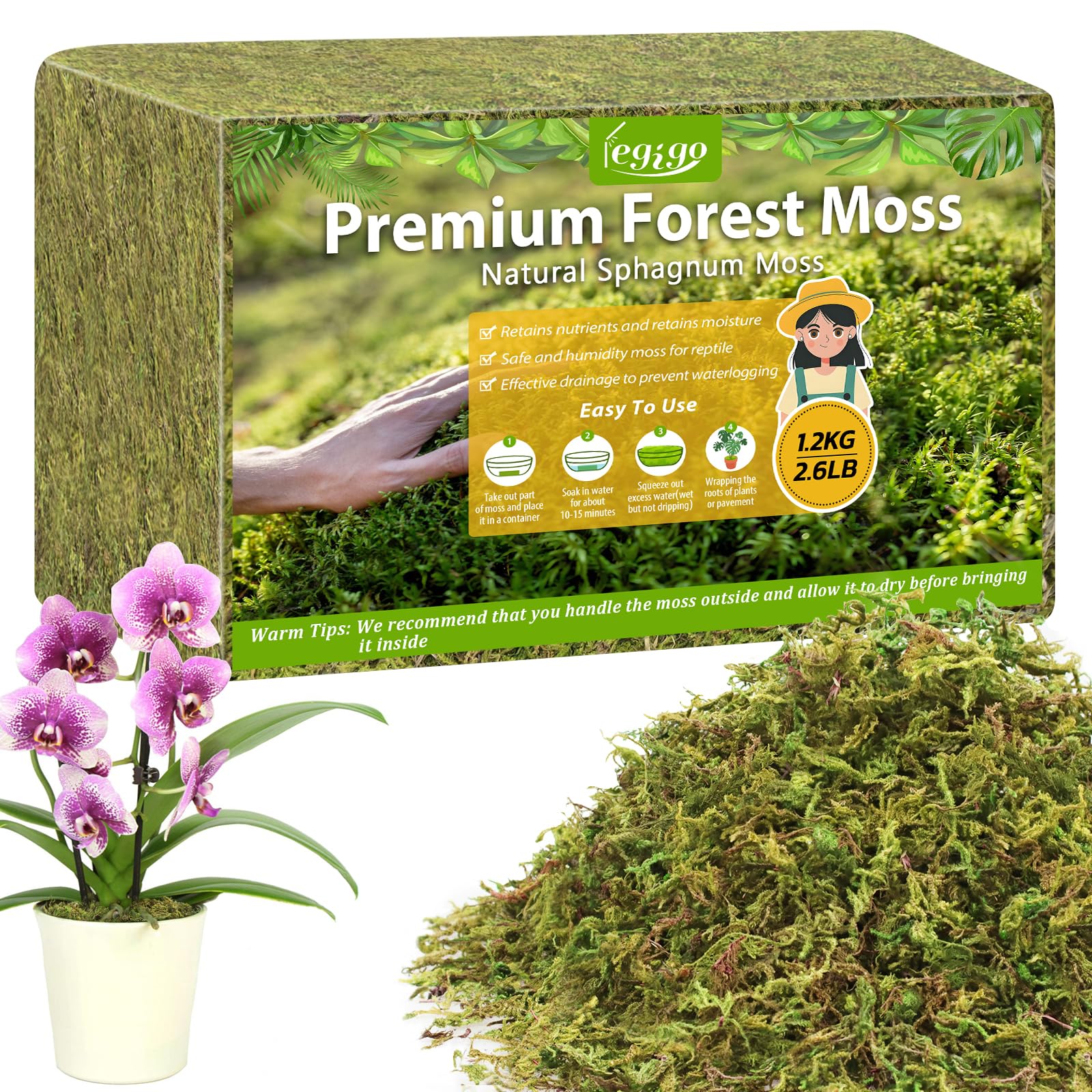
This 2.6-pound brick expands to a full 50 quarts once soaked, which is a serious amount of growing medium for repeated repotting. It is the pick for anyone who maintains several orchids or runs a moss-pole setup for tropicals.
The long-fiber structure stays loose and fluffy, so it holds moisture without compacting into a soggy mass. Owners note it keeps plants from drying out too fast, and it works well for staghorn ferns and repotting projects.
One honest caveat: the green color is lovely to some, but others find it more yellow-brown than the photos suggest. The earthy smell is also a point of debate — some call it fresh, others strong.
bulk moss value: heavy repotting seasons or moss-pole builds where you need volume. The value for money is a top-cited positive here.
6. Halatool Natural Green Forest Moss
The naturally green moss that keeps roots aired without any added dye.
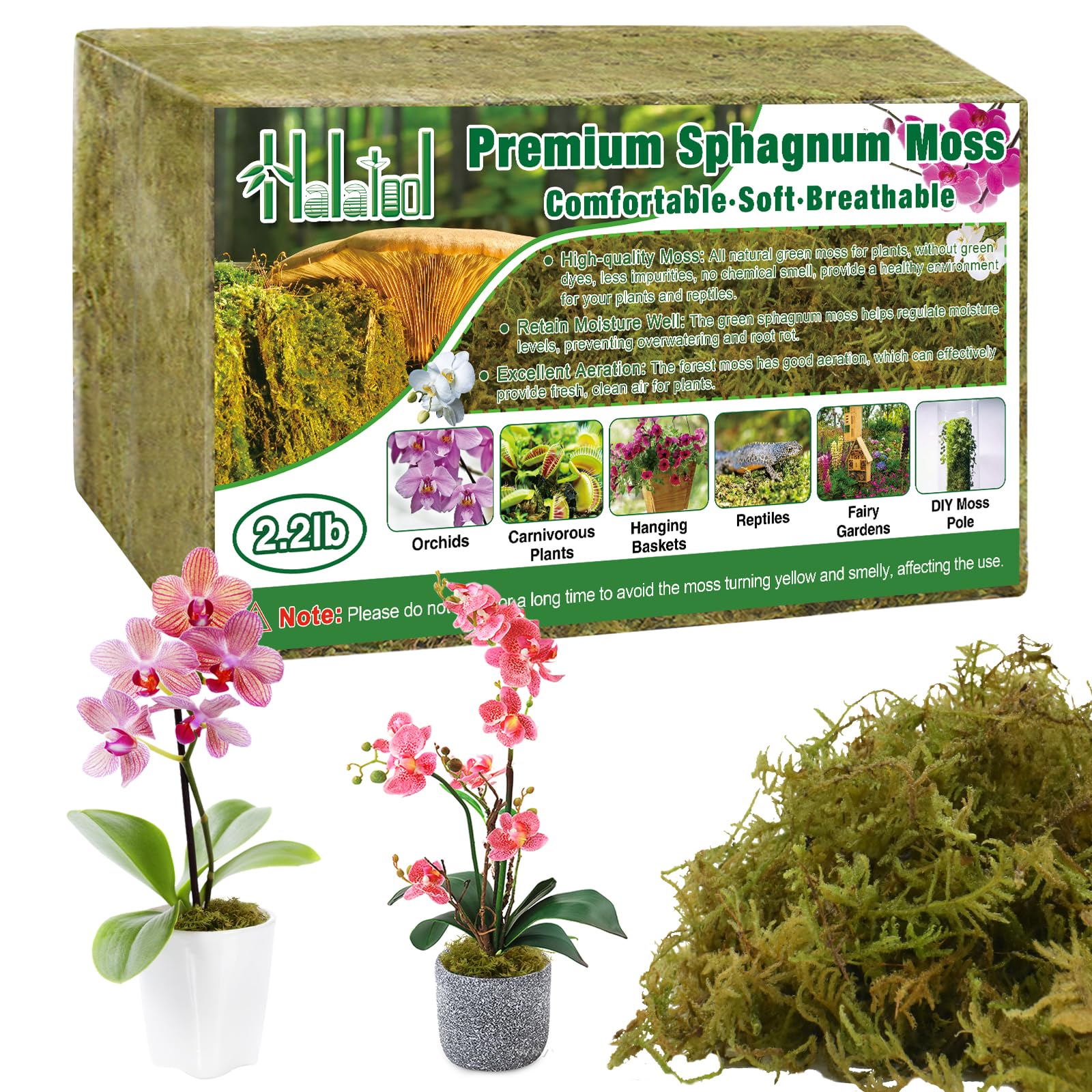
This 2.2-pound brick expands to 50 quarts and stands out for its lush green color, which comes from nature rather than a highlighter-green dye. It is a soft, fluffy long-fiber moss that holds moisture well while letting roots breathe.
The versatility is a big draw — it works for top dressing, wrapping root balls, and building moss walls. Owners who used it for wall projects report it formed easily and looked great once in place.
Quality is the most-cited positive at 52 mentions, but the odor is a genuine split. Some find it mild, others call it foul, and a few units arrive with debris mixed in. If you are sensitive to smells, this is the spec to weigh.
natural green look: decorative moss projects and orchid repotting where appearance matters. Think twice if a strong earthy smell would bother you indoors.
7. QCQHDU Double-Layer Orchid Pots
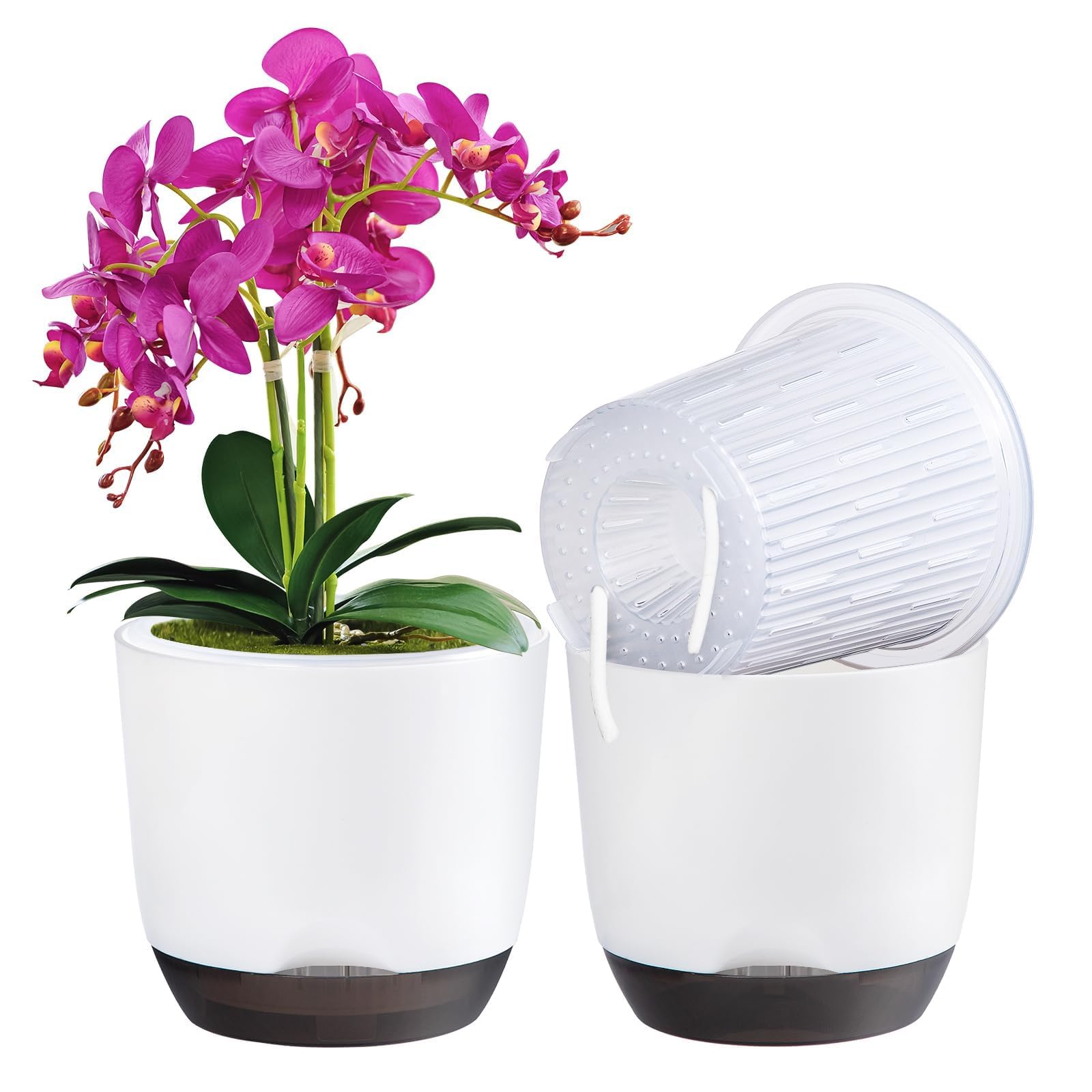
A self-watering dual-layer pot that keeps roots above the water line.
This 2-pack of 5.7-inch pots brings a different approach: an outer decorative pot with a clear inner pot that has holes around all sides. The design channels fresh air in through the inner pot and out the bottom, so roots get constant circulation.
The self-watering base stores water for 7-14 days, and the inner pot sits above the surface, so roots are never submerged. This self-watering base is a practical buffer for travelers or forgetful waterers.
Customers note orchids bouncing back and pushing new buds within a week of repotting. The recurring gripe is that the inner pot is hard to remove once planted — you may need something to pry it out.
double-wall airflow: forgetful waterers who want a buffer against drying out. The quality and appearance are the top positives, with 31 and 15 mentions respectively.
8. Mulctun Orchid Bark Potting Mix
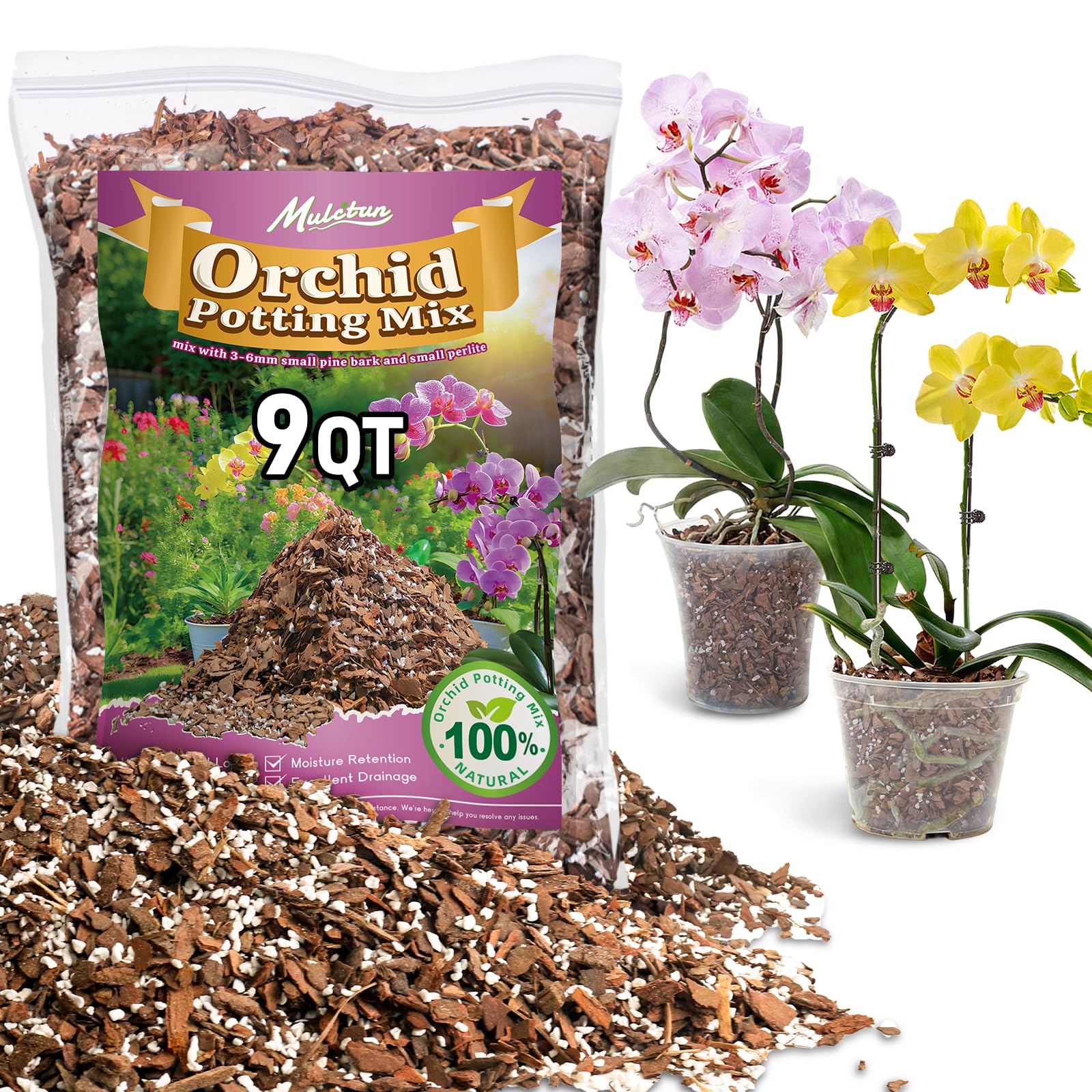
The bark-and-perlite blend that stops water from pooling around roots.
This 9-quart bag pairs pine bark with perlite to create the loose, airy structure orchid roots need. Pine bark handles drainage, and perlite’s porous nature boosts airflow, so the mix resists staying wet too long.
It works for phalaenopsis, cattleyas, dendrobiums, and other epiphytic types. It doubles as an amendment — owners mix it into regular potting soil to make it chunkier and improve drainage for hoyas and aroids.
The honest note: the bark pieces run on the smaller side, and some owners suggest rinsing before use to cut dust. It is better suited to mixing and small pots than as a standalone chunky orchid medium.
bark drainage mix: growers who want a reliable drainage booster or a fine bark for smaller pots. pass on it if you need large, chunky bark pieces for big orchids.
9. Molly’s Chunky Soil-Free Orchid Mix
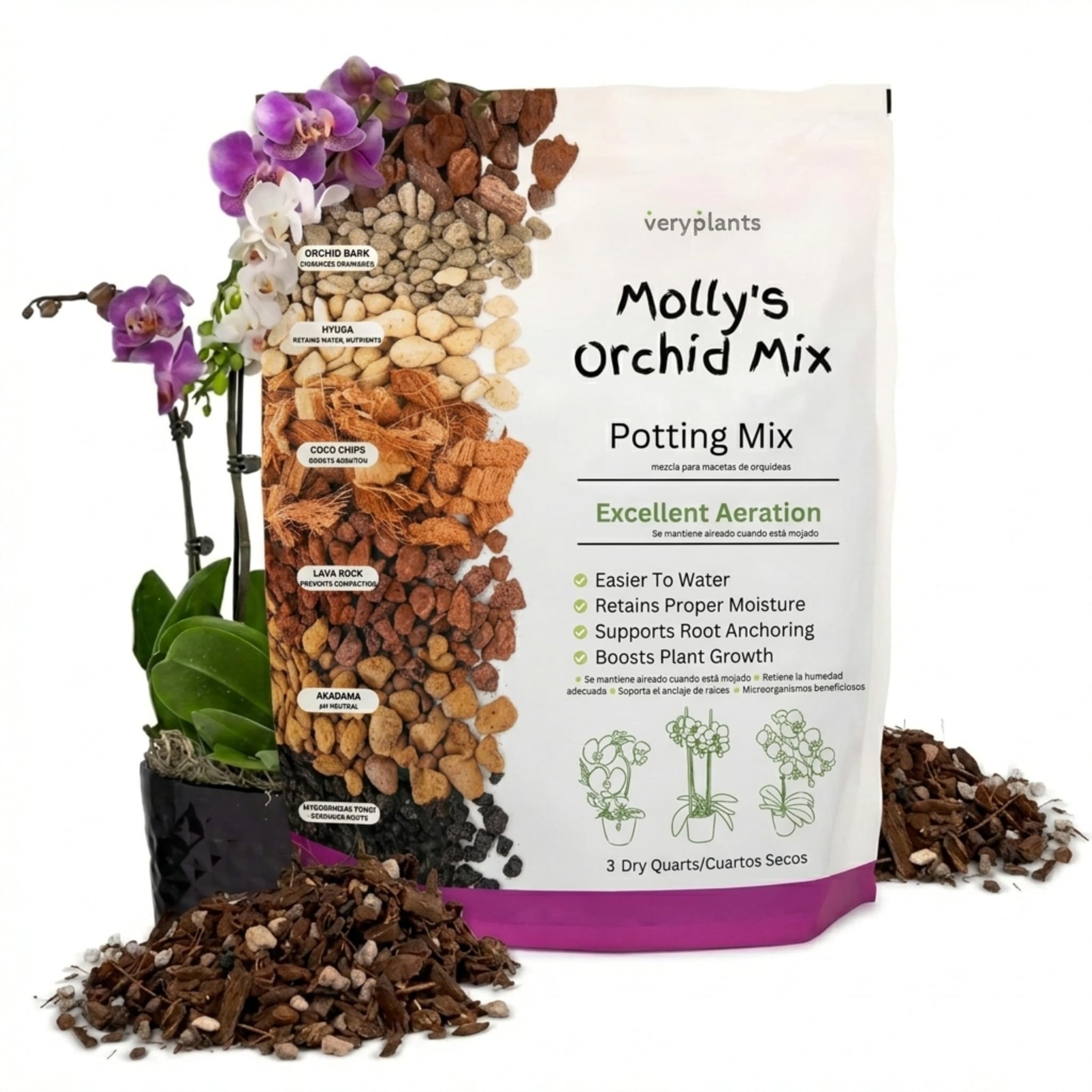
The premium soil-free blend that makes overwatering nearly impossible.
This is the most thoughtfully blended mix on the list, combining orchid bark, red lava, bio char, coco chips, akadama, pumice, and lava rock. It drains freely and will not compact, which is the single biggest protection against overwatering your orchid.
Being soil-free means it is gnat-resistant and less messy than traditional mixes. It also includes beneficial mycorrhizae — a fungus that helps roots absorb nutrients and water more effectively.
Owners praise it for saving gift orchids that arrived in compacted sphagnum moss. The chunkiness is the only mixed point — some love the large pieces, others find them too big. It comes in a resealable bag to stay fresh between repots.
soil-free chunky: orchid owners who have killed plants by overwatering and want a forgiving medium. Think twice if you prefer a finer, denser mix for smaller pots.
Understanding the Specs
Airflow and Drainage
Orchid roots need oxygen, not just water. Pots with side and bottom holes let air circulate around the roots, while bark mixes with perlite create the tiny voids that keep the medium from compacting. This is the difference between healthy roots and root rot.
Moisture Retention
Sphagnum moss holds water and releases it slowly, which is why it is the go-to for mounting and top dressing. The trade-off is that some mosses dry out faster than others, and the odor or color can vary. Soak, squeeze, and check moisture regularly.
FAQ
What is a keiki and how do I grow one?
Should I use sphagnum moss or bark mix for my orchid?
Why do orchid pots need holes in the sides?
How long does keiki paste take to work?
Can I root orchid cuttings in water?
How much sphagnum moss do I need for repotting?
What is the difference between clear pots and self-watering pots?
Is a soil-free mix better than a bark and perlite mix?
Final Thoughts: The Verdict
For most people, the orchid propagation supplies winner is the Pavtner 8-Pack because it covers every pot size you will need, with clear sides and full airflow. If you want to actually clone new plants, grab the Keiki Power Pro Paste. And for a forgiving growing medium, the Molly’s Soil-Free Mix is the one to reach for.
How We Picked
We do not accept paid placement. Every pick is matched to a real buyer and a real use-case; we do not hands-on test units.
Sources & Methodology
Specifications: manufacturer listings and product documentation. Review insights: verified customer reviews, as of July 2026. Pricing: not shown on this page (it changes often); check the current price via the retailer link.
As an Amazon Associate, Lawn Gear Lab earns from qualifying purchases. This does not affect which products we feature.