
Specs are compiled from manufacturer listings and verified buyer reviews and can change over time — please confirm the key details on the product page before buying.
A flimsy pruner or cheap rake causes wrist and back pain, revealing that budget gear’s real cost is time and discomfort. Professional landscaping tools use better steel, smarter geometry, and ergonomic handles to transfer effort into the ground, not your joints. This guide covers nine essential tools, from precision pruners to digging bars, so you can skip trial and error.
I’m Rikta — the founder and writer behind Lawn Gear Lab. This guide is built by comparing the manufacturers’ published specifications and the patterns across verified customer reviews, so you get each pick’s real strengths and trade-offs instead of marketing spin.
These are the professional landscaping tools that earn their place in serious gardeners’ sheds.
Our Picks at a Glance


How To Choose The Best Professional Landscaping Tools
Choosing professional landscaping tools is less about picking the shiniest option and more about matching the tool’s core design to the specific jobs your yard throws at you daily. The right tool reduces strain, cuts cleaner, and lasts for years; the wrong one rusts in a corner after one season.
Match the Blade Geometry to the Job
For cutting tools like pruners and loppers, the blade type decides what you can cleanly handle. Bypass blades slice past each other like scissors, making precise, clean cuts on live wood — ideal for pruning branches you want to heal fast. Anvil blades crush down onto a flat surface, requiring less force and working better on tough, dead wood where a perfect cut matters less than power.
Prioritize Leverage and Handle Design
Longer handles translate to more leverage with less physical effort, but they also add weight. A 68-inch digging bar gives you serious force for prying roots, while a 24-inch lopper keeps overhead work manageable. Look for ergonomic grips and shock-absorbing systems that reduce vibration reaching your hands and joints.
Look at Steel Quality and Construction
Professional tools live or die by their steel. Forged or solid steel heads resist bending and hold an edge far longer than stamped metal. Pay attention to how the head connects to the handle — welded or riveted connections survive heavy prying that can snap a tool where a cheaper model would fail.
Quick Comparison
| Model | Best For | Cutting/Blade Spec | Handle Length | Weight | Amazon |
|---|---|---|---|---|---|
| LÖWE Profi Anvil Pruner★ Best Overall | Precision pruning & tight spaces | 0.98″ cut capacity | 8.27″ | 8.82 oz | Amazon |
| Dremmt Leveling Rake 35″Best Value | Leveling lawns & topsoil | 35″ wide head | 72″ | 11.3 lb | Amazon |
| Bully Tools Digging BarTop Performer | Root cutting & post holes | 1″ solid steel bar | 68″ | 16.2 lb | Amazon |
| Fiskars Pro IsoCore Pickaxe | Breaking tough soil & rock | 5 lb forged steel head | 36″ | 5 lb head | Amazon |
| Landzie Leveling Rake | Leveling & topdressing | 36″ wide head | 72″ | 8.4 lb | Amazon |
| Fiskars 60″ Pro Shovel | Heavy digging & prying | Sharpened alloy steel | 60″ | 2 lb | Amazon |
| FELCO F211-60 Loppers | Precision branch cutting | 1.2″ cut capacity | 24″ | Lightweight | Amazon |
| Rogue 7″ Field Hoe | Cultivating & weed removal | 7″ wide blade | Long handle | 4.09 lb | Amazon |
| A.M. Leonard Nursery Spade | Edging & root cutting | 13″ tapered blade | 50″ | 8 lb | Amazon |
In-Depth Reviews
1. Original LÖWE Profi Anvil Pruner 8.107
Our pick — over 4.5★ from 600+ verified ratings; the strongest balance of quality and price.
The lightweight German pruner that makes clean cuts feel easy in your hand.
This pruner leads the list because it turns a repetitive, wrist-tiring chore into a smooth, two-second motion. Its Bypass Geometry — where the sharp blade slides past a fixed one like scissors — lets it chew through hard branches and wood like yew, cherry, or walnut up to 0.98″ in diameter, which covers most routine pruning in a mixed garden. This slicing action protects live wood, promoting faster healing than a crushing cut.
Comfort is where this tool quietly wins. At just 8.82 Ounces, it is featherlight in the hand, and the ergonomic plastic handles are designed to open less wide — a real relief if you have small to medium-sized hands or spend hours on end pruning. The crowd favorite (4.8 stars across 600 ratings) is a strong signal that this tool delivers on its promise.
There’s one honest quirk: the handles are famously slippery. One owner reported taking heavy-duty sandpaper to roughen them up, noting that otherwise they “slip out of your gloved hands, which is a real problem when you’re trying to do a lot of work.” A little grip tape solves it, but it’s worth knowing before you buy.
Why it wins
- Slices branches up to 0.98″ with clean bypass action
- Featherlight 8.82 oz design reduces wrist fatigue
- Ambidextrous grip suits either hand
The trade-off
- Handles are slippery and may need roughening
- Plastic handles feel less premium than metal
The pick for: Gardeners who prune daily and want a light, precise tool that won’t tire their hands out.
Think twice if: You need to crush thick, dead wood — an anvil-style model like the LÖWE 1.104 cuts those with less force.
2. Dremmt 35″ Lawn Leveling Rake
A back-saving rake that flattens bumpy lawns without the stoop.
If you’ve ever pushed a standard rake over a bumpy lawn and watched it bounce over dips, you’ll understand why the Dremmt is engineered differently. Its 35-inch stainless steel plate sits flat, designed to flatten soil clumps and fill low hollows in one pass — the kind of “golf course flatness” that stops your mower from scalping the high spots.
The real win here is the 72-inch handle, which lets you work standing fully upright. That extended leverage is exactly what saves your lower back during long sessions spreading topsoil or sand — The manufacturer claims a 50% reduction in fatigue.. At 5.12 kg, the weight is a feature: it naturally presses down high spots as you glide it forward.
Buyers report it arrives easily assembled and even comes with its own gloves — a thoughtful extra. The 2mm thick stainless steel plate resists flipping over when it hits a dirt clod, a common failure on cheaper levelers. It also works both ways, letting you push or pull material into low spots, which speeds up any leveling project.
Solid and sturdy: The build quality is remarkable for the price, and the anti-flip design holds firm on uneven ground.
Best for: Homeowners fixing dog spots, snow-removal divots, or prepping a lawn for new sod.
A note: At 35 inches wide, it balances speed and maneuverability — the 45-inch version covers larger lawns faster if you have a big property.
3. Bully Tools 68″ Steel Tamping Digging Bar
A 16.2-pound bar of American steel that demolishes roots and rocks.
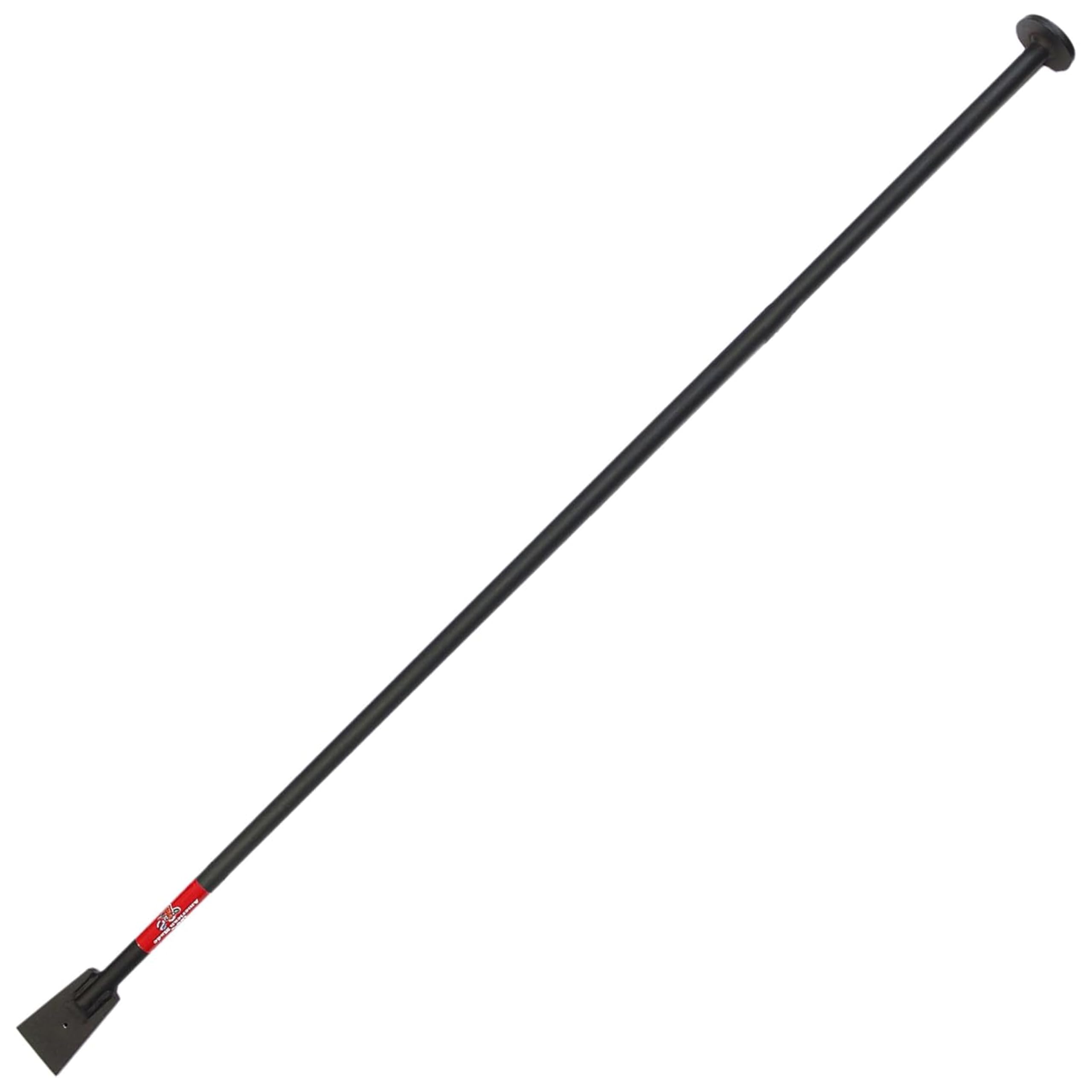
This is the tool you reach for when the ground fights back. The Bully Tools digging bar is a 1-inch diameter solid steel bar with a 3/8-inch thick blade end for cutting through dirt, clay, mud, and rocky terrain — and a flat plate on the other end for tamping backfill. It’s two essential tools fused into one 68-inch monster.
That length is pure leverage: at 68 inches, you apply more force with less effort, which makes breaking compacted soil, cutting tree roots, and prying out stumps genuinely easier. The weight does the work — at 16.2 pounds, it naturally sinks into tough ground with each swing. Owners mention using it for years without a permanent bend, proof of the 100% American-made solid steel and powder coat finish that resists rust.
This is a serious tool that demands respect. As one owner put it, it’s “a beast of a tool” with an injury risk that requires caution similar to a chainsaw. It’s not a pry bar, so don’t expect to lever heavy objects — but for breaking ground, it’s outstanding.
Powerhouse benefits
- Cuts roots and breaks clay with a 3/8″ thick blade
- Flat end doubles as a tamper for backfill
- Lifetime durability from 100% USA steel
Beware the weight
- 16.2 lb is tiring for extended overhead work
- Shaft can flex during hard prying (but won’t stay bent)
Reach for this if: You’re installing fence posts, removing stumps, or breaking up rocky ground that defeats lesser tools.
Look elsewhere if: You only need light garden prep — this is more tool than a small flower bed requires.
4. Fiskars Pro IsoCore 36″ 2-in-1 Pickaxe & Hoe

A dual-ended workhorse that breaks tough soil while sparing your joints.
Trail builders and hardscape pros will recognize this one immediately. The Fiskars Pro IsoCore is a 2-in-1 tool: a pickaxe end for breaking up tough soil, rocky surfaces, and roots, plus a hoe end for cultivating, digging, and weeding. That 5 lb forged steel head is the star — it’s durable, with an inseparable riveted connection that stays secure even under heavy prying.
What sets this apart from a standard mattock is the IsoCore Shock Control System. This patented IsoCore system dampens shock and vibration, reducing muscle fatigue and joint strain. One trail-builder described replacing a worn-down model with this one, noting Fiskars never broke where cheaper brands did. The insulated ergonomic handle further reduces blisters and dampens vibration.
It’s a heavier tool at a 5 lb head, but the weight is what gives it momentum for chopping through hard, dry soil. The 36-inch handle provides a secure grip for swinging and prying. Customers note it handles decomposed granite hillsides and digs out retention wall areas with authority.
Built for the long haul: If you value a body-friendly tool that lasts — and Fiskars backs it with a lifetime warranty — this is a smarter investment than cheap hardware-store alternatives.
Ideal for: Heavy soil work, trenching, and trail building where shock reduction saves your elbows.
Skip if: Your jobs are light duties — the 5 lb head is overkill for a small vegetable patch.
5. Landzie 36″ Lawn Leveling Rake
A sturdy leveler that stays flat on the ground for efficient, one-pass smoothing.
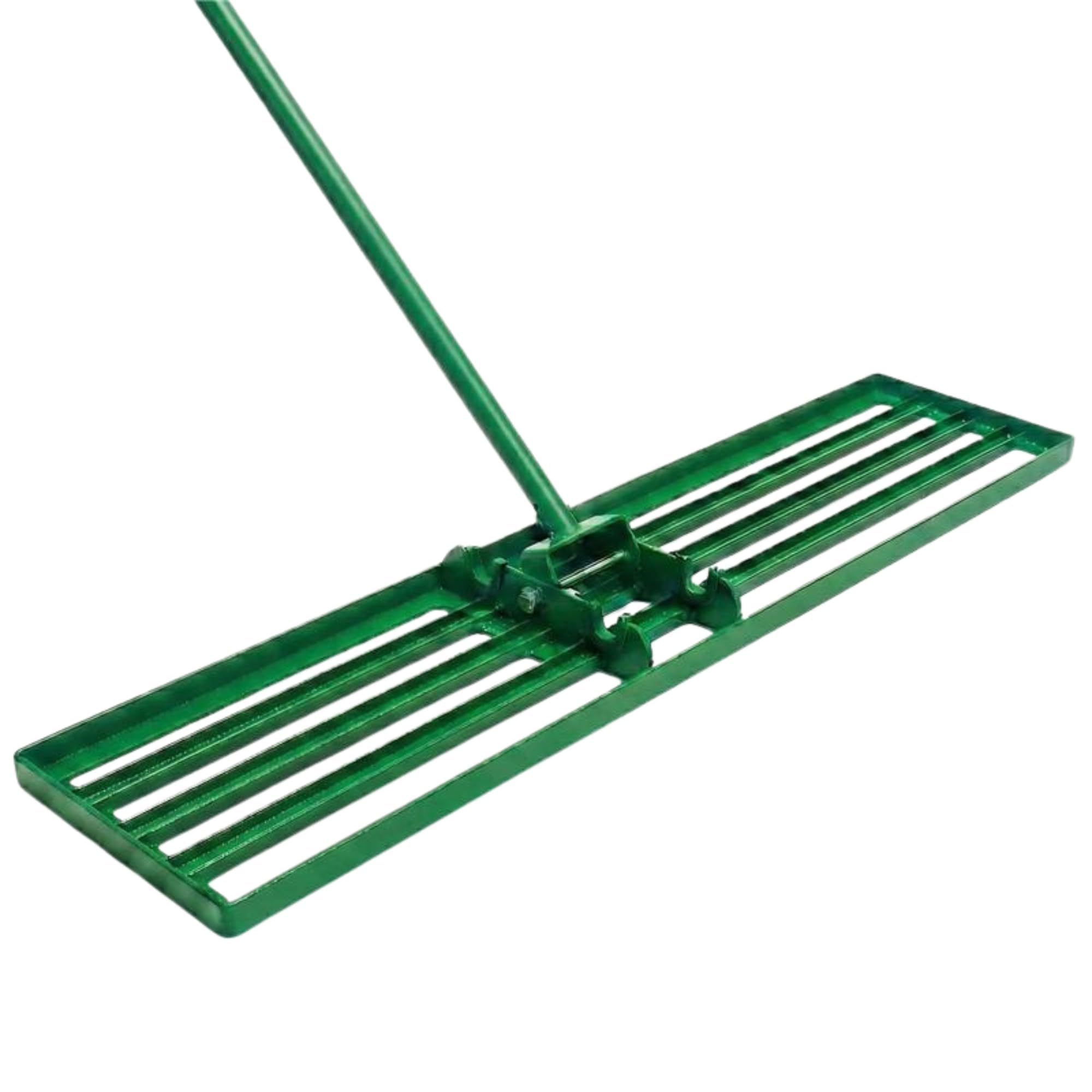
Where the Dremmt focuses on sheer plate size, the Landzie earns its reputation through build quality. The thing everyone raves about is the solid construction — the powder-coated steel head is built to take a beating, and the fortified head-to-pole connection handles clumpy material without wobbling. It stays flat against the surface, which is the difference between leveling soil and just dragging it around.
The 36-inch head is a versatile middle ground, balancing coverage with maneuverability. The extended 72-inch handle keeps you upright, and the detachable design breaks down for flat storage in seconds — just unscrew the poles and store them on the back of the head. It’s also lightweight at 8.4 pounds, making it easier to move around than heavier steel plates.
One recurring note from owners is that the open tine backs can collect sand and dirt during use. It’s a minor annoyance rather than a failure, but those who want zero clogging might prefer closed tines.
Efficient performer: Works beautifully on freshly tilled soil and loose, dry ground, cutting leveling time significantly.
Best for: Perfecting topdressing, prepping soil for patios, and smoothing rough patches without back strain.
Consider: The pivot bolt can feel clunky and may scratch paint without a washer.
6. Fiskars 60″ Pro Garden Shovel
The sharpest edge in the shed, ready to pry out roots and posts.
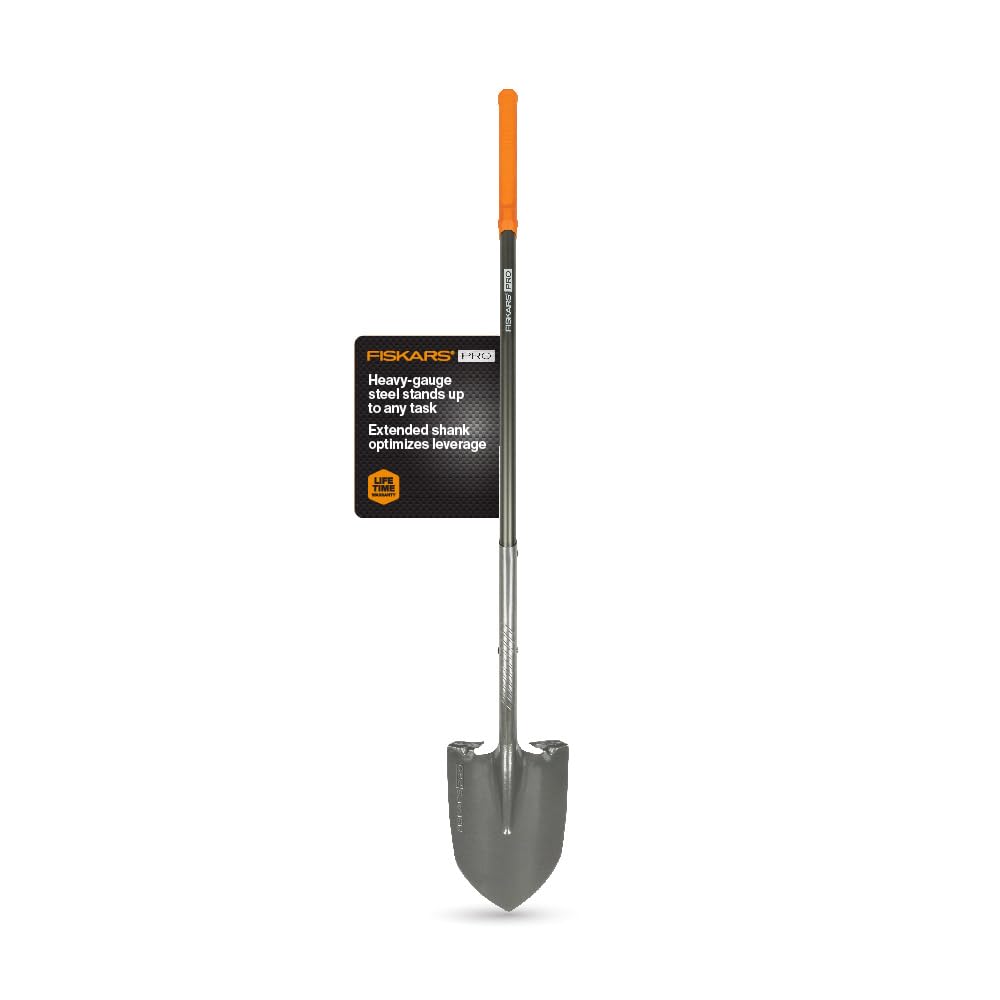
When the job requires prying concrete-embedded fence posts or cutting through stubborn roots, this is the shovel you want in your hands. The Fiskars 60″ Pro Shovel features a heavy-gauge spade with a sharpened edge designed specifically to tune digging and prying — and it stays sharp through heavy use. Reviewers point out it survived prying out concrete fence posts where hardwood, fiberglass, and composite shovels broke.
The aluminum handle is the clever part: it’s lightweight at just 2 pounds, so you get the strength of steel without the back-breaking weight. The teardrop-shaped shaft allows a better fit and more control when digging, and the rubber grip keeps your hands comfortable. At 60 inches, it offers excellent leverage for deep digging.
This is the tool that owners describe as “the best shovel I’ve ever used.” It handles farm work, cemetery work, and rocky soil with equal ease. The only mixed feedback centers on weight perception — some find it light, others heavy — but most agree the sturdy blade and non-flexing design make digging noticeably faster.
Why it earns its spot
- Sharpened blade cuts roots and pries without bending
- At 2 lb, the aluminum handle keeps fatigue low
- Teardrop shaft gives superior control
Heads up
- Some buyers find it heavier than expected
- Minor cosmetic scratches can arrive from shipping
The verdict: A lifetime shovel for anyone who digs seriously — backed by a full lifetime warranty.
Better for: Landscapers and homesteaders who need one dependable digging tool.
7. FELCO F211-60 Swiss Made Loppers
Swiss precision that makes cutting back bougainvillea feel easy.
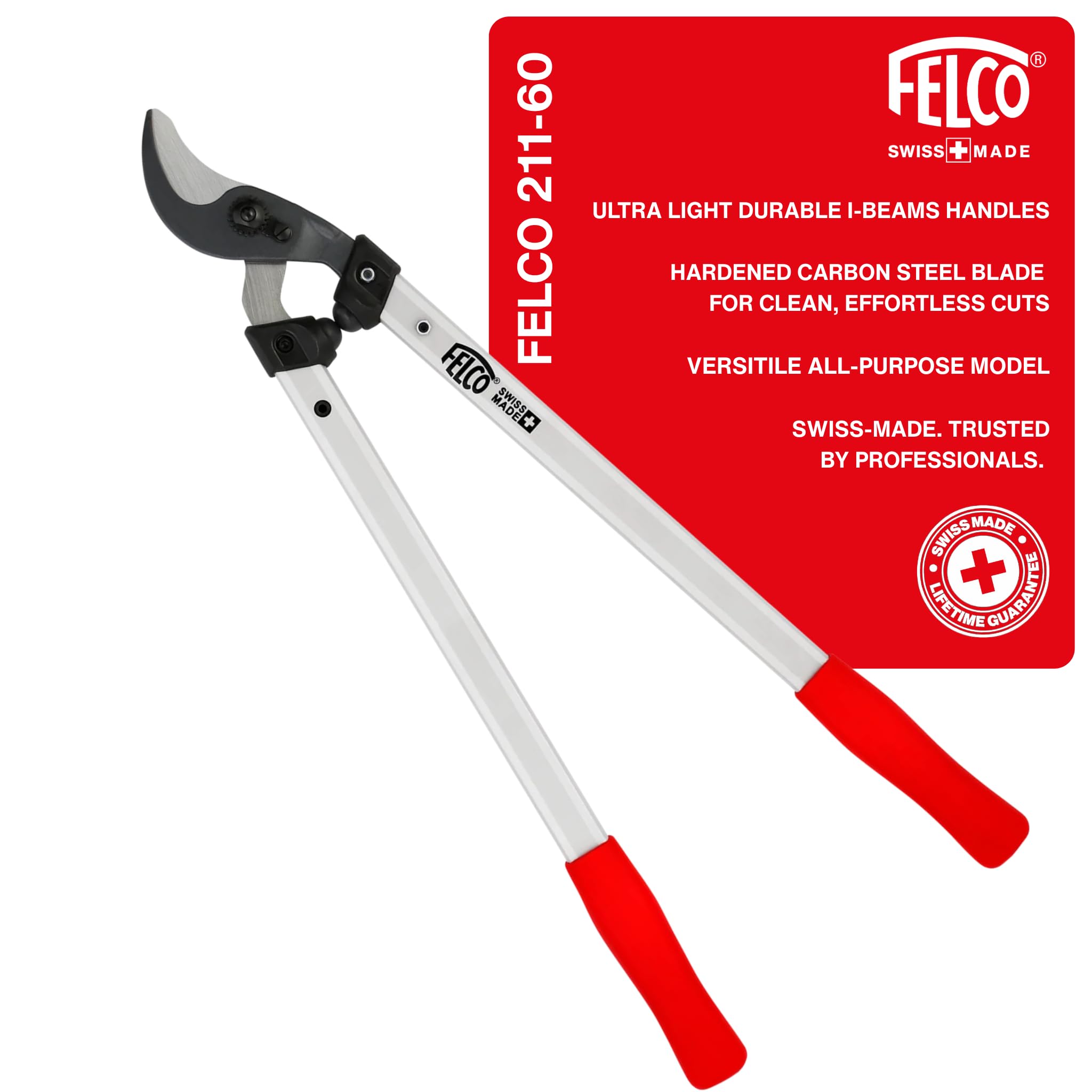
FELCO is a name that needs no introduction among tree care professionals, and the F211-60 shows exactly why. These 24-inch loppers feature a curved bypass blade on carbon steel for maximum edge retention — the kind of blade that stays sharp cut after cut. The cutting capacity reaches 1.2 inches, covering most tree trimming and branch work around a landscape.
What owners can’t stop praising is the lightweight aluminum handle design, making these substantially lighter than wooden-handled alternatives. That weight savings translates directly to less arm fatigue when you’re reaching overhead for extended pruning sessions. The quality (24 positive mentions is the most-discussed aspect) is evident in every detail, from the micrometric adjustment mechanism for easy blade replacement to the phthalate-free durable grips.
The one maintenance note: keep a light coat of oil on the carbon steel blades when not in use to prevent corrosion. It’s a small ritual for a tool that owners say will last for years. This is an investment piece — as one orchard owner put it, “worth every penny” compared to the cheap loppers that came before.
Swiss engineering
- Carbon steel blade holds an edge through heavy use
- Aluminum handles are substantially lighter than wood
- All parts are replaceable and maintainable
The upkeep
- Requires regular oiling to prevent blade corrosion
- Premium price reflects pro-grade build
The pick for: Serious pruners and small orchard owners who want a tool that cuts cleanly for decades.
Note: Time will tell, but shoppers say the easiest cutting experience they’ve ever had on tough plants like bougainvillea.
8. Rogue 7″ Heavy Duty Field Hoe

A recycled-steel blade so sharp it makes weeding almost enjoyable.
The Rogue Hoe line is built from recycled agricultural disc blades, which explains why it feels different from anything at the big-box store. The 7-inch wide cutting blade edge breaks up sod, cultivates, and clears waste trees up to 1 inch in diameter. The socket and blade are welded together, making it durable enough for sustained heavy use.
What owners praise most is the quality — it’s the most-mentioned aspect by a wide margin. The blade arrives sharp on three sides and stays sharp all day, taking a razor edge with a file when it eventually dulls. The 4.09-pound weight is part of its effectiveness: one swing does the work of two or three with a lesser hoe. The long handle allows you to work upright, saving your back during long weeding sessions.
This is a tool that inspires loyalty. One owner refuses to lend it out, and several describe it as a lifetime purchase they’d happily make again. It’s a costlier upfront investment than a hardware-store hoe, but owners say it outlasts them and cuts everything from blackberries to compacted clay.
The cult favorite: Ex-firefighters and serious food gardeners alike swear by this hoe’s ability to chop through roots and sod.
Best for: Weeding, clearing overgrown areas, and tilling soil by hand without renting a tiller.
Heads up: The blade is dangerously sharp on arrival — treat it with the respect it deserves.
9. A.M. Leonard All Steel Nursery Spade

The all-steel edging spade that cuts roots cleanly and lasts a lifetime.
Nursery professionals have trusted A.M. Leonard for decades, and this all-steel spade shows why. The 13-inch blade tapers from 7-3/8 inches to 6-3/8 inches, a shape designed for clean edging and precise digging. It’s welded at the blade to manage big projects without breaking — exactly what you need when cutting through tough roots.
The all-steel construction with a powder-coated handle resists rust, and the turned steps give your foot a comfortable surface when pushing into soil. At 8 pounds, it carries a reassuring heft that helps it sink into the ground. Buyers report it handles 2.5-inch thick roots with ease and makes edging beds significantly easier.
Some find it on the heavier side — one owner described it as “a little heavy” — but most agree the weight is what makes it effective. That 50-inch long handle gives you good reach without excessive stooping. For a tool that’s “absolutely a beast” and expected to be the last spade you’ll need, it’s a worthy investment for serious gardeners.
Nursery-grade build
- 13″ blade slices through roots up to 2.5″ thick
- Welded blade-to-handle connection resists breaking
- Powder-coated finish resists rust
Consider
- 8 lb weight is tiring for prolonged use
- Premium price for a single-purpose tool
The pick for: Edging beds, digging trenches, and cutting through established roots.
Think twice if: You want an all-purpose shovel — this is a specialized nursery tool, not a general digger.
Understanding the Specs
Cutting Capacity and Blade Geometry
Look at the maximum cutting diameter a pruner or lopper handles — usually measured in inches or millimeters. That number tells you the thickest branch the tool can cleanly sever. Pair that with blade type: bypass blades slice cleanly for live wood, while anvil blades crush for dead, tough wood. A 0.98-inch pruner covers most garden work, while a 1.2-inch lopper extends your reach for overhead branches.
Handle Length and Leverage
The handle length directly controls how much force you generate with each swing or squeeze. A 68-inch digging bar gives massive leverage for prying roots, while a 24-inch lopper keeps overhead work manageable. Longer handles also let you work standing upright, which protects your back during long sessions. Shorter handles improve precision but require more bending.
Weight and Material Quality
Professional tools trade outright lightness for durability — the weight is often a feature that does the work for you. Forged steel heads resist bending, while welded or riveted connections survive prying that snaps cheaper tools. Aluminum handles cut weight substantially without sacrificing strength. Look for powder-coated finishes that resist rust and carbon steel blades that hold an edge longer.
FAQ
What is the difference between bypass and anvil pruners?
How long should a professional-grade tool last?
What is the ideal handle length for avoiding back strain?
Can I sharpen professional pruning blades myself?
What is the difference between a leveling rake and a standard garden rake?
How much weight is too much for a digging bar?
Can one tool handle both digging and tamping?
Should I buy a 2-in-1 pickaxe and hoe or separate tools?
Final Thoughts: The Verdict
For the majority of shoppers, the professional landscaping tools winner is the Original LÖWE Profi Anvil Pruner because it delivers pristine cuts at a featherlight weight that makes pruning feel easy, all backed by a 4.8-star crowd approval. If you’re fixing a bumpy lawn, grab the Dremmt 35″ Leveling Rake — its 72-inch handle saves your back while the stainless steel plate flattens soil in one pass. And for breaking rocky ground or removing stubborn roots, the Bully Tools 68″ Digging Bar is the 16.2-pound workhorse that owners say will outlast them.
How We Picked
We do not accept paid placement. Every pick is matched to a real buyer and a real use-case; we do not hands-on test units.
Sources & Methodology
Specifications: manufacturer listings and product documentation. Review insights: verified customer reviews, as of August 2026. Pricing: not shown on this page (it changes often); check the current price via the retailer link.
As an Amazon Associate, Lawn Gear Lab earns from qualifying purchases. This does not affect which products we feature.