
Specs are compiled from manufacturer listings and verified buyer reviews and can change over time — please confirm the key details on the product page before buying.
That means choosing untreated wood — and not all untreated wood is created equal. This guide breaks down the best Raised Beds Untreated Wood options, from waist-high planters to ground-level frames, so you can pick by how you garden.
I’m Rikta — the founder and writer behind Lawn Gear Lab. This guide is built by comparing the manufacturers’ published specifications and the patterns across verified customer reviews, so you get each pick’s real strengths and trade-offs instead of marketing spin.
We focus on the top-tier cedar and fir beds that stand up to weather and soil, comparing construction, capacity, and assembly to find your best match for raised beds untreated wood.
Our Picks at a Glance

How To Choose The Best Raised Beds Untreated Wood
Before you pick a brand, decide how you want to garden: standing up or crouching down. improve beds with legs save your back but hold less soil, while ground-level frames give roots more room to grow deep.
Wood Type: Cedar vs. Fir
Cedar’s natural oils resist rot and insects, making it the standard for untreated beds. Fir is also a solid choice, but it lacks cedar’s natural pest repellent, so it relies more on the finish for protection.
Board Thickness and Longevity
Thicker boards hold up longer against wet soil. A 1/2-inch board is thinner and more budget-friendly, but a 1-inch board will resist warping and bowing far better over multiple growing seasons.
Quick Comparison
| Model | Best For | Wood Type | Capacity | Height | Amazon |
|---|---|---|---|---|---|
| 48x24x30 Wood-Natrl★ Best Overall | Best Overall (Waist-Height) | Cedar | 6 cu ft | 30″ | Amazon |
| 48x24x30 MederlaHigh Capacity | High Capacity Value | Cedar | 300 lb | 30″ | Amazon |
| 48x24x30 Maple99Builder’s Pick | Classic improve Bed | Cedar/Fir | 200 lb | 30″ | Amazon |
| Greenes Fence Classic | Large Ground Area | Cedar | Open Base | 10.5″ | Amazon |
| Greenes Fence Original improve | Back-Friendly Portability | Cedar | 4.8 cu ft | 31″ | Amazon |
| AMERLIFE 8×4 Ft | Maximum Growing Space | Fir | 44 cu ft | 15″ | Amazon |
| Infinite Cedar 3×6 | Premium 1″ Thick Cedar | Cedar | 16.5 cu ft | 11″ | Amazon |
| Gardener’s Supply improve | Heavy-Duty Metal Frame | Cedar | 7 cu ft | 29″ | Amazon |
| Infinite Cedar 4×8 | Large 1″ Thick Build | Cedar | — | 11″ | Amazon |
In‑Depth Reviews
1. Wood-Natrl 48x24x30 Raised Garden Bed
Our pick — over 4.5★ from 350+ verified ratings; the strongest balance of quality and price.
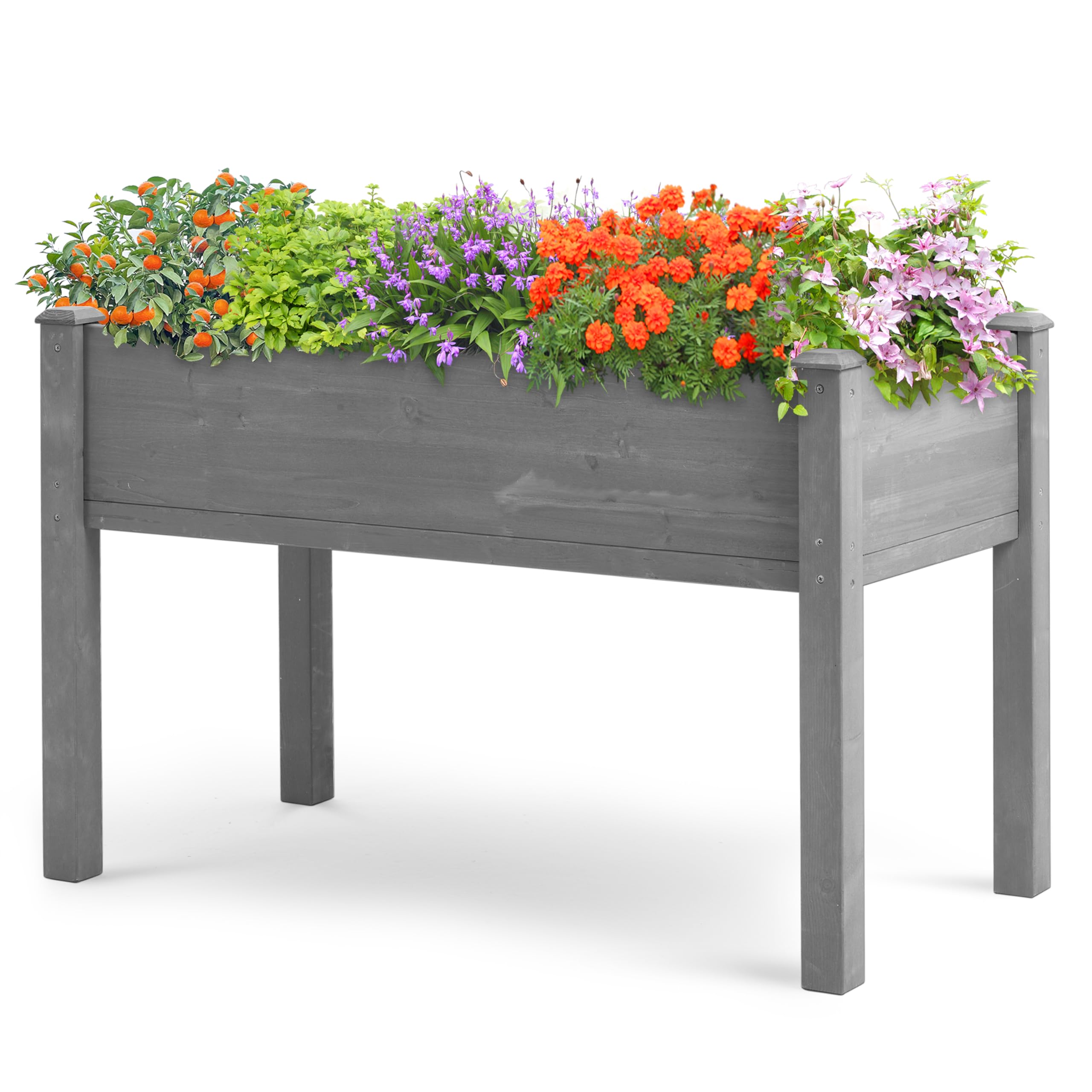
The waist-high cedar bed that makes daily gardening a no-bend habit.
This bed earns the top spot because it solves the most common complaint about gardening: the back pain. The 30-inch waist-height design brings the soil right to you, so planting, watering, and harvesting feel less like chores and more like standing at a counter. It holds a spacious 6 cubic feet of soil in a 48 x 24 inch footprint, giving you room for vegetables, herbs, and flowers without taking over your patio.
Assembly is where owners say this planter shines — the single most-praised aspect is the setup, with clear instructions and pieces that only need a battery-powered screwdriver. The included liner filters water runoff and keeps soil off the wood, which helps the cedar last longer. At 16.3 pounds, it is far lighter than the Maple99 bed below (33.3 pounds), making it genuinely easy to move around your yard when you need to chase the sun.
You get strong support from 2.4-inch-thick legs, and the water-based paint finish protects the wood without the harsh chemicals in treated lumber. Buyers describe it as a well-made cedar planter with clear instructions, a tailored liner, and good drainage, expecting it to last 12+ years. It’s a rare bed that looks good on a deck and functions well for serious planting.
What Wins People Over
- Easy, clear assembly that takes minutes with a screwdriver
- Lightweight 16.3 lb frame you can reposition solo
- Built-in liner filters runoff and extends wood life
Worth Knowing
- Gray finish may not suit every garden aesthetic
- Less capacity than taller or longer ground beds
Reach for it if: you want a sturdy, good-looking improve bed that won’t strain your back and is quick to set up.
Look elsewhere if: you need maximum soil depth for deep-rooted crops like full-size carrots or potatoes.
2. Mederla 48x24x30 Cedar improve Planter
More growing capacity than the top pick, with the same back-friendly height.
If the Wood-Natrl bed feels slightly small for your ambitions, this Mederla planter is the direct upgrade on load. The natural cedar wood with a water-based protective finish shows off the wood grain instead of hiding it under paint.
Owners consistently praise the easy assembly and sturdy build; the second-most-discussed aspect after setup is quality, with many noting the bed feels solid and well-made. Buyers report it “came with a liner (bonus) and was super easy to put together,” and one family bought it as a Christmas gift that arrived early and smelled amazing. It even comes with tools and an instruction manual included, so you don’t need to hunt for hardware.
There is one honest caveat: some owners have mixed feelings about the wood’s odor. Cedar naturally has a strong, sauna-like scent that fades over time, but it’s noticeable at first. Also, by weight this bed is nearly double the top pick at 30 pounds, so it’s not as easy to drag around. Set it where you want it and leave it.
Solid and spacious: the 300-pound rating gives you real freedom to grow heavy crops, and the included liner keeps soil in place while drainage holes prevent water buildup.
The trade-off: the strong cedar smell at unboxing isn’t for everyone, and the heavier frame means you’ll commit to its location.
3. Maple99 Cedar Raised Garden Bed 48x24x30
A straightforward improve bed that rewards a little DIY care.
This Maple99 bed takes a more classic approach: natural finish, cedar and fir mix, and a design meant to be customized. The 30-inch legs give you the same ergonomic benefits as the top picks, but the natural wood invites you to paint or stain it to match your home. Owners love that it arrives with all hardware and clear instructions — no measuring, cutting, or drilling required.
The thing every owner raves about is the assembly, with setup under 30 minutes reported frequently. The fresh cedar scent and sturdy feel impress, and one owner found it “larger than expected” and spacious for both vegetables and herbs. Owners mention that a coat of tung oil makes rain bead right off the wood, and the logo can even be hidden by flipping a piece during assembly.
Here’s the honest engineering note: this bed is rated for 200 pounds, but one owner calculated that wet soil can exceed that — up to 428 pounds — and suggested adding a steel bar under the floor for extra support. That’s a smart modification for heavy soils, not a reason to skip it. At 33.3 pounds, it’s the heaviest of the 48x24x30 improve options, which actually makes it feel planted and stable, but harder to move.
A DIY canvas: the paintable natural cedar and fir mix lets you make it your own, and the sturdy 30-inch legs keep your back happy.
Plan ahead: consider reinforcing the floor if you plan to fill it with wet, heavy soil, and stabilize it with oil to boost its lifespan.
4. Greenes Fence Classic Raised Garden Bed 2’x8′
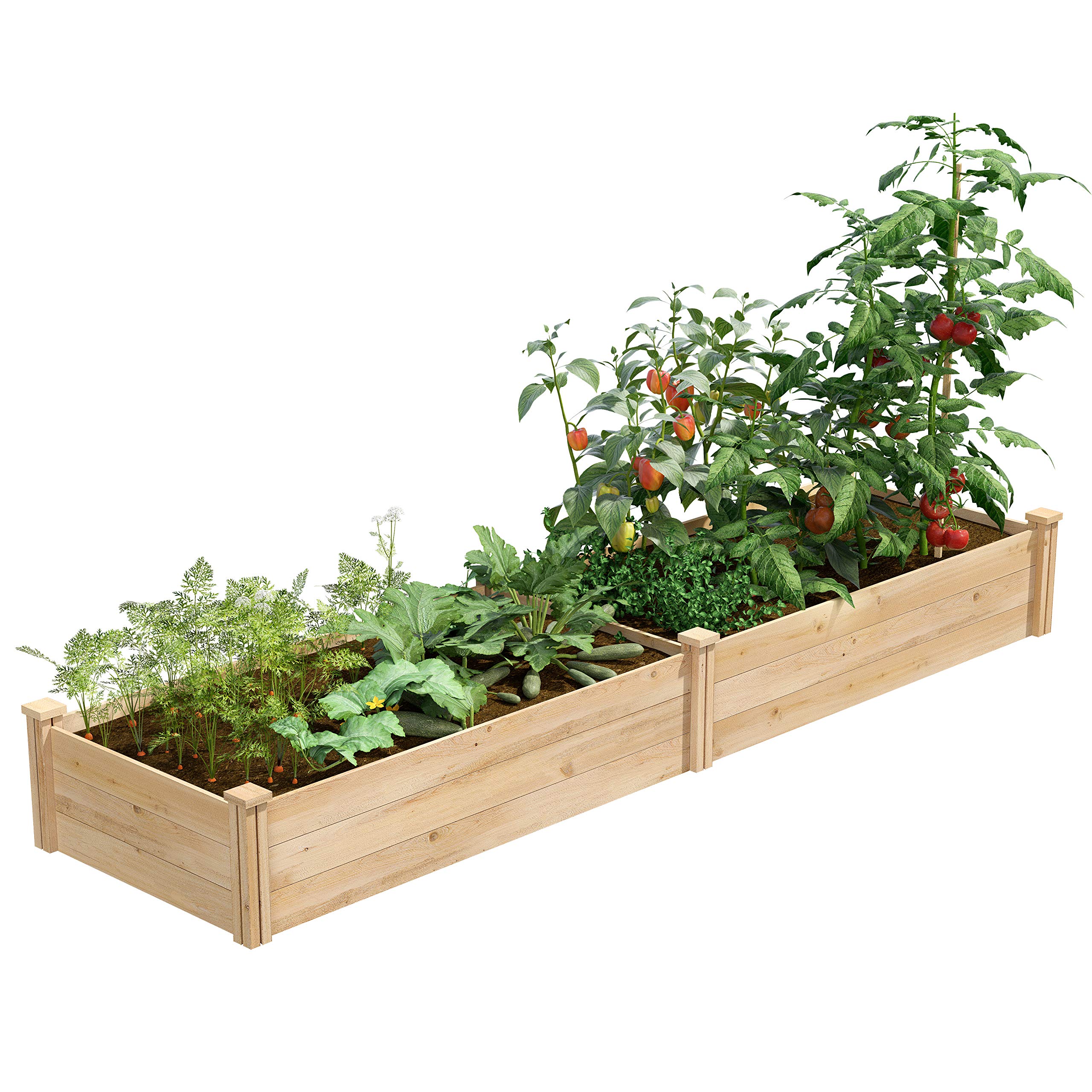
A long, tool-free ground bed for gardeners who want maximum planting length.
If you’d rather sprawl than stand, this 2-foot by 8-foot classic is the layout king. It’s an open-bottom frame, meaning you place it directly on the ground and let plant roots grow down into your native soil — perfect for deep-rooted crops. The dovetail interlocking joints let each board slide into the corner posts without any tools, so assembly is genuinely a breeze.
You’ll love the tool-free setup, and owners appreciate that the untreated North American cedar is left organic and safe for edibles. It’s made in the USA and weathers to a nice silver-gray over time. The classic line uses unsanded, thinner boards (1/2 inch thick) to keep the cost down, which is great for the budget but comes with a real trade-off: some customers note the thin material means less sturdiness, with corners occasionally breaking during assembly if you’re not gentle.
This bed excels at one thing above all: coverage. At 8 feet long, it gives you serious growing room for a family vegetable patch. Just be prepared to treat the thinner boards with care during setup, and consider adding a sealant to protect the 1/2-inch wood from moisture over the years. It’s the smart pick for ground-level expansion, not for aggressive handling.
Why It’s a Ground Favorite
- 8-foot length for serious vegetable production
- Tool-free dovetail joints slide together quickly
- Open base lets roots reach native soil
Handle With Care
- Thin 1/2″ boards need gentle assembly
- Not ideal for moving once built
Choose this for: large ground-level patches where you want fast, tool-free setup and open-root growth.
Think twice if: you’re rough with assembly or need a portable bed you can relocate each year.
5. Greenes Fence Original improve Cedar Bed 24″x48″

A rustic, back-saving cedar pedestal for small-space gardeners.
This improve bed from Greenes Fence is the one to grab if you garden on a balcony, porch, or deck and want that waist-high convenience. At 31 inches tall, it brings the garden right to you, and one owner with limited mobility called it ideal — a real help for anyone avoiding bending or kneeling. The untreated North American cedar keeps things organic and safe for your herbs and veggies.
Assembly is famously easy, often taking about 15 minutes with just a rubber mallet. The rustic finish means the lumber is rough and splintery straight from the start, so owners recommend wearing gloves and having sandpaper handy — but they also note the cedar smells fantastic, like a sauna. It holds up to 4.8 cubic feet of soil, and natural drainage between the bottom slats keeps roots from waterlogging.
What really sets this apart is the included fabric liner, which helps retain soil while still letting water escape. It’s a genuinely charming, functional piece that one owner said keeps bunnies away from their veggies. The trade-off is that the rough-cut wood isn’t as refined as premium options, so be ready to sand and seal it yourself if you want a smoother finish.
Cedar that earns its keep: the 31-inch ergonomic height and 4.8 cubic feet of soil make this a standout for patios and accessible gardening.
Expect some rustic grit: the splintery, rough-cut finish rewards a little DIY sanding, and the included liner is a welcome bonus.
6. AMERLIFE 8×4 Ft Wood Raised Garden Bed
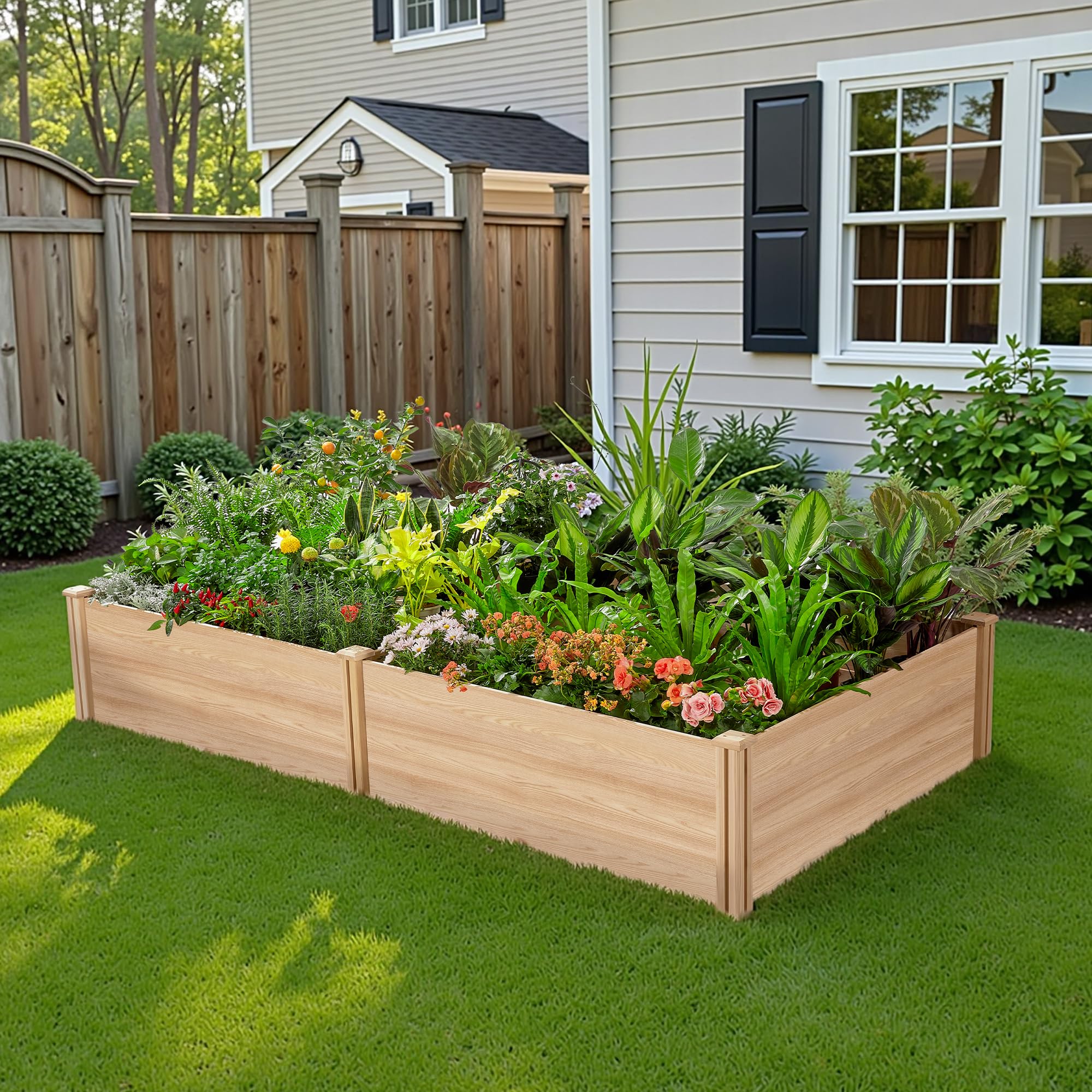
A sprawling 44-cubic-foot fir bed for the serious home grower.
This AMERLIFE bed is for when a 4-foot-long planter just isn’t enough. At 8 feet by 4 feet with a 15-inch depth, it offers a massive 44 cubic feet of planting space — enough to organize a real vegetable operation with a central divider for separate crops. The fir wood construction gives it a warm, natural aesthetic that looks at home in a backyard or against a fence line.
Assembly is a highlight, with a mortise-and-tenon structure that clicks together tool-free in about 15 minutes. Owners praise the easy setup and the grand appearance, and the open-base design provides excellent drainage directly into the ground below. The solid wood build is designed to handle heavy loads without wobble.
The honest caveat here is durability over time. While many reviewers point out the fir is sturdy and beautiful, a recurring theme is concern about warping and the wood’s long-term resilience — one owner hopes “it doesn’t warp too much by spring.” The center poles can develop cracks if you pull boards in and out aggressively. For a bed this size, that’s a fair trade-off for the sheer growing capacity, but it’s not the set-and-forget cedar premium option.
Bounty Potential
- 44 cu ft of space with a helpful center divider
- Quick tool-free assembly in about 15 minutes
- Open base for direct ground drainage
Seasonal Watch
- Fir can warp over time in harsh weather
- Center poles need gentle handling to avoid cracks
Best for: large backyards where maximum planting area trumps portability and you want a fast, tool-free setup.
Not for: those who want a low-maintenance bed that will ignore harsh winters without some seasonal care.
7. Infinite Cedar Premium 3’x6′ Raised Garden Bed

Handcrafted 1-inch-thick cedar that puts thin budget boards to shame.
Here’s the difference that 1/2 inch makes: this Infinite Cedar bed uses full 1-inch-thick Western Red Cedar, which is why owners say it “should hold up a lot better than the super-thin ones I had to replace.” One owner even snapped their old cheap boards apart by hand to throw in the fire pit. This is the bed you buy when you’re tired of replacing flimsy frames every couple of years.
Made in Maine from rot-resistant, 1-inch-thick North American Western Red Cedar, it has no screws or nails to loosen and no dovetail corners to break. It’s 100% natural with no chemicals or stains added, and it arrives with a 5-Year Warranty. The 3-foot by 6-foot footprint with an 11-inch height holds 16.5 cubic feet of soil — a serious growing volume for a ground-level bed.
Assembly is nearly instant; one owner said it “literally took five minutes to put together.” The boards arrive straight and smooth with no rough edges, a stark contrast to rustic options. Some owners note warping can happen on the longer pieces after a few weeks, but the responsive customer service and the ability to add metal brackets for reinforcement make this a dependable, heavy-duty choice for the long haul.
Built to be replaced-proof: the 1-inch-thick cedar alone is worth the step up from thin, budget boards, backed by a 5-Year Warranty.
One watchpoint: long planks can warp in extreme conditions, so consider corner brackets and a level base to keep it true.
8. Gardener’s Supply improve Cedar Raised Bed 2’x4′

The heavy-duty hybrid: rustproof aluminum legs under thick cedar slats.
This is the improve bed that doesn’t rely on wood alone for its strength. Gardener’s Supply pairs beautiful, naturally rot-resistant cedar with heavy-duty rustproof aluminum legs and corners, creating a frame that feels rock-solid under heavy, wet soil. At 29 inches high, it’s ergonomically ideal, and the 2-foot by 4-foot footprint features 10 inches of depth.
The design is clever: a false floor made of cedar slats sits 10 inches down from the top, allowing excess water to drain while giving roots plenty of vertical room. It holds approximately 7 cubic feet of mix (about 170 quarts of soil) across 8 square feet of growing space. Owners love the sturdy construction, with one fitting an impressive haul of tomatoes, cucumbers, peppers, and squash in a single bed.
The premium price is the main sticking point — some owners feel it’s worth every dollar for the durability, while others find it expensive. Assembly takes a bit longer than tool-free options, around 30 minutes, and some owners recommend pre-drilling screw holes to avoid splitting the wood. But the payoff is a planter that one owner says holds up well even in humid conditions, and the metal legs protect the structure from ground moisture.
Engineered Strength
- Rustproof aluminum legs outlast all-wood frames
- 7 cu ft capacity across 8 sq ft of space
- False floor drain system promotes root health
The Investment
- Higher price point than wood-only beds
- Hole alignment needs patience during setup
Pick this if: you want the sturdiest improve design that blends wood warmth with metal reliability and can handle deep, heavy plantings.
skip it if: you’re after the fastest, cheapest setup and don’t need the extra metal reinforcement.
9. Infinite Cedar Premium 4’x8′ Raised Bed

The definitive 4×8 ground bed with hefty 1-inch planks and bolt-together ease.
This is the big sibling to the 3×6 Infinite Cedar bed, and it’s the ultimate for a serious ground-level garden. Spanning 4 feet by 8 feet with an 11-inch height, it gives you an enormous canvas for vegetables and herbs. The standout feature is the 1-inch-thick Western Red Cedar boards, which owners consistently praise for their quality and thickness.
Assembly is straightforward thanks to pre-cut and pre-drilled boards that connect with heavy-duty bolts — no tools beyond what’s included. One owner called it “simple to use assembly” with “thick cedar boards, pre-assembled corners, and heavy-duty bolts.” It’s a solid, handsome structure that one family bought four of for their garden, reporting they’re durable and holding up well after 3+ years in New England.
The main caveats are minor: some owners note that the included locknuts with seal rings can’t always be tightened fully, leaving slight gaps or wobble, and a few mention surface cracks in the wood over time. Also, ensure your area is completely level before assembling, as an uneven base can crack a corner brace. Weighing 55 pounds, this is a substantial piece of equipment meant to stay put.
The grower’s workhorse: 1-inch cedar boards and a massive 4×8 footprint make this the long-term choice for serious ground-level production.
Setup diligence: a perfectly level base is non-negotiable, and you may swap the included locknuts for standard ones to eliminate wobble.
Understanding the Specs
Board Thickness
Board thickness is the single biggest predictor of your bed’s lifespan. Thinner 1/2-inch boards are cheaper and fine for mild climates, but they can bow, warp, or crack under wet soil pressure. A 1-inch-thick board resists wet-soil pressure far better and outlasts thinner frames by multiple seasons.
improve vs. Ground-Level
improve beds with legs (usually 29-31 inches tall) reduce bending and are perfect for patios, decks, and anyone with back or knee pain. Ground-level beds sit directly on the soil and offer an open base, letting roots grow deep into your native ground — but they require more bending to maintain.
Capacity and Soil Depth
Capacity (measured in cubic feet or pounds) tells you how much soil a bed holds. Deeper beds (15 inches or more) support larger plants like tomatoes and carrots, while shallower beds (around 10 inches) are fine for herbs and leafy greens. Always match depth to what you plan to grow.
Natural Cedar vs. Fir
Cedar’s natural oils repel insects and resist rot without chemicals, making it the gold standard for edible gardens. Fir is a solid, more budget-friendly wood, but it lacks cedar’s natural pest resistance and relies more on the finish or paint to survive harsh weather.
FAQ
Why choose untreated wood for a raised garden bed?
How long will an untreated cedar raised bed last?
Is fir wood safe for growing vegetables?
What is the best height for an improve raised bed?
Can I place a raised bed on a patio or deck?
How much soil do I need to fill a raised bed?
What is the difference between an open-base and a closed-bottom bed?
Do I need to seal or stain my untreated wood bed?
Final Thoughts: The Verdict
For most gardeners, the raised beds untreated wood winner is the Wood-Natrl 48x24x30 because it perfectly balances a back-saving 30-inch height, easy assembly, and lightweight portability in a quality cedar frame. If you need to feed a larger family, the AMERLIFE 8×4 Ft bed offers class-leading 44-cubic-foot capacity. And for the longest-lasting, most rugged build, the Infinite Cedar 3’x6′ with its 1-inch-thick boards and 5-Year Warranty is the one to reach for when you want to buy it once and be done.
How We Picked
We do not accept paid placement. Every pick is matched to a real buyer and a real use-case; we do not hands-on test units.
Sources & Methodology
Specifications: manufacturer listings and product documentation. Review insights: verified customer reviews, as of August 2026. Pricing: not shown on this page (it changes often); check the current price via the retailer link.
As an Amazon Associate, Lawn Gear Lab earns from qualifying purchases. This does not affect which products we feature.