
Specs are compiled from manufacturer listings and verified buyer reviews and can change over time — please confirm the key details on the product page before buying.
Breaking up compacted garden soil with a hand fork is a back-breaking hour you will never get back. A mini tiller changes that — it churns dirt, pulls weeds, and mixes compost in minutes rather than weekends. The real choice you face is gas versus battery, and that one decision shapes everything from weight to noise to how much maintenance you will ever do.
I’m Rikta — the founder and writer behind Lawn Gear Lab. This guide is built by comparing the manufacturers’ published specifications and the patterns across verified customer reviews, so you get each pick’s real strengths and trade-offs instead of marketing spin.
From the 28-pound gas veteran to featherweight cordless models, here are the best mini garden tiller options that earn their spot in your shed.
Our Picks at a Glance
How To Choose The Best Mini Garden Tiller
The perfect mini tiller for you depends on one question: how hard is your soil and how much ground do you cover? A tiny 4-inch handheld unit suits a container garden, while a gas-powered model laughs at unbroken clay but asks for fuel and oil in return.
Gas Power vs Battery Freedom
Gas engines like the Honda GX25 deliver relentless torque on tough ground and never need a recharge mid-row. The catch is real: you mix nothing (this one runs on straight unleaded gas), but you do manage a 28-pound machine and its 2-year warranty. Battery models weigh a fraction of that, start with a trigger pull, and are silent enough for early mornings — but you trade raw grunt for runtime measured in minutes per charge.
Match the Tines to the Task
Count the tines and check their angle. A 48-tine staggered pattern breaks soil more evenly and resists clogging, while 4 hardened blades on a unit like the Earthwise keep things simple for lighter beds. Tilling width matters too: an 8.7-inch path needs more passes in a wide bed than a 10-inch one, but a narrower 4-inch tine set slips between established flowers without damage.
Battery Strategy: Tool-Only vs Bundled
If you already own DeWalt 20V Max or Milwaukee M18 batteries, a tool-only tiller saves money and shelf space. If you are starting fresh, a model that ships with two 4.0Ah batteries means you can swap packs and keep working without waiting for a recharge. Check amp-hours, not just voltage — a 2.0Ah pack drains fast under load, while 4.0Ah packs roughly double your window between swaps.
Quick Comparison
| Model | Best For | Power Source | Tilling Width | Tilling Depth | Amazon |
|---|---|---|---|---|---|
| Honda FG110★ Best Overall | Breaking new ground | Gasoline | 6–9″ | Adjustable bar | Amazon |
| Mayoki TillerTop Performer | DeWalt battery owners | Battery (tool only) | 10″ | 7″ | Amazon |
| FORDWALT TillerBest Value | Light to moderate soil | Battery (tool only) | 8.7″ | 6.3″ | Amazon |
| SOARFLY Tiller | All-day runtime | Battery (2×4.0Ah) | 9″ | 6.6″ | Amazon |
| TaskStar Mini Tiller | Tight spaces & seniors | Battery (2×2.0Ah) | 4″ | 4″ | Amazon |
| HEINPRO Tiller | Milwaukee M18 owners | Battery (tool only) | 9″ | 7″ | Amazon |
| Grelawner Tiller | High-speed cultivation | Battery (2×4.0Ah) | 8″ | 6″ | Amazon |
| ADOTOCAM Tiller | DeWalt 20V compatibility | Battery (tool only) | 9″ | 6.5″ | Amazon |
| Earthwise TC70020IT | Budget-friendly beds | Battery (2.0Ah incl.) | 7.5″ | 6″ | Amazon |
In-Depth Reviews
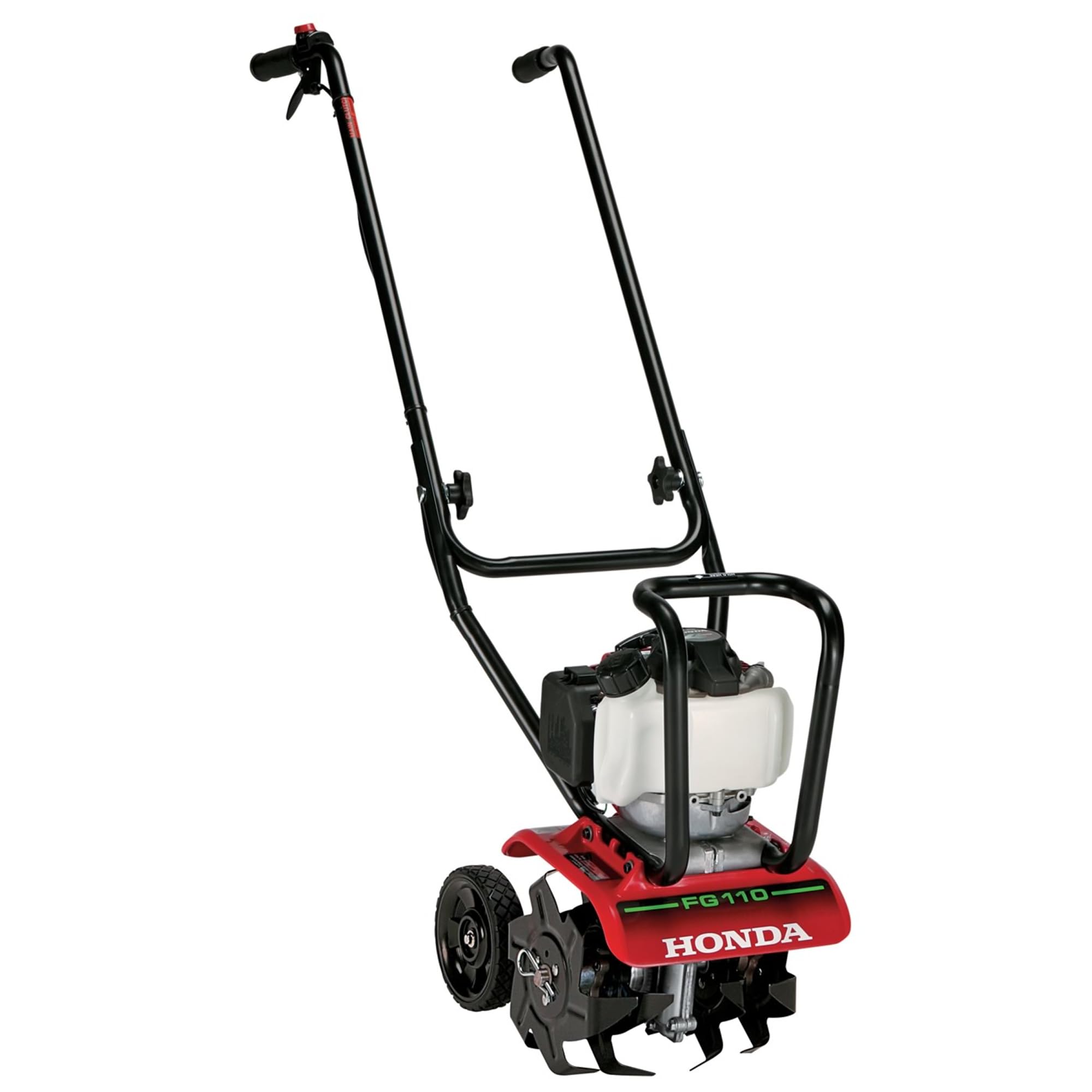
1. Honda FG110 Mini Tiller Cultivator (FG110KiAT)
Our pick — over 4.5★ from 350+ verified ratings; the strongest balance of quality and price.
The gas-powered heavyweight that ends the era of hand-cracking hard soil.
When nothing else will break new ground, this Honda earns its keep. Its patented hybrid tines split the work — half angled for digging, half for cultivating — so you get both actions in one pass. The legendary GX25 4-stroke engine starts on the first pull and runs on straight unleaded gas, so you never mix oil into fuel.
At 28 pounds it is the anchor of this list, nearly three times heavier than the cordless FORDWALT model below, but that heft is exactly what keeps it digging while lighter units bounce. The tilling width adjusts: run all the tines for a 9-inch path, or remove the outer pair to till 6 inches wide and sneak within 1 inch of plants without damage.
You get real control over speed and soil penetration with the adjustable depth bar, and the two-position transport wheels roll over smooth or rough terrain before you snap them off to till. Buyers report replacing a 20-year-old Toro cultivator with this and realizing “what we should have done 20 years ago.” The honest limit: this is built for light to moderate jobs in softer soil — extreme hard-packed ground may only give a few inches per pass. It is the premium pick here, so it suits the gardener who wants one machine for the long haul.
The Muscle
- Hybrid tines dig and cultivate in one pass
- Folds and rolls for easy storage and transport
- Adjustable depth bar controls speed and penetration
The Weight to Carry
- 28 pounds — the heaviest unit in this roundup
- Gas engine means fuel management and a 2-year residential warranty
- Premium price territory among these picks
Who it wins over: anyone with unbroken clay, a large veggie patch, or ambitions beyond weeding — this is the one machine that does it all.
The trade-off: lighter gardeners will feel the weight, and you must store fuel and manage a gas engine where cordless rivals just charge.
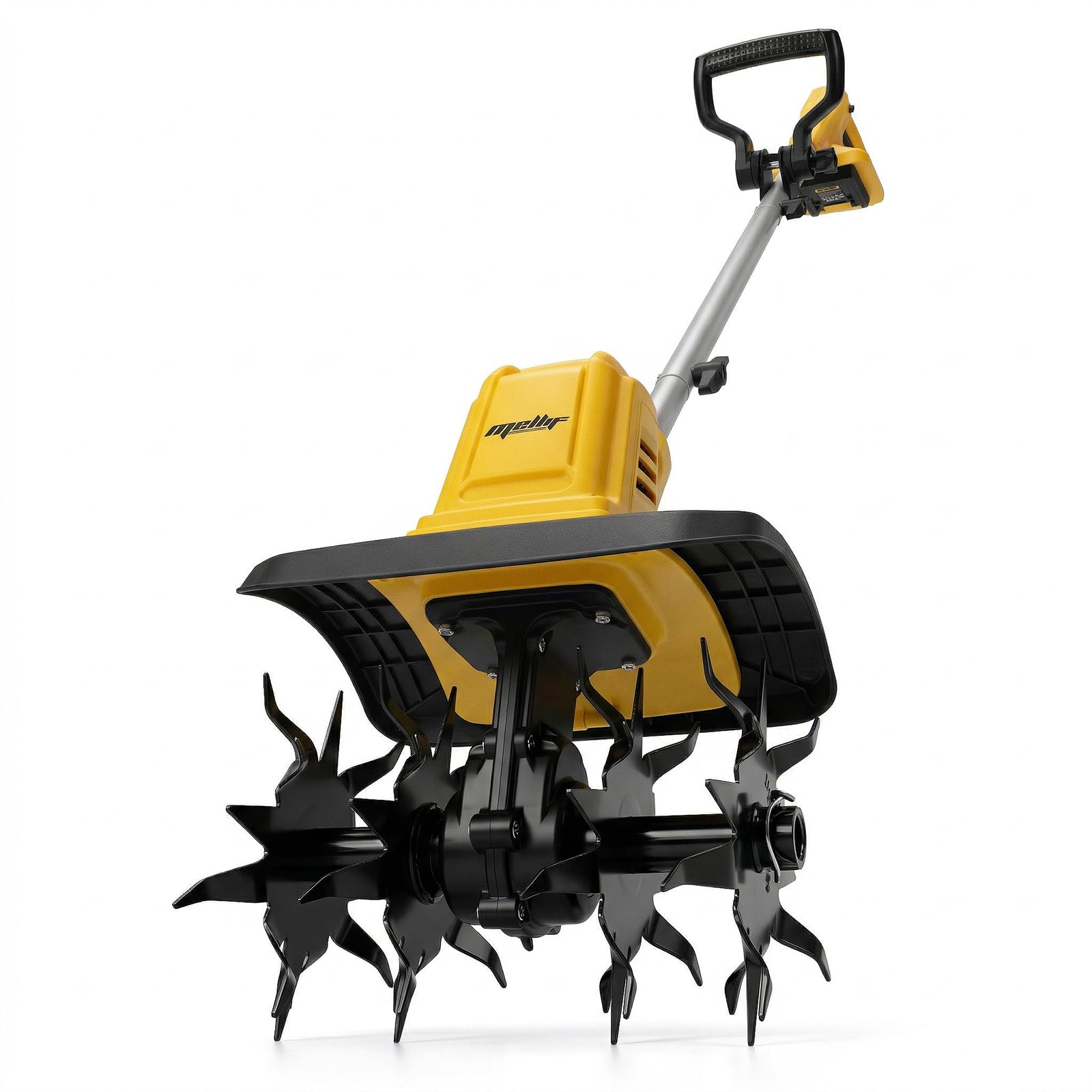
2. Battery Powered Garden Tiller Compatible with DeWalt 20V Battery (Mayoki)
The widest cordless cut here at 10 inches, built for your DeWalt batteries.
If you already own DeWalt 20V Max batteries, this tool-only tiller slips into your lineup without buying another charger. It is far lighter than the Honda at roughly a third of the weight, and its brushless motor spins 48 staggered steel tines to 280 RPM — enough to chew through garden beds, raised beds, and flower beds with fewer passes thanks to that 10-inch path and 7-inch depth.
This is the widest and deepest cut of any cordless model in this roundup, beating the FORDWALT’s 8.7-inch width by 15% and its 6.3-inch depth by 11%. The offset tine design fights clogging and improves aeration, compost mixing, and weed removal. A 180-degree adjustable auxiliary handle adapts to your height and working angle, while the integrated safety lock switch stops accidental startups.
Owners mention excellent results in small spaces, and the runtime story is honest: with 5 amp-hour batteries, customers note about 20 minutes of work before a recharge. The foldable one-piece design stores compactly, and the tool-free twist-and-pull blade replacement makes cleaning simple. The trade-off is that battery life is the recurring variable — you will want a second pack if your beds run large, and the tines arrive needing a bit of sharpening for some users.
Why it earns its spot: the biggest cordless tilling footprint here, matching DeWalt’s ecosystem, with a brushless motor that needs no gas, no oil, and nearly no maintenance.
Reach for this if: you are a DeWalt homeowner wanting one versatile battery tool that covers wide beds fast.
Look elsewhere if: you need all-day autonomy — this one lives and dies by your battery inventory.
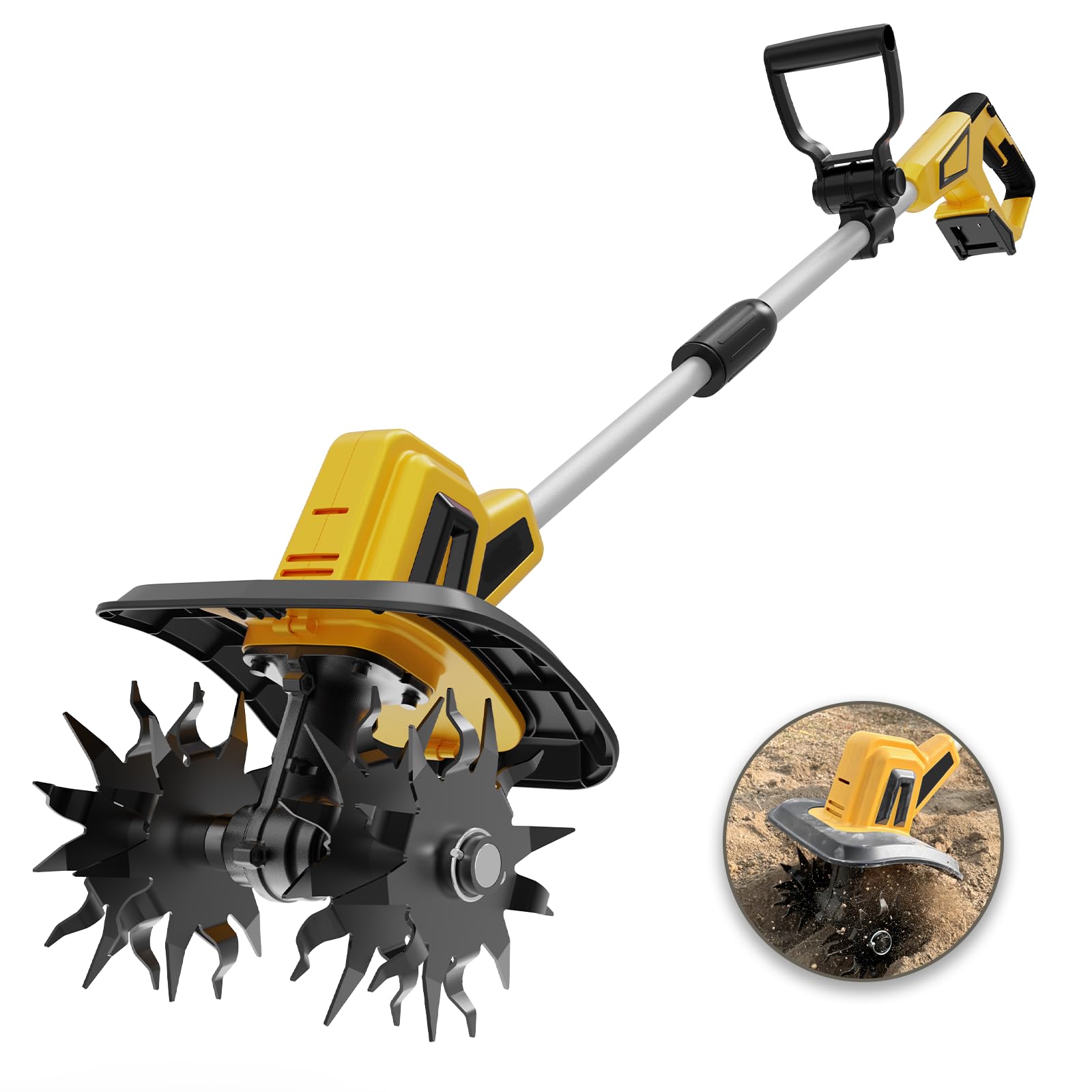
3. Cordless Garden Tiller Cultivator Compatible with Dewalt 20V Max Battery (FORDWALT)
A 10-pound cordless cultivator that replaces the hand rake for good.
This tool-only tiller runs on your existing DeWalt 20V batteries and delivers a sturdy 300W through 48 steel tines at 270 RPM. The 8.7-inch width and 6.3-inch depth suit small to medium beds, clearing hard depleted soil, turning it over, and pulling weeds along edges. It is a featherweight at 10 pounds — a far cry from the Honda’s 28 pounds — making it the obvious upgrade from a manual rake for mulch turnover and light bed prep.
Reviewers point out finishing a front yard in 10 minutes and battery life exceeding expectations. The adjustable ergonomic auxiliary handle reduces fatigue during prolonged use, and the detachable handle and gears disassemble for compact storage. There is a 5-year warranty and 24/7 support behind it, which is reassuring at this level.
The honest limits: it is weak on hard or rocky soil, the width is narrow so wide beds take more passes, and the battery drains fast under heavy load. Owners note it is loud but manageable, and an occasional unit needs its extra pins for assembly. For light-to-moderate work in sandy or prepared soil, this is the value king — and the review pages back it up with the strongest effectiveness praise in this roundup.
The Lightweight Appeal
- 10 pounds — easy for anyone to guide
- Runs on DeWalt 20V batteries you may already own
- 5-year warranty with 24/7 support
Where It Bows Out
- Struggles on hard, rocky, or heavy-weeded ground
- Narrow 8.7-inch path means more passes in wide beds
- Battery drains quickly under load
Best for: the gardener with prepped soil, sandy beds, or mulch to turn who wants cordless convenience without spending on a battery system.
Not for: the person breaking new ground in clay — that demands the Honda’s torque.
4. Cordless Tiller Cultivator 9″ Width 6.6″ Depth with 2×4.0Ah Batteries (SOARFLY)
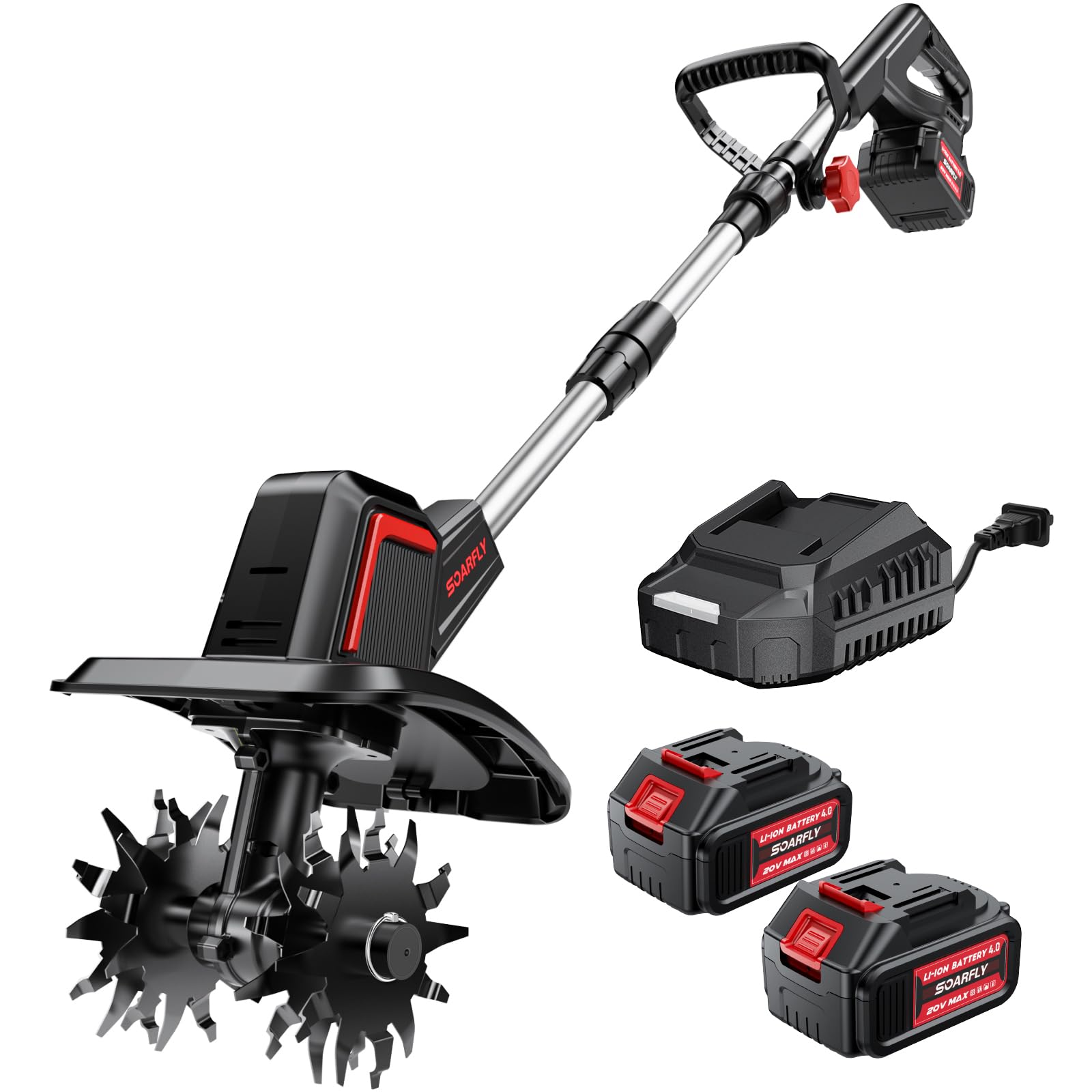
Two 4.0Ah batteries mean you swap instead of stop.
This tiller ships with two upgraded 4.0Ah Li-ion batteries — double the capacity of typical 2.0Ah packs — delivering up to 120 minutes of continuous operation across both. Swap the battery and keep going; shoppers say each pack gives roughly 30 minutes and charges in about 30 minutes, so the work never pauses for long. The 360 RPM motor and 48 steel tines break up compacted soil at a 9-inch width and 6.6-inch depth.
Weight sits around 6.9 kg with a mostly plastic build, and one-handed operation is genuinely possible thanks to good maneuverability. The upgraded height-adjustment system and ergonomic auxiliary handle personalize the fit, reducing fatigue during longer sessions — a real plus over rivals that cannot adjust height at all. The dual safety system requires pressing the safety button and trigger together to start.
The honest catch: on hard dry ground it bounces a bit, and durability gets mixed notes from owners, so treat it as best for small areas, weeding, and prepared beds rather than ground-breaking duty. A 70-something owner found it “worked great” and easy to handle in raised beds. For the gardener who wants two batteries in the box and a faster motor, this is the runtime champion of the cordless set.
Why the dual batteries matter: you get roughly double the working window of single-pack rivals, and the height adjustment keeps you comfortable while you use it.
Choose this for: flower beds, vegetable plots, and soil prep where you want to finish the job without a recharge pit stop.
Think twice if: your ground is hard-packed clay — this prefers looser, prepared soil.
5. Mini Cordless Tiller Cultivator 2.6 lbs (TaskStar)
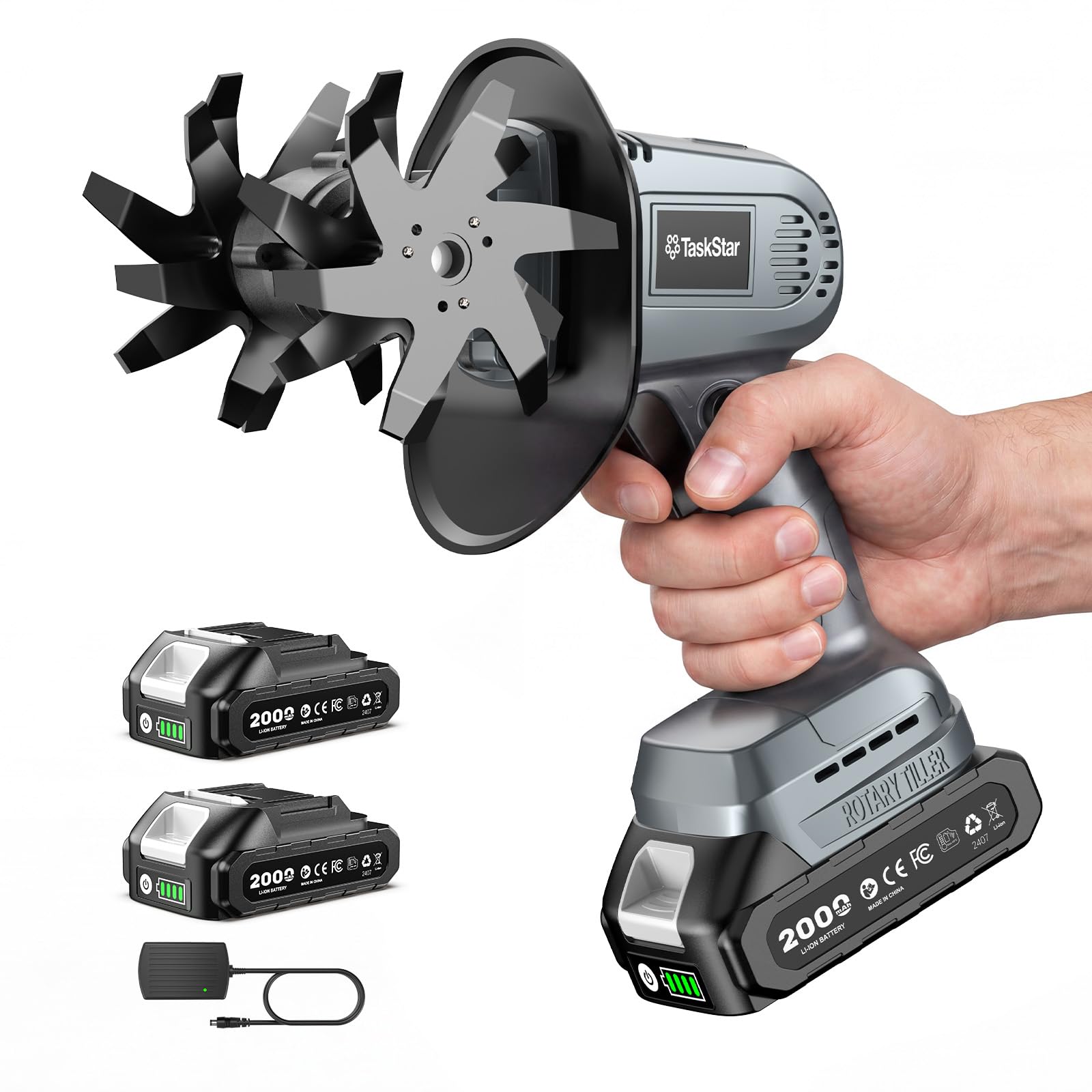
At 2.6 pounds, the lightest tiller here slips between flowers one-handed.
This is the tiller for tight spaces and lighter arms. The 4-inch width and 4-inch depth are made for working between flowers, around vegetables, inside raised beds, and along narrow rows without damaging neighboring plants. A 300 RPM motor breaks up compacted soil, aerates, and pulls small weeds.
It includes two 20V 2.0Ah lithium batteries, so you can keep gardening while one charges. Owners call it “quiet and mighty,” noting it tills grass clippings and weeds with ease and tears through difficult root systems. The stainless steel tines resist rust and rinse clean with water, and the two-step safety switch prevents accidental startups.
The trade-off is scale: at 4 inches wide, large beds take many passes, and tall grass or weeds can clog the tines — pre-cutting is recommended. A 63-year-old owner found it operable with ease, and a 70-something gardener praised it for raised beds. This is the specialist for precision work and small-space gardeners, not the machine for breaking a new half-acre plot.
The Featherweight Edge
- 2.6 lbs — one-hand operation for seniors
- Two batteries included for continuous work
- Stainless tines rinse clean and resist rust
The Size Limit
- 4-inch path means many passes on larger beds
- Tall grass and weeds clog the tines
- Best for weeding and refining, not ground-breaking
Made for: seniors, small raised beds, and anyone who wants to weed between established plants without stooping.
Not built for: opening new ground or covering large vegetable patches quickly.
6. HEINPRO Cordless Tiller Cultivator Compatible with Milwaukee M18
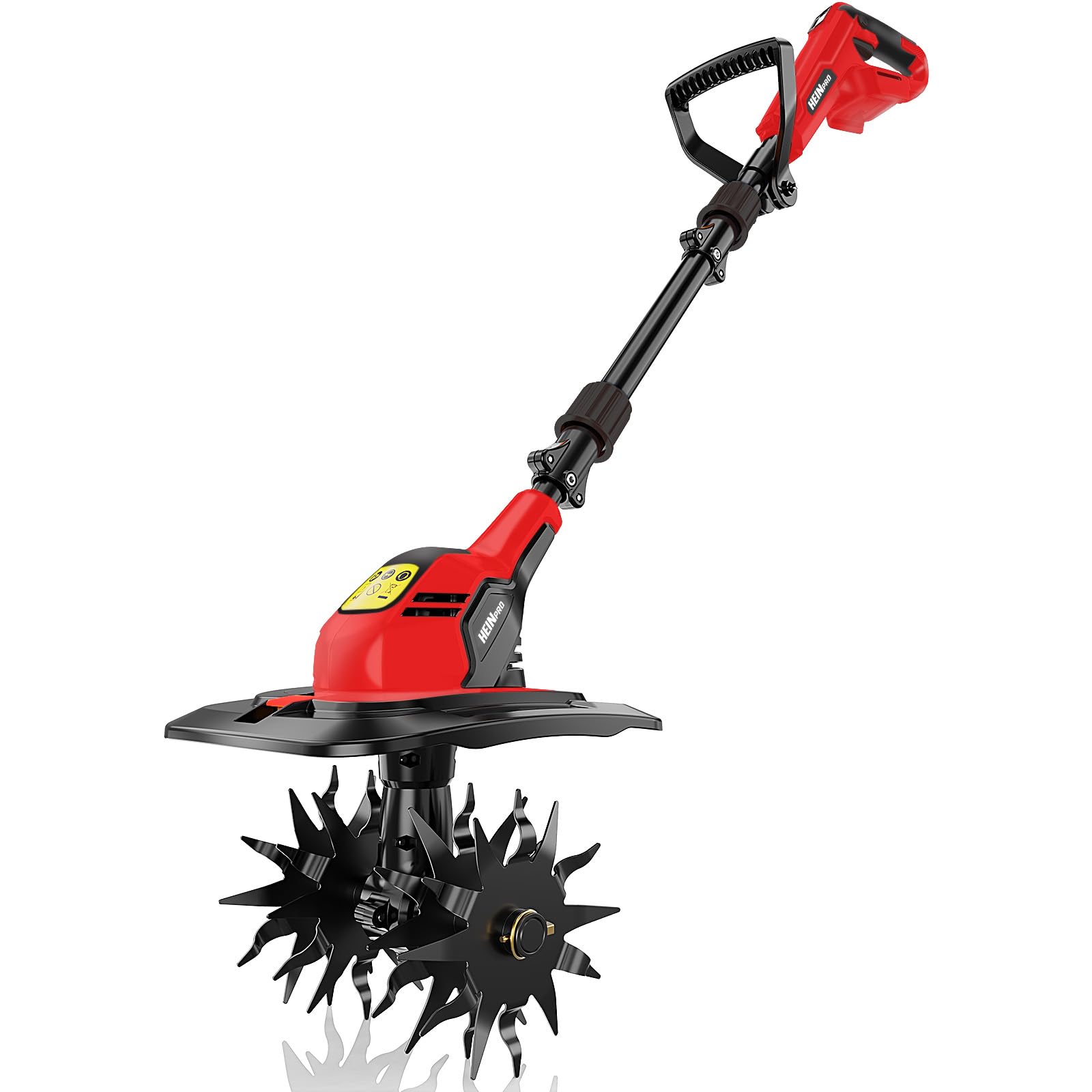
One cordless tiller that speaks fluent Milwaukee M18.
If your shed runs on red, this tool-only tiller expands your kit without a separate battery investment. It is compatible with a wide range of Milwaukee M18 18V lithium-ion batteries — from the 48-11-1811 up through the 48-11-1890 — so you grab the pack you already own and start tilling. A sturdy motor spins 4 hardened steel blades at 360 RPM, cultivating up to 9 inches wide and 7 inches deep in seconds.
At 9.4 pounds with a non-slip soft grip and adjustable handle, it is comfortable enough that one owner notes his wife uses it easily. The 3-section pole connects with pins and a quick-release collar for a rigid, wobble-free setup that extends to 4.1 feet. A battery gauge on the handle shows remaining power at a glance, so you never guess your runtime mid-row.
The build quality earns praise, and buyers report it breaks up compacted clay soil — One owner tilled 4 raised beds and three 15-foot rows in hard dry clay on 2 batteries with no issues.. The recurring caveat: battery life gets mixed notes, and the manufacturer warns against dense grass where blades may tangle. Clear the area of weeds before you start, and this Milwaukee-compatible cultivator handles flower beds, raised beds, and compost blending with ease.
The compatibility win: if you already own Milwaukee M18 batteries, this is the cheapest way to add tilling to your arsenal — and the 360 RPM motor keeps pace with pricier rivals.
Pick this if: you are a Milwaukee user who wants a capable, lightweight cultivator without a new battery system.
skip it if: you need a bundled battery or plan to till dense, grass-heavy ground regularly.
7. 20V Cordless Tiller Cultivator 400RPM with 2×4.0Ah Batteries (Grelawner)
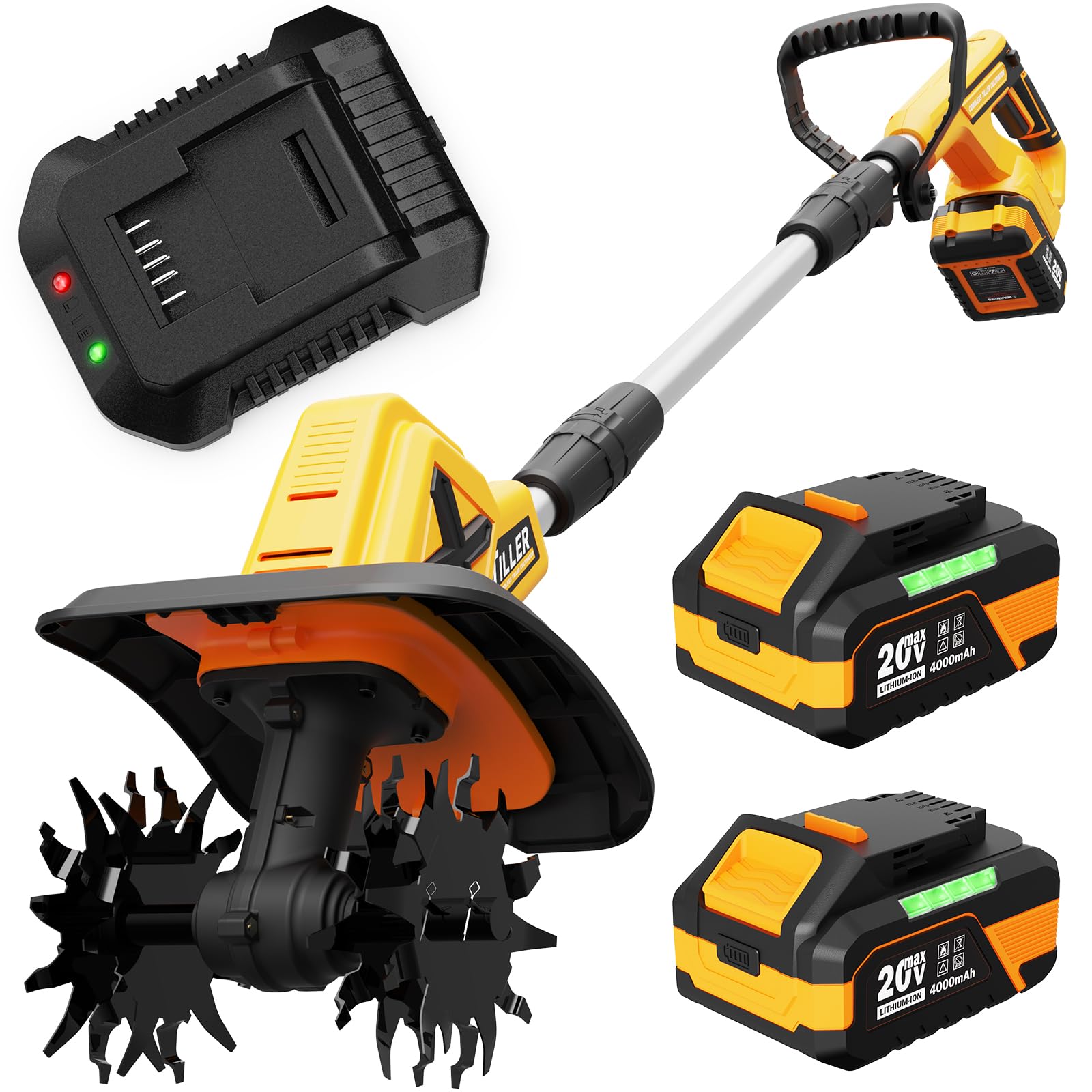
The fastest tine speed in this roundup, packing 400 RPM into 11 pounds.
This cordless cultivator leads the group on rotation speed. A high-performance pure copper motor delivers up to 400 RPM, spinning 48 durable steel tines through compact soil at an 8-inch width and 6-inch depth. It ships with two 4.0Ah lithium batteries — with DeWalt compatibility — so you get extended runtime and a quick swap when the first pack depletes. Owners mention battery life long enough to finish a yard, with fast recharging between sessions.
At about 11 pounds it is easy to maneuver around raised beds and pathways, and the ergonomic auxiliary handle reduces fatigue during longer cultivation. The dual safety switch requires both the safety lock and trigger to start, and a front debris shield blocks flying dirt and small stones for a cleaner, safer workspace. Built-in overload and temperature protection help maintain stable performance and extend battery life.
The design is clean and quiet, running without gas, oil, or heavy maintenance. Owners describe it as lightweight, easy to assemble, and great for loosening soil in flower beds and vegetable gardens, with one noting it is “not very heavy” and easy on a vegetable bed. The caveat: this model has fewer reviews than the crowd favorites, so the long-term durability story is still being written. For the gardener who wants the fastest tine speed and a bundled battery pair, this is the pick.
The speed advantage: 400 RPM is the top of this list, cutting through compacted soil faster than the 270–360 RPM rivals while the dual 4.0Ah packs keep you working.
Go with this for: routine soil preparation, flower beds, and seasonal planting where speed and quiet electric power matter.
Be aware: it is a newer model with a shorter review trail, so the durability proof is still building.
8. Electric Tiller for Gardening Compatible with Dewalt 20V Battery (ADOTOCAM)
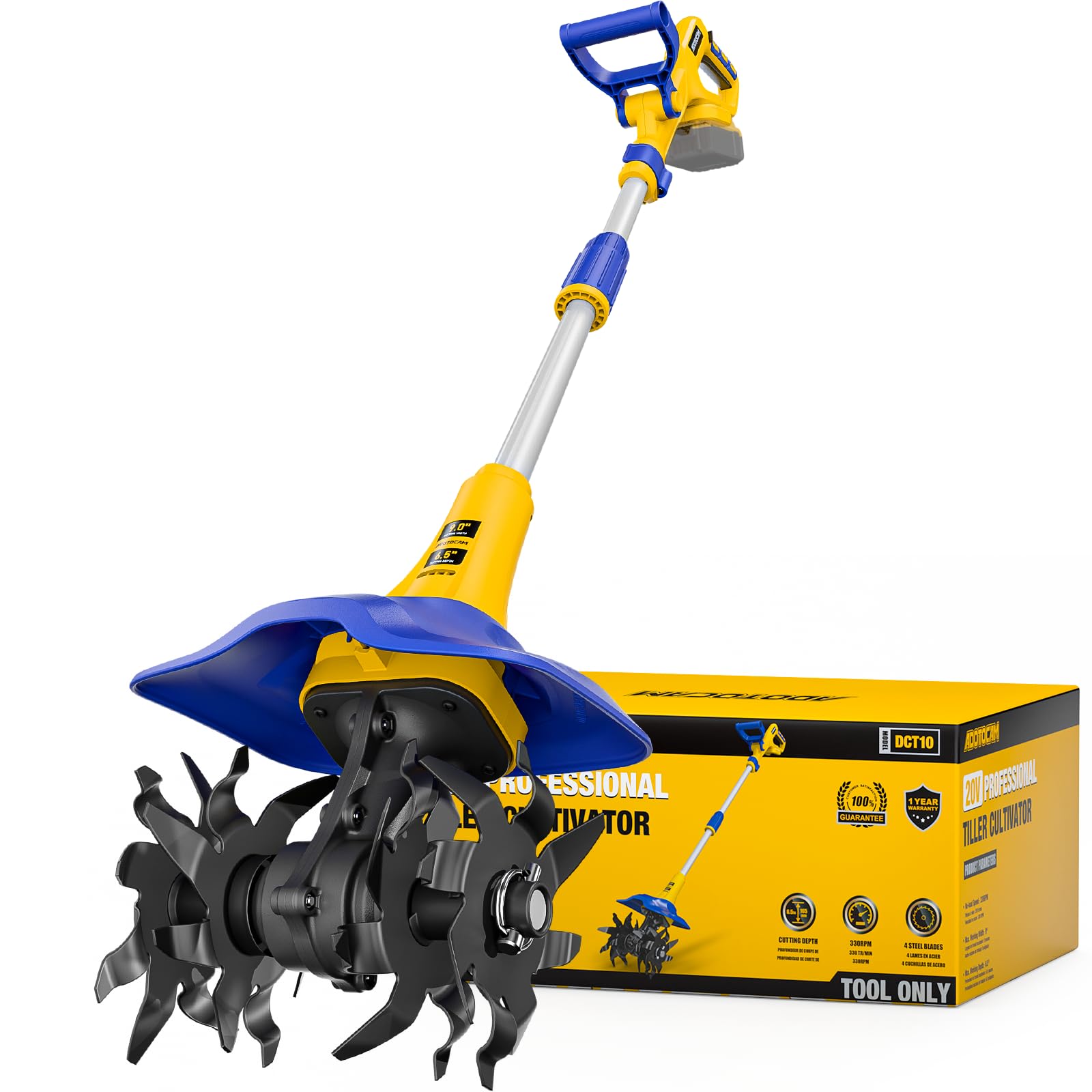
A DeWalt-compatible tiller that overdelivers on a budget.
This tool-only tiller works with a broad range of DeWalt 20V Max batteries — DCB206, DCB205, DCB204, DCB181, DCB182, DCB200, and more — so professionals who already own DeWalt packs get cordless flexibility without a new charger. Sharp steel tines spin to 330 RPM, loosening soil, mixing compost and fertilizer, and aerating root zones at a working width of 9 inches and depth of 6.5 inches.
Customers note it is ideal for small gardens, raised beds, flower beds, and tight corners, with One used it for a retaining wall install, and another praised its compatibility with an existing battery.. The detachable gears remove for easy cleaning of stuck weeds after tilling — a practical touch for keeping it ready next time. The dual safety switch requires pressing the safety button and trigger together, protecting against accidental starts.
The honest picture: battery life draws mixed reviews — some find it short under heavy load, while others report long runtime on a big DeWalt battery. One owner notes needing to clear blades often, though it is “not bad.” There is also the reality that this model sits at the lower end of star ratings in this group, so while it delivers real value for the price, it is best matched to light-to-moderate jobs rather than daily commercial use. For the budget-conscious DeWalt owner, this is the entry point.
The Budget Angle
- Runs on existing DeWalt 20V batteries
- 330 RPM with sharp steel tines
- Detachable gears make cleanup simple
Where It Cuts Corners
- Battery life is the most-discussed mixed point
- Blades may need frequent clearing on weedy ground
- Lower star rating than the pricier cordless rivals
Best if: you want a no-frills tiller that leans on the DeWalt batteries already in your drawer.
Consider spending more if: you need all-day runtime or plan to tackle tough, weed-heavy ground regularly.
9. Earthwise TC70020IT 20V 7.5″ Cordless Electric Garden Tiller Cultivator

A complete cordless kit with battery and charger in the box, ready out of the gate.
Unlike the tool-only models above, this Earthwise ships with a 20-volt 2.0Ah lithium-ion battery and a fast charger, so it works the moment it arrives. Four durable steel tines deliver a 7.5-inch cutting width and 6-inch cutting depth — a size that suits flower beds, mixing soil additives, and keeping weeds down through the season. It is a genuinely light machine, easy to operate and transport around the house.
Owners say it breaks compacted soil, clears old depleted ground, edges well, and pulls weeds up by the roots. A 70-year-old user found it easy to operate with good depth for its size, and another finished a side garden in under 30 minutes that would have taken 1.5 hours by hand. The safety button stops the blades quickly, and weeds that wrap around are easy to remove. A 2-year manufacturer warranty backs the purchase.
The recurring caveat is battery life — it is the most-discussed downside, and the single 2.0Ah pack is the smallest in this roundup, so a big plot may exceed one charge. Owners note needing to stop and readjust in difficult spots with roots, though it is not a huge hassle. For a first-time tiller buyer who wants everything in one box at a friendly price, this is the simplest way in.
The ready-to-run appeal: battery, charger, and tiller in one purchase — no separate ecosystem required, and light enough for anyone to manage.
Grab this for: small gardens, raised beds, and refined weeding where you want a complete kit without extra purchases.
Mind the limit: the 2.0Ah battery is the smallest here, so plan around a recharge for larger areas.
Understanding the Specs
Tilling Width and Depth
Width is how wide a strip the tines churn in one pass — a 10-inch tiller covers more ground per row than an 8.7-inch one but is harder to fit between plants. Depth tells you how deep the tines reach into the soil; 6 inches suits most flower beds, while 7 inches gives vegetables deeper root zones. Match both to your bed size and what you grow.
RPM and Motor Type
RPM is how fast the tines spin — 280 RPM handles routine cultivation, while 400 RPM chews through compacted soil faster. Brushless motors (found on the Mayoki) run longer, run cooler, and need less maintenance than brushed motors, which is why they cost a little more. Gas engines like the Honda GX25 trade RPM for raw torque, excelling where electric motors struggle.
FAQ
Will a battery tiller work on hard clay soil?
Can I use my existing DeWalt or Milwaukee batteries with these tillers?
How long does a cordless tiller battery last?
Is a gas tiller better than a cordless one?
What is the difference between a tiller and a cultivator?
How many tines should a mini tiller have?
Is a 4-inch wide tiller enough for a vegetable garden?
Do I need to worry about safety with a mini tiller?
Final Thoughts: The Verdict
For most people, the best mini garden tiller winner is the Honda FG110 because it pairs legendary reliability with real digging power, and its 4.8-star crowd favorite status across hundreds of owners speaks to years of satisfied tilling. If you want cordless freedom without buying a new battery system, the Mayoki DeWalt-compatible tiller delivers the widest cut at 10 inches. And for tight raised beds and lighter arms, the featherweight TaskStar at 2.6 pounds is the one to reach for.
How We Picked
We do not accept paid placement. Every pick is matched to a real buyer and a real use-case; we do not hands-on test units.
Sources & Methodology
Specifications: manufacturer listings and product documentation. Review insights: verified customer reviews, as of August 2026. Pricing: not shown on this page (it changes often); check the current price via the retailer link.
As an Amazon Associate, Lawn Gear Lab earns from qualifying purchases. This does not affect which products we feature.