
Specs are compiled from manufacturer listings and verified buyer reviews and can change over time — please confirm the key details on the product page before buying.
A sago palm that’s turning yellow usually isn’t dying — it’s starving. These ancient cycads are heavy feeders with specific micronutrient demands, and the right fertilizer for sago palms delivers magnesium and manganese in forms the plant can actually use. This guide sorts through the granular, liquid, powder, and spike options to find the one that matches how you garden and how many palms you’re feeding.
I’m Rikta — the founder and writer behind Lawn Gear Lab. This guide is built by comparing the manufacturers’ published specifications and the patterns across verified customer reviews, so you get each pick’s real strengths and trade-offs instead of marketing spin.
Compare the best fertilizer for sago palms by nutrition ratio, release speed, and application style to match your plant’s needs. fertilizer for sago palms that works starts with the right N-P-K balance and a slow-release nitrogen source.
Our Picks at a Glance


How To Choose The Best Fertilizer For Sago Palms
Sago palms aren’t true palms — they’re cycads, which means they have their own feeding quirks. They crave potassium and micronutrients, and they’re sensitive to too much phosphorus, which is why a generic 10-10-10 (balanced nitrogen, phosphorus, potassium) often does more harm than good. Your goal is a formula with higher potassium than phosphorus and a nitrogen source that releases slowly to avoid burning the roots.
Match the release speed to your routine
Slow-release granules feed over months with one application, which suits gardeners who want to fertilize once per season. Water-soluble powder and liquid concentrates need mixing and more frequent feeding, but they act fast on a palm that’s already yellowing. Spikes sit in the soil and dissolve slowly, though they’re harder to spread evenly around a wide root zone.
Check the micronutrient line-up before you buy
Magnesium, manganese, and iron are the trace elements that keep sago fronds deep green. A fertilizer that lists these on the label is worth more than one with just a strong N-P-K ratio, because yellowing in sagos is usually a micronutrient deficiency, not a nitrogen shortage. Look for these listed explicitly rather than hidden under “and other trace minerals.”
Quick Comparison
| Model | Best For | Form | N-P-K Ratio | Weight | Amazon |
|---|---|---|---|---|---|
| Palm Food 12-4-12★ Best Overall | Best Overall | Granules | 12-4-12 | 4.2 lb | Amazon |
| Espoma Palm-ToneOrganic Pick | Organic Pick | Granules | 4-1-5 | 4 lb | Amazon |
| BGI PALMGAINSlow-Release Value | Slow-Release Value | Granules | 8:2:12 | 2 lb | Amazon |
| EZ-GRO 17-5-24 | Liquid Feed | Liquid | 17-5-24 | 32 fl oz | Amazon |
| Down To Earth 6-2-8 | Organic Large Box | Granules | 6-2-8 | 5 lb | Amazon |
| Jack’s Classic 16-5-25 | Water-Soluble | Powder | 16-5-25 | 1.5 lb | Amazon |
| Jobe’s Spike 10-5-10 | No-Mess Spikes | Spikes | 10-5-10 | 1.1 lb | Amazon |
| Real Growers 12-4-11 | Annual Feeding | Granules | 12-4-11 | 2 lb | Amazon |
| Perfect Palm 7-14-40 | Multi-Palm Value | Granules | 7:14:40 | 7 lb | Amazon |
In‑Depth Reviews
1. Palm Food 12-4-12 4 Lbs
Our pick — over 4.5★ from 700+ verified ratings; the strongest balance of quality and price.
The one that turns sago fronds a deep, dark green and keeps them that way for months.
This granular food earns the top spot because it holds the highest owner rating in this roundup and has a long track record with sago owners. The 12-4-12 (nitrogen, phosphorus, potassium) ratio leans heavily on potassium, which is what a cycad (a palm-like plant) needs most, and it adds magnesium and manganese — the two micronutrients that stop the yellowing between the veins of older fronds, so your sago stays green and healthy.
The slow-release nitrogen comes from ureaform, so it feeds for 3-4 months from a single application instead of dumping everything at once. That slower feeding also makes it forgiving if you’re prone to over-fertilizing. Buyers report it matches the exact mix that Clemson University recommends for palms, and long-term users on a pair of sago palms describe healthy yearly growth with no fuss.
It is a specialty product, so the per-pound cost runs higher than a generic all-purpose feed. The container holds roughly four cupfuls, which raises the cost per application, but the results — a sago “exploding in dark green fronds,” as the review pages put it — justify it for most owners. A few shipments arrive with a loose lid, so it’s worth checking the seal before storing.
What wins owners over
- Growth is the top-praised trait — dozens of owners cite visible new fronds
- 3-4 month slow-release nitrogen from ureaform means fewer applications
- Extra magnesium and manganese directly target yellowing fronds
Fair trade-offs
- Small container goes fast — about four cupfuls per tub
- Specialty price runs higher than generic feeds
- Lid can arrive loose from shipping
Reach for this if: you want a proven granular feed that handles sago yellowing with one or two applications per season.
Look elsewhere if: you’re feeding several large palms and need a bulk bag to keep cost per feeding down.
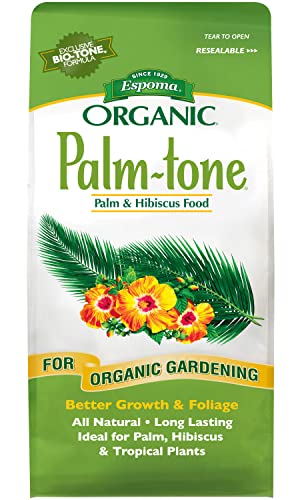
2. Espoma PM4 4-Pound 4-1-5 Palm-Tone Plant Food
The all-natural granules that green up sago and hibiscus without synthetic chemicals.
If organic matters to you, Espoma’s 4-1-5 (nitrogen, phosphorus, potassium) Palm-Tone is the standout — it’s made from all-natural ingredients and needs no mixing, so you just scoop and scatter. The low phosphorus (the “1” in the ratio) is a plus for sago palms, which are sensitive to excess phosphorus and prefer a feed weighted toward potassium.
It’s formulated for all palm and hibiscus types, and the effectiveness is the trait owners praise most — the second most-mentioned positive is how strongly it attracts growth across tropical plants. Owners mention palms “thriving and looking very healthy,” and it doubles as a rescue feed: One owner credits it with helping save an ailing palm after following the application instructions closely..
The honest catch is the smell. It has a strong, barnyard-like odor right after application that fades over time, and it’s noticeable enough that a few owners comment on it. For mostly-outdoor sago setups that’s a minor issue, but it’s something to know before feeding a palm near a patio you’re using that same afternoon.
Why it stands out
- All-natural organic ingredients with no mixing required
- Effectiveness is the top-praised trait among owners
- Low phosphorus suits sago palms’ sensitivity
Know before you buy
- Strong barnyard-like odor right after application
- Smell lingers for a bit before fading
Best for: gardeners who want an organic, no-mix granular feed and keep their sago outdoors where the odor is a non-issue.
Think twice if: you’re feeding a palm on a screened porch or near a seating area where the initial smell would bother you.
3. BGI Fertilizers PALMGAIN, Palm Tree Fertilizer, 2lb Bag
The university-recommended 8:2:12 formula that greened up palms in days.
This is the formula the University of Florida IFAS Extension recommends for palms, and it’s built with a complete minor-nutrient package plus slow-release nitrogen for extended feeding. The 8:2:12 (nitrogen, phosphorus, potassium) ratio again keeps phosphorus low while feeding potassium hard — the right shape for a sago. The 2 lb bag comes with a resealable top, so moisture stays out between uses.
Effectiveness is the thing owners praise most, and the results are fast: on three palms, the two healthy ones showed visible improvement within days — new shoots and darker green leaves. It’s also worked on a foxtail palm that became the envy of the neighborhood, and even on hibiscus and a winter-damaged robellini. The resealable bag is a genuinely useful touch that most granular competitors skip.
The trade-off is weight — this 2-pounder is less than half the heft of the Palm Food pick at 4.2 lb, so it covers fewer palms per bag. Leaves-health results are mixed in the review patterns, with some owners seeing browning continue on stressed trees, and opinions on the smell and value split both ways. It’s a strong choice for a couple of palms, not a palm grove.
Fast feeder: visible new shoots and darker fronds within days on healthy palms, per owner reports.
Right-sized: a resealable 2 lb bag suits a single tree or two, not a large landscape with many palms.
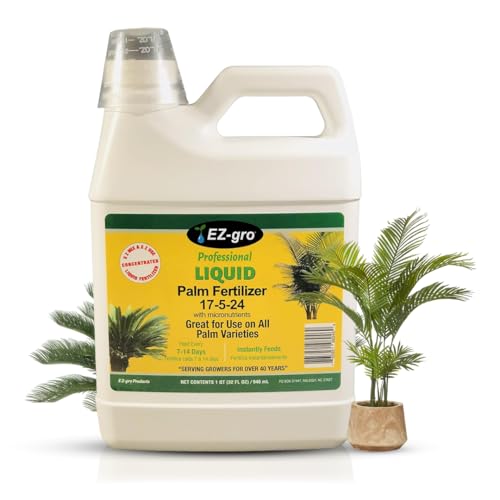
4. EZ-GRO 17-5-24 Palm Tree Fertilizer Liquid Plant Food
The no-smell liquid that saves indoor sago palms from winter decline.
When your sago is struggling indoors over winter, liquid is often the fastest way to reach it, and this 17-5-24 (nitrogen, phosphorus, potassium) formula is built for exactly that. The higher potassium promotes lush green foliage, and it’s enriched with extra magnesium and sulfur — a micronutrient package aimed squarely at photosynthesis. Because it’s a liquid, there are no pellets left on the ground, which owners appreciate.
It’s urea-free, and the maker claims it delivers four times more readily available nitrogen than traditional urea-based fertilizers. That effectiveness shows in real rescues — One customer’s granddaughter revived a struggling Kentucky palm after feeding it and moving it outside for spring.. The 32 oz bottle has no scent, so it’s comfortable for indoor palms, and measuring and applying is straightforward.
The catch is value per feeding: one owner with three trees found the bottle ran out fast, making it pricier per application than the granules they’d used before. One shipment also arrived missing the measuring cup, so check the bottle contents on arrival. For a single indoor sago or two, though, the convenience of a scent-free liquid is tough to top.
Where it shines
- Urea-free formula with more readily available nitrogen
- No odor, making it comfortable for indoor palms
- Extra magnesium and sulfur for lush green growth
Where it’s limited
- Bottle goes fast with multiple trees, raising cost per feeding
- Measuring cup can be missing on arrival
Grab this when: you’re nursing one or two palms, especially indoors, and want a scent-free liquid that absorbs quickly.
Pass if: you’re feeding a row of landscape palms where a granular bag stretches further.
5. Down To Earth All Natural Fertilizers Organic Palm Tree – 6-2-8, 5 lb

A five-pound organic box that lasts a season and a half for the cost of a small bag.
This is the budget-friendly organic that keeps going — a 5 lb box of 6-2-8 (nitrogen, phosphorus, potassium) granules that One owner reports the 5 lb box lasting 1.5 years for palms and potted hibiscus.. It’s OMRI listed, meaning it’s made with all-natural ingredients suitable for certified organic gardening, and it includes calcium, magnesium, and trace minerals for complete nutrition.
The formula keeps phosphorus intentionally low while pushing potassium, and the texture ranges from chunky to fine, which gives a mix of fast and slow release. Customers note a palm responding well and An areca palm showed about 50% growth even through a drought.. It’s also safe around waterways since there are no synthetic chemicals.
The trade-off is the smell. It’s fish-based, and one owner described it making the whole yard smell strongly for weeks — the strongest negative in the reviews. Use it outdoors only and give it time before entertaining in the yard. For organic gardeners with the space to let it air out, the value per pound is excellent.
Long-lasting organic: a 5 lb box stretches far, with one owner getting 1.5 years of feeding from a single purchase.
Outdoor only: the fish-based odor is powerful at first, so keep it away from patios and indoor sago setups.
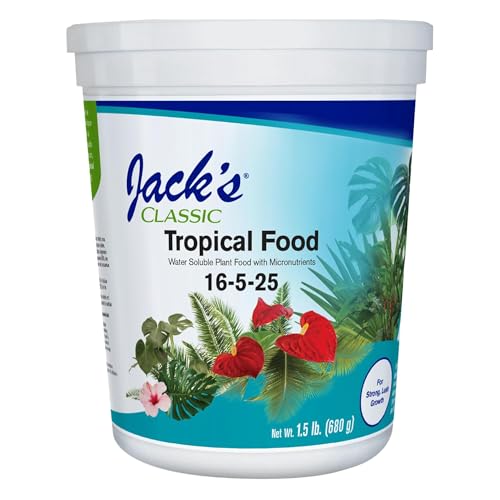
6. Jack’s Classic 16-5-25 Tropical Food Water-Soluble Fertilizer, 1.5lb
The powdered concentrate that makes many gallons of feed from one small jar.
Water-soluble powder goes further than liquid because you mix only what you need, and this 16-5-25 (nitrogen, phosphorus, potassium) formula is the pick for that approach. It’s been rebranded from Palm Food to Tropical Food with the same trusted formula, and it’s formulated for palms including the Lady Cycad, Sego Palm, and Zamia — the cycad family your sago belongs to. A measuring spoon is included.
The formula prevents harmful salt buildup while supplying extra potassium, magnesium, sulfur, and micronutrients., and you can use it as a foliar spray on leaves or as a root feeding. Cycad reviewers point out steady growth with the 16-5-25 ratio, and a majesty palm revived quickly with new fronds and no leaf drop or yellowing. The powder dissolves clean with no residue.
Because it’s a concentrate, the 1.5 lb jar feeds far more palms than the weight suggests — multiple gallons of liquid per mix. The recurring packaging gripe is a loose lid or a hole in the plastic causing spillage, so it’s worth taping the lid before storing. For gardeners who like precise, frequent feeding, this is the most flexible option of the set.
Why owners praise it
- Powdered concentrate stretches into many gallons of feed
- 16-5-25 ratio ideal for cycads, with steady growth reported
- Works as both foliar spray and root feeding
Watch for
- Lid can arrive loose, risking spills in shipping
- Requires mixing, unlike ready-to-pour granules
Choose this for: hands-on gardeners who like mixing fresh feed and want maximum flexibility for foliar or root application.
skip it if: you prefer a scatter-and-forget granular that needs no measuring.
7. Jobe’s Palm Tree Fertilizer Spikes 10-5-10, 15 Count

Hammer-in spikes that replace messy granular feeding with a per-tree solution.
If you hate measuring and spreading granules, Jobe’s 10-5-10 (nitrogen, phosphorus, potassium) spikes are the simplest way to feed a sago — you hammer them into the soil around the drip line and let time-release technology do the rest. This package is 15 spikes total (three packs of five), and each spike is formulated with sulfur, magnesium, iron, and zinc as micronutrients, so your palm gets a balanced meal without any mixing.
Ease of use is the trait owners praise most, tied with effectiveness, and the no-mess, no-mixing approach is the clear appeal. Shoppers say sago palms with beautifully green leaves and other palms putting out new fronds within days. The 10-5-10 ratio keeps phosphorus low, which suits the cycad’s sensitivity, and the spikes feed slowly over a long period.
The recurring gripe is durability — some spikes completely break apart when you hammer them into hard soil, which can make placement awkward. Durability is the most-discussed mixed aspect, so treat them gently in compacted ground. For a gardener who wants per-tree simplicity and doesn’t mind a little soil prep, these are the easiest option here.
The big appeal
- Ease of use is the top-praised trait — no mixing or measuring
- Time-release feeding lasts long after placement
- Includes sulfur, magnesium, iron, and zinc micronutrients
The honest catch
- Spikes can break apart when hammered into hard soil
- Harder to spread evenly around a wide root zone
Reach for these when: you want the lowest-maintenance feeding possible for one or two sago palms and don’t mind hammering.
Look elsewhere if: your soil is hard and compacted, where spikes risk crumbling on impact.
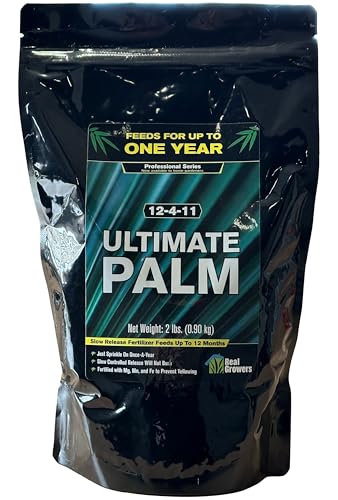
8. Real Growers Ultimate Palm Tree Fertilizer 12-4-11 – 2 lb
Feed once a year and let controlled-release granules carry the sago through all four seasons.
This is the ultimate low-maintenance granular — the 12-4-11 (nitrogen, phosphorus, potassium) formula uses controlled-release granules that feed for up to 12 months from a single application. No monthly reapplication, no feeding calendar. The maker says the 2 lb bag feeds up to two palms for a full year, which makes it a genuinely hands-off option.
The 12-4-11 ratio brings balanced nutrition plus magnesium, sulfur, iron, and molybdenum — the complete micronutrient line that sagos and cycads specifically need. It works both indoors and outdoors, in garden beds or containers, and buyers report palms shooting up almost immediately with noticeably better color. The application is simple: spread evenly, water in thoroughly, and let the controlled release take over.
The most-discussed drawback is guidance — one owner in Spanish noted a lack of clear usage instructions on the package, which can leave first-timers guessing on dosing. A few others simply note it “seems to work well” without drama, which fits the low-key setup. It’s made in the USA and suits the set-and-forget gardener perfectly.
Set and forget: one application feeds for up to 12 months, covering up to two palms per 2 lb bag.
Read the label: application instructions are sparse, so new fertilizer users may need to research dosing.
9. Perfect Palm – Dual Action Palm Tree Fertilizer, 7 LB

The 7 lb pail that feeds 14 palms — created by actual palm farmers.
This is the bulk option for people with multiple palms, and it’s built by actual palm farmers with the 7:14:40 (nitrogen, phosphorus, potassium) ratio — one of the highest potassium levels of any pick here, which The maker says the high potassium boosts resistance to cold, drought, and extreme heat.. The 7 lb resealable pail feeds up to 14 palms with 2-6 inch trunk widths., making it the clear value play for a landscape full of trees.
It’s a dual-action formula with two forms of magnesium and iron, plus SMART GRANULE XCU 64% Control Release Technology, meaning it feeds safely without burning surrounding plants and lawn. The free measuring scoop is a practical inclusion, and a spoon-feeding philosophy avoids the shock of heavy one-time applications. Effectiveness is by far the most-praised trait, and It’s credited with greening up palms after a tough Florida freeze..
The mixed reviews center on value — some owners see the per-palm cost as a huge deal, while others find the upfront price steep. That’s the trade-off of buying big: more output per dollar, but a higher initial outlay. The resealable lid protects the granules from moisture, so the pail stores well between feedings.
What makes it a value
- Feeds up to 14 palms from the 7 lb pail
- Very high potassium (40) for cold and drought resistance
- Control-release granules won’t burn surrounding plants
What to weigh
- Upfront cost is the highest of the granular options
- Opinions split on whether the price matches the results
Choose this for: anyone feeding several palms who wants the lowest cost per tree over a full season.
Think twice if: you have a single sago and don’t need 7 lb of fertilizer sitting in storage.
Understanding the Specs
N-P-K Ratio
The three numbers on any fertilizer label stand for nitrogen, phosphorus, and potassium, in that order. Sago palms prefer a ratio with low phosphorus and higher potassium — something like a 12-4-12 or 8:2:12 — because excess phosphorus can accumulate in the soil and harm the plant over time. Higher potassium also strengthens the palm against cold and drought stress.
Slow-Release vs. Water-Soluble
Slow-release granules (like ureaform-based feeds) break down over 3-12 months, feeding steadily with one application. Water-soluble powder and liquids must be mixed with water and applied more often, but they act fast on a yellowing palm. Spikes sit in the soil and release over time, though they’re harder to distribute evenly around a wide root zone.
FAQ
What N-P-K ratio is best for a sago palm?
Why are my sago palm leaves turning yellow?
How often should I fertilize a sago palm?
Can I use regular palm fertilizer on a sago palm?
Are fertilizer spikes good for sago palms?
What’s the difference between granular and liquid palm fertilizer?
Is organic fertilizer good for sago palms?
How much fertilizer does a sago palm need per feeding?
Can I over-fertilize a sago palm?
Will palm fertilizer help my sago palm grow faster?
Final Thoughts: The Verdict
For most people, the winner is the Palm Food 12-4-12 because it pairs the 3-4 month slow-release nitrogen with the exact magnesium and manganese that stop sago yellowing — and it holds the highest owner rating in this group. If you want an organic option that needs no mixing, grab the Espoma Palm-Tone and accept the brief outdoor odor. And if you’re feeding several palms and want the lowest cost per tree, the Perfect Palm 7 lb pail is the one to reach for.
How We Picked
We do not accept paid placement. Every pick is matched to a real buyer and a real use-case; we do not hands-on test units.
Sources & Methodology
Specifications: manufacturer listings and product documentation. Review insights: verified customer reviews, as of August 2026. Pricing: not shown on this page (it changes often); check the current price via the retailer link.
As an Amazon Associate, Lawn Gear Lab earns from qualifying purchases. This does not affect which products we feature.